
Understanding the Electronic Certificate of Origin (e-CO)
In the intricate landscape of international trade, the Electronic Certificate of Origin (e-CO) has emerged as a pivotal document, streamlining processes and enhancing the security of global transactions. At its core, an e-CO serves the same fundamental purpose as its traditional paper counterpart: to attest to the national origin of goods being exported. This declaration is crucial for customs authorities worldwide, influencing duties, quotas, and compliance with various trade agreements. However, the ‘electronic’ distinction signifies a paradigm shift from physical documentation to a digital format, leveraging technology to accelerate and secure cross-border commerce.
The importance of the e-CO in modern international trade cannot be overstated. It is a cornerstone for ensuring transparency, reducing fraud, and facilitating the smooth flow of goods across borders. While a traditional Certificate of Origin often involves manual processing, physical stamps, and courier delivery, the e-CO embraces digital workflows, digital signatures, and secure online platforms. This fundamental difference not only speeds up the entire supply chain but also lays the groundwork for more integrated and efficient global trade systems, directly addressing many of the challenges associated with conventional paper-based documentation.
1. What is an Electronic Certificate of Origin?
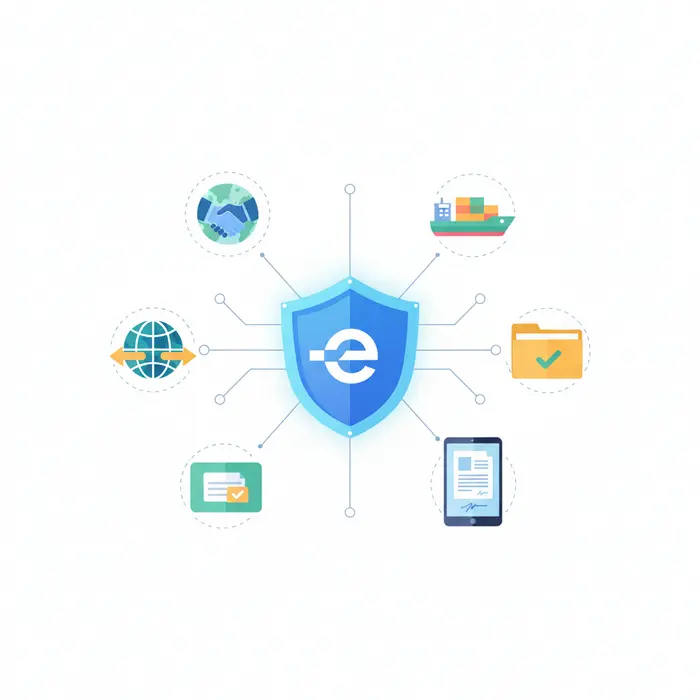
An Electronic Certificate of Origin (e-CO) is a digitally issued and signed document that certifies the country where an exported product was manufactured or processed. Unlike paper Certificates of Origin, which are physical documents requiring manual stamping and signing, an e-CO is created, transmitted, and often stored entirely in an electronic format. This digital nature allows for rapid exchange between exporters, chambers of commerce, customs authorities, and importers, significantly reducing the time and cost associated with obtaining and verifying origin documentation.
Key features of an e-CO include digital signatures, secure encryption, and often a unique verification code or QR code that allows any interested party to authenticate its validity online. This enhanced security makes it far more difficult to forge than traditional paper documents. The information contained within an e-CO is identical to that of a paper CO, detailing the exporter, importer, consignee, description of goods, quantity, and importantly, the country of origin. The process for obtaining an Certificate of Origin online application typically involves submitting data through a secure web portal, which is then reviewed and digitally approved by an authorized issuing body, such as a chamber of commerce or designated government agency.
2. Why e-COs are crucial for modern trade
The transition to e-COs is not merely a technological upgrade; it’s a strategic imperative for businesses operating in today’s fast-paced global economy. One of the primary reasons for their crucial role is the unprecedented speed and efficiency they bring to trade processes. In an era where just-in-time inventory and rapid market response are critical, waiting for physical documents to travel can cause significant delays, impacting supply chains and increasing demurrage costs. E-COs eliminate these bottlenecks, enabling near-instantaneous transmission and verification.
Furthermore, e-COs are vital for facilitating compliance with complex international trade regulations and agreements, particularly Free Trade Agreements (FTAs). Under FTAs, goods originating from signatory countries often qualify for preferential tariff treatment, making the accurate and timely submission of origin documentation critical for importers to benefit from reduced or zero duties. E-COs ensure that the necessary proof of origin is readily available and verifiable, helping businesses leverage preferential origin rules effectively. They also significantly reduce the potential for human error and enhance data accuracy, which is essential for meeting stringent Certificate of Origin requirements imposed by customs authorities worldwide. The digital format supports robust audit trails, offering transparency and accountability that are paramount in an increasingly regulated global trading environment.
3. Benefits over traditional paper COs
The advantages of e-COs over their paper predecessors are extensive and contribute significantly to overall trade facilitation:
- Speed and Efficiency: E-COs can be issued, transmitted, and received within minutes, drastically cutting down processing times compared to the days or weeks often required for paper documents to travel internationally.
- Cost Reduction: Businesses save on courier fees, printing costs, administrative overhead for manual handling, and the significant costs associated with delays in customs clearance.
- Enhanced Security and Authenticity: Digital signatures, encryption, and online verification portals make e-COs far more secure and less susceptible to fraud or alteration. The authenticity of an e-CO can be instantly checked against a central database, ensuring validity.
- Reduced Risk of Loss or Damage: Physical documents can be lost, damaged, or misplaced during transit, leading to costly delays and reissuance. E-COs exist in a secure digital environment, eliminating these risks.
- Improved Audit Trails and Transparency: Every action taken on an e-CO, from application to issuance and verification, is recorded digitally, providing a clear and immutable audit trail. This transparency is invaluable for compliance, reporting, and dispute resolution.
- Global Accessibility: Exporters, importers, and customs officials can access and verify e-COs from anywhere in the world with an internet connection, promoting seamless cross-border collaboration.
- Environmental Sustainability: By eliminating the need for paper, printing, and transportation, e-COs contribute to greener trade practices, aligning with corporate social responsibility initiatives.
Embracing the e-CO is a forward-thinking step for any business engaged in international trade, promising not just compliance but a competitive edge through efficiency, security, and sustainability.
Key Requirements for an e-CO Application
Applying for an Electronic Certificate of Origin (e-CO) is a critical step for businesses in international trade, ensuring goods comply with import regulations and often qualify for preferential tariffs under Free Trade Agreements (FTAs). An e-CO digitally certifies the country of origin, replacing paper certificates with enhanced security and efficiency. Understanding specific Certificate of Origin requirements is paramount to a smooth application, preventing delays, rejections, and penalties. This section details essential documentation, required information, and common pitfalls.
1. Essential documentation checklist
A successful e-CO application hinges on comprehensive and accurate supporting documents, which serve as proof of origin and legitimacy. Key documents typically include:
- Commercial Invoice: Details the transaction, including goods description, quantity, price, value, and terms of sale. Must align perfectly with the e-CO application.
- Packing List: Provides packaging details: contents, dimensions, gross/net weight, and marks.
- Bill of Lading (B/L) or Air Waybill (AWB): Transport documents confirming receipt of goods for shipment, specifying route, carrier details, consignor, and consignee.
- Exporter’s Declaration: A formal statement from the exporter confirming the goods’ origin and compliance with rules of origin.
- Manufacturer’s Declaration (if applicable): If the exporter is not the manufacturer, this verifies the origin of raw materials, components, and the manufacturing process.
- Customs Export Declaration: Proof of goods declared for export in the originating country.
- Sales Contract or Letter of Credit: Can provide additional commercial transaction evidence for complex or high-value shipments.
Consistency across all these documents—product description, quantity, weight, and value—is crucial. Discrepancies are a primary cause of rejection, requiring meticulous preparation to meet Certificate of Origin requirements.
2. Information needed for accurate submission
Beyond physical documents, precise data entry into the Certificate of Origin online application form is vital. Minor errors cause delays or rejection. Essential information includes:
- Exporter Details: Full legal name, registered address, contact, and tax identification numbers.
- Consignee Details: Complete legal name, address, and contact of the recipient.
- Product Description: Detailed and accurate goods description, including the Harmonized System (HS) code—critical for classification, tariffs, and origin rules.
- Quantity and Weight: Gross and net weights, and total quantity, matching supporting documents.
- Value of Goods: Typically, the Free On Board (FOB) value, used for customs valuation.
- Origin Criteria: This crucial information explains how goods meet origin rules, e.g., “Wholly Obtained” (WO) or “Product Specific Rules” (PSR) for manufactured goods. For an FTA Certificate of Origin, correctly applying Preferential origin rules is essential for tariff benefits.
- Transport Details: Vessel/flight number, loading/discharge ports, and departure date.
- Invoice Number and Date: Reference number and date of the corresponding commercial invoice.
Cross-checking every field against source documents before submission prevents significant rework.
3. Common pitfalls in e-CO applications
Despite the digital convenience of an Electronic Certificate of Origin, common mistakes can derail an application. Awareness helps streamline.
- Inconsistent Data: Most frequent error: data mismatch across documents (e.g., invoice vs. packing list quantities, or incorrect consignee address). All information must be perfectly aligned.
- Incorrect HS Codes: Misclassification leads to incorrect origin declarations, customs penalties, or rejection of preferential treatment. Challenging with complex Preferential origin rules.
- Insufficient Proof of Origin: Stating “Made in X” is often inadequate. Applicants must demonstrate how goods meet specific origin criteria, especially for multi-country components, requiring detailed breakdowns of manufacturing or material sourcing.
- Late Submission: Strict deadlines relative to the shipment date are common. Late applications can lead to rejections or goods held at customs.
- Failure to Understand Preferential Origin Rules: For FTA benefits, a superficial grasp of Preferential origin rules can invalidate an FTA Certificate of Origin. These rules are complex, vary by agreement, and demand careful analysis of value-added thresholds, tariff classification changes, or specific processes.
- Incomplete Application Forms: Missing mandatory fields or required supporting documents will inevitably result in rejection.
To mitigate risks, businesses should implement thorough internal checks, utilize reliable Certificate of Origin online application platforms with validation, and consider professional assistance for complex origin determinations. Adhering to these guidelines ensures smoother, more efficient, and compliant international trade.
Navigating FTA and Preferential Origin Rules

In today’s interconnected global economy, Free Trade Agreements (FTAs) have become instrumental in fostering economic growth and facilitating international trade. These agreements aim to reduce or eliminate tariff and non-tariff barriers between signatory countries, making goods more competitive and accessible. However, unlocking the full benefits of FTAs hinges on meticulously adhering to specific trade regulations, particularly the proper use of documentation like the Electronic Certificate of Origin (e-CO) and a thorough understanding of ‘preferential origin rules’. These elements are crucial for determining whether a product truly qualifies for the reduced duties offered under an FTA, directly impacting a business’s eligibility for significant cost savings and enhanced market access.
1. e-COs in Free Trade Agreements (FTAs)
An e-CO is the digital counterpart to the traditional paper Certificate of Origin, serving as an official declaration that a product originates from a specific country or economic bloc. In the context of FTAs, the e-CO is not merely a formality but a vital document that verifies goods meet the origin criteria stipulated by the agreement. For businesses engaged in international trade, particularly those aiming to leverage an FTA, obtaining an Electronic Certificate of Origin ensures transparent and auditable proof of origin. This digital format significantly streamlines the application process, reducing bureaucratic hurdles and processing times. The shift towards an e-CO online application also minimizes errors often associated with manual paperwork, accelerating customs clearance and preventing costly delays. Furthermore, the secure digital environment helps combat fraud, ensuring that only eligible products benefit from the preferential tariff treatment, thereby reinforcing the integrity of the FTA Certificate of Origin system.
2. Understanding Preferential Origin Rules
At the heart of every Free Trade Agreement lie its preferential origin rules. These are a set of highly specific criteria that determine whether a product can be considered ‘originating’ from an FTA member country, and thus eligible for reduced or zero customs duties. The primary purpose of these rules is to prevent goods from non-member countries from merely transshipping through an FTA member to gain preferential access without undergoing substantial transformation. Understanding these rules is paramount, as they often differ significantly from one FTA to another and can be quite complex. Common types of preferential origin rules include:
- Wholly Obtained (WO): Goods entirely produced or extracted within a single country, such as agricultural products, minerals, or live animals.
- Change in Tariff Classification (CTC): Non-originating materials undergo sufficient manufacturing or processing within the FTA territory to result in a change in the product’s Harmonized System (HS) tariff classification.
- Regional Value Content (RVC): A specified percentage of the product’s value must originate from within the FTA region. This often requires complex calculations based on manufacturing costs, raw material origins, and labor.
- Specific Manufacturing Processes: Certain processes or operations must be performed within the FTA territory for the product to qualify.
Adhering to these strict Certificate of Origin requirements necessitates meticulous record-keeping and a deep understanding of production processes and material sourcing. Any misinterpretation or failure to meet these rules can lead to the denial of preferential treatment and potential penalties.
3. Impact on customs duties and market access
The correct application of preferential origin rules directly translates into tangible benefits for businesses. The most immediate impact is on customs duties. By qualifying for preferential treatment, goods can enter FTA partner countries at significantly reduced or even zero tariff rates. This reduction in import costs enhances the competitiveness of products in foreign markets, allowing exporters to offer more attractive pricing or enjoy higher profit margins. For importers, it translates into direct cost savings, which can be passed on to consumers or reinvested into the business.
Beyond direct duty savings, meticulous compliance with FTA Certificate of Origin and origin rules broadens market access. It enables companies to tap into new markets that might otherwise be unfeasible due to high tariffs. This expanded access fosters greater trade volumes, encourages foreign direct investment, and strengthens supply chain resilience within the FTA region. Conversely, non-compliance, whether due to misunderstanding the Certificate of Origin requirements or errors in the e-CO online application, can lead to severe consequences. These include the retrospective imposition of full customs duties, penalties, significant shipment delays, and reputational damage. Therefore, mastering the nuances of preferential origin rules and leveraging the efficiency of Electronic Certificate of Origin is not just about compliance; it’s a strategic imperative for businesses aiming to thrive in the global trade landscape.
The e-CO Online Application Process
In today’s fast-paced international trade environment, the shift from traditional paper-based Certificates of Origin (CO) to the digital Electronic Certificate of Origin (e-CO) has become indispensable. This digitalization significantly enhances efficiency, accuracy, and convenience, streamlining customs procedures and accelerating global commerce. For exporters, mastering the e-CO online application is vital for leveraging trade agreements and ensuring smooth cross-border transactions. This guide provides a comprehensive walkthrough, helps you choose the optimal platform, and offers best practices for a seamless application experience.
1. Step-by-step guide to online submission
Submitting an e-CO online generally follows a clear process designed for compliance and accuracy:
- Registration & Login: Begin by creating an account on your chosen e-CO platform, which could be a Chamber of Commerce, a government customs system, or a private trade service. Log in using your credentials to access the application portal.
- Form Completion: Accurately enter all shipment details: exporter, consignee, goods description, quantity, weight, HS codes, and origin criteria. Precision is key, as any discrepancy can cause delays. Ensure all general Certificate of Origin requirements are met.
- Document Upload: Upload necessary supporting documents in digital formats (PDF, JPEG), such as commercial invoices, packing lists, bills of lading, and manufacturer’s declarations if required for origin verification.
- Origin Declaration: Clearly state the origin of your goods, specifying the criteria (e.g., “wholly obtained,” “value-added”). This determines eligibility for preferential treatment under trade agreements. Refer to specific Preferential origin rules for accuracy.
- Review & Submit: Thoroughly review all entered data and uploaded documents for accuracy. Use any preview functions available. Once satisfied, submit your application.
- Fee Payment: Pay the application fee securely online, typically via credit card or bank transfer.
- Tracking & Approval: Monitor your application’s status using the provided reference number. Upon approval, the e-CO will be digitally endorsed by the issuing body.
- Download & Print: Download the secure, digitally signed e-CO in PDF format. Print a hard copy if required by your consignee or customs.
2. Choosing the right e-CO platform
Selecting the appropriate platform for your Electronic Certificate of Origin application is crucial for operational efficiency:
- Chamber of Commerce Portals: These are widely recognized and trusted, offering secure online services adhering to international trade standards and providing reliable acceptance.
- Dedicated Trade Facilitation Platforms: Third-party providers often offer advanced features like ERP integration, comprehensive document management, and expert consultation services.
- Government Customs Portals: For specific free trade agreements, government agencies provide dedicated online systems, particularly for obtaining an FTA Certificate of Origin to claim preferential duties.
Key considerations when choosing a platform include user-friendliness, robust security, integration capabilities, cost, customer support quality, and, most importantly, its recognition by customs authorities in your target markets.
3. Tips for a smooth online application
To ensure your Electronic Certificate of Origin application proceeds without hitches, follow these best practices:
- Prepare Thoroughly: Compile all necessary information and digital supporting documents (invoices, packing lists, transport docs) before starting. Ensure they are current and in the correct format.
- Understand Requirements: Deeply familiarize yourself with specific Certificate of Origin requirements for your product, destination, and any applicable trade agreements, including Preferential origin rules for duty benefits.
- Ensure Accuracy: Double-check all data entries for precision and consistency across all submitted documents. Inconsistencies can lead to delays or outright rejection.
- Utilize Resources: Make full use of the platform’s help sections, FAQs, and customer support. Many Chambers of Commerce also offer guidance.
- Maintain Records: Always keep digital copies of your applications, supporting documents, and correspondence for audit and future reference.
- Seek Expert Advice: For complex origin determinations or unique trade scenarios, consider consulting trade experts or customs brokers to ensure compliance.
By adhering to these guidelines, businesses can efficiently manage their e-CO applications, minimize administrative burdens, and facilitate smoother international trade operations.
Future Trends and Compliance in e-COs
The landscape of international trade is perpetually shifting, driven by technological advancements and an ever-evolving regulatory framework. For businesses engaged in global commerce, understanding and adapting to these changes is not merely advantageous but imperative. The Electronic Certificate of Origin (e-CO) stands at the forefront of this evolution, offering streamlined processes and enhanced security. However, its true potential can only be realized through foresight, embracing innovation, and unwavering commitment to compliance. As we look ahead, several critical trends are poised to redefine how e-COs are issued, verified, and integrated into global supply chains. Staying abreast of these developments, from cutting-edge technologies like blockchain to global harmonization efforts and dynamic trade laws, is crucial for maintaining competitive advantage and ensuring seamless trade operations.

Blockchain and AI in e-CO issuance
The digital transformation of trade documentation is accelerating, with blockchain and Artificial Intelligence (AI) emerging as game-changers for Electronic Certificate of Origin issuance. Blockchain technology, with its decentralized, immutable ledger, promises to revolutionize the transparency and security of e-COs. By recording every stage of an e-CO’s lifecycle – from application to issuance and verification – on a blockchain, the authenticity of documents can be guaranteed, drastically reducing the risk of fraud and tampering. This distributed ledger technology ensures that all parties involved, including exporters, chambers of commerce, and customs authorities, have access to a single, consistent, and verifiable source of truth, thus building unprecedented trust in the system.
Simultaneously, AI is set to enhance the efficiency and accuracy of e-CO processes. AI-powered tools can automate the verification of application data against existing trade rules, commodity classifications, and Preferential origin rules, flagging discrepancies that might otherwise lead to delays or non-compliance. Machine learning algorithms can analyze historical data to predict potential issues, optimize routing for applications, and even assist in populating forms, significantly speeding up the Certificate of Origin online application process. Together, blockchain and AI will create an ecosystem where e-COs are not only faster and more secure but also intelligently managed, ensuring smoother customs clearance and reducing administrative burdens for all stakeholders. This convergence of technologies will redefine the standards for integrity and speed in trade documentation.
Global harmonization efforts for e-COs
The fragmented nature of international trade documentation, with varying Certificate of Origin requirements across different countries and trade blocs, has historically posed significant challenges. Recognizing this, there is a growing global impetus towards harmonizing e-CO standards and frameworks. Initiatives by international bodies like the World Customs Organization (WCO) and the International Chamber of Commerce (ICC) are actively promoting interoperability and mutual recognition of e-COs. The goal is to establish universal standards for data formats, transmission protocols, and legal frameworks that allow e-COs issued in one country to be seamlessly accepted and processed in another. This move towards a more standardized approach is crucial for facilitating cross-border trade, particularly for those operating under FTA Certificate of Origin agreements.
Harmonization efforts aim to eliminate the need for multiple, country-specific e-CO systems, thereby reducing complexity, costs, and delays for businesses. For instance, the promotion of a globally accepted digital signature for e-COs or a common data model can vastly simplify compliance and verification. Such efforts are not merely technical; they also involve legal and policy coordination to ensure that national laws recognize and enforce these digital documents uniformly. Achieving true global harmonization will unlock immense efficiencies, enabling faster customs procedures, reducing trade friction, and ultimately contributing to more resilient and integrated global supply chains.
Staying compliant with evolving trade laws
In an increasingly complex geopolitical and economic environment, international trade laws are in a constant state of flux. Changes in tariffs, trade agreements, sanctions, and trade facilitation measures can directly impact the validity and requirements for an Electronic Certificate of Origin. For businesses, proactive monitoring and adaptation to these evolving regulations are paramount to avoid costly penalties, shipment delays, or reputational damage. This includes closely tracking amendments to free trade agreements, updates to rules of origin, and new cybersecurity mandates for digital documentation.
Staying compliant necessitates a multi-faceted approach. Firstly, businesses must invest in robust internal processes and technology solutions that can quickly adapt to regulatory changes. This might involve subscribing to regulatory update services, leveraging AI for compliance checks, or partnering with experts in international trade law. Secondly, continuous training for staff involved in e-CO preparation and submission is essential to ensure they are fully aware of the latest Certificate of Origin requirements and best practices. Finally, maintaining a strong relationship with chambers of commerce and customs authorities can provide invaluable insights into upcoming changes and help navigate complex situations. In essence, compliance is not a static state but an ongoing commitment to vigilance, education, and adaptability, ensuring that businesses can confidently leverage e-COs to their full potential in the dynamic world of global trade.
Partner with Vietnam’s Leading Suppliers
Looking for reliable suppliers in Vietnam? Contact VietnamSuppliers.com today to connect with verified manufacturers and exporters across all industries.
—————————————
References
– Free Trade Agreements (FTAs): https://iccwbo.org/resources-for-business/trade-facilitation/certificate-of-origin/
– Certificate of Origin requirements: https://www.icc-ccs.org/bureau-international-des-containers-bib/certificate-of-origin
– Rules of Origin – International Trade Centre: https://www.itc.nl/knowledge-and-tools/factsheets/origin-rules/
– ICC Rules for Certificate of Origin: https://www.iccwbo.org/publication/icc-rules-for-certificate-of-origin/
– WTO Trade Facilitation Agreement: https://www.wto.org/english/tratop_e/tradfa_e/tradfa_e.htm

