Understanding Global Trade Compliance Essentials
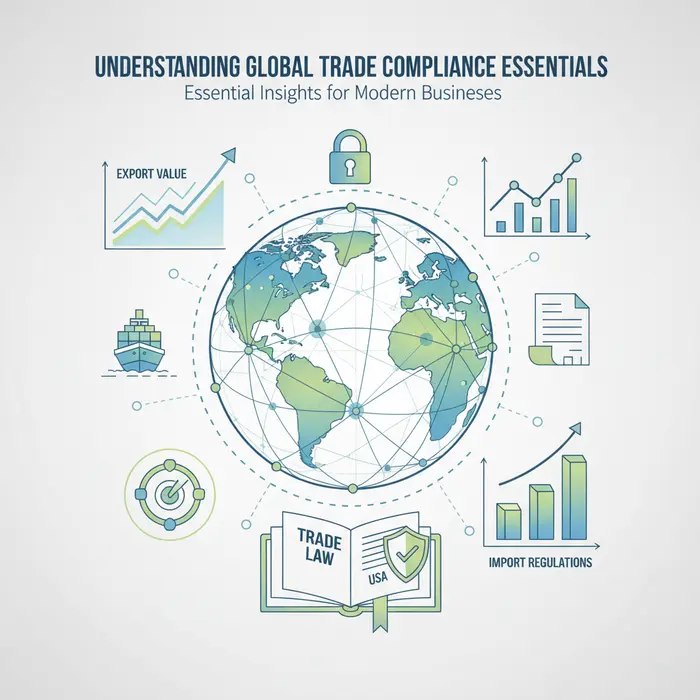
In today’s interconnected global economy, businesses routinely engage in international trade, opening vast opportunities but also encountering a complex web of regulations: Global Trade Compliance. This section will define global trade compliance, highlight its critical importance for international business growth, and detail the significant risks and severe consequences of non-compliance.
1. Defining ‘Global Trade Compliance’
Global Trade Compliance (GTC) involves adhering to a comprehensive set of international and national laws, regulations, and policies governing the cross-border movement of goods, services, and technology. It extends beyond simple tariffs and duties, encompassing diverse requirements designed for security, fair trade, environmental protection, and human rights. Key components include:
- Customs Regulations: Adherence to specific Customs clearance procedures for imports and exports, including accurate valuation, classification (HS codes), country of origin, and proper documentation.
- Export Controls & Sanctions: Regulations restricting the export or re-export of sensitive goods, software, and technology to specific destinations, entities, or end-users due to national security or foreign policy. This also includes compliance with broader economic sanctions and embargoes.
- Product Compliance & International product certification: Ensuring products meet the safety, health, environmental, and technical standards of the destination country, often requiring specific certifications (e.g., CE, UL).
- Anti-Bribery & Corruption: Compliance with laws like the FCPA, preventing illicit payments in international business.
Navigating these intricate requirements demands diligence, expert knowledge, and robust internal controls.
2. Why Compliance Matters for International Business Growth
For any business operating globally, prioritizing Global Trade Compliance is a strategic imperative that directly impacts growth, competitiveness, and sustainability. A strong compliance posture offers distinct advantages:
- Risk Mitigation: Proactive compliance significantly reduces the likelihood of costly fines, shipment delays, goods seizures, and legal action, safeguarding supply chains and financial stability.
- Ensured Market Access: Many international markets have strict entry requirements. Adhering to standards and local regulations, including International product certification, is often a prerequisite for selling products, ensuring legal access to target customers.
- Operational Efficiency: Well-defined compliance procedures and the strategic use of Trade compliance software can streamline operations. Automation reduces errors, accelerates documentation, and facilitates smoother customs clearances, leading to faster transit times and reduced administrative burdens.
- Enhanced Reputation & Trust: Companies known for rigorous adherence to trade laws build stronger relationships with customs authorities, logistics partners, and customers. This trust fosters preferred treatment, easier business expansion, and a stronger brand image globally.
Robust compliance is the bedrock for successful and sustainable international business growth, fostering resilience and opening doors to new opportunities.
3. Consequences of Non-Compliance: Fines, Delays, and Reputational Damage
Failure to comply with global trade regulations carries significant and often severe repercussions that can undermine a business’s financial health, operational stability, and brand integrity. The risks extend far beyond mere inconvenience:
- Hefty Financial Penalties: Violations can result in massive fines, often reaching millions of dollars, imposed by various government agencies. These can include statutory fines, civil penalties, and forfeiture of goods.
- Shipment Delays, Seizures, and Denials: Non-compliant shipments are frequently detained at borders, leading to costly delays, storage fees, and potential loss of goods. In severe cases, shipments may be seized outright. Repeated non-compliance can lead to denial of future import/export privileges.
- Legal Action and Criminal Charges: Serious violations, particularly those involving Export control regulations or sanctions breaches, can lead to criminal investigations and charges against individuals, including executives, resulting in imprisonment and professional ruin.
- Reputational Damage: News of non-compliance quickly spreads, eroding customer trust, damaging brand image, and hindering future business acquisition. Investor confidence can also plummet, impacting stock value and access to capital.
- Loss of Trade Privileges: For severe or repeated infractions, companies may face temporary or permanent bans on exporting or importing, effectively halting their international operations.
Actively mitigating these risks through a robust Global Trade Compliance program is not merely good practice; it is essential for survival and prosperity in the global marketplace.
Navigating International Product Certification
In today’s interconnected global marketplace, the opportunity to expand sales beyond domestic borders is immense. However, this expansion comes with a complex web of challenges, not least among them being Global Trade Compliance. Successfully selling goods in various global markets hinges on understanding and adhering to product-specific regulations and mandatory certifications. Neglecting these crucial steps can lead to severe penalties, product recalls, shipment delays, and reputational damage. This section explores the intricate landscape of international product certification, offering insights into key requirements and strategies for seamless market entry.
1. Key Certification Bodies and Standards (e.g., CE, FCC, UL)
The foundation of international market access lies in understanding the specific certifications required for your product. Different regions and product categories demand compliance with distinct standards, often overseen by various certification bodies. The CE Mark, for instance, is a mandatory conformity marking for products placed on the market in the European Economic Area (EEA), signifying that a product meets EU health, safety, and environmental protection standards. For electronic products targeting the United States market, compliance with the Federal Communications Commission (FCC) regulations is paramount. The FCC mark indicates that electromagnetic interference from a device is within limits approved by the Federal Communications Commission.
Similarly, Underwriters Laboratories (UL) certification, while voluntary, is widely recognized and trusted in North America as a mark of safety. UL develops standards and tests products, components, materials, and systems for safety. Other prominent certifications include TÜV (Germany), CSA (Canada), CCC (China Compulsory Certification), and EAC (Eurasian Conformity Mark) for the Eurasian Economic Union. Each of these certifications requires rigorous testing, documentation, and often factory inspections to ensure ongoing compliance. Understanding which certifications apply to your product and target market is the critical first step in international product certification.
2. Product Labeling and Documentation Requirements by Region
Beyond the core certifications, products must also meet specific labeling and documentation requirements that vary significantly from one region to another. Accurate product labeling is not merely a formality; it provides vital information to consumers and regulatory bodies about the product’s origin, safety, and intended use. Common labeling requirements include country of origin, manufacturer’s name and address, safety warnings, hazard symbols, and instructions for use. For instance, the EU’s REACH regulation imposes specific requirements for chemical substances, which must be reflected in product documentation and safety data sheets. In some regions, labels must be provided in multiple local languages.
Equally critical are the comprehensive documentation requirements. This typically includes a technical file detailing the product’s design, manufacturing processes, risk assessments, test reports, and declarations of conformity. These documents serve as proof that a product meets the necessary standards and are often subject to review during customs clearance procedures or market surveillance activities. Maintaining meticulously organized and up-to-date documentation is essential for demonstrating due diligence and ensuring smooth entry into new markets. The absence or inaccuracy of required documentation can lead to significant delays, fines, or even rejection of goods at the border, underscoring the importance of precise record-keeping in global trade compliance.
3. Strategies for Efficient Certification Processes
Navigating the labyrinth of international product certification can be daunting, but strategic planning can streamline the process. One of the most effective strategies is to integrate compliance considerations early in the product development lifecycle. Proactive engagement with regulatory experts and testing laboratories can identify potential compliance issues before they become costly design changes. Establishing a dedicated internal team or appointing a compliance officer responsible for overseeing certification processes can centralize efforts and expertise.
Leveraging technology is another key strategy for efficiency. Trade compliance software can automate many aspects of the certification process, from managing documentation and tracking deadlines to monitoring changes in export control regulations. Such software can help businesses maintain a clear overview of requirements across multiple markets and product lines, reducing manual errors and improving response times. Furthermore, building strong relationships with accredited testing houses and certification bodies can accelerate the testing and approval phases. Finally, staying informed about evolving regulations and political landscapes is crucial. Regular audits of compliance processes and documentation ensure ongoing adherence, safeguarding against unforeseen challenges and ensuring sustained market access for your products.
Streamlining Customs Clearance Procedures
Navigating the complexities of international trade requires a meticulous approach to customs clearance. Learning the critical steps and essential documentation needed is paramount to ensuring smooth customs processing, avoiding costly delays, and mitigating potential penalties. Effective Global Trade Compliance is not just about adhering to rules; it’s about optimizing your supply chain and protecting your business’s reputation and bottom line. From accurate product classification to understanding duties and tariffs, mastering these procedures is essential for any business engaged in cross-border commerce.

1. Required Documentation: Invoices, Packing Lists, Certificates of Origin
The foundation of efficient customs clearance lies in precise and complete documentation. Key documents include the commercial invoice, which details the transaction between the exporter and importer; the packing list, providing a comprehensive inventory of goods within each package; and the certificate of origin, verifying the country where the goods were produced. Beyond these core documents, specific products or destination countries may require additional permits or licenses, such as phytosanitary certificates for agricultural products or import licenses for controlled goods. Inaccurate or missing documentation is a leading cause of customs delays, fines, and even seizure of goods. Businesses should implement robust internal controls and potentially leverage trade compliance software to manage and track these critical documents, ensuring all necessary paperwork is prepared correctly and submitted on time. Understanding the nuances of these requirements is a fundamental aspect of effective Customs clearance procedures.
2. Harmonized System (HS) Codes and Product Classification Accuracy
One of the most critical steps in customs clearance is the accurate classification of goods using Harmonized System (HS) codes. The HS code is a globally standardized system of names and numbers for classifying traded products, developed and maintained by the World Customs Organization (WCO). These codes determine the applicable duties, taxes, and import/export regulations, including whether specific products are subject to Export control regulations or require special International product certification. Misclassification, whether intentional or accidental, can lead to severe penalties, delays, and additional costs. Companies must invest in training for their compliance teams or utilize specialized software to ensure the correct HS code is applied to every product. Regular audits of product classifications are also advisable to adapt to changes in product specifications or regulatory updates, maintaining high standards of Global Trade Compliance.
3. Managing Duties, Taxes, and Tariffs Effectively
Understanding and accurately calculating duties, taxes, and tariffs is vital for cost management and compliance. These financial obligations are typically determined by the product’s HS code, its declared value, and the country of origin and destination. Various trade agreements, such as free trade agreements, can significantly reduce or eliminate these costs, provided the goods meet specific rules of origin criteria and the proper documentation is presented. Businesses need to stay informed about these agreements and their potential benefits. Furthermore, understanding incoterms (International Commercial Terms) is crucial as they define the responsibilities of buyers and sellers for the delivery of goods, including who is responsible for paying duties and taxes. Employing sophisticated trade compliance software can help automate the calculation of these costs and identify potential savings opportunities, thereby enhancing the efficiency of Customs clearance procedures. Proactive management of these financial aspects is a cornerstone of robust Global Trade Compliance.
Mastering Export Control Regulations
Delve into the crucial rules governing the export of sensitive goods, technologies, and services, designed to prevent illicit trade and protect national security. In today’s interconnected world, navigating the complexities of Global Trade Compliance is more critical than ever. Businesses engaging in international trade must possess a deep understanding of export control regulations to avoid severe penalties, safeguard their reputation, and contribute to global security. These regulations are not merely bureaucratic hurdles; they are vital instruments for preventing the proliferation of weapons, countering terrorism, and upholding international stability.
1. Understanding Dual-Use Goods and Technologies
A cornerstone of export control is the concept of “dual-use” goods and technologies – items, software, or technology with both legitimate commercial applications and potential military or proliferation uses. Identifying and classifying such items is often the first critical step in ensuring compliance. Examples include advanced electronics, specific chemicals, certain software, and specialized machinery, even extending to intangible technology transfers via blueprints or expert consultation.
International frameworks like the Wassenaar Arrangement guide the control of these items, while national regulations, such as the U.S. Export Administration Regulations (EAR), provide detailed guidelines for classification. Businesses must accurately determine if their products fall under these categories, a process often requiring detailed technical specifications and, at times, external expert consultation for precise International product certification. Misclassification can lead to significant compliance breaches, underscoring the intricate nature of export control regulations.
2. Embargoes, Sanctions, and Restricted Parties Lists (e.g., EAR, ITAR)
Beyond dual-use goods, export control necessitates adherence to various embargoes, sanctions, and restricted parties lists. Governments and international bodies impose these measures to exert political pressure, combat terrorism, or address national security concerns, often restricting trade entirely or prohibiting transactions with designated entities or individuals.
Businesses must diligently screen all parties in an export transaction—customers, end-users, intermediaries, and supply chain partners—against numerous restricted parties lists. Major lists include the U.S. Department of Commerce’s Entity List, Treasury’s Specially Designated Nationals (SDN) List, and various UN and EU sanction lists. Failure to screen results in severe penalties and reputational damage.
Two prominent U.S. frameworks are key: the Export Administration Regulations (EAR), overseen by the Bureau of Industry and Security (BIS), and the International Traffic in Arms Regulations (ITAR), administered by the U.S. Department of State’s DDTC. EAR governs most commercial and dual-use items via the Commerce Control List (CCL), while ITAR controls defense articles on the U.S. Munitions List (USML), generally requiring stricter controls. Navigating these rules necessitates specialized Customs clearance procedures and is greatly aided by robust Trade compliance software for screening and classification.
3. Developing an Internal Export Control Program
Given the complexity and potential ramifications of non-compliance, establishing a robust internal export control program is not just advisable but essential for any company engaged in international trade. Such a program demonstrates a commitment to Global Trade Compliance and helps mitigate risks effectively. Key components include:
- Management Commitment: Ensuring top-level support and resources.
- Risk Assessment: Regularly evaluating export activities for vulnerabilities.
- Policies and Procedures: Documenting clear guidelines for all export process stages.
- Training: Comprehensive, ongoing training for relevant employees.
- Classification & Licensing: Rigorous processes for accurately classifying goods (e.g., ECCNs/USML) and determining license requirements.
- Screening: Integrating automated systems for screening all transaction parties; many advanced trade compliance software solutions offer this.
- Recordkeeping: Meticulous records of all export transactions, licenses, and classifications.
- Auditing & Monitoring: Regular internal reviews to ensure adherence and identify improvements.
A well-structured export control program prevents costly fines and penalties, enhances a company’s reputation, and fosters smoother global operations and sustainable business growth.
Leveraging Trade Compliance Software for 2025
As global supply chains become increasingly intricate and regulatory frameworks evolve at an unprecedented pace, businesses face mounting pressure to navigate the complexities of international trade. In 2025, proactive management of Global Trade Compliance is not merely a legal obligation but a strategic imperative. The sheer volume of data, the myriad of international agreements, and the dynamic nature of tariffs and sanctions demand a sophisticated approach. Manual processes, once sufficient, are now liabilities, prone to error, delays, and significant financial penalties. This section explores how advanced technology, specifically modern Trade compliance software, can automate and simplify these complex compliance processes, significantly reducing risk and dramatically improving operational efficiency for businesses worldwide.
The landscape of global commerce is more interconnected yet more fragmented than ever. Companies engaged in cross-border trade must contend with diverse national laws, regional economic blocs, and multilateral agreements, each dictating specific requirements for everything from product safety to origin declarations. Managing this intricate web manually can lead to missed deadlines, incorrect classifications, and severe fines or even trade restrictions. Embracing intelligent software solutions is no longer a luxury but a necessity to maintain competitiveness and ensure business continuity in this challenging environment. These tools provide the agility and precision required to adapt to rapidly changing regulations, such as new export control regulations, and safeguard against disruptions, making compliance a seamless part of daily operations rather than a recurring hurdle.

1. Benefits of Automation in Global Trade Compliance
Automation stands at the forefront of revolutionizing global trade compliance. By automating routine tasks, businesses can significantly reduce human error, which is a common source of costly penalties and delays. Software solutions can automatically screen trading partners against denied party lists, verify product classifications (Harmonized System codes), and manage documentation required for various trade agreements. This not only accelerates Customs clearance procedures but also ensures consistency and accuracy across all shipments. The efficiency gains translate directly into reduced operational costs, as less time and fewer resources are expended on repetitive, manual data entry and verification. Furthermore, automation provides an invaluable audit trail, offering complete transparency and accountability, which is crucial during compliance audits. This proactive approach to compliance minimizes risks associated with non-adherence and fosters a more secure and predictable international trading environment.
2. Key Features of Modern Compliance Software Solutions
Modern trade compliance software solutions are sophisticated platforms designed to address the full spectrum of global trade challenges. Key features typically include automated product classification, often leveraging AI and machine learning to assign correct HS codes, ECCNs (Export Control Classification Numbers), and tariff codes, thereby streamlining the process and reducing classification errors. Denied party screening is another critical component, continuously monitoring global watchlists to ensure transactions are not conducted with prohibited entities. License management features automate the application, tracking, and renewal of import/export licenses, crucial for navigating complex export control regulations. Beyond these, robust solutions offer comprehensive audit trails and reporting capabilities, providing real-time visibility into compliance status and facilitating rapid responses to inquiries. Integration capabilities with existing Enterprise Resource Planning (ERP) and Transportation Management Systems (TMS) are also vital, ensuring a seamless flow of data across an organization’s operational ecosystem. Moreover, these systems are increasingly incorporating modules for managing International product certification requirements, ensuring goods meet diverse market standards before shipment.
3. Choosing the Right Software for Your Business Needs
Selecting the appropriate global trade compliance software is a critical decision that requires careful consideration of a business’s unique operational needs and future growth ambitions. Scalability is paramount; the chosen solution must be able to grow with your business, accommodating increased transaction volumes and expanding into new markets. Seamless integration with existing IT infrastructure, such as ERP, CRM, and TMS systems, is essential to avoid data silos and ensure a unified operational view. User-friendliness and intuitive interfaces are also important for adoption and efficiency, minimizing training time and maximizing productivity. Beyond features, evaluate the vendor’s reputation, customer support, and commitment to regular updates to align with evolving regulations. Businesses should assess their specific requirements regarding product types, trade lanes, and the complexity of their supply chain. For instance, a company dealing with highly regulated goods might prioritize strong capabilities in customs clearance procedures and license management, while another might focus on advanced analytics for duty optimization. A thorough needs analysis, coupled with vendor demonstrations and reference checks, will guide the selection of a solution that not only mitigates compliance risks but also transforms compliance into a competitive advantage.
Partner with Vietnam’s Leading Suppliers
Looking for reliable suppliers in Vietnam? Contact VietnamSuppliers.com today to connect with verified manufacturers and exporters across all industries.
—————————————
References
– U.S. Bureau of Industry and Security (BIS) Export Administration Regulations: https://www.bis.doc.gov/index.php/regulations/export-administration-regulations-ear
– CE Marking European Commission: https://ec.europa.eu/growth/single-market/ce-marking_en
– Harmonized System (HS) overview by WCO: https://www.wcoomd.org/en/topics/nomenclature/overview.aspx
– Bureau of Industry and Security (BIS): https://www.bis.doc.gov/
– Bureau of Industry and Security (BIS): https://www.bis.doc.gov/