What is Customs Clearance & Why it Matters
In the intricate world of global trade, the seamless movement of goods across international borders is paramount for businesses, consumers, and national economies alike. At the heart of this complex logistical ballet lies Customs Clearance International Trade – a critical, often underestimated, process that dictates whether goods reach their destination on time, within budget, and in compliance with myriad regulations. Far more than just paperwork, customs clearance is the legal and administrative gateway through which all imported and exported goods must pass, ensuring governmental oversight, revenue collection, and adherence to trade laws. Understanding its mechanics and profound importance is essential for anyone involved in cross-border commerce, from small businesses importing components to multinational corporations managing vast global supply chains.
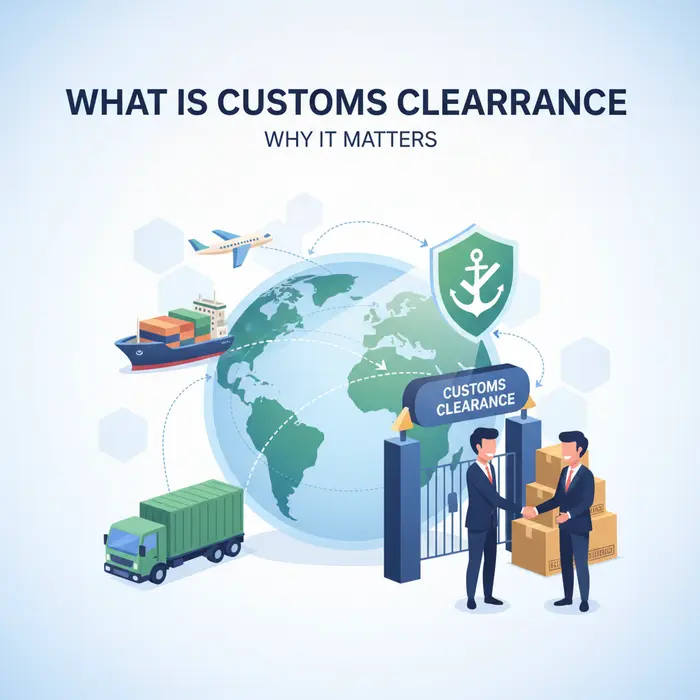
1. Definition of Customs Clearance
Customs clearance refers to the process of obtaining official permission from the customs authorities of a country for goods to either enter (import) or leave (export) its customs territory. This procedure involves a series of steps designed to ensure that all shipments comply with the importing and exporting country’s laws, regulations, duties, and taxes. Essentially, it’s the gateway every international shipment must navigate. The process typically requires the accurate submission of extensive import customs clearance documents, such as commercial invoices, packing lists, bills of lading or air waybills, certificates of origin, and sometimes specific licenses or permits depending on the nature of the goods. For instance, navigating Export Customs Procedures Vietnam for textiles requires precise documentation to meet both Vietnamese export regulations and the import requirements of the destination country. Failure to provide accurate or complete documentation can lead to significant delays, penalties, or even confiscation of goods.
2. Importance for Global Supply Chains
The significance of customs clearance extends far beyond individual shipments; it forms the backbone of efficient global supply chains. In an era where just-in-time inventory and rapid market response are competitive necessities, delays at customs can have cascading negative effects. A hold-up in a single component shipment can halt an entire production line, leading to missed deadlines, increased storage costs, and ultimately, dissatisfied customers and lost revenue. Customs clearance acts as a vital control point, ensuring not only the collection of Customs Duties and Taxes Calculation for governments but also compliance with various international trade agreements, health and safety standards, environmental regulations, and security protocols. It helps prevent the entry of prohibited items, protects intellectual property, and safeguards national security. Smooth and predictable customs processes enable businesses to plan effectively, optimize their logistics, and maintain competitive pricing, thereby fostering robust international trade and economic growth.
3. Key Players in the Process
Navigating the complexities of customs clearance involves several critical stakeholders, each playing a distinct role in ensuring compliance and efficiency:
- Importers and Exporters: These are the primary parties responsible for the goods. They bear the ultimate responsibility for ensuring that their shipments comply with all relevant import and export laws, including providing accurate information and settling any applicable Customs Duties and Taxes Calculation.
- Customs Authorities: These government agencies (e.g., U.S. Customs and Border Protection, Vietnam Customs) are tasked with enforcing trade laws, collecting duties and taxes, and ensuring the security of national borders. They review documentation, inspect goods, and grant final clearance.
- Customs Brokers: Licensed professionals specializing in customs procedures, brokers act as intermediaries between importers/exporters and customs authorities. They are experts in tariff classifications, valuation rules, and the constantly evolving regulatory landscape. Their services include preparing and submitting documentation, calculating duties, arranging for inspections, and resolving any issues that arise. Many Freight Forwarding Customs Brokerage firms offer these specialized services, leveraging their expertise to streamline the process and minimize delays.
- Freight Forwarders: While often working hand-in-hand with customs brokers (or offering brokerage services themselves), freight forwarders primarily handle the logistics of moving goods from origin to destination. They arrange transportation, warehousing, and often manage the entire shipping process, including coordination with customs brokers.
- Carriers: Shipping lines, airlines, trucking companies, and railways are responsible for the physical transportation of goods and often play a role in providing manifest information to customs authorities.
The collaborative effort of these players is indispensable for successful Customs Clearance International Trade. By understanding their roles and leveraging expert services like freight forwarding customs brokerage, businesses can navigate the global marketplace with greater confidence and efficiency, transforming potential bottlenecks into seamless transitions.
Essential Documents for Import Customs Clearance
Navigating Customs Clearance International Trade is a complex process demanding meticulous attention to detail, especially concerning documentation. Inadequate or incorrect paperwork is a primary cause of delays, penalties, and even seizure of goods, leading to significant financial losses and operational disruptions for businesses. This section provides a detailed overview of the mandatory import customs clearance documents necessary for the successful entry of goods into any country, ensuring compliance and preventing costly setbacks. Understanding these requirements is crucial for businesses engaged in global trade, whether dealing with export customs procedures Vietnam or those of any other major trading nation.
Efficient customs clearance international trade hinges on the accurate preparation and timely submission of a comprehensive set of documents. Each document serves a unique purpose, contributing to the overall transparency and legality of the import transaction. To further understand global trade documentation standards, resources like the International Trade Centre (ITC) offer comprehensive guidance on best practices.
Commercial Invoice & Packing List
The Commercial Invoice is arguably the most critical document in the import customs clearance process. It serves as a bill for the goods from the seller to the buyer and provides customs authorities with essential information about the transaction. Key details include the names and addresses of the seller and buyer, an invoice number and date, purchase order number, terms of sale (Incoterms), a detailed description of the goods (including their Harmonized System or HS Code), quantity, unit price, total value, and currency. The declared value on the commercial invoice is crucial for accurate customs duties and taxes calculation, and any discrepancies can lead to significant delays or penalties.
Complementing the commercial invoice is the Packing List. While it doesn’t contain value information, it provides a detailed breakdown of the contents of each package within a shipment. This includes the marks and numbers on the packages, the total number of packages, the quantity of each item per package, and the gross and net weights, along with dimensions. The packing list is indispensable for customs officials during inspection, allowing them to verify the cargo against the commercial invoice and ensure accurate handling and storage. It’s also a vital document for freight forwarding customs brokerage operations, aiding in cargo segregation and efficient warehouse management.
Bill of Lading/Air Waybill
These documents serve as contracts of carriage between the shipper and the carrier, receipts for the goods, and for ocean freight, can also act as documents of title. The choice between a Bill of Lading (B/L) and an Air Waybill (AWB) depends on the mode of transport.
- Bill of Lading (B/L): Used exclusively for ocean freight, a B/L details the shipper, consignee, notify party, vessel name, port of loading and discharge, and a description of the goods, including package count, weight, and cubic measurement. A negotiable B/L grants the holder ownership of the goods, making it a critical financial instrument. It serves as undeniable proof of shipment and is essential for the consignee to claim possession of the goods at the destination port.
- Air Waybill (AWB): Employed for air freight, an AWB is similar to a B/L in its role as a contract of carriage and receipt for goods, but it is generally non-negotiable and does not confer title to the goods. It specifies the airline, flight number, airport codes, and details of the cargo. The AWB facilitates smooth air cargo movement, provides tracking capabilities, and establishes the responsibilities of the parties involved. Both B/L and AWB are foundational import customs clearance documents, verifying that the goods were indeed shipped and are en route to the importer.
Certificates of Origin & Inspection
The Certificate of Origin (COO) is a crucial document that declares the country where the goods were wholly obtained, produced, or manufactured. COOs come in two main types: non-preferential (for general trade) and preferential. Preferential COOs are vital for claiming reduced or zero tariffs under Free Trade Agreements (FTAs) or other preferential trade programs. Without a valid COO, importers may be subject to higher tariffs, significantly impacting the overall landed cost of goods and complicating customs duties and taxes calculation. For example, goods originating from Vietnam might qualify for preferential treatment under certain agreements if accompanied by the correct COO, underscoring its importance in export customs procedures Vietnam.
A Certificate of Inspection (COI) verifies that goods conform to specified quality, quantity, and other contractual requirements before shipment. These certificates are typically issued by independent third-party inspection agencies. COIs protect buyers from receiving non-conforming goods and help ensure compliance with regulatory standards in the importing country, especially for sensitive products like food, pharmaceuticals, or certain industrial equipment that require specific health, safety, or environmental certifications. While not universally mandatory, many countries and specific commodity types require a COI as part of their import customs clearance documents to mitigate risks and ensure consumer safety.
Mastering the preparation and submission of these essential documents is not merely a formality but a strategic imperative for efficient Customs Clearance International Trade. Businesses that prioritize accurate and complete import customs clearance documents can significantly mitigate risks, avoid costly delays, and ensure a smooth, predictable supply chain. Engaging with experienced freight forwarding customs brokerage services can also provide invaluable expertise in navigating these complex requirements, ultimately contributing to successful international trade operations and sustained business growth.
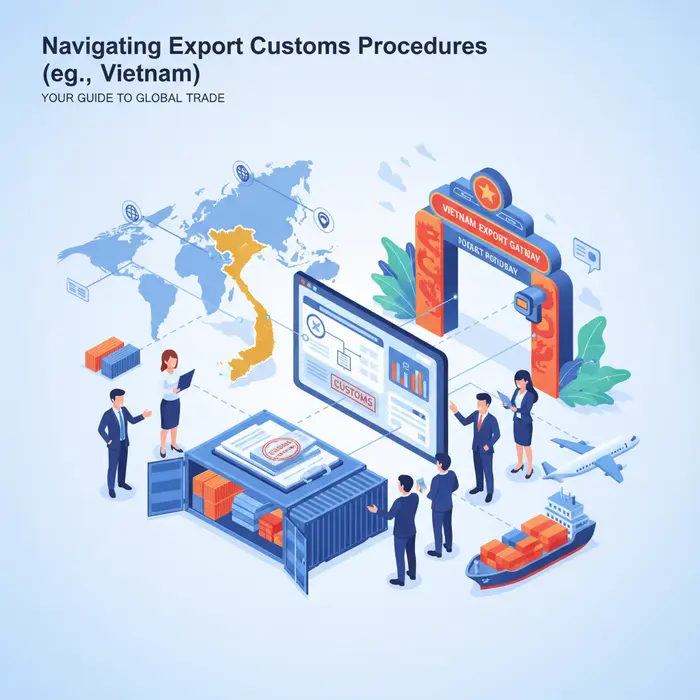
Navigating Export Customs Procedures (e.g., Vietnam)
Engaging in international trade, particularly exporting goods, demands a meticulous understanding of Customs Clearance International Trade procedures. This guide will navigate the complexities involved in moving products across borders, with a specific focus on the requirements and regulations for Export customs procedures Vietnam. Mastering these nuances is critical for businesses aiming for efficiency and compliance in the global marketplace, ensuring smooth operations and avoiding costly delays.
1. General Export Declaration Process
The journey of goods from producer to international buyer involves standardized steps known as the general export declaration process. This ensures all outgoing shipments comply with the exporting country’s regulations. Typically, it begins with preparing essential documentation: commercial invoice, packing list, and bill of lading or air waybill. Export licenses or permits might also be required. An export customs declaration, detailing goods, value, origin, and destination, is then submitted to the customs authority. Officials review the declaration, sometimes conducting physical inspections. While many countries exempt exports from duties, any applicable internal taxes or specific export duties must be settled. Upon successful verification and payment, customs grants clearance, allowing goods to proceed. Accurate navigation of this initial phase is paramount for effective Customs Clearance International Trade.
2. Specifics for Export from Vietnam
While global export frameworks exist, countries like Vietnam introduce unique requirements. For businesses optimizing Export customs procedures Vietnam, understanding these specifics is crucial. Vietnamese customs operates through an electronic system (VNACCS/VCIS), requiring digital submission of export declarations. Key documents include the E-Customs Declaration, commercial invoice, packing list, bill of lading, and potentially certificates of origin, quality inspection, or phytosanitary. Many goods require standard export licenses, while sensitive items (e.g., certain minerals) may need permits from ministries like MOIT. Export duties are generally low or zero for most manufactured and agricultural products, promoting exports. However, some raw materials or natural resources may incur tariffs. Businesses in Vietnam’s industrial parks or export processing zones often benefit from streamlined procedures and tax incentives. Staying informed about these specific regulations is vital for seamless operations from Vietnam, aligning with global trade regulations.
3. Compliance with Export Regulations
Ensuring strict compliance with export regulations is not merely a formality but critical for successful international trade. Accurate classification of goods using Harmonized System (HS) codes is foundational; incorrect classification leads to penalties or delays. Exporters must be aware of prohibited and restricted goods, which vary by country. For example, certain dual-use items or cultural relics might be restricted from export from Vietnam without special permits. Understanding rules of origin is also crucial for leveraging preferential trade agreements. Non-adherence results in severe penalties, including fines, confiscation, and reputational damage. This is where a reliable Freight forwarding customs brokerage proves invaluable. These specialists navigate intricate documentation, ensuring all necessary Import customs clearance documents (paralleling export requirements in accuracy) are prepared, and that any potential Customs duties and taxes calculation (even if zero for exports, internal taxes might apply) are handled efficiently. Their expertise streamlines the process, mitigating risks and ensuring goods reach their destination without legal or logistical hitches.
In summary, successful international exporting, particularly from countries like Vietnam, hinges on a deep understanding of evolving customs procedures and regulations. From meticulous documentation to compliance with specific national requirements, every step demands precision. Partnering with experienced professionals who understand both general and Export customs procedures Vietnam can significantly de-risk operations, ensuring efficiency and fostering long-term success in the competitive global market.
Calculating Customs Duties and Taxes
Navigating the complexities of international trade requires a precise understanding of the financial obligations involved, particularly concerning customs duties, tariffs, and taxes. Unexpected costs can significantly impact profitability and supply chain efficiency. This guide provides essential insights into accurately calculating these charges, ensuring smoother Customs Clearance International Trade and helping businesses avoid unforeseen expenses during import and export operations, especially for regions like Export customs procedures Vietnam.
1. Understanding Tariffs and HS Codes
At the core of customs duty calculation are tariffs, which are taxes levied by governments on imported goods. Their primary purposes include generating revenue and protecting domestic industries from foreign competition. The rate of duty applicable to your shipment is primarily determined by two crucial factors: the type of product and the country of origin. This is where the Harmonized System (HS) Code becomes indispensable.
The HS Code is a globally standardized system of names and numbers for classifying traded products. Developed and maintained by the World Customs Organization (WCO), these six-digit codes are used by customs authorities worldwide to identify products for duty and tax purposes. Many countries extend this to eight or ten digits for further specificity. Correctly identifying the HS Code for your goods is paramount. An incorrect classification can lead to overpayment of duties, delays, or even penalties. Businesses can find HS codes through national customs websites, product databases, or by consulting with experienced freight forwarders and customs brokers who specialize in Customs duties and taxes calculation.
2. VAT, Excise Taxes & Other Fees
Beyond basic tariffs, international shipments are often subject to various other taxes and fees that can substantially add to the overall landed cost. The most common of these is Value Added Tax (VAT), or Goods and Services Tax (GST) in some countries. VAT is a consumption tax charged on goods and services at each stage of the supply chain. For imports, VAT is typically calculated on the CIF (Cost, Insurance, Freight) value of the goods, plus any applicable customs duties. Its rate varies significantly by destination country.
Excise taxes are another specific type of tax applied to certain goods, often those considered non-essential, luxury, or potentially harmful. Examples include alcohol, tobacco, petroleum products, and certain luxury vehicles. These taxes are often specific amounts per unit or a percentage of the value, depending on the product and country. Furthermore, shippers may encounter other charges such as anti-dumping duties (imposed on goods priced below fair market value), countervailing duties (on goods subsidized by foreign governments), administrative fees, storage fees, or inspection charges. Understanding the full spectrum of these potential costs is vital for accurate budgeting and to avoid surprises when managing Import customs clearance documents.
3. Strategies for Duty Optimization
Strategic planning and due diligence can significantly optimize duty expenses, turning potential liabilities into competitive advantages. One of the most effective strategies is meticulous and accurate HS Code classification. Investing time and resources into ensuring the correct classification can prevent overpayment and compliance issues, offering a direct path to Customs duties and taxes calculation efficiency.
Leveraging Free Trade Agreements (FTAs) is another powerful tool. Countries often enter into bilateral or multilateral FTAs to reduce or eliminate tariffs on goods traded between member nations. By understanding the specific Rules of Origin (ROO) requirements for these agreements, businesses can qualify their products for preferential duty rates. Examples include the CPTPP or the EVFTA for trade involving Vietnam. Additionally, exploring customs programs such as duty drawback, which allows for a refund of duties paid on imported goods that are subsequently exported, or utilizing bonded warehouses, which permit goods to be stored without immediate payment of duties, can provide significant financial relief. Given the complexity, partnering with experienced professionals for Freight forwarding customs brokerage is highly recommended. These experts can help identify optimization opportunities, ensure compliance, and streamline your international shipping processes, protecting your bottom line from unexpected customs costs.
The Role of Freight Forwarding & Customs Brokerage
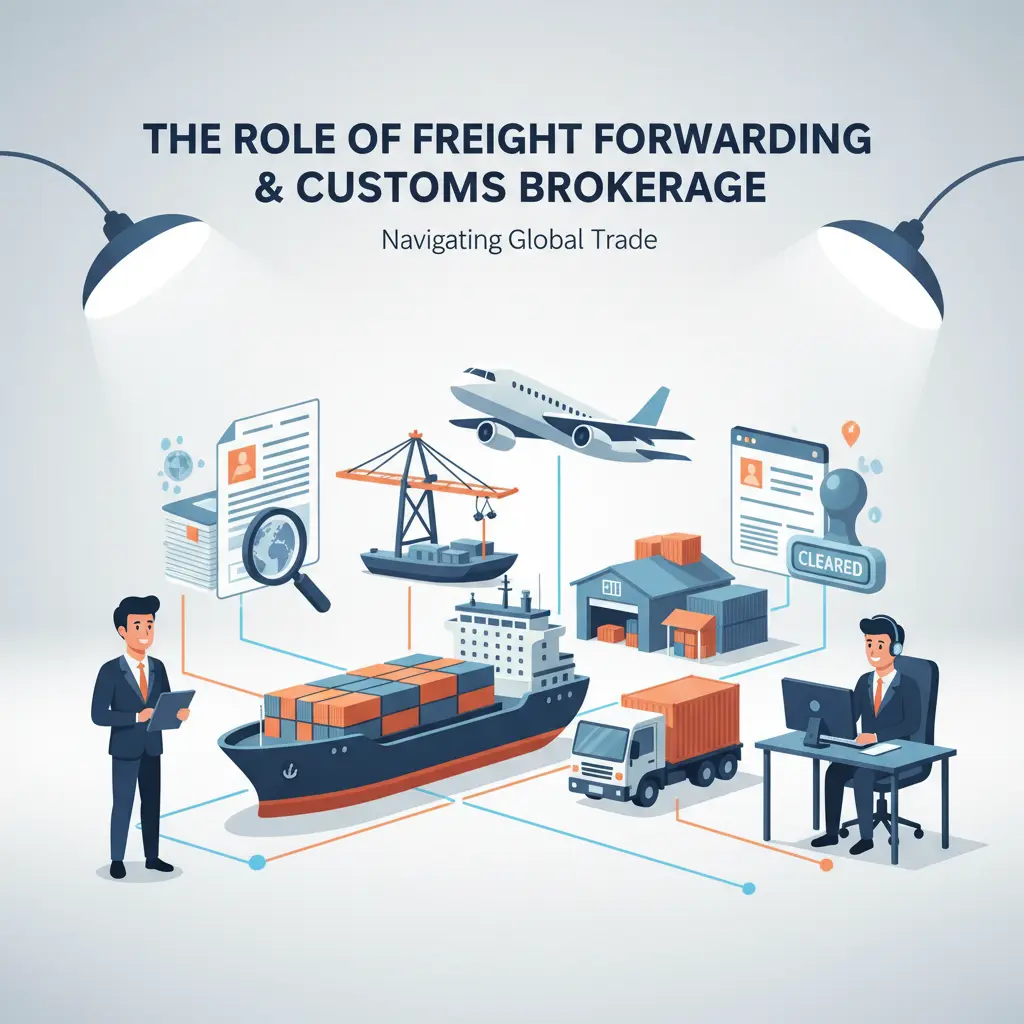
In the intricate world of global commerce, the movement of goods across international borders is a complex ballet of logistics, documentation, and regulatory compliance. Businesses engaging in customs clearance international trade often face significant hurdles, from navigating diverse legal frameworks to ensuring timely delivery. This is where freight forwarders and customs brokers become indispensable partners, acting as crucial intermediaries that streamline the entire process, offer specialized expertise, and dramatically reduce the administrative burdens for companies looking to expand their reach globally.
Their collective role is not merely transactional; it’s strategic, enabling businesses to focus on their core competencies while these experts manage the labyrinthine requirements of cross-border trade. Understanding their distinct yet interconnected functions is key to unlocking efficiency and compliance in international shipping.
1. What is a Freight Forwarder?
A freight forwarder is essentially an orchestrator of logistics, serving as an intermediary between the shipper (exporter/importer) and various transportation services. They do not own the ships, planes, or trucks that move the cargo but instead leverage their extensive network and expertise to arrange the most efficient and cost-effective transportation solutions. Their services encompass a wide range of activities:
- Logistics Planning: Developing comprehensive plans for the movement of goods from origin to destination.
- Carrier Selection: Choosing the best shipping method (air, sea, road, rail) and carrier based on cargo type, destination, urgency, and budget.
- Warehousing and Distribution: Arranging storage solutions and last-mile delivery.
- Consolidation: Combining smaller shipments from multiple clients into larger, more economical loads.
- Documentation: Preparing and processing crucial shipping documents, such as bills of lading, airway bills, and export declarations.
- Tracking and Communication: Providing real-time updates on shipment status and managing communication with all parties involved.
By centralizing the management of the shipping process, freight forwarders reduce complexity for businesses, ensuring that goods reach their destination smoothly and on schedule, which is vital for effective customs clearance and global supply chain management.
2. Benefits of a Customs Broker
While a freight forwarder handles the physical movement of goods, a customs broker focuses on the legal and regulatory aspects of crossing international borders. Customs brokers are licensed professionals with in-depth knowledge of customs laws, tariffs, and trade regulations specific to various countries. Their primary role is to act as an agent for importers and exporters, ensuring compliance with all governmental requirements and facilitating the customs clearance international trade process. Key benefits include:
- Expertise in Regulations: Navigating the ever-changing landscape of international trade laws, including those for specific regions like export customs procedures Vietnam.
- Documentation Accuracy: Preparing and submitting precise import customs clearance documents, such as customs declarations, commercial invoices, packing lists, and certificates of origin, minimizing delays and penalties.
- Tariff Classification and Valuation: Correctly classifying goods using the Harmonized System (HS) codes and accurately determining their dutiable value, which is critical for customs duties and taxes calculation.
- Compliance Assurance: Ensuring that goods meet all import/export restrictions, quotas, and specific agency requirements (e.g., FDA, USDA), thereby preventing costly fines, seizures, or rejections.
- Risk Mitigation: Identifying potential compliance risks and proactively addressing them to avoid disruptions in the supply chain.
- Duty Management: Advising on duty relief programs, free trade agreements, and other opportunities to reduce landed costs.
A proficient customs broker saves businesses time, money, and stress by ensuring adherence to complex rules, allowing goods to clear customs efficiently and without incident. This expertise is crucial for any business engaged in international trade, safeguarding against potential legal and financial pitfalls.
3. Choosing the Right Partner
Selecting the ideal freight forwarding customs brokerage partner is a critical decision that can significantly impact a business’s international operations. When evaluating potential partners, consider the following factors:
- Experience and Reputation: Look for companies with a proven track record in your specific industry or target markets. Reputable firms often have long-standing relationships with carriers and customs authorities.
- Comprehensive Services: Ideally, choose a partner that offers both freight forwarding and customs brokerage services under one roof, providing a seamless, integrated solution.
- Global Network: A strong international network indicates capabilities for handling diverse trade lanes and managing complex cross-border logistics effectively.
- Technology and Transparency: Modern forwarders and brokers utilize advanced technology for tracking, documentation, and communication, offering clients greater visibility and control over their shipments.
- Compliance Expertise: Ensure they have up-to-date knowledge of global and local customs regulations, trade agreements, and specific product requirements. The World Customs Organization (WCO) provides valuable resources for understanding international customs standards.
- Communication and Customer Service: A responsive and proactive partner who communicates clearly and regularly is invaluable for managing expectations and resolving potential issues swiftly.
By carefully evaluating these aspects, businesses can forge a partnership that not only simplifies their international shipping but also enhances their competitive edge through efficient, compliant, and cost-effective global trade operations.
Partner with Vietnam’s Leading Suppliers
Looking for reliable suppliers in Vietnam? Contact VietnamSuppliers.com today to connect with verified manufacturers and exporters across all industries.
—————————————
References
– WTO Agreement on Trade Facilitation: https://www.wto.org/english/tratop_e/tradfa_e/tradfa_e.htm
– International Trade Centre (ITC) Trade Documentation: https://www.intracen.org/trade-support/trade-documentation/
– Trade Facilitation – World Trade Organization: https://www.wto.org/english/tratop_e/tradfa_e/tradfa_e.htm
– World Customs Organization (WCO): https://www.wcoomd.org/en/topics/nomenclature/instrument-and-tools/hs-nomenclature-2022/overview.aspx
– World Customs Organization: https://www.wcoomd.org/