The Evolving Landscape of Global Supply Chain Quality
The modern global supply chain is a labyrinth of interconnected processes, spanning continents and diverse regulatory environments. In this intricate web, maintaining consistent product and service quality is no longer just a best practice; it has become a fundamental pillar of business survival and growth. Current challenges, ranging from geopolitical shifts to rapidly escalating consumer demands, underscore the increasing importance of robust Global Supply Chain Quality Assurance in international trade and manufacturing. Businesses must navigate a complex terrain where a single lapse in quality can trigger devastating consequences, from recalls and legal battles to irreparable brand damage. This section delves into the critical factors shaping the future of supply chain quality and the indispensable role of proactive quality management strategies.

1. Rising Consumer Expectations and Brand Reputation
In today’s hyper-connected world, consumers are more informed and empowered than ever before. Access to online reviews, social media platforms, and instant information means that product defects or quality inconsistencies can rapidly go viral, eroding trust and damaging brand reputation almost instantaneously. This heightened scrutiny places immense pressure on companies to ensure impeccable quality at every stage of their global supply chain. Brands that consistently deliver high-quality products build strong loyalty and positive word-of-mouth, which are invaluable assets in competitive markets. Conversely, even minor quality issues can lead to significant financial losses from returns, warranty claims, and decreased sales. Therefore, prioritizing comprehensive quality control, from raw material sourcing to final Pre-Shipment Quality Inspection, is not merely about meeting minimum standards but about exceeding expectations to safeguard and enhance brand equity. Companies that invest in reliable International Factory Audit Services are better positioned to guarantee that products arriving on shelves meet the stringent quality benchmarks consumers demand.
2. Geopolitical Volatility and its Impact on Sourcing
The global geopolitical landscape is a constant flux, marked by trade wars, tariffs, political instability, and even pandemics, all of which profoundly impact international sourcing and manufacturing. Such volatility introduces significant risks to supply chain continuity and, consequently, to product quality. Disruptions can force companies to rapidly re-evaluate or diversify their supplier base, often leading to partnerships with new manufacturers in unfamiliar regions. This diversification, while crucial for resilience, can complicate quality oversight if not managed correctly. Ensuring adherence to Global Product Compliance Standards becomes a monumental task when dealing with multiple suppliers across different regulatory environments. Effective Supply Chain Risk Management Solutions are paramount, involving meticulous supplier vetting, ongoing monitoring, and robust contingency planning. Companies must develop proactive strategies to assess and mitigate risks associated with new sourcing locations, including conducting thorough factory audits and implementing stringent quality agreements, to prevent quality compromises arising from geopolitical shifts.
3. Technological Advancements in QA and Monitoring
The landscape of quality assurance is being rapidly transformed by innovative technologies. Artificial Intelligence (AI), the Internet of Things (IoT), blockchain, and advanced analytics are revolutionizing how quality is monitored, controlled, and improved across global supply chains. AI-powered visual inspection systems can identify defects with greater speed and accuracy than human eyes, while IoT sensors provide real-time data on environmental conditions (temperature, humidity, vibration) during transit, ensuring product integrity. Blockchain technology offers unprecedented transparency and traceability, allowing businesses to track products from their origin to the end-consumer, verifying authenticity and quality at each step. Predictive analytics can identify potential quality issues before they arise by analyzing historical data and operational metrics. These technological advancements enable more proactive and data-driven quality management, moving beyond reactive inspections to preventive measures. Embracing these tools is crucial for enhancing the effectiveness of internationally recognized quality management standards, leading to more efficient and reliable quality assurance processes throughout the entire global supply chain. This digital transformation empowers businesses to maintain high quality standards, even as their supply chains grow more complex and geographically dispersed.
International Factory Audit Services: A Foundation for Quality
In today’s interconnected global economy, maintaining product quality, ethical standards, and operational efficiency across vast supply chains is paramount. Global Supply Chain Quality Assurance critically relies on robust vetting, making International Factory Audit Services indispensable. These audits form a foundational strategy for businesses to vet suppliers, ensure consistent manufacturing standards, and mitigate risks globally. By systematically evaluating partners, companies can safeguard their brand, comply with Global Product Compliance Standards, and implement effective Supply Chain Risk Management Solutions. Factory audits provide transparent, objective assessments, empowering informed decision-making and fostering resilient, high-quality supply networks.
1. Types of Factory Audits
The scope of factory audits is diverse, addressing various aspects of a supplier’s operations. Tailoring your audit strategy requires understanding these types:
- Quality Management System (QMS) Audits: Assess a supplier’s quality management system against international standards like ISO 9001. They examine processes for quality control, production management, and corrective actions, ensuring consistent product quality.
- Social Compliance Audits: Verify adherence to labor laws and ethical standards, covering working hours, wages, child labor, and health & safety. Benchmarks like SMETA (Sedex Members Ethical Trade Audit), BSCI, or SA8000 protect workers and mitigate reputational risks.
- Security Audits (e.g., C-TPAT, GSV): Focus on supply chain security measures to prevent terrorism and illegal activities. They scrutinize physical security, access controls, and personnel security, crucial for secure global shipments.
- Environmental Audits: Assess a factory’s environmental impact and compliance with regulations. They review waste management, energy consumption, and emissions, often against standards like ISO 14001.
- Manufacturing Process Audits: Specific to production lines, equipment, and processes, ensuring they are efficient, stable, and capable of producing products to specification.
2. Key Criteria for Effective Audit Planning and Execution
To maximize the value of International Factory Audit Services, meticulous planning and execution are essential:
- Clear Objectives and Scope: Define what the audit aims to achieve (e.g., quality verification, social compliance) for a focused and relevant assessment.
- Qualified and Independent Auditors: Employ industry-expert, impartial auditors with necessary certifications and experience to accurately assess complex operations.
- Comprehensive Checklists: Utilize standardized yet customizable checklists tailored to the specific audit type, industry, and product, guiding through critical areas.
- On-Site Verification: Beyond paperwork, an effective audit involves physical inspection, observation of processes, record verification, and confidential interviews for unbiased data.
- Actionable Reporting: Reports must be clear, highlighting findings and non-conformities, and provide specific, actionable recommendations with a framework for a Corrective Action Plan (CAP).
- Follow-up and Verification: Ensure identified issues are resolved effectively and sustainably through regular follow-ups, reinforcing continuous improvement.
3. Benefits of Proactive Supplier Vetting and Monitoring
A proactive approach to supplier vetting and monitoring through international factory audits offers significant benefits, extending beyond simple quality checks:
- Enhanced Risk Mitigation: Early identification of quality, compliance, security, or ethics issues prevents costly delays, product recalls, and legal liabilities. This forms a core pillar of effective Supply Chain Risk Management Solutions.
- Consistent Quality and Brand Protection: Audits ensure products consistently meet specifications, protecting your brand’s integrity and customer trust, integral to high standards for Global Supply Chain Quality Assurance.
- Improved Supplier Performance: Regular feedback encourages suppliers to invest in continuous improvement, optimizing processes and fostering stronger, more reliable partnerships.
- Cost Savings: Preventing issues before they arise is more cost-effective than managing crises, reducing rework, returns, and penalties.
- Ensured Global Product Compliance: Auditing against Global Product Compliance Standards and local laws simplifies navigating complex regulations, minimizing legal exposure.
- Ethical Supply Chain: Social compliance audits confirm ethical manufacturing conditions, aligning with corporate social responsibility goals and meeting consumer expectations.
In essence, International Factory Audit Services are a vital strategic tool for building resilient, ethical, and high-performing global supply chains, ensuring quality at every step from production to market.
Mastering Pre-Shipment Quality Inspection & Control
In the intricate web of modern trade, ensuring product quality before goods leave the factory floor is paramount. A robust Global Supply Chain Quality Assurance strategy hinges critically on diligent Pre-Shipment Quality Inspection (PSI). This proactive approach is not merely a final checkpoint; it’s a vital shield against costly defects, extensive rework, and shipment delays that can erode brand reputation and incur significant financial losses. By implementing comprehensive PSI, businesses can mitigate risks, uphold product integrity, and ensure that every item meets the specified standards and Global Product Compliance Standards before it embarks on its journey to the end-consumer. It is an indispensable component of effective Supply Chain Risk Management Solutions, ensuring that quality is embedded from production to delivery.
Engaging professional International Factory Audit Services and executing stringent quality control measures empowers companies to maintain high standards across diverse manufacturing landscapes. This detailed process involves meticulous examination of goods, packaging, labeling, and documentation to verify compliance with contractual agreements and regulatory requirements, thereby safeguarding customer satisfaction and preventing downstream complications.
1. Different Inspection Stages (DPI, FRI, Loading Supervision)
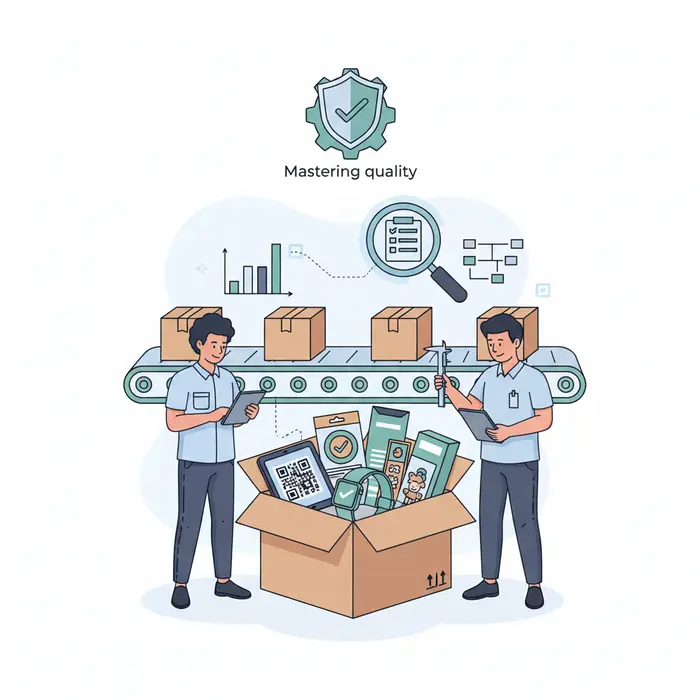
Quality control in the supply chain is not a single event but a continuum, with different inspection stages designed to catch issues at various points in the production cycle. Each stage serves a distinct purpose, collectively building a robust quality assurance framework:
- During Production Inspection (DPI): Also known as In-Process Inspection, DPI occurs when 20-80% of the goods have been produced and packaged. This stage is crucial for identifying defects or deviations from specifications early in the manufacturing process. It allows factories to implement corrective actions promptly, minimizing waste and preventing a large batch of defective products. DPI can also verify initial production samples, material quality, and general workmanship, ensuring the production line is performing as expected.
- Final Random Inspection (FRI) / Pre-Shipment Inspection (PSI): This is the most common and critical inspection stage, conducted when 100% of the production is completed and at least 80% is packed. The FRI is a comprehensive assessment that evaluates product conformity, functionality, appearance, packaging, and shipping marks against client specifications and international standards. It’s the final opportunity to detect any major non-conformities before shipment, thus preventing the dispatch of faulty goods.
- Loading Supervision (LS): Conducted at the factory or warehouse just before shipment, Loading Supervision ensures that the correct products and quantities are loaded onto the container safely and securely. Inspectors verify container conditions, check product quantity against packing lists, monitor the loading process to prevent damage, and ensure proper stacking and sealing. This stage is vital for minimizing transit damage and confirming that the exact order reaches its destination, preventing discrepancies and potential claims.
2. Sampling Methods and Acceptance Quality Limits (AQL)
Inspecting every single item in a large production run is often impractical and cost-prohibitive. Therefore, sampling methods are employed to draw a statistically representative subset of products for inspection. The most widely accepted standard for this is the Acceptance Quality Limit (AQL). AQL is defined as the maximum percentage of defective products that, for purposes of sampling inspection, can be considered satisfactory as a process average.
Using the ANSI/ASQ Z1.4 (or ISO 2859-1) standard, inspectors select samples based on lot size and desired inspection level (e.g., General Level II for standard inspections). The AQL tables specify the sample size to be inspected and the maximum number of allowable defects (acceptance number) for different defect classifications: critical, major, and minor. Critical defects render the product unsafe or non-compliant with regulations, major defects affect functionality or marketability, and minor defects are aesthetic issues that do not significantly reduce usability. By setting specific AQLs for each defect type (e.g., 0% for critical, 2.5% for major, 4.0% for minor), buyers and suppliers establish clear benchmarks for acceptable quality, allowing for objective decision-making on whether to accept or reject a production lot.
3. Common Inspection Findings and Corrective Actions
Pre-shipment inspections frequently uncover a range of issues, from minor aesthetic flaws to significant functional defects. Understanding these common findings and establishing clear corrective action protocols is essential for effective quality management. Typical findings include:
- Cosmetic Defects: Scratches, dents, discoloration, uneven finishes, misaligned components, or poor stitching.
- Functional Defects: Products not working as intended, faulty electronics, incorrect dimensions, or issues with assembly.
- Quantity and Assortment Errors: Discrepancies between the ordered quantity and received quantity, or incorrect ratios of different product variations.
- Packaging and Labeling Issues: Incorrect barcodes, missing warning labels, damaged packaging, wrong shipping marks, or non-compliance with international labeling standards.
- Compliance Issues: Products not meeting specific safety standards, material restrictions (e.g., REACH, RoHS), or other regulatory requirements relevant to the destination market.
When non-conformities are identified, prompt and decisive corrective actions are critical. This typically involves immediate communication with the factory, detailing the nature and extent of the defects. Depending on the severity and percentage of defects, options range from sorting and rework, repair of individual items, re-inspection, or in severe cases, rejection of the entire lot. Documenting these findings and actions provides valuable data for continuous improvement, helping suppliers enhance their manufacturing processes and prevent recurring issues, thus strengthening the overall Global Supply Chain Quality Assurance. Proactive resolution ensures products adhere to all necessary specifications and standards, maintaining consumer trust and avoiding costly recalls or returns.
Comprehensive Supply Chain Risk Management Solutions
In today’s interconnected global economy, supply chains are more complex and vulnerable than ever before. From geopolitical tensions and natural disasters to unexpected quality issues and cyber threats, a myriad of risks can disrupt operations, damage reputations, and significantly impact profitability. Effective Global Supply Chain Quality Assurance and risk management are no longer optional but critical for business continuity and sustained success. This section explores comprehensive strategies and cutting-edge tools designed to identify, assess, and mitigate various risks across the entire global supply chain, from initial sourcing to final delivery, ensuring resilience and reliability in an unpredictable world.
1. Identifying and Mapping Critical Supply Chain Risks
The first step in building a resilient supply chain is a thorough understanding of its vulnerabilities. This involves more than just identifying direct suppliers; it requires mapping the entire ecosystem, including tier-2 and tier-3 suppliers, logistics providers, and critical infrastructure. Risks can manifest in various forms:
- Operational Risks: Production failures, labor shortages, transportation delays.
- Financial Risks: Supplier insolvency, currency fluctuations, unexpected cost increases.
- Geopolitical and Environmental Risks: Trade wars, sanctions, natural disasters, pandemics.
- Quality and Compliance Risks: Substandard materials, manufacturing defects, failure to meet Global Product Compliance Standards, leading to recalls or regulatory penalties.
- Cybersecurity Risks: Data breaches, intellectual property theft, disruption of digital infrastructure.
Leveraging tools like supply chain mapping software, risk registers, and FMEA (Failure Mode and Effects Analysis) can help visualize dependencies and pinpoint critical nodes. Regular supplier assessments and due diligence, including International Factory Audit Services, are crucial for uncovering potential weaknesses before they escalate into major disruptions. A proactive approach to identifying these risks lays the foundation for effective mitigation.
2. Developing Robust Risk Mitigation and Contingency Plans
Once risks are identified, the next phase is to develop proactive strategies to mitigate their impact and comprehensive contingency plans for when disruptions inevitably occur. Effective risk mitigation strategies often include:
- Supplier Diversification: Reducing reliance on single-source suppliers by establishing alternative relationships across different geographic regions.
- Inventory Buffers: Strategically holding safety stock of critical components or finished goods to absorb short-term supply shocks.
- Contractual Agreements: Implementing robust contracts with suppliers that include clear performance metrics, penalty clauses for non-compliance, and force majeure clauses.
- Process Standardization and Redundancy: Establishing standardized operational procedures and building redundancy into critical manufacturing or logistics processes.
- Cybersecurity Enhancements: Investing in robust cybersecurity measures and training to protect sensitive data and operational systems.
Contingency planning involves creating detailed playbooks for various disruption scenarios, outlining roles, responsibilities, communication protocols, and alternative operational pathways. This may include rapid response teams, alternative logistics routes, or agreements with emergency suppliers. Regular drills and simulations are vital to test the effectiveness of these plans and ensure that teams can respond swiftly and effectively under pressure. For instance, implementing Pre-Shipment Quality Inspection protocols can mitigate quality-related risks before products leave the factory, saving significant costs and delays downstream.
3. Utilizing Data Analytics for Predictive Risk Assessment
In the era of big data, advanced analytics and artificial intelligence (AI) are transforming supply chain risk management from a reactive to a highly proactive discipline. Data analytics tools can aggregate and analyze vast amounts of data from diverse sources, including real-time sensor data, weather forecasts, geopolitical news feeds, market trends, and supplier performance metrics. This enables organizations to:
- Predictive Modeling: Identify patterns and predict potential disruptions before they materialize. For example, analyzing weather patterns to foresee transportation delays or monitoring economic indicators to anticipate supplier financial distress.
- Real-time Monitoring: Track shipments, inventory levels, and supplier activities in real-time, providing early warnings of deviations or delays.
- Scenario Planning: Simulate the impact of various risk events on the supply chain, allowing for optimized decision-making and resource allocation.
- Performance Benchmarking: Continuously assess supplier performance against established benchmarks and identify underperforming areas.
- Demand Forecasting Accuracy: Improve the accuracy of demand forecasts, reducing the risk of overstocking or stockouts.
Integrating these analytical capabilities with robust Supply Chain Risk Management Solutions creates an intelligent, self-optimizing supply chain that can anticipate, adapt, and recover quickly from disruptions. By harnessing the power of data, businesses can gain unparalleled visibility and control, transforming vulnerabilities into sources of competitive advantage.
Successfully navigating the complexities of global supply chains requires a holistic and proactive approach to risk management. By meticulously identifying and mapping potential risks, developing robust mitigation and contingency plans, and leveraging the power of data analytics for predictive insights, businesses can build resilient supply chains capable of weathering any storm. This comprehensive strategy not only protects operations but also fosters trust, ensures consistent quality, and strengthens a company’s position in the global marketplace, ultimately securing long-term growth and stability.
Navigating Global Product Compliance Standards
In today’s interconnected world, businesses operating within a global supply chain face an intricate web of international regulations. Ensuring products meet diverse compliance requirements in target markets isn’t just a legal necessity; it’s a cornerstone of sustainable business. From environmental directives to safety standards, the complexities demand meticulous attention to detail and proactive strategies to safeguard brand reputation and market access. Effective Global Supply Chain Quality Assurance is paramount to success in this challenging landscape.

1. Understanding Regional and Industry-Specific Standards (e.g., CE, FCC, RoHS)
Navigating the global marketplace requires an intimate understanding of the myriad regional and industry-specific compliance standards. For instance, products destined for the European Union typically require CE marking, signifying conformity with health, safety, and environmental protection standards. This often involves adherence to directives like the Low Voltage Directive (LVD), Electromagnetic Compatibility (EMC) Directive, and the Restriction of Hazardous Substances (RoHS) Directive. On the other side of the Atlantic, the Federal Communications Commission (FCC) certification is critical for electronic devices sold in the United States, ensuring they do not interfere with other electronic devices or public safety communications. Similarly, specific industries have their own unique requirements; medical devices, for example, must adhere to ISO 13485 standards and various regional health regulations.
The divergence in these standards can be substantial, necessitating a tailored approach for each target market. A product compliant in one region may fail spectacularly in another, leading to significant delays and costs. This complexity underscores the importance of thorough upfront research and expert guidance, often involving International Factory Audit Services to ensure production facilities can consistently meet these varied specifications from the outset. Understanding these nuanced differences is the first critical step in ensuring seamless market entry and sustained operation.
2. The Impact of Non-Compliance (Fines, Recalls, Reputation Damage)
The consequences of non-compliance with global product standards are severe and far-reaching, extending beyond mere financial penalties. Regulators across the globe are increasingly stringent, imposing hefty fines that can cripple businesses. For instance, violations of environmental regulations like RoHS or REACH can result in millions of dollars in penalties. Beyond fines, product recalls represent a catastrophic outcome, not only due to the direct costs of retrieving, repairing, or replacing products but also the indirect costs associated with logistical nightmares and potential legal liabilities. The reputational damage from a recall or a publicized non-compliance issue can be irreparable. Consumers lose trust, market share corrodes, and long-term relationships with distributors and partners are jeopardized.
Furthermore, non-compliance can lead to products being seized at borders, market access bans, and even criminal charges in some cases. The ripple effect can impact the entire supply chain, from manufacturers to retailers, making robust Supply Chain Risk Management Solutions indispensable. Proactive measures, such as comprehensive Pre-Shipment Quality Inspection, are vital to catch potential issues before products leave the factory floor, preventing them from becoming costly liabilities in destination markets. The long-term viability of a business is inextricably linked to its ability to consistently meet and exceed these stringent global requirements.
3. Role of Certifications, Testing, and Documentation
Mitigating the risks of non-compliance hinges on a robust framework of certifications, rigorous testing, and meticulous documentation. Certifications, issued by accredited third-party bodies, serve as official proof that a product meets specific standards. These can range from product-specific certifications like UL (Underwriters Laboratories) for safety in North America, to system certifications like ISO 9001 for quality management, which indirectly supports product compliance. Obtaining these certifications often involves extensive product testing in accredited laboratories. This testing verifies performance, safety, electromagnetic compatibility, chemical composition, and other critical parameters against the relevant standards.
Equally important is comprehensive documentation. A product’s compliance journey must be fully traceable, from raw material sourcing to final product distribution. This includes technical files, test reports, declarations of conformity, risk assessments, and supplier declarations. Such documentation not only provides evidence of compliance to regulatory bodies but also serves as a valuable internal record for future product development and troubleshooting. Many countries now require digital submission of compliance documents, emphasizing the need for organized and accessible records. Investing in these three pillars – certifications, testing, and documentation – is not just a cost; it’s a strategic investment in market access, brand protection, and overall business resilience in the complex world of global trade. Staying abreast of evolving regulatory landscapes is crucial, and resources like the European Commission’s New Legislative Framework provide valuable insights into EU regulations.
Partner with Vietnam’s Leading Suppliers
Looking for reliable suppliers in Vietnam? Contact VietnamSuppliers.com today to connect with verified manufacturers and exporters across all industries.
—————————————
References
– :
– Sedex – Driving responsible supply chains: https://www.sedex.com/about-us/what-we-do/
– ISO 9001 Quality Management System Standards: https://www.iso.org/iso-9001-quality-management.html
– Global Product Compliance Standards: https://www.iso.org/standards.html
– European Commission’s New Legislative Framework: https://ec.europa.eu/growth/single-market/goods/new-legislative-framework_en