
Introduction to CFR Incoterms 2020
Understanding the intricacies of international trade terms is paramount for businesses operating across borders. Among the widely used International Commercial Terms (Incoterms), CFR Incoterms 2020 stands as a critical rule for maritime transport. CFR, which stands for Cost and Freight, defines specific responsibilities, costs, and risks between buyers and sellers, ensuring clarity and minimizing disputes in global shipping. This guide delves into the essence of CFR, its historical context, and the key characteristics highlighted in the latest 2020 version, providing a comprehensive overview for exporters and importers alike.
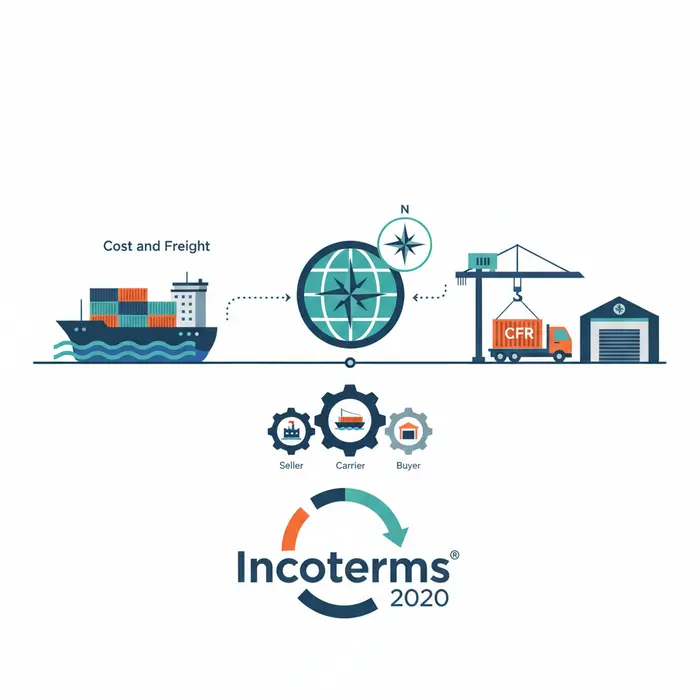
What is CFR (Cost and Freight)?
CFR (Cost and Freight) is an Incoterm specifically designed for sea and inland waterway transport, outlining a precise division of labor between the seller and the buyer. Under CFR, the seller takes on the responsibility and cost of transporting the goods to a named port of destination. This includes all export formalities, packaging, loading charges, and the main carriage freight. However, a crucial distinction lies in the transfer of risk: while the seller pays for the freight, the risk of loss or damage to the goods transfers from the seller to the buyer when the goods are loaded onto the vessel at the port of shipment. From this point onward, any risks during the main carriage are borne by the buyer, even though the seller covers the freight cost. The primary purpose of CFR is to offer a standardized framework for maritime shipments where the seller manages and pays for the freight to the destination port, but the buyer assumes risk much earlier in the shipping process. This understanding is key to grasping CFR buyer seller responsibilities.
Historical Context & Evolution of CFR
The concept of Incoterms dates back to 1936, established by the International Chamber of Commerce (ICC) to standardize global trade terminology and reduce misunderstandings in international contracts. CFR, originally known as C&F (Cost and Freight), is one of the oldest and most consistently used Incoterms, reflecting its enduring relevance in conventional bulk and break-bulk cargo shipping. Over the decades, Incoterms have undergone several revisions – notably in 2000, 2010, and most recently 2020 – to keep pace with evolving shipping practices, technological advancements, and legal interpretations. While many Incoterms saw significant adjustments in the 2020 version, CFR maintained much of its core structure, reinforcing its tried-and-true framework for maritime trade. The continuous evolution aims for clearer interpretation, better allocation of costs and risks, and a more user-friendly guide for global traders, ensuring that terms like CFR remain effective and relevant in an increasingly complex supply chain landscape.
Key Characteristics of CFR Incoterms 2020
The CFR Incoterms 2020 rules uphold several distinct characteristics that are vital for both parties to comprehend. Firstly, regarding cost allocation, the seller is responsible for all costs up to and including the freight to the named port of destination. This encompasses origin charges, export clearance, and the main ocean freight. Upon arrival at the destination port, all costs, including unloading, import customs clearance, duties, and further transport to the final destination, fall under the buyer’s purview. This clear delineation greatly assists in CFR price calculation export. Secondly, risk transfer is pivotal: the risk of loss or damage to the goods passes from the seller to the buyer when the goods are loaded on board the vessel at the port of shipment. This means that while the seller pays for the main carriage, the buyer assumes all risks for the transit itself. Thirdly, unlike CIF (Cost, Insurance, and Freight), the seller under CFR has no obligation to procure marine insurance for the buyer’s benefit. This is a crucial distinction when comparing CFR vs CIF Incoterms, making it imperative for the buyer to consider arranging their own insurance coverage for the main carriage. Lastly, the seller must provide the usual transport documents, such as a Bill of Lading, enabling the buyer to claim the goods at the destination port, thereby guiding the overall CFR shipping process guide for both parties. These defined characteristics underscore CFR’s role as a precise and predictable rule for international maritime trade.
CFR Buyer and Seller Responsibilities Explained
Navigating international trade requires a clear understanding of Incoterms rules, and CFR Incoterms 2020 (Cost and Freight) is one of the most commonly used for sea and inland waterway transport. CFR defines the obligations, risks, and costs for both the buyer and seller, ensuring a smooth transaction. This detailed breakdown will illuminate the precise responsibilities, the critical points of risk transfer, and how costs are allocated under CFR, helping businesses optimize their global supply chains.
1. Seller’s Obligations Under CFR (Up to Destination Port)
Under CFR Incoterms 2020, the seller bears significant responsibilities and costs until the goods reach the named port of destination. These obligations primarily focus on preparing and dispatching the goods for shipment and arranging the main carriage:
- Goods and Commercial Invoice: The seller must provide the goods and the commercial invoice in conformity with the contract of sale. This also includes any other evidence of conformity that may be required by the contract.
- Export Customs Formalities: It is the seller’s responsibility to handle all export clearance procedures. This involves obtaining any necessary export licenses, security clearance, and completing all customs formalities required for export, including paying any duties, taxes, or other charges.
- Pre-carriage and Loading: The seller is responsible for transporting the goods from their premises to the port of shipment and loading them onto the nominated vessel.
- Main Carriage Arrangement and Cost: A cornerstone of CFR is that the seller contracts for and pays the costs of carriage necessary to bring the goods to the named port of destination. This typically covers the freight charges. However, it’s crucial to note that while the seller pays for the freight, the risk transfers earlier.
- Provision of Transport Document: The seller must provide the buyer with the usual transport document for the named port of destination, such as a Bill of Lading (B/L), at the seller’s cost. This document is vital for the buyer to claim the goods at the destination port.
- Notification to Buyer: The seller must give the buyer sufficient notice that the goods have been delivered on board the vessel and are expected to arrive at the named port of destination.
Understanding these CFR buyer seller responsibilities for the seller is critical for accurate CFR price calculation export, ensuring all upfront costs are accounted for.
2. Buyer’s Responsibilities Under CFR (From Destination Port Onwards)
Once the goods arrive at the named port of destination, the majority of responsibilities, costs, and risks shift to the buyer. The buyer must be prepared to handle the final leg of the journey and all associated import procedures:
- Taking Delivery: The buyer must take delivery of the goods from the carrier at the named port of destination.
- Unloading Costs: Any costs associated with unloading the goods from the vessel at the named port of destination are typically for the buyer’s account, unless these costs were included in the freight paid by the seller under the contract of carriage.
- Import Customs Formalities: The buyer is responsible for all import clearance procedures. This includes obtaining any import licenses, security clearance, and completing all customs formalities for import, as well as paying any duties, taxes, and other official charges.
- Onward Carriage: From the named port of destination to the final inland destination, the buyer is responsible for arranging and paying for all further transportation.
- Risk of Loss or Damage: While the seller pays for freight to the destination port, the risk of loss or damage to the goods actually transfers from the seller to the buyer when the goods are loaded on board the vessel at the port of shipment. This means the buyer bears all risks from that point onwards.
- Insurance: Although not obligated by CFR to obtain insurance, it is highly advisable for the buyer to procure marine insurance to cover the goods from the point of risk transfer (port of shipment) to their final destination, given they bear the risk during the main carriage.
These responsibilities highlight why careful planning and coordination are essential for the buyer under a CFR shipping process guide.
3. Understanding the Point of Risk Transfer
The concept of risk transfer is arguably the most critical aspect distinguishing CFR from other Incoterms rules. Under CFR, the point of risk transfer occurs much earlier than the point where costs transfer:
- Risk Transfer Point: The risk of loss of or damage to the goods transfers from the seller to the buyer when the goods are on board the vessel at the port of shipment. This is a crucial detail that often causes confusion.
- Cost vs. Risk: The seller pays for the main carriage to the named port of destination, effectively covering the freight costs. However, the buyer assumes all risks for the goods once they are loaded onto the vessel at the origin port. This means that if the goods are lost or damaged during the ocean voyage, it is the buyer who bears this risk, not the seller, even though the seller paid for that leg of the transport.
- Implication for Insurance: Because the buyer bears the risk during the main carriage, it is strongly recommended that the buyer arranges for marine insurance coverage from the moment the goods are loaded onto the vessel at the port of shipment. This is a key difference when considering CFR vs CIF Incoterms, as under CIF, the seller is obliged to obtain minimum insurance cover for the buyer. The International Chamber of Commerce (ICC) defines Incoterms rules to clearly delineate these distinctions.
Properly understanding this dual point of responsibility – where costs and risks transfer at different stages – is fundamental to executing successful international transactions under CFR Incoterms 2020.
Calculating CFR Price & Understanding Associated Costs
Estimating and including all relevant costs from origin to the named destination port is crucial for accurate pricing in export operations. The Cost and Freight (CFR) Incoterm 2020 delineates specific responsibilities and cost allocations between the seller and buyer, making a precise understanding of its components essential for any international trade transaction. This guide will walk you through the intricacies of CFR price calculation export and help you understand the associated costs, ensuring you can formulate competitive and profitable offers.

1. Components of the CFR Price Calculation
Under CFR Incoterms 2020, the seller is responsible for arranging and paying for the carriage of goods to the named port of destination. However, the risk of loss or damage to the goods transfers from the seller to the buyer when the goods are loaded on board the vessel at the port of shipment. This distinction is vital, particularly when comparing CFR vs CIF Incoterms, where CIF requires the seller to also procure minimum insurance coverage. A complete CFR price calculation export must therefore encompass all costs borne by the seller up to the main carriage, while clearly identifying the subsequent costs and risks for the buyer.
The core components of a CFR price include:
- Product Cost: The base price of the goods themselves.
- Export Packing & Labeling: Costs associated with preparing goods for international shipment.
- Loading Charges: Fees for loading goods onto the first carrier at the seller’s premises.
- Transport to Port of Shipment: Haulage costs from the seller’s facility to the port where the goods will be loaded onto the main vessel.
- Export Customs Formalities & Duties: Expenses related to clearing goods for export in the origin country.
- Origin Terminal Handling Charges (THC): Fees charged by the terminal at the port of shipment.
- Main Carriage (Ocean Freight): The cost of transporting the goods by sea (or inland waterway) to the named port of destination.
Understanding these components allows both parties to accurately budget and manage their respective responsibilities, a key aspect of CFR buyer seller responsibilities.
2. Seller’s Costs: Export Clearance & Main Carriage
For the seller, accurately calculating the CFR price involves meticulous accounting of all expenses until the goods reach the destination port. The seller’s primary obligation under CFR Incoterms 2020 is to deliver the goods on board the vessel nominated by the seller at the port of shipment, and to contract for and pay the costs of carriage necessary to bring the goods to the named port of destination.
Key seller costs include:
- Pre-shipment inspection and quality control: Ensuring goods meet contractual specifications.
- Packaging costs: Appropriate export packaging to prevent damage during transit.
- Local transportation: Transporting goods from the factory/warehouse to the port of loading.
- Export customs clearance: This involves preparing necessary documentation, paying export duties and taxes (if any), and complying with all export regulations in the origin country. This process is complex and often requires the services of a freight forwarder.
- Terminal Handling Charges (THC) at origin: Fees levied by the port terminal for handling containers before they are loaded onto the vessel.
- Ocean freight charges: This is often the largest component of the seller’s cost under CFR. It covers the actual shipping cost from the port of loading to the named port of destination. While the seller pays for this, the risk transfers to the buyer once goods are on board the vessel at the origin port.
This comprehensive approach to cost identification is central to the CFR shipping process guide for sellers, ensuring all obligations are met and factored into the final price. For more in-depth information on Incoterms and their practical application, you can refer to the official Incoterms rules published by the International Chamber of Commerce (ICC).
3. Buyer’s Costs: Unloading, Import Clearance & Inland Transport
While the seller handles costs up to the main carriage, the buyer’s responsibilities commence early in the process and include a significant portion of the total logistics chain. Once the goods arrive at the named port of destination, the buyer takes on the remaining costs and all risks from the point the goods were loaded onto the vessel at the origin port. This distinction highlights the specific CFR buyer seller responsibilities.
The buyer’s primary costs and responsibilities under CFR typically include:
- Unloading Charges: Costs associated with discharging the goods from the vessel at the destination port. This may include Destination Terminal Handling Charges (DTHC).
- Import Customs Formalities & Duties: The buyer is responsible for all import clearance procedures, including preparing documentation, paying import duties, taxes (such as VAT or GST), and other government charges in the destination country. This can be a complex process involving local customs brokers.
- Customs Examination Fees: If goods are selected for inspection by customs authorities.
- Storage Charges: Demurrage or detention charges if containers are not cleared and picked up within the free time period allowed by the shipping line or port.
- Inland Transport: Arranging and paying for the transportation of goods from the destination port to the buyer’s final warehouse or facility. This includes trucking, rail, or other modes of transport.
- Insurance: Although not mandated by CFR, it is highly advisable for the buyer to purchase cargo insurance to cover the goods from the moment risk transfers (when goods are on board the vessel at the port of shipment) until final delivery. This is a key differentiator in CFR vs CIF Incoterms.
- Other local delivery charges: Any additional fees specific to the destination country’s logistics infrastructure.
For a deeper dive into how CFR Incoterms 2020 affects your specific shipping needs and to explore resources for efficient trade, you can find more information on VietnamSuppliers.com. A clear understanding of these costs ensures transparency and prevents unexpected expenses for the buyer, leading to smoother international transactions.
The CFR Shipping Process: A Step-by-Step Guide
Navigating international trade can be complex, but understanding specific Incoterms® rules like Cost and Freight (CFR) streamlines the process. This comprehensive guide details the CFR shipping process guide, from goods preparation at origin to their arrival at the destination port, highlighting key responsibilities. Under CFR Incoterms 2020, the seller arranges and pays for carriage to a named destination port, but the risk of loss or damage transfers from seller to buyer when goods are on board the vessel at the port of shipment. This critical distinction often features in discussions around CFR vs CIF Incoterms, where CIF (Cost, Insurance and Freight) adds the seller’s obligation to procure insurance for the buyer’s risk.
1. Seller’s Logistics: Booking, Loading & Documentation
The seller’s journey in a CFR shipment begins with preparing goods for export. Their primary CFR buyer seller responsibilities include proper packing and marking for international maritime transport. The seller handles all export customs formalities, securing necessary licenses or permits in the country of origin. This also involves accurate CFR price calculation export, covering goods cost plus freight charges to the named destination port.
Crucially, the seller contracts for and pays the freight to the named destination port, choosing a reliable shipping line or freight forwarder. Once booked, the seller oversees loading the goods onto the contracted vessel at the port of shipment. This is a pivotal moment, as per Incoterms® 2020 rules; the risk of loss or damage transfers from seller to buyer once the goods are physically on board.
Finally, the seller provides the buyer with essential shipping documents: commercial invoice, packing list, and a clean Bill of Lading (B/L). The B/L serves as proof of shipment, a receipt, and a document of title. While the seller covers freight, they are not obligated to arrange insurance against the buyer’s risk during main carriage under CFR; this falls to the buyer.
2. Choosing the Right Carrier for CFR Shipments
Selecting an appropriate carrier is a critical decision for the seller. While the buyer ultimately bears the risk during transit, the seller’s choice directly impacts transit times, reliability, and efficiency. Key factors include the carrier’s reputation for reliability, on-time delivery, and specific equipment availability (e.g., refrigerated containers).
Transit time is a significant consideration, requiring sellers to evaluate schedules to meet buyer expectations. Cost, while important, should be balanced against service quality. Effective communication between the seller and carrier is paramount for smooth booking, timely loading, and accurate documentation, ensuring a seamless transfer of goods to the buyer at the destination port.
3. Buyer’s Logistics: Preparing for Arrival & Unloading
Once goods are loaded, the focus shifts to the buyer. Although the seller paid for the freight, the buyer is responsible for all costs and risks from the moment goods are on board the vessel at the port of shipment. The buyer’s CFR buyer seller responsibilities from this point forward include tracking the shipment and preparing for its arrival.
The buyer must ensure all necessary import permits and licenses are secured. Upon arrival at the destination port, the buyer is responsible for arranging and paying for all import customs formalities, including duties, taxes, and other governmental charges. This requires meticulous preparation of documents like the commercial invoice, packing list, and original Bill of Lading. Delays can lead to costly demurrage charges.
Furthermore, the buyer arranges the unloading of goods from the vessel and their subsequent transport from the destination port to the final inland destination. This includes securing inland transportation and coordinating with port authorities. Timely action is vital to avoid additional storage fees. Under CFR, the buyer is also strongly advised to obtain marine insurance coverage for the main carriage, as risk has transferred, safeguarding against potential loss or damage.
In conclusion, a successful CFR shipment hinges on clear communication and a thorough understanding of each party’s roles. While the seller orchestrates initial transport, the buyer proactively manages the latter half, ensuring a smooth transition from sea to land.
CFR vs. CIF Incoterms: Key Differences & When to Choose
Navigating international trade requires a precise understanding of Incoterms rules, which define the responsibilities of buyers and sellers for the delivery of goods. Among the most frequently used terms for sea and inland waterway transport are Cost and Freight (CFR) and Cost, Insurance and Freight (CIF). Both outline similar obligations regarding freight costs to the destination, yet a critical distinction in insurance responsibilities often dictates which term is more suitable for a particular transaction. This guide will compare CFR and CIF side-by-side, highlighting their nuances in terms of cost, risk, and insurance responsibilities to help businesses make informed decisions.

1. Defining CIF (Cost, Insurance and Freight) Incoterms
CIF, standing for Cost, Insurance and Freight, is an Incoterm specifically designed for sea and inland waterway transport. Under CIF, the seller assumes significant responsibilities for getting the goods to the buyer’s named port of destination. The seller is obligated to deliver the goods on board the vessel at the port of shipment, pay for the costs and freight necessary to bring the goods to the named port of destination, and critically, also procure marine insurance against the buyer’s risk of loss of or damage to the goods during carriage. The insurance must at least cover the minimum conditions as stipulated by Institute Cargo Clauses (C) or similar clauses.
While the seller pays for freight and insurance to the destination, the risk of loss or damage to the goods transfers from the seller to the buyer when the goods are on board the vessel at the port of shipment. This means that although the seller covers the insurance premium, the buyer is the beneficiary of the insurance policy and would file any claims for damage or loss that occurs after this point. Understanding CFR buyer seller responsibilities, even when comparing it to CIF, highlights the nuanced interplay of cost and risk transfer points.
2. Primary Differences in Risk & Cost Allocation (CFR vs CIF)
The core distinction between CFR and CIF lies in the obligation to provide insurance. Both terms share the same point for the transfer of risk and similar cost responsibilities up to the port of destination, but the insurance aspect sets them apart:
- CFR (Cost and Freight): Under CFR Incoterms 2020, the seller arranges and pays for the carriage of goods to the named port of destination. The goods are considered “delivered” when they are loaded on board the vessel at the port of shipment. At this precise moment, the risk of loss or damage transfers from the seller to the buyer. However, under CFR, the seller is NOT obligated to procure insurance for the buyer. It is the buyer’s sole responsibility to arrange and pay for insurance coverage from the point of shipment to cover potential risks during transit. This gives the buyer greater control over their insurance policy and choices.
- CIF (Cost, Insurance and Freight): Similar to CFR, the seller under CIF also arranges and pays for the carriage of goods to the named port of destination, and the risk transfers when the goods are loaded on board the vessel at the port of shipment. The key difference is that the seller MUST also procure minimum marine insurance coverage against the buyer’s risk of loss or damage to the goods during carriage. This means the seller shoulders the cost of insurance up to the destination port, although, as noted, the risk has already transferred to the buyer. The CFR price calculation export, therefore, will typically be lower than a CIF price, as it excludes the insurance premium.
In essence, if a business needs to understand Incoterms Rules, they will quickly learn that the decision between CFR and CIF hinges on who is best positioned, or prefers, to manage the insurance aspect of the shipment. While both terms mean the seller pays for freight to the destination, CIF adds the mandatory insurance component to the seller’s burden.
3. Insurance Implications for Buyer and Seller
The insurance aspect is where CFR and CIF truly diverge, with significant implications for both parties:
-
For the Buyer:
- Under CFR: The buyer is fully responsible for arranging and paying for insurance from the point of shipment. This provides the buyer with complete control over the type, extent, and cost of coverage. A buyer with specific insurance requirements, better local rates, or existing blanket policies for their imports might prefer CFR to integrate the shipment into their own insurance strategy. It’s crucial for the buyer to ensure coverage begins exactly when the goods are loaded onto the vessel at the port of shipment.
- Under CIF: The buyer benefits from the seller providing minimum insurance coverage. This simplifies the process for the buyer, as they don’t have to arrange the initial policy. However, the insurance provided by the seller under CIF is usually the minimum coverage (Institute Cargo Clauses (C)), which may not be sufficient for all types of goods or all risks. For valuable or fragile goods, or routes with higher specific risks, the buyer may still need to purchase additional coverage (“topping up” the insurance) to ensure comprehensive protection. Despite the seller arranging it, the buyer is the direct party to whom the claim must be made if loss or damage occurs after the risk transfer point.
-
For the Seller:
- Under CFR: The seller’s responsibility for the goods ends once they are loaded on board the vessel, and they have no obligation to provide insurance for the main carriage. This can simplify the seller’s administrative burden and reduce their upfront costs.
- Under CIF: The seller must arrange and pay for the minimum insurance coverage. This adds an administrative task and a cost component to the seller’s responsibilities, which will be factored into the overall CIF price. Although the risk has transferred to the buyer, the seller must ensure the insurance policy is in place and the buyer is able to make a claim. This extra step is a key differentiator in the CFR shipping process guide versus the CIF process.
Choosing between CFR and CIF depends heavily on the buyer’s preference for managing insurance and the seller’s ability or willingness to procure it. For many, the simplicity of having the seller handle insurance under CIF is appealing, even if it’s minimum coverage. For others, the control and potential cost savings of arranging their own comprehensive insurance under CFR make it the preferred option. Always consider the specific cargo, route, and the relationship between buyer and seller when making this crucial Incoterms decision.
Partner with Vietnam’s Leading Suppliers
Looking for reliable suppliers in Vietnam? Contact VietnamSuppliers.com today to connect with verified manufacturers and exporters across all industries.
—————————————
References
– CFR vs CIF Incoterms: https://iccwbo.org/resources-for-business/incoterms-rules/incoterms-2020/
– International Chamber of Commerce (ICC) Incoterms 2020 Rules: https://iccwbo.org/resources-for-business/incoterms-rules/incoterms-2020-rules/
– International Chamber of Commerce Incoterms Rules: https://iccwbo.org/resources-for-business/incoterms-rules/
– Incoterms® 2020 rules: https://iccwbo.org/resources-for-business/incoterms-rules/incoterms-2020/
– Incoterms Rules: https://www.iccwbo.org/resources-for-business/incoterms-rules/