
The Current State of the Global Semiconductor Market 2024
The global semiconductor market in 2024 has navigated a complex landscape marked by both robust recovery in key segments and persistent macroeconomic uncertainties. After a challenging 2023, which saw a significant downturn, the industry has demonstrated resilience and strategic pivots, setting a cautious yet optimistic tone for the Global Semiconductor Market Outlook 2024 and its trajectory into 2025. This overview delves into the industry’s performance, the pervasive economic forces at play, and the transformative technologies fueling current demand, all of which are critical for understanding electronics component sourcing B2B strategies and evolving semiconductor supply chain trends.

1. Review of 2024 Market Performance and Dynamics
The year 2024 has largely been a period of recovery and rebalancing for the semiconductor industry. Following a steep decline in memory chip demand and a general inventory correction across various sectors in late 2022 and 2023, the market began to show signs of a strong rebound, particularly in the latter half of the year. Initial forecasts anticipated moderate growth, but accelerated demand from Artificial Intelligence (AI) applications, high-performance computing (HPC), and the automotive sector surpassed expectations. This resurgence has led to improved global chip manufacturing statistics, with wafer fabrication plants operating at higher utilization rates for advanced nodes. While consumer electronics markets, such as smartphones and PCs, experienced a more gradual recovery, industrial and infrastructure segments demonstrated consistent demand. The intricate semiconductor supply chain trends have continued to evolve, emphasizing diversification and regionalization efforts in response to geopolitical considerations, directly influencing electronics component sourcing B2B decisions. Inventory levels, which were a major concern, have largely normalized in many areas, though specific high-demand components still face tight supply.
2. Macroeconomic Headwinds and Tailwinds Impacting Growth
The semiconductor market’s performance in 2024 has been significantly shaped by a confluence of macroeconomic factors. On the one hand, persistent global inflation, elevated interest rates, and geopolitical tensions, particularly concerning trade and technology, presented notable headwinds. These factors influenced consumer spending patterns, business investment decisions, and global trade flows, creating an environment of cautious optimism. However, powerful tailwinds have provided substantial impetus for growth. Government initiatives like the U.S. CHIPS and Science Act, Europe’s Chips Act, and similar programs in Asia have spurred significant investment in domestic chip manufacturing capabilities and R&D, aiming to bolster semiconductor supply chain trends resilience. The global push for digitalization across industries, coupled with the foundational requirements for AI infrastructure, has driven enterprise-level demand for advanced chips. The expansion of 5G networks and the increasing sophistication of data centers further fueled this growth. For a deeper dive into the Global Semiconductor Market Outlook 2024, including regional analyses, these macroeconomic forces remain paramount in shaping market projections for 2025.
3. Emerging Technologies Shaping Current Demand
The unprecedented rise of Artificial Intelligence, particularly generative AI, stands as the most significant driver of semiconductor demand in 2024. This technology necessitates vast amounts of processing power, leading to an explosion in demand for high-end GPUs, specialized AI accelerators, and memory solutions. Beyond AI, the automotive sector continues its transformation, with electric vehicles (EVs) and advanced driver-assistance systems (ADAS) requiring an increasing array of microcontrollers, power management ICs, and sensor technologies. The Internet of Things (IoT) ecosystem, encompassing smart factories, connected cities, and wearable devices, consistently demands low-power, high-integration chips. Furthermore, advancements in high-performance computing (HPC) for scientific research and complex simulations underpin various industries. These technological shifts are not only driving volume but also pushing the boundaries of innovation in chip design and manufacturing processes. The Asia electronics export market, particularly from powerhouses like Taiwan, South Korea, and increasingly Vietnam, plays a crucial role in supplying these cutting-edge components to the global market, underpinning modern electronics component sourcing B2B strategies. This sustained demand from emerging technologies is fundamentally reshaping the industry’s landscape, as detailed by leading industry reports such as this Semiconductor Industry Association (SIA) market update.
Navigating Semiconductor Supply Chain Trends & Resilience
The intricate web of the global semiconductor supply chain has undergone unprecedented shifts in recent years, transforming from a lean, just-in-time model to one grappling with volatility, geopolitical pressures, and an urgent demand for resilience. As we look towards the Global Semiconductor Market Outlook 2024, stakeholders across industries are keenly aware of the vulnerabilities exposed by recent crises and are actively seeking robust strategies for electronics component sourcing B2B. Understanding the evolving landscape, from manufacturing concentration to the strategic imperative of diversification, is paramount for sustainable growth and operational stability in a world increasingly reliant on advanced chips.
Geopolitical Impacts on Global Supply Chains
Geopolitical tensions have emerged as a dominant force reshaping the global semiconductor landscape. Trade wars, export controls, and nationalistic industrial policies driven by a desire for technological sovereignty have profoundly impacted established supply routes and manufacturing hubs. Regions like the Asia electronics export market, historically central to chip production and assembly, are now navigating complex tariffs and restrictions. This has fueled a drive among nations to onshore or friend-shore critical chip manufacturing capabilities, often at significant cost and with long lead times. The concentration of advanced foundry capacity in a few geographical locations makes the entire system susceptible to regional conflicts or natural disasters, amplifying the need for proactive risk management and strategic re-evaluation of semiconductor supply chain trends. Businesses must now factor geopolitical risk into every sourcing decision, moving beyond purely economic considerations to embrace a broader view of supply chain security.
Strategic Electronics Component Sourcing for B2B Efficiency
In this complex environment, strategic electronics component sourcing B2B has moved from a tactical procurement function to a core strategic imperative. Efficiency is no longer solely about cost reduction but encompasses reliability, agility, and risk mitigation. Best practices now involve comprehensive supplier due diligence, extending beyond financial health to include geopolitical alignment, ethical practices, and environmental sustainability. Building strong, collaborative relationships with multiple suppliers is crucial, fostering transparency and shared risk. Furthermore, leveraging advanced analytics and AI-driven platforms can provide real-time insights into inventory levels, lead times, and potential disruptions, enabling proactive decision-making. Companies must also optimize their inventory management strategies, balancing the risks of stockouts against the costs of overstocking, especially for critical components whose availability can impact entire production lines. The ability to quickly pivot and find alternative sources for components, even in niche areas, is a competitive advantage.
Resilience Strategies: Diversification and Regionalization
To mitigate future disruptions and build enduring resilience, diversification and regionalization have become cornerstone strategies. Diversification extends beyond simply having multiple suppliers; it means broadening the geographical footprint of sourcing, exploring new manufacturing hubs outside traditional concentrated areas, particularly given shifts in global chip manufacturing statistics. While the Asia electronics export market remains vital, exploring emerging markets or re-evaluating domestic capabilities can spread risk. Regionalization, or “friend-shoring,” involves establishing manufacturing and sourcing networks within allied or geographically proximate regions, reducing reliance on distant or politically sensitive areas. This strategy aims to shorten supply lines, enhance control, and reduce transit vulnerabilities. Additionally, investing in buffer stocks for critical components, engaging in long-term supply agreements, and fostering technological innovation to develop alternative materials or designs can further fortify supply chains against unforeseen shocks. Ultimately, a resilient semiconductor supply chain is not about eliminating risk, but about strategically managing it through a multifaceted approach of geographic spread, supplier redundancy, and enhanced visibility.
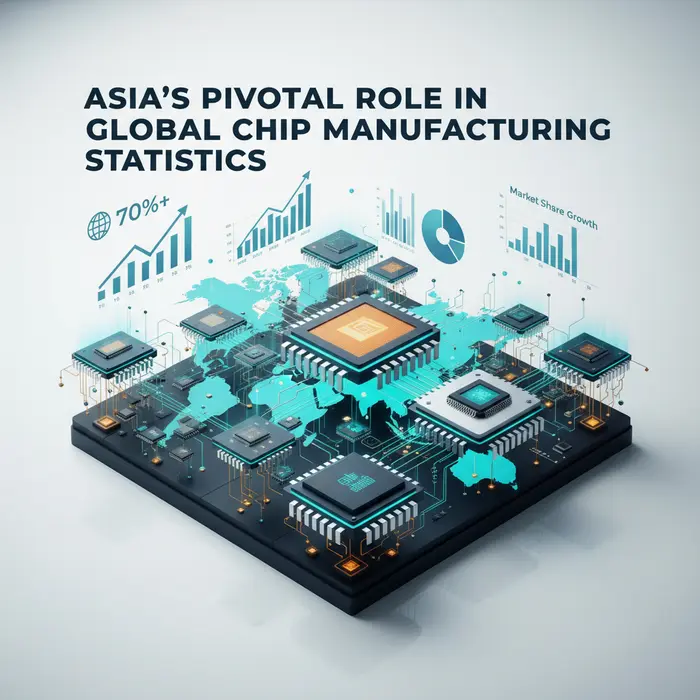
Asia’s Pivotal Role in Global Chip Manufacturing Statistics
Asia stands as the undisputed epicenter of the Global Semiconductor Market Outlook 2024, dictating the pace and direction of global chip production. An in-depth analysis of the Asia electronics export market reveals its profound influence on the world’s technological landscape. From cutting-edge fabrication plants to vast assembly lines, the continent’s contributions are fundamental to every aspect of the semiconductor supply chain trends. As demand for advanced electronics components continues to surge, understanding Asia’s role in global chip manufacturing statistics becomes paramount for anyone involved in electronics component sourcing B2B. Its strategic importance is not merely about volume but also about technological innovation, substantial investments, and intricate supply chain networks that underpin nearly every smart device, vehicle, and piece of industrial equipment worldwide.
Key Manufacturing Hubs: China, Taiwan, South Korea, Japan
The backbone of Asia’s semiconductor dominance rests squarely on its established manufacturing giants: China, Taiwan, South Korea, and Japan. Each plays a distinct yet interconnected role. Taiwan, home to TSMC, commands an overwhelming share of the global foundry market, particularly for advanced logic chips, making it indispensable for any global chip manufacturing statistics analysis. Its expertise in high-volume, cutting-edge chip fabrication is unrivaled, influencing everything from smartphone processors to AI accelerators. South Korea, led by Samsung and SK Hynix, dominates the memory chip market (DRAM and NAND flash), critical components for data centers, mobile devices, and PCs. Japan, while not as prominent in chip manufacturing itself today, remains a vital player in the upstream semiconductor supply chain, providing essential materials (e.g., photoresists, silicon wafers) and highly specialized manufacturing equipment. China, on the other hand, is rapidly expanding its domestic chip production capabilities, aiming for self-sufficiency while also serving as a massive hub for assembly, testing, and packaging (ATP) operations. Its burgeoning domestic market and significant government investment continue to reshape the Asia electronics export market landscape. According to the Semiconductor Industry Association (SIA), the broader Asia Pacific region consistently accounts for the largest share of global semiconductor sales, underscoring the collective impact of these manufacturing titans.
ASEAN Region’s Growing Contribution to Exports
Beyond the traditional powerhouses, the ASEAN (Association of Southeast Asian Nations) region is rapidly emerging as a significant force in the global semiconductor supply chain, particularly for electronics component sourcing B2B. Countries like Malaysia, Vietnam, Singapore, Thailand, and the Philippines are attracting substantial foreign direct investment, establishing themselves as key centers for semiconductor assembly, testing, and packaging (ATP). Malaysia, for instance, has long been a critical hub for outsourced semiconductor assembly and test (OSAT) services, handling a substantial portion of the world’s chip packaging. Vietnam and Thailand are increasingly becoming attractive destinations for manufacturing expansion due to competitive labor costs, growing infrastructure, and supportive government policies. Singapore, while a smaller nation, plays a crucial role in high-value manufacturing, R&D, and as a regional headquarters for many multinational semiconductor firms. This diversification across ASEAN helps de-risk the global supply chain, contributing to more resilient global chip manufacturing statistics and a broader Asia electronics export market base.
Investment in Advanced Packaging and Fabrication Facilities
The future of the Global Semiconductor Market Outlook 2024 is heavily reliant on continuous investment in advanced technologies. Asia is at the forefront of this capital expenditure, with massive investments pouring into state-of-the-art fabrication (fab) facilities and advanced packaging techniques. Countries like Taiwan and South Korea are pushing the boundaries of process technology, investing billions in developing and scaling up production of 3nm, 2nm, and even sub-2nm nodes. Advanced packaging solutions, such as 3D stacking, chiplets, and fan-out wafer-level packaging (FOWLP), are crucial for enhancing chip performance, reducing power consumption, and enabling more complex integrated systems. These investments are not just about building new fabs but also about developing the human capital, R&D infrastructure, and collaborative ecosystems necessary to maintain a competitive edge. This relentless pursuit of innovation ensures that Asia will continue to dominate global chip manufacturing statistics, driving the next generation of technological advancements and maintaining its pivotal role in the global electronics component sourcing B2B landscape. The region’s commitment to cutting-edge technology ensures its enduring influence on worldwide semiconductor supply chain trends.
Key Market Segments & Demand Outlook for 2025
The global semiconductor market is poised for significant expansion in 2025, driven by an accelerating confluence of technological advancements and digital transformation initiatives across industries. As we look ahead, a detailed understanding of the primary sectors fueling this demand is crucial for stakeholders involved in electronics component sourcing B2B and tracking semiconductor supply chain trends. From cutting-edge artificial intelligence to the pervasive Internet of Things, the demand landscape is diversifying, pushing innovation in chip design and manufacturing. The Global Semiconductor Market Outlook 2024 anticipated robust growth, and 2025 is expected to build on this momentum, characterized by increased investment in advanced fabrication and a competitive Asia electronics export market.
1. AI & High-Performance Computing (HPC) Demand
Artificial Intelligence and High-Performance Computing (HPC) stand out as monumental drivers for semiconductor demand heading into 2025. The insatiable appetite for processing power, fueled by generative AI, machine learning models, and complex data analytics, is creating an unprecedented need for advanced processors, GPUs, and specialized AI accelerators. Data centers, the backbone of this digital revolution, are undergoing massive upgrades to handle exascale computing and intricate AI workloads. This translates into a surge in demand for high-end CPUs, memory solutions (HBM – High Bandwidth Memory), and sophisticated network interface controllers (NICs). Moreover, the push for energy efficiency and faster data throughput is compelling chip manufacturers to innovate with advanced packaging technologies and migrate to sub-5nm process nodes. This segment is not just about raw power; it’s also about tailored solutions, such as custom ASICs (Application-Specific Integrated Circuits) designed for specific AI tasks, further fragmenting and expanding the market. According to a Statista report, the global AI chip market is forecast to reach over $116 billion by 2027, underscoring the foundational role of semiconductors in the AI revolution.
2. Automotive Electronics: EVs, ADAS, and Infotainment
The automotive sector continues its transformation into a major consumer of advanced semiconductors, with significant implications for global chip manufacturing statistics. Electric Vehicles (EVs), Advanced Driver-Assistance Systems (ADAS), and sophisticated in-car infotainment systems are at the forefront of this evolution. EVs, in particular, require a vast array of power semiconductors (IGBTs, MOSFETs, SiC devices) for power conversion, battery management, and motor control, contributing significantly to the overall bill of materials. The ongoing shift from internal combustion engines to electric powertrains will only intensify this demand. ADAS features, ranging from adaptive cruise control to lane-keeping assistance and automated parking, rely on high-performance sensors (radar, lidar, cameras), microcontrollers, and powerful AI processors for real-time data processing and decision-making. As the industry moves towards higher levels of autonomous driving, the complexity and quantity of these chips will exponentially increase. Simultaneously, infotainment systems are becoming more sophisticated, demanding powerful SoCs (System-on-Chips) for seamless user interfaces, connectivity, and integration with external services. The stringent reliability and safety requirements of automotive applications also mean higher-grade, often custom-designed, semiconductors, presenting unique challenges and opportunities for semiconductor supply chain trends.
3. Growth in IoT, 5G, and Edge Computing Applications
The proliferation of the Internet of Things (IoT), coupled with the expansive rollout of 5G networks and the rise of edge computing, is creating a massive and diverse demand for semiconductors. Billions of connected devices, spanning smart homes, industrial automation, healthcare, and smart cities, require specialized, often low-power, microcontrollers, sensors, connectivity modules (Wi-Fi, Bluetooth, cellular), and security chips. Each sensor node and IoT device, no matter how small, contributes to the overall silicon demand. The global deployment of 5G is not just about faster mobile broadband; it’s a foundational technology enabling new applications requiring ultra-low latency and massive machine-type communications. This drives demand for 5G modems, RF (radio frequency) front-end modules, and base station components. Furthermore, the imperative to process data closer to its source, rather than sending everything to the cloud, is fueling the growth of edge computing. This requires specialized edge AI processors and microcontrollers capable of efficient, real-time data analysis with minimal power consumption. The diversity of these applications means a broad spectrum of semiconductor products, from analog chips to custom logic, will continue to see strong demand. Understanding these intricate dynamics is vital for those navigating the Global Semiconductor Market Outlook 2024 and planning for future electronics component sourcing B2B strategies.
Conclusion:
The year 2025 will underscore the indispensable role of semiconductors across virtually every facet of modern technology. From powering the next generation of artificial intelligence and advancing automotive autonomy to enabling a truly connected world via IoT and 5G, the demand drivers are robust and diverse. Manufacturers and electronics component sourcing B2B specialists must remain agile, adapting to evolving semiconductor supply chain trends and regional developments, particularly within the competitive Asia electronics export market. The sustained growth in these key segments promises a dynamic and innovative landscape for the semiconductor industry in the years to come.
Global Semiconductor Market Outlook & Strategic Implications 2025
A comprehensive forecast for the global semiconductor market in 2025, outlining potential growth areas, regulatory challenges, and strategic recommendations for industry stakeholders.
The Global Semiconductor Market Outlook 2024 provides a crucial lens through which to view the landscape of 2025, anticipating robust growth driven by accelerating digitalization, AI proliferation, and the persistent demand for advanced electronics. As industries worldwide continue their digital transformation journeys, the foundational role of semiconductors becomes ever more pronounced. This comprehensive forecast delves into the projected market dynamics, emerging regulatory hurdles, and offers actionable strategic recommendations for industry stakeholders to navigate the complexities and capitalize on the opportunities within this pivotal sector. Understanding the intricate semiconductor supply chain trends will be paramount for any business involved in electronics component sourcing B2B.
1. Projected Market Growth Rates and Revenue Forecasts
The global semiconductor market is poised for significant expansion in 2025, following a period of cyclical adjustments. Analysts project a healthy growth trajectory, largely fueled by sustained demand from key end-markets. Artificial intelligence (AI) and machine learning (ML) applications are at the forefront, necessitating high-performance computing chips, memory, and specialized AI accelerators. The burgeoning Internet of Things (IoT) ecosystem, coupled with advancements in 5G infrastructure, electric vehicles (EVs), and industrial automation, will continue to be primary drivers. We anticipate double-digit percentage growth in certain segments, pushing overall market revenues significantly past previous highs. For instance, the market for data center and AI-centric chips is expected to see particularly aggressive growth, reflecting massive investments by tech giants. Memory chips, after a period of oversupply, are forecast to rebound strongly, driven by new generative AI server builds and recovering consumer electronics demand. Emerging economies, particularly within the Asia electronics export market, are also expected to contribute substantially to this growth, both as consumers and increasingly as producers. Businesses tracking the Global Semiconductor Market Outlook 2024 must pay close attention to regional shifts in demand and production capacity.
2. Impact of Government Policies and Subsidies
Government policies and strategic subsidies are increasingly shaping the global semiconductor landscape, marking a decisive shift towards national and regional self-sufficiency. Initiatives such as the U.S. CHIPS Act, the EU Chips Act, and similar programs in Japan, Korea, and India are injecting billions into domestic manufacturing and R&D. These policies aim to mitigate geopolitical risks, reduce reliance on concentrated manufacturing hubs, and foster innovation within national borders. While these subsidies promise to boost local production capabilities and innovation, they also introduce potential complexities, including trade friction, distorted market dynamics, and increased competition for skilled labor. Stakeholders must meticulously analyze these policy frameworks to identify investment opportunities, understand compliance requirements, and anticipate their effects on global supply chains. The drive for domestic resilience is leading to a restructuring of global chip manufacturing statistics, with new fabs breaking ground in diverse geographies. This strategic reorientation underscores the critical importance of monitoring the Global Semiconductor Market Outlook 2024 for policy-driven shifts. Businesses engaged in electronics component sourcing B2B will need to adapt their strategies to these evolving geopolitical realities. For an in-depth understanding of the global policy landscape, the Semiconductor Industry Association (SIA) offers valuable insights into the market and policy developments.
3. Sustainability and ESG Considerations in Manufacturing
Sustainability and Environmental, Social, and Governance (ESG) considerations are rapidly moving from peripheral concerns to central strategic imperatives within the semiconductor industry. The intensive energy and water consumption of chip manufacturing, coupled with the generation of hazardous waste, necessitates a proactive approach to environmental stewardship. Companies are under increasing pressure from investors, regulators, and consumers to demonstrate commitment to reducing their carbon footprint, improving resource efficiency, and ensuring ethical labor practices throughout their semiconductor supply chain trends. This trend is leading to significant investments in green manufacturing technologies, renewable energy sourcing, and advanced waste management systems. Furthermore, transparent reporting on ESG metrics is becoming a non-negotiable requirement for market access and investment. Forward-thinking companies are integrating sustainability into their core business models, viewing it not just as a compliance burden but as a source of competitive advantage and long-term value creation. Adherence to robust ESG standards will differentiate leaders in the Asia electronics export market and beyond. As part of the Global Semiconductor Market Outlook 2024, understanding these sustainability shifts is vital for future-proofing business models and maintaining stakeholder trust.
Strategic Implications and Recommendations:
For industry stakeholders, the 2025 landscape demands agility and foresight. Companies must diversify their supply chains, explore reshoring or nearshoring options where economically viable, and invest heavily in R&D, particularly in areas like advanced packaging, AI-specific hardware, and sustainable manufacturing processes. Collaboration across the value chain – from material suppliers to equipment manufacturers and end-product integrators – will be crucial for navigating technological shifts and geopolitical complexities. Embracing circular economy principles and investing in employee upskilling will also be key to sustained success in this dynamic environment. The Global Semiconductor Market Outlook 2024 underscores a period of both significant opportunity and profound transformation.
Partner with Vietnam’s Leading Suppliers
Looking for reliable suppliers in Vietnam? Contact VietnamSuppliers.com today to connect with verified manufacturers and exporters across all industries.
—————————————
References
– Semiconductor Industry Association (SIA) market update: https://www.semiconductors.org/semiconductor-industry-posts-strong-annual-sales-increase-in-q1-2024/
– The semiconductor industry: A supercycle in the making – McKinsey: https://www.mckinsey.com/industries/semiconductors/our-insights/the-semiconductor-industry-a-supercycle-in-the-making
– Semiconductor Industry Association (SIA) Global Sales Report: https://www.semiconductors.org/wp-content/uploads/2024/02/SIA-Global-Sales-Report-January-2024.pdf
– Statista report on AI Chip Market Size: https://www.statista.com/statistics/1239618/ai-chip-market-size-worldwide/
– Semiconductor Industry Association (SIA): https://www.semiconductors.org/

