
Understanding Export Credit Insurance
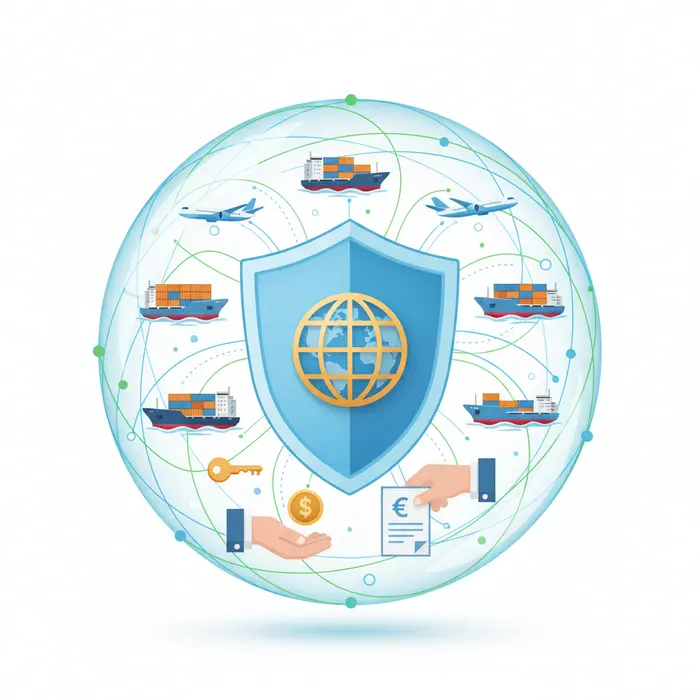
In the complex and often unpredictable landscape of international trade, businesses face a myriad of risks, particularly concerning payment from overseas buyers. Export Credit Insurance emerges as a vital financial tool designed to safeguard exporters against the devastating impact of non-payment. This specialized form of coverage ensures that even when foreign buyers default due to commercial or political reasons, exporters can still recover a significant portion of their invoice value. It’s a cornerstone of export payment risk mitigation, empowering companies to expand into new markets with greater confidence and financial security.
1. What is Export Credit Insurance?
Export Credit Insurance is a risk management solution specifically tailored for businesses engaged in cross-border trade. Its core function is to protect exporters from losses incurred when foreign buyers fail to pay for goods or services supplied on credit terms. Unlike standard business insurance, it focuses exclusively on the unique financial and political risks inherent in international transactions. This insurance typically covers two main categories of risks:
- Commercial Risks: These include buyer insolvency, protracted default (failure to pay within a specified extended period), and buyer bankruptcy.
- Political Risks: Unique to international trade, these risks arise from events in the buyer’s country beyond the control of the buyer or seller. Examples include war, revolution, civil strife, expropriation, currency inconvertibility or transfer restrictions, and changes in import/export regulations that prevent payment.
By transferring these payment risks to an insurer, export credit insurance providers enable exporters to offer competitive credit terms to their international customers, facilitating smoother and more robust trade relationships without jeopardizing their own cash flow or profitability. It’s an indispensable tool for international trade credit protection.
2. How it Differs from Domestic Trade Credit Insurance
While both Export Credit Insurance and general Trade Credit Insurance aim to protect businesses against non-payment from customers, their scope and complexities differ significantly. Domestic trade credit insurance primarily covers commercial risks within a single country’s legal and economic framework. It addresses issues like buyer insolvency or protracted default for local sales.
Export credit insurance, however, operates on a global scale, incorporating additional layers of risk and complexity:
- Geographic Scope: Domestic policies are confined to national borders, whereas export policies cover sales to multiple countries, each with its own economic, legal, and political landscape.
- Political Risk Coverage: This is the most significant differentiator. Domestic policies do not typically cover political risks, as these are generally non-existent or minimal in a stable domestic environment. Export credit insurance explicitly covers political events in the buyer’s country that prevent payment. For example, a sudden government moratorium on foreign currency exchange or a civil uprising that halts business operations would be covered under an export policy, but not a domestic one.
- Currency Fluctuations and Transfer Risks: International trade involves different currencies, introducing risks related to currency conversion and the ability to transfer funds across borders, which are specific concerns addressed by export credit insurance.
- Legal Frameworks: Enforcement of contracts and collection of debts across international borders can be significantly more complicated and costly due to differing legal systems and jurisdictions. Export credit insurers have expertise in navigating these international legal challenges.
- Underwriting Complexity: Assessing creditworthiness for foreign buyers often requires more specialized knowledge, access to international credit databases, and an understanding of country-specific economic and political stability, making the underwriting process for export policies more intricate. The U.S. Export-Import Bank (EXIM), for instance, offers extensive programs to help manage these unique international trade risks.
3. Key Benefits for Exporters
Implementing Export Credit Insurance offers a multitude of advantages that can significantly boost an exporter’s competitiveness and financial health:
- Risk Mitigation and Financial Security: The primary benefit is protection against non-payment, safeguarding cash flow and profits. This stability allows businesses to forecast more accurately and avoid financial distress caused by unexpected defaults.
- Ability to Offer Competitive Credit Terms: With payment risk mitigated, exporters can confidently offer open account terms or longer payment periods, making their proposals more attractive to international buyers compared to competitors demanding letters of credit or cash in advance. This can lead to increased sales and market share.
- Enhanced Access to Financing: Insured receivables can often be used as collateral to secure more favorable financing from banks and other lenders. This improves the exporter’s borrowing capacity and liquidity, freeing up working capital for growth and investment.
- Market Expansion with Confidence: By reducing the financial exposure associated with new or higher-risk markets, exporters can explore and enter these regions more aggressively without undue apprehension, opening up new revenue streams.
- Professional Debt Collection Support: Many export credit insurance policies include access to professional debt collection services for overdue accounts, both domestically and internationally, relieving the exporter of this often-costly and time-consuming burden.
- Peace of Mind: Ultimately, export credit insurance provides peace of mind, allowing exporters to focus on their core business operations – manufacturing, marketing, and sales – rather than constantly worrying about payment uncertainties from international customers.
In essence, Export Credit Insurance is not just a safety net; it’s a strategic tool that facilitates growth, stability, and competitiveness for businesses operating in the global marketplace, turning potential risks into opportunities for expansion and success.
Why Export Credit Insurance is Essential for Global Trade
International trade, while offering immense opportunities for growth and market expansion, is inherently fraught with risks. Exporters routinely face the specter of non-payment, political instability, and economic downturns in foreign markets. In this volatile global landscape, Export Credit Insurance emerges as a crucial safeguard, providing essential export payment risk mitigation and international trade credit protection. This specialized form of trade credit insurance is designed to protect businesses against the commercial and political risks associated with selling goods and services to international buyers on credit terms, ensuring that exporters get paid even if their overseas customers cannot or will not pay.
1. Navigating International Payment Risks
Venturing into international markets exposes businesses to a complex web of payment risks that are far more intricate than those encountered in domestic trade. These include varying legal systems, fluctuating currency exchange rates, a lack of transparent credit information on foreign buyers, and significantly longer payment cycles. Without adequate protection, a single defaulted payment from an overseas customer can severely impact an exporter’s cash flow, jeopardize profitability, and even threaten the viability of the business. Export Credit Insurance acts as a critical buffer, offering peace of mind by underwriting these payment risks. It enables exporters to confidently extend open account terms to foreign buyers, which are often preferred by international customers, without bearing the full burden of non-payment risk. This allows businesses to maintain competitiveness and foster stronger, long-term relationships with their global partners.
2. Protecting Against Buyer Default and Political Risks
The core function of Export Credit Insurance is to shield exporters from two primary categories of risks: commercial risks and political risks. Commercial risks typically involve the financial instability or outright insolvency of the foreign buyer. This could manifest as bankruptcy, protracted default (failure to pay within a specified period after the due date), or refusal to accept goods. Without insurance, these scenarios can lead to substantial financial losses and costly legal battles across international borders.
Equally critical are political risks, which are unique to international trade and often beyond the control of either the buyer or the seller. These include events such as war, revolution, civil unrest, terrorism, or natural disasters that prevent payment or shipment. Furthermore, government actions like currency inconvertibility or transfer restrictions, expropriation, import or export license cancellations, or new import restrictions can halt trade and payments. Export credit insurance providers specialize in assessing and covering these complex and often unpredictable political risks, offering a vital layer of international trade credit protection that traditional domestic insurance policies do not provide. By covering both buyer default and political upheavals, ECI ensures that exporters are compensated, minimizing their exposure to the unpredictable nature of global geopolitics and economics.
3. Enhancing Your Export Competitiveness
Beyond its primary role in risk mitigation, Export Credit Insurance serves as a powerful tool for enhancing an exporter’s overall competitiveness in the global marketplace. By securing their receivables, businesses can confidently offer more flexible and attractive payment terms to potential international buyers, such as open account terms or longer credit periods. This can be a decisive factor in winning contracts against competitors who demand upfront payment or letters of credit, thereby increasing sales and market share.
Furthermore, an Export Credit Insurance policy often facilitates easier access to working capital and trade finance. Banks and other financial institutions are typically more willing to lend against insured foreign receivables, as the risk of non-payment is significantly reduced. This allows exporters to leverage their sales to secure better financing rates and improve cash flow, freeing up capital for reinvestment, expansion into new markets, or product development. Ultimately, ECI empowers exporters to explore and penetrate riskier, yet potentially lucrative, emerging markets with greater confidence, transforming potential liabilities into secured assets and driving sustainable international growth for businesses worldwide.
Types of Export Credit Insurance Policies
Navigating international trade requires robust financial protection against unforeseen payment defaults. Export Credit Insurance is a critical shield, safeguarding exporters against commercial risks (like buyer insolvency) and political risks (such as war or currency inconvertibility). Understanding the diverse policy structures and coverage options is paramount for effective export payment risk mitigation and ensuring business continuity. This guide details the principal policy types, offering clarity on how exporters can secure their international receivables.
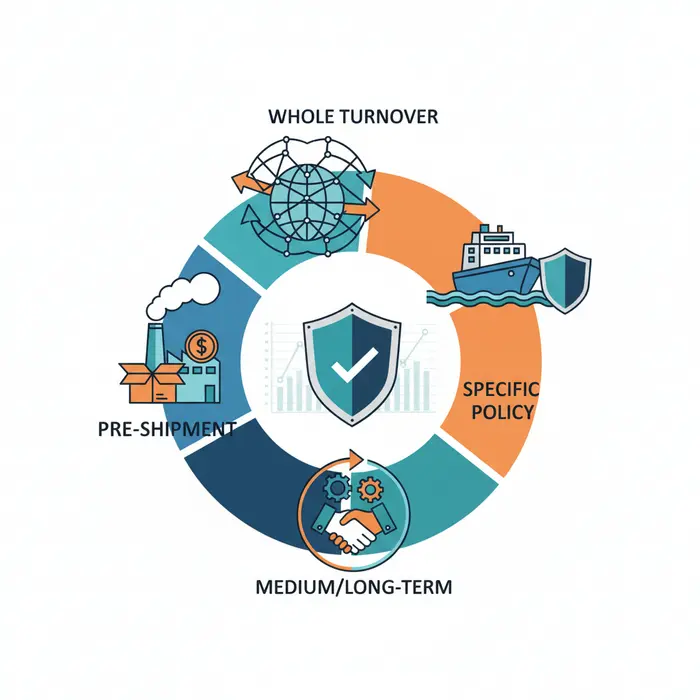
1. Whole Turnover vs. Specific Contract Policies
Exporters primarily choose between comprehensive coverage for all eligible sales or targeted protection for individual transactions.
Whole Turnover Policies: These cover an exporter’s entire portfolio of eligible overseas sales against non-payment. Insuring most foreign buyers provides a comprehensive safety net.
- Benefits: Offers broad protection, often at a more favorable premium rate due to risk diversification. It simplifies administration and can enhance borrowing capacity as banks view insured receivables as higher quality collateral. Ideal for exporters with consistent, high-volume trade across various international markets.
- Coverage: Typically includes both commercial risks (e.g., buyer bankruptcy) and political risks (e.g., government actions preventing payment transfer).
Specific Contract Policies: Tailored to cover a single, clearly defined export transaction or project, chosen when the risk is exceptionally high, the contract value substantial, or payment terms unusually long.
- Benefits: Allows for precise risk assessment and coverage customization for unique circumstances. Valuable for one-off, high-value capital goods exports, large infrastructure projects, or sales to politically sensitive regions.
- When to Choose: Exporters with many small, frequent transactions typically opt for whole turnover, while those with infrequent, high-value, or complex deals might find specific contract policies more suitable. Some exporters use both.
2. Short-Term vs. Medium-Long Term Coverage
The duration of payment terms significantly influences the type of International trade credit protection required.
Short-Term Coverage: Addresses payment terms typically up to 180 days (sometimes 360 days), common for open account sales, documentary collections, or letters of credit. This is the most common form of export credit insurance, widely available from private and government-backed export credit insurance providers.
- Products: Often delivered through whole turnover policies, protecting against standard commercial and political risks inherent in short-term trade.
- Market: Primarily serves exporters of consumer goods, raw materials, and components with typical trade cycles.
Medium-Long Term Coverage: Designed for complex, capital-intensive transactions, covering payment terms exceeding 180 days, often spanning several years (e.g., 1-5+ years). Crucial for capital goods exports, large industrial projects, and services involving extended manufacturing, delivery, and payment schedules.
- Complexity: Underwriting is more intricate due to longer exposure and higher values, often involving project finance structures and deep analysis of buyer financials and political stability.
- Providers: Government Export Credit Agencies (ECAs) play a predominant role, supporting strategic national exports that private insurers might deem too risky. These policies can also facilitate financing by guaranteeing bank loans against long-term receivables.
3. Bespoke Solutions for Niche Markets
While standard policies cover many exporters, the dynamic nature of global trade often requires specialized, “bespoke” solutions for particular market segments or unique risk profiles.
Addressing Specific Needs:
- Small and Medium-sized Enterprises (SMEs): Require simpler, more flexible, and affordable Trade Credit Insurance solutions. Insurers offer streamlined applications and bundled services for smaller businesses mitigating international payment risks.
- Emerging Markets and High-Risk Regions: Exporting to volatile political landscapes or less developed financial infrastructures presents elevated risks. Insurers craft specialized policies accounting for heightened political risk, currency convertibility issues, or legal enforceability challenges, often with specific conditions or higher premiums.
- Pre-shipment Risk Coverage: Extends protection to the pre-shipment phase, covering losses if a buyer cancels a contract before goods are shipped, especially for custom-made or long lead-time products with substantial production costs.
- Political Risk Insurance (PRI) Standalone: For scenarios where commercial risk is minimal but political instability is a major concern, exporters might opt for standalone PRI, focusing exclusively on perils like expropriation, political violence, or currency inconvertibility.
- Specific Industry Requirements: Industries like aerospace or large-scale infrastructure have unique contractual structures and timelines. Insurers and brokers develop highly customized policies aligning with their distinct operational and risk profiles.
In summary, the Export Credit Insurance landscape is diverse, offering options from broad whole turnover policies to specialized, single-contract coverage, adapted to different payment terms and market complexities. Partnering with experienced export credit insurance providers and brokers is crucial to identify the most appropriate policy structure for your unique export strategy and ensure robust export payment risk mitigation.
Choosing the Right Export Credit Insurance Provider
Choosing the right Export Credit Insurance provider is a critical decision for any exporter looking to safeguard their international sales against the risk of buyer non-payment. This guide outlines the essential criteria and considerations to ensure you select a partner that aligns with your business needs and risk profile. By carefully evaluating providers, you can secure comprehensive protection, facilitating confident expansion into new and existing markets.
1. Key Factors When Evaluating Providers
Definition: This section delves into the foundational elements an exporter must scrutinize when assessing potential Export Credit Insurance providers, ensuring a robust and reliable partnership.
When embarking on the journey to select a suitable Export Credit Insurance provider, several key factors demand meticulous attention. Firstly, financial strength and stability are paramount. You need assurance that the insurer can fulfill its obligations, especially during economic downturns. Reputable providers often have strong credit ratings from agencies like S&P or Moody’s. Secondly, consider their industry expertise and global reach. A provider with a deep understanding of your specific industry and the markets you operate in can offer more tailored coverage and accurate risk assessments. Their global network can be invaluable for monitoring buyer creditworthiness worldwide and facilitating local claims processing.
Thirdly, claims processing efficiency and track record are crucial. Investigate their reputation for timely and fair claim settlements. A cumbersome or slow claims process can negate the benefits of the insurance. Fourth, evaluate the flexibility and customization of their policies. Can they adapt to your unique trade terms, sales volume, and risk appetite? Some providers offer ‘whole turnover’ policies, while others specialize in ‘specific buyer’ or ‘single transaction’ cover. Finally, don’t underestimate the importance of customer service and support. A responsive and knowledgeable account manager can be an invaluable asset in navigating policy terms, making credit limit requests, and managing your risk portfolio. Understanding these aspects helps in selecting an Export Credit Insurance provider that offers more than just a policy – but a strategic partnership for your export payment risk mitigation.
2. Understanding Coverage Limits and Premiums
Definition: This section explores how exporters should analyze the scope of protection offered by an Export Credit Insurance policy, specifically focusing on the extent of coverage and the cost associated with it.
A critical component of selecting the right Export Credit Insurance is a thorough understanding of the coverage limits and how they apply to your specific transactions. Coverage limits define the maximum amount an insurer will pay out for a buyer’s non-payment. It’s essential to ensure these limits adequately cover your potential exposure for each buyer and market. Overly restrictive limits might leave you underinsured, while excessively high limits could lead to unnecessary premium costs. Providers will assess the creditworthiness of your buyers to establish these limits, which can be adjusted over time based on updated financial data.
Equally important is comprehending the premium structure. Premiums are typically calculated based on a percentage of your insured turnover, but this rate is influenced by several factors: the overall risk profile of your buyers, the countries you export to, your past claims history, the payment terms offered (e.g., open account, sight draft), and the breadth of coverage requested. Some policies might have deductibles or co-insurance clauses, where the exporter retains a small percentage of the risk. It’s vital to compare premium costs against the value of the International trade credit protection offered. While a lower premium might seem attractive, it could signify less comprehensive coverage or higher deductibles. Always seek transparency regarding how premiums are calculated and what precisely is covered and excluded. For those looking to explore various Export Credit Insurance solutions and compare options to mitigate export payment risk, you can find more information and resources available.
3. The Role of Brokers in Your Decision
Definition: This section highlights the invaluable contribution of experienced brokers in guiding exporters through the complexities of the Export Credit Insurance market and securing optimal coverage.
Navigating the intricate landscape of Trade Credit Insurance can be challenging, especially for those new to international trade. This is where an experienced broker can play a pivotal role in your decision-making process. Brokers act as independent intermediaries, working on behalf of the exporter to identify and secure the most suitable policy. They possess an in-depth understanding of the market, including the various providers, their specific policy wordings, pricing structures, and typical underwriting requirements.
A good broker will begin by conducting a thorough analysis of your business, your export markets, your customer base, and your specific risk concerns. Based on this assessment, they can then approach multiple Export Credit Insurance providers, obtaining competitive quotes and negotiating favorable terms on your behalf. This comparative shopping is invaluable, as policies can vary significantly in their coverage, exclusions, and cost. Furthermore, brokers can help you understand the nuances of different policy clauses, assist with the application process, and even provide guidance during a potential claims scenario. Their expertise can save you considerable time and effort, ensuring you secure a policy that offers robust protection at a competitive price, allowing you to focus on growing your international business with confidence, knowing your Export Credit Insurance is in capable hands.
Implementing and Maximizing Your Export Credit Insurance
Exporting presents immense growth opportunities, but it also exposes businesses to inherent payment risks from international buyers. Export Credit Insurance is a critical tool designed to mitigate these risks, safeguarding your cash flow and enabling confident global expansion. Far from being a mere safety net, a properly integrated trade credit insurance policy can become a strategic asset, empowering businesses to offer competitive payment terms and access better financing. This section will guide you through the practical steps of integrating export credit insurance into your operations, ensuring you harness its full potential for sustainable international growth.

1. Steps to Apply for Coverage
Securing international trade credit protection begins with a systematic application process.
Firstly, research various export credit insurance providers. Major players include government-backed agencies and private insurers, each offering different policy structures, coverage limits, and industry specializations. It’s crucial to compare their offerings, understand their underwriting criteria, and assess their reputation for claims handling. For a comprehensive overview of the global industry, consider exploring resources from the Berne Union, the international association of export credit and investment insurers. Look for a provider whose services align with your target markets, buyer profiles, and specific export payment risk mitigation needs.
Once you’ve selected a potential provider, the application typically involves submitting comprehensive information about your company, your export markets, and your prospective buyers. You’ll need to provide financial statements, details of your trade history, and specific data on the buyers you wish to insure, including their legal names, addresses, and estimated credit needs. The insurer will then conduct a thorough credit assessment of each proposed buyer. Based on this assessment, they will set individual credit limits, which define the maximum amount they will cover for each buyer. This initial phase is crucial, as accurate and detailed information facilitates a smoother underwriting process and ensures adequate coverage.
2. Managing Your Policy and Claims Process
Effective management is key to maximizing the benefits of your Export Credit Insurance policy. Post-coverage, continuous monitoring of your buyers’ creditworthiness is paramount. Many insurers provide online portals or regular updates on your insured buyers, allowing you to stay informed of any changes in their financial health or risk rating. It’s your responsibility to promptly report any adverse information you receive about a buyer to your insurer, such as payment delays or financial difficulties, as this can affect your coverage.
Should a buyer default on payment, understanding the claims process is vital. Most policies require you to notify the insurer within a specified timeframe after the payment due date or after becoming aware of the buyer’s insolvency. You will need to submit detailed documentation, including invoices, shipping documents, proof of delivery, and any communication related to collection efforts. The insurer will then investigate the claim and, if valid, will typically compensate you for a significant percentage of the outstanding debt, subject to the policy’s deductible and credit limits. Transparent and timely communication with your insurer throughout this process is essential for a swift and successful claim resolution.
3. Leveraging Insurance for Trade Finance
Beyond basic risk mitigation, Export Credit Insurance serves as a powerful instrument for enhancing your trade finance capabilities. Banks and other financial institutions often view an insured export receivable as lower risk. This reduced risk profile can enable you to secure more favorable financing terms, such as larger working capital loans, lower interest rates, or extended credit lines. By assigning your insurance policy to a bank, you can use your insured receivables as collateral, unlocking liquidity that might otherwise be tied up in outstanding payments. This is particularly beneficial for businesses looking to expand rapidly or manage large, long-term contracts.
Furthermore, with the assurance of payment, you can confidently offer more competitive payment terms to your international buyers, such as open account terms instead of letters of credit or cash in advance. This flexibility can be a significant differentiator in competitive global markets, helping you attract new customers and strengthen existing relationships. Ultimately, leveraging Export Credit Insurance not only protects you from unexpected losses but also acts as a catalyst for strategic growth, enabling you to expand into new markets and pursue larger orders with greater financial security.
Conclusion: Integrating and maximizing your Export Credit Insurance involves a proactive approach from application to claims and beyond. By understanding the process, diligently managing your policy, and strategically utilizing it for trade finance, businesses can transform payment risks into opportunities for growth and stability. It provides peace of mind, allowing you to focus on what you do best: growing your business on the global stage.
Partner with Vietnam’s Leading Suppliers
Looking for reliable suppliers in Vietnam? Contact VietnamSuppliers.com today to connect with verified manufacturers and exporters across all industries.
—————————————
References
– U.S. Export-Import Bank (EXIM) Export Credit Insurance: https://www.exim.gov/what-we-do/export-credit-insurance
– Export Credit Insurance | EXIM Bank: https://www.exim.gov/products/export-credit-insurance
– Export Credit Insurance – International Trade Administration: https://www.trade.gov/export-credit-insurance
– U.S. EXIM Bank Export Credit Insurance Programs: https://www.exim.gov/products/export-credit-insurance
– Berne Union: https://www.berneunion.org/

