Understanding International Freight Insurance 2025
In the intricate ballet of global commerce, where goods traverse oceans, skies, and landmasses, the potential for unforeseen events looms large. From natural disasters and accidental damage to theft and political instability, the risks associated with international shipping are multifaceted and ever-evolving. This is precisely where International Freight Insurance steps in, acting as a critical safeguard for businesses engaged in cross-border trade. This section delves into the fundamental concept, paramount importance, and historical evolution of international freight insurance in the modern global trade landscape, laying the groundwork for a deeper exploration of its nuances and strategic value.
1. What is International Freight Insurance & Why It’s Crucial?
At its core, International Freight Insurance is a specialized form of coverage designed to protect goods against loss, damage, or theft while in transit between countries. Unlike carrier liability, which often provides minimal compensation and has stringent limitations, a comprehensive international shipment insurance policy offers robust financial protection. This coverage extends across various modes of transport, whether it’s by sea (covered by a Marine cargo insurance policy), air (considering Air cargo insurance rates), road, or rail.
The cruciality of this insurance cannot be overstated. In a globalized economy, supply chains are often lengthy and complex, exposing cargo to a multitude of perils. Without adequate insurance, businesses face the potential for significant financial losses, disruptions to their supply chain, and even insolvency in the event of a major incident. For importers, it ensures the safe arrival of their purchased goods or compensation for their value. For exporters, it protects their revenue, reputation, and relationship with buyers. It provides peace of mind, allowing companies to focus on their core business activities rather than worrying about the myriad risks associated with transit.
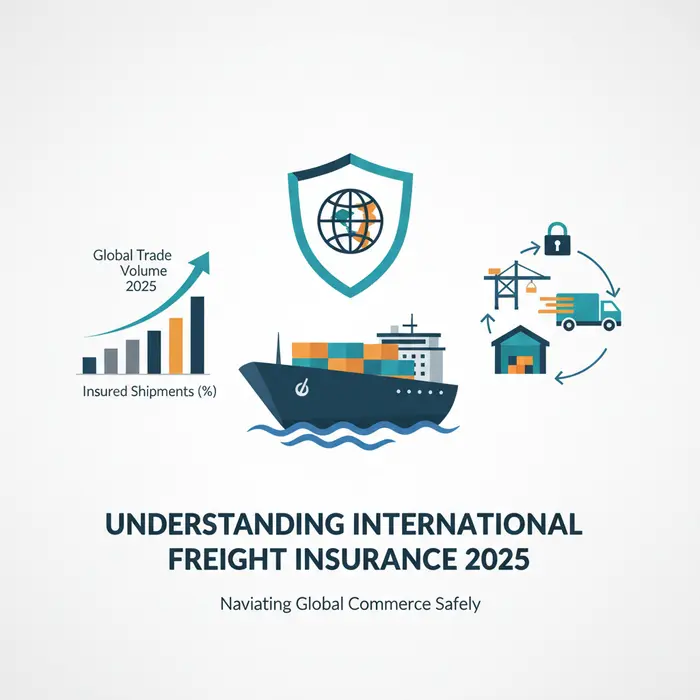
2. Key Benefits for Importers, Exporters, and Logistics Providers
The advantages of securing International Freight Insurance ripple across all stakeholders in the global trade ecosystem:
- For Importers: They gain protection against financial loss if goods are damaged, lost, or stolen before delivery. This ensures budget predictability and mitigates the risk of needing to re-order and re-ship, which can be costly and time-consuming. It also often helps with customs clearance and minimizes disputes with sellers or carriers. Understanding international shipment insurance cost becomes a vital part of their landed cost calculation.
- For Exporters: Insurance protects their revenue and ensures they are compensated regardless of what happens during transit. This is especially important for CIF (Cost, Insurance, and Freight) or CIP (Carriage and Insurance Paid To) Incoterms, where the seller is responsible for insurance. It safeguards their reputation by ensuring customer satisfaction, even if goods are delayed or damaged, and facilitates smooth payment processes by banks often requiring proof of insurance for Letters of Credit.
- For Logistics Providers & Freight Forwarders: While carriers have their own liability limits, these are often insufficient to cover the full value of the cargo. Offering or recommending robust supply chain insurance solutions enhances their service offering, reduces their own potential liability disputes, and adds a layer of professionalism and trust with their clients. It allows them to differentiate themselves in a competitive market by providing a complete, risk-managed solution.
3. Evolution of Freight Insurance in a Dynamic Global Economy
The concept of insuring goods in transit is ancient, with roots tracing back to early maritime trade and the communal pooling of risks. The modern framework of International Freight Insurance largely crystallized with the establishment of institutions like Lloyd’s of London, which formalized practices for marine insurance centuries ago. However, the 21st century has introduced unprecedented complexities and risks, necessitating a constant evolution of insurance offerings.
Today’s dynamic global economy faces challenges ranging from geopolitical tensions and trade wars to increasingly severe climate events, cyber threats, and the complexities introduced by multimodal transport and just-in-time inventory systems. This has driven the insurance industry to develop more sophisticated and flexible supply chain insurance solutions. Modern policies now often encompass broader coverage for delays, specific types of terrorism, war risks, and even cargo abandonment, reflecting a holistic understanding of supply chain vulnerabilities. Technological advancements, such as real-time tracking, IoT sensors, and data analytics, are also being integrated to offer more precise risk assessment, proactive mitigation strategies, and tailored International shipment insurance cost models. The emphasis has shifted from merely compensating for loss to actively managing and mitigating risks throughout the entire journey, making international freight insurance an indispensable tool for resilience in global trade.
Types of Cargo Insurance: Marine & Air Cargo Policies
Navigating the complexities of global trade necessitates robust protection against unforeseen risks. This section delves into specific insurance types, focusing on the distinct features of marine cargo insurance policy and air cargo insurance rates, and common policy inclusions for different modes of transport, all crucial components of comprehensive International Freight Insurance. Effective International Freight Insurance is paramount for safeguarding goods as they traverse continents, ensuring business continuity in an increasingly interconnected world.
1. Marine Cargo Insurance Policy: Coverage and Considerations
Marine cargo insurance is the oldest form of transportation insurance, designed to protect goods transported by sea, including coastal and inland waterways. Given the vast distances and inherent risks associated with ocean travel, a comprehensive marine cargo insurance policy is indispensable for any entity involved in international trade. These policies typically cover a wide array of perils, from adverse weather conditions and piracy to collision, jettison, and general average contributions. The scope of coverage is often defined by the Institute Cargo Clauses (ICC), with Clause A offering the broadest “all-risks” coverage (subject to specific exclusions), while Clauses B and C provide more restricted named-perils coverage.
Key considerations when opting for a marine cargo insurance policy include the type of goods being shipped (perishable, hazardous, high-value), the trade route, the vessel’s condition, and the incoterms agreed upon by the buyer and seller. Incoterms dictate the point at which risk and cost transfer from seller to buyer, directly influencing who is responsible for insuring the cargo. Understanding these nuances is critical to ensure adequate protection. For instance, FOB (Free On Board) generally places the responsibility on the buyer once goods are loaded, whereas CIF (Cost, Insurance and Freight) requires the seller to arrange and pay for insurance to the port of destination. A robust marine cargo insurance policy not only offers financial security against loss or damage but also peace of mind, allowing businesses to focus on their core operations without fear of devastating financial setbacks due to shipping incidents.
2. Air Cargo Insurance Rates: Factors and Specific Risks
While air cargo offers unparalleled speed and efficiency for international shipments, it is not immune to risks. Air cargo insurance rates are influenced by several factors, including the value and nature of the goods (high-value electronics, pharmaceuticals, or delicate machinery typically incur higher rates), the specific route, the airline’s track record, and the chosen deductible. Although air transit times are significantly shorter, the potential for total loss in the event of an aircraft incident, coupled with risks associated with ground handling, loading, unloading, and airport security procedures, makes air cargo insurance a vital component of a comprehensive international shipment insurance cost strategy.
Unlike marine cargo, the primary risks for air cargo often involve theft, pilferage, misdelivery, or damage during handling at busy transit hubs. Despite sophisticated security measures, these vulnerabilities persist. Standard air waybills usually offer limited liability coverage, often based on weight rather than actual declared value, which is almost always insufficient to cover the true cost of goods in case of loss or damage. Therefore, purchasing a dedicated air cargo insurance policy tailored to the specific value and characteristics of the goods is highly recommended. Such policies can cover a broad range of risks, from physical loss or damage to delays caused by insured perils, providing essential financial protection that standard carrier liability cannot match.
3. Exploring Other Modes: Road, Rail, and Multimodal Insurance
Beyond sea and air, cargo frequently travels by road and rail, each presenting its own set of challenges and requiring specific insurance considerations. Road cargo insurance covers goods transported by trucks or lorries, protecting against risks like theft, collision, fire, and accidents. Rail cargo insurance addresses similar perils unique to rail transport, such as derailment, shunting damage, and environmental factors. For both modes, factors influencing coverage and premiums include the type of goods, distance, security measures employed by the carrier, and the carrier’s liability limits.
However, in today’s intricate global supply chains, it’s rare for a single shipment to rely solely on one mode of transport. Many journeys involve a combination of sea, air, road, and rail – known as multimodal transport. This complexity necessitates comprehensive International Freight Insurance. Multimodal insurance policies offer seamless, door-to-door coverage, bridging the gaps between different stages of a journey and simplifying claims processes. These international shipment insurance cost solutions are specifically designed to address the accumulated risks across various carriers and handling points within a single supply chain insurance solutions framework. By consolidating coverage, businesses can avoid potential disputes over liability between different carriers and ensure that their goods are protected throughout their entire journey, from origin to final destination. This holistic approach to supply chain insurance solutions is increasingly vital for maintaining resilience and mitigating financial exposure in complex global logistics operations. The International Chamber of Commerce (ICC) provides essential guidelines, such as Incoterms, that clarify the responsibilities of buyers and sellers for goods transfer and insurance at various points in the transport chain, which directly impacts the chosen insurance policy.
Factors Affecting International Shipment Insurance Cost
Navigating the complexities of global commerce requires a keen understanding of every operational expense, with International Freight Insurance being a critical component. This section breaks down the various elements that determine the premium for international shipment insurance cost, helping businesses understand their rates and make informed decisions to optimize their supply chain insurance solutions.

Commodity Value, Type, and Packaging Requirements
The inherent characteristics of the goods being shipped are primary determinants of your international shipment insurance cost. Naturally, items with a higher declared value will incur a greater premium, as the insurer’s potential payout in the event of loss or damage increases proportionally. Beyond mere monetary value, the *type* of commodity plays a significant role. Fragile goods, such as electronics or glassware, carry a higher risk of breakage, while hazardous materials like chemicals, or perishable items such as fresh produce, introduce unique risks like spoilage, contamination, or specific handling requirements. Insurers assess these risks rigorously, leading to higher marine cargo insurance policy or air cargo insurance rates for high-risk commodities.
Furthermore, the adequacy and quality of packaging are crucial. Goods that are improperly packed or lack sufficient protective measures are more susceptible to damage during transit, handling, and storage. Robust, industry-standard packaging that accounts for potential shocks, vibrations, temperature fluctuations, and moisture significantly reduces the likelihood of claims. Conversely, inadequate packaging will invariably lead to higher premiums or even a refusal of coverage for certain perils, as it directly impacts the risk profile of the entire shipment and the effectiveness of your supply chain insurance solutions.
Route, Destination Risks, and Mode of Transport Impact
The geographical journey and the chosen method of transport are pivotal in calculating your international shipment insurance cost. Different trade routes present varying levels of risk. For instance, shipping through areas prone to piracy, political instability, or frequent natural disasters (e.g., hurricane zones, earthquake-prone regions) will elevate premiums due to the increased probability of incidents. Similarly, the specific destination country’s infrastructure, customs efficiency, and political stability can influence the perceived risk. Countries with a history of civil unrest, unreliable port operations, or high crime rates will typically command higher insurance premiums.
The mode of transport chosen also has a direct impact. Each mode – sea, air, road, or rail – has its own set of inherent risks and vulnerabilities. A marine cargo insurance policy, for example, accounts for perils such as rough seas, container loss overboard, or port delays. Air cargo insurance rates, while often reflecting faster transit times and generally lower theft risk, must consider potential handling damage at airports or flight-related incidents. Road and rail transport introduce risks like accidents, theft during stops, and varying road/track conditions. Insurers factor in these unique risk profiles, along with transit duration and transfer points, to accurately determine the premium for comprehensive supply chain insurance solutions.
Coverage Scope, Deductibles, and Policy Limits
The specifics of the insurance policy itself – what it covers, how much it covers, and the policyholder’s responsibility – are fundamental to the final international shipment insurance cost. The broadest and most expensive option is typically an ‘all-risk’ policy, which covers all perils except those specifically excluded (e.g., nuclear war, inherent vice of the goods). More limited ‘named perils’ policies, which only cover risks explicitly listed (e.g., fire, collision), will naturally have lower premiums but offer less protection. Understanding your liabilities, often defined by Incoterms® rules, is crucial when selecting the appropriate coverage.
Deductibles, also known as excesses, play a significant role. A higher deductible means the policyholder assumes a greater portion of the initial loss in the event of a claim. In return for taking on more of this financial risk, the insurer charges a lower premium. Conversely, a lower deductible will result in a higher premium. Finally, the policy limits – the maximum amount the insurer will pay out for a covered loss – directly correlates with the premium. Higher policy limits provide more extensive financial protection but come at a greater international shipment insurance cost. Businesses must carefully balance the desire for comprehensive supply chain insurance solutions against their budget and risk appetite, tailoring their International Freight Insurance to meet specific needs without overspending.
Navigating Comprehensive Supply Chain Insurance Solutions
In today’s interconnected global economy, the movement of goods is subject to an intricate web of potential disruptions, from geopolitical events and natural disasters to logistical failures and cyber threats. While basic transit insurance covers only a fraction of these risks, a truly effective strategy necessitates holistic insurance solutions that extend coverage across the entire supply chain. This approach goes far beyond traditional International Freight Insurance, aiming to mitigate risks from raw material sourcing to final customer delivery, and connecting seamlessly to the broader concept of advanced supply chain insurance solutions.
Holistic Supply Chain Risk Management and Its Importance
The imperative for holistic supply chain risk management has never been more evident. Global supply chains are inherently vulnerable, and relying solely on individual policies for specific legs of a journey leaves significant gaps. A holistic strategy involves identifying, assessing, and mitigating risks at every touchpoint – from manufacturing and storage to various modes of transportation and distribution. This includes understanding the potential for business interruption, product recall, and reputational damage, all of which can stem from supply chain failures. Comprehensive supply chain insurance solutions are therefore critical, providing a financial safety net against unforeseen events that can severely impact operations and profitability. Insurers now offer sophisticated products that go beyond physical loss or damage during transit, covering areas like contingent business interruption, political risk, and even cyber-attacks that could halt logistics. Embracing this integrated view enhances overall supply chain resilience, ensuring continuity and stability in an increasingly volatile world.
Integrated Insurance Programs for End-to-End Protection
Moving beyond fragmented coverage, integrated insurance programs offer a seamless, end-to-end protective shield for goods and operations throughout their entire journey. Instead of managing multiple policies with different providers for various stages – such as a separate Marine cargo insurance policy for ocean freight and another for overland transport – an integrated program consolidates coverage under a single umbrella. This simplifies administration, streamlines the claims process, and, most importantly, eliminates potential gaps in coverage that can arise when handoffs occur between different carriers or modes. Such programs often include comprehensive International Freight Insurance, extending protection from the factory floor, through warehousing, ocean voyages, airlifts – where competitive Air cargo insurance rates are crucial – and final mile delivery. These solutions are designed to cover the entire spectrum of risks associated with international shipment insurance costs, offering peace of mind that assets are protected every step of the way, regardless of the complexity of the global logistics network.
Tailoring Solutions for Specific Industry Needs and Risks
While the need for comprehensive protection is universal, the specific risks and insurance requirements can vary dramatically across different industries. An effective supply chain insurance solution is not a one-size-fits-all product; rather, it’s a meticulously tailored program designed to address the unique vulnerabilities of a particular sector. For instance, the pharmaceutical industry requires strict temperature controls and robust coverage for spoilage or contamination, while high-tech electronics might demand higher limits for valuable components and protection against intellectual property theft. The fashion industry, with its seasonal inventory and rapid turnover, needs agile policies that can adapt to changing stock levels and expedited shipping needs. Understanding these nuances allows insurers to craft specialized policies that optimize coverage while managing International shipment insurance cost effectively. By collaborating with experienced brokers and underwriters, businesses can ensure their comprehensive International Freight Insurance truly reflects their operational realities, providing targeted protection against the most probable and impactful risks unique to their industry and specific supply chain configurations.
Selecting the Best International Freight Insurance Provider 2025
In the complex and often unpredictable world of global trade, safeguarding your goods against unforeseen risks is paramount. As supply chains evolve and geopolitical landscapes shift, choosing the best International Freight Insurance provider for 2025 and beyond is a critical strategic decision. This guide offers practical advice on evaluating and choosing an insurance partner, considering crucial factors like expertise, claims service efficiency, and future-proof policy options to ensure your cargo arrives safely and your business remains protected.
1. Key Considerations When Choosing an Insurance Partner
Selecting the right insurance partner goes beyond just comparing international shipment insurance cost. Look for a provider with deep expertise in marine cargo insurance, understanding the nuances of different shipping routes, customs regulations, and potential regional risks. A financially stable insurer with a strong global network is essential, ensuring they can respond effectively to incidents anywhere in the world. Evaluate their track record and reputation for reliability and customer service. Customization is another vital factor; the best providers offer flexible supply chain insurance solutions tailored to your specific cargo type, value, volume, and trade lanes. This includes specific coverage for perishables, high-value goods, or project cargo. Proactive risk management services, such as advice on packaging, routing, and security measures, can significantly reduce your exposure to claims in the first place, offering value far beyond the policy itself.
2. Understanding Policy Terms, Conditions, and Exclusions
Before committing to any marine cargo insurance policy, a thorough understanding of its terms, conditions, and, most importantly, exclusions is non-negotiable. Policies vary widely, from ‘All Risks’ coverage (which covers most perils unless specifically excluded) to ‘Free of Particular Average’ (FPA) or ‘With Average’ (WA) clauses, offering more limited protection against specific events. Pay close attention to deductibles, limits of liability, and any warranties or conditions you must adhere to (e.g., proper packing, specific vessel types). For air shipments, understanding air cargo insurance rates and the specific coverage details, especially concerning delays, temperature excursions, or security risks, is crucial. Ensure the policy clearly defines what constitutes a ‘covered peril’ and what specific events, such as war, strikes, riots, or inherent vice of the goods, might be excluded. Clarity here will prevent disputes and ensure you have adequate protection when it truly matters.
3. Streamlining Claims Processes and Future Trends in Insurance
The true test of any insurance provider lies in its claims handling efficiency. An ideal partner offers a streamlined, transparent, and responsive claims process. Inquire about their average claims processing time, documentation requirements, and the availability of local claims adjusters in key transit regions. Digital platforms for claims submission and tracking are becoming standard, enhancing efficiency and transparency. For 2025 and beyond, expect to see further integration of technology in International Freight Insurance. Data analytics, AI, and blockchain are increasingly being used to assess risks, prevent fraud, and expedite claims. Look for providers who are embracing these innovations, offering predictive risk insights and proactive solutions to help you mitigate potential issues before they arise. Partnering with an insurer committed to innovation ensures your supply chain protection remains robust and adaptable to future challenges, including increased cyber risks and climate-related disruptions affecting logistics.
Partner with Vietnam’s Leading Suppliers
Looking for reliable suppliers in Vietnam? Contact VietnamSuppliers.com today to connect with verified manufacturers and exporters across all industries.
—————————————
References
– Marine Cargo Insurance Insights from Marsh: https://www.marsh.com/us/insights/risk-segments/marine-cargo-insurance.html
– International Chamber of Commerce (ICC) provides essential guidelines, such as Incoterms: https://iccwbo.org/resources-for-business/incoterms-rules/
– Incoterms® rules: https://iccwbo.org/resources-for-business/incoterms-rules/
– Why supply chains are at risk and what to do about it: https://www.weforum.org/agenda/2023/01/why-supply-chains-are-at-risk-and-what-to-do-about-it/
– International Chamber of Commerce (ICC): https://iccwbo.org/