
Understanding Foreign Exchange Risk in Global Trade
In the intricate world of global trade, businesses are constantly navigating a myriad of challenges, and one of the most significant yet often underestimated is foreign exchange (FX) risk. For import/export companies, operating across borders inherently means dealing with multiple currencies, exposing their bottom line to the unpredictable swings of exchange rates. Understanding, identifying, and effectively managing foreign exchange risk is not just a financial prudence; it’s a critical component for ensuring profitability, maintaining competitiveness, and fostering sustainable international operations. Without a robust strategy, currency fluctuations can erode profit margins, destabilize cash flows, and even jeopardize the viability of cross-border ventures.
1. What is Foreign Exchange (FX) Risk?
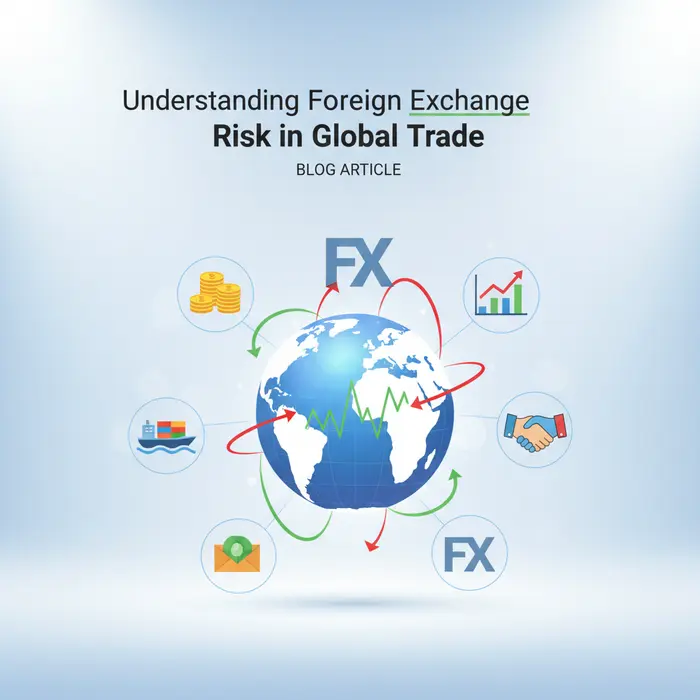
Foreign exchange risk, often referred to as currency risk, is the potential for financial losses that an international business or investor may suffer due to adverse movements in exchange rates between two currencies. Simply put, it’s the uncertainty about the future value of a foreign currency relative to your domestic currency. For an importer, this might mean that the cost of goods purchased in a foreign currency increases if their domestic currency weakens before payment is made. Conversely, an exporter could see their expected revenue decrease if the foreign currency they are paid in depreciates against their home currency.
There are typically three main types of foreign exchange risk: transaction risk, translation risk, and economic risk. Transaction risk, most relevant for day-to-day import/export operations, arises from the time lag between entering a contract and settling it in a foreign currency. Translation risk pertains to the impact of currency fluctuations on a company’s financial statements when consolidating foreign assets and liabilities. Economic risk, or operating risk, refers to the long-term impact of exchange rate changes on a company’s market value and future cash flows. Effective foreign exchange risk management is crucial for mitigating these exposures.
2. Why FX Risk is Critical for Import/Export Businesses
For import/export businesses, foreign exchange risk isn’t merely a theoretical concept; it has tangible and often severe consequences. The very act of engaging in international trade exposes a business to potential financial volatility that can directly impact its profitability and operational stability.
- Erosion of Profit Margins: The most immediate and critical impact is on profit. A small percentage shift in exchange rates can wipe out carefully calculated profit margins, turning a profitable deal into a loss-making one. This is especially true for businesses operating with tight margins.
- Unpredictable Pricing and Competitiveness: FX risk makes it challenging to set stable and competitive prices for international contracts. Uncertainty about future exchange rates can lead to either overpricing (losing sales) or underpricing (losing profit). Competitors with superior currency hedging strategies international trade may gain an advantage by offering more predictable pricing.
- Cash Flow Volatility: Unforeseen currency movements can cause significant fluctuations in expected cash inflows and outflows, making financial planning and budgeting incredibly difficult. This can strain liquidity and hinder the ability to meet financial obligations.
- Supply Chain Disruptions: If currency fluctuations severely impact a foreign supplier’s or buyer’s financial health, it can ripple through the entire supply chain, leading to delays, quality issues, or even contract cancellations.
- Strategic Decision-Making: The impact of currency fluctuations on international trade can influence strategic decisions regarding market entry, sourcing locations (mitigating exchange rate risk global sourcing), and investment in foreign operations.
Therefore, implementing robust foreign exchange risk management for import export is not optional but a fundamental necessity for long-term success.
3. Key Factors Influencing Currency Volatility
Understanding the drivers behind currency movements is essential for anticipating and mitigating foreign exchange risk. Currency exchange rates are influenced by a complex interplay of economic, political, and market forces:
- Interest Rate Differentials: Countries with higher interest rates tend to attract foreign investment seeking better returns, which increases demand for that country’s currency, causing it to appreciate.
- Economic Performance: Strong economic indicators such as robust GDP growth, low unemployment, and stable inflation generally signal a healthy economy, supporting a stronger currency. Conversely, economic downturns tend to weaken a currency.
- Political Stability and Events: Geopolitical tensions, elections, changes in government policy, and trade agreements (or disputes) can cause significant and rapid shifts in currency values as investors react to perceived risks or opportunities.
- Government Intervention: Central banks occasionally intervene in foreign exchange markets by buying or selling their own currency to influence its value, typically to stabilize the economy or support export competitiveness.
- Balance of Payments: A country’s balance of payments, which tracks all international transactions, including trade surpluses or deficits, can influence currency strength. A persistent trade deficit, for instance, implies more currency is leaving the country, potentially weakening it.
- Speculation: Large-scale speculative trading by institutional investors and hedge funds can create significant short-term volatility, moving currencies based on market sentiment and expectations rather than fundamental economic data.
These factors underscore the dynamic nature of currency markets, making a proactive approach to managing foreign exchange exposure through strategies like spot vs forward contracts B2B an indispensable part of international business operations.
Impact of Currency Fluctuations on International Trade Profitability
For businesses engaged in global trade, the intricate dance of exchange rates can significantly influence their bottom line. Currency fluctuations, often seen as an unpredictable variable, directly affect profit margins, pricing strategies, and overall competitiveness. Understanding and managing these changes, often referred to as foreign exchange risk management for import export, is not merely an administrative task but a strategic imperative for sustainable growth in the international marketplace. The volatile nature of global currencies means that a deal that looks profitable today could easily turn into a loss tomorrow, making it crucial for importers and exporters to develop robust strategies to mitigate these risks.
1. Direct Impact on Profit Margins and Revenue
The most immediate and discernible consequence of currency fluctuations is their direct effect on a company’s profit margins and revenue streams. For importers, a strengthening domestic currency against the currency of their supplier can be a boon, making goods cheaper to purchase and potentially increasing profit margins or allowing for more competitive pricing. Conversely, a weakening domestic currency means that imported goods become more expensive, directly eroding profit margins unless these increased costs can be passed on to the consumer. This scenario highlights the core of the impact of currency fluctuations on international trade.
Exporters face the opposite challenge. A weaker domestic currency makes their goods more affordable and attractive to foreign buyers, boosting demand and potentially increasing revenue when converted back to their home currency. However, a strengthening domestic currency makes their products more expensive in international markets, which can reduce competitiveness, lower sales volumes, and ultimately diminish their revenue and profit margins. Without effective foreign exchange risk management, businesses are essentially gambling on currency movements, which can lead to significant unpredicted gains or, more frequently, substantial losses, particularly for companies operating on thin margins or dealing with large transaction volumes.
2. Pricing Strategies and Competitive Advantage in a Volatile Market
In a world characterized by currency volatility, businesses must adopt dynamic pricing strategies to maintain their competitive edge. When faced with adverse exchange rate movements, companies have several options: absorb the losses, adjust their prices, or implement currency hedging strategies international trade. Absorbing losses can protect market share but is unsustainable in the long run. Increasing prices might protect margins but risks alienating customers and losing market share to competitors with more favorable currency positions or superior hedging practices. This is where strategic financial planning, including the understanding of mechanisms like Spot vs forward contracts B2B, becomes critical.
Forward contracts, for instance, allow businesses to lock in an exchange rate for a future transaction, providing certainty and protecting against adverse movements. Other hedging tools like currency options and futures also offer varying degrees of protection and flexibility, allowing companies to tailor their risk exposure. By actively managing their foreign exchange risk, businesses can maintain stable pricing, offer more predictable quotes to international clients, and thus sustain their competitive advantage. Furthermore, proactive strategies for mitigating exchange rate risk global sourcing can ensure that the cost benefits of sourcing from different regions are not eroded by unfavorable currency shifts, thus optimizing the entire supply chain.
3. Real-World Examples of Currency Fluctuation Impacts
Consider a European furniture importer purchasing goods from Vietnam, priced in Vietnamese Dong (VND). If the Euro (EUR) weakens against the VND before payment is due, the importer will need more EUR to purchase the same amount of VND, increasing their cost of goods. Without a forward contract to lock in the exchange rate, their profit margin would shrink unexpectedly. Conversely, if a Vietnamese garment exporter sells to the US, priced in USD, and the USD weakens significantly against the VND before the payment is converted, the exporter will receive less VND for the same USD amount, effectively reducing their revenue and profitability in local currency terms.
Another example involves a tech company selling software licenses globally. If their pricing is fixed in USD, a strong USD makes their software more expensive in countries with weaker local currencies, potentially reducing sales volume. If they price in local currencies, they face conversion risk when repatriating profits. Many companies, from large multinationals to small and medium-sized enterprises (SMEs), have faced severe financial distress due to unmanaged currency exposures. These examples underscore the critical need for robust foreign exchange risk management for import export businesses, highlighting that currency fluctuations are not merely abstract economic indicators but tangible forces that directly impact a company’s financial health and strategic outlook.
Essential Currency Hedging Strategies for International Trade
International trade, while offering vast opportunities for growth, inherently exposes businesses to the volatility of foreign exchange markets. Currency fluctuations can significantly impact profitability, turning a seemingly lucrative deal into a loss-making venture overnight. Effective foreign exchange risk management for import export is not merely a financial nicety; it’s a strategic imperative for businesses engaged in cross-border transactions. This section delves into various practical methods businesses employ to protect themselves from adverse currency movements, ensuring operational stability and predictable financial outcomes.

1. Natural Hedging Techniques for Operational Resilience
Natural hedging refers to operational strategies designed to mitigate currency risk by matching foreign currency inflows with foreign currency outflows. It’s often the most straightforward and cost-effective approach among currency hedging strategies international trade, as it reduces the need for costly financial instruments. For instance, a company importing raw materials from Europe (incurring EUR expenses) and exporting finished goods to Europe (earning EUR revenues) naturally hedges its exposure to the Euro. Other techniques include invoicing in the domestic currency, though this might shift the currency risk to the counterparty, or diversifying supply chains and sales markets across different currency zones. Establishing foreign subsidiaries can also serve as a natural hedge, as local currency revenues can be used to cover local currency expenses. While not always feasible for every transaction, integrating natural hedging wherever possible builds a strong foundation for operational resilience against exchange rate volatility.
2. Financial Instruments: Options, Futures, and Swaps
When natural hedging isn’t sufficient or practical, businesses turn to financial instruments to manage their exposure. These tools allow companies to lock in an exchange rate or limit potential losses, providing certainty for future transactions.
- Forward Contracts: A forward contract is a customized agreement between two parties to exchange a specified amount of one currency for another at a pre-determined rate on a future date. Unlike spot contracts, which involve immediate delivery, forwards allow businesses to fix the exchange rate for a future import or export payment, thereby eliminating uncertainty. This is a common and effective tool for Spot vs forward contracts B2B scenarios where businesses need to budget precisely for future foreign currency receipts or payments.
- Currency Options: An option contract gives the holder the right, but not the obligation, to buy (call option) or sell (put option) a specific amount of foreign currency at a predetermined exchange rate (strike price) on or before a specific date. In exchange for this right, the buyer pays a premium. Options offer flexibility; if the market rate moves favorably, the business can choose not to exercise the option and benefit from the better rate. If the market moves unfavorably, the option provides protection against adverse movements beyond the strike price, with the maximum loss limited to the premium paid.
- Currency Futures: Similar to forward contracts, futures are agreements to buy or sell a currency at a pre-determined price on a future date. However, futures are standardized, exchange-traded contracts, often requiring margin accounts. Their standardization makes them highly liquid but less flexible than forwards for specific business needs.
- Currency Swaps: A currency swap involves two parties exchanging principal and/or interest payments in different currencies over a specified period. This is particularly useful for companies looking to manage long-term debt or investments in foreign currencies, effectively transforming a liability from one currency to another and vice versa. Swaps are a sophisticated method of mitigating exchange rate risk global sourcing for long-term projects or funding requirements.
3. Developing an Effective Currency Hedging Policy
To consistently and effectively manage currency risk, businesses should establish a comprehensive currency hedging policy. This policy outlines the company’s approach to foreign exchange risk management, defining objectives, permissible instruments, hedging ratios, and responsibilities. Key elements of such a policy include:
- Risk Appetite and Tolerance: Clearly defining the level of foreign exchange risk the company is willing to bear.
- Hedging Horizon: Specifying the time frame for which exposures should be hedged (e.g., all anticipated transactions within the next 3-6 months).
- Permissible Instruments: Listing which financial instruments (forwards, options, futures, etc.) are authorized for use.
- Hedging Ratio: Determining the percentage of exposure to be hedged. Some companies might hedge 100% of firm commitments, while others might hedge only 50-75% of forecasted transactions.
- Reporting and Review: Establishing procedures for regular reporting of hedging positions and periodic review of the policy’s effectiveness and alignment with market conditions.
- Segregation of Duties: Ensuring proper internal controls by separating responsibilities for execution, settlement, and reconciliation.
The impact of currency fluctuations on international trade can be profound, making a well-defined hedging policy an indispensable tool for business stability and financial planning. By proactively addressing foreign exchange risk through a combination of natural hedging and judicious use of financial instruments, guided by a robust policy, businesses can navigate the complexities of global commerce with greater confidence and predictability.
Spot vs. Forward Contracts: A B2B Transaction Guide
In the intricate world of global trade, businesses frequently encounter the challenge of foreign exchange risk. The fluctuating values of currencies can significantly impact the profitability of international transactions, making effective foreign exchange risk management for import export crucial. This guide will compare and contrast two fundamental financial instruments – spot and forward contracts – explaining their application and benefits for business-to-business (B2B) transactions. Understanding these tools is vital for mitigating the impact of currency fluctuations on international trade, ensuring predictability and safeguarding margins in a volatile global marketplace.
1. Spot Contracts: Advantages for Immediate Transactions
A spot contract, in the realm of foreign exchange, refers to an agreement to buy or sell a currency at the current market rate for immediate delivery. “Immediate” typically means within two business days, allowing for settlement and administrative processing. This type of transaction is characterized by its simplicity and transparency, as the exchange rate is known and fixed at the moment the deal is struck. For businesses engaged in international trade, spot contracts are ideal for urgent payments or smaller transactions where the convenience of quick settlement outweighs the potential exposure to minor currency movements.
The primary advantage of using a spot contract in B2B operations is its straightforward nature. Businesses can react quickly to immediate payment obligations, such as paying a supplier for goods just received or converting incoming international payments for instant liquidity. This method offers high flexibility, as there are no long-term commitments, making it suitable when market conditions are relatively stable, or when the cost of hedging is not justified by the transaction size. However, the simplicity of a spot contract comes with a significant caveat: it offers no protection against adverse shifts in exchange rates between the time a deal is agreed upon and when the payment is actually made. This exposes businesses to the full force of market volatility, potentially eroding profit margins if the currency moves unfavorably.
2. Forward Contracts: Locking in Future Exchange Rates
In contrast to spot contracts, a forward contract is a customized agreement between two parties to buy or sell a specified amount of currency at a predetermined exchange rate on a future date. This contract is a cornerstone of currency hedging strategies international trade, offering a powerful tool for foreign exchange risk management for import export. By entering into a forward contract, a business locks in an exchange rate today for a transaction that will occur weeks or months down the line. This certainty allows businesses to accurately forecast costs and revenues, irrespective of how currency markets fluctuate in the interim.
The main benefit for B2B transactions lies in risk mitigation and budget certainty. Imagine an importer who needs to pay a supplier in three months. Without a forward contract, they face the risk that their domestic currency might weaken against the supplier’s currency, making the import more expensive. A forward contract eliminates this uncertainty by guaranteeing the exchange rate, thereby mitigating exchange rate risk global sourcing. This is particularly valuable for large-scale international trade deals, long-term supply agreements, and projects with extended payment schedules. While a forward contract provides invaluable protection against unfavorable movements, it also means foregoing potential gains if the market moves in a favorable direction. The primary goal here is risk reduction, not speculation.
3. Choosing the Right Contract for Your B2B Operations
Deciding between a spot and a forward contract depends largely on a business’s specific needs, risk tolerance, transaction characteristics, and market outlook. For immediate payment requirements, smaller transaction values, or when currency markets exhibit low volatility, a spot contract offers unmatched simplicity and speed. It’s the go-to for day-to-day operational currency conversions where the exposure is minor and immediate liquidity is paramount.
Conversely, for substantial future payments, long-term international agreements, or when facing significant market volatility, forward contracts are indispensable. They provide the stability needed to protect profit margins and ensure predictable cash flows, making them a critical component of robust foreign exchange risk management for import export strategies. Businesses engaging in significant global sourcing or exporting should consider forward contracts as a core strategy for mitigating exchange rate risk global sourcing. The choice ultimately boils down to a strategic decision about managing risk versus seeking potential, but uncertain, gains. While spot contracts offer convenience, forward contracts provide the financial certainty that can be a game-changer for B2B entities navigating the complexities of international trade. By carefully assessing each transaction and understanding the market environment, businesses can leverage both spot and forward contracts effectively to optimize their global operations and enhance profitability, demonstrating a sophisticated approach to currency hedging strategies international trade and minimizing the impact of currency fluctuations on international trade.
Advanced Strategies for Mitigating Exchange Rate Risk in Global Sourcing
In today’s interconnected global economy, businesses engaged in international sourcing and complex supply chain management are constantly exposed to the volatility of foreign exchange markets. While basic hedging instruments like forward contracts offer a fundamental layer of protection, a truly comprehensive approach to foreign exchange risk management for import export demands more sophisticated strategies. Beyond simple transactional hedges, companies must adopt an integrated framework that addresses both operational and financial aspects of currency exposure, ensuring stability and predictability in their global procurement efforts.
1. Diversifying Supply Chains and Payment Currencies
One of the most powerful, yet often overlooked, strategies for mitigating exchange rate risk is the diversification of both supply chains and the currencies used for payment. Instead of relying solely on suppliers from a single country or region, businesses can spread their sourcing across multiple geographies. This geographical dispersion naturally reduces concentrated exposure to the economic and currency-specific risks of any one nation. For instance, if a company sources components from China and pays in CNY, and simultaneously sources similar items from Vietnam paying in VND, a significant appreciation of the CNY against the company’s base currency would have a reduced overall impact due to the offsetting or different movements of VND. Furthermore, negotiating payment terms in a mix of currencies—perhaps a portion in USD, another in EUR, and a third in the supplier’s local currency—can create a natural hedge. This multi-currency approach to sourcing and payments fundamentally strengthens a company’s position in mitigating exchange rate risk global sourcing by balancing exposures across different currency pairs, making the entire supply chain more resilient to sudden market shifts.
2. Multi-Currency Invoicing and Negotiating Payment Terms
Beyond diversifying supply sources, active management of invoicing and payment terms provides significant leverage. Multi-currency invoicing involves agreeing with suppliers to pay in a currency that is either more stable or offers a more favorable exchange rate outlook from the buyer’s perspective. For example, if a buyer’s base currency is USD and they have suppliers in the Eurozone, they might negotiate to pay in USD rather than EUR, shifting the FX risk to the supplier. Conversely, if the buyer anticipates their local currency strengthening, they might prefer to pay in the supplier’s local currency. Strategic negotiation of payment terms is equally crucial. This includes extending payment windows, which provides more time to observe currency movements and execute hedging strategies, or even linking payment amounts to specific FX rates at the time of delivery rather than order placement. While currency hedging strategies international trade often involve complex financial instruments like options and swaps, even simpler arrangements such as Spot vs forward contracts B2B can be strategically employed within these extended payment terms to lock in favorable rates closer to the actual payment date, offering greater flexibility and control over transactional exposure.
3. Leveraging Technology for Real-Time FX Risk Monitoring and Management
In the fast-paced world of global trade, relying on retrospective analysis of currency movements is no longer sufficient. Modern businesses must leverage advanced technology for real-time monitoring and proactive management of FX risk. Enterprise Resource Planning (ERP) systems, specialized Treasury Management Systems (TMS), and AI-driven analytics platforms are becoming indispensable tools. These technologies provide consolidated views of all foreign currency exposures across the entire supply chain, from purchase orders and invoices to outstanding payables and receivables. Real-time data feeds offer up-to-the-minute exchange rates, allowing treasury teams to identify potential risks as they emerge. Predictive analytics, powered by machine learning, can forecast currency movements with greater accuracy, enabling businesses to make informed hedging decisions. Automated alerts notify stakeholders of critical threshold breaches, while integrated trading platforms facilitate rapid execution of hedging instruments. By providing granular visibility into the impact of currency fluctuations on international trade and streamlining the hedging process, technology empowers companies to transition from reactive risk management to a proactive, strategic approach, significantly enhancing their ability to protect profit margins and maintain competitive pricing in dynamic global markets.
Partner with Vietnam’s Leading Suppliers
Looking for reliable suppliers in Vietnam? Contact VietnamSuppliers.com today to connect with verified manufacturers and exporters across all industries.
—————————————
References
– Foreign Exchange Risk Definition: https://www.investopedia.com/terms/f/foreignexchangerisk.asp
– Foreign Exchange Risk: Definition, Types, and How to Hedge It: https://www.investopedia.com/terms/f/foreignexchangerisk.asp
– Currency Hedging: Definition, How It Works, and Examples: https://www.investopedia.com/terms/c/currency-hedging.asp
– Currency Hedging: https://www.investopedia.com/terms/c/currency-hedging.asp
– currency hedging strategies international trade: https://www.investopedia.com/terms/c/currency-swap.asp

