The Art of Private Label Supplier Search: International Best Practices
Delve into effective strategies for identifying, evaluating, and partnering with the right private label suppliers globally.
When venturing into private label ventures, particularly across borders, the quest for the ideal supplier is paramount. Effective Global Private Label Sourcing isn’t merely about finding the cheapest option; it’s about establishing robust, long-term partnerships that ensure product quality, ethical production, and market competitiveness. Navigating the complexities of international trade, cultural nuances, and diverse manufacturing landscapes requires a strategic approach built on thorough research and diligent vetting. This guide explores best practices for your private label supplier search, offering insights into identifying reputable manufacturers, conducting comprehensive due diligence, and leveraging various sourcing channels to facilitate successful international private label manufacturing. By mastering these strategies, businesses can confidently expand their product lines and achieve their private label market expansion strategies.

1. Identifying Reputable International Private Label Manufacturers
The initial step in any successful private label supplier search involves casting a wide net to identify potential partners. Begin by defining your product specifications, target market, and budget. Different regions specialize in various industries; for instance, Asia is often dominant in electronics and textiles, while Europe excels in luxury goods and precision engineering.
- Industry Directories and Trade Publications: Online directories specific to industries (e.g., textiles, cosmetics, electronics) and B2B platforms like Alibaba, Global Sources, and Thomasnet are excellent starting points. Look for suppliers with verified badges, long operational histories, and positive reviews.
- Trade Shows and Exhibitions: Attending international trade shows (e.g., Canton Fair, Ambiente, CES) offers invaluable opportunities to meet manufacturers face-to-face, inspect product samples, and discuss capabilities directly. This personal interaction often fosters stronger initial connections.
- Referrals and Professional Networks: Leverage your existing business network. Recommendations from trusted contacts who have experience with international private label manufacturing can lead to highly reliable suppliers, bypassing much of the initial vetting.
- Online Presence and Professionalism: Evaluate a potential supplier’s website, social media presence, and responsiveness. A professional online footprint and prompt, clear communication are indicators of a well-run operation. Pay attention to their experience with OEM ODM private label services, as this indicates their capability to customize products to your brand’s specifications. Understanding their past projects can give you insights into their flexibility and design capabilities.
2. Due Diligence: Vetting Suppliers and Quality Checks
Once a shortlist of potential manufacturers is established, rigorous due diligence is critical to mitigate risks and ensure product quality. This phase is about verifying capabilities, credentials, and commitment to quality.
- Background Checks and Certifications: Request proof of business registration, export licenses, and relevant industry certifications (e.g., ISO 9001 for quality management, GMP for pharmaceuticals/cosmetics, SA8000 for social accountability). These certifications demonstrate a commitment to international standards and ethical practices.
- Factory Audits: Whenever possible, conduct or commission a third-party factory audit. This involves on-site inspection of production facilities, equipment, quality control processes, labor conditions, and environmental compliance. Virtual audits can be a viable alternative if physical travel is not feasible.
- Sample Evaluation: Always request product samples before committing to a bulk order. Evaluate them meticulously for quality, functionality, material consistency, and adherence to your specifications. This is a non-negotiable step in ensuring the manufacturer can meet your standards.
- Quality Control (QC) Protocols: Understand the supplier’s internal QC procedures at every stage: pre-production (raw materials), in-production, and pre-shipment. Discuss your own QC requirements and ensure they can be integrated into their workflow. Consider hiring third-party QC inspectors for final inspections, especially for large orders.
- Contractual Agreements and Intellectual Property (IP): A comprehensive manufacturing agreement is crucial. It should detail product specifications, pricing, payment terms, delivery schedules, quality standards, warranties, and dispute resolution mechanisms. Crucially, it must include robust clauses for intellectual property protection to safeguard your designs and brand assets, especially when engaging in OEM ODM private label services. For comprehensive insights into global supply chain management, explore resources like Forbes’ guide to Supply Chain Management Best Practices.
3. Leveraging B2B Platforms and Sourcing Agents
For businesses new to Global Private Label Sourcing, or those with limited resources, leveraging specialized platforms and professional agents can significantly streamline the process.
- B2B Platforms (e.g., Alibaba, Global Sources): These platforms offer vast databases of suppliers and can be excellent for initial discovery and requesting quotes. They often provide supplier verification services, trade assurance programs, and communication tools. However, exercise caution; while convenient, direct engagement requires thorough vetting as not all listed suppliers are equally reliable. They are best used as a starting point for your private label supplier search.
- Sourcing Agents/Companies: A reputable sourcing agent, particularly one with local presence in the manufacturing region, can be an invaluable asset. They offer expertise in local markets, language translation, negotiation, factory vetting, and quality control oversight. They can significantly reduce risk and complexity, especially for businesses with limited international experience. Look for agents with transparent fee structures and proven track records in international private label manufacturing. They can often connect you with smaller, highly specialized factories that might not be visible on larger platforms.
By meticulously implementing these international best practices for private label supplier search, businesses can forge strong manufacturing partnerships, ensure high-quality products, and successfully execute their private label market expansion strategies on a global scale. This proactive and diligent approach forms the bedrock of sustainable growth and competitive advantage in the dynamic world of private labeling.
Mastering International Private Label Manufacturing & Logistics
Navigating the intricate world of international production, quality assurance, and global supply chain management is paramount for brands looking to excel in the private label sector. As businesses increasingly seek competitive advantages, strategic Global Private Label Sourcing has become a cornerstone of success. This guide delves into the complexities of managing overseas manufacturing, ensuring product integrity, and optimizing the flow of goods from factory to consumer, ultimately empowering brands to execute robust private label market expansion strategies.
The journey from concept to market demands meticulous planning and execution, especially when engaging in international private label manufacturing. It requires a keen understanding of global markets, effective private label supplier search methodologies, and the ability to leverage specialized OEM ODM private label services. By mastering these elements, companies can not only reduce costs but also enhance product quality and accelerate time-to-market.
Here, we explore three critical pillars for navigating the global private label landscape:
1.
Streamlining Production Processes Across Borders
Efficient international private label manufacturing hinges on robust process management and clear communication channels. When engaging with overseas partners, it’s crucial to establish standardized operating procedures (SOPs) that cover everything from raw material procurement to final assembly. This involves regular factory audits, transparent progress reporting, and the use of project management tools that bridge geographical and linguistic gaps. Leveraging experienced OEM ODM private label services can be transformative, as these partners often possess established infrastructures and expertise in managing complex production schedules and quality benchmarks. They can provide invaluable assistance in navigating local regulations, cultural nuances, and logistical challenges, ensuring a smoother production flow. Furthermore, embracing technologies such as enterprise resource planning (ERP) systems and collaborative design platforms allows for real-time data sharing and immediate problem-solving, significantly enhancing efficiency and reducing potential delays in your Global Private Label Sourcing efforts. Building strong, long-term relationships with your manufacturers, founded on trust and mutual understanding, is also key to ensuring consistent quality and responsive service as you pursue your private label market expansion strategies.
2.
Ensuring Quality Control and Compliance Standards
Maintaining consistent product quality and adhering to international compliance standards are non-negotiable for successful private label market expansion strategies. This begins with a comprehensive private label supplier search, focusing on manufacturers with proven track records and relevant certifications (e.g., ISO 9001 for quality management, specific industry standards like CE for electronics or FDA for food/medical products). Implementing a multi-stage quality control process—from raw material inspection to in-process checks and pre-shipment verification—is vital. Third-party inspection agencies often play a critical role, providing unbiased assessments and ensuring specifications are met. Beyond quality, understanding and complying with various market-specific regulations (e.g., REACH in Europe, CPSIA in the US) is essential to avoid costly penalties and product recalls. Ethical sourcing and sustainability considerations are also increasingly important, requiring due diligence on labor practices and environmental impact. Reputable OEM ODM private label services should be able to demonstrate their commitment to these standards, providing documentation and facilitating factory visits. Investing in rigorous quality assurance not only protects your brand’s reputation but also builds consumer trust, which is invaluable for long-term success in Global Private Label Sourcing.
3.
Optimizing International Shipping and Freight Forwarding
The final leg of international private label manufacturing, logistics, often presents the most significant challenges and opportunities for cost savings. Optimizing international shipping and freight forwarding involves strategic planning, a deep understanding of Incoterms, and strong partnerships with reliable logistics providers. Selecting the appropriate shipping method (sea freight, air freight, or a combination) depends on factors like urgency, cost, and cargo volume. Negotiating competitive rates and consolidating shipments can lead to substantial savings. Furthermore, navigating customs regulations, tariffs, and import duties across different countries requires expertise. Working with experienced freight forwarders who specialize in cross-border logistics can significantly streamline this process, handling documentation, customs clearance, and last-mile delivery. They act as crucial intermediaries, ensuring goods move efficiently and compliantly. Effective inventory management, including forecasting demand and strategically locating warehousing facilities, also plays a critical role in reducing carrying costs and ensuring timely product availability for your private label market expansion strategies. Continuous monitoring of supply chain performance and adapting to global trade changes, such as those highlighted by resources like the International Trade Centre on supply chain resilience, are crucial for maintaining an agile and efficient Global Private Label Sourcing operation.
Mastering these elements is not merely about managing complexity; it’s about transforming challenges into strategic advantages. Successful Global Private Label Sourcing and international private label manufacturing pave the way for sustainable growth, expanded market reach, and ultimately, a more competitive private label brand.
OEM/ODM Private Label Services: A Strategic Advantage
In today’s competitive global marketplace, businesses constantly seek innovative ways to introduce products, minimize costs, and expand their reach. Original Equipment Manufacturer (OEM) and Original Design Manufacturer (ODM) private label services offer a powerful strategic advantage, enabling brands to accelerate product development and achieve swift market entry. Understanding these services is paramount for successful Global Private Label Sourcing and effective private label market expansion strategies. By leveraging these specialized manufacturing partnerships, companies access vast production capabilities and expertise without significant infrastructure investment, streamlining their journey from concept to consumer.
1. Defining OEM vs. ODM in Private Labeling
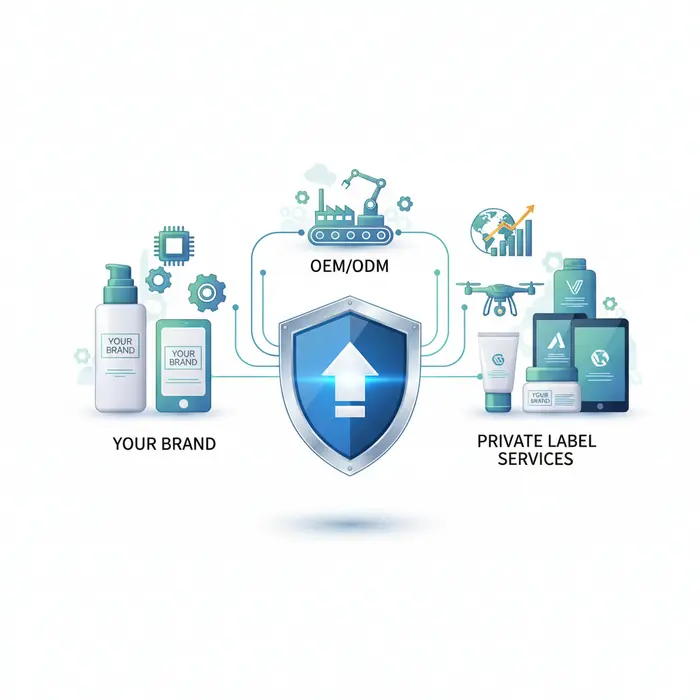
To effectively engage in international private label manufacturing, it’s crucial to distinguish between OEM and ODM services:
- OEM (Original Equipment Manufacturer): Here, your company provides the specific product design, blueprints, and specifications. The OEM manufactures the product precisely according to your detailed instructions. This model is ideal when you have a unique product idea or stringent design requirements, allowing you to maintain full control. Your brand retains design ownership, while the OEM handles production, assembly, and often packaging. It’s common for specialized components or products where custom innovation is key.
- ODM (Original Design Manufacturer): An ODM designs and manufactures products that another company then rebrands and sells. You typically choose from their existing product catalog, which can be customized with your branding, packaging, and sometimes minor modifications. This model significantly reduces R&D time and cost, making it excellent for rapid market entry or quickly expanding product lines with proven designs. ODMs often bring considerable expertise in product development and market trends, offering ready “white label” solutions.
Both models are fundamental for businesses seeking efficient private label supplier search, offering distinct advantages based on desired design control and speed to market.
2. Benefits of Utilizing OEM/ODM for Product Innovation
The strategic adoption of OEM ODM private label services brings numerous benefits, particularly in fostering product innovation and competitive advantage:
- Accelerated Time to Market: ODMs, with pre-developed designs, dramatically shorten product development cycles, allowing brands to quickly respond to market demands. OEM services also streamline manufacturing, bringing custom products to market faster than in-house production.
- Cost Efficiency: Partnering with OEM/ODMs significantly reduces capital expenditure on manufacturing facilities and labor. These manufacturers benefit from economies of scale, translating into lower per-unit costs for your brand, crucial for competitive pricing in the growing private label industry.
- Access to Specialized Expertise: Reputable OEM/ODMs offer a wealth of specialized knowledge, engineering capabilities, and access to advanced manufacturing technologies that might be inaccessible or cost-prohibitive otherwise. This partnership leverages cutting-edge innovation without direct R&D investment.
- Scalability and Flexibility: OEM/ODM partners can often scale production up or down more efficiently than in-house operations, offering greater flexibility and reducing inventory risks. This adaptability is vital for managing growth and market changes.
- Focus on Core Competencies: Outsourcing manufacturing allows brands to dedicate resources to their strengths: marketing, sales, brand building, and distribution, enhancing overall business efficiency and market penetration.
3. Selecting the Right OEM/ODM Partner
The success of your Global Private Label Sourcing strategy heavily depends on choosing the right OEM/ODM partner. This critical decision requires thorough due diligence:
A meticulous private label supplier search ensures you forge a strategic partnership, fostering long-term growth and innovation.
In conclusion, OEM/ODM private label services are more than just outsourcing; they are a strategic pathway to product innovation, cost efficiency, and accelerated market entry. By carefully navigating the distinctions between OEM and ODM, and by diligently selecting the right partner, businesses can unlock immense potential, effectively implement their private label market expansion strategies, and solidify their position in the dynamic world of Global Private Label Sourcing.
Private Label Market Expansion Strategies for Global Growth
Launching and scaling private label products into new international markets presents a significant opportunity for brands seeking global growth. The intricacies of cross-border commerce, however, demand a strategic and informed approach. Success hinges on more than just a great product; it requires meticulous planning, cultural sensitivity, and efficient Global Private Label Sourcing. By carefully navigating market dynamics and leveraging the right partnerships, businesses can unlock vast potential and establish a strong international presence for their private label offerings.
1. Market Entry Strategies: Research and Localization
The foundation of any successful international expansion is comprehensive market research. Before considering a private label market expansion, it’s crucial to understand the target country’s economic landscape, consumer behavior, cultural nuances, and regulatory environment. This includes analyzing purchasing power, demographic trends, and local competition. Identifying specific niches or unmet demands can provide a competitive edge. Tools such as government trade reports, market intelligence platforms, and local consultancy services can offer invaluable insights. For instance, businesses can access in-depth market analysis and country-specific commercial guides from authoritative sources to inform their decisions.
Localization is equally vital. This goes beyond simple language translation, encompassing product adaptation, packaging design, and marketing messaging to resonate with local preferences and regulations. A product successful in one market may require significant tweaks – from ingredients to size or even color – to appeal to another. The private label supplier search phase should actively consider manufacturers capable of meeting these localized specifications, ensuring compliance with local standards and cultural relevance. Understanding import duties, taxes, and labeling requirements from the outset prevents costly delays and compliance issues.
2. Building a Strong Private Label Brand Internationally
Establishing a robust brand identity is paramount when venturing into international territories. This involves maintaining consistent product quality, ethical manufacturing practices, and clear brand messaging across all markets. International private label manufacturing partners play a critical role in upholding these standards. Selecting suppliers with certifications, proven quality control processes, and a track record of reliability is non-negotiable. Whether opting for OEM (Original Equipment Manufacturer) or ODM (Original Design Manufacturer) private label services, ensure your chosen partner can scale production efficiently while maintaining stringent quality checks.
Protecting intellectual property (IP) is another crucial aspect of global brand building. Registering trademarks and patents in target countries safeguards your brand against counterfeiting and unauthorized reproduction, which can severely damage reputation and profitability. Furthermore, building a strong international private label brand requires storytelling that transcends cultural barriers while still feeling authentic to the local consumer. Highlighting unique selling propositions and product benefits that resonate universally can foster trust and loyalty.
3. Digital Marketing and E-commerce for Global Reach
In today’s interconnected world, digital marketing and e-commerce platforms are indispensable for achieving global reach. Leveraging major international marketplaces like Amazon Global Selling, Alibaba, or regional e-commerce giants allows private label brands to access millions of potential customers without needing a physical presence. Optimizing product listings for local search engines (SEO) in relevant languages, utilizing localized keywords, and high-quality imagery are fundamental.
Social media marketing, tailored to the platforms popular in each target country, can effectively engage local audiences and build brand awareness. Influencer collaborations with local personalities can significantly boost credibility and reach. Localized advertising campaigns, employing country-specific demographic data and cultural insights, ensure marketing spend is effective. Beyond sales, a strong digital presence also facilitates customer service and feedback, essential for continuous product improvement and market adaptation. Efficient logistics and fulfillment strategies, whether through third-party logistics (3PL) providers or direct shipping, are critical to ensuring timely and cost-effective delivery to international customers, completing the global expansion cycle for private label brands.
Global Private Label Sourcing: Navigating International Manufacturing Opportunities
In today’s hyper-competitive retail landscape, businesses are constantly seeking innovative ways to differentiate their offerings, optimize costs, and expand their market reach. Global Private Label Sourcing has emerged as a powerful strategy, enabling brands to develop unique products under their own label without the prohibitive costs of in-house manufacturing. This approach involves identifying and collaborating with international manufacturers to produce goods ranging from consumer electronics and apparel to food products and home goods. Navigating this complex global ecosystem requires a strategic mindset, meticulous planning, and a deep understanding of international trade, quality control, and logistics.
Understanding the Global Private Label Sourcing Landscape
The concept of private label sourcing revolves around retailers or brands commissioning manufacturers to produce goods that are then sold exclusively under the retailer’s brand name. This model offers significant advantages, including higher profit margins, greater control over product specifications, and enhanced brand loyalty. However, the move towards global sourcing introduces layers of complexity. A thorough private label supplier search is paramount, demanding careful evaluation of potential partners’ production capabilities, quality assurance processes, ethical labor practices, and compliance with international standards. The global landscape is rich with opportunities, from the manufacturing powerhouses of Asia to specialized producers in Europe and Latin America, each offering unique advantages in terms of cost, quality, and innovation. Understanding regional specializations and trade agreements is crucial for making informed decisions and building resilient supply chains.
Strategic Approaches to International Private Label Manufacturing
Successful international private label manufacturing hinges on a robust strategy that mitigates risks while maximizing efficiencies. The initial phase involves extensive market research to identify regions that align with product requirements, cost targets, and logistical considerations. Establishing clear communication channels and robust contracts with overseas manufacturers is non-negotiable. This includes detailed specifications, quality control benchmarks, delivery schedules, and intellectual property protection clauses. Regular factory audits and third-party inspections are vital for ensuring consistent quality and adherence to agreed-upon standards. Furthermore, managing the intricacies of international shipping, customs, and tariffs requires expertise or reliable partnerships with freight forwarders and customs brokers. Embracing technology for supply chain visibility and data analytics can provide valuable insights, enabling proactive problem-solving and continuous optimization of the sourcing process.

Harnessing OEM/ODM Services for Private Label Market Expansion
For businesses looking to accelerate their product development and market entry, leveraging OEM ODM private label services offers a streamlined path. Original Equipment Manufacturers (OEMs) produce goods based on a buyer’s specific design and specifications, essentially manufacturing an existing product with the buyer’s brand. Original Design Manufacturers (ODMs), on the other hand, offer a more comprehensive service, including product design, development, and manufacturing. ODMs often have a catalog of existing products that can be customized and branded by the buyer, significantly reducing time-to-market and development costs. These services are particularly beneficial for companies pursuing aggressive private label market expansion strategies, as they allow for rapid prototyping, product diversification, and entry into new categories with established production capabilities. The rapid growth of private label brands, as highlighted by industry reports like those from NielsenIQ, underscores the importance of efficient and flexible sourcing models like OEM/ODM. By partnering with experienced OEM/ODM providers, brands can tap into a wealth of manufacturing expertise and innovative product designs, allowing them to focus on marketing and distribution while their production needs are expertly handled.
Partner with Vietnam’s Leading Suppliers
Looking for reliable suppliers in Vietnam? Contact VietnamSuppliers.com today to connect with verified manufacturers and exporters across all industries.
—————————————
References
– Forbes’ guide to Supply Chain Management Best Practices: https://www.forbes.com/advisor/business/supply-chain-management-best-practices/
– International Trade Centre on supply chain resilience: https://www.intracen.org/news/enhancing-supply-chain-resilience-lessons-from-the-pandemic/
– Private label brands share of retail market value worldwide: https://www.statista.com/statistics/1083995/private-label-share-ofretail-market-value-worldwide/
– :
– :