Introduction to Container Freight Station (CFS)
In the complex tapestry of global supply chains, efficient cargo handling is paramount to ensuring timely delivery and cost-effectiveness. The Container Freight Station (CFS) stands as a critical hub in this intricate network, playing a pivotal role in optimizing logistics for international trade. Often misunderstood or simply overlooked, a CFS is far more than just a warehouse; it’s a strategic facility that streamlines the movement of goods, particularly for shipments that do not fill an entire shipping container. Understanding the core concept of a CFS, its fundamental meaning in shipping, and its operational intricacies is essential for anyone involved in import, export, or freight forwarding. This section will delve into the definition, purpose, and key services of a CFS, clarifying its indispensable position in the modern logistics chain.
1. Defining CFS: Its Purpose and Function
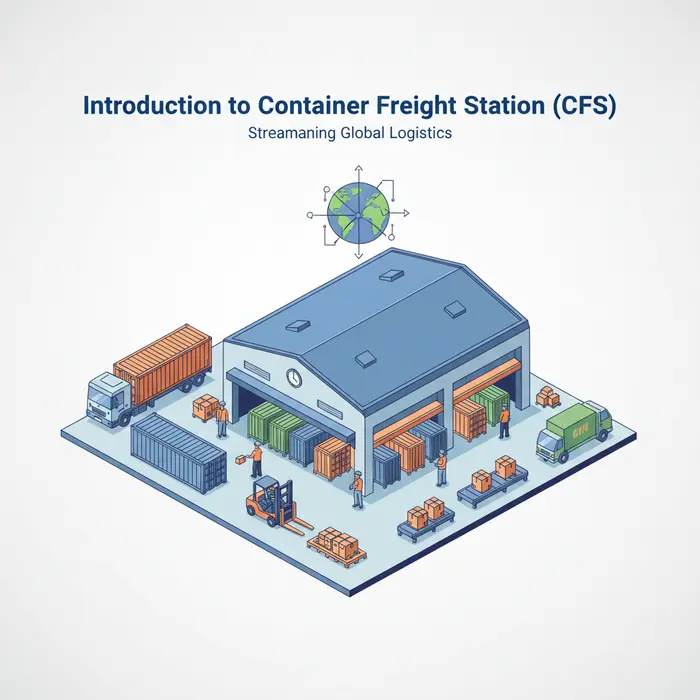
At its core, a Container Freight Station (CFS) is a facility where Less than Container Load (LCL) cargo is consolidated or deconsolidated. To grasp the CFS shipping meaning, one must understand that not all shipments are large enough to fill an entire 20-foot or 40-foot container. Such smaller shipments are known as LCL cargo. A CFS acts as an intermediate point where multiple LCL shipments from various shippers are brought together, consolidated into a single Full Container Load (FCL) for ocean transit, and then transported to the port for loading onto a vessel. Conversely, for import cargo, the CFS receives FCL containers, which are then deconsolidated, and the individual LCL shipments are sorted for onward delivery to their respective consignees. This process minimizes empty container space, making international shipping more economical and accessible for businesses of all sizes. The primary purpose of a CFS is therefore to facilitate the efficient handling and movement of LCL cargo, serving as a crucial link between the shipper/consignee and the ocean carrier.
2. The Role of CFS in Global Trade Logistics
The significance of a CFS extends far beyond mere cargo handling; it is an integral component of global trade logistics, particularly in enabling small and medium-sized enterprises (SMEs) to participate in international commerce. By offering LCL cargo consolidation, CFS facilities reduce freight costs for shippers who don’t have enough goods to fill a full container, thereby lowering barriers to international trade. Without CFS services, sending smaller shipments across oceans would be prohibitively expensive or logistically complex. Furthermore, a CFS plays a vital role in differentiating its operations from a Container Yard (CY). While a CY primarily handles full containers (FCL) that are ready for immediate loading or have just been discharged, a CFS specifically deals with LCL cargo, requiring more labor-intensive processes of loading, unloading, sorting, and segregating goods. This distinction, often referred to as CFS vs CY, highlights the specialized function of the CFS in optimizing space and efficiency for fractional container shipments. It ensures that cargo is organized, secure, and prepared for its next leg of the journey, contributing significantly to the seamless flow of goods across borders.
3. Key Services Offered at a CFS Terminal
A typical CFS terminal offers a comprehensive suite of services designed to support the efficient flow of LCL cargo. These services are crucial for preparing goods for transit and ensuring their smooth customs clearance and delivery. Key offerings include: LCL cargo consolidation, where goods from multiple shippers are combined into a single container for export; and deconsolidation, where imported FCL containers are unpacked, and individual LCL shipments are separated. Beyond these core functions, CFS terminals provide essential warehousing and storage solutions, offering temporary secure space for cargo before loading or after unloading. They also facilitate customs inspections, which are often required for international shipments, and assist with necessary documentation and labeling to ensure compliance with regulatory requirements. Value-added services like palletizing, crating, re-packing, and segregation of cargo based on destination or consignee are also common. While beneficial, it’s important for businesses to be aware of the associated CFS charges and fees, which typically cover handling, storage, labor, and administrative tasks. These fees are a standard part of international shipping costs for LCL cargo, reflecting the comprehensive range of services provided to manage and expedite complex shipments efficiently.
CFS Operations and LCL Cargo Consolidation
A Container Freight Station (CFS) serves as a pivotal hub in international logistics, acting as a crucial intermediary, particularly for Less than Container Load (LCL) cargo. Understanding the day-to-day operations within a CFS is essential for appreciating its role in efficient global trade. This section explores how LCL shipments are received, meticulously consolidated, and expertly prepared for either onward shipment or final distribution, shedding light on the fundamental mechanics of CFS shipping meaning and highlighting key differentiators like CFS vs CY operations. The primary goal of a CFS is to streamline the movement of smaller consignments, transforming individual pieces of cargo into consolidated, container-ready loads, while also managing associated CFS charges and fees.
1. Receiving and Storing LCL Shipments
Upon arrival at a Container Freight Station, LCL cargo embarks on a carefully orchestrated journey. The first critical step involves the meticulous receiving process. Shipments, often arriving from various local origins via trucks or smaller vehicles, are offloaded and immediately subjected to thorough inspection. This initial check verifies the integrity of the packaging, identifies any visible damage, and confirms the accuracy of accompanying documentation, such as packing lists, waybills, and customs declarations. Each individual piece or pallet of cargo is assigned a unique tracking number, enabling precise inventory management within the CFS.
Once verified, the LCL shipments are moved to designated storage areas, typically organized for easy access and efficient retrieval. Depending on the nature of the goods – whether fragile, hazardous, perishable, or requiring specific handling – they may be segregated into specialized zones. This temporary storage acts as a crucial buffer, allowing time for documentation processing and for sufficient cargo volume to accumulate for consolidation. Security measures, including surveillance, are paramount during this phase to protect the diverse goods awaiting their next stage of transit. This systematic receiving and storage ensures accountability and preparedness for the subsequent consolidation process, fundamental to the entire CFS operation.
2. The Process of Cargo Consolidation and Deconsolidation
At the heart of a Container Freight Station’s utility lies the intricate process of LCL cargo consolidation. This involves combining multiple smaller shipments, belonging to different consignees but destined for the same geographical region or port, into a single, full container load (FCL). Logistics professionals at the CFS utilize sophisticated planning tools to match shipments based on destination, weight, volume, and special handling requirements. The goal is to maximize container space utilization, thereby reducing per-unit shipping costs for each individual shipper. Once a full container load is assembled, the cargo is expertly loaded into a shipping container, secured, sealed, and prepared for transport to the port or rail yard. This consolidation significantly enhances efficiency and cost-effectiveness for businesses shipping smaller quantities, offering a viable alternative to more expensive air freight.
Conversely, the CFS also handles deconsolidation. Upon arrival of an FCL container at the destination CFS, the container is offloaded, its seal broken, and the cargo carefully unloaded. Each individual LCL shipment within the container is then separated, verified against its documentation, and routed for local delivery or onward transportation. This dual capability of consolidation and deconsolidation underscores the versatile role of a Container Freight Station as a critical node in global supply chains, streamlining the flow of goods for businesses worldwide.
3. Optimizing Space: Loading and Unloading Containers at CFS
Efficient loading and unloading operations are paramount to the financial viability and operational excellence of a Container Freight Station. The loading process for consolidated LCL cargo is a precise art, requiring skilled personnel and specialized equipment such as forklifts and pallet jacks. The objective is to utilize every cubic inch of container space without compromising the safety or integrity of the cargo. This involves strategic stacking, blocking, and bracing techniques to prevent shifting during transit. Careful consideration is given to weight distribution for container stability; heavier items are typically loaded at the bottom, while lighter, more fragile goods are placed on top or securely against the container walls.
Similarly, the unloading (deconsolidation) process demands equal precision. Containers arriving at the CFS are carefully opened, and the cargo is systematically removed. This often involves careful dismantling of braces and supports, followed by the safe extraction of individual shipments. As each item is offloaded, it’s typically scanned, inspected for any damage incurred during transit, and moved to a temporary holding area for sorting and eventual dispatch. The efficiency with which containers are turned around impacts the overall throughput and cost-effectiveness of the CFS. Mastery of these techniques is a hallmark of an expertly run Container Freight Station, ensuring swift and secure movement of diverse LCL cargo through the supply chain.
CFS vs CY: Understanding the Key Differences
In the intricate world of global shipping, understanding the various facilities and processes is crucial for efficient logistics. Among these, the Container Freight Station (CFS) and the Container Yard (CY) stand out as fundamental components, each playing a distinct role in the movement of goods. While often mentioned in the same breath, their functions, operational procedures, and implications for cargo—particularly Full Container Load (FCL) versus Less than Container Load (LCL)—differ significantly. Gaining clarity on these distinctions is essential for shippers, freight forwarders, and logistics professionals to optimize their supply chain strategies, manage costs, and ensure timely delivery.
1. CFS vs. CY: A Side-by-Side Comparison
To truly grasp the differences, let’s break down the Container Freight Station (CFS) and the Container Yard (CY).
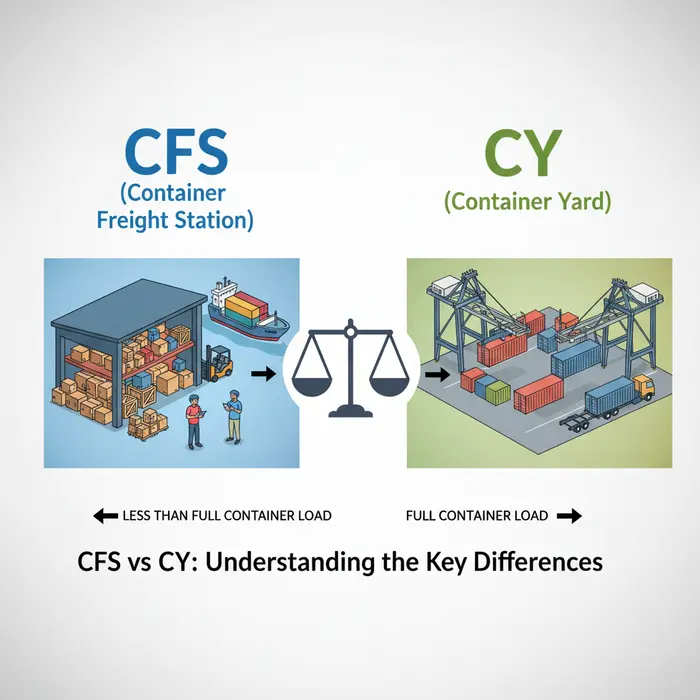
- Container Freight Station (CFS): A CFS is a facility where individual shipments, typically LCL cargo from various shippers, are consolidated into full containers for export or deconsolidated from containers for import. The primary CFS shipping meaning revolves around its role as a hub for small, disparate shipments. Services at a CFS include cargo receipt, warehousing, inspection, customs clearance, labeling, stuffing (loading cargo into containers), and destuffing (unloading cargo from containers). These stations are usually located near ports or inland distribution centers, acting as intermediaries between the shipper/consignee and the ocean carrier. The goal of a CFS is to optimize container space by combining multiple small shipments into one FCL, making international shipping more accessible and cost-effective for those without enough goods to fill an entire container.
- Container Yard (CY): A CY, in contrast, is an open storage area, typically located within or very close to a port, where full containers (FCL) are stored temporarily before being loaded onto a vessel for export or after being discharged from a vessel for import. Unlike a CFS, a CY does not involve the consolidation or deconsolidation of cargo. Its main function is to facilitate the efficient transfer of full containers between different modes of transport (e.g., truck to ship, or ship to rail). When a container is referred to as ‘CY/CY’, it means the container is picked up full from the shipper’s premises, moved to the origin CY, shipped, and then delivered full to the consignee from the destination CY. The focus here is on the container itself, not its contents in relation to multiple shippers.
2. When to Use CFS vs. CY: FCL vs. LCL Implications
The choice between utilizing a CFS and a CY is predominantly dictated by the volume and nature of the cargo, specifically whether it’s FCL or LCL.
- CFS for LCL Cargo: When a shipper does not have enough goods to fill an entire shipping container (i.e., Less than Container Load, LCL), they will use a CFS. Their goods are transported to the CFS, where they undergo LCL cargo consolidation with other LCL shipments destined for the same port or region. This process allows multiple shippers to share the cost of a single container, making international trade viable for smaller businesses or those shipping smaller quantities. Once consolidated, the container moves from the CFS to the port’s CY for loading onto the vessel.
- CY for FCL Cargo: Conversely, if a shipper has sufficient goods to fill an entire container (Full Container Load, FCL), they will bypass the CFS. The container is typically stuffed (loaded) at the shipper’s own facility. Once loaded and sealed, the container is directly transported to the designated Container Yard at the port. From the CY, it awaits loading onto the vessel. For imports, an FCL container is discharged from the vessel, moved to the CY, and then picked up by the consignee for direct delivery to their premises for destuffing.
This distinction clarifies that the ‘CFS vs CY’ decision is fundamentally about cargo volume and the need for consolidation services.
3. Impact on Shipping Logistics and Costs
The choice between CFS and CY significantly impacts various aspects of shipping logistics and overall costs.
- Logistical Complexity and Handling: Shipping via CFS (LCL) involves more handling stages. Cargo needs to be transported to the CFS, unloaded, sorted, consolidated, and then stuffed into a container. At the destination, the reverse process occurs: destuffing, sorting, and individual pickup. This increased handling can lead to longer transit times and a higher risk of damage if not managed properly. FCL shipments moving directly to a CY experience less handling, generally resulting in faster transit and reduced risk of damage or loss.
-
Cost Implications:
- CFS Costs: While LCL shipping itself is cost-effective for smaller volumes due to shared container space, there are specific CFS charges and fees. These include handling charges for stuffing and destuffing, warehousing, sorting, documentation fees, and potentially demurrage or detention if goods are not cleared promptly. These individual fees, though small per item, can accumulate.
- CY Costs: For FCL shipments using a CY, the primary costs are the ocean freight for the full container, terminal handling charges at the port (THC), and potential demurrage if the container isn’t picked up on time. While the upfront cost of an FCL container is higher than a single LCL shipment, the per-unit cost often decreases significantly for larger volumes, making it more economical for bulk shipments.
Ultimately, selecting between CFS and CY depends on a shipper’s specific needs, cargo volume, budget, and urgency. Understanding these facilities empowers businesses to make informed decisions that optimize their international shipping operations, balancing efficiency with cost-effectiveness.
Navigating CFS Charges and Fees
Navigating global shipping costs, particularly those linked to Container Freight Station (CFS) services, is essential for efficient logistics. A CFS serves as a critical hub for Less than Container Load (LCL) shipments, facilitating the consolidation and deconsolidation of cargo. Understanding the various CFS charges and fees is vital for shippers to accurately budget, prevent unexpected expenses, and optimize their supply chain.
1. Common CFS Charges: Handling, Storage, and Documentation
When cargo passes through a Container Freight Station, it incurs several standard fees, typically categorized into handling, storage, and documentation charges:
- Handling Charges (THC/LHC): These prevalent fees cover the physical movement of cargo within the CFS, including receiving, unloading, sorting, stacking, and the stuffing or de-stuffing of LCL cargo. They are typically calculated per cubic meter (CBM) or weight ton.
- Storage Charges: Incurred when cargo exceeds a predetermined free storage period, these fees compensate the CFS operator for facility usage. Charged daily per CBM or weight, they often arise from delays in customs clearance or final delivery. Shippers can refer to external resources explaining demurrage and detention fees in shipping for more details.
- Documentation Fees: These flat-rate fees cover the administrative work and processing of essential shipping documents like manifests, HBL releases, delivery orders, and customs declarations.
- Other Potential Charges: Additional fees may include weighing, fumigation, or special handling for hazardous, oversized, or re-packaged cargo.
2. Factors Influencing CFS Fee Structures
The exact amount a shipper pays in CFS charges can vary significantly due to several influencing factors:
- CFS Location and Operator: CFS location and the operator’s pricing strategy significantly impact fees. Facilities in high-cost areas or those offering premium services typically charge more.
- Cargo Type and Characteristics: Hazardous, oversized, perishable, or fragile cargo requires specialized handling and equipment, directly increasing fees.
- Service Level Agreement (SLA): The agreed service level, from basic handling to value-added services like inspection or re-palletizing, influences costs.
- Volume and Frequency: Larger volumes or frequent shipments often allow for negotiation of more favorable rates.
- Carrier/Forwarder Contracts: Pre-negotiated rates between freight forwarders and CFS operators can lead to varied “all-in” prices.
- Customs and Port Regulations: Varying customs and port regulations can introduce unique charges or increase processing times, impacting costs.
3. Strategies for Managing and Reducing CFS Costs
Proactive management and strategic planning are key to minimizing CFS-related expenses:
- Optimize Documentation and Communication: Accurate, complete, and promptly submitted documents, coupled with clear communication with your forwarder and CFS, prevent delays and avoidable storage charges.
- Understand Free Time: Know the allocated “free time” for storage and plan cargo pickup/delivery within this window to avoid daily fees.
- Accurate Cargo Information: Provide precise cargo dimensions, weight, and description to prevent re-weighing, re-measurement fees, or customs penalties.
- Efficient LCL Cargo Consolidation: For LCL shipments, work with your forwarder to ensure efficient cargo consolidation, which optimizes space and reduces per-unit handling costs.
- Negotiate with Forwarders: Negotiate rates with freight forwarders, especially for regular or high-volume shipments, as they often secure better CFS deals.
- Choose Reputable Partners: Select efficient and transparent freight forwarders and CFS operators to prevent unforeseen delays and hidden costs.
- Consider FCL if Viable (CFS vs CY): If volume permits, consider Full Container Load (FCL) shipping to bypass CFS handling by sending cargo directly to the Container Yard (CY).
By understanding the nuances of CFS charges and implementing these strategies, shippers can gain better control over their logistics budget, enhance supply chain predictability, and ultimately reduce their overall shipping expenditures.
Advantages, Challenges, and Future of CFS
Container Freight Stations (CFS) play a pivotal role in modern supply chains, acting as critical hubs for the consolidation and deconsolidation of cargo. As global trade continues to evolve, understanding the nuances of CFS operations—its benefits, inherent challenges, and future trajectory—becomes essential for businesses aiming for efficiency and cost-effectiveness in their logistics strategies. This section will delve into the multifaceted aspects of CFS, examining its current impact and anticipating its future in an increasingly integrated and technologically advanced logistics landscape.

1. Benefits of Utilizing Container Freight Stations
The primary advantage of a Container Freight Station lies in its ability to facilitate Less than Container Load (LCL) shipments. For businesses with smaller volumes of goods that do not fill an entire shipping container, CFS facilities enable LCL cargo consolidation. This process combines multiple LCL shipments from various consignors into a single Full Container Load (FCL), significantly reducing per-unit shipping costs and making international trade accessible to a wider range of businesses. The CFS shipping meaning extends beyond simple aggregation; it encompasses a range of services designed to streamline logistics.
CFS facilities often provide value-added services such as cargo inspection, weighing, labeling, and temporary storage, enhancing the overall supply chain efficiency. By offering a secure environment for cargo handling and customs clearance, CFS reduces the risk of damage or loss during transit and expedites the administrative processes. This localized hub for pre-and post-shipment activities minimizes the need for individual shippers to manage complex port logistics, thereby improving transit times and offering greater flexibility in scheduling. For many, CFS serves as a cost-effective alternative to direct port handling for LCL cargo, especially when comparing the operational complexities and costs of managing diverse small shipments at a busy container yard (CY).
2. Common Challenges and How to Overcome Them
Despite their numerous benefits, CFS operations are not without challenges. One significant hurdle can be the potential for delays. The consolidation and deconsolidation process involves meticulous planning and coordination among multiple parties, and any misstep can lead to bottlenecks. This is especially true when dealing with diverse cargo types, varying documentation requirements, and different schedules from numerous shippers. Another area of concern often revolves around CFS charges and fees. While CFS offers cost savings for LCL, the cumulative handling, storage, and administrative fees can become substantial if not managed effectively, sometimes eroding the cost benefits if not transparently communicated and agreed upon.
Overcoming these challenges requires a proactive approach. Robust communication channels between shippers, freight forwarders, and CFS operators are crucial to ensure smooth operations and timely information exchange. Implementing advanced tracking and tracing systems provides real-time visibility of cargo status, allowing for quick identification and resolution of potential delays. Furthermore, a clear understanding and negotiation of CFS charges, coupled with detailed billing, can help manage costs effectively. Strategic partnerships with reliable CFS providers who prioritize efficiency, security, and transparent pricing are key to mitigating risks and optimizing the overall logistics process. Differentiating between CFS vs CY in terms of operational scope and respective cost structures also helps in making informed logistical decisions.
3. Technological Advancements and the Future of CFS in 2025
The future of CFS is poised for significant transformation, driven by rapid technological advancements. By 2025, we can expect to see CFS facilities evolving into highly automated and intelligent hubs. Robotics and automated guided vehicles (AGVs) will play a crucial role in cargo handling, sorting, and storage, dramatically improving efficiency, reducing labor costs, and minimizing human error. Artificial Intelligence (AI) and machine learning algorithms will optimize space utilization, predict demand fluctuations, and streamline consolidation processes, leading to more efficient container loading and routing.
Furthermore, the integration of Internet of Things (IoT) sensors will provide real-time data on cargo conditions, such as temperature, humidity, and location, enhancing security and product integrity. Blockchain technology is expected to revolutionize documentation and transaction transparency, creating an immutable record of cargo movement and ownership. This digital transformation will not only make CFS operations faster and more reliable but also integrate them more seamlessly into broader digital supply chain ecosystems. The CFS of the future will be a data-driven, interconnected entity, playing an even more critical role in facilitating global trade efficiency and resilience, adapting to dynamic market demands with unprecedented agility.
Partner with Vietnam’s Leading Suppliers
Looking for reliable suppliers in Vietnam? Contact VietnamSuppliers.com today to connect with verified manufacturers and exporters across all industries.
—————————————
References
– :
– What is CFS and CY?: https://www.shippingandfreight.com/2019/08/what-is-cfs-and-cy.html
– Container Freight Station (CFS): https://www.flexport.com/glossary/container-freight-station-cfs
– demurrage and detention fees: https://www.investopedia.com/terms/d/demurrage.asp
– WTO – General Agreement on Trade in Services (GATS): https://www.wto.org/english/thewto_e/what_e/tif_e/gats3_e.htm