Understanding CIF Incoterms 2020 Fundamentals
In the complex world of international trade, clarity and precision are paramount. Incoterms rules, published by the International Chamber of Commerce (ICC), provide globally recognized standards for the delivery of goods between sellers and buyers. Among these, CIF Incoterms 2020 (Cost, Insurance, and Freight) stands out as a widely used rule, particularly for goods transported by sea or inland waterway. This section delves into the core principles of CIF as defined by Incoterms 2020, explaining its mechanics, key distinctions from previous versions, and why it maintains its relevance in modern global commerce. Understanding CIF is crucial for businesses, from seasoned importers to those seeking competitive Vietnam supplier CIF quotes, to accurately calculate CIF shipping costs calculation and navigate the intricate landscape of international logistics.
1. What is CIF and How Does it Work?
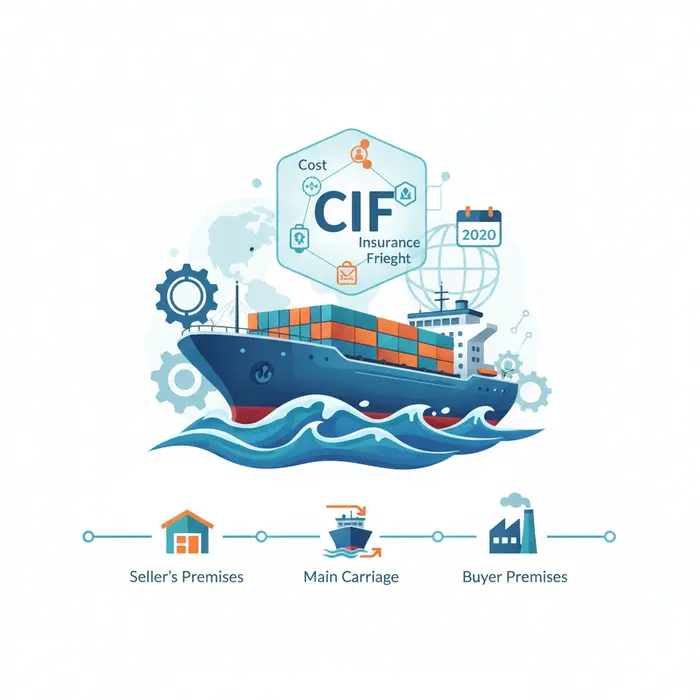
CIF, standing for Cost, Insurance, and Freight, is a C-group Incoterm specifically designed for sea and inland waterway transport. Under CIF, the seller has significant responsibilities: arranging and paying for the carriage of goods to the named port of destination, as well as obtaining and paying for marine insurance against the buyer’s risk of loss of or damage to the goods during transit. The critical aspect of CIF lies in its dual transfer points. The risk of loss or damage to the goods passes from the seller to the buyer when the goods are loaded on board the vessel at the port of shipment. However, the cost of freight and insurance continues to be borne by the seller until the goods arrive at the named port of destination. This means that while the buyer assumes risk early in the journey, they benefit from the seller’s expertise in handling the initial logistics and insuring the cargo. Understanding these Incoterms 2020 duties and responsibilities is vital for both parties to avoid disputes. For businesses engaging with overseas suppliers, precise CIF shipping costs calculation involves not just the freight, but also the mandatory minimum insurance coverage, ensuring transparent pricing from initial Vietnam supplier CIF quotes.
2. Key Differences: CIF Incoterms 2020 vs. Earlier Versions
While the fundamental principles of CIF have largely remained consistent across Incoterms versions, Incoterms 2020 brought crucial clarifications and structural improvements rather than radical changes to CIF itself. A significant emphasis was placed on aligning the Bill of Lading with the point of risk transfer – specifically, that the seller must provide an “on-board” Bill of Lading, indicating the goods have been loaded onto the vessel, which marks the risk transfer point. Another key aspect clarified in Incoterms 2020 pertains to security-related requirements for transport, which are now more explicitly assigned to the seller. Furthermore, Incoterms 2020 clarified the level of insurance required under CIF. The seller is obligated to obtain insurance providing at least minimum cover (Institute Cargo Clauses (C) or similar clauses), which covers a more restricted list of perils compared to the broader coverage under CIP (Carriage and Insurance Paid To), which requires Institute Cargo Clauses (A). This distinction ensures that buyers are aware of the minimum insurance level and can opt for additional coverage if their goods require it, impacting overall CIF shipping costs calculation. These refinements enhance clarity and reduce potential misunderstandings regarding Incoterms 2020 duties and responsibilities for both sellers and buyers.
3. Why CIF Remains Popular in Sea and Inland Waterway Transport
Despite the array of Incoterms rules available, CIF continues to be a highly favored choice for the transport of goods by sea and inland waterways, especially for bulk commodities and general cargo. Its enduring popularity stems from the convenience it offers to the buyer. With CIF, the buyer typically deals with a single, all-inclusive price up to the port of destination, freeing them from the immediate hassle of arranging international freight and securing cargo insurance up to that point. This simplified approach is particularly appealing to buyers who may not have extensive experience or resources for international shipping logistics. From the seller’s perspective, they often have established relationships with carriers and insurers, allowing them to secure competitive rates for freight and international cargo insurance requirements, which can then be factored into their Vietnam supplier CIF quotes. The inherent structure of CIF, where risk transfers at the port of shipment but costs extend to the port of destination, provides a balanced compromise. It allows buyers to receive goods with pre-arranged logistics and insurance, while still assuming risk once the goods are safely loaded, making it a pragmatic choice for many international transactions involving maritime transport.
CIF Incoterms 2020: Buyer and Seller Responsibilities
Understanding the intricacies of international trade terms is paramount for smooth and successful global transactions. Among the most widely used is CIF Incoterms 2020 (Cost, Insurance, and Freight), specifically designed for sea and inland waterway transport. This rule clearly delineates the Incoterms 2020 duties and responsibilities for both the seller and the buyer, particularly concerning delivery, cost allocation, and risk transfer. While the seller undertakes significant obligations in arranging and paying for transport and insurance to the named port of destination, the buyer shoulders responsibilities for import clearance and costs from the destination port onwards, along with the crucial aspect of risk transfer occurring much earlier in the journey.
1. Seller’s Obligations: Delivery, Freight, and Insurance
Under CIF Incoterms 2020, the seller bears considerable responsibility up to the named port of destination. Their primary duties include:
- Delivery of Goods: The seller must deliver the goods by placing them on board the vessel nominated by them at the port of shipment. This marks the point of delivery and the critical moment of risk transfer to the buyer.
- Export Formalities: All necessary export customs clearance procedures, licenses, security clearances, and associated duties and taxes are the seller’s responsibility.
- Pre-carriage and Loading: The seller must arrange and pay for the transport of goods from their premises to the port of shipment, as well as the costs of loading the goods onto the vessel.
- Main Carriage (Freight): A core obligation is for the seller to contract for and pay the costs of freight necessary to bring the goods to the named port of destination. This forms a significant part of the CIF shipping costs calculation from the seller’s perspective.
- Insurance: The seller is obligated to obtain and pay for marine insurance coverage against the buyer’s risk of loss of or damage to the goods during transit to the named port of destination. According to Incoterms 2020, CIF requires minimum cover, equivalent to Clause C of the Institute Cargo Clauses, though buyers often negotiate for broader coverage. Understanding these International cargo insurance requirements is vital for both parties. For detailed guidance on Incoterms® 2020, referring to the official ICC resources is highly recommended.
- Proof of Delivery: The seller must provide the buyer with the usual transport document for the named port of destination, enabling the buyer to claim the goods.
2. Buyer’s Responsibilities: Unloading, Import Clearance, and Risk
While the seller covers costs to the destination port, the buyer’s responsibilities under CIF Incoterms 2020 are equally critical, especially regarding actions at and after arrival, and the early assumption of risk:
- Taking Delivery: Once the goods arrive at the named port of destination, the buyer is responsible for taking delivery from the carrier.
- Unloading Costs: The buyer typically bears the costs of unloading the goods from the vessel at the port of destination, unless these costs are specifically included in the freight contract paid by the seller.
- Import Formalities: All import customs clearance procedures, duties, taxes, and other official charges payable upon import are the sole responsibility of the buyer. This includes obtaining any necessary import licenses and managing security clearances.
- Onward Transportation: From the named port of destination, the buyer is responsible for arranging and paying for the onward transport of the goods to their final warehouse or facility.
- Risk of Loss or Damage: Crucially, the risk of loss of or damage to the goods transfers from the seller to the buyer when the goods are loaded on board the vessel at the port of shipment, not upon arrival at the destination port. This makes understanding CIF Incoterms 2020 particularly important for buyers, as they bear the risk for the majority of the main carriage, even though the seller pays for it and the insurance. When obtaining Vietnam supplier CIF quotes, buyers must be aware that the quoted price includes freight and insurance, but their risk begins earlier.
- Additional Costs: Any costs incurred after the goods have been delivered on board the vessel, except those payable by the seller under the main carriage contract, fall to the buyer.
3. Point of Risk Transfer vs. Cost Transfer in CIF
One of the most distinctive and often misunderstood aspects of CIF Incoterms 2020 is the separation between the point where risk transfers and the point to which costs are paid. This “dislocation” is fundamental to CIF:
- Risk Transfer: The risk of loss or damage to the goods transfers from the seller to the buyer when the goods are on board the vessel at the port of shipment. This means that if the goods are lost or damaged during the main ocean voyage, it is the buyer who bears this risk, even though the seller arranged and paid for the transport and insurance. The insurance policy taken out by the seller is for the buyer’s benefit.
- Cost Transfer: The seller pays for the costs of carriage and insurance to the named port of destination. This means the seller covers the main freight and minimum insurance premium.
This distinction is vital for both parties. For the seller, their obligation for safe transit effectively ends once the goods are loaded, although they still have a financial commitment for the freight and insurance. For the buyer, despite the seller paying for transport and insurance, they must understand that their exposure to risk commences at the port of loading. This knowledge is critical for managing potential claims and understanding the full financial implications of a CIF Incoterms 2020 transaction.
Calculating CIF Shipping Costs and Insurance Requirements
Explore the components that make up CIF shipping costs, how to calculate them accurately, and the mandatory international cargo insurance requirements under Incoterms 2020.
For businesses engaged in international trade, particularly those sourcing goods from markets like Vietnam, understanding Incoterms 2020 is crucial. Among these, Cost, Insurance, and Freight (CIF) is a widely utilized Incoterm, especially for sea and inland waterway transport. CIF places significant responsibilities on the seller to cover costs and arrange insurance up to the named port of destination. Accurately calculating CIF shipping costs and fulfilling its mandatory insurance obligations are critical for smooth transactions and avoiding unforeseen expenses.
1. Components of CIF Shipping Costs Calculation (Cost, Insurance, Freight)
The name CIF clearly defines its three core components forming the basis of its calculation. When a buyer receives a CIF quote, particularly from a Vietnam supplier CIF quotes, the price includes:
- Cost (C): This is the ex-works price of the goods, plus charges for bringing them to the port of shipment and loading them onto the vessel. This covers packaging, origin terminal handling, export customs clearance, and loading fees.
- Insurance (I): Under CIF Incoterms 2020, the seller must procure minimum international cargo insurance coverage against the buyer’s risk of loss or damage during transit to the named port of destination. This is a key differentiator from CFR.
- Freight (F): This is the cost of sea or inland waterway transport from the port of shipment to the named port of destination, encompassing the main carriage charges.
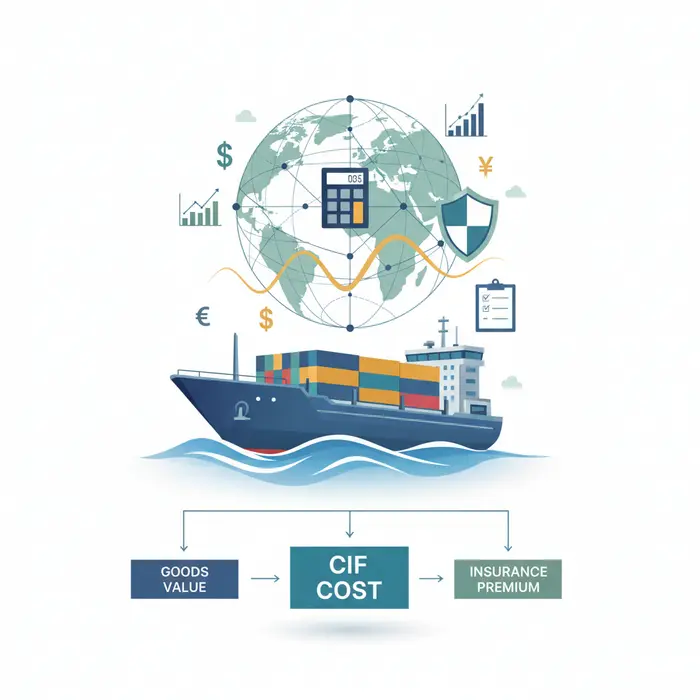
Thus, the total CIF value is the sum of the goods’ value, freight, and minimum insurance premium. While the seller covers these costs to the destination port, the risk of loss or damage transfers to the buyer once goods are loaded onto the vessel at the port of shipment. Buyers must scrutinize the CIF quote breakdown to understand what’s included and what additional costs, like unloading, duties, taxes, and onward transportation, they will incur upon arrival.
2. Mandatory International Cargo Insurance: Institute Cargo Clauses (C)
A defining feature of CIF Incoterms 2020 is the seller’s mandatory obligation to provide international cargo insurance. This insurance must comply with the Institute Cargo Clauses (C) or similar clauses, covering at least 110% of the contract value in the contract currency. Institute Cargo Clauses (C) offer the most basic level of coverage, protecting against major perils such as:
- Fire or explosion
- Vessel or craft being stranded, grounded, sunk, or capsized
- Overturning or derailment of land conveyance
- Collision of vessel, craft, or conveyance with any external object (excluding water)
- Discharge of cargo at a port of distress
- General average sacrifice
Buyers must understand the limitations of Institute Cargo Clauses (C). This basic coverage does *not* typically include risks like theft, non-delivery, rough handling, or contamination. Given these limitations, buyers should assess their specific cargo and trade route risks. If higher protection is desired – e.g., against theft or accidental damage – the buyer should consider arranging additional insurance (like Institute Cargo Clauses (A) or (B), or “all risks” coverage) to supplement the seller’s minimum provision. While the seller arranges and pays for the minimum insurance, the ultimate beneficiary is the buyer, as the risk transfers at the port of shipment.
3. Strategies for Minimizing Hidden CIF Incoterms Expenses
While CIF Incoterms 2020 stipulates the seller covers costs and insurance up to the named destination port, buyers must be vigilant about potential hidden expenses upon goods arrival. Minimizing these unexpected costs requires proactive planning and clear communication. Here are several strategies:
- Comprehensive Quote Analysis: Always request a detailed breakdown from your supplier or freight forwarder. Understand precisely what charges are included in the CIF price and, critically, what is excluded. Be wary of unusually low quotes, which often hide substantial destination charges.
- Clarify Destination Charges: Explicitly inquire about all potential charges at the port of destination, including Terminal Handling Charges (THC), container demurrage and detention, Customs clearance fees, duties, taxes, and any other local surcharges. These can significantly inflate the total landed cost.
- Understand Incoterms 2020 Duties and Responsibilities: A thorough understanding of the buyer’s responsibilities under CIF is paramount. Remember that unloading costs at the destination port and all subsequent transportation are typically the buyer’s responsibility. Knowing your Incoterms 2020 duties and responsibilities helps anticipate and budget for these.
- Engage a Local Customs Broker/Freight Forwarder: Partnering with a reputable customs broker or freight forwarder at the destination port provides clarity on local fees and streamlines the import process. They often provide accurate estimates for post-CIF expenses.
- Negotiate Terms Clearly: When dealing with suppliers, especially those providing Vietnam supplier CIF quotes, ensure all terms are explicitly laid out in the contract. Ambiguities can lead to disputes and unexpected costs.
By diligently applying these strategies, importers can gain a more accurate picture of their total landed costs and effectively minimize the impact of hidden CIF Incoterms expenses, ensuring a more predictable and profitable international trade experience.
Practical Application: Navigating CIF with Vietnam Suppliers
When sourcing goods from the dynamic manufacturing hub of Vietnam, understanding the nuances of shipping terms is paramount. For many international buyers, Cost, Insurance, and Freight (CIF) Incoterms 2020 is a frequently encountered arrangement. This section provides practical insights and crucial considerations for businesses dealing with CIF Incoterms 2020 when procuring products from Vietnamese suppliers, aiming to mitigate risks and ensure smoother transactions.
1. Understanding Vietnam Supplier CIF Quotes and Pricing
CIF Incoterms 2020 dictates that the seller (in this case, your Vietnamese supplier) is responsible for delivering the goods onto the vessel, arranging and paying for the main carriage to the named port of destination, and providing minimum insurance coverage against the buyer’s risk of loss or damage during transit. For businesses engaging with Vietnamese suppliers, deciphering CIF quotes requires meticulous attention. A typical “Vietnam supplier CIF quote” will consolidate the cost of the goods, the sea freight from a Vietnamese port (like Haiphong or Ho Chi Minh City) to your specified destination port, and the insurance premium.
It’s crucial to confirm that the quote explicitly states the named port of destination and that the included insurance meets your requirements. While the seller covers the freight and insurance to the destination port, it’s important to remember that the risk of loss or damage transfers from the seller to the buyer once the goods are loaded onto the vessel at the port of shipment in Vietnam. Therefore, any costs incurred after the goods arrive at the destination port, such as unloading charges, import duties, taxes, and onward domestic transportation, typically fall on the buyer. Clear communication with your Vietnamese partner regarding the scope of their CIF obligation is vital to avoid unexpected “CIF shipping costs calculation” discrepancies.
2. Common Challenges When Shipping CIF from Vietnam
Despite its apparent simplicity, shipping under CIF Incoterms 2020 from Vietnam can present several challenges for buyers. One significant hurdle can be the lack of transparency or control over the choice of carrier and the specific shipping schedule. Since the supplier arranges the freight, they often choose their preferred logistics partners, which may not always align with the buyer’s priorities for speed or reliability. This can sometimes lead to unexpected delays, particularly given potential port congestion in Vietnam or at the destination.
Another common issue relates to “International cargo insurance requirements.” While the seller is obliged to provide insurance, CIF only mandates minimum coverage, typically at 110% of the CIF value, covering general risks. Buyers often find this insufficient for high-value or fragile goods and may need to purchase additional, broader coverage (e.g., Institute Cargo Clauses A or B) themselves. Furthermore, understanding the precise point of risk transfer – on board the vessel at the port of shipment – is critical for addressing claims effectively. Any damage occurring before loading is the seller’s responsibility, while damage during transit is the buyer’s risk, covered by the insurance arranged by the seller. Familiarity with the “Incoterms 2020 duties and responsibilities” is key here. For a detailed guide on Incoterms and their implications, refer to resources from the International Chamber of Commerce (ICC).
3. Best Practices for Negotiating CIF Terms with Vietnamese Partners
Successful navigation of CIF Incoterms 2020 with Vietnamese suppliers hinges on proactive communication and meticulous negotiation. Firstly, always seek a detailed breakdown of the CIF quote. Ask for separate figures for the goods, freight, and insurance if possible. This transparency aids in verifying the competitiveness of the overall price and allows you to compare it against other Incoterms like FOB. Secondly, be explicit about the type and level of insurance required. If the minimum coverage provided by the seller is insufficient, discuss who will bear the cost of extended coverage, or plan to purchase it independently.
Thirdly, clearly define the “named port of destination.” Ambiguity can lead to disputes regarding where the seller’s responsibility ends. Fourthly, establish clear communication channels and agree on documentation requirements upfront. Prompt provision of shipping documents (Bill of Lading, Commercial Invoice, Packing List, Certificate of Origin, and Insurance Certificate) is essential for timely customs clearance at your end. Finally, while CIF offers convenience, consider if it truly aligns with your supply chain strategy. For some businesses, gaining more control over logistics by using Free On Board (FOB) terms and arranging their own freight and insurance might be more advantageous, especially when dealing with high volumes or seeking specific carrier services. By adhering to these best practices, businesses can foster stronger partnerships and ensure a more predictable shipping experience when importing from Vietnam.
In the complex world of international trade, choosing the right Incoterm is paramount for defining the responsibilities and risks between buyers and sellers. Among the eleven Incoterms 2020 rules, Cost, Insurance, and Freight (CIF) is one of the most widely used, particularly for bulk and non-containerized goods shipped by sea or inland waterway. CIF places significant responsibilities on the seller, who is accountable for arranging and paying for the carriage of goods to the named port of destination, as well as obtaining minimum insurance coverage against the buyer’s risk of loss or damage during transit. However, despite its popularity, understanding the nuances of CIF Incoterms 2020, its advantages, disadvantages, and best practices is crucial for businesses aiming to optimize their global supply chains.
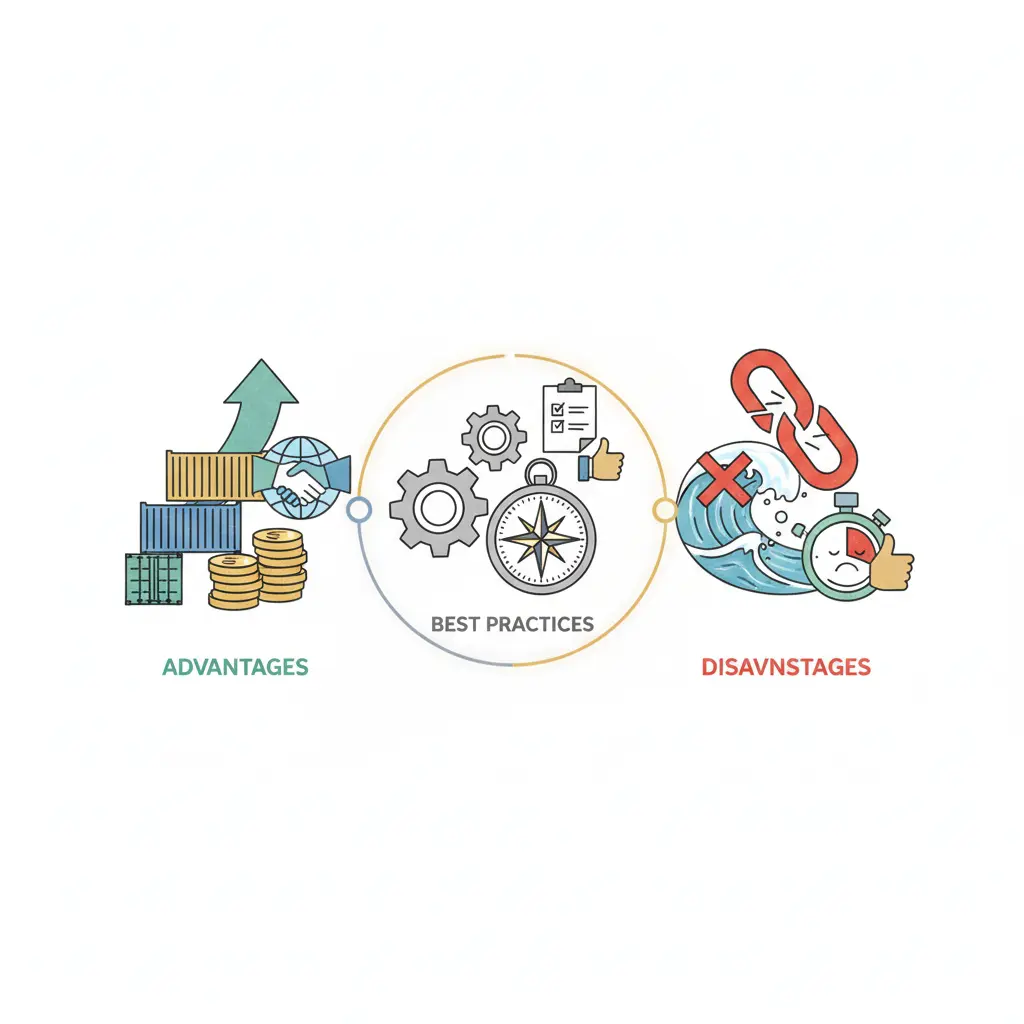
For many, CIF simplifies the initial transaction by presenting a consolidated cost. However, a deeper dive into its implications reveals a careful balance of benefits and drawbacks for both parties involved. Navigating these requires strategic planning and a clear understanding of the point of risk transfer versus cost transfer.
1. Key Benefits of Using CIF for Buyers and Sellers
For buyers, one of the primary advantages of CIF is convenience. When a buyer agrees to a CIF Incoterms 2020 agreement, they receive a single, all-inclusive price for goods, shipping, and basic insurance up to the destination port. This streamlines the procurement process, as the buyer doesn’t need to manage the complexities of international freight booking or arrange insurance for the main carriage. It offers a degree of cost predictability, making budget management simpler. The inclusion of insurance, even if minimum, provides a baseline level of security for the buyer.
Sellers, on the other hand, can leverage CIF to offer a more competitive and attractive package, especially if they have established relationships with carriers and can secure favorable shipping rates. By controlling the logistics up to the destination port, sellers can often achieve economies of scale and integrate shipping costs into their overall pricing strategy. This can be particularly appealing to buyers who prefer a hassle-free purchasing experience. For experienced sellers, managing the main carriage offers greater control over the shipping process, ensuring goods are dispatched efficiently and through preferred channels.
2. Potential Risks and Disadvantages of CIF Incoterms
Despite its appeal, CIF carries several potential risks and disadvantages, primarily for the buyer. A significant drawback is the buyer’s lack of control over carrier selection and the shipping process from the origin port. This can lead to less efficient routing or higher CIF shipping costs calculation if the seller marks up freight charges. Crucially, under Incoterms 2020 duties and responsibilities, the risk transfers from the seller to the buyer once the goods are loaded onto the vessel at the port of shipment, even though the seller pays for freight and insurance to the destination port. This means if damage or loss occurs during the main carriage, the buyer bears the risk and must file a claim with the insurance company arranged by the seller, potentially leading to complications if the minimum insurance coverage is insufficient for the actual value or specific risks of the cargo. Buyers might need to secure additional “All Risks” insurance to protect their interests fully.
For sellers, the main disadvantage lies in the higher upfront costs and administrative burden of arranging and paying for the main carriage and insurance. While they control the process, they are exposed to freight rate fluctuations and currency risks until the payment is secured. They must also ensure that the chosen insurance meets the minimum requirements, which might not always align with the buyer’s desired level of protection. Disputes can arise if the buyer perceives the shipping service or costs to be unfavorable, despite the seller fulfilling their international cargo insurance requirements and other obligations.
3. When to Choose CIF Over Other Incoterms: Strategic Considerations
CIF is often an excellent choice when a buyer prefers a simplified pricing structure and is comfortable with the seller managing the logistics up to the destination port. It’s particularly suitable for buyers who are new to international trade or lack the resources to manage complex shipping arrangements themselves. Sellers with strong logistics networks and competitive freight rates can use CIF to gain a competitive edge, especially when targeting such buyers. For example, when securing Vietnam supplier CIF quotes, buyers often appreciate the clarity of a single price inclusive of delivery to their home port, simplifying their budgeting and operational planning.
However, if the buyer prioritizes control over carrier choice, wishes to negotiate freight rates directly, or requires more comprehensive insurance than the minimum stipulated by CIF, then other Incoterms like FOB (Free On Board) or EXW (Ex Works) might be more appropriate. Buyers should always consider the nature of their goods, the volume, and their own logistical capabilities. If high-value or fragile goods are being shipped, the buyer should absolutely consider purchasing additional insurance beyond the minimum Class C coverage provided by the seller under CIF. Clear communication between buyer and seller regarding the exact scope of services, insurance details, and the named port of destination is paramount to avoid misunderstandings and ensure a smooth transaction. Both parties must fully understand their respective obligations and the exact point of risk transfer to mitigate potential issues and optimize their international trade operations.
Partner with Vietnam’s Leading Suppliers
Looking for reliable suppliers in Vietnam? Contact VietnamSuppliers.com today to connect with verified manufacturers and exporters across all industries.
—————————————
References
– Incoterms 2020 Rules: https://iccwbo.org/resources-for-business/incoterms-rules/incoterms-2020/
– official ICC resources: https://iccwbo.org/resources-for-business/incoterms-rules/incoterms-2020/
– Incoterms 2020 rules from ICC: https://iccwbo.org/resources-for-business/incoterms-rules/
– International Chamber of Commerce (ICC) Incoterms Rules: https://iccwbo.org/resources-for-business/incoterms-rules/
– International Cargo Insurance Requirements – Incoterms 2020 Rules: https://www.iccwbo.org/resources-for-business/incoterms-rules/incoterms-2020/