
Understanding the Unique Challenges of Seasonal Supply Chains
The rhythm of business often marches to the drumbeat of seasonality. From holiday decorations and summer apparel to agricultural harvests and back-to-school supplies, many products experience predictable spikes and dips in demand. However, managing these fluctuations in a global marketplace presents a labyrinth of complexities, where the slightest misstep can lead to significant economic and environmental repercussions. Effective Seasonal Product Supply Chain Volatility Management is not just about anticipating busy periods; it’s about navigating an intricate web of production, logistics, and distribution that spans continents and diverse regulatory environments.
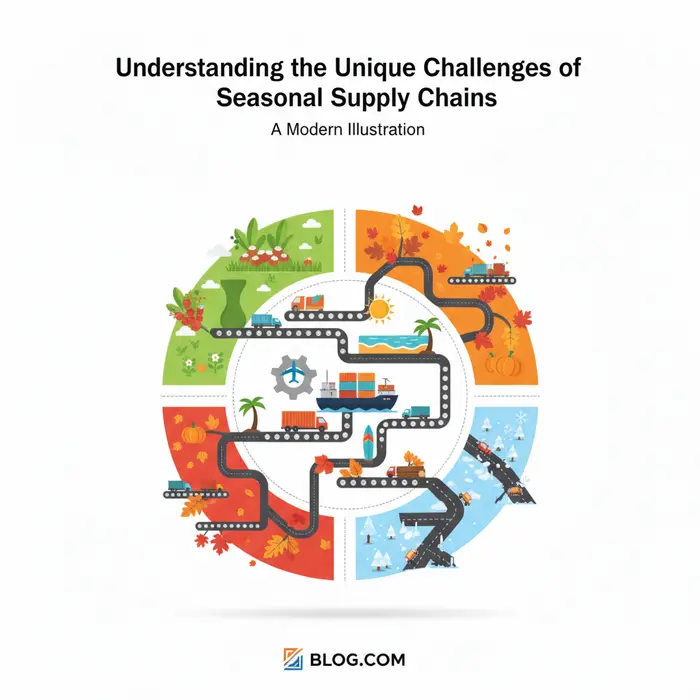
1. Defining ‘Seasonal’: Beyond Calendar Cycles
The term ‘seasonal’ often conjures images of winter holidays or summer vacations, but its definition in a supply chain context is far more expansive. Seasonality can be driven by a multitude of factors beyond the calendar. Agricultural cycles dictate the availability of fresh produce, fashion trends create short, intense demand windows for specific apparel lines, cultural festivals and events spark regional surges for particular goods, and even product launch cycles in technology can create a form of artificial seasonality. Understanding these diverse drivers is crucial for effective demand forecasting. A business dealing with ‘seasonal’ products might be a textile manufacturer supplying school uniforms, a seafood distributor managing specific fishing seasons, or a toy company preparing for a major film release. Each scenario demands a nuanced approach to forecasting, inventory, and logistics, as the predictability, duration, and intensity of the seasonal peak can vary wildly. This broader understanding is the first step in mitigating the inherent volatility.
2. The Domino Effect of Demand Fluctuations
Unpredictable demand, whether due to a sudden surge or an unexpected dip, creates a cascade of challenges throughout the entire supply chain. When demand spikes, businesses face pressure to ramp up production rapidly, often leading to increased costs for overtime, expedited shipping, and raw material premiums. Conversely, an overestimation of demand results in excess inventory, necessitating costly storage, markdowns, or even product write-offs. This volatility is particularly acute in international markets. Accurate Global demand planning for seasonal products becomes a high-stakes game, where errors in Export forecast accuracy for seasonal goods can lead to lost sales in one region and overstocked warehouses in another. The impact extends to supplier relationships, manufacturing schedules, labor allocation, and transportation capacity, creating a ‘bullwhip effect’ where small changes in consumer demand lead to amplified fluctuations upstream. For industries dealing with perishables, such as flowers or fresh produce, these demand fluctuations combined with the complexities of International perishable goods logistics can result in significant waste and financial losses.
3. Economic and Environmental Impact of Supply Chain Volatility
The economic ramifications of seasonal supply chain volatility are profound. High operational costs, including warehousing, transportation, and labor, are exacerbated by erratic demand. Businesses may incur penalties for failing to meet delivery schedules or face increased tariffs for rushed shipments. Lost sales due to stockouts directly impact revenue, while the need to discount excess inventory erodes profit margins. Beyond the immediate financial costs, there’s a significant environmental toll. Overproduction leads to increased waste, particularly for perishable items, contributing to landfills and resource depletion. Expedited international shipping, often reliant on air freight, generates a larger carbon footprint compared to more sustainable sea transport. Moreover, the constant re-adjustment of production schedules and logistics can strain relationships with suppliers and distributors, impacting long-term business stability. Implementing robust strategies for B2B seasonal inventory optimization and leveraging advanced analytics are critical to minimize waste, improve efficiency, and build a more resilient and sustainable supply chain for seasonal goods.
In conclusion, seasonal supply chains are far more complex than simple calendar-driven cycles. They demand sophisticated forecasting, agile logistics, and a deep understanding of global market dynamics to effectively manage Seasonal Product Supply Chain Volatility Management. Overcoming these challenges requires a holistic approach, integrating technology, collaboration, and strategic planning to ensure profitability and sustainability in an ever-fluctuating world.
Strategic Global Demand Planning for Seasonal Products
Uncover advanced techniques and best practices for forecasting and preparing for the unpredictable nature of international seasonal demand.
Managing global supply chains for seasonal products presents a unique set of challenges, from unpredictable weather patterns impacting agricultural yields to rapidly shifting consumer trends and geopolitical factors affecting logistics. The inherent volatility of seasonal demand, coupled with long international lead times and the potential for perishable goods, necessitates a sophisticated approach to Seasonal Product Supply Chain Volatility Management. Traditional forecasting methods often fall short in this dynamic environment, leading to stockouts, excess inventory, and significant financial losses. To navigate these complexities, businesses must adopt advanced strategies that integrate cutting-edge technology, comprehensive market intelligence, and robust cross-functional collaboration. This section explores key techniques for enhancing Seasonal Product Supply Chain Volatility Management, focusing on achieving superior Export forecast accuracy for seasonal goods and optimizing B2B seasonal inventory optimization.
1. Leveraging AI and Machine Learning for Predictive Analytics
In the realm of Global demand planning for seasonal products, the sheer volume and variety of data points can overwhelm conventional analysis. This is where Artificial Intelligence (AI) and Machine Learning (ML) become indispensable tools. These technologies can process vast datasets, including historical sales, weather patterns, social media sentiment, economic indicators, competitor activities, and even geopolitical events, to identify subtle patterns and predict future demand with unprecedented accuracy. Unlike static models, AI/ML algorithms continuously learn and adapt, refining their predictions based on new information and real-world outcomes. For instance, predictive models can account for regional holidays, cultural events, and localized promotions, which significantly influence seasonal product uptake. By deploying advanced predictive analytics, companies can move beyond reactive adjustments to proactive planning, substantially improving Export forecast accuracy for seasonal goods, reducing waste, and enhancing responsiveness to market shifts. Implementing AI-driven solutions is transforming how businesses approach supply chain management, offering a pathway to mitigate risks and capitalize on opportunities inherent in seasonal markets. As outlined in a Harvard Business Review article, AI is fundamentally reshaping supply chains by enabling more intelligent forecasting and operational decisions.
2. Integrating Market Intelligence and Consumer Trend Analysis
While quantitative data is crucial, a holistic approach to Global demand planning for seasonal products demands the integration of qualitative market intelligence and insightful consumer trend analysis. This involves more than just looking at past sales; it means actively monitoring global economic forecasts, geopolitical developments, currency fluctuations, and consumer behavior shifts. Tools for social media listening, sentiment analysis, and competitor benchmarking provide critical early warnings about emerging trends or potential disruptions. Understanding evolving consumer preferences – for example, a sudden shift towards sustainable packaging or organic ingredients in food products – can significantly impact demand and require agile adjustments in sourcing and production. For sectors dealing with International perishable goods logistics, this intelligence is even more vital, as misjudging demand can lead to significant spoilage. By integrating market research, expert opinions, and real-time news feeds, businesses can develop more nuanced forecasts, anticipating both opportunities and threats that might not be visible through historical data alone. This proactive understanding is key to effective B2B seasonal inventory optimization and ensuring product availability when and where it’s needed most.
3. Cross-Functional Collaboration for Comprehensive Planning
Effective Global demand planning for seasonal products cannot occur in silos. It requires seamless cross-functional collaboration across all departments, including sales, marketing, production, procurement, logistics, and finance. Sales teams, with their direct customer interaction, possess invaluable insights into market pulse and specific client needs. Marketing teams track campaigns and promotions that directly influence demand. Production and procurement understand capacity constraints, lead times, and raw material availability. Logistics teams provide critical data on shipping routes, transit times, and potential bottlenecks in International perishable goods logistics. Finance ensures that inventory levels and production plans align with budget and profitability goals. Implementing a robust Sales & Operations Planning (S&OP) or Integrated Business Planning (IBP) framework can facilitate this collaboration, creating a unified demand signal and a single, coherent plan that all departments can execute. Regular meetings, shared dashboards, and clear communication channels are essential to ensure everyone is working from the same playbook, mitigating the risks associated with Seasonal Product Supply Chain Volatility Management and ensuring consistent service levels globally. This integrated approach fosters agility, allowing organizations to react swiftly to unexpected changes and maintain a competitive edge.
In conclusion, mastering strategic global demand planning for seasonal products is about embracing a multifaceted approach. By harnessing the power of AI and Machine Learning for predictive accuracy, integrating rich market intelligence and consumer trend analysis, and fostering robust cross-functional collaboration, businesses can transform the challenges of seasonal volatility into opportunities for growth and efficiency. These advanced techniques are not just about forecasting; they are about building a resilient, responsive, and profitable supply chain capable of thriving in the unpredictable world of international trade.
Enhancing Export Forecast Accuracy for Seasonal Goods
For businesses dealing with seasonal products, the international market presents both immense opportunities and significant challenges. The inherent unpredictability of demand, coupled with global logistics complexities, makes accurate export forecasting a critical differentiator. Poor predictions lead to costly overstocking, waste, missed sales, and eroded profitability. This section delves into advanced strategies to enhance your export forecast accuracy for seasonal goods, ensuring your operations are lean, agile, and poised for international success. Effective global demand planning for seasonal products is not merely about anticipating sales; it’s about mastering Seasonal Product Supply Chain Volatility Management.
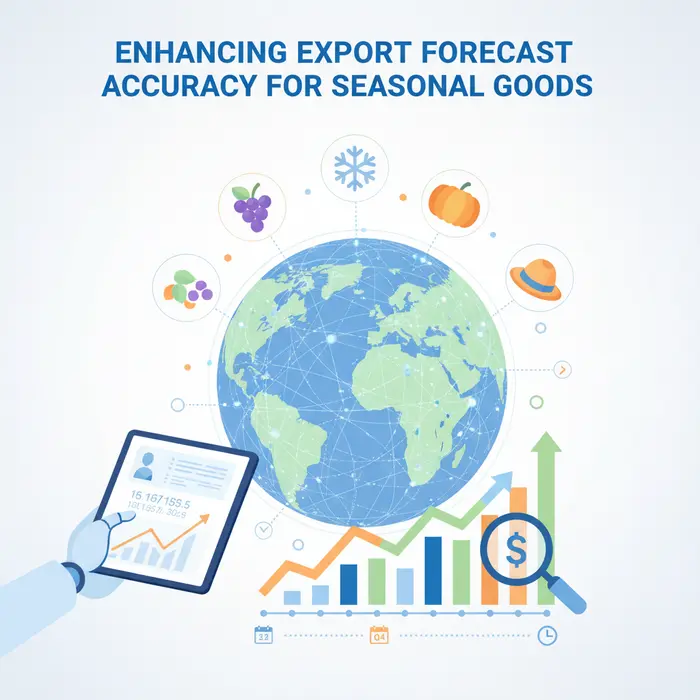
1. Data-Driven Approaches to Minimize Forecasting Errors
Minimizing forecasting errors begins with a robust commitment to data. Traditional forecasting methods, while foundational, often fall short in capturing the nuanced volatility of seasonal demand across diverse international markets. Modern approaches leverage advanced analytics and machine learning to sift through vast datasets, identifying patterns invisible to the human eye. Key strategies include:
- Advanced Time Series Analysis: Beyond simple moving averages, employ sophisticated models like ARIMA or Exponential Smoothing with seasonality components. These models can better project future trends based on historical seasonal peaks and troughs, accounting for holidays, weather patterns, and cultural events specific to target export markets.
- Machine Learning Models: Implement algorithms like Random Forests or neural networks that incorporate a multitude of exogenous variables—macroeconomic indicators, local promotions, competitor pricing, social media sentiment, and weather forecasts. By continuously learning from new data, these models offer dynamic adjustments, significantly boosting export forecast accuracy for seasonal goods. For deeper insights into advanced forecasting techniques, explore resources from leading academic institutions or supply chain research bodies such as Gartner’s Supply Chain Planning Research.
- Predictive Analytics for Perishable Goods: For international perishable goods logistics, real-time data on shelf life, transit times, and potential customs delays can be integrated into forecasting models. This allows for dynamic adjustments to order quantities and shipping schedules, minimizing spoilage and maximizing freshness upon arrival.
- Granular Data Collection: Break down sales data by region, city, sales channel (B2B vs. B2C), and even specific product SKUs. The more granular the data, the more precise the insights for B2B seasonal inventory optimization.
2. Scenario Planning for Geopolitical and Economic Instability
The global landscape is inherently unpredictable, and Seasonal Product Supply Chain Volatility Management demands proactive preparation for unforeseen events. Geopolitical shifts, economic downturns, trade policy changes, and natural disasters can all severely impact export demand and logistics. Scenario planning involves creating multiple “what-if” models to assess potential impacts and develop contingency plans.
- Risk Identification and Assessment: Systematically identify potential disruptions relevant to your export markets. This includes political instability in key regions, currency fluctuations affecting purchasing power, new tariffs, or environmental events impacting agricultural output. Quantify the probability and potential impact of each risk.
- Developing Multiple Forecast Scenarios: Instead of a single “best guess,” develop optimistic, pessimistic, and most-likely scenarios. Each scenario should detail specific assumptions about market conditions, logistical challenges, and consumer behavior.
- Contingency Planning: For each significant risk, outline clear action plans. This might involve identifying alternative shipping routes, securing backup suppliers, negotiating flexible contract terms with distributors, or preparing marketing campaigns for different demand levels. This proactive approach is vital for resilience in your global demand planning for seasonal products.
- Dynamic Adjustment Frameworks: Establish clear triggers for shifting from one scenario plan to another. Regular monitoring of global indicators and market intelligence is crucial to recognizing when a shift is necessary.
3. Improving Communication and Data Sharing with Overseas Partners
Effective export forecast accuracy for seasonal goods is a collaborative effort. Your overseas partners – distributors, retailers, logistics providers, and even key B2B customers – possess invaluable on-the-ground intelligence that can significantly refine your predictions. Breaking down data silos and fostering transparent communication channels are paramount.
- Establishing Collaborative Forecasting Platforms: Implement shared digital platforms or cloud-based solutions where sales data, inventory levels, promotional calendars, and market feedback can be exchanged in real-time. This eliminates delays and discrepancies inherent in manual reporting.
- Joint Business Planning Sessions: Regularly scheduled meetings (quarterly or even monthly during peak seasons) with key overseas partners can align objectives, review performance against forecasts, and discuss upcoming market trends or challenges.
- Real-time POS Data Integration: Where possible, integrate Point-of-Sale (POS) data from your international retailers directly into your forecasting models. This provides the freshest possible view of actual consumer demand, allowing for rapid adjustments to production and shipping schedules, especially crucial for International perishable goods logistics.
- Feedback Loops and Continuous Improvement: Encourage partners to provide qualitative feedback on forecast accuracy and market conditions. This is essential for refining models and improving relationships. For comprehensive insights into managing the complexities of supply chains, particularly for seasonal products, explore resources on Seasonal Product Supply Chain Volatility Management. Building trust through transparent data sharing ensures all parties work towards a common, more accurate forecast.
Mastering export forecast accuracy for seasonal goods is a continuous journey. By embracing data-driven analytics, preparing for geopolitical uncertainties through rigorous scenario planning, and fostering unparalleled communication with international partners, businesses can transform volatility into a competitive advantage. This holistic approach minimizes waste, maximizes profitability, and solidifies your position as a reliable supplier in the global marketplace.
Navigating International Perishable Goods Logistics with Precision
International trade of perishable goods, especially seasonal items, presents a unique labyrinth of logistical challenges. From fresh produce to delicate flowers, the journey from farm to table across borders demands unparalleled precision. Effective Seasonal Product Supply Chain Volatility Management is paramount for businesses striving to meet fluctuating consumer demands while minimizing waste and maintaining product integrity. This section delves into the critical strategies for navigating the complexities of international perishable goods logistics, focusing on key areas that ensure efficiency and compliance. Success hinges on meticulous global demand planning for seasonal products, robust export forecast accuracy for seasonal goods, and sophisticated B2B seasonal inventory optimization to respond swiftly to market shifts and environmental variables.
Mastering Cold Chain Management and Temperature Control
The cornerstone of international perishable goods logistics is an unblemished cold chain. Any deviation in temperature can render an entire shipment worthless, leading to significant financial losses and reputational damage. Mastering cold chain management goes beyond simply refrigerating goods; it involves a continuous, unbroken sequence of temperature-controlled storage and distribution. This includes pre-cooling, refrigerated transportation (refrigerated trucks, reefer containers, air cargo holds), and climate-controlled warehousing at every transshipment point. Modern solutions leverage advanced IoT sensors and real-time monitoring systems that provide end-to-end visibility, alerting stakeholders to any fluctuations. Beyond maintaining specific temperatures, managing humidity levels and atmospheric composition (e.g., controlled atmosphere storage for certain fruits) is crucial for extending shelf life and preventing spoilage. Adherence to international standards on cold chain management ensures best practices are followed. This rigorous approach is fundamental for successful Seasonal Product Supply Chain Volatility Management, especially when dealing with high-value, time-sensitive exports.
Streamlining Customs Compliance and Border Clearance
Navigating the intricate web of international customs regulations is a major hurdle for international perishable goods logistics. Seasonal products, often subject to strict phytosanitary requirements, import quotas, and tariff codes, demand flawless documentation and proactive engagement with customs authorities. Errors or delays at borders can lead to spoilage, hefty fines, and significant market access issues, directly impacting export forecast accuracy for seasonal goods. To streamline this process, businesses must:
- Understand and classify goods correctly: Accurately identifying Harmonized System (HS) codes and country-specific import regulations prevents misdeclarations.
- Pre-clearance procedures: Leveraging options for electronic documentation and pre-submission of paperwork can significantly reduce transit times.
- Partner with customs brokers: Experienced brokers specializing in perishable goods can navigate complex trade agreements and evolving regulations, such as those related to CITES (Convention on International Trade in Endangered Species) or specific food safety standards (e.g., FSMA in the US).
- Contingency planning: Having robust plans for inspection delays or unforeseen regulatory changes is vital for maintaining shipment integrity.
Proactive compliance and a deep understanding of each destination country’s specific requirements are indispensable for smooth border transitions and contribute significantly to effective Seasonal Product Supply Chain Volatility Management.
Optimizing Multi-Modal Transport for Speed, Safety, and Cost
For time-sensitive perishable goods, selecting the optimal transport mode – or combination thereof – is a delicate balancing act between speed, safety, and cost-efficiency. International perishable goods logistics often necessitates a multi-modal approach. Air freight offers unparalleled speed, crucial for highly sensitive items or urgent replenishments, but at a premium cost. Sea freight, while slower, provides a cost-effective solution for larger volumes of goods with longer shelf lives, especially when utilizing advanced reefer containers. Road and rail transport serve as vital links for domestic distribution and connecting to international hubs.
Optimizing this involves:
- Strategic routing: Identifying the fastest and most reliable routes with minimal transshipment points to reduce handling risks.
- Consolidation strategies: Grouping smaller shipments to achieve economies of scale without compromising transit times.
- Technology integration: Utilizing advanced logistics software for real-time tracking, predictive analytics, and dynamic re-routing capabilities helps adapt to unforeseen disruptions. This sophisticated approach to B2B seasonal inventory optimization minimizes transit times and associated risks, ensuring that seasonal products reach their markets in optimal condition. Effective global demand planning for seasonal products coupled with precise execution of multi-modal strategies is critical in mitigating risks associated with Seasonal Product Supply Chain Volatility Management.
B2B Seasonal Inventory Optimization Strategies for 2025
In the dynamic landscape of global commerce, managing B2B seasonal inventory effectively is paramount for sustained profitability and operational efficiency. Businesses grapple with the inherent challenges of balancing inventory levels to meet fluctuating demand without incurring excessive holding costs or risking critical stockouts. The volatility stemming from shifting consumer preferences, geopolitical events, and climate change necessitates sophisticated approaches to Seasonal Product Supply Chain Volatility Management. For 2025, a proactive and technology-driven strategy is essential to navigate these complexities, ensuring that supply chains remain resilient and responsive to market demands across various seasonal cycles.
Optimizing B2B seasonal inventory isn’t merely about forecasting; it involves a holistic approach that integrates predictive analytics, agile logistics, and robust supplier relationships. This ensures that enterprises can adapt quickly to market shifts, maintain service levels, and protect margins. Mastering B2B seasonal inventory optimization requires a deep understanding of demand patterns, lead times, and the strategic deployment of resources.

1. Dynamic Stocking Levels and Safety Stock Principles
The core of effective seasonal inventory management lies in establishing dynamic stocking levels and applying robust safety stock principles. Rather than relying on static reorder points, businesses in 2025 must implement systems that adjust inventory thresholds based on real-time data, forecasted demand, and supply chain variability. Dynamic stocking means that as a peak season approaches, inventory levels are strategically increased, and as the season wanes, they are scaled down to prevent overstocking. This approach is particularly critical for global demand planning for seasonal products, where lead times can be extensive and disruptions frequent.
Safety stock, the buffer held to guard against unexpected spikes in demand or delays in supply, should also be dynamically calculated. Traditional safety stock formulas often fall short in highly volatile environments. Advanced models should consider factors like historical forecast error, supplier reliability, and the cost of a stockout versus the cost of holding excess inventory. By leveraging predictive analytics and machine learning, companies can determine optimal safety stock levels that minimize risk without tying up excessive capital, offering a crucial advantage in modern supply chain planning.
2. Implementing Just-in-Time (JIT) for Seasonal Components
While JIT is often associated with continuous production, its principles can be powerfully adapted for seasonal inventory optimization, particularly for components or sub-assemblies. For B2B suppliers dealing with seasonal finished goods, procuring high-cost or space-intensive components just as they are needed can significantly reduce holding costs and obsolescence risk. This strategy requires exceptionally tight coordination with suppliers and robust communication channels. For industries dealing with international perishable goods logistics, JIT principles can be extended to manage the timely arrival of fresh ingredients or short shelf-life components, minimizing waste and ensuring product freshness upon delivery to the B2B client.
Successful JIT implementation for seasonal components hinges on meticulous demand forecasting and highly reliable supplier networks. It’s about orchestrating a finely tuned ballet where parts arrive precisely when they are needed for production or assembly, allowing the final product to be dispatched just-in-time for the market’s seasonal peak. This approach frees up capital and warehouse space, redirecting resources to other critical areas of the business.
3. Leveraging Technology for Real-Time Inventory Visibility and Control
In 2025, technology is not just an enabler but a fundamental requirement for mastering B2B seasonal inventory optimization. Solutions incorporating Artificial Intelligence (AI), Machine Learning (ML), and the Internet of Things (IoT) offer unprecedented real-time visibility and control over inventory across the entire supply chain. AI-powered forecasting models can analyze vast datasets, including historical sales, weather patterns, social media trends, and economic indicators, to predict seasonal demand with significantly higher accuracy than traditional methods, thereby enhancing export forecast accuracy for seasonal goods.
IoT sensors provide real-time tracking of goods in transit and in storage, offering insights into conditions (e.g., temperature, humidity for perishable goods), location, and potential delays. This immediate data allows for proactive adjustments to shipping schedules or alternative sourcing, mitigating the impact of unexpected disruptions. Furthermore, cloud-based Enterprise Resource Planning (ERP) and Warehouse Management Systems (WMS) integrated with advanced analytics dashboards provide a single source of truth for inventory data, empowering decision-makers with the insights needed to optimize stocking levels, streamline order fulfillment, and respond swiftly to market changes. Embracing these technological advancements will be key to maintaining a competitive edge and ensuring seamless B2B operations throughout the year’s seasonal fluctuations.
Partner with Vietnam’s Leading Suppliers
Looking for reliable suppliers in Vietnam? Contact VietnamSuppliers.com today to connect with verified manufacturers and exporters across all industries.
—————————————
References
– Demand Forecasting: Overcoming the Challenges of Volatility: https://www.supplychainbrain.com/articles/39294-demand-forecasting-overcoming-the-challenges-of-volatility
– How AI Is Transforming Supply Chain Management: https://hbr.org/2020/09/how-ai-is-transforming-supply-chain-management
– Gartner’s Supply Chain Planning Research: https://www.gartner.com/en/supply-chain/insights/supply-chain-planning
– Cold chain crucial to food safety and reducing food waste: http://www.fao.org/fao-stories/article/en/c/1192534/
– modern supply chain planning: https://www.mckinsey.com/capabilities/operations/our-insights/supply-chain-planning-the-next-generation

