
What is a Trade War? Definition and Causes
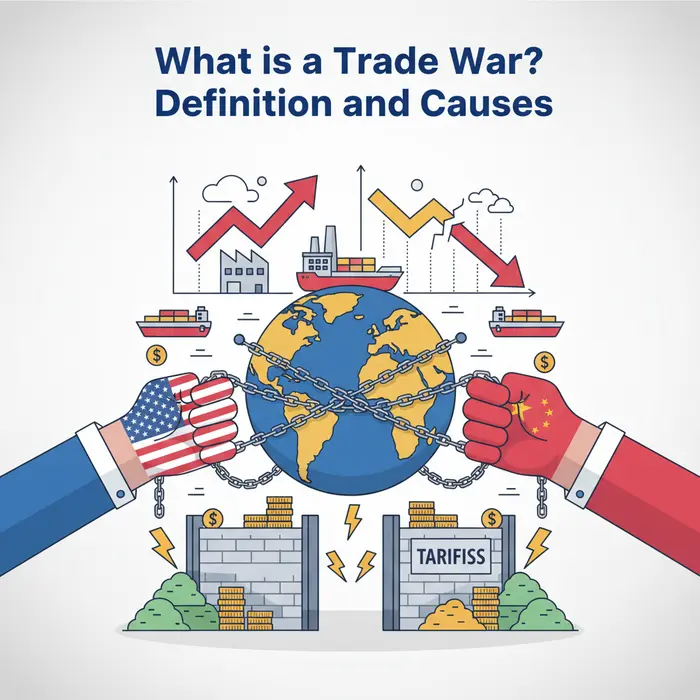
A “trade war” is a complex economic phenomenon characterized by escalating protectionist measures between two or more countries. It’s essentially a cycle of retaliatory actions, primarily involving tariffs and quotas, designed to protect domestic industries and achieve specific economic or political objectives. Understanding what is a trade war definition is crucial for businesses and policymakers alike, as these disputes can have profound and often detrimental effects on global trade, supply chains, and economic stability. This section explores the key characteristics, the instruments typically employed, and the underlying economic and political factors that trigger such contentious disputes between nations.
1. Defining a Trade War: Tariffs, Quotas, and Retaliation
At its core, a trade war begins when one nation imposes trade barriers on another, prompting the target nation to retaliate with similar measures. The primary instruments in this economic arsenal are tariffs and quotas. Tariffs are taxes levied on imported goods and services, making them more expensive for domestic consumers and less competitive compared to locally produced alternatives. Quotas, on the other hand, are quantitative limits on the volume of specific goods that can be imported over a certain period. Both measures aim to reduce imports, thereby theoretically boosting domestic production and employment.
However, the defining characteristic of a trade war is the cycle of retaliation. When Country A imposes tariffs on Country B’s steel, Country B might respond by placing tariffs on Country A’s agricultural products. This tit-for-tat escalation can quickly spiral, leading to a broader imposition of barriers across various sectors. The immediate consequence is often an increase in costs for businesses, disruption of global supply chains, and a reduction in international trade volume. Such actions invariably impact consumers through higher prices and reduced product availability, highlighting the extensive trade war impact on supply chains.
2. Economic Nationalism and Protectionism as Drivers
Beneath the surface of tariffs and quotas lie powerful ideological currents: economic nationalism and protectionism. Economic nationalism is a political ideology that prioritizes domestic control of the economy, the accumulation of capital, and the imposition of trade barriers to protect and grow the national economy. It often advocates for policies that favor domestic industries, workers, and capital over foreign competitors, even if it comes at the expense of global economic integration. This mindset fuels the belief that international trade should serve national interests first and foremost.
Closely intertwined, protectionism is the economic policy of restricting imports from other countries through methods such as tariffs on imported goods, import quotas, and a variety of other government regulations. Its stated goal is to protect domestic industries from foreign competition, prevent job losses, and sometimes to nurture nascent industries until they are strong enough to compete globally. While proponents argue that protectionism safeguards national sovereignty and economic security, critics contend that it distorts markets, reduces efficiency, and ultimately harms consumers by limiting choices and increasing prices. When these ideologies gain prominence, they often serve as potent drivers for initiating trade disputes.
3. Common Causes of Global Trade Disputes
While economic nationalism and protectionism provide the philosophical framework, specific grievances typically ignite global trade disputes. One of the most common triggers is persistent and large trade imbalances, where one country consistently imports far more from another than it exports, leading to accusations of unfair trade practices. Another significant cause is alleged intellectual property theft or forced technology transfer, where foreign companies are pressured to share their proprietary technology in exchange for market access.
Government subsidies for domestic industries, which can give local producers an unfair competitive advantage, also frequently spark disputes. Additionally, currency manipulation, where a country deliberately devalues its currency to make its exports cheaper and imports more expensive, is a recurring point of contention. Beyond purely economic factors, national security concerns are sometimes invoked as a justification for imposing trade barriers, even if the primary motivation is economic protection. Geopolitical rivalries and the desire to exert political leverage can also escalate economic friction into full-blown trade wars.
For businesses, understanding these causes is the first step in mitigating trade war risks. The overarching trade war implications for businesses are vast, ranging from increased operational costs and supply chain disruptions to reduced market access and dampened consumer demand. Proactive analysis of global trade disputes is therefore essential for strategic planning and resilience in an interconnected world.
Direct Trade War Implications for Businesses
Trade wars, characterized by protectionist measures such as tariffs and quotas, represent significant economic disruptions that can severely impact businesses across all sectors. Understanding the trade war implications for businesses is crucial for strategic planning and risk mitigation. At its core, the effects of trade wars are a series of escalating retaliatory tariffs and non-tariff barriers imposed by countries on each other’s goods, often in response to perceived unfair trade practices or to protect domestic industries. These disputes, part of broader global trade disputes analysis, create a volatile operating environment that directly affects manufacturing, retail, and even service industries, leading to increased costs, reduced market access, and ultimately, eroded profitability. The immediate and direct consequences ripple through complex global supply chains, requiring companies to rapidly adapt or face significant financial distress.
1. Increased Costs for Imports and Exports
One of the most immediate and tangible trade war impact on supply chains is the surge in operational costs. Tariffs, essentially taxes on imported goods, directly inflate the price of raw materials, components, and finished products that businesses rely on. Manufacturers, for example, might face higher costs for steel, semiconductors, or textiles imported from tariff-affected countries. These increased input costs can’t always be absorbed, forcing businesses to either raise their own prices – potentially alienating customers – or accept lower profit margins. For exporters, the situation is equally challenging. Tariffs imposed by destination countries make their products more expensive and less competitive in those markets, sometimes requiring them to lower their export prices to stay viable, again, at the expense of profitability. Beyond tariffs, trade wars can lead to increased administrative burdens, supply chain disruptions as companies seek alternative (often more expensive or less reliable) suppliers, and higher logistics costs due to rerouting or delays.
2. Reduced Market Access and Export Opportunities
Trade wars erect significant barriers to international markets, directly limiting where and how businesses can sell their products and services. When a country imposes tariffs on imports, it effectively makes it harder for foreign businesses to compete within its borders. Conversely, retaliatory tariffs mean that a company’s traditional export markets suddenly become less accessible or economically viable. For businesses heavily reliant on exports, this can be catastrophic, leading to a loss of significant revenue streams. Agricultural producers, for instance, might find their key overseas markets suddenly closed off or heavily taxed, leaving them with surplus goods and dwindling demand. This reduction in market access not only stifles growth but can also force businesses to abandon long-standing relationships with international partners, restructure their sales strategies, or even scale back operations. The uncertainty surrounding future trade policies further complicates long-term investment and market expansion plans, discouraging businesses from exploring new opportunities in volatile regions.
3. Profit Margin Erosion and Business Viability
The combined effect of increased costs and reduced market access inevitably leads to the erosion of profit margins, threatening the overall viability of businesses. Higher import costs mean less money left over from sales, while reduced export opportunities mean fewer sales overall. Retailers may struggle to pass on increased wholesale prices to consumers, leading to reduced sales volumes. Manufacturers may find their competitive edge blunted by more expensive components and difficulty in exporting finished goods. Small and medium-sized enterprises (SMEs) are particularly vulnerable as they often lack the financial reserves or diversified supply chains to withstand prolonged trade disruptions. Faced with dwindling profits, businesses may be forced to implement cost-cutting measures such as layoffs, reduction in R&D, or delayed investments. In extreme cases, sustained margin erosion can lead to insolvency and business failure. Navigating these challenges requires businesses to consider strategies for mitigating trade war risks, such as diversifying supply chains, exploring new markets, or hedging against currency fluctuations, but these often come with their own set of costs and complexities.
Trade War Impact on Supply Chains & Logistics
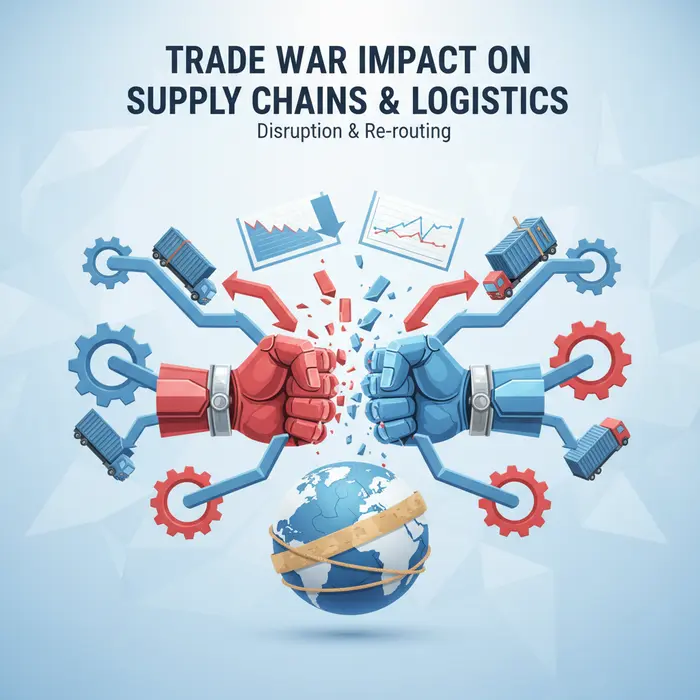
A trade war is an economic conflict where one nation imposes tariffs or other trade barriers on imports, leading to retaliatory measures from its trading partners. This escalating exchange of protectionist policies, often stemming from political or economic disputes, creates profound trade war implications for businesses globally. The effects extend beyond mere price hikes, deeply disrupting global supply chains and logistics networks, compelling companies to undertake comprehensive global trade disputes analysis and overhaul operational strategies.
The intricate web of modern supply chains, characterized by just-in-time delivery and optimized global sourcing, is particularly vulnerable to the sudden shifts and uncertainties introduced by trade wars. Challenges manifest as volatile sourcing costs, restricted market access, and increased logistical complexities. Understanding these disruptions is crucial for developing adaptive strategies to maintain operational efficiency and competitive advantage.
1. Re-shoring and Near-shoring Considerations
One direct response to heightened risks from distant, potentially unstable supply routes is the consideration of re-shoring and near-shoring. Re-shoring involves bringing production back to the home country, while near-shoring relocates it to a neighboring or geographically closer nation. These moves are primarily driven by the desire to reduce tariff exposure, shorten lead times, improve supply chain visibility, and enhance control over manufacturing processes. For businesses assessing the trade war impact on supply chains, these strategies offer a pathway to greater resilience.
However, these shifts involve complexities. Re-shoring often faces challenges like higher labor costs, a lack of skilled workforce, or insufficient domestic manufacturing infrastructure. Near-shoring can mitigate some of these by leveraging lower labor costs in adjacent regions while maintaining proximity. Both strategies demand significant capital investment, extensive planning, and a careful cost-benefit analysis, weighing long-term benefits of reduced geopolitical risk against immediate relocation costs and potential loss of economies of scale. Companies must meticulously assess operational needs and market demands before committing, as part of their efforts in mitigating trade war risks.
2. Diversifying Sourcing and Manufacturing Locations
To reduce reliance on single-country suppliers or manufacturing hubs, which become high-risk targets during trade disputes, businesses are increasingly diversifying their sourcing and manufacturing footprints. This means establishing multiple production sites or sourcing components from various countries, creating redundant pathways for critical inputs. The aim is to build a more robust and flexible supply chain capable of withstanding disruptions in any single region. For instance, a company reliant on components from a country in a trade war might seek alternative suppliers in different geopolitical blocs. This approach is a core strategy for building supply chain resilience amidst global trade disputes.
Diversification helps in mitigating trade war risks by spreading exposure across different political and economic landscapes. If tariffs are imposed on goods from one country, businesses can pivot to suppliers in another, minimizing impact on production and costs. While this strategy requires extensive supplier management, rigorous quality control across multiple locations, and potentially increased logistics complexity, the investment in a diversified network offers significant dividends in business continuity and long-term stability. It provides a crucial buffer against unpredictable global trade disputes analysis and their consequences.
3. Inventory Management in Volatile Environments
Trade wars introduce significant volatility into demand and supply forecasts, making traditional just-in-time (JIT) inventory management strategies precarious. The threat of sudden tariff imposition, export restrictions, or logistical bottlenecks can lead to stockouts or, conversely, excessive inventory holding if companies try to front-load orders. Thus, adapting inventory management strategies is vital. One common approach is to increase safety stock levels for critical components or finished goods, creating a buffer against unforeseen disruptions and price fluctuations, though this increases carrying costs.
Another strategy is to implement postponement, delaying the final assembly or customization of products until closer to the point of sale. This allows companies to maintain generic inventory adaptable to various markets, offering flexibility in responding to regional tariff changes or demand shifts. Furthermore, leveraging advanced analytics and real-time data to monitor global trade policies, shipping routes, and supplier performance becomes paramount. By proactively identifying potential disruptions and adjusting inventory levels, businesses can mitigate the financial burden of tariffs and maintain consistent product availability, addressing the acute trade war impact on supply chains. Effective inventory management, alongside re-shoring and diversification, forms a critical pillar in a comprehensive strategy for thriving despite the uncertainties of global trade disputes analysis and the profound trade war implications for businesses.
Mitigating Trade War Risks for Business Resilience
In an increasingly interconnected yet volatile global economy, businesses frequently face external shocks that can disrupt operations, erode profitability, and challenge long-term viability. Among these, trade wars stand out as particularly complex and far-reaching. At its core, what is a trade war definition refers to a situation where countries impose tariffs or other barriers to trade on each other in retaliation for similar actions. These disputes, often rooted in protectionism, can trigger a cascade of adverse trade war implications for businesses, from inflated input costs and reduced market access to disrupted supply chains and diminished consumer confidence. Building resilience against these geopolitical headwinds requires a multi-faceted approach centered on adaptability, proactive planning, and strategic foresight.
1. Developing Robust Risk Assessment Frameworks
The first critical step in mitigating trade war risks is to comprehensively understand a business’s exposure. This involves establishing dynamic and robust risk assessment frameworks that go beyond traditional financial analyses. Companies must meticulously evaluate their entire value chain, identifying potential vulnerabilities stemming from specific countries or regions involved in trade disputes. This includes scrutinizing raw material sources, manufacturing locations, distribution channels, and key export markets. A thorough global trade disputes analysis should consider various scenarios, such as escalating tariffs, non-tariff barriers, currency fluctuations, and even geopolitical instability. Stress-testing business models against these potential shocks allows management to quantify potential financial impacts, assess the viability of current strategies, and prioritize areas for intervention. Leveraging data analytics to track global economic indicators, political developments, and trade policy shifts provides the intelligence needed to anticipate emerging threats rather than merely reacting to them.
2. Strategic Partnerships and Alliances
Building resilience often means not going it alone. Strategic partnerships and alliances play a pivotal role in diversifying risk and enhancing operational flexibility. One of the most significant trade war impact on supply chains is increased vulnerability due to reliance on single-country sourcing or manufacturing. To counter this, businesses should explore multi-sourcing strategies, establishing relationships with suppliers in different geographical regions to ensure continuity of supply. This might involve near-shoring (moving production closer to consumption markets) or friend-shoring (sourcing from politically aligned countries). Furthermore, forming alliances with local partners in target markets can help navigate complex regulatory landscapes, mitigate market access restrictions, and even gain insights into local consumer preferences. Collaborative efforts, such as joint ventures or shared logistics networks, can also distribute the burden of new tariffs or logistical challenges, fostering a collective resilience against protectionist measures.
3. Leveraging Technology for Market Intelligence
In a rapidly changing global trade environment, timely and accurate information is paramount for mitigating trade war risks. Technology offers powerful tools to gather, analyze, and act upon critical market intelligence. Advanced data analytics, artificial intelligence (AI), and machine learning (ML) platforms can monitor vast amounts of data, including trade agreements, tariff schedules, customs regulations, and economic indicators across multiple countries. These tools can identify emerging trends, predict potential policy changes, and even forecast their impact on specific commodities or sectors. Furthermore, technologies like blockchain can enhance supply chain transparency, providing real-time visibility into the movement of goods and allowing businesses to quickly adapt to disruptions. Digital platforms for supplier relationship management and customer relationship management (CRM) can also provide crucial insights into market sentiment and demand shifts, enabling businesses to adjust pricing, product offerings, or market strategies proactively. Investing in these technological capabilities transforms reactive responses into proactive, data-driven decision-making, significantly boosting a company’s agility and resilience in the face of trade volatility.
Global Trade Disputes Analysis and Future Outlook
Global trade disputes have become a defining feature of the international business landscape, challenging long-established supply chains and prompting a re-evaluation of global economic integration. At its core, what is a trade war definition? It typically involves countries imposing tariffs or other trade barriers on each other in retaliation for perceived unfair trade practices. This tit-for-tat escalation creates significant trade war implications for businesses worldwide, forcing companies to adapt rapidly to changing market dynamics and increased uncertainties. A thorough global trade disputes analysis reveals complex shifts that demand strategic foresight and operational agility for sustained success.
1. Shifting Global Economic Blocs and Alliances
Trade disputes often accelerate the formation of new economic blocs and alliances, altering traditional global value chains. As nations seek to reduce their dependence on contentious trading partners, we observe a trend towards “friend-shoring” or “near-shoring.” This involves companies relocating production to politically aligned or geographically closer countries, aiming to build more resilient and secure supply networks. The trade war impact on supply chains is profound, leading to diversification away from single-country reliance and fostering regional economic integration. Businesses must closely monitor these evolving geopolitical relationships, as they dictate future market access, tariff structures, and regulatory environments. Adapting to these shifts requires strategic investments in new production hubs, a re-evaluation of logistics networks, and an understanding of emerging trade agreements that favor these new alignments. This fragmentation of global trade necessitates a proactive approach to market entry and supply chain management, embracing resilience over pure cost efficiency.
2. Importance of Digital Transformation in Trade
In an era of heightened trade tensions, digital transformation is no longer a luxury but a necessity for businesses aiming to navigate complex trade landscapes. Advanced technologies like AI, blockchain, and data analytics offer powerful tools for mitigating trade war risks. For instance, AI-driven analytics can forecast tariff changes and demand fluctuations, enabling companies to adjust sourcing and pricing strategies in real-time. Blockchain technology can enhance supply chain transparency and traceability, providing immutable records of origin and compliance, which is crucial for navigating complex customs regulations and rules of origin. Furthermore, digital platforms facilitate direct engagement with customers and suppliers, streamlining processes and reducing reliance on intermediaries. Embracing automation in logistics, customs declarations, and payment systems can significantly improve efficiency, reduce costs, and enhance responsiveness to sudden trade policy shifts. This technological adoption is key to building agile and adaptable business models resilient to external shocks.
3. Navigating Geopolitical Complexities
The future outlook for global trade is inextricably linked to geopolitical dynamics. Businesses must develop a sophisticated understanding of international relations, recognizing that trade policy is increasingly a tool of statecraft rather than purely economic decision-making. Navigating these complexities requires robust risk management frameworks that extend beyond traditional market risks to encompass political and regulatory uncertainties. Companies need to diversify not only their supply chains but also their customer bases and investment portfolios across different regions to hedge against concentrated geopolitical exposure. Engaging with policymakers and industry associations becomes vital for influencing trade dialogues and staying informed about potential policy changes. Furthermore, cultivating strong local partnerships in diverse markets can provide invaluable insights and operational flexibility. Ultimately, success in this environment hinges on adopting a “geopolitical agile” strategy, where businesses can quickly pivot their operations, investments, and market focus in response to shifts in global power dynamics and trade relations. This strategic adaptability is paramount for enduring the long-term trade war implications for businesses.
Partner with Vietnam’s Leading Suppliers
Looking for reliable suppliers in Vietnam? Contact VietnamSuppliers.com today to connect with verified manufacturers and exporters across all industries.
—————————————
References
– WTO: Tariffs and Quotas: https://www.wto.org/english/thewto_e/whatis_e/tif_e/fact2_e.htm
– US-China Trade War Has Hurt Both Countries: https://www.piie.com/blogs/trade-and-investment-policy-watch/us-china-trade-war-has-hurt-both-countries
– Global Value Chain Development Report 2023: Reshaping Globalization – World Bank: https://www.worldbank.org/en/topic/trade/publication/global-value-chain-development-report-2023-reshaping-globalization
– What is a Trade War?: https://www.wto.org/english/thewto_e/whatis_e/tif_e/fact4_e.htm
– what is a trade war definition: https://www.cfr.org/trade-war

