
The Middle Corridor’s Strategic Resurgence
In an increasingly complex global landscape, the Middle Corridor Trade Route is rapidly emerging as a critical alternative for businesses seeking robust and diversified supply chains between Asia and Europe. This ancient path, officially known as the Trans-Caspian International Transport Route (TITR), has seen a remarkable resurgence, driven by significant geopolitical shifts, a pressing demand for enhanced supply chain resilience strategies, and the continuous search for new Asia Europe logistics routes that offer both efficiency and stability. As traditional trade arteries face unprecedented challenges, the Middle Corridor offers a compelling proposition for countries like Vietnam looking for new Vietnam export opportunities 2024 and for companies aiming to optimize their international trade infrastructure projects.
1. Defining the Trans-Caspian International Transport Route (TITR)
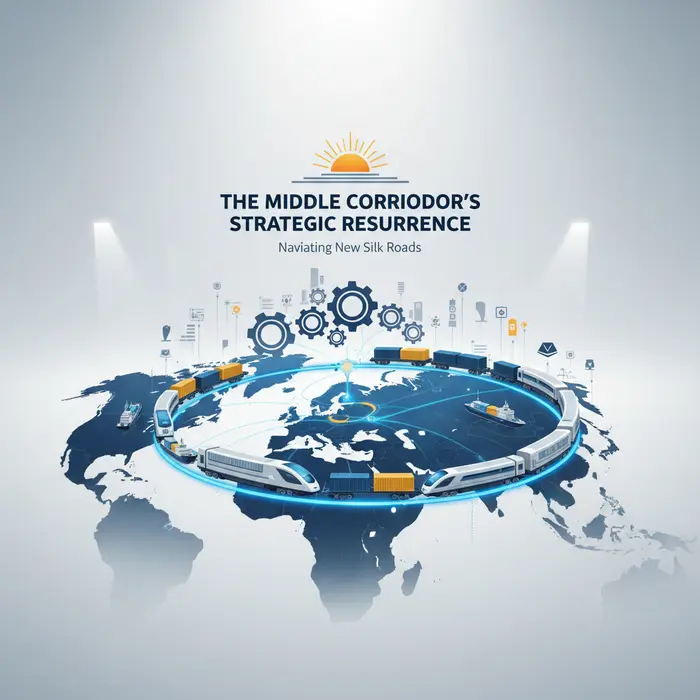
The Trans-Caspian International Transport Route (TITR), commonly referred to as the Middle Corridor, is a multimodal logistics corridor connecting China and Southeast Asia to Europe via Central Asia, the Caspian Sea, the South Caucasus, and Turkey. Originating from China’s western regions, the route traverses Kazakhstan by rail, crosses the Caspian Sea by feeder vessels to Azerbaijan, continues by rail through Georgia, and then either across the Black Sea to Romania and Bulgaria or directly via rail into Turkey, connecting onwards to European markets. This ambitious international trade infrastructure project utilizes existing rail networks and port facilities, along with significant ongoing investments, to facilitate the movement of goods, primarily containerized cargo, but also bulk and general freight. It represents a vital component of the broader efforts to create alternative Asia Europe logistics routes that are less prone to geopolitical disruptions and offer faster transit times compared to traditional sea routes.
2. Geopolitical Factors Driving Renewed Interest
The resurgence of the Middle Corridor is not merely an infrastructural development but a direct response to a series of significant geopolitical events that have reshaped global trade flows. Foremost among these is the ongoing conflict in Ukraine, which has severely disrupted and complicated the viability of the Northern Corridor (the Trans-Siberian Railway) as a reliable route for trade between Asia and Europe. Sanctions against Russia, coupled with operational uncertainties, have compelled shippers to seek viable alternatives, thrusting the Middle Corridor into the spotlight. Simultaneously, recent security concerns and disruptions in the Red Sea, particularly affecting the Suez Canal route, have underscored the vulnerability of maritime chokepoints. This has intensified the global imperative for diversified supply chains and more resilient transport options.
Furthermore, while the Middle Corridor predates China’s Belt and Road Initiative (BRI), it has significantly benefited from the BRI’s emphasis on developing infrastructure across Eurasia. Countries along the Middle Corridor have actively invested in upgrading their rail networks, ports, and logistics capabilities to capitalize on this strategic shift. The combined effect of these geopolitical forces has catalyzed a collective effort among corridor countries, supported by international financial institutions like the European Bank for Reconstruction and Development (EBRD), to enhance the route’s capacity, efficiency, and attractiveness as a reliable link for global commerce, strengthening supply chain resilience strategies for businesses worldwide.
3. Comparing with Traditional Routes (e.g., Northern Corridor, Suez Canal)
To fully appreciate the strategic importance of the Middle Corridor, it’s essential to compare it with its established counterparts. The Northern Corridor, primarily utilizing the Trans-Siberian Railway through Russia, has historically offered a faster land-based transit option than sea routes. However, current geopolitical realities render it largely impractical and risky for many international shippers. The Suez Canal route, a cornerstone of global trade for over a century, remains the most cost-effective option for large-volume maritime freight between Asia and Europe. Yet, its reliance on a single waterway and vulnerability to disruptions – whether from environmental factors, political instability, or security threats as recently witnessed in the Red Sea – highlights the inherent risks of over-reliance on a single artery. This has spurred greater interest in diversified Asia Europe logistics routes.
The Middle Corridor positions itself as a robust alternative by offering a balance of speed and security. While typically slower than the Northern Corridor (due to multimodal transfers) and potentially more expensive per TEU than the Suez Canal for very high volumes, it provides crucial advantages: political neutrality, avoidance of sanctions-hit territories, and reduced exposure to maritime chokepoints. Transit times via the Middle Corridor can be significantly shorter than purely maritime routes that circumnavigate Africa, making it appealing for time-sensitive cargo. However, challenges persist, including the need for enhanced coordination among multiple countries, varying customs procedures, and continuous infrastructure upgrades at trans-shipment points across the Caspian and Black Seas. Despite these hurdles, its role in strengthening global supply chain resilience strategies and offering a stable path for Asian exports, including emerging Vietnam export opportunities 2024, is undeniable, marking it as a route of profound strategic importance for the coming decades.
Enhancing Asia-Europe Logistics & Supply Chain Resilience
The global logistics landscape has undergone significant transformations in recent years, propelled by geopolitical shifts, demand fluctuations, and an increasing imperative for resilience. Traditional Asia-Europe trade routes, while well-established, have demonstrated vulnerabilities to disruptions, necessitating the urgent exploration and development of diversified alternatives. In this context, the Middle Corridor, also known as the Trans-Caspian International Transport Route (TITR), has emerged as a pivotal solution. It promises to redefine Asia-Europe logistics by offering a faster, more reliable, and strategically diversified conduit for trade, directly addressing the critical need for robust supply chain resilience strategies in the modern era.
1. Speed and Efficiency Advantages for Transit Times
One of the most compelling attributes of the Middle Corridor is its significant contribution to reducing transit times between Asia and Europe. Unlike the maritime routes via the Suez Canal, which can take 35-45 days, or even the northern rail routes occasionally facing geopolitical complexities, the Middle Corridor offers a viable overland and sea-ferry combination that drastically cuts down delivery schedules. Spanning from China through Kazakhstan, across the Caspian Sea to Azerbaijan, Georgia, and then into Turkey and onward to Europe, this multimodal route leverages rail and ferry services. This strategic combination typically enables cargo to reach its European destination within 15-25 days from its Asian origin. This accelerated timeframe is not merely a matter of convenience; it translates into reduced inventory holding costs, faster market entry for products, and improved responsiveness to consumer demand, all critical factors for businesses seeking a competitive edge in today’s fast-paced global economy. The efficiency gains are particularly appealing for high-value goods and those with strict shelf-life requirements, enhancing the overall attractiveness of Asia Europe logistics routes.
2. Diversifying Global Supply Chains and Risk Mitigation
The concept of supply chain resilience strategies hinges on the ability to withstand and recover from disruptions, and diversification is its cornerstone. The Middle Corridor acts as a crucial antidote to the over-reliance on single points of failure, such as the Suez Canal, which has demonstrated its susceptibility to blockages, or the northern routes that can be affected by geopolitical tensions. By providing an alternative, the Middle Corridor significantly de-risks the global supply chain, offering shippers a credible Plan B. This strategic alternative helps businesses maintain continuity and mitigate potential financial losses during unforeseen events. For emerging markets, particularly for Vietnam export opportunities 2024, a diversified route means greater stability and predictability in reaching European consumers, fostering continued growth. The development of this vital Trans-Caspian International Transport Route represents a significant step in strengthening international trade infrastructure projects and building a more robust global trading system. Businesses keen to explore the full potential and latest developments of this critical trade artery can find more detailed information and analyses on the Middle Corridor Trade Route.
3. Optimizing Cargo Flow and Delivery Predictability
Beyond speed and diversification, the Middle Corridor is continuously evolving to offer enhanced cargo flow optimization and delivery predictability. This involves not only physical infrastructure improvements but also significant advancements in operational coordination and digital integration among the participating countries. Efforts are underway to streamline customs procedures, reduce border crossing delays, and implement harmonized tariff policies, thereby ensuring a smoother transit for goods. The development of advanced tracking and tracing systems, coupled with better information sharing between rail operators, port authorities, and logistics providers across the various segments of the route, contributes to greater transparency. This holistic approach allows businesses to have real-time visibility over their shipments, enabling more accurate forecasting and scheduling. For companies managing complex global supply chains, this predictability is invaluable, allowing for leaner inventory management, optimized warehouse operations, and ultimately, more reliable deliveries to end-customers. These optimizations solidify the Middle Corridor’s position as a cornerstone for future-proof Asia Europe logistics routes.
In conclusion, the Middle Corridor is more than just an alternative route; it is a strategic imperative for businesses navigating the complexities of modern international trade. Its inherent advantages in speed and efficiency, its critical role in diversifying global supply chains for enhanced risk mitigation, and its continuous efforts towards optimizing cargo flow and delivery predictability collectively position it as a foundational element for robust supply chain resilience strategies. As global trade continues to evolve, the Middle Corridor stands ready to facilitate a more secure, efficient, and sustainable connection between the economic powerhouses of Asia and Europe.
International Trade Infrastructure Projects Fueling Growth
The Middle Corridor Trade Route, an increasingly vital artery connecting Asia and Europe, is undergoing a significant transformation fueled by ambitious international trade infrastructure projects. As global supply chains seek greater resilience and diversification, investment in this multimodal corridor — spanning Central Asia, the Caucasus, and Turkey — has intensified. These strategic developments in ports, railways, and border crossings are not merely upgrades; they are foundational pillars underpinning the corridor’s expansion and its emergence as a robust alternative to traditional routes. The ongoing commitment to modernizing and expanding its physical and digital infrastructure positions the Middle Corridor as a linchpin for future intercontinental trade, offering new Asia Europe logistics routes and immense potential for economies like Vietnam seeking new Vietnam export opportunities 2024.
1. Key Port Developments (e.g., Poti, Baku, Aktau)
Coastal and Caspian Sea ports form critical gateways for the Middle Corridor, facilitating the seamless transshipment of goods. Significant investments are being channeled into these maritime hubs to enhance capacity, improve efficiency, and reduce turnaround times. In Georgia, the Port of Poti, a crucial access point to the Black Sea, is undergoing substantial modernization and expansion. Plans include deepening berths, upgrading cargo handling equipment, and developing new logistics zones to accommodate larger vessels and increased cargo volumes. This investment directly supports the corridor’s westbound flow of goods, providing a vital link to European markets.
Further east, the Port of Baku (Alat) in Azerbaijan serves as the primary hub on the Caspian Sea. Its strategic location and modern facilities, including a free economic zone, are attracting considerable attention. Ongoing projects aim to further expand its capacity, particularly for container traffic, and integrate it more tightly with the railway networks radiating across the Caspian region. Similarly, Kazakhstan’s Port of Aktau, another key Caspian Sea node, is seeing enhancements to its infrastructure, particularly for bulk and container operations. These port developments are pivotal for accelerating transit times and reducing logistical bottlenecks, forming robust foundations for global international trade infrastructure projects across the corridor.
2. Railway Network Modernization & Expansion Initiatives
The backbone of the Middle Corridor’s terrestrial connectivity lies in its expanding and modernizing railway networks. Nations along the route are prioritizing significant investments to upgrade existing lines, build new links, and improve operational efficiencies. A standout example is the Baku-Tbilisi-Kars (BTK) railway, which has been instrumental in providing a direct rail link between Azerbaijan, Georgia, and Turkey, effectively bypassing traditional routes and significantly reducing transit times. Further enhancements to its capacity and operational speed are continuously being pursued.
Kazakhstan, as a central transit country, is heavily investing in its vast railway network. Projects include the electrification of key sections, the construction of new rail lines to improve regional connectivity, and the expansion of container terminals. These efforts are crucial for managing the increasing volume of cargo originating from or destined for East Asia. Similarly, Uzbekistan and other Central Asian states are upgrading their rail infrastructure to better integrate with the wider Middle Corridor, ensuring smooth and rapid transit of goods. The goal is to create high-speed, high-capacity rail corridors that can reliably support the growing demand for efficient Asia Europe logistics routes, fostering greater cross-border trade and regional economic integration.
3. Digitalization and Customs Streamlining Efforts
Beyond physical infrastructure, the Middle Corridor’s success hinges on significant advancements in ‘soft’ infrastructure – specifically digitalization and customs streamlining. These initiatives are crucial for enhancing supply chain resilience strategies by reducing administrative burdens, increasing transparency, and speeding up border crossings. Countries along the route are actively implementing unified digital platforms for customs declarations, electronic data interchange (EDI) systems, and ‘single window’ operations. These technologies aim to minimize paperwork, reduce the need for physical inspections, and provide real-time tracking capabilities for cargo.
For instance, efforts are underway to standardize customs procedures and documentation across multiple countries, fostering greater interoperability between national systems. The introduction of digital seals and electronic transit declarations is also gaining traction, ensuring secure and efficient movement of goods across borders. Furthermore, investments in smart logistics platforms that integrate information from various stakeholders – including ports, railway operators, and customs authorities – are central to creating a truly seamless and predictable corridor. These digitalization efforts are not just about efficiency; they are fundamental to building trust, reducing costs, and ultimately making the Middle Corridor a more attractive and competitive option for global trade, opening new avenues for Vietnam export opportunities 2024.
Unlocking New Trade & Export Opportunities (Vietnam Focus 2025)
The global trade landscape is continuously evolving, demanding innovative and resilient logistics solutions. As businesses seek to diversify routes and mitigate risks, the Middle Corridor Trade Route emerges as a pivotal pathway. This section explores how this crucial route creates unprecedented market access and export opportunities, with a specific focus on Vietnam’s immense potential to leverage this route for its burgeoning exports in 2025. By connecting Southeast Asia directly to Europe, the Middle Corridor is set to redefine Asia Europe logistics routes, bolster supply chain resilience strategies, and unlock significant Vietnam export opportunities.
1. Connecting Southeast Asia to Europe via the Middle Corridor
The Middle Corridor, officially known as the Trans-Caspian International Transport Route (TITR), is a multimodal international trade infrastructure project that traverses Central Asia, the Caspian Sea, and the South Caucasus, ultimately linking to Europe. It serves as a viable alternative to traditional maritime routes passing through the Suez Canal and the longer Northern Corridor. This strategic Asia Europe logistics route offers significant advantages in terms of reduced transit times and geographical diversification, critical factors in today’s volatile global economy. For Southeast Asian nations like Vietnam, accessing the Middle Corridor typically involves a sea leg across the South China Sea, through ports in countries like Georgia or Azerbaijan, and then via rail into Central and Eastern Europe. This integrated land-sea network significantly shortens the journey compared to all-sea routes, offering a compelling proposition for time-sensitive cargo and enhancing overall supply chain resilience. Governments and international bodies are investing heavily in its development, recognizing its potential to reshape global trade flows and create new economic corridors.
2. Vietnam’s Strategic Position and Growing Export Volume
Vietnam stands at a critical juncture, poised to capitalize on these new trade dynamics. Strategically located in Southeast Asia with extensive coastlines, it serves as a natural gateway for goods moving between the region and broader global markets. The nation has consistently demonstrated remarkable economic growth, largely driven by its robust export sector. In 2023, Vietnam’s exports soared, reaching approximately $355.5 billion, and projections for 2025 indicate continued upward trajectory, cementing its role as a global manufacturing hub. This burgeoning export volume, combined with an increasing demand for faster and more reliable delivery to key European markets, makes the Middle Corridor particularly attractive. By integrating into this network, Vietnamese businesses can circumvent potential disruptions in traditional shipping lanes, improve predictability, and significantly reduce lead times for goods destined for Europe. This not only strengthens Vietnam’s position as a reliable supplier but also opens up new Vietnam export opportunities 2025 by making its products more competitive through enhanced logistics efficiency.
3. Key Vietnamese Export Sectors Benefiting (e.g., Electronics, Textiles)
Several of Vietnam’s leading export sectors are particularly well-positioned to leverage the advantages offered by the Middle Corridor Trade Route. The electronics industry, a cornerstone of Vietnam’s manufacturing prowess, including smartphones, components, and consumer electronics, demands rapid and secure transit. With high-value, time-sensitive products, even marginal reductions in transit time can translate into substantial competitive advantages and lower inventory holding costs for European importers. Similarly, the textile and apparel sector, a significant contributor to Vietnam’s economy, can benefit immensely. Faster delivery through the Middle Corridor allows Vietnamese fashion and footwear manufacturers to respond more quickly to evolving European market trends, supporting just-in-time inventory models and reducing obsolescence risks. Beyond these, agricultural products like coffee, cashew nuts, and seafood, while requiring specialized logistics, could also see expanded market reach and improved freshness upon arrival, commanding better prices. Ultimately, the Middle Corridor enhances Vietnam’s overall logistics capabilities, making its diverse range of exports more attractive and competitive in the vast European market, fostering further economic growth and trade expansion.
Challenges, Future Outlook & Strategic Implications
The Middle Corridor Trade Route, also known as the Trans-Caspian International Transport Route (TITR), represents a formidable alternative to traditional Asia-Europe logistics routes. However, unlocking its full potential necessitates a concerted effort to address a spectrum of obstacles, ranging from bureaucratic hurdles to significant investment requirements and environmental considerations. As global supply chains continue to evolve, demanding greater resilience and efficiency, understanding these challenges and charting a clear strategic path for the Middle Corridor is paramount. This forward-looking perspective will explore its role in global trade by 2025 and beyond, positioning it as a pivotal artery for international commerce, potentially opening new avenues for Vietnam export opportunities 2024.
1. Overcoming Bureaucracy and Standardization Issues
One of the most significant impediments to the seamless operation and increased utilization of the Middle Corridor Trade Route is the intricate web of varying national regulations and customs procedures across the participating countries. The absence of a harmonized legal framework and standardized digital platforms leads to delays, increased administrative burdens, and higher operational costs. Each border crossing, with its unique set of requirements, can slow down cargo movement, negating the time advantages offered by the route’s geographical shortcut. To truly optimize this crucial trade artery, there is an urgent need for multilateral agreements focused on simplifying customs declarations, implementing unified electronic data interchange (EDI) systems, and promoting a ‘single window’ approach for trade facilitation. Efforts by international bodies and regional alliances to develop common transit documents and procedures, similar to those seen in the EU, would significantly enhance the route’s competitiveness. Furthermore, investing in robust digital infrastructure along the entire corridor is essential to track goods efficiently and transparently, ensuring predictability and reliability for shippers.
2. Financing and Investment Challenges for Expansion
The ambition to transform the Middle Corridor into a high-capacity, reliable transport route demands substantial financial investment in its underlying international trade infrastructure projects. Upgrades are needed across various segments, including modernizing railway lines, expanding port capacities in the Caspian Sea, improving road networks, and developing logistics hubs. The scale of these projects often exceeds the financial capabilities of individual nations along the route, necessitating significant international cooperation and blended financing models. Attracting private sector investment, often deterred by perceived political risks and the long payback periods associated with infrastructure, is a critical challenge. Initiatives from multilateral development banks, such as the European Bank for Reconstruction and Development (EBRD) and the Asian Development Bank (ADB), will be vital in de-risking investments and providing concessional financing. Public-private partnerships (PPPs) offer a viable pathway to mobilize the necessary capital, provided clear regulatory frameworks and attractive investment conditions are established. Securing these funds is crucial for enhancing the route’s capacity, reducing transit times, and strengthening supply chain resilience strategies against future disruptions, ultimately solidifying its position among competitive Asia Europe logistics routes.
3. Environmental Impact and Sustainability Efforts
As the global focus shifts towards sustainable trade and green logistics, the Middle Corridor’s development must integrate robust environmental considerations. While rail transport is inherently more carbon-efficient than air or road freight, the increasing volume of goods and the associated infrastructure development still carry an environmental footprint. Addressing this requires a commitment to sustainable practices throughout the corridor’s expansion. This includes incorporating renewable energy sources in port operations and railway electrification where feasible, minimizing habitat disruption during construction, and implementing effective waste management strategies. Furthermore, promoting intermodal transport solutions that leverage rail for long-haul distances and more sustainable last-mile delivery options can significantly reduce overall emissions. Certification schemes for green logistics and incentives for carriers adopting eco-friendly technologies can also play a crucial role. By proactively embedding sustainability into its core strategy, the future of the Middle Corridor can not only attract environmentally conscious businesses but also contribute positively to global climate goals, ensuring its long-term viability and appeal in an increasingly green global economy.
Partner with Vietnam’s Leading Suppliers
Looking for reliable suppliers in Vietnam? Contact VietnamSuppliers.com today to connect with verified manufacturers and exporters across all industries.
—————————————
References
– European Bank for Reconstruction and Development (EBRD) – Middle Corridor: https://www.ebrd.com/what-we-do/sectors/sustainable-infrastructure/middle-corridor.html
– Commissioner Văleanu champions Middle Corridor, furthering EU-Caspian connectivity and trade: https://transport.ec.europa.eu/news/commissioner-vahalyi-champions-middle-corridor-furthering-eu-caspian-connectivity-and-trade-2023-05-18_en
– EBRD steps up support for Middle Corridor: https://www.ebrd.com/news/2023/ebrd-steps-up-support-for-middle-corridor.html
– Middle Corridor Initiative by EBRD: https://www.ebrd.com/what-we-do/transport/middle-corridor.html
– :

