What is a Global Trade Certificate of Origin (COO)?
In the intricate world of international commerce, navigating customs procedures and ensuring trade compliance can be a formidable challenge. Among the myriad documents required for smooth cross-border transactions, the Global Trade Certificate of Origin (COO) stands out as an indispensable cornerstone. This vital document acts as an international passport for goods, formally declaring the country in which a product was manufactured, produced, or processed. Understanding its fundamental role is paramount for any business engaged in import or export, as it directly impacts everything from tariff rates to eligibility for preferential trade agreements.
The Certificate of Origin isn’t merely a piece of paper; it’s a legal declaration that provides crucial transparency regarding the provenance of goods. Without it, shipments can face delays, additional duties, or even rejection at borders, making it a critical component of successful logistics and supply chain management. This section will delve into the definition, purpose, essential information, and the authorities behind this pivotal document, emphasizing why mastering its intricacies is key to unlocking efficiency and cost savings in global trade.
Definition and Primary Purpose in Global Commerce
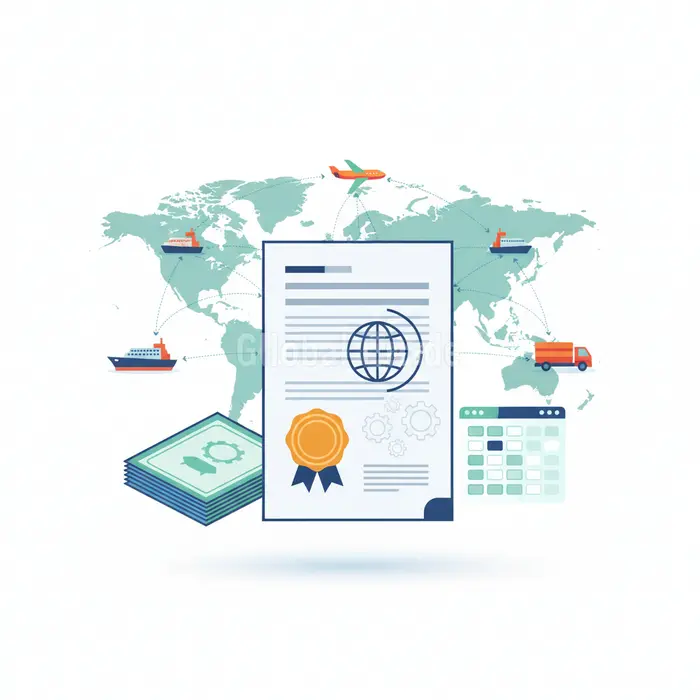
At its core, a Certificate of Origin is a document issued by a competent authority, typically a Chamber of Commerce, that certifies the country where goods originated. This isn’t just about geographical location; it’s a declaration of the economic nationality of the product, crucial for determining trade policies, customs duties, and import restrictions. Its primary purpose in global commerce is multifaceted: it serves as a basis for applying tariffs, helps enforce trade embargoes, and most importantly, qualifies goods for preferential treatment under free trade agreements (FTAs).
For instance, an FTA Certificate of Origin allows importers to benefit from reduced or even zero duties, significantly lowering the landed cost of goods. Without a valid COO, goods may be subjected to higher Most Favored Nation (MFN) rates. Beyond tariffs, COOs are vital for statistical purposes, ensuring compliance with anti-dumping regulations, and safeguarding national security by preventing the import of prohibited goods. It’s an essential tool for customs officials worldwide to verify claims and ensure fair trade practices, underscoring its role in facilitating legitimate trade while preventing illicit activities.
Key Information Contained within a Standard COO
While the specific format of a Certificate of Origin can vary depending on the issuing country and trade agreement, several key pieces of information are universally required to validate its authenticity and purpose. These critical details ensure transparency and provide customs authorities with all necessary data for efficient processing. Typically, a COO will include:
- Exporter’s Details: Full legal name and address of the company shipping the goods.
- Consignee’s Details: Full legal name and address of the party receiving the goods.
- Description of Goods: A detailed commercial description of the product, including quantity, weight, and often the Harmonized System (HS) code. This ensures accurate identification.
- Origin Criteria: A clear indication of how the goods qualify as originating from the declared country. This could involve “wholly obtained” (e.g., minerals extracted), “produced entirely” (e.g., agricultural products grown), or “substantial transformation” (e.g., manufacturing processes that change the HS classification).
- Transport Details: Information about the mode of transport and route, though this is sometimes optional.
- Issuing Authority and Certification: The name and signature of the authorized issuing body (e.g., Chamber of Commerce) and the date of issuance, along with its official stamp or seal.
Accurate and complete fulfillment of these COO Requirements is paramount. Any discrepancies or omissions can lead to significant delays, penalties, or even rejection of the shipment, directly impacting the Certificate of Origin Benefits the importer seeks to gain.
The Role of Chambers of Commerce and Issuing Authorities
The responsibility for issuing and authenticating Certificates of Origin primarily rests with designated issuing authorities, most commonly Chambers of Commerce. These organizations play a crucial role in verifying the claims made by exporters regarding the origin of their goods. Their process typically involves reviewing commercial invoices, packing lists, and sometimes declarations from manufacturers or suppliers to confirm that the goods meet the origin criteria specified by the relevant trade rules or agreements.
Once verified, the Chamber of Commerce or other authorized body (which could include governmental agencies or specific industry associations) will officially stamp and sign the COO, granting it legal validity. This authentication ensures that the document is recognized and accepted by customs authorities worldwide. With the advent of digital transformation, there’s a growing trend towards a Digital Certificate of Origin. These electronic COOs offer numerous advantages, including faster processing times, reduced administrative burden, enhanced security against fraud, and greater efficiency in record-keeping. The adoption of digital solutions streamlines the entire process, making the verification of origin quicker and more reliable, thus maximizing the Certificate of Origin Benefits for all parties involved in global trade.
The Indispensable Benefits of a Certificate of Origin
In the complex and interconnected world of international commerce, navigating customs regulations and trade agreements can be a formidable challenge. Among the myriad documents essential for cross-border transactions, the Global Trade Certificate of Origin (COO) stands out as a foundational requirement. This seemingly simple document, which certifies where a product was manufactured, is far more than just a bureaucratic formality; it is a powerful tool that offers indispensable benefits to importers, exporters, and logistics providers alike. From ensuring strict regulatory adherence to unlocking significant cost savings, understanding the comprehensive advantages of a COO is crucial for any business engaged in global trade. It enables preferential duty rates, ensures regulatory compliance, and facilitates smoother market access, making it a cornerstone of efficient and profitable international operations. Properly managing COO Requirements is key to success.
Ensuring Trade Compliance and Customs Verification
A primary function of a Certificate of Origin is to guarantee robust trade compliance and streamline customs verification processes. Customs authorities worldwide rely on the COO to determine the national origin of goods, a critical factor for applying appropriate tariffs, quotas, and trade restrictions. Without a valid COO, goods can face significant delays at borders, leading to costly demurrage charges, rejections, or even penalties for non-compliance. The COO acts as an official declaration, providing irrefutable proof that the goods meet the origin criteria specified by the importing country’s laws. This not only expedites customs clearance but also minimizes the risk of legal complications and financial repercussions for both importers and exporters. As international trade increasingly moves towards digitalization, the adoption of a Digital Certificate of Origin further enhances verification efficiency and reduces the potential for fraud, ensuring that all parties adhere to strict international trade regulations and COO Requirements. Businesses committed to transparent and compliant operations find the COO an indispensable asset in their supply chain management.
Unlocking Preferential Duty Rates under Trade Agreements
Perhaps one of the most financially impactful Certificate of Origin Benefits is its ability to unlock preferential duty rates. Many countries have entered into bilateral and multilateral Free Trade Agreements (FTAs) to foster economic cooperation by reducing or eliminating tariffs on goods traded between member nations. However, to qualify for these reduced duties, goods must demonstrably originate from one of the signatory countries. This is precisely where the FTA Certificate of Origin becomes indispensable. By presenting a valid COO, importers can prove that their products meet the “rules of origin” specified within the FTA, thereby qualifying for significantly lower or even zero customs duties. This can translate into substantial cost savings, enhancing competitiveness and improving profit margins for businesses. For example, a business importing goods from a country with which its home country has an FTA can leverage the COO to bypass standard tariffs, making their products more affordable in the target market. Understanding and utilizing these preferential rates is a strategic advantage in global commerce.
Facilitating Market Access and Reducing Trade Barriers
Beyond compliance and cost savings, the Certificate of Origin plays a pivotal role in facilitating broader market access and effectively reducing trade barriers. In many markets, particularly those with stringent import regulations or specific consumer protection laws, a COO is a mandatory requirement for entry. It provides transparency regarding the product’s origin, which can be crucial for consumers who prefer goods from certain regions or for industries subject to specific ethical sourcing guidelines. Furthermore, a COO can help overcome non-tariff barriers, such as anti-dumping measures or quota restrictions, by clearly establishing the genuine origin of the goods. For exporters, providing a COO demonstrates their commitment to legitimate trade practices and builds trust with international partners and customs authorities. This credibility can open doors to new markets and strengthen existing trade relationships. By streamlining bureaucratic processes and instilling confidence, the Global Trade Certificate of Origin serves as a key enabler for smoother, more predictable, and expanded participation in the global marketplace, solidifying its place as an essential document for successful international trade ventures.
Understanding Different Types of Certificates of Origin
In the complex landscape of international trade, the Global Trade Certificate of Origin (COO) serves as a vital document, attesting to the nationality of exported goods. This seemingly simple piece of paper holds immense power, influencing tariffs, import duties, and trade policy compliance. Understanding the different types of COOs, their specific COO requirements, and the benefits they offer is crucial for businesses engaged in cross-border commerce, particularly when leveraging preferential trade agreements. Incorrect or missing COOs can lead to delays, penalties, and even loss of market access, highlighting their indispensable role in facilitating smooth and cost-effective international shipments.
1. Non-Preferential vs. Preferential Certificates of Origin
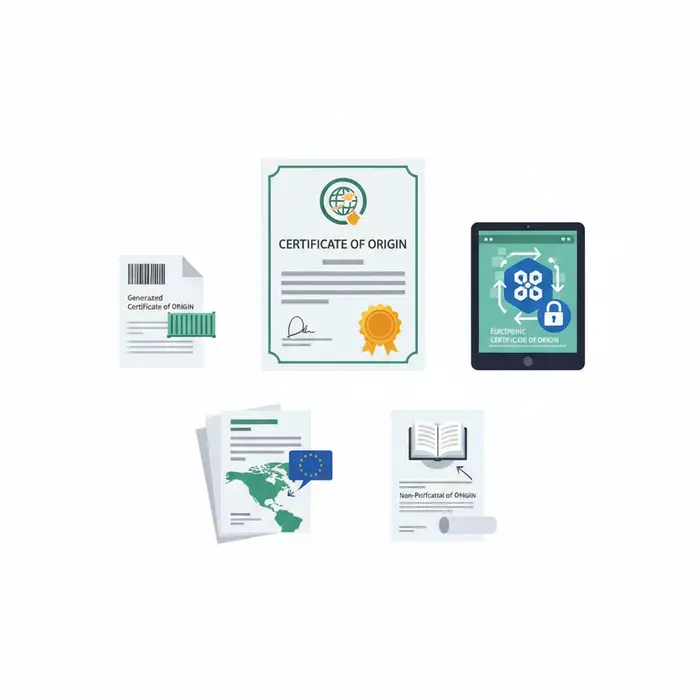
The primary distinction among COOs lies between non-preferential and preferential types. A non-preferential Certificate of Origin simply states the country of origin of goods. It acts as a declaration of origin for statistical purposes, to enforce quotas, and to apply standard import duties and trade policy measures such as anti-dumping duties or countervailing measures. These are typically issued by chambers of commerce or other authorized bodies in the exporting country, and they do not confer any special tariff benefits. They are essential for demonstrating compliance with customs regulations and for identifying the source of products in cases of product recall or intellectual property disputes.
Conversely, a preferential Certificate of Origin is specifically designed to enable goods to benefit from reduced or zero tariffs under preferential trade agreements. These agreements, such as Free Trade Agreements (FTAs), Generalised System of Preferences (GSP), or other bilateral/multilateral arrangements, aim to lower trade barriers between signatory countries. For a product to qualify for preferential treatment, it must meet specific rules of origin as defined in the respective agreement. These rules are often complex, involving criteria such as change in tariff heading, value-added thresholds, or specific manufacturing processes. Obtaining a preferential COO is key to realizing significant Certificate of Origin Benefits, directly impacting the competitiveness and profitability of exports.
2. FTA Certificates of Origin: Requirements and Implications
The FTA Certificate of Origin is the most common type of preferential COO, allowing exporters to leverage the benefits of numerous free trade agreements worldwide. Each FTA has its own detailed set of COO requirements for determining origin. These rules are critical and often require meticulous record-keeping and a thorough understanding of the agreement’s text. Common origin criteria include:
- Wholly Obtained: Goods entirely produced or grown in a single country (e.g., agricultural products, minerals).
- Change in Tariff Classification (CTC): Non-originating materials used in production undergo a sufficient change in tariff heading, indicating substantial transformation.
- Value-Added Criterion (VA): A certain percentage of the product’s value must originate from the FTA party’s territory. This can be expressed as a minimum regional value content (RVC) or a maximum non-originating material content.
- Specific Process Rules: Certain products may require specific manufacturing or processing operations to be performed within the FTA territory.
Importers are generally responsible for claiming preferential treatment at customs, often by presenting the FTA COO issued by the exporter. The implications of non-compliance can be severe, ranging from retrospective duty payments and fines to potential loss of future preferential access. Therefore, exporters must ensure accurate documentation and adherence to the specific rules of the FTA they are utilizing. Many countries are also moving towards Digital Certificate of Origin systems to streamline this process, offering greater efficiency and transparency.
3. Country-Specific COO Regulations and Formats
Beyond the preferential vs. non-preferential distinction, the practical application of COOs is heavily influenced by country-specific regulations and preferred formats. While many countries accept standard forms, some have unique requirements or mandatory formats. For instance, certain countries may require COOs to be issued by a specific government agency, while others delegate this to authorized chambers of commerce. The information required on a COO can also vary, including detailed descriptions of goods, invoice numbers, transportation details, and specific declarations from the exporter.
Furthermore, the process for verification and certification can differ significantly. Some regions accept self-certification by the exporter, especially under certain FTAs, while others demand notarization or legalization by consular offices. Staying abreast of these nuances is essential for any exporter looking to avoid customs delays and ensure compliance. Leveraging technology through Digital Certificate of Origin platforms is increasingly becoming a standard practice, offering secure, verifiable, and efficient issuance and exchange of these critical trade documents across various jurisdictions.
Key Requirements for Obtaining a Certificate of Origin
Navigating the complexities of international trade demands meticulous attention to documentation, with the Certificate of Origin (COO) standing as a cornerstone. A COO is a crucial trade document that certifies the country of origin of a particular product. It’s vital for customs clearance, determining duties and tariffs, and ensuring compliance with trade agreements. For businesses engaged in Global Trade Certificate of Origin processes, understanding the nuances of obtaining this certificate is paramount to facilitating smooth and efficient cross-border transactions. This section outlines the essential documentation, application procedures, and common challenges to help businesses successfully meet all necessary COO Requirements.
Required Documentation and Proof of Origin
The foundation of a successful COO application lies in providing comprehensive and accurate documentation that unequivocally proves the origin of your goods. A COO identifies where goods are manufactured, produced, or processed, impacting customs duties and eligibility for preferential tariff treatments under various Free Trade Agreements (FTAs). To secure an International Chamber of Commerce-backed COO or any other recognized certificate, businesses typically need to assemble a dossier of supporting documents:
- Commercial Invoice: Detailing goods, value, and transaction parties.
- Packing List: Information on package contents and dimensions.
- Bill of Lading or Air Waybill: Transport document confirming shipment details.
- Manufacturer’s/Supplier’s Declaration: Critical for goods not wholly obtained in the exporting country, attesting to component origin or manufacturing processes. Essential for an FTA Certificate of Origin.
- Purchase Orders/Sales Contracts: To verify commercial transactions.
- Production Records: Occasionally, detailed records of raw material sourcing and manufacturing processes for complex products.
Consistency across all submitted documents is paramount. Discrepancies between the commercial invoice, packing list, and the COO itself regarding origin country, product description, or quantities can lead to delays or outright rejection. Meticulous verification of all information alignment is crucial.
The Application Process and Designated Issuing Bodies
Once documentation is gathered, the next step involves applying to the designated issuing body. These entities, commonly Chambers of Commerce, customs authorities, or government-approved trade organizations, verify origin claims and uphold international trade standards.
The application process generally follows these steps:
- Registration: Companies register with the issuing body, providing business credentials.
- Application Form Completion: Filling out the specific COO application form, physically or electronically. The rise of a Digital Certificate of Origin has significantly streamlined this step.
- Document Submission: Submitting compiled supporting documents with the application form.
- Verification: The issuing body reviews for accuracy and compliance with rules of origin, potentially requesting additional information.
- Issuance: Upon successful verification, the COO is issued as a physical or secure digital file.
Utilizing a Digital Certificate of Origin expedites processing and enhances security, offering significant Certificate of Origin Benefits for modern global trade. Understanding the specific requirements of your chosen issuing body and the importing country is vital.
Common Pitfalls and How to Avoid COO Rejections
Despite careful preparation, businesses can encounter challenges leading to COO rejections, causing costly delays. Awareness of these common pitfalls and proactive measures are essential for successful COO Requirements compliance.
- Incomplete/Inconsistent Documentation: The most frequent reason for rejection. Any missing document or discrepancy across documents raises red flags.
- Incorrect Rules of Origin Application: Prevalent when seeking an FTA Certificate of Origin. Misinterpreting specific FTA rules for “originating goods” can invalidate claims.
- Errors in Product Classification: Incorrect Harmonized System (HS) codes lead to mismatches with tariff schedules and origin rules.
- Late Submission: Failure to adhere to deadlines for COO submission can lead to rejection or loss of preferential treatment.
- Lack of Proof for Value-Added: Inadequate documentation for value-added components or substantial transformation criteria.
To mitigate these risks, businesses should:
- Conduct Thorough Internal Audits: Regularly review all shipping documents for consistency.
- Master Rules of Origin: Understand specific rules for each target market and relevant FTA; seek expert advice.
- Maintain Meticulous Records: Keep comprehensive records of material sourcing, production, and supplier declarations.
- Leverage Technology: Implement systems that automate document generation and cross-referencing, reducing human error, especially for Digital Certificate of Origin processes.
- Communicate with Issuing Bodies: Seek clarification for specific requirements or complex cases.
By diligently adhering to these guidelines, businesses can navigate the complexities of COO acquisition, unlock significant Certificate of Origin Benefits, and ensure seamless participation in global trade.
The Future of COOs: Embracing Digital Certificates of Origin

The landscape of international commerce is undergoing a profound transformation, driven by technological innovation and a global push for greater efficiency and transparency. At the forefront of this evolution is the Global Trade Certificate of Origin, a vital document attesting to a product’s country of manufacture. Traditionally, the process of obtaining and verifying COOs has been manual, time-consuming, and prone to errors. However, the future promises a radical departure from these conventional methods as businesses increasingly embrace Digital Certificates of Origin. This shift not only streamlined complex trade documentation but also significantly enhances security and reduces operational costs, fundamentally revolutionizing how goods traverse borders and redefining COO requirements.
1. Advantages of Digital COOs: Speed, Security, and Cost-Efficiency
The transition to digital COOs offers a myriad of benefits that address many pain points of traditional paper-based systems. Firstly, speed is dramatically improved. What once took days, involving physical mailing and numerous signatures, can now be completed in minutes. Digital platforms allow for instant submission, verification, and sharing of documents across borders, accelerating customs clearance and reducing lead times for goods. This rapid processing is crucial for time-sensitive supply chains and supports the demand for faster market entry.
Secondly, enhanced security is a cornerstone of Digital Certificates of Origin. Paper documents are susceptible to fraud, loss, or damage. Digital certificates, however, leverage advanced encryption and digital signatures, making them significantly harder to counterfeit or alter without detection. This inherent security helps maintain the integrity of trade data and provides greater assurance to all parties involved, from exporters and importers to customs authorities. The reduction in fraudulent claims also contributes to fairer trade practices globally.
Finally, cost-efficiency is a compelling advantage. Digital COOs eliminate printing, courier services, storage fees, and manual handling costs. Automation reduces the need for extensive administrative staff dedicated to document management, freeing up resources for more strategic tasks. Furthermore, fewer errors mean fewer delays and penalties, directly impacting a company’s bottom line. These combined Certificate of Origin benefits make a strong case for widespread adoption, particularly for those looking to optimize their Global Trade Certificate of Origin processes, including FTA Certificate of Origin compliance.
2. Blockchain Technology and Secure Digital Verification
The true power behind the secure and transparent future of digital COOs lies in emerging technologies, particularly blockchain. Blockchain provides an immutable, distributed ledger that records every transaction and modification in a verifiable and tamper-proof manner. When applied to Global Trade Certificate of Origin issuance, each Digital Certificate of Origin can be registered on a blockchain network. This creates a permanent and transparent record accessible to authorized parties.
For example, an exporter can issue a Digital Certificate of Origin, and its details are hashed and added to the blockchain. Importers, customs officials, and other stakeholders can then independently verify the authenticity and integrity of the COO by checking its corresponding record on the blockchain. This eliminates the need for intermediaries to verify documents, reducing potential points of failure and increasing trust among trading partners. The distributed nature of blockchain also means there’s no single point of attack, making the system highly resilient against cyber threats. Such robust verification methods are essential for complex trade agreements, including those requiring specific FTA Certificate of Origin documentation.
3. Preparing Your Business for Digital Trade Documentation
As the transition to digital trade documentation accelerates, businesses must strategically prepare to fully capitalize on these advancements. The first step involves assessing current internal processes for handling Global Trade Certificate of Origin requirements and identifying areas ripe for digitization. This might include investing in document management systems, integrating with e-governance platforms, or collaborating with technology providers specializing in trade solutions.
Training staff is another critical component. Employees need to be familiar with new digital platforms, secure data handling protocols, and the legal implications of electronic signatures and digital documents. Understanding the nuances of different Digital Certificate of Origin standards and ensuring compliance with international regulations will be paramount. Building strong relationships with logistics partners, customs brokers, and industry associations that are also embracing digital transformation will facilitate a smoother transition. Embracing these changes isn’t merely about adopting new tools; it’s about fostering a culture of innovation and efficiency to remain competitive in the evolving landscape of international trade. The benefits, ranging from enhanced security to improved Certificate of Origin benefits, are substantial for those who adapt proactively to the new COO requirements.
Partner with Vietnam’s Leading Suppliers
Looking for reliable suppliers in Vietnam? Contact VietnamSuppliers.com today to connect with verified manufacturers and exporters across all industries.
—————————————
References
– Rules of Origin Facilitator | International Trade Centre: https://www.intracen.org/trade-support/trade-info-tools/rules-of-origin-facilitator/
– Free Trade Agreements – trade.gov: https://www.trade.gov/free-trade-agreements
– International Trade Centre (ITC) – Certificate of Origin: https://www.intracen.org/trade-support-institutions/training/certificate-of-origin/
– International Chamber of Commerce: https://iccwbo.org/trade-facilitation/certificates-of-origin/
– ICC Digital Standards Initiative: https://iccwbo.org/digital-standards-initiative/