
What is an International Trade Compliance Audit?
An international trade compliance audit is a systematic and independent examination of an organization’s policies, procedures, and records related to international trade activities. Its primary goal is to ensure adherence to various national and international laws, regulations, and agreements governing the movement of goods, technology, and services across borders. In an increasingly interconnected yet regulated global economy, such audits are not just a best practice but a critical necessity for businesses engaged in cross-border commerce. They serve as a proactive measure to identify and mitigate risks associated with non-compliance, which can range from severe financial penalties and legal repercussions to reputational damage and supply chain disruptions.

1. Defining Trade Compliance & Its Importance
International trade compliance refers to a company’s adherence to all applicable laws, regulations, treaties, and organizational policies governing its cross-border transactions. This encompasses a vast array of rules enforced by customs authorities, export control agencies, and sanctions bodies worldwide. For instance, businesses must comply with import duties, tariffs, customs valuation rules, country of origin regulations, and product-specific requirements like labeling and safety standards. On the export side, companies must navigate export control regulations that dictate what can be exported, to whom, and under what conditions, often to prevent items from falling into the wrong hands or being used for prohibited purposes.
The importance of robust trade compliance cannot be overstated. Non-compliance can lead to significant consequences. These include hefty fines and penalties levied by government agencies, revocation of export or import privileges, criminal prosecution for severe violations, and seizure of goods. Beyond legal and financial ramifications, non-compliance can severely damage a company’s reputation, disrupt its supply chain, and erode trust with customers and partners. Proactive management through an effective compliance program, regularly assessed via an International Trade Compliance Audit, is therefore essential for sustainable global operations.
2. Key Objectives of a Compliance Audit
The primary objectives of an international trade compliance audit are multifaceted and designed to provide a comprehensive assessment of an organization’s trade-related activities. Firstly, an audit aims to identify areas of non-compliance. This involves scrutinizing processes, documentation, and transactions against regulatory requirements to pinpoint any deviations or weaknesses. Secondly, it seeks to assess the effectiveness of existing compliance programs. Are the company’s policies, training, and internal controls sufficient to prevent and detect violations? Thirdly, a crucial objective is risk mitigation. By uncovering potential risks, the audit allows companies to implement corrective actions before violations occur, thereby avoiding penalties and disruptions. Fourthly, audits serve to improve operational efficiency by streamlining processes and reducing the likelihood of costly errors and delays at customs. Finally, they provide assurance to management and stakeholders that the company is operating responsibly and ethically in its global trade endeavors. A well-executed audit, often involving export compliance audit checklist items, ensures that due diligence is being performed.
3. Scope: Export, Import, and Sanctions Compliance
The scope of an International Trade Compliance Audit is broad and typically covers three core areas: export compliance, import compliance, and sanctions compliance.
Export Compliance:
This segment focuses on adherence to export control regulations from various jurisdictions (e.g., U.S. EAR, ITAR, EU Dual-Use Regulations). An audit here would examine:
- Classification: Correct classification of goods, software, and technology (e.g., ECCN, HTS codes).
- Licensing: Proper determination and acquisition of export licenses.
- Denied Party Screening: Robust screening procedures for customers, suppliers, and other parties against restricted party lists.
- End-Use/End-User: Verification of the ultimate destination and intended use of exported items, especially for sensitive goods.
- Documentation: Accuracy and completeness of export declarations and related records.
An effective export compliance audit checklist is vital for this component.
Import Compliance:
This area ensures adherence to the import laws and regulations of the destination country. Key audit points include:
- Customs Valuation: Correct valuation methods for goods to determine duties.
- Country of Origin: Accurate determination and declaration of the country of origin, which impacts duties and trade agreements.
- Tariff Classification: Correct HTS (Harmonized Tariff Schedule) classification to ensure appropriate duty rates.
- Special Programs: Compliance with free trade agreements, duty drawback, and other preferential programs.
- Recordkeeping: Maintenance of accurate and complete import documentation as required by customs authorities.
This section often examines customs compliance audit requirements rigorously.
Sanctions Compliance:
This is a critical and increasingly complex area. Audits here verify compliance with economic sanctions programs administered by bodies like OFAC (Office of Foreign Assets Control) in the U.S. and similar entities in other nations or blocs (e.g., EU, UN). This includes:
- Restricted Party Screening: Ensuring effective screening against all relevant sanctions lists.
- Embargoes: Adherence to comprehensive embargoes against certain countries or regions.
- Sectoral Sanctions: Compliance with restrictions on specific industries or activities.
- Due Diligence: Processes for conducting due diligence on transactions and partners in high-risk jurisdictions.
Comprehensive trade compliance audit services often provide expertise across all these areas, offering a holistic supply chain compliance audit perspective. By conducting regular and thorough international trade compliance audits, companies can safeguard their operations, maintain their license to operate globally, and foster a culture of compliance that is essential for long-term success in the dynamic world of international trade.
Key Components of an Export Compliance Audit Checklist
In the intricate landscape of global commerce, maintaining robust International Trade Compliance Audit procedures is critical. An effective export compliance audit checklist is an indispensable tool, guiding organizations through complex international regulations to prevent costly penalties and safeguard reputation. This comprehensive checklist outlines essential elements for adherence to global export controls, covering everything from product classification to destination screenings and meticulous documentation.
A proactive supply chain compliance audit approach minimizes risks associated with non-compliance, which can lead to significant fines, legal repercussions, or loss of export privileges. Systematically reviewing each component allows companies to identify weaknesses, implement corrective actions, and foster a culture of compliance. Here are the key components of a robust export compliance audit checklist.
1. Export Control Classification Numbers (ECCNs) Verification
Accurate product classification forms the bedrock of compliant export operations. Export Control Classification Numbers (ECCNs) are alphanumeric designations within the Commerce Control List (CCL), identifying items subject to the U.S. Export Administration Regulations (EAR). Correct ECCN verification is crucial; it determines licensing requirements, permissible destinations, and conditions of export. An audit checklist must thoroughly examine the internal process for ECCN assignment.
This component involves reviewing the classification methodology: how are products identified based on technical parameters, components, and intended use? Does the organization utilize self-classification or third-party services? The audit should verify supporting documentation—product specifications, engineering drawings, and technical data—for each classification. Inaccurate ECCNs risk unauthorized exports, penalties, or unnecessary delays from unwarranted license applications. Regular re-evaluation of classifications, particularly for new or modified products, is vital for ongoing customs compliance audit requirements.
2. Denied Party Screening & End-Use Checks
Understanding who you are doing business with and for what purpose is a critical layer of export compliance. Denied Party Screening (DPS) involves checking all parties in an export transaction—customers, end-users, and intermediaries—against various government watchlists. These lists, maintained by agencies like BIS, OFAC, and DDTC, aim to prevent trade with prohibited entities such as terrorists or proliferators of weapons of mass destruction.
The audit checklist for DPS should assess screening protocols: What software or services are used? How frequently are screenings conducted, and how are potential matches investigated? Equally important are End-Use Checks, which determine if an exported item will be used for an unauthorized purpose, regardless of the destination. This requires due diligence to identify red flags like vague end-user descriptions, unusual payment methods, or requests for modifications that could adapt civilian items for military use. A robust audit ensures employees are trained to recognize red flags and that an escalation process exists for suspicious transactions. Neglecting these checks poses significant risks, including severe penalties for the exporter.
3. Export Licensing & Documentation Review
With ECCNs verified and parties screened, the next critical step is securing all necessary export licenses and ensuring meticulous supporting documentation. Depending on the ECCN, destination, end-user, and end-use, an export license may be required from agencies such as BIS or DDTC. The trade compliance audit services checklist must scrutinize the licensing determination process: Are decisions clearly documented? Are license applications correctly prepared and submitted? Are conditions of issued licenses strictly adhered to?
The audit must also cover a comprehensive review of all export-related documentation: commercial invoices, packing lists, Shipper’s Letter of Instruction (SLI), Automated Export System (AES) filings, and certificates of origin. Accuracy across these documents is paramount, as discrepancies can lead to delays, fines, or customs seizures. The audit should confirm that data points like ECCNs, values, descriptions, and parties match across all documents and accurately reflect the shipment. It should also verify that records are maintained for the legally required period (typically five years) and are readily accessible for potential government inquiries.
In conclusion, a thorough export compliance audit checklist is a strategic imperative for global businesses. By systematically addressing ECCN verification, denied party screening and end-use checks, and diligent licensing and documentation review, companies build a resilient supply chain compliance audit framework. This ensures adherence to complex global export regulations, mitigates financial penalties, protects against reputational damage, and fosters secure international trade.
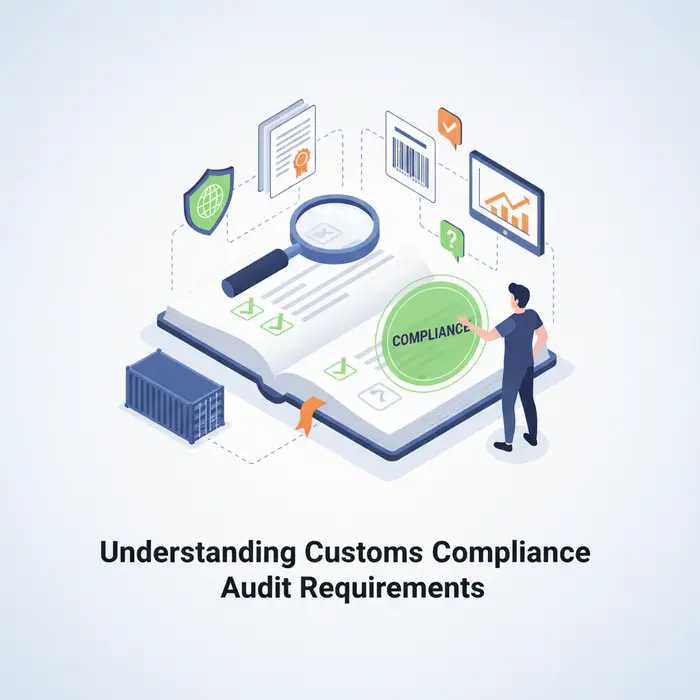
Understanding Customs Compliance Audit Requirements
In the complex and ever-evolving landscape of global commerce, adherence to international trade regulations is not merely a best practice—it’s a legal imperative. A robust customs compliance program is essential for businesses engaged in cross-border trade, safeguarding against penalties, delays, and reputational damage. This section will explore the specific requirements for customs compliance audits, focusing on critical areas such as import regulations, tariffs, and proper customs procedures, all vital components of a comprehensive International Trade Compliance Audit.
Understanding and proactively addressing these audit requirements is crucial for maintaining seamless supply chains and ensuring operational integrity. From small businesses venturing into international markets to large multinational corporations, the principles of customs compliance remain universally critical. Regular audits serve as a critical checkpoint, evaluating a company’s adherence to an export compliance audit checklist, assessing the efficacy of internal controls, and identifying potential areas of risk.
1. Tariff Classification & Valuation Accuracy
One of the foundational pillars of customs compliance is the accurate classification and valuation of imported goods. Tariff classification determines the duty rate applicable to a product, impacting its final cost. This process requires a meticulous understanding of the Harmonized System (HS) – a standardized numerical method of classifying traded products. Incorrect classification can lead to underpayment or overpayment of duties, resulting in fines, penalties, and retroactive duty assessments. During a customs compliance audit, auditors will scrutinize your classification methods, documentation, and whether your internal teams or customs brokers are using the most current and correct HS codes.
Similarly, valuation accuracy is paramount. Customs value is typically the transaction value of the imported goods, plus certain costs and expenses. This can include freight, insurance, assists (materials or services provided by the buyer to the seller free of charge or at a reduced cost), and royalties. Misstating the value, whether intentionally or inadvertently, can trigger significant penalties. Auditors will look for consistency between your commercial invoices, purchase orders, payment records, and customs declarations. They will also verify that all dutiable costs have been properly declared. For authoritative guidance on classification, businesses often refer to resources from organizations like the World Customs Organization (WCO), which administers the HS code system, ensuring global standardization in trade.
2. Country of Origin Rules Adherence
The determination of a product’s country of origin is another critical aspect of customs compliance, influencing tariff rates, trade remedies (like anti-dumping duties), and marking requirements. Rules of origin can be complex, varying based on trade agreements (e.g., free trade agreements), preferential treatment programs, and the specific regulations of the importing country. These rules dictate where a product truly originates, especially when multiple countries are involved in its production or assembly. Auditors conducting a trade compliance audit will examine your processes for determining origin, reviewing origin declarations, certificates of origin, and supporting manufacturing records.
Proper adherence ensures eligibility for preferential tariffs, which can offer significant cost savings. Conversely, misrepresenting origin can lead to severe consequences, including fines, denial of preferential treatment, and even seizure of goods. For companies seeking to optimize their supply chain and leverage trade agreements, understanding and correctly applying country of origin rules is a core element of effective supply chain compliance audit practices.
3. Managing Customs Brokers & Freight Forwarders
For many companies, customs brokers and freight forwarders are indispensable partners in navigating the intricacies of international trade. While these intermediaries handle many operational aspects of customs declarations and logistics, the ultimate legal responsibility for customs compliance often remains with the importer. A key component of customs compliance audit requirements involves evaluating the relationship with, and oversight of, these third-party service providers.
Auditors will typically assess the due diligence exercised in selecting brokers and forwarders, the contractual agreements in place, and the communication protocols for sharing critical information such as classification data, valuation details, and country of origin. They will look for evidence of regular performance reviews, audits of your broker’s declarations, and ongoing training to ensure that both your internal staff and external partners are abreast of the latest regulations. Implementing a robust oversight program for your customs brokers and freight forwarders is not just a regulatory expectation; it’s a strategic move to mitigate risks and enhance the overall efficiency and compliance of your international shipping operations, forming a crucial part of any comprehensive International Trade Compliance Audit.
The Role of Trade Compliance Audit Services
In today’s intricate global economy, businesses engaged in international trade confront a complex web of regulations, tariffs, and customs procedures. Navigating this landscape while ensuring adherence to evolving laws is not merely a legal obligation but a strategic imperative. This is precisely where specialized International Trade Compliance Audit services become indispensable. These services offer a critical assessment of current practices, identify potential vulnerabilities, and help build a robust compliance framework, safeguarding operations against significant risks, penalties, and reputational damage.
A comprehensive trade compliance audit is a systematic and independent examination of a company’s international trade activities, processes, and documentation. From export controls and sanctions to import duties and customs valuation, these audits ensure every aspect of the supply chain aligns with national and international trade laws. By leveraging expert trade compliance audit services, businesses gain clarity, mitigate risks, and optimize their global trade operations.
1. When to Seek External Expertise for Audits
While internal compliance efforts are vital, specific scenarios make engaging external expertise for an International Trade Compliance Audit highly beneficial. Companies should consider third-party audit support when:
- Lacking Internal Expertise or Resources: SMEs often lack dedicated compliance departments or specialized knowledge in global trade regulations. External auditors provide up-to-date insights.
- Navigating Regulatory Changes: Major shifts in import/export regulations, sanctions programs, or customs policies necessitate an expert review for continued adherence.
- Expanding into New Markets: New countries or product categories introduce new compliance challenges; external auditors assess readiness and identify specific risks.
- Post-Merger/Acquisition Integration: Combining entities means merging disparate compliance systems. An external audit helps harmonize practices and uncover hidden liabilities.
- Preparing for Government Audits: Proactive preparation for potential government inquiries (e.g., from CBP, BIS) can significantly reduce the risk of adverse findings and penalties.
- Requiring Unbiased Assessment: An independent third party offers an objective view, free from internal biases, accurately pinpointing compliance strengths and weaknesses. This includes reviewing any existing export compliance audit checklist or customs compliance audit requirements.
- Operating in High-Risk Areas: Businesses dealing with controlled goods or sanctioned entities face increased scrutiny, requiring robust, externally validated compliance programs.
2. Types of Professional Audit Services Offered
Professional trade compliance audit services are tailored to meet diverse business needs, encompassing a range of specialized offerings:
- Comprehensive Trade Compliance Audits: Holistic reviews covering all aspects of international trade, including export controls, import regulations, customs valuation, origin, free trade agreements, anti-boycott, and sanctions compliance. These often integrate a thorough supply chain compliance audit for end-to-end adherence.
- Targeted or Specific Audits: Focused audits on particular areas such as an export compliance audit checklist review, Incoterms application, classification and valuation practices, or specific program assessments like C-TPAT readiness.
- Risk Assessments and Gap Analysis: Identifying high-exposure areas and pinpointing discrepancies between current practices and regulatory requirements or best practices.
- Pre-Audit Assessments and Readiness Checks: Preparing companies for official government audits by simulating the process, identifying issues, and recommending corrective actions.
- Post-Audit Remediation and Training: Assisting in developing and implementing corrective action plans, enhancing internal controls, and providing training to prevent future non-compliance.
3. Benefits of Engaging Third-Party Audit Support
Investing in third-party trade compliance audit services yields significant advantages, contributing to a company’s operational integrity and financial health.
- Risk Mitigation and Penalty Avoidance: Proactive identification and remediation of compliance gaps drastically reduce the likelihood of costly fines, penalties, shipment delays, and legal issues from government agencies.
- Enhanced Operational Efficiency: Streamlined compliance processes lead to faster customs clearances, reduced demurrage, and more efficient supply chain management.
- Reputation Protection: Non-compliance can severely damage a company’s reputation, affecting customer trust and market standing. Audits help maintain a clean compliance record.
- Access to Specialized Expertise: External auditors bring deep, up-to-date knowledge of global trade laws, industry best practices, and evolving regulatory landscapes.
- Objective Assessment and Credibility: An independent audit provides an unbiased evaluation, lending greater credibility to a company’s compliance program for both internal and external stakeholders.
- Improved Internal Controls: Audits often lead to stronger internal controls, policies, and procedures, fostering a sustainable culture of compliance within the organization. This ensures the effectiveness of ongoing trade compliance audit services.
Ultimately, engaging professional International Trade Compliance Audit services is a strategic investment that fortifies a business against the inherent risks of global trade, fostering sustainable growth and ensuring long-term success in the international arena.
Integrating Compliance into Your Supply Chain Audit
In today’s interconnected global economy, supply chains are complex webs spanning multiple jurisdictions, each with its own set of regulations and trade laws. For businesses operating internationally, simply managing logistics and production is no longer enough; robust International Trade Compliance Audit is paramount. Embedding trade compliance considerations directly into your broader supply chain audit strategy is not just a best practice—it’s a necessity for enhanced risk management, operational efficiency, and maintaining your reputation. This integrated approach ensures that every link in your chain adheres to the intricate rules governing exports, imports, customs, and sanctions, turning potential liabilities into competitive advantages. A comprehensive supply chain compliance audit moves beyond reactive measures, proactively identifying and mitigating risks before they disrupt operations or incur hefty penalties.

1. Identifying Compliance Gaps Across the Supply Chain
The first step in integrating compliance is to gain a holistic understanding of where your supply chain touches international trade regulations. This involves a meticulous review of every stage, from raw material sourcing and manufacturing to warehousing, transportation, and final delivery. Key areas to scrutinize include product classification (HS codes), country of origin determination, valuation methods, licensing requirements, and restricted party screening. An effective trade compliance audit services provider can help in mapping these touchpoints and assessing adherence to various regulations such as the Export Administration Regulations (EAR), International Traffic in Arms Regulations (ITAR), and sanctions programs administered by the Office of Foreign Assets Control (OFAC). This comprehensive mapping helps identify critical compliance gaps that could expose your business to fines, shipment delays, or even criminal charges. For instance, incorrect product classification can lead to underpayment or overpayment of duties, while inadequate screening of trade partners might violate sanctions. Understanding the nuances of global trade, as outlined by authoritative bodies like the World Customs Organization, is crucial for accurate compliance.
2. Due Diligence for Third-Party Vendors & Partners
Your supply chain is only as strong as its weakest link, and often, that weakness lies with third-party vendors and partners. From freight forwarders and customs brokers to component suppliers and contract manufacturers, each external entity introduces a layer of compliance risk. Integrating compliance into your supply chain audit mandates rigorous due diligence for these third parties. This involves not only initial vetting but also continuous monitoring. Essential elements of this due diligence include reviewing their own internal compliance programs, assessing their understanding of relevant trade laws, and ensuring they have robust processes in place for data accuracy and document retention. An export compliance audit checklist should be applied to ensure that all partners handle export-controlled items appropriately, including proper documentation and adherence to licensing requirements. Furthermore, understanding customs compliance audit requirements for your chosen customs brokers and carriers is vital to prevent misdeclarations or delays at borders. Clear contractual obligations outlining compliance responsibilities and audit rights are non-negotiable. Regular audits of third-party performance against these compliance standards are essential to maintain control and reduce liability throughout your extended supply chain.
3. Leveraging Technology for Supply Chain Compliance
The sheer volume and complexity of international trade data make manual compliance management increasingly impractical and error-prone. Modern businesses are turning to technology to streamline and enhance their supply chain compliance efforts. Integrated Global Trade Management (GTM) software, Enterprise Resource Planning (ERP) systems with compliance modules, and even emerging technologies like Artificial Intelligence (AI) and blockchain are revolutionizing how companies manage trade compliance. These tools can automate product classification, screen against restricted party lists in real-time, manage export licenses, track country of origin, and generate accurate customs declarations. AI-driven analytics can identify patterns and anomalies that might indicate compliance risks, while blockchain technology offers immutable ledgers for transparent and verifiable tracking of goods and documentation across the supply chain. By centralizing compliance data and automating routine tasks, technology reduces human error, improves efficiency, and provides an unparalleled level of visibility into your global trade operations. This not only strengthens your compliance posture but also frees up valuable resources to focus on strategic risk management and continuous improvement.
Integrating compliance into your supply chain audit is a proactive strategy that transforms a necessary burden into a strategic asset. By systematically identifying gaps, ensuring robust third-party due diligence, and leveraging advanced technology, businesses can navigate the complexities of international trade with confidence, mitigate risks, and build a resilient, efficient, and compliant global supply chain.
Partner with Vietnam’s Leading Suppliers
Looking for reliable suppliers in Vietnam? Contact VietnamSuppliers.com today to connect with verified manufacturers and exporters across all industries.
—————————————
References
– BIS Export Compliance Program Manual Template: https://www.bis.doc.gov/index.php/documents/regulations-docs/2347-export-compliance-program-manual-template-1/file
– U.S. Export Administration Regulations (EAR): https://www.bis.doc.gov/index.php/regulations/export-administration-regulations-ear
– World Customs Organization – Harmonized System: https://www.wcoomd.org/en/topics/nomenclature/instrument-and-tools/harmonized_system.aspx
– Export Control Reform Guide: https://www.bis.doc.gov/index.php/documents/export-control-reform-archive/1118-export-control-reform-guide/file
– World Customs Organization: https://www.wcoomd.org/

