
Introduction to Trade Deficits
In the intricate world of global commerce, understanding the flow of goods and services between nations is paramount. Terms like ‘trade deficit’ and ‘trade surplus’ are not merely economic jargon; they represent fundamental indicators of a country’s economic health, competitiveness, and engagement in international business. As economies become increasingly interconnected, these balances significantly influence currency values, employment rates, and investment patterns, shaping the future of global trade dynamics. This section will delve into the core concepts, defining what a trade deficit truly entails, contrasting it with its counterpart, a trade surplus, and underscoring why these economic indicators remain crucial for analysis in 2025 and beyond.
1. Defining a Trade Deficit: The Basics
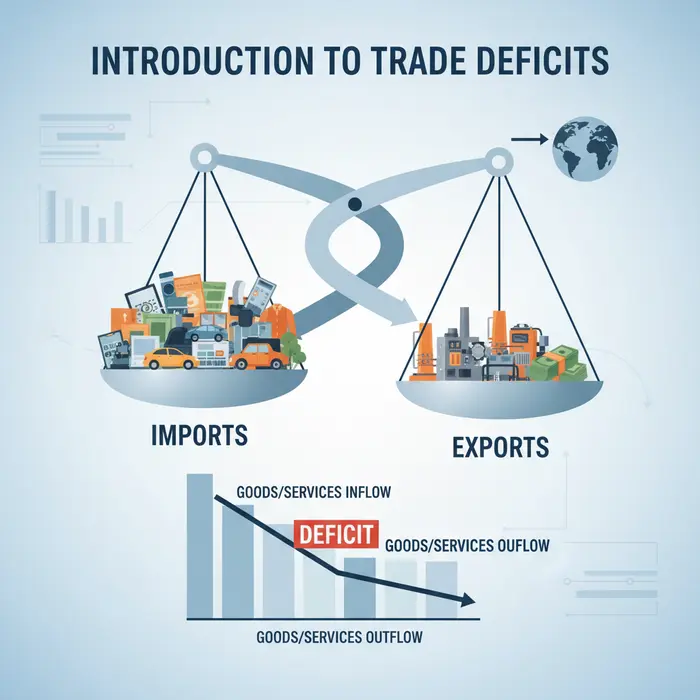
At its simplest, what is a trade deficit? It occurs when a country’s total value of imports exceeds its total value of exports over a specified period, typically a quarter or a year. This imbalance means that a nation is spending more on foreign goods and services than it is earning from selling its own products and services abroad. The calculation is straightforward: Total Imports – Total Exports. If the result is a negative number, the country is running a trade deficit. This figure encompasses both tangible goods, such as manufactured products, raw materials, and agricultural commodities, and intangible services, including tourism, financial services, transportation, and intellectual property.
A persistent trade deficit can signify several underlying economic conditions. For instance, it might indicate strong domestic demand that outstrips local production capacity, leading to increased reliance on foreign suppliers. Alternatively, it could point to a lack of competitiveness in a country’s export sectors, making its goods less attractive in international markets. Understanding the trade deficit impact on imports exports is vital for policymakers and businesses, as sustained deficits can have repercussions on national debt, industrial policy, and employment.
2. Trade Surplus Meaning: The Opposite Side of the Coin
Conversely, a trade surplus represents the opposite scenario. The trade surplus meaning international business context refers to a situation where a country’s total value of exports surpasses its total value of imports during a given period. In this case, the nation is selling more goods and services to the rest of the world than it is buying, resulting in a positive net flow of capital. A trade surplus is often seen as a sign of economic strength and competitiveness, indicating that a country’s industries are productive and its products are in high demand globally. Nations like Germany and China have historically maintained significant trade surpluses, fueling their economic growth and accumulating foreign reserves.
While a deficit suggests borrowing from abroad (either directly or through foreign investment in domestic assets), a surplus implies lending to the rest of the world or accumulating foreign assets. Both trade positions have their own set of advantages and disadvantages, and neither is inherently ‘good’ or ‘bad’ without considering the broader economic context and national objectives.
3. Why Trade Balances Matter in 2025
The significance of trade balances extends far beyond simple accounting. In 2025, with global supply chains constantly evolving and geopolitical landscapes shifting, monitoring these figures is more critical than ever. Trade balances offer insights into a nation’s economic vitality, its industrial structure, and its ability to compete on the world stage. A large and persistent trade deficit, for example, can lead to a weaker domestic currency, as demand for foreign currency to pay for imports outstrips demand for the domestic currency. It can also be associated with job losses in domestic industries that struggle to compete with cheaper imports, raising concerns about the trade deficit impact on imports exports. Furthermore, financing a trade deficit often requires foreign investment, which can lead to increased foreign ownership of domestic assets or rising national debt.
Conversely, understanding the causes of trade deficit global trade, which can range from exchange rates and economic growth differentials to government policies and consumer preferences, is crucial for formulating effective national strategies. Policymakers often debate various trade deficit solutions international trade, including promoting exports, restricting imports through tariffs, or fostering domestic industries. These discussions are frequently informed by data and analyses from authoritative sources like the International Monetary Fund (IMF), which provides comprehensive frameworks for understanding global economic imbalances. In an era of increasing protectionist sentiments and reshoring initiatives, the implications of trade deficits and surpluses on national security, technological independence, and domestic prosperity remain at the forefront of economic policy debates, making their comprehension essential for anyone involved in international business.
Causes of Trade Deficits in Global Trade
A trade deficit occurs when a country’s imports of goods and services exceed its exports over a specific period. While not inherently good or bad, understanding the underlying What is a trade deficit and its causes is crucial for economic policymakers and businesses engaged in international trade. These imbalances, which reflect the “trade deficit impact on imports exports,” stem from a complex interplay of domestic economic conditions, global market dynamics, and governmental actions. Exploring these primary factors helps shed light on why a nation might consistently import more than it exports, influencing its economic stability and global standing.
1. Domestic Demand Outstripping Production Capacity
One of the most straightforward causes of trade deficit global trade is when a nation’s internal demand for goods and services surpasses its ability to produce them domestically. In periods of robust economic growth and strong consumer confidence, households and businesses often increase their spending. If local industries cannot ramp up production quickly enough, or if they lack the specialized capabilities to meet certain demands, the country turns to international markets to fill the void. This reliance on imports, fueled by strong consumer purchasing power and investment, directly widens the trade deficit. For instance, a country with a rapidly expanding middle class might see a surge in demand for electronics, luxury goods, or specialized machinery. If its domestic manufacturing sector isn’t equipped to produce these items efficiently or at competitive prices, imports will naturally rise, contributing significantly to a trade deficit. This scenario highlights how internal economic vibrancy can inadvertently lead to an external imbalance, impacting the “trade deficit impact on imports exports” by tilting the balance heavily towards inbound goods.
2. Currency Exchange Rates and Competitiveness
The value of a country’s currency relative to others plays a pivotal role in determining its trade balance. A strong domestic currency makes imported goods cheaper for local consumers and businesses, simultaneously making the country’s exports more expensive and less competitive in international markets. For example, if the Vietnamese Dong strengthens significantly against the US Dollar, American goods become more affordable for Vietnamese buyers, increasing imports. Conversely, Vietnamese products, such as textiles or agricultural goods, become pricier for American consumers, potentially reducing demand for Vietnamese exports. This shift in price competitiveness directly exacerbates a trade deficit. Conversely, a weaker currency can boost exports and make imports more expensive, potentially narrowing the deficit. Central bank policies, interest rate differentials, and speculative capital flows all influence exchange rates. Maintaining a competitive exchange rate is therefore a key component of a nation’s trade strategy, as an overvalued currency can severely handicap export-oriented industries and deepen the trade deficit. For further insights into how currency fluctuations affect trade, you can refer to analysis from institutions like the International Monetary Fund on Exchange Rates and Trade Imbalances.
3. Government Fiscal Policies and National Savings
Government fiscal policies, particularly those related to spending and taxation, can indirectly but powerfully influence a nation’s trade balance. A persistent government budget deficit – where government spending exceeds its revenue – often necessitates borrowing. If this borrowing absorbs a significant portion of the nation’s available savings, it can lead to higher interest rates, drawing in foreign capital. This influx of foreign capital can, in turn, put upward pressure on the domestic currency, contributing to the issues described in the previous point. More broadly, the relationship between national savings, investment, and the current account (which includes the trade balance) is explained by the national income identity: Savings – Investment = Exports – Imports. When national savings (comprising both private and public savings) are insufficient to fund domestic investment, the country must borrow from abroad, which manifests as a current account deficit, and by extension, a trade deficit. This phenomenon is sometimes referred to as the “twin deficits” hypothesis, where a large budget deficit often correlates with a large trade deficit. Therefore, prudent fiscal management aimed at encouraging national savings and reducing government debt can be a crucial step in addressing the underlying causes of trade deficit global trade and fostering a more balanced international trade position. Understanding these dynamics is essential when discussing “trade deficit solutions international trade” and for grasping the full “trade surplus meaning international business” context.
Trade Deficit Impact on Imports and Exports
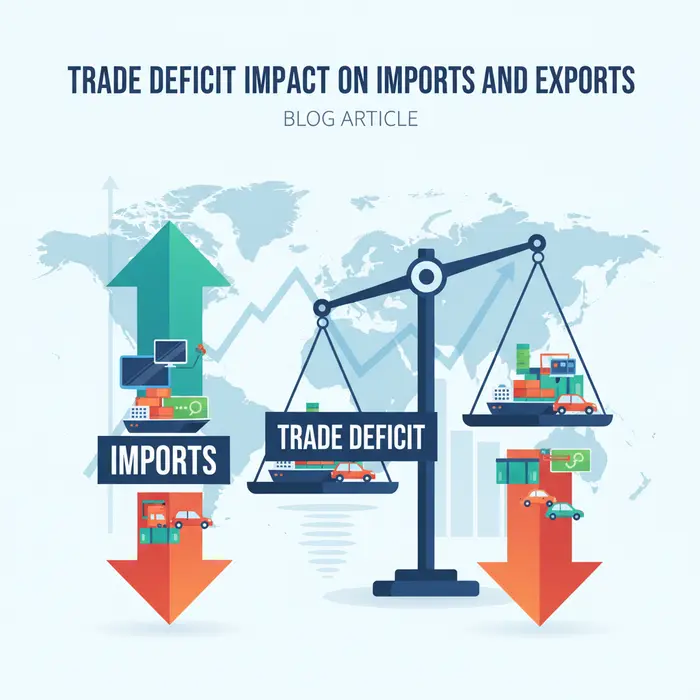
Understanding what is a trade deficit is crucial for comprehending a nation’s economic health and its standing in global trade. Simply put, a trade deficit occurs when a country’s imports of goods and services exceed its exports over a specific period. This imbalance has profound implications, directly influencing a nation’s import and export levels, and consequently shaping the broader economic landscape for its industries and consumers. The trade deficit impact on imports exports is multifaceted, reflecting shifts in consumer behavior, industrial competitiveness, and employment trends. Analyzing these dynamics reveals the intricate connections between international trade balances and domestic economic prosperity.
1. Increased Imports and Consumer Spending Patterns
A trade deficit inherently signifies an influx of foreign goods and services into the domestic market. This situation often arises due to robust domestic demand, where consumers possess sufficient purchasing power and a preference for imported products, sometimes driven by perceived superior quality, wider variety, or more competitive pricing. When a nation experiences a trade deficit, its citizens are, on average, buying more from abroad than they are selling to foreign markets. This pattern of increased imports reflects particular consumer spending behaviors, where readily available foreign goods meet existing demand or even create new desires. For consumers, this typically translates to greater choice and potentially lower prices for a wide array of products, from electronics to apparel. While this can enhance living standards and provide immediate benefits, it also indicates a growing reliance on external supply chains, which could pose risks during periods of global disruption or currency fluctuations. The sustained demand for foreign goods is one of the primary causes of trade deficit global trade, illustrating a scenario where domestic production may not fully satisfy consumer appetite.
2. Stagnant or Declining Exports and Competitiveness
Conversely, a persistent trade deficit often points to a nation’s struggle with stagnant or declining exports. For a country to run a deficit, its goods and services are either not competitive enough on the international stage, or external demand for its products is simply not strong enough to offset the volume of imports. Factors contributing to this can include a strong domestic currency, which makes exports more expensive for foreign buyers, or a lack of innovation and quality in domestic industries compared to global competitors. Protectionist policies in other countries, such as tariffs or quotas on specific goods, can also hinder a nation’s export capabilities. The diminished ability to sell goods and services abroad reduces a country’s market share in international trade and limits opportunities for economic expansion through export-led growth. This lack of export dynamism highlights a potential erosion of national competitiveness, which is a significant aspect of the trade deficit impact on imports exports equation.
3. Effects on Domestic Industries and Employment
Perhaps the most immediate and tangible consequence of a trade deficit is its effects on domestic industries and employment. When foreign goods flood the market at competitive prices, domestic producers often find it challenging to compete. This can lead to reduced sales, lower profits, and in severe cases, factory closures and job losses in sectors directly competing with imports. Industries such as manufacturing, textiles, and electronics are particularly vulnerable. The shift in consumer spending towards imports can slow down the growth of local businesses, stifling innovation and investment within the domestic economy. Over time, a prolonged trade deficit can contribute to deindustrialization, as a country’s economic focus shifts away from goods production towards services or other sectors. While some argue that this is a natural evolution in a globalized economy, the social costs, including unemployment and economic restructuring, can be substantial. Addressing these challenges often involves implementing trade deficit solutions international trade policies, such as fostering domestic innovation, enhancing labor skills, or negotiating fairer trade agreements. It’s important to differentiate this from a trade surplus meaning international business, which typically indicates strong export performance and often supports domestic industry growth and employment. The underlying causes of trade deficit global trade ultimately dictate the severity and nature of these domestic impacts.
Economic Implications and Controversies
Understanding what is a trade deficit involves navigating complex economic implications and intense debates among economists. A sustained trade deficit, where imports outstrip exports, profoundly affects a nation’s economic structure, growth, and employment. While some see it as a natural part of global trade, others warn of long-term issues like increased foreign debt and diminished domestic production. The core controversy lies in distinguishing between beneficial and detrimental deficits.
1. Impact on GDP and Economic Growth Potential
The immediate impact of a trade deficit on a nation’s Gross Domestic Product (GDP) is often cited as a concern because net exports (exports minus imports) are a direct component of GDP. A negative net export figure subtracts from GDP. However, this view overlooks crucial nuances. The true trade deficit impact on imports exports hinges on the nature of the imports. If imports are primarily consumption goods that could be produced domestically, the deficit might suppress domestic economic activity and job creation. Conversely, if imports are capital goods, advanced machinery, or raw materials vital for domestic production and investment, they can enhance a country’s productive capacity and long-term economic growth potential. For instance, importing cutting-edge technology boosts domestic industries’ efficiency, even if it creates a short-term trade deficit. Many growing economies often run deficits as they import necessary inputs. The crucial question is whether these imports finance productive investment for future exports or merely unsustainable consumption. Economists often analyze the overall balance of payments, where a trade deficit balanced by a capital surplus can signify foreign investment and confidence in the domestic economy.
2. Job Displacement vs. Consumer Benefits Debate
One of the most contentious aspects of sustained trade deficits is their perceived effect on domestic employment. Critics argue that a surge in imports leads to job displacement, particularly in manufacturing, as domestic industries struggle to compete with cheaper foreign goods. This can result in factory closures, unemployment, and declining wages for affected workers, often fueling protectionist sentiments. However, proponents of free trade emphasize the significant consumer benefits. Imports offer consumers a wider variety of goods, often at lower prices, increasing purchasing power and living standards. This allows households to spend more on other goods and services, potentially creating jobs in sectors like retail or technology. By specializing in what they produce most efficiently and importing what others produce better, countries achieve greater overall economic efficiency. This specialization, a core tenet of international trade theory, suggests that while some jobs may be lost in less competitive sectors, new, potentially higher-value jobs can emerge in competitive, export-oriented industries. The challenge for policymakers lies in managing this transition, supporting displaced workers, and investing in retraining. The debate is less about whether job displacement occurs, but its net effect and how society manages these structural changes. For a deeper understanding of how global economic interactions shape national economies, one might consult resources from the International Monetary Fund.
3. The ‘Good’ vs. ‘Bad’ Trade Deficit Argument
Not all trade deficits are equal, leading economists to differentiate between a “good” and a “bad” deficit. A ‘good’ trade deficit typically arises in a robust, growing economy highly attractive to foreign investors. Such an economy experiences strong domestic demand for both consumption and capital goods crucial for investment and future growth. High rates of return draw in foreign capital, creating a capital account surplus that balances the current account deficit. Foreigners invest their savings in the deficit country’s assets, expecting good returns. This capital inflow funds productive investments, drives innovation, and fosters long-term growth. The causes of trade deficit global trade in such a context often stem from economic strength and confidence. Conversely, a ‘bad’ trade deficit signals underlying structural problems, perhaps due to low domestic savings, excessive government spending, or lack of industrial competitiveness. This deficit might be financed by unsustainable foreign debt, risking currency devaluation, inflation, or financial crises. Here, the deficit fuels consumption or inefficient spending, not productive investment. Understanding the nature and causes of trade deficit global trade is crucial for effective trade deficit solutions international trade. Policymakers must discern if the deficit reflects a healthy economy attracting global capital or one living beyond its means. The presence of a trade surplus meaning international business often implies the opposite – a country saving more than it invests domestically, exporting that excess saving abroad, which also carries its own economic implications.
Trade Deficit Solutions in International Trade
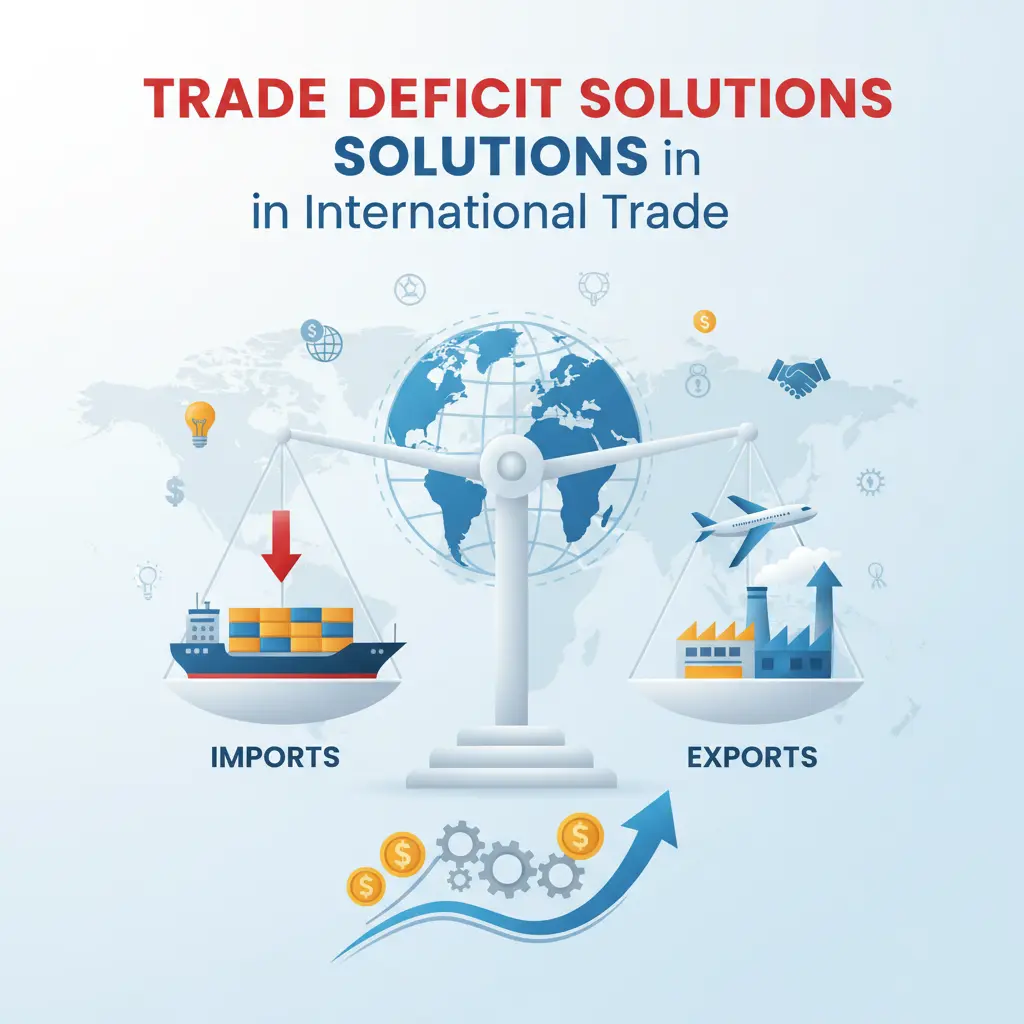
A What is a trade deficit occurs when a country’s imports of goods and services exceed its exports over a specific period. This imbalance, often driven by factors like strong domestic demand, competitive foreign goods, or currency valuations, can have a significant impact on imports exports and a nation’s economic landscape. While not always inherently negative, persistent and large deficits can lead to concerns about national debt, employment, and industrial competitiveness. Addressing the causes of trade deficit global trade requires a comprehensive and often multi-faceted approach, incorporating both domestic adjustments and international cooperation. This section outlines various strategies and policies countries might employ as trade deficit solutions international trade.
1. Promoting Export Growth and Competitiveness
This strategy focuses on enhancing a nation’s ability to sell more goods and services to other countries, thereby increasing export revenue and narrowing the trade gap. Governments can employ several tactics to foster export growth and improve international competitiveness. These include:
- Export Promotion Programs: Establishing agencies or initiatives that provide financial assistance, market research, and logistical support to domestic companies looking to export. This can involve subsidies, tax incentives, and credit facilities to make exports more attractive.
- Investment in Research and Development (R&D): Encouraging innovation helps domestic industries develop high-value, differentiated products that are more competitive in global markets. Government grants, tax breaks for R&D, and collaboration between academia and industry are key.
- Improving Infrastructure: Investing in robust transportation networks (ports, roads, railways) and efficient logistics reduces the cost and time of exporting, making domestic goods more attractive to international buyers.
- Currency Management: While often contentious, a depreciated domestic currency can make exports cheaper and imports more expensive, naturally boosting exports and curbing imports. However, this must be managed carefully to avoid inflationary pressures or trade retaliation.
- Quality and Standards: Ensuring domestic products meet international quality standards and certifications can open up new markets and build trust among foreign consumers.
2. Fiscal Policy Adjustments and National Savings Initiatives
The ‘twin deficits hypothesis’ suggests a strong link between a country’s budget deficit and its trade deficit. When a government runs a large budget deficit, it often needs to borrow from foreign sources, which can lead to higher interest rates and an appreciation of the domestic currency, making exports less competitive. Conversely, a low national savings rate can lead to increased reliance on foreign capital to finance domestic investment, thereby contributing to a trade deficit.
To address this, countries can implement fiscal policies aimed at increasing national savings and reducing government borrowing:
- Reducing Government Spending and/or Increasing Taxes: A more disciplined fiscal policy, by cutting non-essential government expenditures or increasing tax revenues, can reduce the need for government borrowing, thereby potentially freeing up domestic capital for productive investment and easing pressure on the exchange rate.
- Promoting Private Savings: Governments can encourage households and businesses to save more through various incentives, such as tax-deferred savings plans, higher interest rates on savings accounts (if monetary policy allows), or public awareness campaigns emphasizing the benefits of saving. Increased domestic savings can fund domestic investment without relying as heavily on foreign capital.
- Investment in Productivity-Enhancing Sectors: Directing public spending towards education, healthcare, and infrastructure projects that boost long-term productivity can enhance a country’s overall competitiveness, indirectly supporting export growth and reducing the underlying causes of trade deficit global trade.
3. Tariffs, Quotas, and Strategic Trade Agreements
These policies represent more direct interventions in international trade flows, often with varying degrees of success and potential for unintended consequences. While some measures aim to reduce imports directly, others seek to improve market access for domestic goods.
- Tariffs and Quotas: Tariffs (taxes on imported goods) and quotas (limits on the quantity of imported goods) are protectionist measures designed to make imports more expensive or scarce, thus reducing their demand and theoretically decreasing a trade deficit. However, these can lead to higher domestic prices for consumers, reduce competition, and often provoke retaliatory tariffs from trading partners, harming export industries.
- Strategic Trade Agreements: Rather than unilateral protectionism, countries can engage in bilateral or multilateral trade agreements to achieve specific objectives. These agreements can aim to open new markets for a country’s exports, reduce non-tariff barriers, establish fair trade practices, and address specific trade deficit solutions international trade by creating a more level playing field. For example, negotiating better access for agricultural products or manufactured goods can significantly boost export volumes and help transition from a trade deficit to a trade surplus meaning international business for specific sectors. Effective trade policy, as highlighted by institutions like the World Bank, often involves a nuanced understanding of global economic dynamics.
- Anti-dumping and Countervailing Duties: These are specific tariffs imposed on imported goods that are priced below their fair market value or benefit from foreign government subsidies, respectively. They aim to protect domestic industries from unfair competition and can indirectly help reduce deficits caused by predatory pricing.
Ultimately, solving a trade deficit requires a balanced and often long-term approach, combining domestic economic reforms with strategic international engagement. No single solution fits all situations, and the most effective strategies often involve a mix of promoting exports, prudent fiscal management, and carefully negotiated trade policies.
Partner with Vietnam’s Leading Suppliers
Looking for reliable suppliers in Vietnam? Contact VietnamSuppliers.com today to connect with verified manufacturers and exporters across all industries.
—————————————
References
– International Monetary Fund (IMF): https://www.imf.org/en/About/Factsheets/Sheets/2022/balance-of-payments
– International Monetary Fund on Exchange Rates and Trade Imbalances: https://www.imf.org/en/Publications/fandd/issues/2021/03/exchange-rates-and-trade-imbalances-obstfeld-rogoff
– IMF World Economic Outlook: https://www.imf.org/en/Publications/WEO/Issues/2023/10/10/world-economic-outlook-october-2023
– How to Think About Trade Deficits: https://www.imf.org/en/Publications/fandd/issues/2017/09/how-to-think-about-trade-deficits
– World Bank Trade Topic: https://www.worldbank.org/en/topic/trade