Understanding Global Supply Chain Quality Management
In today’s interconnected global economy, businesses operate across borders, relying on intricate networks of suppliers, manufacturers, and logistics providers. This complex web necessitates a robust framework to ensure consistency and excellence at every stage. Global Supply Chain Quality Management (GSCQM) is this crucial framework, encompassing the systematic processes and strategies designed to maintain and improve product and service quality across international supply chains. From initial design and sourcing to manufacturing, distribution, and delivery, GSCQM ensures that every component meets specified standards, mitigating risks and fostering consumer trust. Its growing importance stems from escalating consumer expectations, increasingly stringent regulatory requirements, and the profound impact that quality failures can have on brand reputation and financial performance. Effective GSCQM often leverages critical services such as pre-shipment inspection services, detailed Vietnam factory audit, comprehensive product quality assurance international, and reliable third-party QC inspection to safeguard product integrity before goods even leave their origin country.

1. Defining Global Supply Chain Quality Management
Global Supply Chain Quality Management can be understood as the comprehensive set of policies, processes, and procedures implemented to ensure that products and services conform to predetermined quality standards throughout the entire international supply chain. Unlike traditional quality management focused solely on the manufacturing floor, GSCQM extends its reach across geographical boundaries and organizational silos. It encompasses everything from supplier selection and qualification, raw material inspection, in-process quality control, final product inspection, packaging, and logistics, right through to customer delivery and after-sales support. Key elements include establishing clear quality metrics, implementing robust audit protocols like a Vietnam factory audit, ensuring compliance with international standards such as ISO, and continuously monitoring performance. The goal is not merely to detect defects but to prevent them proactively, fostering a culture of continuous improvement and risk mitigation across all international partners.
2. The Evolving Landscape of International Trade
The imperative for stringent GSCQM has intensified dramatically with the evolving dynamics of international trade. Globalization has led to increasingly fragmented supply chains, where components and finished goods traverse multiple countries and continents before reaching the end-consumer. This complexity introduces numerous potential points of failure, from variations in manufacturing standards and regulatory frameworks to logistical challenges and communication barriers. Furthermore, geopolitical shifts, trade disputes, and unexpected global events (like pandemics) underscore the fragility of these chains, making resilient and quality-focused management indispensable. Consumers today are also more informed and discerning, demanding not only high-quality products but also ethical sourcing and sustainable practices. Businesses that fail to adapt their Global Supply Chain Quality Management strategies risk losing market share and damaging their brand in an instant. The reliance on services like third-party QC inspection and pre-shipment inspection services has become a cornerstone for companies navigating this intricate environment.
3. Why Quality is Paramount in Global Sourcing
In global sourcing, quality is not just a competitive advantage; it is a fundamental requirement for survival and growth. Poor quality products can lead to a cascade of detrimental consequences, including costly product recalls, damage to brand reputation, customer dissatisfaction, lost sales, and potential legal liabilities. For companies importing goods, unexpected quality issues can cause significant delays, rework expenses, and even jeopardize long-term supplier relationships. Conversely, a strong commitment to quality, underpinned by effective Global Supply Chain Quality Management, builds trust with customers and partners. It ensures compliance with diverse international regulations, reduces waste and operational costs through fewer defects, and ultimately enhances profitability. Implementing robust product quality assurance international protocols, supported by reliable third-party oversight, becomes a strategic imperative. By prioritizing quality at every touchpoint, businesses can secure their position in the global market, fostering sustainable growth and consumer loyalty in an increasingly demanding marketplace.
The Cornerstone of Quality: Pre-shipment Inspection Services
In today’s intricate Global Supply Chain Quality Management, ensuring superior product quality is paramount. As businesses navigate extensive global networks, robust quality control is critical. Pre-shipment inspection services emerge as a pivotal defense against defects, verifying goods meet standards before leaving the factory. This ensures brand integrity, customer satisfaction, and operational profitability.
1. What are Pre-shipment Inspection Services?
Pre-shipment Inspection (PSI) services involve the thorough and systematic examination of goods before they are dispatched from the manufacturing site or warehouse. This critical quality control measure is typically conducted once 100% of the order has been produced and at least 80% is packed for shipment. The primary objective of PSI is to verify that the quantity, specifications, quality, and labeling of products conform to the buyer’s purchase order, contractual agreements, and relevant international standards.
Conducted by independent third-party QC inspection agencies, PSI offers unbiased product assessment. Inspectors meticulously verify appearance, workmanship, functionality, safety, and packaging. This proactive approach ensures product quality assurance international, catching issues early and preventing costly consequences of shipping substandard goods. Whether a Vietnam factory audit or a final inspection, PSI is the ultimate quality gatekeeper.
2. Benefits for Importers and Buyers
For importers and buyers navigating international trade, pre-shipment inspection services offer profound advantages. These include:
- Defect Prevention & Risk Mitigation: PSI is crucial for preventing defective or non-compliant goods from shipping. It identifies issues like incorrect specifications or poor workmanship before dispatch, significantly reducing costly returns, rejections, and rework. This safeguards against financial losses and reputational damage.
- Ensured Product Quality & Brand Protection: By verifying products meet predefined standards, PSI guarantees consistent product quality. This consistency is vital for customer satisfaction and loyalty, directly protecting and enhancing the buyer’s brand reputation.
- Cost Reduction & Efficiency: While an investment, PSI prevents greater expenses from shipping faulty goods, such as return fees, customs penalties, and production delays. It streamlines the supply chain by minimizing disruptions.
- Enhanced Negotiation & Compliance: A comprehensive inspection report provides buyers with leverage for demanding corrective actions. PSI also ensures compliance with importing country regulations, avoiding fines and market access issues.
3. Common Inspection Protocols and Standards
Effective pre-shipment inspection services adhere to globally recognized protocols and standards. One widely adopted statistical sampling method is the Acceptable Quality Limit (AQL) standard (ISO 2859-1). AQL defines the maximum percentage of defective units acceptable for a given sample size. Inspectors randomly select a product sample and compare defects against the AQL table to determine if the lot passes or fails.
Beyond AQL, specific industry standards and regulatory requirements dictate inspection parameters. Electronics may require electrical safety tests, textiles might undergo colorfastness checks, and toys face stringent safety and material compliance tests.
The role of a third-party QC inspection agency is paramount. These independent bodies provide expertise, equipment, and impartiality for thorough inspections, offering objective reports with photographic evidence. Leveraging a reputable third party is crucial for ensuring Product quality assurance international across diverse manufacturing landscapes, including regions like Vietnam. They can conduct a comprehensive Vietnam factory audit, ensuring local compliance and quality benchmarks are met.
In conclusion, pre-shipment inspection services are indispensable for businesses in the global market. More than an expense, they are a strategic investment safeguarding quality, mitigating risks, protecting brand reputation, and fostering supply chain trust. By embracing these essential quality control measures, importers can confidently navigate international sourcing, ensuring every product meets high global standards.
Ensuring Supplier Reliability: The Vietnam Factory Audit Model
In the intricate web of global commerce, maintaining consistent product quality and ethical sourcing is paramount. Companies navigating international procurement face myriad challenges, from cultural differences to varying manufacturing standards. This is where Global Supply Chain Quality Management becomes not just a best practice, but a critical imperative. A powerful tool in this arsenal is the factory audit, particularly the Vietnam factory audit, which serves as a robust mechanism to assess potential and existing suppliers’ capabilities, compliance, and commitment to delivering high-quality products. By meticulously evaluating production facilities, processes, and personnel, businesses can significantly mitigate risks and enhance product quality assurance international, ensuring their supply chain remains robust and reliable. These comprehensive assessments, often conducted by impartial third-party QC inspection teams, are indispensable for safeguarding brand reputation and operational efficiency.
1. Importance of Factory Audits in Global Supply Chains
The complexity of modern global supply chains necessitates a proactive approach to supplier vetting and ongoing monitoring. Factory audits are fundamental for several reasons. Firstly, they provide a transparent, on-the-ground view of a manufacturer’s operations, moving beyond mere declarations to tangible proof of capability. This is crucial for identifying potential bottlenecks, capacity limitations, or inconsistencies that could later impact delivery schedules or product specifications. Secondly, audits are instrumental in risk mitigation, addressing concerns related to product quality, ethical labor practices, environmental compliance, and security. A thorough audit can uncover issues before they escalate into costly recalls, reputational damage, or legal liabilities. Furthermore, by ensuring suppliers adhere to agreed-upon standards, audits foster a culture of accountability and continuous improvement, which is vital for sustained success in highly competitive markets. For businesses relying on outsourced manufacturing, regular audits are not merely a compliance exercise but a strategic investment in securing the integrity and performance of their entire supply network, ultimately reinforcing their Global Supply Chain Quality Management.

2. Key Aspects of a Vietnam Factory Audit
A Vietnam factory audit is designed to offer a holistic evaluation of a manufacturing facility, extending far beyond a simple checklist. Typically, it encompasses several critical areas. Production capabilities are thoroughly assessed, examining machinery, production lines, maintenance schedules, and overall capacity to meet order volumes and specific product requirements. The quality control system is a central focus, scrutinizing the entire process from incoming material inspection (IQC), in-process quality control (IPQC), to final quality control (FQC) and outbound checks. This includes reviewing quality manuals, testing procedures, calibration records, and staff training. Social compliance aspects are also meticulously reviewed, ensuring adherence to international labor laws, fair wages, safe working conditions, and absence of child labor, which is increasingly important for ethical sourcing. Environmental compliance, covering waste management, energy consumption, and pollution control, is another vital component. Beyond these, a comprehensive audit might delve into the supplier’s research and development capabilities, management structure, supply chain traceability, and security protocols. The goal is to build a detailed profile of the supplier’s operational excellence and their potential for long-term partnership, providing insights that complement subsequent pre-shipment inspection services.
3. From Audit Findings to Corrective Actions
The true value of a factory audit lies not just in identifying deficiencies but in leveraging those findings to drive improvement. Upon completion, a detailed audit report is generated, outlining strengths, weaknesses, non-conformities, and areas requiring attention. This report serves as a foundational document for collaborative discussions with the supplier. The next crucial step involves developing and implementing corrective and preventive actions (CAPA). This typically means setting clear timelines for rectifying identified issues, assigning responsibilities, and establishing measurable indicators of improvement. For instance, if the audit reveals inadequate quality control checks during production, the corrective action might involve implementing new inspection protocols and retraining staff. Preventive actions aim to avoid recurrence, perhaps by upgrading equipment or revising standard operating procedures. Regular follow-up verification checks, either through subsequent mini-audits or document reviews, are essential to ensure that implemented changes are effective and sustainable. This iterative process of auditing, feedback, corrective action, and verification fosters a culture of continuous improvement, strengthening the supplier relationship and enhancing overall international quality standards. Ultimately, this structured approach ensures that initial audit investment translates into tangible, long-term improvements in supplier reliability and product quality.
Achieving Product Quality Assurance International Standards
In today’s interconnected global economy, companies face the complex challenge of maintaining consistent, high product quality across diverse markets and distributed manufacturing hubs. Achieving robust product quality assurance international standards is not merely a compliance exercise but a strategic imperative that underpins brand reputation, customer satisfaction, and long-term profitability. Effective Global Supply Chain Quality Management requires a proactive, integrated approach that encompasses planning, technology, and adherence to global regulations. This section explores how businesses can implement comprehensive strategies to ensure product excellence from design to delivery, irrespective of geographical boundaries.
1. Developing a Comprehensive International Quality Control Plan
The foundation of international quality assurance lies in a meticulously crafted quality control plan that transcends national borders. This plan must establish unified quality metrics, inspection protocols, and corrective action procedures applicable to all manufacturing sites and suppliers. It begins with rigorous supplier qualification, where potential partners, particularly in emerging manufacturing hubs, undergo thorough vetting. For instance, conducting a Vietnam factory audit helps assess a supplier’s capabilities, quality management systems, and ethical practices firsthand. The plan should detail every critical stage of production, from raw material procurement to final assembly. Crucially, it must incorporate robust in-process inspections and end-of-line checks. Furthermore, utilizing Pre-shipment inspection services conducted by qualified personnel ensures that products meet specified requirements before leaving the factory. Engaging Third-party QC inspection agencies adds an unbiased layer of scrutiny, verifying product specifications, packaging, and quantity, thereby minimizing risks associated with defective shipments and ensuring consistent product quality assurance international.
2. Leveraging Technology for Global Quality Tracking
Modern quality management in a global context is impossible without advanced technology. Implementing a centralized Quality Management System (QMS) software solution provides real-time visibility and control over the entire Global Supply Chain Quality Management. These systems facilitate the standardization of processes, document control, and efficient handling of non-conformances and corrective/preventive actions (CAPA). Data analytics plays a pivotal role, allowing companies to identify trends, predict potential quality issues, and implement proactive measures. Digital inspection platforms enable remote audits and immediate reporting from any manufacturing site, reducing delays and enhancing responsiveness. Advanced traceability solutions, including blockchain technology, offer unparalleled transparency, allowing businesses to track every component and product throughout its journey, from origin to final customer. This technological integration not only streamlines operations but also provides invaluable insights for continuous improvement, ensuring sustained product quality assurance international across all production facilities.
3. Compliance with International Regulations and Certifications
Navigating the complex landscape of international regulations and industry-specific certifications is a cornerstone of global quality assurance. Companies must ensure their products and processes comply with relevant standards such as international quality standards like ISO 9001 for quality management systems, ISO 14001 for environmental management, or industry-specific benchmarks like IATF 16949 for automotive or GMP for pharmaceuticals. Beyond generic quality standards, market-specific compliance is vital. For instance, products destined for the European Union require CE marking, while those for the United States might need FCC compliance. Regular audits, both internal and external, are essential to verify ongoing adherence to these standards and regulations. Building a culture of quality, where every team member understands their role in upholding these standards, is paramount. This commitment to compliance and continuous improvement not only safeguards against legal penalties and market access restrictions but also builds immense trust with consumers and partners worldwide, solidifying a company’s reputation for superior product quality assurance international.
Partnering for Success: The Role of Third-Party QC Inspection
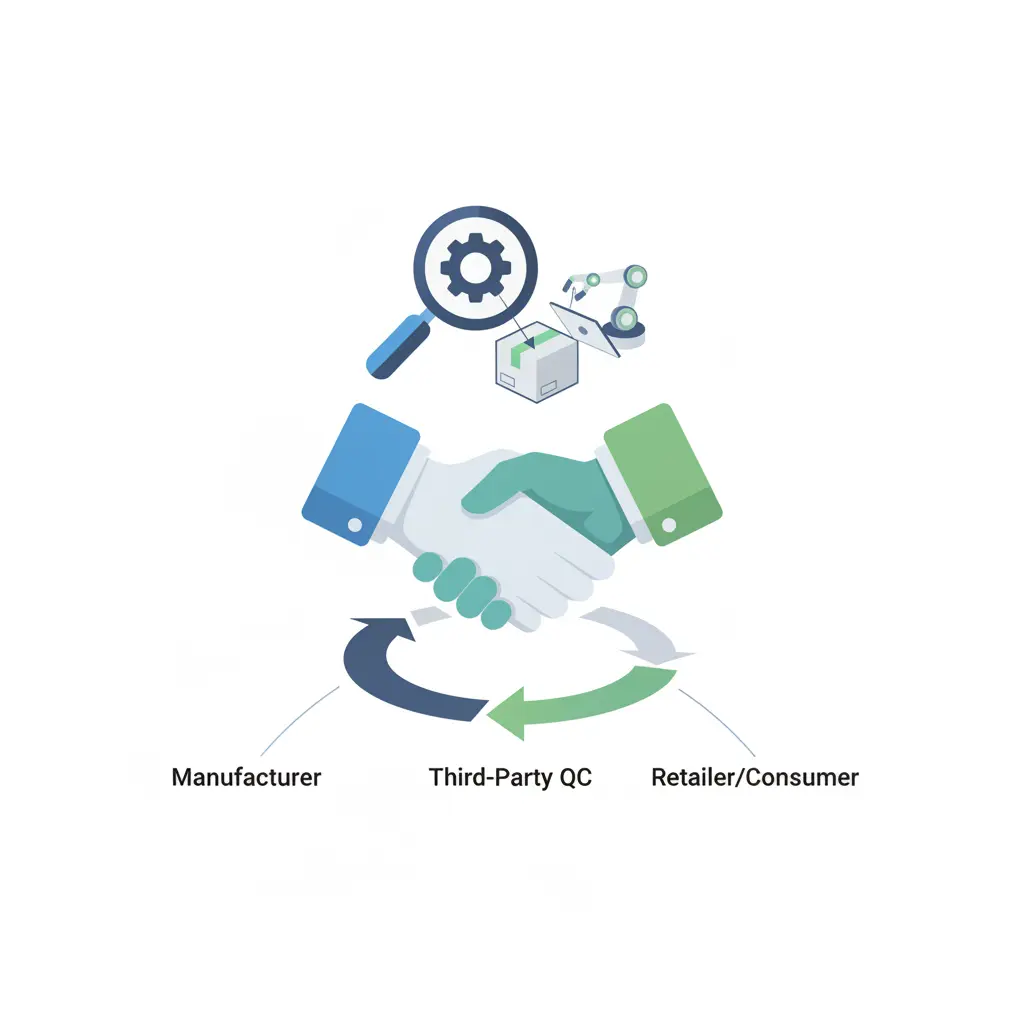
In today’s interconnected world, managing a global supply chain presents both immense opportunities and significant challenges. Ensuring consistent product quality across diverse manufacturing landscapes, cultural nuances, and varying regulatory environments is paramount for brand reputation, customer satisfaction, and financial success. This is where the strategic engagement of independent third-party QC inspection services becomes indispensable. These specialized services provide an objective lens through which to assess product quality, verify compliance, and proactively mitigate risks, thereby fortifying your overall Global Supply Chain Quality Management framework.
1. Why Opt for Third-Party QC Inspection?
The decision to outsource quality control functions to a third party stems from several compelling advantages that in-house teams often cannot replicate. Foremost among these is objectivity. Independent inspectors operate without the biases or conflicts of interest that can sometimes affect internal factory QC teams or even the buying company’s own staff, who might be under pressure to meet shipping deadlines. This impartiality ensures a truly accurate assessment of product quality, identifying defects that might otherwise be overlooked.
Furthermore, third-party Global Supply Chain Quality Management services are experts in risk mitigation. By conducting thorough checks at various stages, such as during production (DUPRO) or critical pre-shipment inspection services, they can detect issues early. This proactive identification prevents the costly repercussions of receiving faulty goods, including product recalls, customer complaints, damaged reputation, and logistical nightmares. Their specialized knowledge of international quality standards, local regulations, and specific product categories ensures that your goods meet the required benchmarks, irrespective of their origin.
2. Selecting the Right Inspection Partner
Choosing the right independent third-party QC inspection partner is crucial for maximizing the benefits. Look for companies with robust accreditation, such as ISO/IEC 17020, which demonstrates their competence and impartiality in inspection activities. Experience within your specific industry or product type is equally vital; an inspector familiar with textiles will be more effective than one specializing solely in electronics if you’re importing garments. Geographic reach and local presence are also key considerations. For instance, if you source extensively from Southeast Asia, a partner with strong capabilities for a Vietnam factory audit will prove invaluable, offering swift deployment and an understanding of local manufacturing practices.
Beyond credentials, evaluate their reporting transparency and technological capabilities. A good partner provides clear, concise, and timely reports, often with photographic evidence and detailed findings, accessible through user-friendly online platforms. Seek references and testimonials to gauge their reliability and the quality of their service. Ultimately, the right partner becomes an extension of your team, providing the eyes and ears on the ground needed for effective quality management strategies. For more insights into international quality standards, the International Organization for Standardization (ISO) offers comprehensive guidelines critical for international trade.
3. Maximizing Value from Independent QC Reports
Receiving an independent QC report is just the first step; the real value lies in how you utilize its findings. These reports are more than just pass/fail documents; they are powerful tools for continuous improvement. Analyze the data for recurring issues, identify root causes, and work collaboratively with your suppliers to implement corrective actions. This iterative process fosters a culture of quality, leading to better manufacturing practices and consistent product quality assurance international. Share the insights gained from third-party QC inspection with your sourcing, production, and design teams to refine specifications, improve supplier selection criteria, and enhance product development.
By integrating these reports into your broader Global Supply Chain Quality Management system, you transform inspection costs from an expense into an investment. They provide quantifiable data that supports strategic decisions, reduces waste, and ultimately strengthens your supply chain’s resilience against quality-related disruptions. Building strong, trust-based relationships with both your suppliers and your chosen inspection partner, grounded in transparent communication and shared quality goals, is the cornerstone of long-term success in the complex world of global manufacturing.
Partner with Vietnam’s Leading Suppliers
Looking for reliable suppliers in Vietnam? Contact VietnamSuppliers.com today to connect with verified manufacturers and exporters across all industries.
—————————————
References
– ISO standards for quality management: https://www.iso.org/standards.html
– SGS Supply Chain Inspection: https://www.sgs.com/en/services/supply-chain/inspection
– ISO 9001 Quality Management Standards: https://www.iso.org/iso-9001-quality-management.html
– ISO 9001 Quality Management: https://www.iso.org/iso-9001-quality-management.html
– International Organization for Standardization (ISO): https://www.iso.org/standards.html