Introduction to Global Trade Dynamics
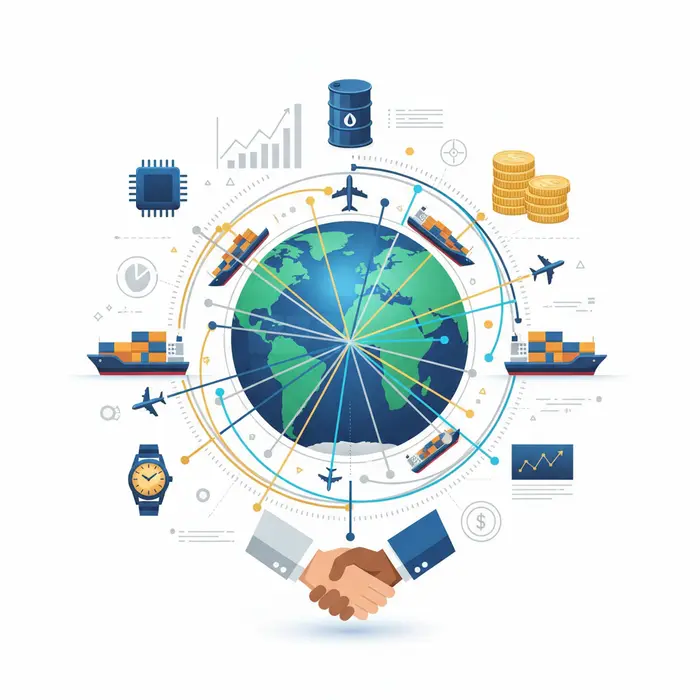
The global economic landscape in 2025 is poised at a critical juncture, with attention firmly fixed on the trajectory of international commerce. Following a period marked by unprecedented disruptions, the focus shifts towards understanding the underlying forces that will shape the Global Trade Recovery Outlook. This section sets the stage, examining the intricate web of economic, geopolitical, and technological factors influencing trade flows and presenting a forward-looking perspective on the opportunities and challenges that lie ahead. Navigating this complex environment requires a nuanced understanding of market shifts, a commitment to innovation, and strategic adaptation from businesses and policymakers alike.
1. Review of 2024 Trade Performance and Challenges
The year 2024 presented a mixed bag for global trade, characterized by persistent inflationary pressures, elevated interest rates in major economies, and lingering geopolitical uncertainties. While some sectors demonstrated remarkable resilience, overall trade volumes faced headwinds from weakened global demand and a tightening credit environment. Supply chain disruptions, though less severe than in previous years, continued to pose challenges, pushing businesses to prioritize Global Supply Chain Resilience. Companies invested heavily in diversification strategies, nearshoring, and inventory optimization to mitigate future shocks. Furthermore, regional conflicts and protectionist sentiments in certain nations introduced an element of unpredictability, affecting specific trade routes and commodity prices. This environment necessitated agility and strategic foresight from trading nations and enterprises seeking to maintain competitive advantages and market access.
2. Key Geopolitical and Economic Drivers Shaping the Outlook
Looking towards 2025, several pivotal geopolitical and economic factors are set to significantly influence the global trade landscape. The outcomes of major elections in key economies, ongoing geopolitical tensions, and evolving trade alliances will undoubtedly redefine market access and regulatory frameworks. Technological advancements, particularly in automation, AI, and digital trade platforms, are also expected to drive efficiency and create new avenues for commerce, though they also raise questions about job displacement and data governance. Furthermore, the global push towards decarbonization and sustainable practices is transforming industries, impacting trade policies and fostering demand for green technologies and services. The International Monetary Fund (IMF) projects a gradual pick-up in global economic activity, which bodes well for trade, contingent on inflation control and stable financial markets. A comprehensive Commodity Market Trends Analysis reveals that energy prices, agricultural commodities, and critical minerals will remain sensitive to supply chain stability and geopolitical events, directly influencing manufacturing costs and consumer prices worldwide. Understanding these dynamic interactions is crucial for anticipating market shifts and formulating effective trade strategies.
3. Fostering Growth: Export Market Opportunities and Support Mechanisms
As the global economy slowly recalibrates, identifying and capitalizing on emerging Export Market Opportunities will be paramount for sustained growth. Developing economies, particularly those in Southeast Asia and parts of Africa, are anticipated to offer significant potential due to growing middle classes and increasing industrialization. Digitalization continues to lower barriers to entry, enabling small and medium-sized enterprises (SMEs) to access international markets more readily through e-commerce platforms and digital trade solutions. However, navigating the complexities of international trade requires robust support. Access to adequate Trade Finance Solutions for SMEs becomes critical, bridging the gap between production and payment and enabling smaller businesses to manage cash flow and mitigate risks associated with cross-border transactions. Government initiatives, trade promotion agencies, and specialized financial institutions play a vital role in providing these essential tools, from export credit insurance to working capital loans. By fostering an environment conducive to export growth and ensuring financial accessibility, nations can strengthen their participation in global value chains and contribute significantly to the overall Global Trade Recovery Outlook for 2025 and beyond.
The path to a robust Global Trade Recovery Outlook in 2025 is multifaceted, requiring careful navigation of persistent challenges while simultaneously leveraging new opportunities. Businesses that prioritize agility, embrace technological innovation, and commit to sustainable practices will be best positioned to thrive in this evolving landscape. The collective efforts of governments, international organizations, and the private sector will be instrumental in fostering an environment of stability and growth, ensuring that the benefits of international trade are widely distributed.
Building Global Supply Chain Resilience
The past few years have underscored the fragility of global supply chains, transforming their resilience into a paramount concern for sustainable Global Trade Recovery Outlook. As the world emerges from a period of unprecedented disruptions, strengthening these intricate networks is not merely a defensive strategy but a proactive measure to foster economic stability and unlock new Export Market Opportunities. This section delves into the critical strategies and innovations poised to fortify global supply chains against future shocks, ensuring a more adaptable, transparent, and robust trading ecosystem.
1. Diversification and Regionalization Strategies
A primary lesson learned from recent crises is the inherent risk of over-reliance on single-source suppliers or concentrated production hubs. To mitigate this, businesses are increasingly adopting diversification and regionalization strategies. Diversification involves broadening the supplier base across multiple geographies and even different companies within the same region, reducing dependency on any one entity. This “China Plus One” or “multi-node” approach minimizes the impact of localized disruptions, be they geopolitical, natural disasters, or health crises. Simultaneously, regionalization, often termed nearshoring or friendshoring, focuses on bringing production closer to end markets or aligning with geopolitical allies. This reduces lead times, transportation costs, and vulnerability to long-haul shipping disruptions, while also potentially leveraging regional trade agreements and enhancing supply chain resilience. While it may involve higher initial investment or production costs, the long-term benefits in terms of reliability and risk management are increasingly outweighing these considerations, positioning companies for greater stability in volatile markets.
2. Technological Advancements for Enhanced Visibility and Agility
Technology is at the forefront of building resilient supply chains. Innovations such as Artificial Intelligence (AI), Machine Learning (ML), Blockchain, and the Internet of Things (IoT) are revolutionizing how companies manage their networks. AI and ML enable predictive analytics, allowing businesses to anticipate potential disruptions—from demand fluctuations to logistical bottlenecks—and proactively adjust strategies. For instance, advanced analytics can forecast shifts in Commodity Market Trends Analysis, helping procurement teams make more informed decisions. IoT devices provide real-time tracking of goods in transit, offering unprecedented visibility into inventory levels and movement across the entire chain. Blockchain technology enhances transparency and traceability, creating immutable records of transactions and product origins, which is crucial for verifying ethical sourcing and compliance. Furthermore, automation, from robotic process automation (RPA) in logistics to automated warehouses, boosts operational efficiency and reduces reliance on manual labor, contributing to greater agility and responsiveness during crises. These technologies collectively empower supply chain managers with data-driven insights, enabling quicker decision-making and more adaptive responses to unforeseen events.
3. Policy Frameworks Supporting Robust Supply Networks
Government policies and international collaborations play a pivotal role in fostering resilient global supply chains. Nations are increasingly implementing policy frameworks designed to incentivize diversification, reshoring, and technological adoption. These include tax breaks for investments in domestic manufacturing, subsidies for R&D in supply chain technologies, and streamlined regulatory processes for critical goods. International cooperation through multilateral trade agreements and forums is also vital, promoting standardized practices, data sharing, and joint risk assessments across borders. For example, agreements focused on harmonizing customs procedures or creating common emergency response protocols can significantly improve the flow of goods during crises. Public-private partnerships are emerging as crucial mechanisms, bringing together government resources and private sector expertise to identify vulnerabilities and build shared infrastructure. Additionally, facilitating access to robust Trade Finance Solutions for SMEs is essential, as small and medium-sized enterprises often form the backbone of supply chains but lack the financial buffers to withstand prolonged disruptions. By creating a supportive policy environment, governments can significantly enhance the collective resilience of global trade networks, laying a stronger foundation for sustained economic growth.
Identifying Export Market Opportunities for Growth
In an ever-evolving global economy, pinpointing new export market opportunities is paramount for businesses aiming for sustainable growth in 2025 and beyond. The landscape is continuously shaped by geopolitical shifts, technological advancements, and a renewed focus on Global Trade Recovery Outlook. As industries adapt to post-pandemic realities and strive for enhanced Global Supply Chain Resilience, new avenues for international trade are emerging, offering significant potential for forward-thinking enterprises. Understanding these shifts and aligning business strategies accordingly will be key to unlocking substantial growth.

1. Emerging Markets with High Demand Potential
The pursuit of new export frontiers naturally leads to emerging markets, which are often characterized by rapidly expanding middle classes, increasing disposable incomes, and significant infrastructure development. Regions like Southeast Asia (e.g., Vietnam, Indonesia, Philippines) continue to be powerhouses, driven by robust manufacturing sectors and growing digital economies. Latin America, particularly Mexico and Brazil, presents strong opportunities due to their proximity to major consumer markets and ongoing integration into global value chains. Furthermore, the African continent, with initiatives like the African Continental Free Trade Area (AfCFTA), is set to become a formidable trading bloc, opening up vast Export Market Opportunities across diverse sectors from renewable energy to processed goods. Businesses should conduct thorough market research to understand local consumer preferences, regulatory environments, and competitive landscapes to effectively penetrate these high-potential markets.
2. Sector-Specific Export Trends and Niches
Beyond geographical expansion, identifying high-growth sectors and niche markets is crucial. The digital transformation continues to fuel demand for advanced technology solutions, including Artificial Intelligence (AI), Internet of Things (IoT), cybersecurity, and cloud services across industries. The global pivot towards sustainability has made the green economy a burgeoning sector, with increasing demand for renewable energy technologies (solar, wind), electric vehicles, sustainable packaging, and eco-friendly products. Healthcare and biotechnology also remain evergreen sectors, experiencing accelerated innovation and demand for medical devices, pharmaceuticals, and health tech solutions, partly driven by an aging global population and enhanced health awareness. Moreover, the evolution of e-commerce has not only opened direct-to-consumer export channels but also spurred demand for sophisticated logistics and fulfillment services. Businesses must also pay close attention to Commodity Market Trends Analysis, as fluctuations in raw material prices and availability can significantly impact production costs and competitiveness across various manufacturing sectors.
3. Navigating New Trade Agreements and Blocs
The landscape of international trade is consistently reshaped by new bilateral and multilateral trade agreements. Understanding and leveraging these agreements is vital for maximizing Export Market Opportunities. Agreements such as the Regional Comprehensive Economic Partnership (RCEP) in Asia, the Comprehensive and Progressive Agreement for Trans-Pacific Partnership (CPTPP), and the aforementioned AfCFTA are designed to reduce trade barriers, harmonize regulations, and streamline customs procedures. For businesses, especially Small and Medium-sized Enterprises (SMEs), these agreements can unlock preferential market access and reduce operational costs. However, navigating the complexities of rules of origin, customs declarations, and compliance requirements demands strategic planning. This is where robust Trade Finance Solutions for SMEs become indispensable, providing the necessary capital, risk mitigation, and payment mechanisms to engage confidently in cross-border transactions under new trade frameworks. Staying informed about impending agreements and their implications is not just an advantage but a necessity for competitive exporters.
In conclusion, the path to sustained export growth lies in a multi-faceted approach: diligently researching emerging markets, targeting high-growth sectors and niches, and astutely navigating the evolving web of international trade agreements. Businesses that invest in market intelligence, foster innovation, and embrace resilient supply chain strategies will be best positioned to seize the plentiful export market opportunities available in 2025 and beyond.
Empowering SMEs with Trade Finance Solutions
Small and medium-sized enterprises (SMEs) are the backbone of economies worldwide, driving innovation, employment, and growth. Yet, their participation in global trade is frequently hampered by significant financial barriers, primarily a lack of access to suitable credit and working capital. Despite these hurdles, a dynamic landscape of accessible trade finance solutions and innovative approaches is emerging, specifically designed to support SMEs in navigating international commerce. This support is crucial, especially as we observe a promising Global Trade Recovery Outlook, where robust SME engagement is essential for sustained growth and diversified markets. Understanding and leveraging these solutions is key for SMEs to not only survive but thrive globally.
1. Accessing Credit and Working Capital for SMEs
This section explores the fundamental financial challenges SMEs face in global trade and outlines trade finance instruments providing necessary credit and working capital. Traditional banks often perceive SMEs as higher risk due to smaller scale, limited collateral, and less robust financial histories, leading to significant financing gaps. This lack of suitable trade finance solutions for SMEs prevents many agile businesses from capitalizing on international opportunities.
To bridge this gap, specific trade finance instruments offer viable alternatives. Factoring provides immediate cash flow by allowing SMEs to sell accounts receivable. Supply chain finance optimizes cash flow, offering early payment to suppliers or deferred payment for buyers. Letters of credit offer bank payment guarantees, significantly reducing risk for exporters and importers. These solutions are pivotal for building Global Supply Chain Resilience, ensuring smaller participants have liquidity to fulfill orders and manage costs, thus strengthening the entire value chain. By reducing financial burden and risk, these instruments empower SMEs to confidently engage in international trade, manage working capital, and seize previously inaccessible opportunities.
2. Digitalization of Trade Finance Processes
This segment examines how technological advancements are revolutionizing trade finance, making processes more efficient, transparent, and accessible, thereby lowering barriers for SMEs seeking to capitalize on Export Market Opportunities. Historically, trade finance was paper-intensive, manual, and costly, leading to slow transactions and reduced accessibility for smaller players. Digitalization is fundamentally transforming this.
Modern digital platforms, powered by technologies like blockchain, artificial intelligence (AI), and cloud computing, streamline every aspect of trade finance. Electronic documentation replaces bulky paper trails, accelerating approvals and reducing errors. Blockchain offers transparency and security with immutable transaction records, reducing fraud and dispute resolution times. AI and machine learning enhance risk assessment, allowing financiers to quickly evaluate SME creditworthiness based on diverse data points, expanding funding access. Digital trade finance platforms connect SMEs with a broader pool of lenders, fostering greater competition and tailored financial products. This digital transformation not only lowers transaction costs and speeds up the flow of goods and money but also equips SMEs with tools to efficiently manage international trade operations, allowing them to compete more effectively and capitalize on the expanding global marketplace. This shift is vital for fostering Global Supply Chain Resilience and ensuring all participants contribute to a robust global economy.
3. Government Support Programs for SME Export Growth
This final section explores the vital role of governmental initiatives and international bodies in fostering a supportive environment for SMEs to expand their international footprint, offering crucial assistance to mitigate risks and enhance their participation in global trade. Recognizing SMEs’ significant contribution to national economies and export diversification, many governments worldwide implement comprehensive support programs.
These programs often include export credit insurance and guarantees through export credit agencies (ECAs), such as EXIM Bank. These instruments de-risk international trade for SMEs by protecting them against political and commercial risks, making it safer to offer competitive payment terms. Beyond direct financial instruments, governments also offer subsidies, grants for market research, and technical assistance that help SMEs understand international regulations, navigate customs, and identify promising Export Market Opportunities. Some initiatives focus on helping SMEs manage exposure to market volatility, including fluctuations detailed in Commodity Market Trends Analysis, by providing risk hedging advice. Such government backing provides a crucial safety net and levels the playing field, allowing SMEs to compete with larger corporations. This concerted effort to empower SMEs is instrumental in fostering a more inclusive and resilient global trading system, significantly contributing to a positive Global Trade Recovery Outlook by broadening the base of active exporters.
In conclusion, empowering SMEs to actively participate in global trade requires a multi-faceted approach. By enhancing access to trade finance solutions, embracing the efficiency and transparency of digital processes, and leveraging robust government support programs, SMEs can overcome traditional barriers. These combined efforts not only strengthen Global Supply Chain Resilience but also unlock vast Export Market Opportunities for smaller businesses, ensuring they play a central role in driving a prosperous and inclusive Global Trade Recovery Outlook.
Commodity Market Trends Analysis and Impact on Trade
The intricate dance of global commodity markets profoundly influences the trajectory of the Global Trade Recovery Outlook. Understanding the latest trends in energy, raw materials, and agricultural goods is not merely an academic exercise; it’s critical for businesses, policymakers, and investors seeking to navigate the complex currents of international commerce. Volatility in these markets can ripple through supply chains, dictate pricing strategies, and ultimately shape economic stability worldwide. As global economies strive for resilience post-pandemic and amidst geopolitical shifts, a keen analysis of commodity trends provides essential insights into potential opportunities and risks, directly impacting trade flows and fostering strategic adjustments across various sectors.

1. Energy and Raw Material Price Volatility Forecast
The energy and raw material sectors remain epicenters of market volatility, driven by a confluence of geopolitical tensions, supply-side disruptions, and evolving demand dynamics. Crude oil and natural gas prices, for instance, are heavily influenced by OPEC+ decisions, the ongoing conflict in Ukraine, and the global energy transition push. This volatility directly impacts shipping costs, manufacturing expenses, and ultimately, consumer prices. Industrial metals like copper, lithium, and rare earths, crucial for the green energy transition and advanced manufacturing, face increasing demand amidst constrained supply and geopolitical competition for resources. The forecast suggests continued price swings, necessitating agile procurement strategies and robust risk management frameworks for businesses reliant on these inputs. Sustained high energy and raw material costs can challenge the Global Supply Chain Resilience, forcing companies to reconsider sourcing locations and inventory management practices to mitigate economic pressures and maintain competitive advantage.
2. Agricultural Commodity Outlook and Food Security
Agricultural commodities – including grains like wheat and corn, and edible oils such as palm and soybean – are at the forefront of global food security discussions. Climate change, with its increasing frequency of extreme weather events (droughts, floods), significantly impacts crop yields and exacerbates price volatility. Geopolitical events, such as disruptions to the Black Sea grain corridor, further compound supply uncertainties. The demand side is also evolving, driven by population growth and changing dietary preferences. For traders and nations, understanding the agricultural commodity outlook is vital for managing inflation, ensuring food security, and identifying new Export Market Opportunities. Furthermore, small and medium-sized enterprises (SMEs) engaged in agricultural trade require flexible Trade Finance Solutions for SMEs to navigate these turbulent markets, secure fair pricing, and maintain stable supply lines to international partners. The World Bank’s latest commodity markets outlook consistently highlights the risks posed by these factors, underscoring the interconnectedness of agricultural trade with global stability.
3. Strategic Reserves and Global Supply Security Implications
In an era marked by increased geopolitical fragmentation and supply chain vulnerabilities, strategic reserves have gained renewed importance as a tool for ensuring global supply security. Nations are increasingly stockpiling not only energy resources, like crude oil in Strategic Petroleum Reserves (SPR), but also critical raw materials, such as rare earth minerals, and essential foodstuffs. These reserves serve as a buffer against unforeseen shocks, whether from natural disasters, political conflicts, or sudden demand surges, thereby mitigating immediate market dependency and extreme price spikes. The existence and deployment of strategic reserves significantly influence long-term trade strategies, encouraging diversification of sourcing and fostering stronger bilateral agreements for resource security. For businesses, monitoring these strategic reserve movements is part of a comprehensive Commodity Market Trends Analysis, allowing for better forecasting of market stability and potential government interventions. While they offer a crucial safety net, the management and deployment of strategic reserves also carry implications for market psychology and can, at times, affect global commodity pricing and trade flows, reflecting a complex interplay between national security and economic policy.
Partner with Vietnam’s Leading Suppliers
Looking for reliable suppliers in Vietnam? Contact VietnamSuppliers.com today to connect with verified manufacturers and exporters across all industries.
—————————————
References
– Commodity Market Trends Analysis: https://www.wto.org/english/news_e/pres24_e/pr954_e.htm
– Building supply chain resilience: https://www.mckinsey.com/capabilities/operations/our-insights/building-supply-chain-resilience
– Commodity Market Trends in Developing Countries 2023 – ITC: https://www.intracen.org/news/commodity-market-trends-in-developing-countries-2023/
– Trade finance remains an obstacle for SMEs: https://www.intracen.org/news/Trade-finance-remains-an-obstacle-for-SMEs-but-digital-can-offer-a-solution/
– World Bank’s latest commodity markets outlook: https://www.worldbank.org/en/research/commodity-markets