
Understanding Global Supply Chain Lead Time Basics
In the intricate world of international trade, Global Supply Chain Lead Time Management is a critical factor distinguishing successful businesses from those facing operational bottlenecks and financial strain. Lead time, at its core, refers to the duration between initiating a process and its completion. In a global context, this seemingly simple definition expands into a complex web of interconnected stages, from placing an order with an overseas manufacturer to the final delivery of goods to a customer’s doorstep. Poor management of these extended timelines can result in significant financial repercussions, including increased carrying costs, stockouts, lost sales, and diminished customer satisfaction. Operationally, it leads to inefficient inventory planning, production delays, and a reduced ability to respond to market changes, highlighting the paramount importance of precise lead time understanding and optimization.
Effectively managing global lead times requires a deep dive into every stage of the supply chain, acknowledging the unique challenges posed by geographical distance, diverse regulatory environments, and varying logistical infrastructures. Businesses, particularly those relying on extensive international sourcing, must master the nuances of global logistics challenges to ensure predictable and efficient operations. This section will break down the essential components, calculation methods, and the profound impact of lead time on a company’s bottom line and operational agility.
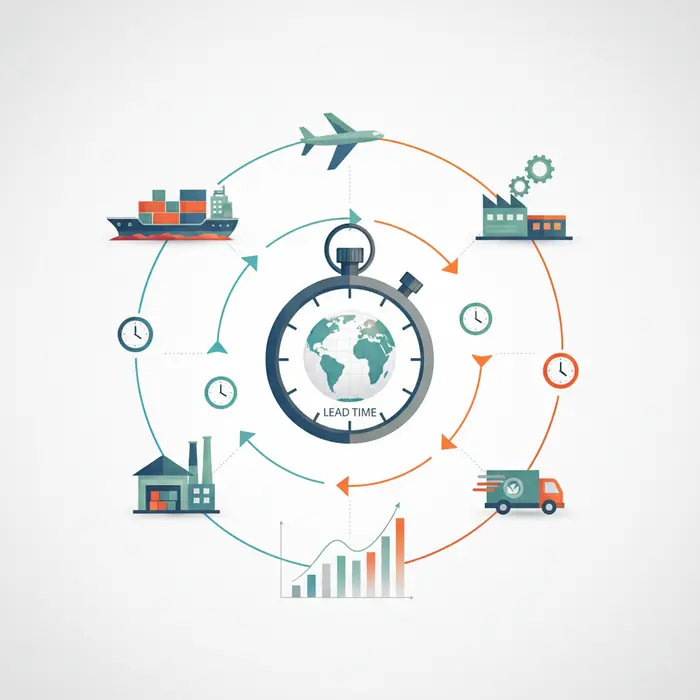
1. Key Components of International Shipping Lead Times
International shipping lead times are far more extensive and complex than domestic ones, involving multiple handoffs and potential delays. Understanding each component is crucial for accurate forecasting and planning. These key components typically include:
- Order Processing Time: The duration from when a purchase order is placed until the supplier confirms it and begins preparing for production. This can vary based on supplier efficiency and communication protocols.
- Production/Manufacturing Time: The actual time it takes for the supplier to produce the goods. Factors like order size, production capacity, raw material availability, and supplier efficiency (e.g., Vietnam supplier delivery schedules) significantly influence this stage.
- Transit Time (First Mile, Main Leg, Last Mile):
- First Mile: The time to move goods from the factory to the origin port/airport.
- Main Leg: The longest segment, involving sea or air freight from the origin country to the destination country. This is heavily impacted by the mode of transport, route, and potential delays like port congestion or weather.
- Last Mile: The time from the destination port/airport to the final warehouse or distribution center.
- Customs Clearance Time: The period required for goods to pass through customs in both the origin and destination countries. This can be unpredictable due to varying regulations, documentation accuracy, and inspection requirements.
- Quality Control and Inspection: Time allocated for pre-shipment inspections or quality checks, which can be performed at various stages.
- Warehousing/Handling Time: The time for goods to be received, unloaded, checked, and stored at the destination warehouse before being available for distribution.
Each of these stages presents opportunities for delays, making robust management essential.
2. Calculating Total Lead Time for Global Imports/Exports
Calculating the total lead time for global imports and exports involves summing up all the individual components mentioned above. While the formula seems straightforward, the challenge lies in obtaining accurate estimates for each stage, especially when dealing with variables inherent in international logistics. The basic calculation is:
Total Lead Time = Order Processing Time + Production Time + Transit Time (First Mile + Main Leg + Last Mile) + Customs Clearance Time + Quality Control Time + Warehousing Time.
However, several factors can influence these calculations:
- Incoterms: The chosen Incoterms (e.g., EXW, FOB, CIF, DDP) dictate at which point responsibility and costs transfer from seller to buyer, directly impacting which segments of transit and customs fall under the buyer’s lead time calculation.
- Mode of Transport: Air freight is significantly faster than sea freight but comes at a higher cost. The choice heavily influences transit time.
- Geopolitical Factors: Trade disputes, political instability, or new regulations can introduce unforeseen delays.
- Supplier Reliability: A reliable supplier with transparent Vietnam supplier delivery schedules can provide more accurate production timelines, thereby aiding in reducing import export lead time by improving predictability.
- Seasonality and Peak Seasons: Ports and shipping lanes can experience congestion during peak seasons (e.g., holidays, pre-sales events), extending transit and customs clearance times.
To achieve accurate calculations, businesses must maintain strong relationships with their suppliers, freight forwarders, and customs brokers, continuously monitoring and adjusting estimates based on real-time data.
3. The Financial and Operational Impact of Lead Time Mismanagement
Mismanaging lead times in a global supply chain can have a devastating ripple effect across a business’s financial health and operational efficiency. The most immediate financial impacts include:
- Increased Inventory Costs: To mitigate the risk of stockouts due to unpredictable lead times, businesses often hold higher levels of safety stock. This ties up working capital, incurs warehousing costs, insurance, and the risk of obsolescence.
- Lost Sales and Customer Dissatisfaction: Extended or unpredictable lead times can lead to stockouts, resulting in missed sales opportunities, backorders, and a damaged reputation. In today’s fast-paced market, customers expect timely delivery, and failures can drive them to competitors.
- Expedited Shipping Costs: When lead times are unexpectedly long, companies often resort to more expensive air freight or express shipping to meet deadlines, significantly eroding profit margins.
- Production Interruptions: For manufacturing businesses, delayed raw material or component deliveries can halt production lines, leading to idle labor, machinery, and missed production targets.
Operationally, poor lead time management hinders effective B2B logistics lead time optimization, demand forecasting, and production planning. It creates a reactive environment where managers are constantly firefighting rather than strategically planning. This leads to inefficient resource allocation, increased administrative overhead in tracking delayed shipments, and a general loss of control over the supply chain. Ultimately, mastering Global Supply Chain Lead Time Management is not just about avoiding problems; it’s about building a resilient, cost-effective, and responsive supply chain that fuels sustained business growth and competitive advantage in the global marketplace.
Common Challenges in International Lead Time Management
Managing international lead times is a critical aspect of Global Supply Chain Lead Time Management, especially for businesses sourcing from dynamic regions like Vietnam. The complexities involved extend far beyond simple transit times, encompassing a myriad of unpredictable factors that can significantly impact delivery schedules, increase costs, and strain supplier relationships. Understanding these common hurdles – from regulatory mazes to geopolitical shifts and specific supplier reliability issues – is essential for businesses aiming for B2B logistics lead time optimization and to maintain competitive advantage in global trade.
1. Navigating Customs Delays and Regulatory Hurdles
One of the most persistent challenges in international shipping lead times is the unpredictable nature of customs procedures and regulatory compliance. Each country possesses its own unique set of import and export regulations, tariffs, and documentation requirements. Errors in paperwork, incomplete declarations, or non-compliance with product standards can lead to goods being held indefinitely at ports, accruing demurrage and detention charges. Furthermore, increased scrutiny by customs authorities, often due to security concerns or trade disputes, can result in lengthy inspection processes, further delaying international shipping lead times.
For goods originating from Vietnam, businesses frequently encounter specific challenges related to local customs processes, varying interpretations of trade agreements, and sometimes, slower administrative processing times compared to more automated systems elsewhere. Port congestion, particularly at major Vietnamese hubs like Ho Chi Minh City (Cat Lai) and Hai Phong, can also exacerbate delays, extending the time vessels spend waiting to dock and unload. Proactive engagement with customs brokers who have deep local expertise in both origin (Vietnam) and destination countries is crucial. Keeping abreast of changes in international trade regulations and ensuring meticulous documentation are key strategies for reducing import export lead time and avoiding costly customs-related setbacks.
2. Mitigating Risks from Geopolitical Factors and Natural Disasters
The global supply chain is increasingly vulnerable to disruptions stemming from geopolitical tensions and natural disasters, both of which have a profound impact on international lead times. Trade wars, sanctions, political instability in key shipping lanes, and even localized conflicts can lead to sudden changes in shipping routes, increased freight costs due to risk premiums, or outright bans on certain goods or origins. These factors create an environment of uncertainty, making it difficult to forecast and manage delivery schedules effectively for international shipping lead times.
Vietnam, situated in Southeast Asia, is particularly susceptible to natural disasters such as typhoons, floods, and earthquakes. These events can devastate infrastructure, including roads, ports, and factories, leading to significant production halts and logistical bottlenecks. For instance, a major typhoon hitting the Vietnamese coast can cripple port operations for days or weeks, creating ripple effects across the entire supply chain. Developing robust contingency plans, diversifying sourcing locations (if feasible), and maintaining strong communication channels with suppliers and logistics partners are vital for mitigating these risks and ensuring business continuity even when faced with unforeseen external shocks. Understanding the potential for such events and building resilience into contracts and operational plans is a cornerstone of effective Global Supply Chain Lead Time Management.
3. Addressing Vietnam Supplier Delivery Schedules and Reliability Issues
Beyond external factors, the reliability of Vietnam supplier delivery schedules can present its own set of challenges, directly impacting overall trade terms and a buyer’s ability to meet market demands. Common issues include unexpected production delays, inconsistent quality control leading to rework or rejections, and capacity constraints during peak seasons. While many Vietnamese suppliers are highly professional and reliable, variations exist, and cultural differences in communication or problem-solving can sometimes complicate matters.
Factors contributing to these internal supplier issues can range from raw material shortages, labor disputes, or machinery breakdowns to overbooked production lines. Poor communication regarding production status or unforeseen delays can catch buyers off guard, making it difficult to adjust downstream planning. To address these concerns, buyers need to invest in thorough supplier vetting processes, including factory audits and performance track record analysis. Establishing clear Service Level Agreements (SLAs) with penalties for non-compliance, implementing strong quality assurance protocols at various stages of production, and fostering transparent, long-term relationships can significantly improve Vietnam supplier delivery schedules. Regular performance reviews and proactive collaboration can help identify potential bottlenecks early, ensuring that B2B logistics lead time optimization efforts are not undermined by issues at the source.
Successfully navigating these complex challenges requires a multi-faceted approach, combining meticulous planning, robust risk management strategies, and strong partnerships throughout the supply chain. By proactively addressing customs hurdles, preparing for geopolitical and natural disruptions, and fostering reliable supplier relationships, businesses can significantly improve their international shipping lead times and enhance overall supply chain resilience when sourcing from Vietnam.
Strategies for Reducing Import Export Lead Time
In today’s interconnected global economy, efficient Global Supply Chain Lead Time Management is paramount for business success. Long lead times in import and export operations can lead to missed market opportunities, increased carrying costs, and customer dissatisfaction. Practical approaches to shorten lead times involve process optimization, leveraging technology, and fostering strong supplier relations to enhance efficiency and maintain a competitive edge. This section delves into actionable strategies designed to help businesses, particularly those dealing with Vietnam supplier delivery schedules and complex international logistics, significantly reducing import export lead time.

1. Streamlining Documentation and Communication Processes
One of the most significant bottlenecks in international shipping lead times often stems from inefficient documentation and communication. Manual processes, paper-based forms, and fragmented communication channels can lead to errors, delays, and re-work. To combat this, businesses should prioritize the digitalization and standardization of all necessary import and export documents, including invoices, packing lists, customs declarations, and certificates of origin. Implementing Electronic Data Interchange (EDI) systems or integrating with customs brokerage software can significantly accelerate document processing and submission. Furthermore, establishing clear, centralized communication protocols with all supply chain partners—suppliers, freight forwarders, customs brokers, and carriers—is crucial. This involves utilizing shared digital platforms or project management tools that provide real-time updates and facilitate instant messaging, reducing reliance on slow email chains. By fostering transparency and ensuring all parties operate from the same information base, companies can drastically cut down on administrative delays, directly impacting reducing import export lead time and improving overall supply chain agility.
2. Leveraging Technology for Visibility and Predictive Analytics
The digital revolution offers powerful tools for optimizing B2B logistics lead time optimization. Leveraging technology provides unprecedented visibility into the entire supply chain, allowing businesses to track shipments in real-time, anticipate potential delays, and react proactively. Implementing robust Enterprise Resource Planning (ERP) systems integrated with supply chain management (SCM) modules can offer a holistic view of inventory, orders, and shipments. Advanced technologies such as IoT (Internet of Things) sensors on cargo can provide real-time location and condition monitoring, while Artificial Intelligence (AI) and Machine Learning (ML) can analyze vast datasets to offer predictive analytics. These tools can forecast demand more accurately, identify patterns in transit delays, and even suggest alternative routes or modes of transport to circumvent anticipated disruptions. For instance, predictive analytics can help companies proactively address potential issues with Vietnam supplier delivery schedules before they become critical, allowing for strategic adjustments. Embracing such technological solutions transforms reactive problem-solving into proactive risk management, significantly shortening the overall lead time and enhancing operational efficiency.
3. Optimizing Inventory Management to Buffer Against Delays
While the goal is to reduce lead times, unpredictable global events or unforeseen disruptions can still occur. Therefore, optimizing inventory management strategies becomes a critical buffer against potential delays, especially for businesses managing Global Supply Chain Lead Time Management. Rather than strictly adhering to a Just-In-Time (JIT) model, which can be vulnerable to disruptions, a more balanced approach incorporating strategic safety stock levels can be beneficial. This involves conducting thorough risk assessments to identify critical components or products prone to lead time volatility and maintaining a calculated buffer stock for these items. Additionally, exploring options like vendor-managed inventory (VMI) or consolidating orders with key suppliers can streamline processes and improve forecasting accuracy, mitigating the need for excessive safety stock. Diversifying sourcing strategies, such as engaging multiple suppliers for critical components, also reduces reliance on a single point of failure. By intelligently managing inventory and building resilience into the supply chain, companies can maintain consistent product availability and minimize the impact of extended international shipping lead times on their operations and customers. This approach ensures business continuity even when facing unexpected challenges, proving vital for long-term sustainability.
B2B Logistics Lead Time Optimization Techniques
In the dynamic landscape of global commerce, efficient B2B logistics is not merely about moving goods from point A to point B; it’s about doing so with speed, precision, and cost-effectiveness. A critical differentiator for businesses today is their ability to manage and reduce lead times, directly impacting customer satisfaction, inventory costs, and overall operational agility. This deep dive explores specific logistics strategies, including strategic freight selection, efficient warehousing, and advanced transportation management, designed to optimize B2B operations and enhance Global Supply Chain Lead Time Management. By systematically addressing bottlenecks and leveraging best practices, companies can significantly improve their delivery schedules, especially when dealing with complex international shipping lead times and diverse supplier networks like those for Vietnam supplier delivery schedules.
1. Strategic Selection of Freight Forwarders and Shipping Routes
The choice of freight forwarder and shipping route fundamentally dictates international shipping lead times. A strategic approach goes beyond simply comparing costs; it involves evaluating forwarders based on their reliability, network reach, customs clearance expertise, and technology infrastructure. For instance, a forwarder with established relationships and real-time tracking capabilities can provide invaluable visibility and proactive problem-solving, crucial for reducing import export lead time. Businesses must carefully assess the trade-offs between different modes of transport (air, sea, rail, road) and direct versus consolidated routes. While air freight offers speed, sea freight provides cost efficiency for bulk shipments. Route optimization also involves considering geopolitical factors, port congestion, and seasonal variations. Partnering with forwarders who demonstrate a strong track record in specific trade lanes, such as those connecting to Southeast Asia, can significantly mitigate risks and ensure more predictable Vietnam supplier delivery schedules. Furthermore, leveraging their expertise in navigating complex customs regulations can prevent costly delays, making them indispensable allies in your B2B logistics lead time optimization efforts. McKinsey & Company highlights the importance of risk management in global supply chains, emphasizing that selecting resilient partners is paramount for consistent lead times.
2. Implementing Cross-Docking and Efficient Warehousing Solutions
Warehousing, often seen as a necessary cost center, can be transformed into a strategic asset for B2B logistics lead time optimization through innovative practices like cross-docking. Cross-docking minimizes the storage period of goods by directly transferring incoming shipments to outbound trucks or distribution points, bypassing traditional long-term storage. This process dramatically reduces handling costs, inventory holding costs, and crucially, shortens the overall lead time from supplier to customer. For businesses with high-volume, fast-moving products, cross-docking is particularly effective. Beyond cross-docking, efficient warehousing solutions involve optimizing facility layouts, implementing advanced warehouse management systems (WMS), and embracing automation (e.g., automated guided vehicles, robotic picking). A well-designed warehouse ensures optimal flow of goods, minimizing travel time for internal operations. Strategic placement of distribution centers closer to key markets or major transport hubs can further shrink last-mile delivery times, making a tangible difference in meeting tight client deadlines and improving overall Global Supply Chain Lead Time Management.
3. Collaborative Logistics: Partnering for Enhanced Efficiency
In an increasingly interconnected supply chain, collaboration is no longer optional but a strategic imperative for lead time reduction. Collaborative logistics involves multiple parties—suppliers, manufacturers, distributors, and even competitors—sharing resources, information, and risks to achieve mutual benefits. Examples include co-loading shipments with other companies to maximize vehicle utilization and reduce transport costs, or sharing warehouse space in strategic locations. Information sharing, facilitated by integrated technology platforms, allows for predictive analytics and proactive decision-making regarding inventory levels, demand fluctuations, and potential disruptions. For instance, a supplier providing early visibility into production schedules can help a buyer optimize their reducing import export lead time planning. Furthermore, engaging in Vendor-Managed Inventory (VMI) programs or Consignment Inventory agreements can shift inventory management responsibilities, streamline replenishment, and significantly reduce stock-outs and associated lead time issues. By fostering strong, trust-based relationships across the supply chain, businesses can create a more resilient, agile, and efficient logistics network, directly impacting Vietnam supplier delivery schedules and enhancing overall B2B operational performance.
Future-Proofing Lead Time Management for 2025 and Beyond
In an increasingly interconnected yet unpredictable global economy, Global Supply Chain Lead Time Management has evolved from a tactical necessity to a strategic imperative. The past few years have underscored the fragility of traditional supply chains, exposing vulnerabilities ranging from geopolitical tensions and natural disasters to unprecedented demand fluctuations. For businesses aiming to thrive in 2025 and beyond, future-proofing lead time management is not merely about efficiency; it’s about building resilience, leveraging cutting-edge technology, and fostering a culture of continuous improvement to navigate an evolving global landscape.

1. Building Resilient Supply Chains: Diversification and Redundancy
The era of single-source dependency is rapidly drawing to a close. To mitigate risks and ensure stable delivery schedules, companies must strategically diversify their supplier base and introduce redundancy. This involves exploring multiple geographical regions for sourcing, establishing regional distribution hubs, and even investing in localized production capabilities where viable. For instance, while Vietnam supplier delivery schedules have proven reliable for many, smart businesses are also cultivating relationships with manufacturers in other Southeast Asian nations or even near-shoring options to reduce reliance on any single point of origin. Understanding and managing International shipping lead times from diverse ports becomes paramount. Implementing a ‘multi-tier’ visibility approach, extending beyond direct suppliers to their sub-suppliers, provides crucial insights into potential disruptions before they impact final delivery. Building resilience also means rethinking inventory strategies. While lean principles are valuable, strategic safety stock for critical components, especially those with long lead times or high volatility, can act as a crucial buffer against unforeseen events, ensuring business continuity.
2. The Role of AI and Automation in Future Lead Time Management
The future of lead time management is inextricably linked to digital transformation, with Artificial Intelligence (AI) and automation leading the charge. AI-powered predictive analytics can process vast amounts of data – from historical sales and market trends to weather patterns and geopolitical events – to forecast demand with unprecedented accuracy, thereby optimizing inventory levels and production schedules. Machine learning algorithms can identify potential bottlenecks in real-time, suggest alternative routes for B2B logistics lead time optimization, and even predict potential delays based on carrier performance or customs data. Automation, from robotic process automation (RPA) handling routine administrative tasks like order processing and documentation, to automated warehousing systems, significantly accelerates operational speed and reduces human error. This not only streamlines workflows but also provides real-time data visibility, allowing for proactive adjustments rather than reactive responses. As highlighted by McKinsey & Company, automating supply chains delivers speed and agility, enabling organizations to respond swiftly to market changes and maintain competitive lead times.
3. Continuous Monitoring and Performance Metrics for Improvement
Achieving sustained lead time excellence requires an unwavering commitment to continuous monitoring and iterative improvement. Businesses must establish robust performance metrics and leverage technology like IoT sensors and blockchain for end-to-end visibility. Real-time dashboards displaying key performance indicators (KPIs) – such as order-to-delivery cycle time, supplier on-time performance, and freight transit times – are essential. These metrics enable organizations to pinpoint inefficiencies, measure the impact of strategic changes, and hold partners accountable. Feedback loops, where data from delivery performance informs future forecasting and procurement decisions, are critical for adaptive learning. Adopting agile methodologies, familiar in software development, can also be applied to supply chain operations, allowing for rapid experimentation and adaptation. Regularly reviewing and optimizing processes for reducing import export lead time, for example, through improved customs clearance procedures or carrier selection, contributes directly to overall efficiency. This proactive and data-driven approach transforms lead time management from a static process into a dynamic, evolving system, constantly seeking optimal performance.
In conclusion, future-proofing Global Supply Chain Lead Time Management for 2025 and beyond demands a holistic strategy encompassing resilience through diversification, innovation through AI and automation, and disciplined continuous improvement. Companies that embrace these principles will not only survive but thrive in the face of future uncertainties, turning potential disruptions into opportunities for competitive advantage.
Partner with Vietnam’s Leading Suppliers
Looking for reliable suppliers in Vietnam? Contact VietnamSuppliers.com today to connect with verified manufacturers and exporters across all industries.
—————————————
References
– McKinsey & Company: Supply Chain Management Insights: https://www.mckinsey.com/capabilities/operations/our-insights/supply-chain-management
– Trade Facilitation: https://www.wto.org/english/tratop_e/tradfac_e/tradfac_e.htm
– How to Reduce Supply Chain Lead Times: https://www.supplychainbrain.com/articles/36021-how-to-reduce-supply-chain-lead-times
– McKinsey & Company: Global Supply Chain Risk Management: https://www.mckinsey.com/capabilities/operations/our-insights/supply-chain-management/global-supply-chain-risk-management
– Automating the supply chain to deliver speed and agility: https://www.mckinsey.com/capabilities/operations/our-insights/automating-the-supply-chain-to-deliver-speed-and-agility

