What is an Electronic Sea Waybill?
An ELECTRONIC SEA WAYBILL (ESWB) represents a significant evolution in maritime logistics, transforming the traditional paper-based Sea Waybill into a digital format. At its core, the Sea Waybill is a non-negotiable transport document that serves as proof of a contract of carriage and receipt of goods by the carrier. Unlike a Bill of Lading, which can be traded, a Sea Waybill is simpler, designed for direct shipments where the consignee is known and trusted by the shipper. The electronic version amplifies this inherent simplicity and efficiency, leveraging digital technologies to streamline processes, enhance security, and significantly accelerate global trade. Its primary purpose is to facilitate faster cargo release and provide real-time visibility, reducing the administrative burden and delays associated with physical documentation.
1. Defining the Sea Waybill concept in logistics
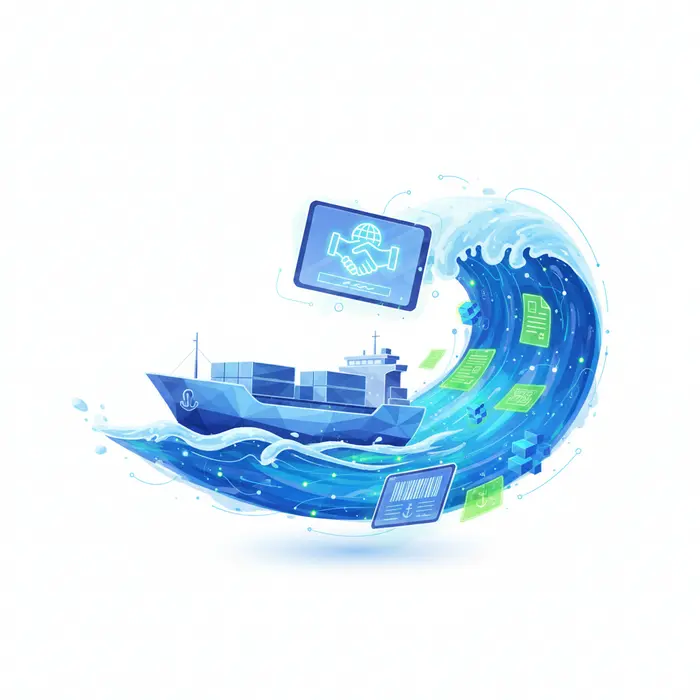
The concept of a Sea Waybill is fundamental to understanding its electronic counterpart. A Sea Waybill, often called a “straight Bill of Lading,” is a carrier-issued document acknowledging receipt of goods for shipment and detailing the terms of carriage. Crucially, it is a non-negotiable document, meaning it is not a document of title and cannot be endorsed or traded to a third party to claim the goods. Instead, cargo release is simply granted to the named consignee upon their identification, without needing to present an original document. This characteristic is particularly advantageous in scenarios involving trusted trading partners, inter-company shipments, or when goods require quick release at the destination port. The key distinction in the Sea Waybill vs Bill of Lading debate lies in this negotiability: while a Bill of Lading acts as a transferable title to the goods, a Sea Waybill functions primarily as a receipt and a contract of carriage. This inherent simplicity makes it ideal for digitalization, speeding up the entire logistics chain. The Sea Waybill definition underscores its role in facilitating direct, trust-based transactions.
2. Key features of its electronic form and digital advantages
The transition from a paper document to an ELECTRONIC SEA WAYBILL unlocks a multitude of digital advantages, fundamentally reshaping the Sea Waybill procedure. Key features include instant transmission, enhanced security through encryption and potential blockchain integration, and real-time data access for all authorized parties. This digital format eliminates logistical challenges of courier services for physical documents, which often cause delays, risk of loss, or fraudulent alterations.
The Electronic Sea Waybill benefits are profound. It dramatically accelerates the documentation process; digital transmission means the document arrives at the destination virtually instantaneously, long before the vessel docks, enabling quicker customs clearance and cargo release. It also significantly improves data accuracy, reducing manual errors as information integrates directly into ERP systems. Enhanced security features, like audit trails and immutable records, deter fraud and provide greater transparency. Digital tracking contributes to better inventory management. Environmentally, reducing paper consumption and courier emissions aligns with sustainability goals. These combined features underscore its pivotal role in fostering a more agile, secure, and eco-friendly global trade environment.
3. Legal standing and implications for cargo release
A crucial aspect of the ELECTRONIC SEA WAYBILL is its legal standing. For an ESWB to be effective, it must be legally recognized as equivalent to its paper counterpart. Many jurisdictions and international conventions, such as the UNCITRAL Model Law on Electronic Transferable Records (MLETR), provide frameworks for the legal recognition of electronic transport documents. This legal foundation ensures an ESWB holds the same evidentiary value and contractual force as a traditional Sea Waybill.
The implications for cargo release are particularly significant. With a paper Sea Waybill, the named consignee identifies themselves at the destination. The ESWB maintains this simplicity but digitizes the verification process. Upon vessel arrival, the carrier can digitally verify the consignee’s identity and grant cargo release without requiring any physical document surrender. This swift process minimizes demurrage and detention charges, common pain points in international shipping. The digital system provides an unambiguous record of the consignee, contract of carriage, and cargo details, ensuring secure and efficient release. This seamless Sea Waybill procedure, backed by robust legal frameworks and digital verification protocols, facilitates uninterrupted trade flows, directly contributing to faster supply chains and reduced operational costs for all parties. The adoption of ESWBs represents a forward-thinking step towards a fully digitalized and interconnected global logistics network, reflecting modern demands for speed, transparency, and reliability.
Electronic Sea Waybill vs. Bill of Lading: A Key Comparison
In the complex world of international shipping, the proper documentation is paramount. Two primary documents—the Bill of Lading (BoL) and the Sea Waybill—stand out, each serving distinct purposes with unique implications for shippers, carriers, and consignees. The advent of digital solutions, particularly the Electronic Sea Waybill, has further streamlined processes, but the fundamental differences between these two vital shipping documents remain.
1. Core differences: negotiability and title to goods
At the heart of the distinction between a Bill of Lading and a Sea Waybill lies the concept of "negotiability" and their function as a "document of title." The Bill of Lading is a multipurpose document that serves three critical functions: it is a contract of carriage between the shipper and the carrier, a receipt for the goods issued by the carrier, and most importantly, a document of title to the goods. As a document of title, the original Bill of Lading must be presented to the carrier at the destination to claim the cargo. This feature makes it negotiable, meaning ownership of the goods can be transferred by endorsing and physically handing over the original document, even while the goods are still in transit.
Conversely, a Sea Waybill (SWB) is also a contract of carriage and a receipt for the goods, but it is not a document of title and is not negotiable. This means that ownership of the goods cannot be transferred merely by endorsing or transferring the waybill. Under a Sea Waybill, the goods are released directly to the named consignee upon arrival at the destination, provided their identity can be verified by the carrier. There is no requirement for the physical presentation of an original document for cargo release. The development of the Electronic Sea Waybill further accentuates this difference, offering a fully digital, paperless process where instructions and confirmations replace physical documents.
2. When to choose a Sea Waybill over a Bill of Lading
The choice between a Bill of Lading and a Sea Waybill largely depends on the specific trade relationship, the need for flexibility, and the involvement of trade finance. A Sea Waybill is typically preferred in scenarios where there is a high degree of trust between the shipper and the consignee, such as shipments between parent and subsidiary companies, long-standing business partners, or for goods that are not intended for resale while in transit. Its key advantages include speed and simplicity. With no need to send original documents, there are no delays due to lost or misplaced paperwork, making it ideal for short-sea shipping routes or when goods have a short shelf life.
The Electronic Sea Waybill amplifies these benefits by eliminating paper entirely, reducing administrative burdens, printing costs, and the risk of fraud associated with physical documents. For instance, in fast-paced logistics, an Electronic Sea Waybill can shave days off transit times by facilitating instant release upon arrival. However, a Bill of Lading remains indispensable when the goods are to be sold during transit, when the shipper requires security of payment (e.g., through a Letter of Credit), or when there is any uncertainty about the consignee’s ability or willingness to pay, as it provides the shipper with control over the cargo until payment or other conditions are met.
3. Implications for trade finance, ownership, and disputes
The functional differences between these documents have significant ramifications across trade finance, ownership transfer, and dispute resolution. In trade finance, particularly with Letters of Credit (LCs), the Bill of Lading is the cornerstone. Banks require the presentation of original Bills of Lading as a condition for payment because they represent the goods and provide the bank with a security interest in the cargo. A Sea Waybill, lacking the document of title characteristic, is generally not acceptable for traditional LC transactions, although some innovative digital trade finance solutions are emerging to accommodate electronic documents.
Regarding ownership, a Bill of Lading clearly vests ownership in the lawful holder of the document, making it a critical tool for collateral and resale. Disputes over ownership are often resolved by establishing who holds the original BoL. A Sea Waybill, while providing a clear record of the contract, does not offer the same level of control over ownership transfer. Goods are simply delivered to the named consignee, which, in cases of dispute, can complicate matters if the consignee’s entitlement is challenged. The simplicity of an Electronic Sea Waybill streamlines operations but also means foregoing the protective mechanism of requiring physical document presentation for cargo release. Therefore, while Sea Waybills offer efficiency and speed, particularly in their electronic form, Bills of Lading continue to provide essential security and control for complex international trade transactions where financial risk and ownership transfer are paramount considerations.
The Benefits of Using an Electronic Sea Waybill
In the complex landscape of international trade, efficient documentation is paramount. The traditional Bill of Lading, while crucial, often presents logistical hurdles due to its negotiability and requirement for physical presentation. Enter the ELECTRONIC SEA WAYBILL – a modern, digital alternative that offers substantial improvements in managing maritime shipments. Unlike a Bill of Lading, which serves as a title to goods, a Sea Waybill is a non-negotiable receipt for goods and a contract of carriage. It simplifies the process by confirming receipt of cargo and instructing the carrier to release goods to a named consignee upon arrival, without the need for the physical document to be presented at the destination. An **Electronic Sea Waybill** digitizes this process, eliminating paper and manual handling, thereby transforming how international trade operates. This shift brings forth a myriad of benefits for all stakeholders: shippers, consignees, and carriers alike.
Streamlined operations and faster release of goods
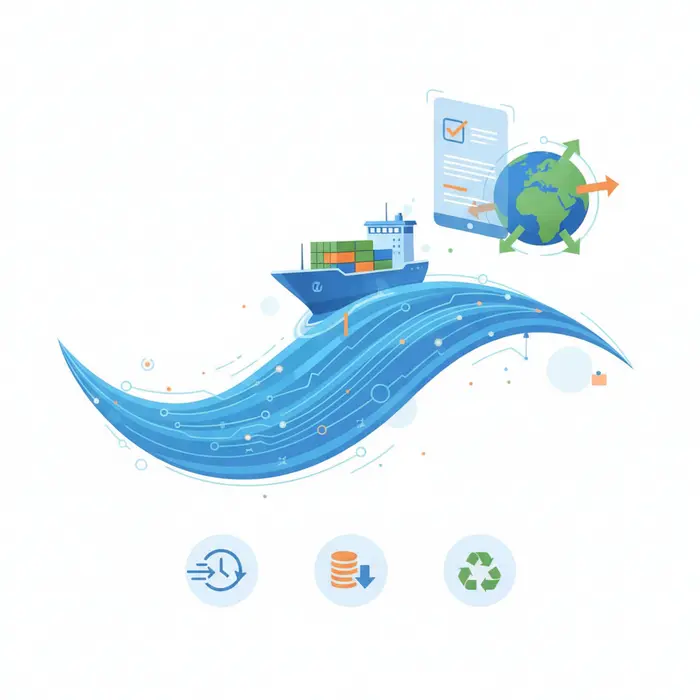
The most immediate advantage of an Electronic Sea Waybill is its capacity to drastically streamline logistics operations. By removing the need for physical documents to be couriered globally, delays associated with paper-based processes are virtually eliminated. This is a critical distinction in the simplification of international maritime traffic. Shippers can transmit the electronic waybill to consignees instantly, enabling the consignee to initiate customs clearance and cargo release procedures well in advance of the vessel’s arrival. This proactive approach ensures goods are released much faster, reducing demurrage and detention charges. For carriers, the digital format reduces the administrative burden of handling, tracking, and archiving physical documents. The simplified **Sea Waybill procedure** ensures that goods are delivered directly to the named consignee, avoiding complex endorsement chains often required with traditional Bills of Lading, thereby enhancing overall supply chain velocity and predictability.
Cost savings and reduced administrative burden
Adopting an Electronic Sea Waybill significantly translates into tangible cost reductions across the supply chain. Shippers and consignees save substantially on courier fees for sending physical documents, which can accumulate rapidly, especially for frequent international shipments. Furthermore, the risk and cost associated with lost or stolen paper documents, including the potential for complex indemnity requirements, are mitigated entirely. From an administrative perspective, the digital format reduces the need for manual data entry, printing, scanning, and physical archiving. This not only saves on office supplies but also frees up staff time, allowing them to focus on more value-added activities. The improved data accuracy inherent in digital systems minimizes errors, which can be costly to rectify, leading to fewer disputes and smoother transactions. Faster cargo release also means quicker inventory turnover and improved cash flow for businesses.
Enhanced security, data accuracy, and environmental impact
Security is a paramount concern in international trade, and the Electronic Sea Waybill offers considerable enhancements over its paper counterpart. Digital documents are less susceptible to fraud, tampering, or loss. Robust electronic systems often incorporate advanced encryption and secure digital platforms, providing a verifiable audit trail for every transaction. This level of transparency and immutability significantly boosts confidence among all parties involved. Moreover, the digital creation and transmission of data inherently improve accuracy. Eliminating manual transcription reduces human error, ensuring that the details of the shipment, consignee, and terms of carriage are consistent and correct across all platforms. Beyond operational and security benefits, the Electronic Sea Waybill aligns with global sustainability efforts. By enabling paperless transactions, it drastically reduces the consumption of paper, ink, and the carbon footprint associated with document transportation. This commitment to environmental responsibility positions businesses using **Electronic Sea Waybill benefits** as forward-thinking and sustainable operators in the global marketplace.
How the Electronic Sea Waybill Procedure Works
In the rapidly evolving landscape of international trade, the transition from traditional paper-based documentation to digital solutions is revolutionizing logistics. Among these innovations, the Electronic Sea Waybill stands out as a crucial instrument for enhancing efficiency, security, and speed in maritime cargo transportation. Unlike a traditional negotiable Bill of Lading, a Sea Waybill definition clarifies it as a non-negotiable document of title, primarily functioning as a receipt for goods and a contract of carriage. The “Electronic Sea Waybill” takes this concept into the digital realm, offering a streamlined “Sea Waybill procedure” that benefits all parties involved.
1. Issuance and digital transmission process flow
The journey of an Electronic Sea Waybill begins with its issuance. Once a shipper books cargo space with a carrier, and the goods are tendered for shipment, the carrier or their agent generates the Electronic Sea Waybill. This document contains vital information such as the shipper’s and consignee’s details, cargo description, vessel name, port of loading, and port of discharge. Instead of printing multiple copies, this digital document is created within a secure, often blockchain-enabled or platform-based, electronic system. This secure environment ensures the integrity and authenticity of the document.
Upon generation, the Electronic Sea Waybill is digitally transmitted. The carrier typically shares secure access to this document with the shipper, who can then review and confirm its accuracy. Following confirmation, the carrier securely transmits the document to the designated consignee, often via email notification with a secure link, or directly through an integrated platform. This digital transmission eradicates the risks associated with lost or delayed paper documents, a common pitfall when comparing “Sea Waybill vs Bill of Lading” in terms of physical handling. The instantaneous nature of digital transfer significantly contributes to the overall “Electronic Sea Waybill benefits,” accelerating the flow of information and goods.
2. Roles of parties: shipper, carrier, and consignee
Understanding the distinct roles of the primary parties is fundamental to appreciating the seamless operation of the Electronic Sea Waybill procedure.
- Shipper: The exporter or sender of the goods. Their role involves providing accurate and complete cargo information to the carrier. They instruct the carrier to issue an Electronic Sea Waybill and designate the correct consignee. By opting for an Electronic Sea Waybill, the shipper explicitly agrees to its non-negotiable terms, understanding that the cargo will be released directly to the named consignee without the need for an original document.
- Carrier: The shipping line or freight forwarder responsible for transporting the goods. The carrier issues the Electronic Sea Waybill, acts as the custodian of the cargo, and executes its transportation from the port of loading to the port of discharge. Crucially, the carrier is responsible for ensuring the secure digital transmission of the document to the consignee and for releasing the cargo solely to the party named on the waybill.
- Consignee: The importer or receiver of the goods at the destination. The consignee’s role is simplified with an Electronic Sea Waybill. They receive digital notification of the document and can track the shipment’s progress. Upon the cargo’s arrival, they simply need to present proof of identity to the carrier to claim the goods, eliminating the need to wait for physical documents to arrive, which dramatically speeds up cargo release.
3. Customs clearance, cargo release, and proof of delivery
The latter stages of the shipping process, including customs clearance and cargo release, are significantly optimized by the use of an Electronic Sea Waybill. Digital documentation facilitates faster customs processing as relevant information can be transmitted electronically to customs authorities even before the vessel arrives. This proactive approach helps reduce potential delays at the port of entry.
One of the most profound “Electronic Sea Waybill benefits” is the expedited cargo release. Since the Electronic Sea Waybill is non-negotiable and the cargo is consigned directly to a named party, there’s no requirement for the physical surrender of an original document at the destination port. Once the vessel arrives and customs formalities are completed, the carrier releases the goods to the consignee upon verification of their identity. This direct release mechanism prevents demurrage charges and storage costs that often arise from delays in receiving original paper documents.
Finally, proof of delivery in an electronic system is also streamlined. Digital platforms provide clear audit trails, showing when the cargo was released and to whom. This enhances transparency and accountability, offering a robust digital record that serves as conclusive proof of delivery, further solidifying the efficiency and security of the entire Electronic Sea Waybill procedure from start to finish. The continuous digital trail provides an undeniable advantage over traditional methods, ensuring smooth operations.
Future Outlook and Adoption in 2025
As global trade continues its rapid evolution, the drive for enhanced efficiency, transparency, and sustainability has positioned the ELECTRONIC SEA WAYBILL as a cornerstone of future logistics operations. Moving beyond traditional paper-based systems, 2025 is poised to be a pivotal year for the widespread adoption of digital documentation in maritime shipping. This shift not only streamlines administrative processes but fundamentally redefines the speed and reliability of supply chains, offering distinct advantages when considering the nuances of a Sea Waybill vs Bill of Lading. Understanding the core Sea Waybill definition—a non-negotiable document of title—is crucial to appreciating how its electronic counterpart addresses long-standing challenges in international trade.
1. Industry adoption rates and digital transformation drivers
The acceleration of digital transformation across industries has significantly boosted the appetite for electronic documentation in shipping. In 2025, we are witnessing a substantial uptick in the adoption rates of the ELECTRONIC SEA WAYBILL, driven by an overarching desire for greater operational efficiency and cost savings. Key drivers include the imperative for real-time data access, reduced administrative overheads, and the significant environmental Electronic Sea Waybill benefits derived from paperless transactions. Leading shipping lines, freight forwarders, and multinational corporations are increasingly integrating electronic waybills into their standard operating procedures, recognizing their potential to expedite cargo release, minimize delays, and enhance the overall predictability of their supply chains. The momentum has been further amplified by collaborative initiatives among industry stakeholders to build interoperable platforms and secure digital environments, paving the way for a more connected and resilient global trade ecosystem. This shift is not merely about digitizing existing processes but about leveraging technology to fundamentally re-engineer how goods move across oceans.
2. Addressing challenges: standardization and legal frameworks
Despite the undeniable advantages, the path to universal ELECTRONIC SEA WAYBILL adoption is not without its hurdles. A primary challenge lies in establishing globally accepted standards for data exchange and interoperability between the myriad of platforms and systems used by different players in the supply chain. Efforts by organizations like the Digital Container Shipping Association (DCSA) are critical in developing these universal standards for electronic documentation, including sea waybills, to ensure seamless communication and data integrity across various digital ecosystems. Furthermore, the legal recognition of electronic documents across diverse international jurisdictions remains a complex area. While many countries have adopted domestic legislation to facilitate electronic trade, a harmonized international legal framework is essential to provide certainty and enforceability for all parties involved. Addressing these legal complexities and fostering a common understanding of the Sea Waybill procedure in a digital context is crucial. Cybersecurity concerns also loom large, necessitating robust security protocols and trusted digital platforms to protect sensitive trade data from unauthorized access or manipulation, thereby building confidence in the electronic ecosystem.
3. Impact on global supply chain efficiency and innovation
The widespread adoption of the ELECTRONIC SEA WAYBILL promises a transformative impact on global supply chain efficiency and innovation. By eliminating the physical exchange of paper documents, electronic waybills drastically cut down on processing times, leading to faster customs clearance and quicker cargo release. This reduction in delays translates directly into lower demurrage and detention costs, providing substantial savings for shippers and consignees. Enhanced visibility and real-time tracking capabilities become standard, allowing businesses to monitor shipments with unprecedented precision and respond proactively to potential disruptions. Moreover, the digital nature of the sea waybill opens avenues for integrating with other cutting-edge technologies, such as blockchain for secure payment processing and trade finance, and Internet of Things (IoT) devices for continuous cargo monitoring. This synergy fosters an environment ripe for innovation, enabling the development of smarter, more agile supply chain models. From an environmental perspective, the move to paperless trade aligns with global sustainability goals, reducing waste and the carbon footprint associated with document handling and transportation. In essence, the ELECTRONIC SEA WAYBILL is not just a digital document; it is a catalyst for a more efficient, transparent, and resilient future for global trade.
Partner with Vietnam’s Leading Suppliers
Looking for reliable suppliers in Vietnam? Contact VietnamSuppliers.com today to connect with verified manufacturers and exporters across all industries.
—————————————
References
– The Sea Waybill – Gard: https://www.gard.no/web/updates/content/29718449/the-sea-waybill
– The Sea Waybill – a solution for speed and efficiency: https://www.gard.no/web/updates/content/29845348/the-sea-waybill-a-solution-for-speed-and-efficiency
– simplification of international maritime traffic: https://www.imo.org/en/OurWork/Facilitation/Pages/Simplificationofinternationalmaritimetraffic.aspx
– BIMCO – Electronic Bills of Lading: https://www.bimco.org/contracts-and-clauses/bimco-clauses/electronic-bills-of-lading
– DCSA Electronic Bill of Lading: https://www.dcsa.org/our-work/electronic-bill-of-lading/