
Navigating Global Automotive Trade in 2025
The global automotive industry stands at a pivotal juncture in 2025, characterized by unprecedented dynamism and complexity. From technological breakthroughs to shifting geopolitical alliances and evolving consumer preferences, the landscape for global automotive trade trends is undergoing a profound transformation. This introductory overview aims to set the stage for understanding the current environment and future projections, highlighting the critical factors influencing the import and export of vehicles, components, and related services worldwide. As nations strive for economic resilience and strategic advantage, the automotive sector remains a cornerstone of industrial output and international commerce, making its trajectory a crucial indicator of broader economic health.
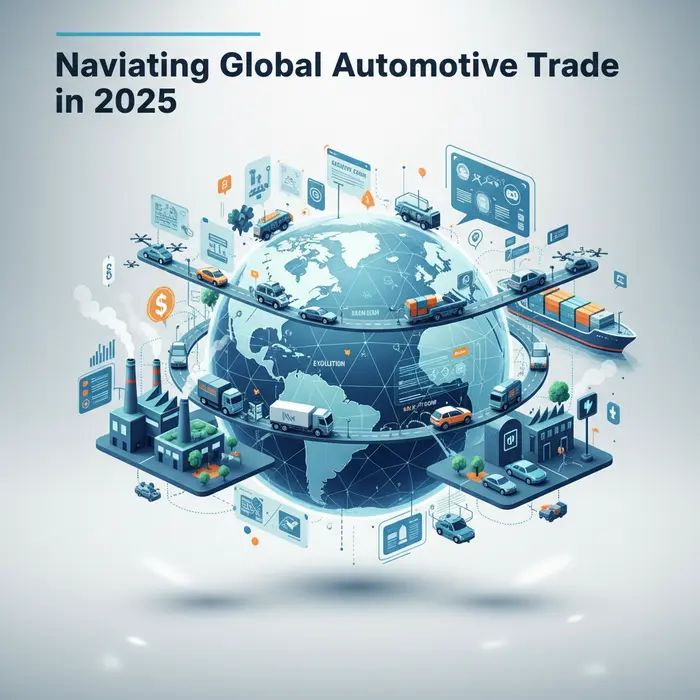
1. Overview of key market forces shaping trade
The forces shaping the global automotive trade trends in 2025 are multifaceted. Economic growth, though uneven across regions, remains a primary driver, particularly in emerging markets where rising disposable incomes fuel demand for new vehicles. This outlook aligns with broader projections for global trade, which anticipate modest rebounds but also acknowledges persistent risks. Simultaneously, a powerful shift towards sustainability is redefining industry standards, with stringent emissions regulations and consumer preference for eco-friendly transportation accelerating the transition to electric vehicles (EVs). This pivot necessitates significant investments in new manufacturing capabilities and supply chains, influencing automotive export market analysis as countries compete to become leaders in green automotive production. Moreover, the integration of advanced digital technologies, from AI in manufacturing to sophisticated in-car connectivity, is creating new value chains and trade opportunities for high-tech components. Regulatory frameworks, including tariffs, free trade agreements, and environmental standards, continue to play a crucial role, either facilitating or hindering the smooth flow of automotive goods across borders. Understanding these intertwined factors is essential for any participant in the international automotive arena.
2. Impact of geopolitical shifts on automotive commerce
Geopolitical shifts are exerting an increasingly significant influence on global automotive trade trends. The rise of protectionist policies, coupled with ongoing trade disputes between major economic powers, has led to greater scrutiny of supply chain dependencies and a drive towards regionalization. Tariffs, quotas, and non-tariff barriers are frequently deployed as tools of economic statecraft, adding layers of complexity and cost to international transactions. This environment has prompted automotive manufacturers to re-evaluate their global manufacturing footprints, seeking to diversify sourcing and build more resilient global automotive supply chain disruptions-resistant networks. For instance, the push for “friend-shoring” or “near-shoring” aims to reduce reliance on potentially unstable regions, impacting established trade routes and fostering new industrial partnerships. Furthermore, political stability or instability in key resource-producing nations directly affects the availability and pricing of critical materials like lithium and rare earth elements, vital for EV battery production, thus creating ripple effects throughout the entire automotive commerce ecosystem. The evolving landscape of international relations demands agility and strategic foresight from all stakeholders.
3. Technological advancements driving new trade avenues
Technological advancements are not merely improving existing products but are fundamentally reshaping the very nature of global automotive trade trends and creating entirely new avenues for commerce. The undeniable momentum behind electric vehicles (EVs) is perhaps the most significant, driving a complete overhaul of manufacturing processes, component sourcing, and international distribution. This shift has created a robust electric vehicle trade outlook, with countries vying for dominance in battery technology, charging infrastructure, and EV production. Beyond electrification, autonomous driving systems, advanced driver-assistance systems (ADAS), and sophisticated in-car infotainment platforms are increasingly becoming points of competitive differentiation. The trade in semiconductors, specialized sensors, and complex software solutions is burgeoning, adding new layers to traditional automotive trade flows. Furthermore, the digitalization of the entire automotive lifecycle, from design and simulation to manufacturing and aftermarket services, fosters cross-border collaboration and the exchange of intellectual property and digital services. Regions like ASEAN, with its growing manufacturing capabilities and market demand, are emerging as significant players, reflected in evolving ASEAN automotive import export data. These technological innovations require continuous adaptation from manufacturers, logistics providers, and policymakers to capitalize on the opportunities and navigate the challenges of this rapidly evolving trade environment.
Shifting Automotive Export Market Dynamics
The global automotive industry is undergoing a profound transformation, with export markets at the forefront of this change. An in-depth automotive export market analysis reveals a complex interplay of established powers, rapidly emerging competitors, and evolving trade patterns. This shift is driven by technological advancements, particularly in electric vehicles, geopolitical realignments, and the persistent challenge of global automotive supply chain disruptions. Understanding these dynamics is crucial for stakeholders navigating the future of global automotive trade trends.
1. Major exporting regions and their strategic shifts
Traditionally, regions like Europe (led by Germany), Japan, and South Korea have dominated automotive exports, renowned for their engineering prowess and brand strength. Germany, for instance, remains a powerhouse, but its strategic focus is increasingly on high-value premium vehicles and a rapid transition towards the electric vehicle trade outlook. Japan, while maintaining strong exports, particularly in hybrid technologies, is also re-evaluating its global manufacturing footprint amidst supply chain vulnerabilities and aiming for greater resilience. South Korea continues its aggressive expansion, leveraging strong EV battery technology and government support to boost exports across various segments. The United States, primarily an importer, has seen selective growth in certain export segments, especially luxury and high-performance vehicles. A significant strategic shift for these regions involves diversifying sourcing and, in some cases, relocating parts of their supply chains closer to key markets or suppliers to mitigate future global automotive supply chain disruptions.
2. Growth trajectories of emerging automotive export markets
The landscape of automotive exports is being dramatically reshaped by emerging markets. China stands out as the most significant new player, having transformed from a net importer to a formidable exporter, especially in the electric vehicle segment. Chinese brands are rapidly expanding into Southeast Asia, Europe, and Latin America, driven by competitive pricing, rapid innovation, and a robust domestic EV ecosystem. Beyond China, the ASEAN region is showing considerable promise. Countries like Thailand and Indonesia are leveraging their established manufacturing bases and growing domestic markets to become regional export hubs. Analysis of ASEAN automotive import export data indicates a concerted effort to attract foreign investment in EV production and battery manufacturing, aiming to capture a larger share of the future electric vehicle trade outlook. Mexico continues its strong performance, benefiting from its proximity to the lucrative US market and established trade agreements, while India is also positioning itself as a cost-effective manufacturing base with growing export ambitions for smaller passenger vehicles and commercial vehicles.
3. Influence of regional trade agreements on export volumes
Regional trade agreements play an indispensable role in shaping global automotive trade trends and export volumes. Agreements such as the European Union’s single market, the US-Mexico-Canada Agreement (USMCA), and the Regional Comprehensive Economic Partnership (RCEP) in Asia create preferential trading blocs that significantly impact where vehicles are manufactured and exported. These agreements often reduce or eliminate tariffs, standardize regulations, and establish rules of origin that encourage regional supply chain integration. For example, USMCA incentivizes North American content, influencing automotive investment decisions within the bloc. Similarly, RCEP, encompassing major Asian economies, facilitates smoother trade flows and promotes regional manufacturing hubs, directly influencing ASEAN automotive import export data and the strategies of global OEMs. Such agreements can mitigate global automotive supply chain disruptions by fostering localized production but can also create trade diversion, impacting non-member countries. The evolving nature of these agreements, particularly their inclusion of provisions for digital trade and environmental standards, further sculpts the future of the electric vehicle trade outlook and the overall automotive export market analysis.
In conclusion, the automotive export market is in a state of dynamic flux. From the strategic recalibrations of traditional giants to the meteoric rise of new entrants and the intricate web of regional trade agreements, every element contributes to a complex, evolving picture. As the industry races towards electrification and autonomous driving, understanding these global automotive trade trends becomes paramount for businesses to adapt and thrive in this competitive environment.
Electric Vehicle Trade: The Future is Electric
The automotive industry is undergoing a monumental shift, propelled by the relentless drive towards electrification. This transformation is not merely changing what vehicles we drive, but fundamentally reshaping global automotive trade trends, creating new opportunities and challenges across continents. The electric vehicle (EV) sector is witnessing an unprecedented boom, with its influence extending beyond finished vehicles to critical components, advanced battery technologies, and the foundational charging infrastructure. This rapid expansion heralds a future where electric vehicles dictate a significant portion of international commerce, demanding a closer look at the rapidly expanding EV market and its multifaceted trade implications.
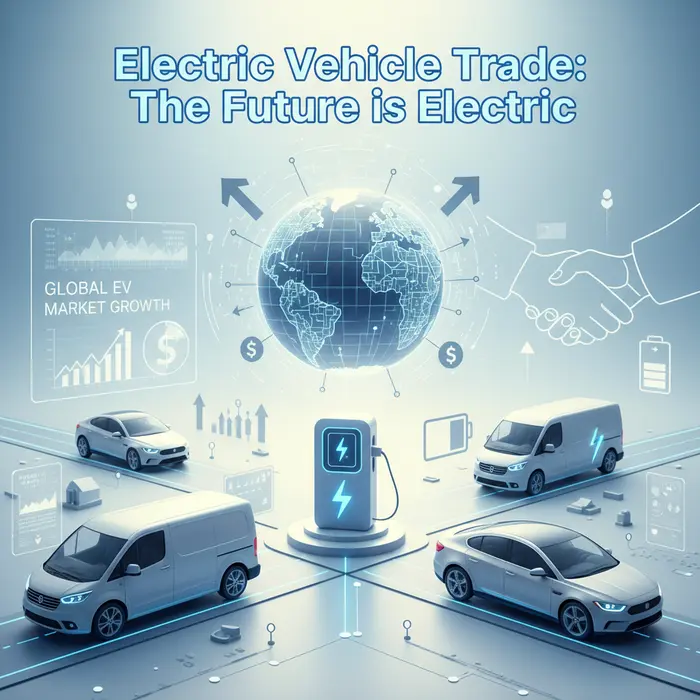
1. Global growth in EV exports and imports
The surge in EV adoption worldwide has directly fueled a dramatic increase in both EV exports and imports. Countries with established automotive manufacturing capabilities, such as China, Germany, and South Korea, are rapidly expanding their automotive export market analysis to capitalize on this demand. China, in particular, has emerged as a powerhouse in EV manufacturing and export, shipping millions of electric vehicles to markets across Europe, Asia, and beyond. This trend is not limited to finished vehicles; the trade in EV components, including electric motors, power electronics, and specialized chassis, is also booming. Developing nations are increasingly participating in this global value chain, either as consumers of imported EVs or as nascent producers looking to establish their footprint. The electric vehicle trade outlook suggests sustained growth, driven by technological advancements, falling battery costs, and evolving consumer preferences. This dynamic environment necessitates continuous monitoring and strategic adjustments for all participants in the global automotive sector.
2. Battery supply chain: Raw materials and component trade
At the heart of the EV revolution lies the battery, a complex assembly whose production hinges on a delicate global supply chain. The trade in raw materials such as lithium, cobalt, nickel, and graphite is experiencing unprecedented demand, leading to significant shifts in global commodity markets. Countries rich in these minerals, predominantly in South America, Africa, and Australia, are becoming pivotal players in the EV ecosystem. However, the processing and refining of these raw materials are often concentrated in specific regions, most notably China, creating potential vulnerabilities and global automotive supply chain disruptions. Beyond raw materials, the trade in battery cells and modules is a critical component of the EV trade. Gigafactories are being established globally to meet the soaring demand, leading to increased cross-border movement of semi-finished battery products. Ensuring a resilient, diversified, and ethical battery supply chain is a top priority for governments and automotive manufacturers alike, as it directly impacts the cost, availability, and environmental footprint of electric vehicles.
3. Policy impacts on EV adoption and cross-border trade
Government policies play a decisive role in shaping the EV landscape and influencing international trade flows. Incentives for EV purchases, such as subsidies, tax breaks, and charging infrastructure development, directly stimulate domestic demand and can impact import volumes. Conversely, protective trade policies, including tariffs or local content requirements, can lead to trade friction and shifts in manufacturing locations. Emission standards and regulatory frameworks, like those in the European Union or California, drive technological innovation and compel automakers to electrify their fleets, thereby increasing the demand for EV-related trade. Regional trade blocs are also significant; for instance, ASEAN automotive import export data shows a growing regional focus on EV manufacturing and distribution, encouraged by harmonized standards and preferential trade agreements. The interplay of these diverse policies creates a complex global trade environment where strategic positioning and diplomatic engagement are crucial for businesses navigating the evolving EV market. As governments continue to prioritize decarbonization, their policies will increasingly steer the future direction and pace of the electric vehicle trade.
In conclusion, the electric vehicle trade is a dynamic and expanding frontier that encompasses far more than just finished cars. From the sourcing of critical raw materials for batteries to the deployment of sophisticated charging networks, every segment is experiencing rapid growth and transformation. Understanding and adapting to these evolving global automotive trade trends will be paramount for businesses and nations aiming to thrive in the electric future.
Resilience in Global Automotive Supply Chains
The global automotive industry, a cornerstone of international trade and manufacturing, has recently faced an unprecedented barrage of disruptions. From the initial shockwaves of the COVID-19 pandemic to ongoing geopolitical tensions and the rapid transition to electric vehicles (EVs), these challenges have profoundly impacted global automotive trade trends, forcing a critical re-evaluation of established supply chain models. The intricate web of suppliers, manufacturers, and distributors, once optimized for efficiency and cost-cutting, has proven vulnerable to external shocks. This section will delve into the nature of these ongoing global automotive supply chain disruptions, their profound impact on trade dynamics, and outline strategic approaches for building more robust and resilient supply networks capable of navigating future uncertainties.
1. Lessons learned from recent supply chain crises
The past few years have served as a stark masterclass in the vulnerabilities inherent in highly optimized, just-in-time (JIT) supply chains. The most prominent example is the semiconductor shortage, which brought production lines worldwide to a grinding halt, costing the industry hundreds of billions in lost revenue. This crisis exposed a critical lack of visibility into multi-tier supply networks; many automotive manufacturers were unaware of their reliance on a handful of distant semiconductor fabs until it was too late. Beyond chips, port congestion, labor shortages, and natural disasters further exacerbated disruptions, demonstrating that a single point of failure could trigger a cascade effect across the entire system. Lessons learned include the necessity for diversified sourcing, real-time data visibility, and a move away from an exclusive focus on cost efficiency towards risk management. Automotive export market analysis was severely skewed by these production constraints, preventing many economies reliant on vehicle exports from meeting global demand and impacting their trade balances.
2. Geopolitical risks and their influence on manufacturing locations
Geopolitical tensions have emerged as a significant factor reshaping the landscape of automotive manufacturing and global trade. Trade wars, evolving sanctions, and regional conflicts force companies to reconsider traditional manufacturing hubs and supply routes. The drive for “de-risking” supply chains, particularly away from over-reliance on single countries or regions for critical components, is accelerating. This shift is influencing decisions regarding where new factories are built and where raw materials are sourced. For instance, the escalating focus on battery materials for electric vehicles (EVs) has highlighted dependencies on specific regions, prompting efforts to secure alternative sources and processing capabilities. This geopolitical re-alignment has implications for emerging automotive powerhouses, with regions like ASEAN increasingly scrutinized for their potential in manufacturing and as part of diversified supply networks. Analyzing ASEAN automotive import export data reveals shifting patterns as companies explore new manufacturing footprints, aiming to mitigate political risks and leverage regional trade agreements.
3. Strategies for nearshoring, reshoring, and inventory management
In response to these persistent challenges, the automotive industry is actively pursuing strategies to enhance resilience, primarily through adjustments in manufacturing location and inventory philosophy. Nearshoring involves relocating production facilities closer to the target market, often within the same continent, to reduce lead times, transportation costs, and exposure to distant geopolitical risks. Reshoring, or onshoring, takes this a step further by bringing manufacturing back to the home country, driven by national security concerns, government incentives, and a desire for greater control over the supply chain. While these strategies often incur higher labor or production costs, the trade-off is improved agility, reduced vulnerability to external shocks, and enhanced control over quality and intellectual property. Concurrently, traditional just-in-time inventory management is evolving. Instead of minimizing all inventory, companies are adopting more strategic approaches, building resilient buffers for critical components or raw materials – particularly those identified as high-risk or single-sourced. This “just-in-case” approach, combined with advanced supply chain analytics and predictive modeling, helps anticipate disruptions and maintain production continuity, ensuring the stability of the global automotive trade even amidst ongoing volatility in the electric vehicle trade outlook and broader market.
ASEAN and Emerging Regional Trade Hubs
The global automotive industry is in a constant state of flux, driven by technological advancements, evolving consumer demands, and dynamic geopolitical landscapes. A specific look at ASEAN automotive import export data reveals a region rapidly ascending as a pivotal player in this global arena. Alongside ASEAN, other burgeoning regional automotive trade centers are also reshaping the future of the automotive supply chain. This section delves into the intricate dynamics of the region’s automotive sector, analyzing its growing influence and identifying key trends that are set to define the next era of global automotive trade trends.
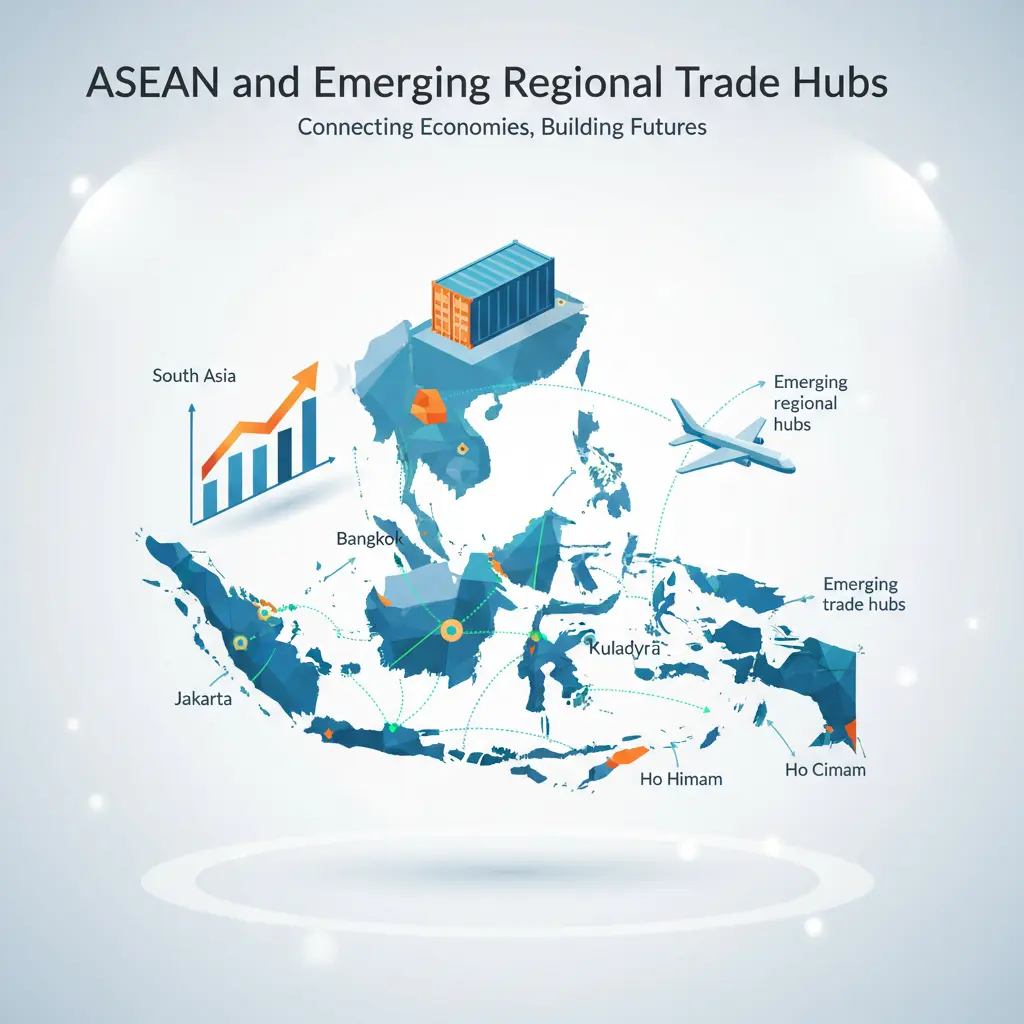
1. ASEAN’s integral role in global automotive production and trade
The Association of Southeast Asian Nations (ASEAN) has firmly established itself as a critical hub for global automotive production and trade. Comprising diverse economies like Thailand, Indonesia, Malaysia, and Vietnam, the region benefits from strategic geographical locations, competitive manufacturing costs, and a rapidly growing middle class that fuels domestic demand. Thailand, often dubbed the “Detroit of Asia,” leads in vehicle production, particularly for pickup trucks and eco-cars, catering to both regional and international markets. Indonesia boasts a robust domestic market and significant production capabilities, especially for multi-purpose vehicles (MPVs). Malaysia, while focusing on its national car brands, also serves as a vital manufacturing base for several global OEMs.
The region’s attractiveness is further enhanced by preferential trade agreements and a skilled workforce, drawing substantial foreign direct investment into the automotive sector. This robust ecosystem supports not only vehicle assembly but also a burgeoning component manufacturing industry, making ASEAN a vital cog in the complex global automotive supply chain disruptions. The push towards sustainable mobility is also evident, with increasing investments in electric vehicle (EV) production and infrastructure, signaling a significant shift in the region’s electric vehicle trade outlook. This strategic evolution ensures ASEAN’s continued relevance and growth in the broader context of global automotive trade trends.
2. Key import and export trends within ASEAN member states
An in-depth analysis of ASEAN automotive import export data reveals several compelling trends. On the export front, countries like Thailand and Indonesia are major exporters of completed built-up (CBU) vehicles, particularly to other ASEAN countries, Australia, and parts of Africa and the Middle East. Thailand’s strength lies in its ability to export high volumes of pick-up trucks, which are popular globally. Indonesia, on the other hand, sees strong demand for its MPVs and low-cost green cars. Vietnam is rapidly emerging as a significant player, attracting investment for both traditional internal combustion engine (ICE) vehicles and EVs, especially with VinFast’s ambitious global expansion.
Import trends within ASEAN are equally dynamic. There’s a growing appetite for luxury vehicles and specialized segments, primarily from Europe, Japan, and Korea. The increasing disposable income across the region contributes to this demand. Furthermore, the shift towards electrification means a rising import of EV components, batteries, and even CBU EVs as local production scales up. Intra-ASEAN trade remains strong, facilitated by the ASEAN Free Trade Area (AFTA), which reduces tariffs and streamlines customs procedures, fostering a more integrated regional market. This constant flow of goods provides rich data for automotive export market analysis, highlighting the region’s evolving preferences and production capabilities.
3. Growth potential in other emerging automotive manufacturing hubs
While ASEAN commands significant attention, other regions are also demonstrating considerable growth potential in automotive manufacturing. Mexico, for instance, continues to solidify its position as a major automotive hub, leveraging its proximity to the lucrative North American market and a highly integrated supply chain. Countries in Eastern Europe, such as Slovakia, Czech Republic, and Hungary, remain critical for European automotive production, particularly for premium brands and components, benefiting from skilled labor and strong industrial heritage.
Moreover, certain parts of India are experiencing a surge in automotive investment, driven by a massive domestic market and government incentives for manufacturing. Turkey also presents a strategic bridge between Europe and Asia, with a well-established automotive industry focused on both domestic sales and exports. These emerging hubs, alongside ASEAN, are crucial for diversifying the global automotive supply chain disruptions and building resilience against future shocks. Their combined growth signifies a decentralization of automotive manufacturing, moving beyond traditional centers to leverage new markets, cost efficiencies, and strategic advantages. The collective rise of these regions paints a comprehensive picture of the changing landscape of global automotive production and trade.
Partner with Vietnam’s Leading Suppliers
Looking for reliable suppliers in Vietnam? Contact VietnamSuppliers.com today to connect with verified manufacturers and exporters across all industries.
—————————————
References
– WTO predicts modest rebound in global trade for 2024, risks remain: https://www.wto.org/english/news_e/news24_e/trdev_08feb24_e.htm
– IEA Global EV Outlook 2023: https://www.iea.org/reports/global-ev-outlook-2023
– IEA Global EV Outlook 2023: https://www.iea.org/reports/global-ev-outlook-2023
– Deloitte – Automotive Supply Chain Resilience Playbook: https://www2.deloitte.com/us/en/pages/manufacturing/articles/automotive-supply-chain-resilience-playbook.html
– OICA sales statistics: https://www.oica.net/category/sales-statistics/