Navigating international trade, particularly for complex routes like FOB Ho Chi Minh to Rotterdam for a 20ft container, necessitates a meticulously prepared Request for Quotation (RFQ). A detailed RFQ is not merely a price inquiry; it’s a strategic document that outlines your precise logistics needs, enabling freight forwarders to provide tailored and competitive end-to-end logistics solutions for B2B export from Vietnam to Europe, ensuring efficiency and cost-effectiveness.

1. What is an International Freight Forwarder RFQ?
An International Freight Forwarder RFQ is a formal document issued by a shipper to multiple freight forwarding companies. It solicits detailed proposals and price quotes for specific logistics services, encompassing everything from origin and destination ports to cargo type and Incoterms. For a route like international freight forwarder RFQ (FOB Ho Chi Minh to Rotterdam for 20ft container), this document defines your requirements for transporting a 20ft container, covering shipping costs, transit times, and value-added services. Its purpose is to facilitate a transparent comparison of potential partners, ensuring you select a forwarder whose capabilities align precisely with your operational and budgetary needs.
2. Why a Detailed RFQ Matters for FOB Ho Chi Minh Exports
Exporting under FOB (Free On Board) Incoterms from Ho Chi Minh, Vietnam, presents unique considerations. Under FOB Ho Chi Minh, the seller is responsible for costs and risks until goods are loaded onto the vessel at the port. A detailed RFQ for your 20ft container shipment to Rotterdam is paramount for several reasons:
- Cost Clarity: It compels forwarders to quote accurately for their services from the port of loading onward, including ocean freight and destination charges, preventing hidden costs and ensuring precise budgeting.
- Streamlined Origin & Export: Even with FOB, a forwarder’s local expertise in Vietnam is invaluable. Your RFQ can assess their capabilities for efficient pre-carriage and customs brokerage Vietnam export, ensuring a smooth handoff at Ho Chi Minh Port.
- Reliable Transit & Destination: The long sea journey to Rotterdam requires careful management. A detailed RFQ helps evaluate a forwarder’s ability to manage transit times, potential transhipments, and their network for swift import customs clearance and onward delivery in Europe.
- Risk Management: It prompts forwarders to detail their offerings for a robust cargo insurance policy for overseas shipment, protecting your goods. It also ensures compliance with both Vietnamese export and EU import regulations, minimizing delays and penalties.
- Meaningful Comparison: By standardizing the information requested, a detailed RFQ allows for a true “apples-to-apples” comparison of quotes, whether for your FCL 20ft container or to understand potential LCL shipping rates Vietnam to Europe for future shipments.
3. Key Information to Include in Your RFQ Document
To receive comprehensive and competitive bids for your international freight forwarder RFQ (FOB Ho Chi Minh to Rotterdam for 20ft container), include the following:
- Shipper & Consignee Details: Full contact information and relevant identification numbers.
- Origin & Destination: Clearly state Ho Chi Minh Port, Vietnam, and Rotterdam Port, Netherlands.
- Incoterms 2020: Explicitly state “FOB Ho Chi Minh Port, Vietnam.”
- Cargo Specifications:
- Container Type: 20ft Standard Dry Container.
- Commodity: Detailed description (e.g., “textiles,” “machinery parts”).
- Weight: Gross weight per container (KG).
- Value: For insurance valuation.
- Hazardous Goods: Indicate if applicable.
- Service Requirements:
- Pre-carriage: If factory-to-port service is needed.
- Export Customs: Confirm capabilities for customs brokerage Vietnam export.
- Ocean Freight: FCL rates from Ho Chi Minh to Rotterdam.
- Transit Time & Frequency: Desired lead time and sailing schedule.
- Destination Services: Import customs clearance, port handling, and final delivery to Rotterdam warehouse if required.
- Value-Added: Request quotes for cargo insurance policy for overseas shipment, tracking, and reporting.
- Volume Estimates: Annual/monthly container volumes to aid rate negotiation.
- Evaluation Criteria & Deadline: Specify KPIs for assessment and the quote submission deadline.
By providing this granular detail, you empower freight forwarders to deliver precise, competitive, and truly effective end-to-end logistics solutions for B2B export, fostering a reliable partnership for your Ho Chi Minh to Rotterdam shipments.
Route & Cargo Specifics: FOB Ho Chi Minh to Rotterdam (20ft Container)
Navigating international shipping requires precise planning, especially for routes like FOB Ho Chi Minh to Rotterdam with 20ft containers. This section offers critical insights for businesses exporting from Vietnam, detailing the journey from Ho Chi Minh’s vibrant ports to Europe’s largest gateway, Rotterdam. We’ll explore shipper responsibilities, logistical nuances, and container specifics for a seamless supply chain.
FOB (Free On Board) Ho Chi Minh: Shipper’s Responsibilities
Under Incoterms 2020, FOB (Free On Board) Ho Chi Minh defines the seller’s (shipper’s) responsibility for goods until they are loaded onto the nominated vessel at a Ho Chi Minh port, typically Cat Lai or Cai Mep. This critical phase encompasses all domestic transport within Vietnam, port loading charges, and crucially, all export customs clearance procedures. The efficiency of customs brokerage Vietnam export services is paramount, ensuring all documentation, permits, and declarations are accurately processed to prevent delays or penalties. Once goods are loaded, risk and cost transfer to the buyer. Therefore, selecting a reliable local logistics partner or an experienced international freight forwarder RFQ (FOB Ho Chi Minh to Rotterdam for 20ft container) capable of managing these initial, complex stages—from pre-carriage to origin customs and vessel loading—is essential for a smooth start to the long sea voyage.
Rotterdam Port: Destination Considerations & Transit
A 20ft container from Ho Chi Minh typically reaches the Port of Rotterdam in 28 to 35 days, a duration influenced by shipping line routes and transhipment points. The Port of Rotterdam, Europe’s largest and most technologically advanced port, serves as an unparalleled distribution hub for the European hinterland, leveraging its extensive network of road, rail, and inland waterways.
Importers must navigate Rotterdam’s operational efficiencies and potential challenges, including managing port congestion, especially during peak seasons. Timely customs clearance upon arrival is vital, requiring meticulous preparation of import documentation. Freight forwarders offering end-to-end logistics solutions for B2B export often provide these destination services, streamlining the import process. Post-port, various multimodal options exist for onward distribution—trucking for direct deliveries, barges for inland water transport, or rail for faster connections to Central and Eastern Europe. Optimizing this final leg requires knowledge of these diverse transport solutions.
20ft Container: Capacity, Dimensions & Suitability
The 20ft GP (General Purpose) container is a cornerstone of global shipping due to its versatility and cost-effectiveness. Measuring approximately 20ft (6.06m) long, 8ft (2.44m) wide, and 8.5ft (2.59m) high externally, it offers an internal capacity of around 33 cubic meters (CBM) and a maximum gross weight of 24,000-30,480 kg (subject to vessel and road restrictions).
This container size is ideal for a broad spectrum of Vietnamese exports, including textiles, electronics, small machinery, and agricultural products. It’s best suited for shippers with sufficient cargo volume to utilize a significant portion of the container, maximizing the economies of FCL (Full Container Load) shipping. While LCL shipping rates Vietnam to Europe might be an alternative for smaller volumes, focusing on 20ft FCL emphasizes direct, dedicated transport. Proper packing and securing are crucial to prevent cargo damage during the lengthy sea transit. Furthermore, a comprehensive cargo insurance policy for overseas shipment is strongly recommended, providing essential financial protection against unforeseen incidents like theft, damage, or loss. Accurate understanding of dimensions and weight limits during an international freight forwarder RFQ (FOB Ho Chi Minh to Rotterdam for 20ft container) prevents unexpected surcharges and ensures efficient space utilization.
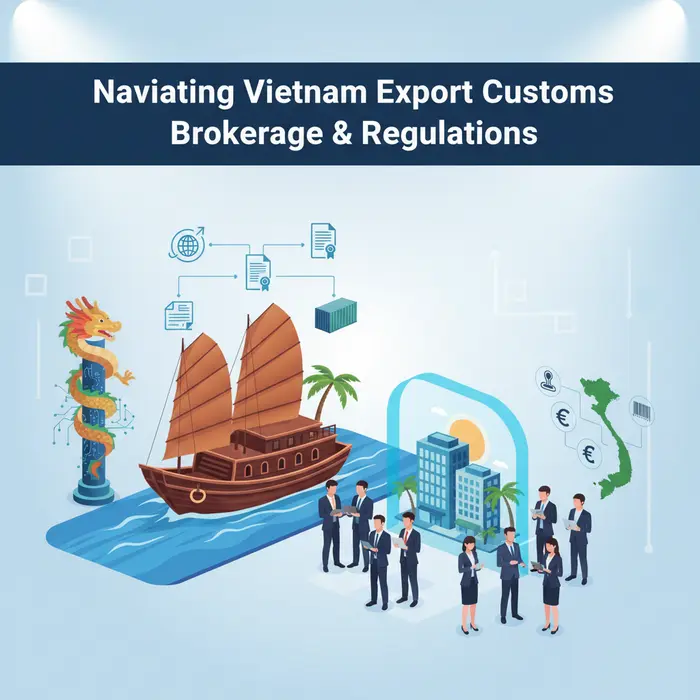
Navigating Vietnam Export Customs Brokerage & Regulations
Vietnam has cemented its position as a global manufacturing and export powerhouse, with Ho Chi Minh City serving as a vital gateway for goods heading to international markets. However, the journey from factory floor to global consumer involves a complex web of regulations, particularly concerning customs brokerage Vietnam export. For businesses, especially those engaging in B2B transactions, understanding and expertly navigating these complexities is crucial to ensure compliance, avoid costly delays, and facilitate smooth processing of shipments from Vietnam to destinations like Rotterdam.
Ignoring the intricacies of Vietnam’s export customs can lead to significant bottlenecks, impacting delivery schedules, increasing operational costs, and potentially damaging trade relationships. This section aims to demystify the process, highlighting essential documentation, the pivotal role of a customs broker, and critical compliance strategies for a seamless export experience.
1. Essential Export Documentation for Vietnam Shipments
The foundation of any successful export from Vietnam lies in meticulous documentation. Accuracy and completeness are paramount to prevent holdups at Ho Chi Minh customs. Key documents typically required for goods leaving Vietnam include:
- Commercial Invoice: A detailed record of the transaction between exporter and importer, including goods description, quantity, price, and terms of sale (e.g., FOB Ho Chi Minh).
- Packing List: Provides a comprehensive list of all items in each package, including dimensions, weight, and contents, aiding customs in cargo verification.
- Bill of Lading (B/L) or Air Waybill (AWB): The contract of carriage and receipt of goods. The B/L is for ocean freight, while the AWB is for air freight.
- Certificate of Origin (C/O): Verifies the country of origin of the goods. This is crucial for importers to claim preferential tariffs under free trade agreements (e.g., EVFTA for shipments to Europe). Common forms include Form E (ASEAN-China), Form B (non-preferential), and EUR.1 (EU).
- Export Customs Declaration: The official declaration submitted to Vietnamese customs authorities detailing the goods being exported.
- Export Licenses/Permits: Depending on the nature of the goods (e.g., certain agricultural products, chemicals, pharmaceuticals, or textiles), specific licenses or permits from relevant Vietnamese ministries may be required.
Any discrepancies or errors in these documents can lead to significant delays, incurring additional storage charges and potentially impacting your international freight forwarder RFQ (FOB Ho Chi Minh to Rotterdam for 20ft container) and overall logistics costs.
2. Role of a Customs Broker in Vietnam Export Procedures
Navigating the complex and ever-evolving landscape of export regulations requires specialized expertise. This is where a professional customs broker becomes indispensable. A customs broker acts as an authorized intermediary between the exporter and the Vietnamese customs authorities, ensuring all legal requirements are met efficiently.
Their key roles and benefits include:
- Expert Guidance: Providing up-to-date information on Vietnamese export laws, tariffs, and specific commodity regulations.
- Document Preparation and Submission: Meticulously preparing and electronically submitting all necessary customs declarations and supporting documents, minimizing errors.
- HS Code Classification: Accurately classifying goods using the Harmonized System (HS) codes, which is critical for correct duty assessment at the destination and preventing misdeclarations.
- Liaison with Authorities: Representing the exporter during customs inspections, addressing queries, and resolving potential issues swiftly.
- Compliance Assurance: Ensuring adherence to all Vietnamese export controls, quotas, and specific licensing requirements for regulated goods.
Engaging an experienced customs broker for your customs brokerage Vietnam export needs significantly reduces the burden on your team, mitigates risks of penalties, and ultimately facilitates faster, smoother cargo movement.
3. Compliance & Avoiding Delays for B2B Shipments
For B2B exporters, timely delivery and strict compliance are non-negotiable. Proactive measures can prevent common pitfalls that lead to delays and additional costs:
- Accurate Product Description and HS Codes: Ensure your product descriptions are precise and your HS codes are correctly applied. This impacts not only Vietnamese customs but also the import process and duties at the destination, like Rotterdam.
- Pre-Shipment Inspections: If required by the destination country or the buyer, arrange for pre-shipment inspections well in advance to avoid last-minute issues.
- Proper Packaging and Labeling: Adhere to international shipping standards and specific requirements of the destination country. Robust packaging protects goods, while clear labeling ensures correct handling and identification.
- Understanding Incoterms: Clearly define and understand the Incoterms (e.g., FOB, CIF) with your buyer, as they dictate responsibilities for costs, risks, and insurance coverage.
- Cargo Insurance: Protect your investment. A comprehensive cargo insurance policy for overseas shipment provides crucial financial protection against loss or damage during transit, which is especially important for long-haul routes from Vietnam to Europe.
- Choose the Right Logistics Partner: Whether you require full container load (FCL) or are looking for competitive LCL shipping rates Vietnam to Europe, selecting a reliable freight forwarder offering end-to-end logistics solutions for B2B export is critical. They can seamlessly integrate customs brokerage, transportation, and warehousing services, ensuring your goods reach their destination efficiently.
By prioritizing robust documentation, leveraging expert customs brokerage, and implementing proactive compliance strategies, B2B exporters can confidently navigate the complexities of shipping goods from Ho Chi Minh, ensuring a predictable and efficient supply chain to global markets.
Securing Your Overseas Investment: Cargo Insurance & LCL Options
Navigating international trade, particularly when exporting goods from Vietnam to European markets, presents both significant opportunities and inherent risks. Protecting your overseas investment demands robust logistical planning and financial safeguards. This section delves into the critical role of a cargo insurance policy for overseas shipment and explores flexible shipping alternatives like Less than Container Load (LCL) options, offering essential financial protection and efficient supply chain management for businesses engaged in B2B export.
1. Choosing the Right Cargo Insurance Policy for Overseas Shipment
The journey of goods from a factory in Vietnam to a European warehouse is fraught with potential perils—ranging from natural disasters and accidents at sea to theft or damage during handling. Without adequate protection, these incidents can result in substantial financial losses, impacting profitability and disrupting your supply chain. Therefore, selecting the appropriate cargo insurance policy for overseas shipment is a strategic imperative.
Several types of cargo insurance policies offer varying levels of coverage:
- All-Risk Coverage: The most comprehensive, covering most physical loss or damage from external causes, subject to specific exclusions (e.g., inherent vice, war, nuclear risks). Recommended for most cargo.
- Free From Particular Average (FPA): Limited coverage, typically protecting against major casualties like vessel sinking, burning, collision, or stranding. Does not cover partial losses unless directly caused by these major incidents.
- With Average (WA): A middle ground, covering major casualties and specific partial losses, such as those caused by heavy weather.
When choosing, consider your goods’ nature (fragile, perishable, high-value), the shipping route, and potential risks. Engaging with an experienced insurance broker or freight forwarder can help you navigate these choices to ensure adequate protection.
2. Understanding Insurance Coverage, Deductibles & Claims Process
Once you’ve identified the policy type, understanding your coverage specifics is crucial. This includes defining covered and excluded losses, geographical scope, and any conditions related to packaging or handling. Proper documentation for customs brokerage Vietnam export is vital not only for smooth customs clearance but also for substantiating an insurance claim.
Deductibles: Cargo policies often include a deductible, the amount you pay out of pocket before coverage activates. A higher deductible usually means lower premiums but a greater financial burden for minor claims. Weigh this trade-off based on your risk tolerance.
Claims Process: Should a loss or damage occur, a swift and well-documented claims process is essential. This typically involves:
- Notifying your insurer or broker immediately upon discovery.
- Providing comprehensive documentation: bill of lading, commercial invoice, packing list, survey reports (if applicable), and photographs.
- Cooperating with the insurer’s investigation.
A clear understanding of these elements beforehand can significantly streamline the process and improve the likelihood of a successful claim.
3. When to Consider LCL Shipping Rates from Vietnam to Europe
While a 20ft container is often the choice for large-volume exporters, it’s not always the most efficient or cost-effective solution if your shipment doesn’t fill it. Less than Container Load (LCL) shipping offers a flexible and economical alternative for smaller volumes of goods destined from Vietnam to Europe.
LCL shipping consolidates multiple smaller shipments from different exporters into a single container. This allows businesses to pay only for the space their cargo occupies, rather than the entire unit. It’s particularly beneficial for:
- Start-ups or SMEs without full container volume.
- Trial orders for new products or markets.
- Regular, smaller shipments to maintain consistent inventory.
- Reducing inventory and warehousing costs through more frequent, smaller orders.
When evaluating LCL shipping rates Vietnam to Europe, compare transit times, potential for additional handling (which makes insurance even more critical), and overall cost structure. While LCL can be more expensive per cubic meter than FCL, the total cost for a small shipment is significantly lower, making it a viable solution for many B2B exporters.
To ensure smooth operations, consider engaging an international freight forwarder RFQ (FOB Ho Chi Minh to Rotterdam for 20ft container) that offers comprehensive end-to-end logistics solutions for B2B export. Such a partner can provide expert advice on both FCL and LCL options, manage customs brokerage Vietnam export, and help you secure optimal LCL shipping rates from Vietnam to Europe, ensuring your goods reach their destination safely and efficiently, regardless of shipment size.
Partnering for End-to-End B2B Export Logistics Solutions
In the complex world of international trade, B2B exporters face myriad challenges, from navigating intricate customs regulations to ensuring timely and cost-effective delivery. Finding the right international freight forwarder is not merely about securing transport; it’s about establishing a strategic partnership that provides comprehensive end-to-end logistics solutions for B2B export. This encompasses every stage of the supply chain, from the moment goods leave the factory gate in Vietnam to their final destination, such as Rotterdam in Europe. A truly valuable forwarder acts as an extension of your business, streamlining processes, mitigating risks, and ultimately enhancing your global competitiveness. When issuing an international freight forwarder RFQ (FOB Ho Chi Minh to Rotterdam for 20ft container), understanding the full scope of services is paramount.

1. Defining End-to-End Logistics for B2B Export Success
End-to-end logistics for B2B export goes far beyond simply booking cargo space. It refers to a holistic approach where a single logistics provider manages the entire journey of your goods. From the initial pick-up at the manufacturing facility in Vietnam, this includes crucial elements like origin consolidation, warehousing, and meticulous documentation preparation. A key component is efficient customs brokerage Vietnam export, ensuring all necessary permits and declarations are accurately filed to prevent delays. Once cleared, the freight forwarder arranges the main carriage, such as loading your 20ft container onto a vessel departing from Ho Chi Minh. Upon arrival at the destination port, like Rotterdam, the end-to-end solution continues with import customs clearance, warehousing, and final last-mile delivery to your client’s specified address. This integrated service dramatically reduces administrative burden, minimizes the risk of errors and unforeseen costs, and provides unparalleled visibility into your shipment’s progress, offering peace of mind throughout the entire export process.
2. Evaluating Freight Forwarder Capabilities Beyond Basic Freight
When selecting an international freight forwarder, it’s essential to look beyond competitive LCL shipping rates Vietnam to Europe or basic FCL pricing. A truly capable partner offers a depth of expertise and services that add significant value. Evaluate their proficiency in specific trade lanes, particularly the intricacies of shipping from FOB Ho Chi Minh to Rotterdam. Do they have strong local networks in both origin and destination? Consider their risk management strategies, including the provision of a robust cargo insurance policy for overseas shipment that protects your investment against unforeseen events. Furthermore, assess their technological capabilities for real-time tracking, reporting, and proactive communication. A leading forwarder will possess profound knowledge of global trade regulations and compliance, helping you navigate complex international standards and avoid penalties. Understanding the nuances of these regulations is crucial for smooth international transactions, as highlighted by resources like the World Trade Organization’s information on Trade Facilitation.
3. Post-Shipment Support & Supply Chain Optimization
The relationship with a top-tier freight forwarder doesn’t end when the cargo reaches the port. True end-to-end partners provide extensive post-shipment support and contribute to ongoing supply chain optimization. This includes efficient destination services, managing local transport, and ensuring timely final delivery. They should offer transparent performance metrics, allowing you to review transit times, cost efficiency, and any incidents. A proactive forwarder will also identify areas for continuous improvement, suggesting routing alternatives, consolidation strategies, or inventory management solutions that align with your business goals. By continuously monitoring and optimizing your logistics chain, they help reduce overall operational costs, improve delivery reliability, and enhance customer satisfaction. This strategic partnership transforms logistics from a mere operational necessity into a competitive advantage, fostering long-term growth and resilience for your B2B export operations.
Partner with Vietnam’s Leading Suppliers
Looking for reliable suppliers in Vietnam? Contact VietnamSuppliers.com today to connect with verified manufacturers and exporters across all industries.
—————————————
References
– ICC Incoterms 2020 Rules: https://iccwbo.org/resources-for-business/incoterms-rules/incoterms-2020/
– Port of Rotterdam Official Website: https://www.portofrotterdam.com/
– General Department of Vietnam Customs: https://www.customs.gov.vn/
– Understanding Marine Cargo Insurance – TT Club: https://www.ttclub.com/loss-prevention/publications/understanding-marine-cargo-insurance/
– World Trade Organization’s information on Trade Facilitation: https://www.wto.org/english/tratop_e/tradfa_e/tradfa_e.htm