
Introduction to Global Shipping Emission Rules 2025
The maritime industry stands at the precipice of a transformative era, driven by increasingly stringent environmental regulations set to reshape operations worldwide. The year 2025 marks a pivotal moment, ushering in new Global Shipping Emission Rules 2025 designed to drastically reduce the carbon footprint of international shipping. This comprehensive regulatory shift isn’t merely an incremental adjustment; it represents a fundamental overhaul demanding immediate attention, strategic planning, and significant investment from shipowners, operators, and logistics providers globally. Failing to adapt will not only incur substantial financial penalties but also risk operational disruptions and reputational damage in an increasingly sustainability-conscious market. The urgency for compliance and proactive strategic planning cannot be overstated as the industry navigates towards a greener future.
1. Why New Emission Rules are Crucial for Maritime Sustainability
For decades, international shipping has been a backbone of global trade, but its reliance on heavy fuel oil has contributed significantly to greenhouse gas emissions and air pollution. The collective impact on climate change and public health has made it imperative for the industry to transition towards more sustainable practices. These new Global Shipping Emission Rules 2025 are not arbitrary; they stem from a global consensus on the urgent need to decarbonize all sectors, including maritime transport. They aim to accelerate the adoption of cleaner fuels, energy-efficient technologies, and optimized operational procedures. Achieving maritime sustainability is no longer an aspiration but a regulatory mandate, pushing for innovations in vessel design, propulsion systems, and supply chain management. The long-term vision is a shipping industry that operates with minimal environmental impact, contributing positively to global climate goals and fostering a healthier planet.
2. Key Regulatory Bodies: IMO and EU’s Role in Shaping Policy
The primary drivers behind these sweeping changes are the International Maritime Organization (IMO) and the European Union (EU). The IMO, a specialized agency of the United Nations, is responsible for developing global shipping regulations. Its strategy to reduce GHG emissions from ships includes ambitious targets, with 2025 being a critical checkpoint for various measures, including energy efficiency requirements (EEXI) and carbon intensity indicators (CII). These IMO 2025 compliance guidelines are binding for its member states and set the global standard for environmental performance. For more information on the IMO’s comprehensive efforts, refer to the International Maritime Organization’s guidelines on air pollution.
Complementing the IMO’s global framework, the European Union has taken a pioneering regional approach with its own set of directives. Notably, the EU ETS shipping impact 2025 will be profound, as maritime transport fully enters the EU’s Emissions Trading System. This means that shipping companies operating within the EU (or to/from EU ports) will be required to surrender allowances for their greenhouse gas emissions, effectively putting a price on carbon. This dual regulatory pressure from both global and regional bodies creates a complex, yet unified, push towards decarbonization, making compliance strategies a top priority for all involved.
3. Navigating the Financial and Operational Shifts: Green Surcharges and Strategic Adaptation
The impending Global Shipping Emission Rules 2025 will inevitably introduce significant financial and operational shifts. One of the most tangible manifestations will be the rise of green shipping surcharges explained as a necessary mechanism to offset the increased costs associated with compliance, cleaner fuels, and carbon allowances. These surcharges, applied by carriers, will reflect the financial burden of adhering to stricter environmental standards, including the costs incurred from the EU ETS and investments in sustainable technologies. Shippers must anticipate these additional costs and integrate them into their logistics budgeting and pricing strategies.
Beyond surcharges, companies must consider deeper strategic adaptations. This includes evaluating fleet modernization, investing in alternative fuels like LNG, methanol, or hydrogen, and optimizing routes for fuel efficiency. Embracing sustainable maritime logistics trends will involve a comprehensive review of the entire supply chain, from port operations to last-mile delivery. Early engagement with these changes, thorough risk assessments, and the development of robust compliance frameworks are essential. Companies that proactively plan and invest in greener shipping solutions will not only ensure compliance but also gain a competitive edge, appealing to environmentally conscious consumers and partners. For further insights into preparing for these regulations, explore resources on Global Shipping Emission Rules 2025. The transition to low-carbon shipping is not a distant future but an immediate imperative, demanding concerted effort and innovative solutions from every stakeholder in the maritime ecosystem.
Deciphering the EU ETS Shipping Impact 2025
The global maritime industry is undergoing a significant transformation driven by the urgent need to decarbonize. At the forefront of this change are stringent regulations like the European Union’s Emissions Trading System (EU ETS), which expanded to cover shipping emissions from January 1, 2024. However, 2025 marks a critical year, with the compliance obligations significantly increasing, making the EU ETS shipping impact 2025 a pivotal concern for carriers and shippers worldwide. This regulatory shift is not just about environmental compliance; it’s a fundamental restructuring of operational costs, reporting requirements, and strategic planning within the maritime sector, setting new precedents for Global Shipping Emission Rules 2025.
How EU ETS Applies to Shipping: Scope and Coverage Explained
The EU ETS is a cornerstone of the EU’s policy to combat climate change, operating on a ‘cap and trade’ principle. It sets a cap on the total amount of greenhouse gases that can be emitted by participating installations and aircraft operators, which is then gradually reduced over time. For shipping, the inclusion marks a landmark step towards decarbonizing a sector previously exempt from such direct emissions pricing mechanisms. From 2025, the system’s application intensifies, covering a substantial portion of emissions from vessels of 5,000 gross tonnage (GT) and above, regardless of their flag, when calling at EU ports.
Specifically, the scope of coverage for shipping in 2025 includes:
- 100% of emissions from voyages between two EU ports.
- 50% of emissions for voyages starting or ending outside the EU, designed to share the responsibility for international routes and reduce the risk of ‘carbon leakage’ (where ships might avoid EU ports).
- 100% of emissions generated while ships are at berth in an EU port.
The compliance obligation is phased in, meaning that while 40% of verified emissions from 2024 must be covered by allowances surrendered in 2025, a significant jump to 70% of verified emissions from 2025 must be covered by allowances surrendered in 2026. This phased approach allows the industry some time to adapt, but the 2025 increase demands immediate strategic adjustments. Initially, the system primarily targets carbon dioxide (CO2) emissions, but from 2026, methane (CH4) and nitrous oxide (N2O) will also be included, broadening the scope of accountability.
Calculating and Reporting Emission Allowances for Vessel Operators
For vessel operators, navigating the EU ETS requires a robust understanding of monitoring, reporting, and verification (MRV) procedures. The existing EU MRV Regulation for CO2 emissions forms the backbone of the ETS for shipping. Shipping companies are already obligated to monitor and report their fuel consumption and associated CO2 emissions for voyages touching EU ports. This data, once independently verified, forms the basis for calculating the number of EU emission allowances (EUAs) that must be surrendered annually.
Each EUA permits the emission of one tonne of CO2 equivalent (CO2e). By March 31st each year, companies must submit their verified emissions report for the previous calendar year to their administering authority (an EU Member State assigned to each shipping company). Crucially, by September 30th of the same year, they must surrender the corresponding number of EUAs to cover the proportion of their verified emissions. Failure to do so incurs substantial penalties, underscoring the importance of accurate data collection, timely reporting, and proactive EUA acquisition strategies. The complexity of these calculations and reporting frameworks necessitates significant internal expertise or reliance on specialized third-party services for operators to ensure full compliance.
Financial Implications for Carriers and Shippers Under EU ETS
The financial ramifications of the EU ETS for shipping are profound, affecting both carriers and, inevitably, their customers. For carriers, the direct cost comes from acquiring EUAs. These allowances are traded on an open market, meaning their prices can fluctuate significantly based on supply and demand, adding a layer of unpredictable operational expense. Beyond the direct cost of allowances, carriers also face administrative costs associated with enhanced MRV compliance, internal process adjustments, and potentially investing in more fuel-efficient technologies or alternative, lower-emission fuels to reduce their emissions footprint and, consequently, their EUA purchasing obligations.
To mitigate these increased operating costs, carriers are largely expected to pass on a significant portion of the EU ETS burden to their customers through new or adjusted freight surcharges. These ‘green shipping surcharges explained’ will become a standard component of shipping invoices, reflecting the cost of carbon. Shippers, therefore, need to anticipate higher logistics costs, which could impact their supply chain planning, product pricing, and competitive positioning. Transparency from carriers regarding these surcharges will be crucial for shippers to understand and forecast their expenses accurately. Furthermore, the EU ETS, alongside emerging IMO 2025 compliance guidelines and other environmental pressures, is accelerating the demand for sustainable maritime logistics trends. This will drive investments in eco-friendly vessels, optimized routing, and the development of new propulsion technologies, ultimately reshaping the entire value chain in favor of greener shipping solutions.
IMO 2025 Compliance Guidelines: What to Expect
The global maritime industry is on the cusp of significant regulatory changes as the International Maritime Organization (IMO) intensifies its efforts to decarbonize shipping. With 2025 fast approaching, shipowners, operators, and stakeholders must understand and prepare for the upcoming International Maritime Organization (IMO) regulations. These compliance guidelines are designed to curb greenhouse gas (GHG) emissions, pushing the sector towards a more sustainable future. This section will delve into the short-term and mid-term measures, operational requirements, and robust monitoring standards that define the new era of Global Shipping Emission Rules 2025.
1. Overview of IMO’s Short-Term and Mid-Term Decarbonization Measures
The IMO’s commitment to reducing greenhouse gas emissions from international shipping is enshrined in its revised GHG Strategy, adopted in July 2023. This ambitious strategy sets a target of net-zero GHG emissions from international shipping by or around 2050, with indicative checkpoints for 2030 and 2040. To achieve these goals, the IMO has introduced a suite of short-term and is developing mid-term measures. The primary short-term measures, which came into effect on January 1, 2023, but whose full impact and compliance reporting mature by 2025, are the Energy Efficiency Existing Ship Index (EEXI) and the Carbon Intensity Indicator (CII). While EEXI addresses the technical efficiency of individual ships, CII targets their operational carbon intensity annually.
Looking further ahead, mid-term measures are currently under development and are expected to be finalized by 2025, with implementation targeted for 2027. These include a goal-based marine fuel standard, which will regulate the GHG intensity of marine fuels, and an economic measure, such as a GHG levy or an emissions pricing mechanism. These mid-term regulations aim to incentivize the uptake of zero and near-zero emission technologies and fuels, significantly shaping the future of global maritime logistics and necessitating proactive planning for all shipping companies.
2. Operational Efficiency and Technical Requirements for Compliance
Compliance with the IMO’s new regulations demands a dual approach focusing on both technical design and operational practices. The Energy Efficiency Existing Ship Index (EEXI) is a one-time technical certification for existing vessels, ensuring they meet a minimum energy efficiency standard. It’s calculated based on a ship’s design parameters and, for many vessels, has necessitated engine power limitations (EPL) or shaft power limitations (ShaPoli) to reduce their maximum speed and fuel consumption. Vessels must demonstrate EEXI compliance at their first annual survey after January 1, 2023.
In contrast, the Carbon Intensity Indicator (CII) is an operational measure, assigning an annual rating (A to E) to ships based on their actual carbon emissions relative to the amount of cargo carried and the distance traveled. Ships with a D or E rating for three consecutive years must submit a corrective action plan as part of their Ship Energy Efficiency Management Plan (SEEMP) to achieve a C rating or better. Achieving a favourable CII rating will require continuous optimization of voyages through measures like slow steaming, optimized routing, just-in-time arrivals, enhanced hull and propeller maintenance, and the adoption of energy-saving devices. Understanding these IMO 2025 compliance guidelines is crucial for maintaining operational licenses and market competitiveness.
3. Monitoring, Reporting, and Verification (MRV) Standards for IMO 2025
Robust Monitoring, Reporting, and Verification (MRV) standards are fundamental to the IMO’s decarbonization efforts, particularly for the CII framework. Shipowners and operators are required to collect and report comprehensive data on fuel consumption, distance traveled, hours underway, and cargo carried on an annual basis. This data is then used to calculate the ship’s annual efficiency ratio (AER) and subsequent CII rating. These reports must be verified by an accredited third-party verifier before being submitted to the flag state. The rigorous MRV process ensures transparency, accuracy, and accountability, allowing the IMO to track progress towards its emission reduction targets and identify areas for further improvement.
Furthermore, the insights gained from meticulous MRV are increasingly influencing financial decisions and market trends, contributing to sustainable maritime logistics trends. Parallel to IMO’s MRV, the European Union’s Emissions Trading System (EU ETS) for shipping, effective from January 1, 2024, introduces similar MRV requirements but with a direct financial impact through the purchase of emission allowances. The EU ETS shipping impact 2025 will see the full application of the system (100% of verified emissions must be covered), significantly increasing operating costs for voyages to, from, and between EU ports. Consequently, shippers can expect the emergence and solidification of green shipping surcharges explained as carriers pass on these compliance costs. Effective data management and strategic planning are thus paramount for navigating the evolving regulatory landscape and mitigating financial exposure.
Green Shipping Surcharges Explained
The global shipping industry, a vital artery of international trade, is facing unprecedented pressure to decarbonize. As the world grapples with climate change, international bodies and regional governments are implementing stringent regulations aimed at reducing greenhouse gas emissions from maritime transport. A direct consequence of these new rules is the introduction of ‘green shipping surcharges’ – additional levies designed to cover the increased costs associated with adopting more sustainable practices and complying with emission mandates. Understanding these surcharges is crucial for businesses engaged in international logistics, as they directly impact freight costs, budgeting, and overall supply chain management. This section will break down the concept of these eco-friendly levies, explain their rationale, delve into how they are calculated and passed on, and explore strategies to mitigate their financial impact.
1. The Rationale Behind Eco-Friendly Levies and Carbon Pricing
The introduction of green shipping surcharges stems directly from the urgent need to address the significant carbon footprint of the maritime sector. Shipping, responsible for approximately 3% of global greenhouse gas emissions, is under intense scrutiny to contribute to global climate goals. This pressure has manifested in critical policy developments, notably the Global Shipping Emission Rules 2025 and regional initiatives like the expansion of the EU Emissions Trading System (EU ETS) to shipping. The primary rationale behind these eco-friendly levies is to create a financial incentive for shipping companies to invest in cleaner fuels, more energy-efficient vessels, and innovative green technologies.
Carbon pricing, a core component of many new regulations, works by making polluters pay for their emissions. For instance, the EU ETS shipping impact 2025 will require ship operators calling at EU ports to purchase emission allowances for a percentage of their voyages, increasing to 100% by 2027. Similarly, future IMO 2025 compliance guidelines are expected to introduce market-based measures to achieve ambitious decarbonization targets set by the International Maritime Organization. These regulatory frameworks translate into direct operational costs for carriers, which are then passed on to shippers as green surcharges. The goal is not merely to collect funds but to drive a fundamental shift towards sustainable maritime logistics trends, pushing the industry towards a net-zero future by making the cost of polluting higher than the cost of cleaner alternatives.
2. How Surcharges are Calculated and Passed On to Shippers
The complexity of green shipping surcharges lies in their varied calculation methodologies and implementation across different carriers and trade lanes. Essentially, these surcharges are designed to recover the additional operating costs incurred by shipping lines due to new environmental regulations. These costs include, but are not limited to, the purchase of carbon allowances (e.g., EU ETS allowances), investments in more expensive low-sulphur or alternative fuels (like LNG, methanol, or eventually ammonia and hydrogen), and upgrades to vessel technology for improved energy efficiency.
Carriers typically integrate these costs into existing surcharge mechanisms or introduce new ones. For example, a common approach is to create an “ETS Surcharge” or modify the existing Bunker Adjustment Factor (BAF) to reflect the increased cost of compliant fuels. The calculation often considers factors such as the vessel’s fuel consumption, the specific trade lane, the amount of carbon emitted per TEU (Twenty-foot Equivalent Unit) or ton-mile, and the prevailing price of carbon allowances. As green shipping surcharges explained, these additional costs are not uniform. They can vary significantly based on the regulatory scope of the voyage (e.g., intra-EU vs. international), the efficiency of the specific vessel, and the carrier’s procurement strategy for carbon allowances and alternative fuels.
Shippers will typically see these surcharges itemized on their freight invoices. They might appear as separate lines such as “Environmental Surcharge,” “Emissions Surcharge,” “Fuel Surcharge – Green Component,” or integrated into a revised “Bunker Surcharge.” The transparency and specificity of these charges can differ, making it essential for shippers to engage with their logistics providers to understand the exact components contributing to their overall freight costs. Ultimately, the burden of these increased operational expenses is passed down the supply chain, impacting the final cost of goods.
3. Strategies to Mitigate Increased Shipping Costs from Green Surcharges
While green shipping surcharges are an unavoidable reality of the evolving regulatory landscape, businesses can adopt several strategies to mitigate their financial impact and maintain competitive logistics costs. Proactive planning and a comprehensive understanding of these charges are key to effective cost management.
- Optimize Supply Chain Efficiency: Review and optimize shipping routes, consolidate shipments to maximize container utilization, and explore multimodal transport options. Reducing overall freight volume or distance through smarter logistics planning can directly lower the total surcharge burden.
- Carrier Selection and Negotiation: Engage with multiple carriers to compare their surcharge methodologies and overall cost structures. Some carriers may have invested more heavily in green technologies, potentially offering more competitive rates or greater transparency regarding their green surcharges. Long-term contracts with transparent clauses for surcharges can also provide more predictability.
- Data-Driven Decisions: Leverage data analytics to understand the carbon footprint of your shipments and identify areas for improvement. Collaborating with carriers to access emissions data can help in making informed decisions about routes, vessel types, and even packaging to reduce weight and volume.
- Explore Alternative Logistics Solutions: Consider diversifying your logistics portfolio. For less time-sensitive cargo, rail or short-sea shipping (if applicable) might offer lower-emission and potentially lower-cost alternatives compared to traditional ocean freight, aligning with sustainable maritime logistics trends.
- Embrace Transparency and Collaboration: Foster open communication with your logistics partners. Understanding how surcharges are calculated and what efforts carriers are making towards decarbonization can help in strategic planning and potentially lead to collaborative solutions that benefit both parties.
By implementing these strategies, businesses can not only manage the financial implications of green shipping surcharges but also contribute to a more sustainable and environmentally responsible global supply chain.
Navigating Sustainable Maritime Logistics Trends
The maritime industry is undergoing a transformative shift, moving beyond incremental adjustments to embrace a comprehensive strategy for sustainability. This evolution is driven not only by a global consciousness for environmental protection but also by impending and stringent regulations, most notably the Global Shipping Emission Rules 2025. These rules, alongside other regional frameworks, are compelling stakeholders to explore broader industry shifts towards greener practices beyond immediate compliance, focusing on long-term sustainability and technological advancements. The objective is to secure a resilient, eco-friendly future for global trade, setting a new course for sustainable maritime logistics trends that redefine efficiency and environmental stewardship.
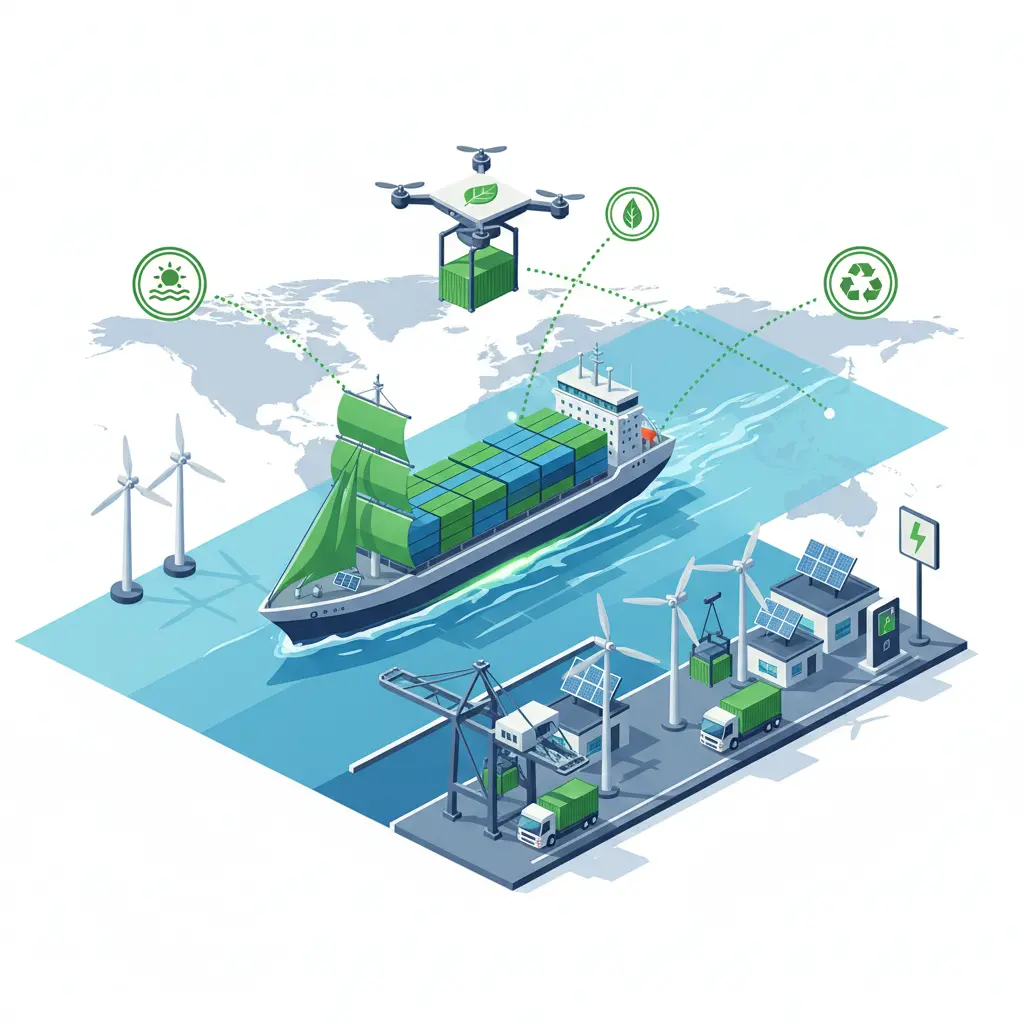
1. Adoption of Alternative Fuels and Propulsion Technologies
One of the most significant pillars of sustainable maritime logistics is the rapid adoption of alternative fuels and advanced propulsion technologies. The industry is actively seeking viable alternatives to traditional heavy fuel oil, exploring options such as Liquefied Natural Gas (LNG), methanol, ammonia, hydrogen, and various biofuels. While LNG has seen initial uptake due to its lower carbon emissions compared to conventional fuels, methanol and ammonia are gaining traction as promising future fuels, despite significant challenges related to infrastructure, cost, and safety protocols. Hydrogen, particularly green hydrogen, offers a zero-emission potential but requires substantial technological breakthroughs and investment in production and storage. Furthermore, advancements in propulsion systems, including wind-assisted propulsion (e.g., rotor sails, kites), electric and hybrid solutions, and even nuclear power for specialized vessels, are being developed and tested. Adhering to IMO 2025 compliance guidelines and future targets necessitates a diversified approach to energy sources, demanding continuous innovation in ship design and operational flexibility.
2. Digitalization for Optimized Route Planning and Efficiency
Digitalization plays a pivotal role in enhancing operational efficiency and reducing the environmental footprint of maritime logistics. Advanced digital tools, including Artificial Intelligence (AI), machine learning, the Internet of Things (IoT), and big data analytics, are revolutionizing how vessels are managed and routes are planned. Optimized route planning, for instance, leverages real-time weather data and ocean currents to determine the most fuel-efficient paths, significantly reducing consumption and emissions. Just-in-time (JIT) arrivals, facilitated by predictive analytics, minimize idle time at ports, further conserving fuel. Predictive maintenance systems, enabled by IoT sensors, monitor vessel performance and proactively identify potential issues, reducing breakdowns and ensuring optimal operational efficiency. These digital interventions are crucial not just for cost savings but also for meeting stringent environmental benchmarks like the Global Shipping Emission Rules 2025, by providing actionable insights for greener operations and fostering transparency across the supply chain.
3. Collaborative Industry Initiatives for Decarbonization and Innovation
Achieving comprehensive decarbonization in maritime logistics is a monumental task that necessitates unprecedented collaboration across the entire value chain. Shippers, carriers, port authorities, technology providers, and financial institutions are increasingly forming alliances and participating in industry initiatives to pool resources, share knowledge, and accelerate innovation. These collaborative efforts span research and development projects for alternative fuels, the establishment of green shipping corridors, and the creation of standardized frameworks for reporting emissions. The financial implications of these transitions are substantial, leading to new economic models, such as Green shipping surcharges explained, which aim to incentivize and fund sustainable practices. Regulatory frameworks, such as the EU ETS shipping impact 2025, are also driving these collaborations by creating a market-based mechanism for emission reduction. Through shared vision and collective action, the industry is not only addressing current environmental challenges but also laying the groundwork for a future where maritime logistics seamlessly integrates economic prosperity with ecological responsibility, pushing the boundaries of what is possible in sustainable shipping.
Partner with Vietnam’s Leading Suppliers
Looking for reliable suppliers in Vietnam? Contact VietnamSuppliers.com today to connect with verified manufacturers and exporters across all industries.
—————————————
References
– IMO | Air Pollution: https://www.imo.org/en/OurWork/Environment/Pages/Air-Pollution.aspx
– :
– EU ETS Q&A: https://ec.europa.eu/commission/presscorner/detail/en/qanda_23_3012
– EU Emissions Trading System (EU ETS): https://ec.europa.eu/clima/eu-action/eu-emissions-trading-system-eu-ets_en
– Questions and Answers on the EU Emissions Trading System (EU ETS) for maritime transport: https://ec.europa.eu/commission/presscorner/detail/en/QANDA_23_3356

