The Evolving Landscape of Global Trade in 2025
The global trade ecosystem in 2025 is a complex tapestry, continually reshaped by a confluence of economic, political, and environmental forces. While the immediate shockwaves of the early 2020s have subsided, their profound impact on supply chain stability and the imperative for resilience continues to define the operating environment for businesses worldwide. Recent shifts, from unprecedented demand swings to geopolitical realignments, have unveiled critical vulnerabilities, propelling Global Supply Chain Resilience to the forefront of strategic planning for nations and enterprises alike. Understanding these dynamics is crucial for navigating the evolving landscape and forecasting future global trade trends.
1. Post-Pandemic Realities and Ongoing Disruptions
The aftershocks of the COVID-19 pandemic continue to ripple through global commerce, fundamentally altering consumer behavior and production paradigms. Lingering issues such as labor shortages in key logistics hubs, persistent port congestion in major trading arteries, and unpredictable demand fluctuations for various goods underscore the fragility of lean, just-in-time supply chains. Beyond the pandemic’s direct influence, new layers of disruption have emerged. The energy crises exacerbated by regional conflicts, for instance, have driven up shipping costs and manufacturing inputs, impacting profitability and consumer prices. Simultaneously, the increasing frequency and intensity of climate-related events – from droughts affecting agricultural outputs to severe weather disrupting transportation networks – introduce an inherent volatility that demands more adaptive and robust supply chain strategies. Businesses are now compelled to move beyond reactive measures, investing in predictive analytics, diversified sourcing, and localized production capabilities to insulate themselves from future shocks and build true Global Supply Chain Resilience.
2. Geopolitical Shifts and Their Economic Ramifications
The geopolitical chessboard is arguably a greater determinant of global trade patterns in 2025 than ever before. Rising trade tensions, particularly between major economic blocs like the US and China, continue to foster an environment of uncertainty, compelling companies to reassess their dependency on single markets or manufacturing hubs. This strategic recalculation has accelerated trends such as nearshoring and “friendshoring,” where businesses relocate production closer to home markets or to politically aligned nations, prioritizing security and reliability over pure cost efficiency. Regional conflicts, while localized, have cascading effects on commodity prices, shipping routes, and insurance costs, disrupting established trade flows and creating new barriers. These shifts not only fragment global supply chain networks but also influence foreign direct investment flows, as countries compete to attract industries looking for more stable and resilient operating environments. The economic ramifications are profound, potentially leading to higher production costs, reduced global efficiency, but also fostering new regional economic corridors and strengthening certain national industries.
3. Policy Responses and the Drive for Diversification
In response to these multifaceted challenges, policymakers globally are actively working to reshape the rules of engagement for international trade. Significant WTO policy updates are under scrutiny, aimed at modernizing multilateral trade rules, fostering greater transparency, and addressing issues ranging from digital trade to environmental sustainability. The efficacy of these updates in promoting free and fair trade, while also allowing for national security and resilience concerns, will be a critical determinant of future global trade trends. Simultaneously, there’s a heightened focus on bilateral and regional trade agreements. An in-depth trade agreement impact analysis reveals how pacts like the Comprehensive and Progressive Agreement for Trans-Pacific Partnership (CPTPP), the Regional Comprehensive Economic Partnership (RCEP), and the African Continental Free Trade Area (AfCFTA) are creating new trade blocs, streamlining customs procedures, and opening up significant new export market diversification opportunities. These agreements often aim to reduce tariffs and non-tariff barriers, fostering greater integration within their respective regions and offering businesses alternative routes to market. The strategic imperative for companies now extends to proactively exploring these new markets and diversifying their supplier bases to mitigate risks. This proactive approach, including leveraging insights from platforms that highlight resilient suppliers, is paramount for enhancing overall Global Supply Chain Resilience. The drive for diversification is not merely about finding new customers; it’s about building a distributed and adaptable network that can withstand shocks from any origin.

The evolving landscape of global trade in 2025 demands agility, foresight, and a commitment to building robust systems. While challenges abound, they also present significant opportunities for innovation and strategic repositioning for those willing to adapt to the new realities of a more interconnected yet fragmented world.
WTO Policy Updates & Their Supply Chain Implications
The World Trade Organization (WTO) stands as the cornerstone of the multilateral trading system, and its ongoing policy updates and discussions are critical determinants of global trade flows and, consequently, the intricate web of supply chain operations. In an era marked by geopolitical shifts, technological advancements, and increasing demands for sustainability, understanding how potential WTO policy shifts directly affect international trade flows is paramount for fostering Global Supply Chain Resilience. Businesses must remain agile, conducting thorough Trade agreement impact analysis to navigate an ever-evolving landscape.
1. Key Agreements and Proposed Reforms Impacting Trade
Recent years have seen both breakthroughs and stalemates in WTO negotiations, each with profound implications for global commerce. A significant development was the WTO Agreement on Fisheries Subsidies, concluded at MC12 in 2022, which aims to curb harmful subsidies that contribute to overfishing. While specific to fisheries, this agreement sets a precedent for how multilateral efforts can address complex global challenges. For supply chains, such agreements can influence sourcing strategies, necessitate compliance with new environmental standards, and potentially shift production centers as resource availability or cost structures change.
Beyond specific agreements, the WTO is grappling with calls for broader reforms. Discussions around modernizing trade rules for the 21st century cover areas like e-commerce, investment facilitation, and the future of special and differential treatment for developing countries. The ongoing moratorium on customs duties on electronic transmissions, for instance, has a direct bearing on digital trade and service supply chains, impacting everything from software delivery to data processing. Any change to this moratorium could significantly alter the cost and logistics of cross-border digital services, requiring businesses to adapt their digital infrastructure and service delivery models. Close monitoring of these negotiations is crucial for accurate Global trade trends forecast and strategic planning.
2. Dispute Settlement Mechanism’s Role in Market Stability
The WTO’s Dispute Settlement Mechanism (DSM) is designed to provide security and predictability to the multilateral trading system, ensuring that trade disputes are resolved according to established rules. However, the paralysis of the WTO’s Appellate Body since December 2019, due to blocks on new appointments, has severely weakened the DSM’s ability to issue binding rulings on appeal. This situation creates a significant void in the enforcement of international trade rules, leading to increased uncertainty for businesses and governments alike.
Without a fully functioning Appellate Body, WTO members often find themselves in legal limbo, with trade disputes potentially escalating or lingering without definitive resolution. This uncertainty can directly impact supply chain stability. For example, if a country imposes tariffs that are challenged at the WTO but the appeal process cannot be completed, businesses face prolonged ambiguity regarding market access and trade costs. This forces companies to build greater redundancy and flexibility into their supply chains, potentially seeking out new suppliers or markets to mitigate the risks associated with unpredictable trade environments. The reliance on interim arbitration arrangements, such as the Multi-Party Interim Appeal Arbitration Arrangement (MPIA), offers a temporary solution but underscores the urgent need for comprehensive reform to restore the DSM’s effectiveness and bolster market stability.
3. Digital Trade, Sustainability, and Export Market Diversification
The convergence of digital transformation and an intensified focus on environmental sustainability is reshaping global supply chains, with the WTO playing an increasingly pivotal role. Negotiations around digital trade, including data localization, cross-border data flows, and digital services, will define the future architecture of the digital economy. These policies have direct implications for global value chains, affecting how companies manage data, deliver services, and innovate across borders. Supply chain managers must consider the regulatory frameworks for digital trade when planning their IT infrastructure, data centers, and e-commerce strategies.
Concurrently, the WTO is engaging with environmental sustainability issues, from trade-related aspects of climate change to circular economy principles. As countries implement greener policies, businesses will face new compliance requirements, potentially leading to shifts in production methods, materials sourcing, and logistical processes. This global push for sustainability, coupled with trade tensions, makes Export market diversification a strategic imperative. Businesses are increasingly looking beyond traditional markets to reduce dependency and build more resilient supply networks. This involves exploring emerging economies, understanding new trade agreements, and proactively adjusting to future Global trade trends forecast, ensuring that supply chains are not only efficient but also environmentally compliant and geographically diversified to withstand future shocks.
Trade Agreement Impact Analysis & Future Outlook
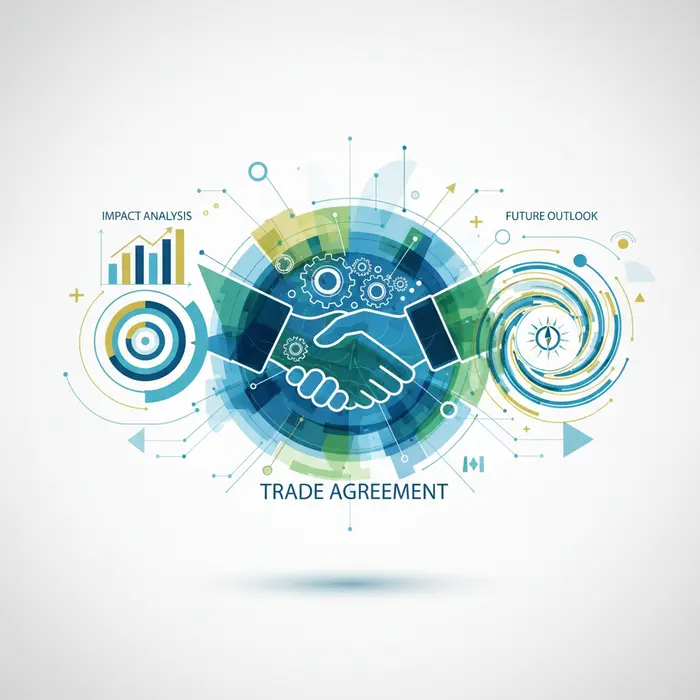
Examining the intricate web of existing and emerging regional and bilateral trade agreements is crucial for understanding their profound effects on global supply chain structures. These agreements, driven by evolving economic, political, and environmental imperatives, constantly reshape international commerce, demanding heightened Global Supply Chain Resilience from businesses worldwide. A forward-looking perspective on their strategic importance is essential for anticipating future challenges and leveraging opportunities in a dynamic trade landscape. Our analysis delves into how these pacts facilitate or impede trade, influence sourcing decisions, and necessitate proactive adaptation.
Free Trade Zones and Regional Blocs: Opportunities & Challenges
Free Trade Zones (FTZs) and regional blocs represent cornerstones of modern trade policy, designed to foster economic integration and reduce barriers among member states. Examples like the European Union (EU), ASEAN, USMCA, and the Regional Comprehensive Economic Partnership (RCEP) have dramatically reshaped global trade flows. For businesses, these agreements offer significant opportunities, including preferential market access, reduced or eliminated tariffs, and streamlined customs procedures, which can significantly lower operational costs and facilitate cross-border trade. This often encourages Export market diversification by opening up new consumer bases.
However, navigating these blocs presents considerable challenges. Complex rules of origin criteria, varying regulatory standards, and the potential for trade diversion (where trade shifts from more efficient non-member suppliers to less efficient member suppliers due to preferential treatment) demand careful strategic planning. Companies must meticulously analyze each agreement’s specific provisions to fully capitalize on benefits while mitigating risks associated with compliance and market fragmentation. Understanding these dynamics is paramount for effective Trade agreement impact analysis.
Navigating Tariff Adjustments and Non-Tariff Barriers
Tariff adjustments, often the most visible outcomes of trade agreements, directly influence the cost of goods and services, dictating shifts in production and sourcing strategies. While tariff reductions generally foster increased trade, sudden increases or retaliatory tariffs can disrupt established supply chains, prompting businesses to reassess their manufacturing locations or seek alternative suppliers. Beyond tariffs, non-tariff barriers (NTBs) present a more insidious, yet equally potent, challenge.
NTBs include a wide array of measures such as quotas, import licenses, technical barriers to trade (TBTs), stringent sanitary and phytosanitary (SPS) measures, cumbersome customs procedures, and domestic content requirements. These often increase compliance costs, delay market entry, and can effectively negate the benefits of tariff reductions. Staying abreast of WTO policy updates and national regulatory changes is critical for businesses to ensure compliance and maintain competitive advantage. Effective management of these barriers is a key component of robust Trade agreement impact analysis, directly influencing a company’s ability to compete in global markets.
Geopolitical Shifts and Supply Chain Reconfiguration
The global trade landscape is increasingly shaped by geopolitical shifts, compelling businesses to fundamentally rethink their supply chain structures. Rising nationalism, trade tensions between major economic powers, and regional conflicts introduce significant uncertainty and risk. These dynamics often trigger strategies such as "friend-shoring," "near-shoring," or reshoring, where companies prioritize sourcing and manufacturing from politically aligned or geographically closer countries to enhance Global Supply Chain Resilience and reduce reliance on potentially volatile regions.
Such reconfigurations are not merely about cost or efficiency but about managing risk and ensuring continuity. Businesses are increasingly mapping their supply chains to identify critical vulnerabilities and diversify their supplier base across multiple countries or regions. This trend reflects a broader recognition that an over-reliance on single-source or politically exposed suppliers can be catastrophic. Monitoring the Global trade trends forecast through a geopolitical lens is essential for strategic decision-making, allowing companies to proactively adapt to potential disruptions and secure their long-term operational viability.
In conclusion, the future outlook for global supply chains is intricately linked to the evolution of trade agreements and the broader geopolitical environment. Businesses must adopt a proactive and adaptive approach, continually performing Trade agreement impact analysis, integrating WTO policy updates, and monitoring the Global trade trends forecast. Prioritizing Export market diversification and building inherent Global Supply Chain Resilience through strategic sourcing and robust risk management will be paramount for navigating the complexities of international trade in the years to come.
Global Trade Trends Forecast 2025: Building Resilience
The global trade landscape is in a perpetual state of flux, shaped by economic, geopolitical, and technological forces. As we look towards 2025, the imperative for building robust Global Supply Chain Resilience has never been more pronounced. Businesses worldwide are bracing for continued volatility, from regional conflicts and trade disputes to unforeseen environmental disruptions, making adaptability and foresight critical. This forecast explores pivotal trends redefining international commerce, emphasizing technological integration, sustainability mandates, and strategic recalibrations necessary to navigate an increasingly complex global marketplace. The goal is not merely to react, but to proactively build agile, transparent, and shock-resistant supply chains.
1. Digitalization, AI, and Blockchain in Logistics
The digital transformation of logistics and supply chain management accelerates, fundamentally altering how goods are moved, tracked, and managed globally. By 2025, widespread adoption of digital technologies will be non-negotiable. Artificial Intelligence (AI) is set to revolutionize demand forecasting, inventory optimization, and route planning, enabling predictive analytics to anticipate disruptions. Blockchain technology offers an immutable ledger for transactions, enhancing transparency and traceability across complex supply networks, mitigating fraud, and providing real-time visibility. Furthermore, Internet of Things (IoT) devices will provide granular data on cargo conditions, location, and security, creating truly ‘smart’ supply chains. These integrated digital tools boost operational efficiency and provide critical intelligence for swift reactions, a cornerstone of effective Global Supply Chain Resilience.
2. Sustainability and ESG Factors in Sourcing Strategies
Environmental, Social, and Governance (ESG) considerations are rapidly transitioning from best practices to fundamental requirements for global trade. Consumers, investors, and regulators demand greater accountability and transparency regarding supply chain impacts. By 2025, sustainability will be deeply embedded in sourcing strategies, influencing procurement decisions. Companies will increasingly prioritize suppliers demonstrating strong commitments to reduced carbon footprints, ethical labor practices, and circular economy principles. This includes investing in renewable energy, optimizing packaging, and ensuring fair wages. Regulatory frameworks, such as the EU’s Corporate Sustainability Reporting Directive (CSRD) and potential carbon border adjustment mechanisms, will compel businesses to measure, report, and reduce their environmental impact. Non-compliance will carry significant risks. Adapting to these evolving ESG standards unlocks new market opportunities and enhances brand value, contributing to a more sustainable and resilient global trade ecosystem.
3. Geopolitical Shifts and Trade Policy Evolution
The geopolitical landscape is arguably the most unpredictable yet impactful driver of global trade trends towards 2025. Rising protectionism, trade wars, and the fragmentation of global alliances force businesses to rethink sourcing and market access strategies. Ongoing WTO policy updates and the proliferation of regional trade agreements (RTAs) are creating a complex web of rules that demand meticulous analysis. This strategic realignment often leads to “friend-shoring” or “near-shoring” initiatives, aiming to reduce reliance on single, potentially volatile sources, fostering greater Global Supply Chain Resilience. Businesses must engage in robust “Trade agreement impact analysis” to understand preferential tariffs, rules of origin, and non-tariff barriers. Furthermore, “Export market diversification” will become a critical strategy to mitigate risks associated with over-reliance on a few key markets, encouraging exploration of emerging economies. Navigating this intricate geopolitical terrain requires constant monitoring, proactive engagement, and dynamic adaptation of trade strategies.
The period leading up to 2025 will present both significant challenges and transformative opportunities in global trade. Emphasis on Global Supply Chain Resilience will necessitate a multi-faceted approach: integrating digital technologies, embedding sustainability, and shrewdly adapting to geopolitical realities. Companies embracing these trends—investing in digitalization, prioritizing ESG factors, and diversifying trade relationships—will be best positioned to not only survive but thrive in the dynamic global marketplace, ensuring supply chains are truly future-proof.
Export Market Diversification Strategies for Stability
In today’s interconnected yet volatile global economy, businesses face unprecedented challenges ranging from geopolitical shifts to unforeseen disruptions. Relying heavily on a single export market or a limited set of markets can expose companies to significant risks, making export market diversification not just a growth strategy but a critical component of long-term stability and Global Supply Chain Resilience. By strategically expanding into new territories, businesses can mitigate the impact of economic downturns, political instability, or sudden changes in demand within specific regions. This section provides actionable insights and strategies for companies seeking to strengthen their market position and build robust supply chains against an uncertain global backdrop.

1. Identifying Emerging Markets and Growth Regions
Successful market diversification begins with thorough research to identify promising new export destinations. Businesses should move beyond traditional markets and look towards regions exhibiting strong economic growth, rising consumer purchasing power, and favorable trade policies. Analyzing Global trade trends forecast data is crucial, as it provides foresight into sectors and geographies poised for expansion. Factors to consider include GDP growth rates, demographic shifts, political stability, ease of doing business, and the competitive landscape. Tools like market intelligence reports, trade association data, and government export agencies can provide valuable insights. For instance, Southeast Asia, parts of Latin America, and specific African nations often present untapped potential for various industries. Prioritizing markets where demand for a company’s specific product or service is either underserved or rapidly expanding allows for more efficient resource allocation and higher chances of success. This proactive approach to export market diversification is foundational for building lasting Global Supply Chain Resilience.
2. Risk Mitigation through Supply Chain Mapping and Redundancy
Diversifying export markets inherently requires a more complex and robust supply chain. To achieve this, businesses must engage in comprehensive supply chain mapping, which involves visualizing every node from raw material sourcing to final delivery. This process helps identify potential bottlenecks, single points of failure, and geographical concentration risks. Once identified, strategic redundancy can be introduced. This might involve sourcing materials from multiple countries, establishing alternative manufacturing sites, or utilizing diverse shipping routes and logistics providers. Furthermore, understanding the potential Trade agreement impact analysis on these diversified supply chains is vital. For example, preferential tariffs under new agreements could make certain sourcing regions more attractive, enhancing both cost-efficiency and resilience. A well-mapped and redundant supply chain is essential for ensuring that disruptions in one region do not cripple the entire operation, thereby significantly contributing to Global Supply Chain Resilience.
3. Leveraging Digital Platforms and E-commerce for Market Entry
The digital age offers unprecedented opportunities for businesses to access new export markets with reduced initial investment. E-commerce platforms, B2B marketplaces, and digital marketing channels can provide a direct route to customers in diverse geographical locations without the need for extensive physical infrastructure or large sales teams. Businesses can utilize localized websites, social media campaigns, and online payment systems to tailor their offerings to specific market preferences and currencies. This approach significantly lowers the barriers to entry for small and medium-sized enterprises (SMEs) seeking export market diversification. Furthermore, digital analytics can provide real-time insights into market demand and consumer behavior, enabling agile adjustments to product offerings and marketing strategies. By embracing these digital tools, companies can rapidly test and scale their presence in multiple new markets, making the diversification process more efficient and cost-effective, thus reinforcing overall Global Supply Chain Resilience.
4. Navigating Regulatory Landscapes and Trade Policy Changes
Entering new export markets necessitates a thorough understanding of each country’s unique regulatory environment, customs procedures, and trade policies. This includes navigating tariffs, non-tariff barriers, product certifications, labeling requirements, and intellectual property laws. Keeping abreast of WTO policy updates and understanding the nuances of various bilateral and multilateral trade agreements is paramount. For instance, a detailed Trade agreement impact analysis can reveal how specific agreements might simplify customs processes or reduce tariffs for goods originating from certain countries, thereby influencing market entry strategies. Businesses should either invest in in-house expertise or partner with local legal and compliance professionals to ensure adherence to all regulations. Proactive engagement with trade bodies and continuous monitoring of geopolitical developments are critical to anticipating changes that could affect market access or operational costs. The World Trade Organization (WTO) offers a wealth of information regarding global trade rules and agreements, which can be invaluable for businesses navigating complex international trade. Learn more about WTO agreements here. This diligent approach to regulatory compliance is a cornerstone of sustainable export market diversification.
By systematically implementing these strategies, businesses can not only reduce their dependency on single markets but also build a more resilient, adaptable, and stable operational framework, better equipped to thrive amidst the complexities of the modern global economy.
Partner with Vietnam’s Leading Suppliers
Looking for reliable suppliers in Vietnam? Contact VietnamSuppliers.com today to connect with verified manufacturers and exporters across all industries.
—————————————
References
– WTO policy updates: https://www.wto.org/
– :
– WTO policy updates: https://www.wto.org/english/news_e/news_e.htm
– WTO General Council Updates: https://www.wto.org/english/news_e/news23_e/gc_26jul23_e.htm
– WTO agreements: https://www.wto.org/english/thewto_e/whatis_e/tif_e/agrm1_e.htm