The Rise of Vietnam in Global Furniture Manufacturing
The global furniture industry has witnessed a profound shift in recent decades, with Vietnam emerging as a dominant force and a go-to destination for manufacturers, buyers, and retailers worldwide. Once a relatively minor player, Vietnam has strategically leveraged its resources and policies to become one of the top furniture exporting nations. This remarkable ascent has solidified its reputation as a hub for high-quality, competitively priced furniture, attracting significant international investment and transforming the landscape for Vietnam furniture manufacturers. From traditional wooden pieces to modern upholstered designs and specialized outdoor collections, the nation’s capacity and craftsmanship continue to impress.

1. Key Drivers of Vietnam’s Furniture Boom
Vietnam’s rapid rise in the global furniture market is not accidental but the result of several deliberate strategies and favorable conditions. Firstly, robust governmental support, including tax incentives, land leases, and investment in infrastructure, has created an attractive environment for both domestic and foreign investors. This support is complemented by a stable political climate, providing long-term predictability essential for large-scale manufacturing operations. Secondly, a significant advantage lies in its cost-effective and increasingly skilled labor force. While labor costs are rising, they remain competitive compared to many other manufacturing hubs, especially for labor-intensive furniture production. Furthermore, Vietnam’s strategic geographical location, with extensive coastlines and well-developed port facilities like Ho Chi Minh City and Hai Phong, ensures efficient logistics and reduced shipping times to major consumer markets, making Vietnam furniture sourcing highly efficient. The ongoing diversification of global supply chains, partly driven by trade tensions between the U.S. and China, has also accelerated the shift of production to Vietnam. Many international brands and retailers now actively seek partners for Wholesale furniture Vietnam, recognizing the country’s capacity to handle large orders with consistent quality.
2. Competitive Advantages Over Other Asian Hubs
When compared to other established Asian manufacturing powerhouses, Vietnam presents a compelling set of competitive advantages. While China remains a giant, Vietnam often offers lower labor costs and, crucially for access to Western markets, fewer tariff barriers due to its participation in numerous Free Trade Agreements (FTAs) such as the CPTPP and EVFTA. This makes Vietnamese-produced furniture more attractive to importers looking to mitigate trade-related risks and costs. Compared to Southeast Asian neighbors like Indonesia or Malaysia, Vietnam often boasts superior infrastructure and a more streamlined bureaucratic process, leading to faster setup times and more efficient production cycles. Moreover, Vietnamese manufacturers have demonstrated remarkable flexibility and adaptability. They are adept at handling diverse design specifications, making them ideal partners for Custom furniture Vietnam projects, from bespoke pieces for hospitality to unique retail collections. This adaptability extends to specialization, with many factories focusing on particular niches, for example, becoming renowned Outdoor furniture Vietnam manufacturers, leveraging durable local materials and advanced weather-resistant finishing techniques. Their commitment to quality control and adherence to international manufacturing standards further bolsters their competitive edge, ensuring products meet the stringent requirements of global markets.
3. Sustainability and Ethical Production Trends
Beyond cost and efficiency, Vietnam’s furniture industry is increasingly recognized for its commitment to sustainability and ethical production. As global consumers and corporations demand greater transparency and responsibility in supply chains, Vietnamese manufacturers are responding proactively. Many factories are investing in certifications like the Forest Stewardship Council (FSC) to ensure their timber is sourced from responsibly managed forests, combating deforestation and promoting biodiversity. This focus on sustainable raw materials is often paired with advancements in eco-friendly manufacturing processes, including reducing waste, optimizing energy consumption, and using non-toxic finishes. Furthermore, there’s a growing emphasis on upholding international labor standards, ensuring fair wages, safe working conditions, and ethical treatment of employees. This dedication to ethical production not only resonates with environmentally and socially conscious brands but also enhances Vietnam’s global reputation, attracting partners who prioritize responsible sourcing. The integration of these sustainable and ethical practices is not just a trend but a fundamental shift, positioning Vietnam as a leader in responsible furniture manufacturing for the long term.
Vietnam’s journey from a developing nation to a global furniture manufacturing leader is a testament to its strategic vision, robust investment, and a dedicated workforce. By capitalizing on favorable economic policies, superior infrastructure, and a relentless pursuit of quality and efficiency, Vietnam furniture manufacturers have carved out an indispensable niche in the international market. As the industry continues to evolve, with an increasing emphasis on sustainability and innovation, Vietnam is well-positioned not just to maintain its growth trajectory but to further solidify its status as an indispensable powerhouse in the global furniture supply chain.
Navigating Vietnam Furniture Sourcing: A Comprehensive Guide
Vietnam has rapidly emerged as a global powerhouse in furniture manufacturing, offering a compelling blend of competitive pricing, skilled craftsmanship, and growing production capabilities. For businesses looking to diversify their supply chains or enter the market, effective Vietnam furniture sourcing is crucial. This guide provides practical advice to streamline your procurement process, ensuring quality, compliance, and logistical efficiency when dealing with Vietnam furniture manufacturers.
1. Identifying Reputable Vietnam Furniture Sourcing Agents
Engaging a reliable sourcing agent can significantly mitigate risks and complexities when procuring furniture from Vietnam. These agents act as your eyes and ears on the ground, offering invaluable local knowledge, negotiation prowess, and oversight during production. When seeking a sourcing partner for Vietnam furniture manufacturers, look for agents with a proven track record, demonstrated expertise in furniture (e.g., specializing in outdoor furniture Vietnam manufacturers or wholesale furniture Vietnam), and transparent communication. Request references, inquire about their quality control procedures, and clarify their fee structure upfront. A good agent will have an extensive network of trusted factories, helping you navigate cultural nuances and ensure your specifications are clearly understood. They are particularly vital for complex projects or if you’re exploring custom furniture Vietnam options, where precise communication and oversight are paramount.
2. Understanding Quality Control and Compliance Standards
Maintaining high-quality standards is non-negotiable in furniture sourcing. Robust quality control (QC) protocols are essential to prevent costly defects and ensure your products meet consumer expectations. Implement a multi-stage QC process, including pre-production checks (materials, samples), in-line inspections during manufacturing, and a final random inspection (FRI) before shipment. Pay close attention to wood moisture content, joint integrity, finish consistency, and packaging suitability. Beyond quality, compliance with international standards is critical. This includes environmental regulations (e.g., CARB P2 for formaldehyde emissions, Lacey Act for legal timber sourcing), safety standards (e.g., EN standards for Europe, ASTM for North America), and social accountability audits (e.g., BSCI, SMETA) to ensure ethical labor practices. For comprehensive testing and certification, consider working with accredited third-party inspection agencies. More information on furniture and wood product testing can be found through resources like SGS’s furniture and wood products testing services, which outlines various standards and testing methods.
3. Logistics and Shipping Best Practices
Efficient logistics are the backbone of successful Vietnam furniture sourcing. The vast majority of furniture from Vietnam is shipped via sea freight, offering cost-effectiveness for bulk orders. You’ll need to understand key Incoterms (International Commercial Terms) such as FOB (Free On Board), CIF (Cost, Insurance, and Freight), and EXW (Ex Works), as they define the point at which responsibility and costs transfer from seller to buyer. FOB is commonly preferred as it gives the buyer more control over shipping. Secure a reliable freight forwarder with experience in shipping furniture from Vietnam. They can advise on container types (FCL – Full Container Load, LCL – Less than Container Load), optimize routes, and manage crucial documentation like the Bill of Lading, commercial invoice, packing list, and Certificate of Origin. Crucially, emphasize robust packaging with your Vietnam furniture manufacturers; adequate corner protection, sturdy cartons, and proper internal bracing are vital to prevent transit damage, especially for delicate or large items like those produced by outdoor furniture Vietnam manufacturers. Factor in customs clearance procedures and potential import duties at your destination port to avoid unexpected delays and costs.
Exploring Wholesale and Custom Furniture Vietnam Options
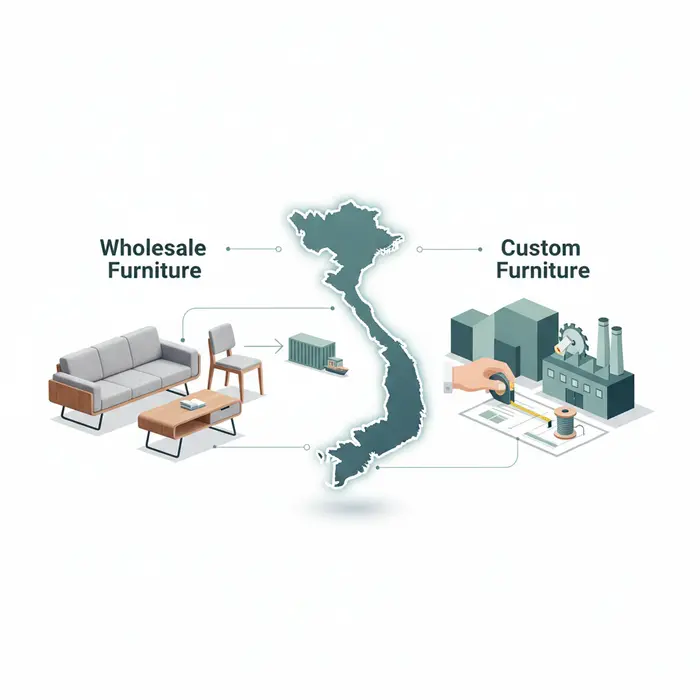
Dive into the possibilities for businesses seeking wholesale quantities or bespoke furniture designs from Vietnamese manufacturers. Vietnam has rapidly emerged as a global powerhouse in furniture manufacturing, offering a compelling blend of competitive pricing, skilled craftsmanship, and a commitment to quality. For businesses ranging from large retailers and hospitality groups to interior designers and specialized boutiques, understanding the landscape of Vietnam furniture manufacturers is crucial for successful sourcing.
1. Finding High-Volume Wholesale Furniture Vietnam Suppliers
Vietnam’s strategic location, growing economy, and established supply chains make it an ideal hub for high-volume wholesale furniture Vietnam sourcing. The country boasts a diverse manufacturing base capable of producing everything from intricate wooden pieces and sleek metal designs to comfortable upholstered items and robust outdoor furniture Vietnam manufacturers specialize in. Key advantages include access to sustainable timber, skilled artisans, and increasingly sophisticated production technologies. Businesses can find suppliers for various categories, including residential furniture, office furniture, hospitality sector pieces, and commercial fit-outs.
To effectively find high-volume suppliers, businesses often explore several avenues. Attending international trade shows, both in Vietnam (like VIFA-EXPO) and abroad (where Vietnamese manufacturers exhibit), offers direct interaction with factory representatives. Online B2B platforms and reputable sourcing agents specializing in Vietnam furniture sourcing can also streamline the process, connecting buyers with vetted manufacturers. When selecting a supplier, it’s vital to conduct thorough due diligence, including factory audits, quality control checks, and verifying ethical labor practices and environmental certifications. A reliable partner ensures not only competitive pricing but also consistent quality and timely delivery.
2. The Process of Commissioning Custom Furniture Vietnam Designs
Beyond standard wholesale offerings, Vietnamese manufacturers excel in producing custom furniture Vietnam designs. This service is invaluable for businesses requiring bespoke pieces to meet specific project requirements, unique branding, or exclusive retail lines. The process typically begins with a detailed design brief from the client, including sketches, technical drawings, material preferences, and desired finishes. Vietnam furniture manufacturers are adept at working with a variety of materials, including solid wood (acacia, rubberwood, oak), plywood, MDF, metal (steel, aluminum), rattan, and various upholstery fabrics.
Following the brief, the manufacturer’s design and engineering teams will often develop 3D renderings and technical drawings for approval. A critical stage is prototyping, where a sample piece is produced to verify design, functionality, material integrity, and finish quality. This allows for any necessary adjustments before full-scale production commences. Effective communication throughout this process is paramount, often facilitated by dedicated project managers or sourcing agents who can bridge language and cultural gaps. Commissioning custom designs in Vietnam offers immense flexibility and the opportunity to create truly unique products that stand out in the market, leveraging the country’s evolving design capabilities and manufacturing prowess, as highlighted in various industry analyses of the Vietnam furniture market.
3. Minimum Order Quantities (MOQs) and Pricing Structures
Understanding Minimum Order Quantities (MOQs) and pricing structures is fundamental when engaging with Vietnam furniture manufacturers. MOQs represent the smallest quantity of a particular product a factory is willing to produce in a single run. These are influenced by factors such as raw material purchasing requirements, production line efficiency, and setup costs. For wholesale furniture Vietnam, MOQs can range significantly, from a few hundred units for larger items to thousands for smaller, simpler pieces. For custom furniture Vietnam, MOQs might be lower for highly specialized, high-value pieces, but expect higher unit costs compared to mass-produced items.
Factories often have flexibility, especially for long-term partners or trial orders, so negotiation is frequently possible. Pricing structures are another key consideration. Common terms include FOB (Free On Board), where the seller covers costs until the goods are loaded onto the shipping vessel; EXW (Ex Works), where the buyer assumes all costs and risks from the factory gate; and CIF (Cost, Insurance, Freight), where the seller covers costs, insurance, and freight to the port of destination. Payment terms typically involve an upfront deposit (e.g., 30-50%), with the balance due upon completion or before shipment. Clearly defining these terms upfront ensures transparency and avoids misunderstandings, paving the way for a smooth and productive sourcing relationship.
Specializing in Outdoor Furniture Vietnam Manufacturers
Vietnam has firmly established itself as a global powerhouse in the furniture manufacturing industry, with a particularly robust and innovative sector dedicated to outdoor furniture. The country’s strategic location, skilled workforce, and abundant access to diverse raw materials have positioned Vietnam furniture manufacturers as top-tier suppliers for international markets. Businesses looking for high-quality, durable, and stylish outdoor pieces often turn to Vietnam furniture sourcing, recognizing the unparalleled value and craftsmanship. From sprawling resort patios to intimate garden balconies, Outdoor furniture Vietnam manufacturers are adept at producing a wide array of products that meet varying aesthetic and functional demands.
1. Popular Materials: Teak, Wicker, Aluminum, and More
The expertise of Outdoor furniture Vietnam manufacturers shines through their mastery of diverse materials. Teak stands out as a perennial favorite, revered for its natural resistance to rot, decay, and insect infestation. Vietnam’s access to sustainable teak plantations ensures a steady supply of this premium hardwood, which develops a beautiful silvery-grey patina over time, enhancing its appeal. Manufacturers skillfully craft elegant dining sets, lounge chairs, and benches that are both resilient and timeless.
Another popular choice is Wicker, encompassing both natural rattan and synthetic PE (polyethylene) wicker. While natural rattan offers an organic, classic look, synthetic wicker is specifically engineered for outdoor use, providing exceptional UV, moisture, and temperature resistance. Wholesale furniture Vietnam suppliers often offer extensive collections in synthetic wicker, known for its longevity and low maintenance. This versatility allows designers to achieve various aesthetics, from bohemian chic to modern minimalist.
Aluminum is a cornerstone material for contemporary outdoor furniture due to its lightweight nature, rust-proof properties, and strength. Vietnam furniture manufacturers utilize advanced techniques to create sleek, powder-coated aluminum frames that are durable and resistant to fading and chipping. It’s often combined with other materials like textilene fabric or sling mesh for seating, providing comfort and quick drying capabilities. Beyond these, materials such as stainless steel for unparalleled strength, reclaimed wood for rustic charm, concrete for modern industrial aesthetics, and even recycled plastics are increasingly being adopted, showcasing the industry’s commitment to innovation and sustainability.
2. Innovations in Weather-Resistant Outdoor Furniture Vietnam
The competitive global market has driven Outdoor furniture Vietnam manufacturers to continuously innovate in creating highly durable, weather-resistant products. This commitment extends beyond material selection to include advanced manufacturing processes and protective finishes. For instance, the application of multi-layer powder coating on aluminum and steel frames significantly enhances their resistance to corrosion, UV radiation, and scratching. Furthermore, developments in marine-grade fabrics for cushions and slings, such as solution-dyed acrylics, offer superior fade resistance, water repellency, and mildew protection, ensuring that outdoor pieces maintain their aesthetic appeal and structural integrity for years.
Manufacturers are also incorporating quick-dry foam and open-cell technology into cushions, preventing water retention and reducing drying time, which is crucial in humid climates. The focus on engineered composite materials and advanced weaving techniques for synthetic wicker ensures that these products can withstand extreme weather conditions without cracking, fading, or unraveling. This drive for innovation means that when businesses engage in Vietnam furniture sourcing, they are investing in furniture designed to endure, reflecting a profound understanding of diverse global climates and consumer expectations. This relentless pursuit of durability and longevity is a hallmark of the sector. You can read more about global furniture material innovations here, showcasing Vietnam’s alignment with international advancements.
3. Design Trends and Market Demand for Outdoor Pieces
The design landscape for outdoor furniture manufactured in Vietnam is dynamic and responsive to global trends. Outdoor furniture Vietnam manufacturers are not merely producers but also innovators, collaborating with international designers to create collections that resonate with contemporary aesthetics. Current trends lean towards a seamless transition between indoor and outdoor living spaces, demanding pieces that are as stylish and comfortable as their indoor counterparts. This translates into sophisticated modular seating, versatile dining sets, and accent pieces that blend functionality with elegance.
Minimalist designs, characterized by clean lines and neutral color palettes, remain popular, offering timeless appeal. However, there’s also a growing demand for bohemian and natural aesthetics, incorporating elements like woven textures, natural wood finishes, and earthy tones. The hospitality sector, in particular, drives significant demand for Wholesale furniture Vietnam, requiring robust, aesthetically pleasing, and easy-to-maintain outdoor solutions for hotels, resorts, and restaurants. Residential markets, too, are increasingly investing in creating luxurious outdoor retreats, fueling the need for high-end, comfortable, and durable furniture.
The ability of Custom furniture Vietnam suppliers to adapt to specific design requirements and bulk orders further solidifies their position. Whether it’s unique material combinations, bespoke dimensions, or exclusive finishes, Vietnamese factories demonstrate remarkable flexibility and precision. This responsiveness to evolving market demands, combined with a commitment to quality and sustainable practices, ensures that Outdoor furniture Vietnam manufacturers continue to lead the way in providing exceptional outdoor living solutions worldwide.
Challenges and Opportunities: Future of Vietnam Furniture
The Vietnamese furniture industry has carved out a significant niche on the global stage, earning a reputation for quality craftsmanship, competitive pricing, and diverse product offerings. As one of the world’s leading furniture exporters, Vietnam continues to attract both manufacturers seeking efficient production hubs and buyers looking for reliable sourcing partners. However, the path ahead is not without its complexities. The future of Vietnam furniture manufacturers is poised at a critical juncture, facing both formidable challenges stemming from a dynamic global landscape and exciting opportunities driven by technological advancements and evolving consumer demands. Navigating these requires strategic foresight, adaptability, and a commitment to innovation from all stakeholders involved in Vietnam furniture sourcing.

1. Impact of Global Economic Shifts and Supply Chains
Global economic volatility poses a significant challenge, with fluctuations in major consumer markets like the US and Europe directly impacting export orders due to inflation or recessionary pressures. Rising raw material costs (timber, steel, fabrics) and global supply chain disruptions further squeeze profit margins for Vietnam furniture manufacturers, increasing logistics costs and lead times.
Despite these obstacles, opportunities abound. Vietnam’s proactive engagement in Free Trade Agreements (FTAs) such as the EVFTA and CPTPP offers preferential market access. This strategic positioning, coupled with Vietnam’s robust export performance in the global furniture trade landscape, reinforces its appeal. The global trend of supply chain diversification and “friend-shoring” positions Vietnam as a stable and reliable hub for Vietnam furniture sourcing. Manufacturers can capitalize by strengthening backward integration, exploring sustainable local raw material sources, and investing in resilient logistics. Adapting product lines to diverse market needs and focusing on high-value segments can also mitigate economic downturns.
2. Embracing Technology and Automation in Production
Rising labor costs are gradually eroding a traditional competitive advantage, making technology and automation a necessity for maintaining efficiency and market edge. Challenges include significant initial investment and the need for a skilled workforce to operate advanced machinery, particularly for SMEs.
However, Industry 4.0 technologies offer immense opportunities. Robotics, AI-driven design, CNC machinery, and IoT-enabled production lines can significantly enhance precision, reduce waste, and accelerate manufacturing. This leads to higher quality products, consistent output, and easier handling of complex designs. For example, CAD/CAM systems with automated processes can revolutionize Custom furniture Vietnam production, enabling cost-effective mass customization. Automation also improves safety and facilitates digital transformation for better inventory, predictive maintenance, and streamlined supply chain communication, boosting global competitiveness.
3. Future Growth Sectors and Emerging Markets
Sustained expansion hinges on capitalizing on future growth sectors and emerging markets. Diversification is key, moving beyond traditional markets. There’s a surging global demand for sustainable and eco-friendly furniture, driven by environmentally conscious consumers. Vietnamese manufacturers can invest in sustainable materials, eco-friendly processes, and certifications to tap into this high-value segment. The “smart” furniture market, integrating technology for convenience, also represents a growing niche.
Beyond products, sectors like hospitality, with its global expansion, demand contract furniture. The e-commerce sector requires scalable production and logistics for direct-to-consumer models. Outdoor furniture Vietnam manufacturers can innovate in materials and design to meet evolving tastes. While the US, EU, and Japan remain primary markets, exploring new territories like the Middle East, Africa, and other ASEAN countries offers substantial growth. Furthermore, Vietnam’s growing domestic market presents a significant opportunity for Wholesale furniture Vietnam and retail. Strategic market research and flexible production capabilities are vital for penetrating these diverse segments.
The future of the Vietnamese furniture industry is a tapestry woven with both potential pitfalls and bright prospects. By proactively addressing global economic shifts, vigorously embracing technological advancements, and astutely targeting emerging growth sectors, Vietnam furniture manufacturers can not only overcome challenges but also solidify their position as global leaders, ensuring continued success and innovation for years to come.
Partner with Vietnam’s Leading Suppliers
Looking for reliable suppliers in Vietnam? Contact VietnamSuppliers.com today to connect with verified manufacturers and exporters across all industries.
—————————————
References
– Furniture exports from Vietnam 2022 | Statista: https://www.statista.com/statistics/1231862/vietnam-furniture-exports-value/
– Furniture and Wood Products Testing Services | SGS: https://www.sgs.com/en/services/furniture-and-wood-products-testing
– Vietnam Furniture Market Analysis & Forecast: https://www.mordorintelligence.com/industry-reports/vietnam-furniture-market
– New materials and technologies drive outdoor furniture innovation: https://www.furnituretoday.com/outdoor-furniture/new-materials-and-technologies-drive-outdoor-furniture-innovation/
– Vietnam Wood Exports Grow Nearly 7% In 2022: https://www.furnituretoday.com/markets/vietnam-wood-exports-grow-nearly-7-in-2022/