The Rise of Vietnam’s Wood Product Industry
Vietnam has rapidly emerged as a global powerhouse in wood product manufacturing, transforming from a nascent industry into a strategic global hub within a few decades. This remarkable ascent is characterized by consistent double-digit growth, turning the nation into a preferred destination for Vietnam wood product manufacturers and international buyers alike. The industry’s evolution reflects not only Vietnam’s adaptability and resourcefulness but also its strategic integration into the global supply chain, making it a critical player in meeting the world’s demand for high-quality, competitively priced wood products. From exquisite furniture to essential timber components, Vietnam’s wood export companies are carving out an indelible mark on the international market, showcasing robust capabilities in design, production, and sustainable sourcing.

1. Key Growth Drivers and Market Position
The phenomenal growth of Vietnam’s wood product industry is underpinned by several compelling factors. Firstly, a competitive labor force, coupled with increasing investments in modern technology and production facilities, has significantly boosted manufacturing capacity and efficiency. This has attracted numerous international companies looking for reliable Vietnam furniture manufacturers and partners for sourcing wood products Vietnam. Secondly, Vietnam benefits from a strategic geographical location, providing easy access to key raw material sources and major export markets. The country has also actively cultivated a business-friendly environment, encouraging both domestic and foreign direct investment (FDI) into the sector.
Vietnam’s wood product exports soared past the USD 15 billion mark in recent years, making it one of the top global exporters of wood and wood products, particularly in wooden furniture. This strong performance is not solely driven by cost advantages; Vietnamese manufacturers have also enhanced their design capabilities and product quality, catering to diverse international tastes and standards. The industry’s robust supply chain, encompassing everything from wholesale timber Vietnam suppliers to finished product exporters, ensures a smooth flow of goods. The country’s ability to adapt to market trends and innovate in product development continues to solidify its role as a leading global supplier.
2. Government Policies and Trade Agreements Impacting Exports
The Vietnamese government has played a pivotal role in nurturing the wood product industry through supportive policies and strategic trade agreements. Initiatives such as investment incentives, tax breaks, and streamlined administrative procedures have made it easier for businesses to operate and expand. Moreover, the government’s strong emphasis on sustainable forest management and the legality of timber sourcing has bolstered the industry’s international credibility, addressing growing concerns about environmental responsibility. This commitment is crucial for Vietnam wood export companies seeking to comply with stringent import regulations in major markets like the EU and the US.
A significant catalyst for export growth has been Vietnam’s participation in numerous free trade agreements (FTAs). Agreements like the Comprehensive and Progressive Agreement for Trans-Pacific Partnership (CPTPP), the EU-Vietnam Free Trade Agreement (EVFTA), and bilateral agreements with key partners have opened up vast new markets and reduced tariff barriers. These trade pacts provide preferential access for Vietnamese wood products, making them more competitive on the global stage. This strategic advantage, combined with a commitment to quality and increasingly sustainable practices, positions Vietnam wood product manufacturers as highly attractive partners for international buyers. For those looking to partner with reliable suppliers, the network of Vietnam Wood Product Manufacturers listed on platforms like VietnamSuppliers.com offers a comprehensive starting point.
3. Sustainable Practices and Future Outlook
Looking ahead, the Vietnamese wood product industry is increasingly focusing on sustainability and value addition to maintain its competitive edge. There is a growing emphasis on certified timber sources, efficient use of raw materials, and the adoption of eco-friendly manufacturing processes. Many Vietnam furniture manufacturers are investing in advanced machinery and techniques to minimize waste and produce higher-value products, including smart furniture and bespoke designs. This shift towards sustainable and innovative production not only meets evolving global consumer demands but also enhances the industry’s long-term resilience.
The future outlook for sourcing wood products Vietnam remains exceptionally promising. With continued government support, sustained foreign investment, and an unwavering commitment to quality and sustainability, Vietnam is poised to further consolidate its position as a leading global wood product manufacturing hub. The industry’s ability to adapt to international standards, innovate in design, and ensure responsible sourcing will be key to its continued success, solidifying its reputation as a reliable and forward-thinking supplier for the world.
Spotlight on Leading Vietnam Furniture Manufacturers
Description: A deep dive into the furniture manufacturing segment, showcasing innovative designs, quality craftsmanship, and major players driving the sector.
Vietnam has firmly established itself as a global powerhouse in furniture manufacturing, evolving from a low-cost production hub to a sophisticated center known for its innovative designs and high-quality craftsmanship. The sector plays a crucial role in the national economy, fueled by abundant natural resources, a skilled workforce, and strategic government support. As global supply chains continue to diversify, businesses looking for reliable and high-capacity Vietnam Wood Product Manufacturers increasingly turn their attention to this vibrant Southeast Asian nation. The country’s ability to blend traditional woodworking artistry with modern industrial processes makes it an attractive destination for Sourcing wood products Vietnam, catering to diverse international markets.
1. Trends in Furniture Design and Export Markets
The aesthetic landscape of furniture produced by Vietnam furniture manufacturers is constantly evolving, reflecting global consumer preferences and design philosophies. Contemporary Vietnamese furniture often features clean lines, minimalist aesthetics, and functional designs that appeal to modern homes and commercial spaces. There’s a strong emphasis on sustainability, with a growing number of manufacturers utilizing ethically sourced and certified timber, embracing eco-friendly finishes, and minimizing waste throughout the production process. Beyond aesthetics, smart furniture solutions incorporating technology are also emerging, catering to tech-savvy consumers.
Major export markets for Vietnamese furniture include the United States, European Union, Japan, South Korea, and Australia. These markets demand not only competitive pricing but also strict adherence to international quality, safety, and environmental standards. Vietnamese firms have adeptly responded by investing in R&D, design innovation, and advanced manufacturing technologies. This strategic approach ensures their products remain competitive and desirable on the global stage, solidifying Vietnam’s reputation as a key player in the international furniture trade.
2. Custom Manufacturing Capabilities and Quality Standards
One of Vietnam’s significant strengths lies in its robust custom manufacturing capabilities. Many Vietnam furniture manufacturers offer extensive OEM (Original Equipment Manufacturer) and ODM (Original Design Manufacturer) services, allowing international buyers to realize their specific product visions, from unique designs and material specifications to custom finishes and packaging. This flexibility is invaluable for brands seeking tailored solutions that align perfectly with their market needs and brand identity.
The industry upholds rigorous quality control standards, often complying with international certifications such as FSC (Forest Stewardship Council) for responsible forestry, CARB (California Air Resources Board) for low formaldehyde emissions, and ISO standards for quality management. Manufacturers work with a diverse range of materials, from locally abundant rubberwood, acacia, and pine to imported hardwoods like oak and walnut, alongside engineered wood products. The meticulous attention to detail, from initial timber selection to the final assembly and finishing, ensures that the end products are durable, aesthetically pleasing, and meet the high expectations of global consumers. Businesses interested in Wholesale timber Vietnam or specific wood components will find a mature supply chain capable of providing high-grade materials for various production needs.
3. Sustainability Initiatives and Key Industry Players
Sustainability has become a cornerstone of the Vietnamese furniture industry’s growth strategy. Recognizing the increasing global demand for environmentally responsible products, many Vietnam wood export companies are actively implementing sustainable forestry practices, investing in biomass energy, and adopting cleaner production technologies. This commitment not only enhances their appeal to eco-conscious buyers but also ensures the long-term viability of the nation’s natural resources. The Vietnamese government also supports these efforts through various policies promoting green manufacturing and sustainable forest management.
The sector is characterized by a mix of large-scale enterprises with significant export volumes and smaller, specialized workshops focusing on artisanal quality or niche markets. Leading companies often boast state-of-the-art factories equipped with advanced machinery and employ thousands of skilled workers. These major players, alongside numerous agile small and medium-sized enterprises (SMEs), contribute to the industry’s dynamic and competitive landscape. Their collective expertise covers a broad spectrum of furniture types, including indoor and outdoor furniture, office furniture, kitchen cabinets, and children’s furniture, cementing Vietnam’s position as a versatile and reliable global supplier. According to recent reports, Vietnam has become the second-largest furniture exporter in the world, a testament to its industry’s resilience and adaptability. For more insights, refer to this report from Furniture Today.
In conclusion, Vietnam’s furniture manufacturing sector continues to thrive, driven by a combination of innovative design, exceptional craftsmanship, and a steadfast commitment to quality and sustainability. For international buyers, partnering with Vietnam Wood Product Manufacturers offers access to a diverse range of products, flexible production capabilities, and a reliable supply chain. The industry’s strategic investments in technology and human capital ensure its continued prominence in the global furniture market for years to come.
Strategic Sourcing Wood Products from Vietnam
Vietnam has emerged as a global powerhouse in wood product manufacturing, offering a diverse array of items from high-quality furniture to construction timber and intricate handicrafts. For international buyers, understanding how to effectively source these products is crucial for success. This guide provides comprehensive strategies for identifying reliable Vietnam Wood Product Manufacturers, ensuring quality, and navigating the complexities of international trade.

1. Finding Reliable Suppliers and Manufacturers
Identifying reputable Vietnam Wood Product Manufacturers is the cornerstone of a successful sourcing strategy. The Vietnamese market is vast, with numerous small to large-scale operations. Start your search by leveraging online B2B platforms, industry directories, and trade show participation. Platforms like Alibaba, Global Sources, and specialized Vietnamese sourcing sites can offer initial leads. Attending major trade fairs such as VietnamWood, VIFA-EXPO, or the international furniture fair in Ho Chi Minh City provides invaluable opportunities to meet Vietnam furniture manufacturers face-to-face, inspect product samples, and assess factory capabilities. It’s essential to conduct thorough due diligence, including checking business registrations, export licenses, and previous client references. Engaging local sourcing agents or consultants can also streamline this process, as they possess in-depth market knowledge and established networks, helping you navigate cultural nuances and language barriers effectively. When evaluating potential partners for sourcing wood products Vietnam, prioritize those with clear communication, transparent production processes, and a proven track record of meeting international standards. Look for certifications such as FSC (Forest Stewardship Council) or PEFC (Programme for the Endorsement of Forest Certification) to ensure responsible timber sourcing, particularly when seeking wholesale timber Vietnam or components.
2. Navigating Logistics, Quality Control, and Compliance
Once suppliers are identified, the next critical steps involve managing logistics, ensuring stringent quality control, and adhering to compliance standards. Logistics in Vietnam are generally efficient, with major ports like Hai Phong and Ho Chi Minh City facilitating global shipping. It’s advisable to work with experienced freight forwarders who specialize in shipping wood products from Vietnam. They can help optimize routes, manage customs declarations, and ensure timely delivery. Quality control is paramount; establish clear specifications and conduct regular inspections at various stages of production—from raw material inspection to in-process checks and final pre-shipment verification. Many international buyers opt for third-party inspection agencies to provide unbiased assessments. This proactive approach minimizes defects and ensures products meet your exact requirements. Compliance with international trade regulations, environmental standards, and labor laws is non-negotiable. Familiarize yourself with the Lacey Act in the U.S., EUTR (European Union Timber Regulation), and similar regulations concerning timber legality and deforestation. Ensuring your chosen Vietnam wood export companies comply with these standards not only mitigates legal risks but also enhances your brand’s reputation for ethical sourcing. Understanding the origin of raw materials is vital, especially given global concerns about illegal logging. The Vietnamese government, alongside international organizations, is actively working to strengthen timber legality assurance systems, making it easier for buyers to source responsibly. For comprehensive data and insights into the global timber trade and sustainability efforts, resources like the International Tropical Timber Organization (ITTO) provide valuable information.
3. Building Sustainable Partnerships and Market Understanding
Successful long-term sourcing wood products Vietnam hinges on cultivating strong, trust-based relationships with your suppliers. This involves regular communication, transparent feedback loops, and a willingness to understand their operational challenges. Investing in long-term partnerships can lead to better pricing, preferential production slots, and greater flexibility in customization. Beyond individual supplier relationships, staying abreast of market trends and economic developments in Vietnam is crucial. The country’s wood processing industry continues to evolve, driven by technological advancements and increasing demand for sustainable products. Understanding these dynamics allows buyers to anticipate changes, identify new product opportunities, and adapt their sourcing strategies accordingly. For example, the shift towards utilizing plantation timber and certified wood rather than natural forest timber presents both challenges and opportunities for Vietnam wood export companies. Furthermore, monitor governmental policies and trade agreements, such as the EVFTA (EU-Vietnam Free Trade Agreement) or CPTPP (Comprehensive and Progressive Agreement for Trans-Pacific Partnership), which can significantly impact tariffs, lead times, and overall costs. Engaging with industry associations in Vietnam can also provide valuable insights and networking opportunities. By committing to ethical practices, fostering mutual respect, and continuously learning about the market, international buyers can unlock the full potential of Vietnam’s vibrant wood product sector, ensuring a stable and high-quality supply chain for years to come, whether for custom Vietnam furniture manufacturers or large-scale wholesale timber Vietnam needs.
Wholesale Timber Vietnam: Supply Chain Insights
Vietnam has rapidly emerged as a powerhouse in the global timber industry, transforming from a raw material exporter to a sophisticated manufacturer and exporter of wood products. The country’s strategic location, competitive labor costs, and robust trade agreements have fueled this growth, attracting significant foreign investment and fostering a dynamic domestic sector. Understanding the intricate timber supply chain in Vietnam is crucial for businesses looking to source high-quality wood products, from raw timber to finished furniture. This section delves into the origins of timber, the sustainability measures in place, and the market forces shaping the wholesale timber landscape in Vietnam.
1. Domestic vs. Imported Timber Sources and Availability
The foundation of Vietnam’s thriving wood industry rests on a dual sourcing strategy: utilizing both domestic forests and a significant volume of imported timber. While Vietnam boasts substantial forest coverage, its domestic supply primarily consists of plantation species like Acacia, Rubberwood, and Pine. These fast-growing woods are integral to the production of plywood, particleboard, and lower-to-mid-range furniture. Domestic timber sources provide a stable base, contributing to local employment and reducing immediate reliance on international markets for basic wood needs.
However, for specialized hardwoods, large dimensions, or species not readily available domestically, Vietnam heavily relies on imports. Major import partners include Laos, Cambodia, Malaysia, and African nations for tropical hardwoods, and the United States, Europe, New Zealand, and Brazil for temperate species like oak, ash, walnut, and pine. This diverse import portfolio allows Vietnam Wood Product Manufacturers to cater to a wide range of international market demands and aesthetic preferences. The availability and pricing of imported timber are subject to global market fluctuations, trade policies of source countries (such as log export bans), and international shipping costs, making efficient Sourcing wood products Vietnam a complex but vital process for the industry.
2. Sustainable Forestry, Certifications, and Environmental Practices
As global demand for ethically sourced and environmentally responsible products grows, sustainability has become a critical pillar of Vietnam’s timber industry. The Vietnamese government, in collaboration with international organizations, is increasingly promoting sustainable forest management practices to combat illegal logging and ensure the long-term viability of its forest resources. National strategies focus on reforestation, forest protection, and the development of certified plantations.
Certifications like the Forest Stewardship Council (FSC) and the Programme for the Endorsement of Forest Certification (PEFC) are increasingly important for Vietnam furniture manufacturers aiming for export markets, especially in Europe and North America, which often mandate such assurances. While the adoption of these certifications is rising, particularly among larger enterprises and export-oriented firms, challenges remain in extending them to smallholder farmers and ensuring complete supply chain traceability. Efforts include strengthening legal frameworks, enhancing monitoring systems, and providing technical assistance to growers and processors. These practices not only safeguard the environment but also enhance market access and build consumer trust in Vietnamese wood products. Information on the global timber situation, which influences sustainable practices, can be found in publications like the ITTO Annual Review and Assessment of the World Timber Situation.
3. Wholesale Market Dynamics and Export Opportunities
The Wholesale timber Vietnam market is characterized by a vibrant ecosystem of sawmills, timber processing facilities, and trading companies. These entities play a pivotal role in transforming raw logs into usable lumber, veneer, plywood, and other semi-finished products that feed into Vietnam’s vast manufacturing sector. Key market drivers include the robust demand from the furniture and flooring industries, as well as construction. Both domestic consumption and, more significantly, international export markets shape pricing and operational strategies.
Vietnam’s competitive edge in the global market is its strong processing capability and its ability to produce a diverse range of finished wood products, from high-end bespoke furniture to mass-produced items. Major export destinations for Vietnam wood export companies include the United States, the European Union, Japan, South Korea, and China. Free trade agreements such as the EVFTA (EU-Vietnam Free Trade Agreement) and the CPTPP (Comprehensive and Progressive Agreement for Trans-Pacific Partnership) have significantly boosted export opportunities by reducing tariffs and streamlining trade processes. However, challenges persist, including fluctuating raw material prices, the need for continuous technological upgrades, and intense international competition. To sustain growth, the industry must continue to innovate, invest in advanced manufacturing, and further strengthen its commitment to transparency and sustainability throughout the supply chain.
Key Vietnam Wood Export Companies and Future Trends
Vietnam has cemented its position as a global leader in wood product manufacturing and export. This section highlights prominent export companies that drive this success, while also discussing the critical future industry trends, challenges, and opportunities for sustained growth and innovation within the sector.
1. Profiles of Major Exporters and Product Categories
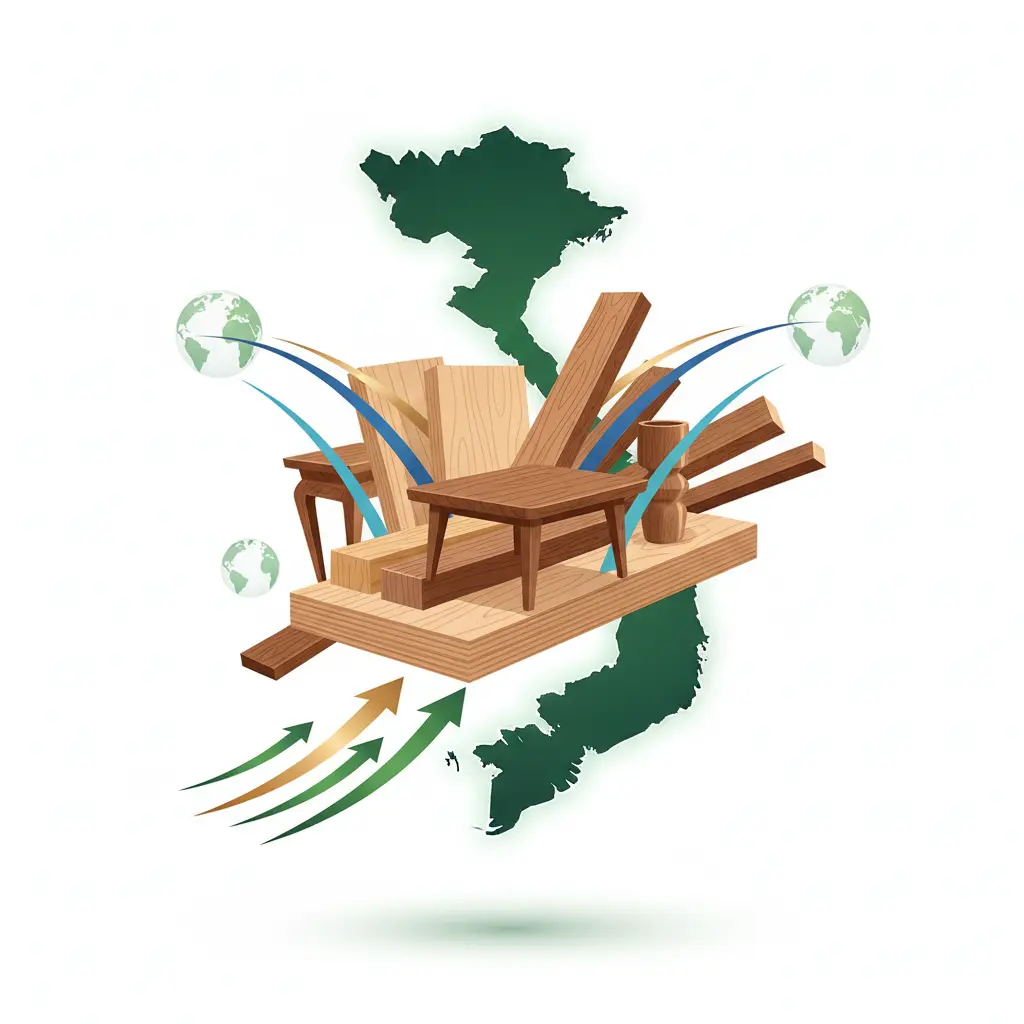
Vietnam’s wood export landscape is dominated by a mix of large corporations and a vast network of small and medium-sized enterprises (SMEs). Key players like AA Corporation, a highly regarded furniture manufacturer, have carved out a niche in high-end hospitality and residential projects, showcasing Vietnam’s capability in producing sophisticated, custom designs. Other significant names include the Phu Tai Corporation, known for its diverse portfolio ranging from indoor and outdoor furniture to wood flooring and rubberwood products. Scansia Pacific, with its focus on Scandinavian-style furniture, and Truong Thanh Furniture Corporation, a veteran in the industry, further exemplify the breadth and depth of manufacturing expertise. These Vietnam wood export companies are not just manufacturers but often integrated operations, managing everything from material sourcing to final logistics.
The product categories exported are incredibly varied, catering to global demands. Indoor furniture, including dining sets, bedroom suites, and living room pieces, forms a substantial portion, often leveraging tropical hardwoods and engineered wood. Outdoor furniture, particularly popular in markets like the US and EU, utilizes durable acacia and eucalyptus. Beyond finished furniture, wholesale timber Vietnam and semi-finished wood products, such as wood panels, plywood, and veneer, are also significant. Additionally, the handicraft sector, producing items like decorative objects, wooden kitchenware, and intricate carvings, highlights the skilled craftsmanship prevalent across the country. Many international buyers are actively engaged in sourcing wood products Vietnam, drawn by competitive pricing and improving quality.
2. Emerging Technologies, Market Shifts, and Long-Term Outlook
The Vietnamese wood industry is on the cusp of significant transformation, driven by emerging technologies and evolving market demands. Automation and robotics are increasingly being integrated into production lines, enhancing efficiency, precision, and reducing reliance on manual labor. Computer Numerical Control (CNC) machines are now standard in many modern factories, enabling complex designs and minimizing material waste. Furthermore, the adoption of Industry 4.0 principles, including the Internet of Things (IoT) for supply chain monitoring and Artificial Intelligence (AI) for predictive analytics and design optimization, is slowly but surely gaining traction among leading Vietnam furniture manufacturers.
Market shifts are equally pivotal. The global demand for sustainable and ethically sourced wood products continues to grow, pushing Vietnamese exporters to obtain certifications like FSC (Forest Stewardship Council) and PEFC (Programme for the Endorsement of Forest Certification). E-commerce growth is opening new direct-to-consumer channels, allowing manufacturers to reach a broader international audience. There’s also a rising consumer preference for customizable, multi-functional, and flat-pack furniture, which manufacturers are adapting to. The long-term outlook for Vietnam wood product manufacturers remains robust. The industry is projected to continue its impressive growth trajectory, focusing on moving up the value chain by producing more design-intensive, high-quality, and branded products, rather than just mass-produced items. This strategic shift is crucial for maintaining competitiveness and profitability.
3. Challenges, Sustainability, and Innovation
Despite its strong position, the Vietnamese wood industry faces several challenges. Raw material sourcing remains a significant hurdle; while Vietnam has some domestic timber, a substantial portion of wood must be imported, making the industry susceptible to global price fluctuations and supply chain disruptions. Rising labor costs, increasing competition from other Asian manufacturing hubs, and potential trade barriers also pose ongoing threats. However, these challenges are simultaneously driving innovation and a stronger commitment to sustainability.
Sustainability is no longer an option but a necessity. Companies are investing in cleaner production technologies, waste reduction strategies, and responsible forest management practices. The focus is on promoting a circular economy within the wood sector, maximizing resource utilization, and minimizing environmental impact. For example, many companies are now exploring innovative uses for wood waste, turning sawdust into pellets for energy or creating composite materials. Innovation extends to product design, with a growing emphasis on modularity, durability, and aesthetics that appeal to diverse global tastes. There’s also a strong push towards research and development in new wood treatments and finishes that enhance product longevity and performance. Addressing these challenges through continuous innovation and a steadfast commitment to sustainable practices will be key to ensuring the long-term prosperity and global leadership of Vietnam wood product manufacturers. This proactive approach ensures that the industry not only grows but also sets a benchmark for responsible and modern manufacturing, attracting more buyers looking to source wood products Vietnam from ethical suppliers. The country’s commitment to sustainable forest management and legal timber sourcing is a critical factor for its future success, as highlighted by organizations monitoring global timber trade practices.
Partner with Vietnam’s Leading Suppliers
Looking for reliable suppliers in Vietnam? Contact VietnamSuppliers.com today to connect with verified manufacturers and exporters across all industries.
—————————————
References
– Vietnam exports wood and forest products worth over US$9 billion: https://vietnamnews.vn/economy/1381387/vietnam-exports-wood-and-forest-products-worth-over-us-9-billion.html
– Vietnam solidifies position as world’s second-largest furniture exporter: https://www.furnituretoday.com/markets/vietnam-solidifies-position-as-worlds-second-largest-furniture-exporter/
– :
– ITTO Annual Review and Assessment of the World Timber Situation: https://www.itto.int/annual_review/
– International Tropical Timber Organization (ITTO): https://www.itto.int/member/viet_nam/