
Understanding the EU CBAM Framework: What You Need to Know
The European Union’s Carbon Border Adjustment Mechanism (CBAM) represents a landmark shift in global trade, intertwining environmental policy with international commerce. Designed to tackle carbon leakage and incentivize decarbonization worldwide, CBAM directly impacts businesses engaged in trade with the EU. As a pivotal component of the European Green Deal, this mechanism requires a profound understanding of its objectives, critical timelines, and stringent reporting obligations. For businesses navigating the complexities of global green trade policy updates, mastering CBAM compliance is not just about avoiding penalties, but about fostering sustainable supply chain due diligence and seizing opportunities for eco-friendly product certification B2B across borders.
1. What is CBAM and why it matters for global trade?
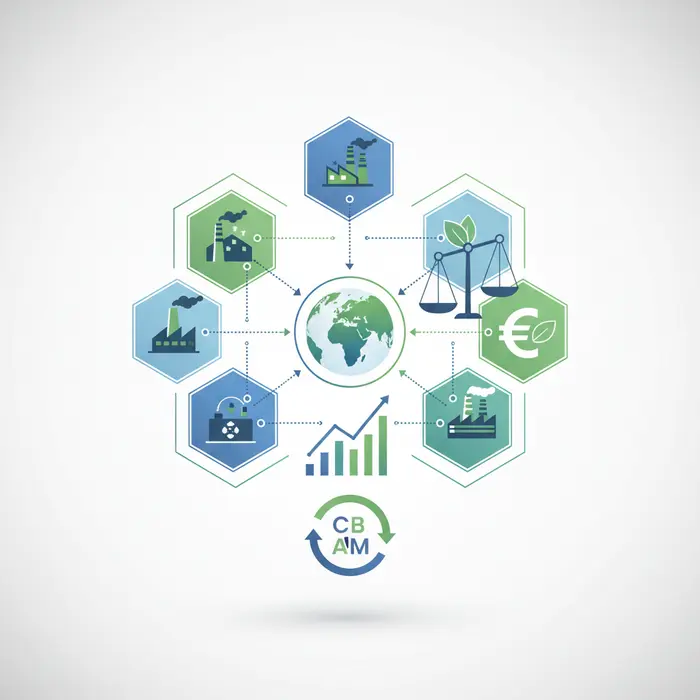
The EU Carbon Border Adjustment Mechanism (CBAM) is a groundbreaking tool designed to put a fair price on the carbon emitted during the production of certain goods imported into the EU. Its primary objective is to prevent “carbon leakage” – a scenario where EU-based companies might move carbon-intensive production outside the EU, or EU imports are replaced by more carbon-intensive goods, to avoid the bloc’s stringent carbon pricing under the EU Emissions Trading System (ETS). By ensuring that imported goods face a carbon cost equivalent to those produced within the EU, CBAM levels the playing field and encourages non-EU countries to step up their climate ambition and adopt cleaner production methods. This mechanism is a significant driver for global green trade policy updates, pushing companies worldwide to enhance their export compliance environmental standards. For businesses, understanding CBAM is crucial not only for market access to the EU but also for proactively developing sustainable supply chain due diligence practices and exploring eco-friendly product certification B2B opportunities to remain competitive in an increasingly carbon-conscious global economy.
2. Key Timelines and Transitional Period Learnings (2023-2025)
The implementation of CBAM is proceeding in phases, with the current transitional period being critical for businesses to adapt. This phase officially began on October 1, 2023, and will run until December 31, 2025. During this time, importers into the EU are primarily subject to reporting obligations without any financial adjustments. This means businesses must collect and report data on the embedded emissions of their imported goods, as well as any carbon price effectively paid in the country of origin. This transitional period serves as a vital learning curve for both importers and third-country producers, allowing them to fine-tune their data collection methods, emission calculation methodologies, and internal processes. The insights gained from this phase will be invaluable for navigating the full implementation of CBAM, which commences on January 1, 2026. From this date onwards, importers will be required to purchase and surrender CBAM certificates corresponding to the reported embedded emissions of their goods, making accurate data and robust compliance strategies paramount to avoid significant financial implications.
3. Products Covered and Reporting Obligations for Importers
Initially, CBAM targets a select group of carbon-intensive goods, deemed at high risk of carbon leakage. These include specific categories of cement, iron and steel, aluminum, fertilizers, electricity, and hydrogen. The scope for these products encompasses both direct emissions (from the production process itself) and, for certain sectors like electricity, indirect emissions (from the generation of electricity consumed during production). For importers, the reporting obligations during the transitional period are detailed and precise. Quarterly reports must be submitted to the EU Commission outlining the total quantity of goods imported, the actual embedded emissions (both direct and indirect, where applicable) per tonne of each product, and the carbon price effectively paid in the country of origin for these emissions. This necessitates close collaboration with non-EU suppliers to obtain accurate and verifiable emissions data, a task that underscores the importance of robust data management and due diligence. Effective EU Carbon Border Adjustment Mechanism (CBAM) compliance during this phase will lay the groundwork for a smooth transition into the permanent regime, minimizing risks and ensuring continued market access to the EU.
Navigating Global Green Trade Policy Updates & CBAM’s Role
The global trade landscape is undergoing a profound transformation, driven by an urgent need to address climate change. As nations intensify their decarbonization efforts, a new wave of green trade policies is emerging, fundamentally reshaping international commerce. At the forefront of these global green trade policy updates is the European Union’s Carbon Border Adjustment Mechanism (CBAM). This section explores how CBAM fits within this broader landscape, detailing its implications for international commerce and climate action, and highlighting the critical need for businesses to adapt to evolving EU Carbon Border Adjustment Mechanism (CBAM) compliance.
1. CBAM’s Position in International Climate Policy Frameworks
The EU Carbon Border Adjustment Mechanism (CBAM) is not an isolated policy but a cornerstone of the EU’s ambitious Fit for 55 package, designed to achieve a 55% reduction in net greenhouse gas emissions by 2030 compared to 1990 levels. Its primary objective is to prevent ‘carbon leakage’ – the scenario where EU companies might relocate carbon-intensive production outside the EU or replace EU products with more carbon-intensive imports due to differing climate ambitions. By placing a carbon price on imports into the EU for certain goods, CBAM aims to level the playing field and encourage global industries to decarbonize. It serves as an extension of the EU’s internal Emissions Trading System (ETS).
Within international climate policy frameworks, CBAM aligns with the spirit of the Paris Agreement, which encourages all nations to pursue ambitious climate actions. While some countries have raised concerns about its potential trade implications, the EU maintains that CBAM is compliant with World Trade Organization (WTO) rules, specifically principles of non-discrimination and necessity for environmental protection. Its introduction marks a significant step towards internalizing the cost of carbon in international trade, compelling non-EU countries to consider their own carbon pricing mechanisms or risk their exports facing additional costs when entering the EU market. This pressure is already prompting discussions and potential policy shifts in various trading partners, positioning CBAM as a de facto global standard-setter for carbon pricing at borders.
2. Impact on Non-EU Countries and Evolving Trade Relations
The immediate and profound impact of CBAM is felt most acutely by non-EU countries exporting high-carbon goods to the EU. Sectors such as iron and steel, cement, fertilizers, aluminium, electricity, and hydrogen are directly affected. Exporters in these industries must now navigate stringent reporting requirements during the transitional phase (October 2023 – December 2025), which demands meticulous data collection on the embedded greenhouse gas emissions of their products. This necessitates robust sustainable supply chain due diligence and precise emissions accounting, challenging many businesses that may lack the infrastructure or expertise for such detailed environmental reporting.
The implications extend beyond mere compliance; CBAM is reshaping trade relations. Some developing nations fear it could act as a trade barrier, impacting their economic competitiveness. Conversely, it provides a strong incentive for these nations to invest in green technologies and processes, accelerating their own decarbonization efforts. Countries with existing carbon pricing mechanisms may see their exports face lower CBAM charges, fostering a global shift towards carbon pricing. Businesses globally are now focused on export compliance environmental standards, exploring new methods for eco-friendly product certification B2B to demonstrate their low-carbon credentials and maintain market access to the EU.
3. Anticipated Policy Evolutions and Future Green Trade Measures
CBAM’s current form is likely just the beginning of a broader trend in green trade measures. Following the transitional reporting period, the full financial mechanism of CBAM will commence in 2026, requiring importers to purchase CBAM certificates corresponding to the carbon embedded in their goods. It is highly anticipated that the scope of CBAM will expand over time, potentially to include more sectors and even indirect emissions (scope 2 and 3). This evolution will further intensify the pressure on global supply chains to reduce their carbon footprints.
Beyond CBAM, the landscape of global green trade policy updates is burgeoning. We can expect to see an increase in mandatory sustainability reporting requirements, deforestation-free supply chain regulations, and the development of digital product passports detailing environmental impacts. Other jurisdictions, such as the UK, Canada, and the USA, are also exploring or implementing their own forms of carbon border adjustments or similar environmental trade policies, potentially leading to a patchwork of regulations. For businesses, proactive engagement with these evolving frameworks, investment in decarbonization technologies, and transparent reporting will be crucial for maintaining competitiveness and ensuring long-term market access in a world increasingly prioritizing sustainable trade. Adapting to these changes is not merely about compliance; it’s about seizing opportunities in the burgeoning green economy.
Sustainable Supply Chain Due Diligence for CBAM Compliance
As Global green trade policy updates accelerate, businesses face increasing pressure to demonstrate environmental responsibility and transparency. The EU Carbon Border Adjustment Mechanism (CBAM) compliance represents a pivotal shift, requiring importers into the European Union to declare and pay for the embedded emissions of certain carbon-intensive goods. This mechanism is not just a tax; it’s a powerful driver for change, compelling companies to implement robust sustainable supply chain due diligence practices. Meeting CBAM’s stringent data and emissions requirements is crucial for market access and competitive advantage, necessitating a deep dive into your supply chain’s carbon footprint.
The imperative for detailed carbon accounting and proactive mitigation strategies has never been higher. Effective Sustainable supply chain due diligence not only ensures compliance but also unlocks opportunities for operational efficiency, enhanced brand reputation, and resilience against future environmental regulations. For businesses dealing with products like cement, iron and steel, aluminum, fertilizers, electricity, and hydrogen, understanding and adapting to CBAM is paramount. This section outlines practical strategies to navigate these new requirements, transforming compliance into a strategic advantage.
1. Mapping Your Supply Chain for Carbon-Intensive Imports
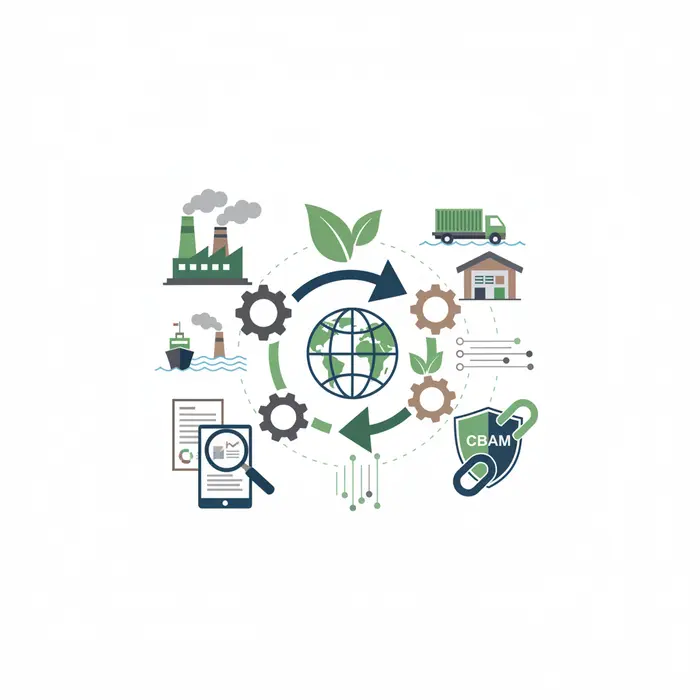
The first critical step towards EU Carbon Border Adjustment Mechanism (CBAM) compliance is gaining granular visibility into your supply chain, specifically identifying and mapping all carbon-intensive goods destined for the EU market. This goes beyond understanding your direct, Tier-1 suppliers. True Sustainable supply chain due diligence demands an N-tier visibility approach, tracing materials and components back to their origin. Companies must categorize imported goods based on CBAM’s scope, including iron and steel, aluminum, cement, fertilizers, electricity, and hydrogen. This mapping process should meticulously document the source country, manufacturing facilities, and production processes for each relevant input.
Utilizing digital tools and platforms can significantly aid in this complex task, allowing for the visualization of entire supply networks and pinpointing potential carbon hotspots. The goal is to establish a comprehensive inventory of all imported products subject to CBAM, understanding their journey from raw material extraction to final product assembly. This foundational mapping serves as the basis for all subsequent data collection and emissions calculation efforts, crucial for accurate Export compliance environmental standards.
2. Data Collection and Emissions Calculation Methodologies
Once your supply chain is mapped, the next challenge is to accurately collect emissions data and apply appropriate calculation methodologies. CBAM requires detailed reporting of both direct (Scope 1) and indirect (Scope 2) emissions embedded in imported goods. This means gathering data on the energy consumption, fuel types, and production processes at each manufacturing stage for CBAM-relevant products. Importers are encouraged to obtain actual emissions data from their suppliers, but where this is not fully available, default values provided by the European Commission can be used during the transitional period.
Establishing robust data governance procedures is vital. This includes defining data ownership, collection frequency, verification protocols, and ensuring data integrity. Companies should invest in systems that can aggregate, analyze, and report emissions data in a format compatible with CBAM requirements. Collaboration with suppliers is paramount here, fostering a culture of transparency and data sharing. Furthermore, integrating Eco-friendly product certification B2B initiatives can streamline data verification and enhance the credibility of reported emissions. For detailed guidance on reporting obligations and calculation methodologies, refer to the official European Commission’s Carbon Border Adjustment Mechanism resources.
3. Identifying and Mitigating High-Risk Suppliers for Compliance
With supply chain visibility and emissions data in hand, businesses can then identify and prioritize high-risk suppliers – those whose production processes are particularly carbon-intensive or who lack the capacity for accurate data reporting. Risk assessment should consider factors such as the energy mix of the supplier’s country, the specific technologies used in production, and their current environmental management systems. Suppliers relying heavily on fossil fuels or operating in regions with less stringent environmental regulations will likely pose higher compliance risks under CBAM.
Mitigation strategies involve a multi-pronged approach. Firstly, engaging in direct dialogue with high-risk suppliers is crucial to understand their challenges and collaboratively develop improvement plans. This could include offering support for transitioning to renewable energy sources, optimizing production processes for efficiency, or implementing cleaner technologies. Secondly, consider diversified sourcing strategies to reduce reliance on single high-emission sources. Finally, providing training and capacity building for suppliers on emissions data collection and reporting can significantly enhance their ability to meet Export compliance environmental standards. Proactive engagement in these areas demonstrates commitment to Sustainable supply chain due diligence and ensures smoother EU Carbon Border Adjustment Mechanism (CBAM) compliance.
Achieving Eco-Friendly Product Certification & Export Compliance
In an era defined by intensifying global green trade policy updates, navigating international commerce demands more than just competitive pricing and quality. Proactive engagement with EU Carbon Border Adjustment Mechanism (CBAM) compliance, coupled with strategic eco-friendly product certification B2B and robust export compliance environmental standards, is becoming non-negotiable. These measures not only serve as a shield against potential tariffs and penalties but also act as a powerful differentiator, streamlining CBAM reporting and significantly enhancing a company’s market position within the global supply chain. For businesses aiming to thrive in the EU and beyond, understanding and implementing these sustainability imperatives is paramount.
Relevant Environmental Certifications for CBAM-Affected Products
The EU CBAM primarily targets carbon-intensive goods such as iron, steel, cement, fertilizers, aluminium, electricity, and potentially hydrogen in the future. For manufacturers and exporters in these sectors, demonstrating a commitment to reduced environmental impact through recognized certifications is crucial. While a direct “CBAM certification” does not exist, several environmental certifications provide the foundational data and credibility needed for smooth CBAM reporting. Key among these are:
- ISO 14001: Environmental Management Systems (EMS): While not product-specific, an ISO 14001 certification demonstrates an organization’s commitment to systematically managing its environmental responsibilities, including emissions. This provides a robust framework for collecting and verifying environmental data essential for CBAM.
- Environmental Product Declarations (EPDs): EPDs are independently verified and registered documents that communicate transparent and comparable information about the life-cycle environmental impact of products. Based on Product Category Rules (PCRs) and Life Cycle Assessments (LCAs), EPDs provide the granular, verified data on embedded emissions that CBAM requires, significantly simplifying reporting.
- Product Environmental Footprint Category Rules (PEFCRs): Developed by the European Commission, PEFCRs provide specific rules for calculating the environmental footprint of products within a defined category. Adherence to PEFCRs, where available, offers a standardized and EU-recognized method for assessing environmental performance, directly aligning with the spirit and requirements of CBAM for communicating product-level environmental data to B2B partners.
Obtaining these certifications not only validates eco-friendly claims but also prepares the necessary documentation to prove lower embedded carbon, potentially reducing CBAM financial obligations.
Best Practices for Data Verification and Audit Preparedness
Effective EU Carbon Border Adjustment Mechanism (CBAM) compliance hinges on the accuracy and verifiability of embedded emissions data. Companies must implement robust systems for sustainable supply chain due diligence to ensure all reported figures withstand scrutiny. Best practices include:
- Granular Data Collection: Establish precise mechanisms for collecting data on energy consumption, raw material inputs, and production processes at every stage of the supply chain. This includes Scope 1 (direct) and Scope 2 (indirect from electricity/heat) emissions as defined by CBAM.
- Internal Verification and Quality Control: Implement regular internal audits and cross-checks to ensure data accuracy and consistency. This proactive approach helps identify and rectify discrepancies before external reporting.
- Digitalization and Automation: Leverage specialized software and digital platforms to track, measure, and report emissions data. Automation minimizes human error and provides a centralized, auditable trail of information.
- Third-Party Assurance: Engage accredited third-party verifiers to audit emissions data, mirroring the requirements for CBAM reports. This independent verification lends credibility to your data and builds trust with customs authorities and B2B partners.
- Documentation and Record-Keeping: Maintain meticulous records of all data sources, calculation methodologies, and verification reports. This comprehensive documentation is indispensable for defending your reported emissions during official CBAM audits and inquiries.
By adhering to these practices, businesses can significantly reduce the risk of non-compliance, streamline their CBAM reporting process, and confidently demonstrate their adherence to export compliance environmental standards.
Leveraging Compliance and Certification for B2B Market Advantage
Beyond simply meeting regulatory requirements, excelling in EU Carbon Border Adjustment Mechanism (CBAM) compliance and securing eco-friendly product certification B2B offers a distinct competitive advantage in the global market. Companies that proactively embrace these environmental standards can:
- Enhance Brand Reputation and Trust: In an increasingly environmentally conscious marketplace, certified eco-friendly products and adherence to stringent export compliance environmental standards build trust with B2B buyers, who are themselves facing pressure to green their supply chains.
- Gain Preferential Market Access: Demonstrating robust CBAM compliance and certified environmental performance can open doors to the lucrative EU market and other regions adopting similar green trade policies, giving a crucial edge over less prepared competitors.
- Reduce CBAM Financial Burden: By accurately measuring and reporting lower embedded emissions through verified certifications, businesses can reduce the number of CBAM certificates required, leading to significant cost savings.
- Attract Sustainable Investment: Investors are increasingly prioritizing Environmental, Social, and Governance (ESG) criteria. A strong track record in environmental compliance and certification makes a company more attractive to capital seeking sustainable enterprises.
- Drive Innovation and Efficiency: The process of achieving certification and compliance often necessitates internal process improvements, leading to greater resource efficiency, waste reduction, and innovation in product design and manufacturing.
- Foster Long-Term Partnerships: B2B partners are actively seeking suppliers who can help them meet their own sustainability targets. Certified compliance positions you as a reliable and forward-thinking partner, fostering stronger, more resilient supply chain relationships.
Ultimately, investing in eco-friendly certification and export compliance environmental standards transforms a potential regulatory hurdle into a strategic asset, securing market position and fostering sustainable growth in the global economy.
Strategic Preparedness for 2025 and Beyond: Future-Proofing Your Business
As the global economy gravitates towards sustainability, businesses worldwide face an urgent imperative to adapt to evolving environmental trade regulations. A prime example of this paradigm shift is the European Union’s Carbon Border Adjustment Mechanism (CBAM), a pivotal instrument designed to prevent ‘carbon leakage’ by leveling the playing field between EU and non-EU producers. For companies exporting to the EU, understanding and proactively addressing EU Carbon Border Adjustment Mechanism (CBAM) compliance is not merely a regulatory burden, but a strategic opportunity to enhance competitiveness and reputation. This section provides actionable insights and forward-looking strategies for companies to build robust CBAM compliance plans and adapt effectively to future global green trade policy updates.

1. Developing a Robust CBAM Compliance Strategy and Action Plan
Effective EU Carbon Border Adjustment Mechanism (CBAM) compliance begins with a comprehensive strategy. The initial step involves a thorough assessment of your product portfolio’s carbon intensity, specifically for goods falling under CBAM scope (cement, iron and steel, aluminum, fertilizers, electricity, and hydrogen). This requires meticulous data collection from your entire production process, identifying direct and indirect emissions associated with each product. Businesses must establish robust internal systems for tracking, quantifying, and verifying embedded emissions. This also extends to Sustainable supply chain due diligence, where understanding the carbon footprint of raw materials and intermediate goods sourced from upstream suppliers becomes critical. Developing a detailed action plan should include appointing a dedicated compliance team, investing in training, and outlining a clear timeline for implementing necessary process adjustments and reporting protocols. Proactive engagement with suppliers to improve their environmental performance will be instrumental in mitigating future CBAM liabilities and ensuring long-term market access.
2. Technology Solutions for Carbon Accounting and Reporting Efficiency
Navigating the complexities of carbon accounting and reporting for CBAM demands sophisticated technological solutions. Manual processes are prone to errors and inefficiencies, especially for businesses with diverse product lines and extensive supply chains. Investing in specialized carbon accounting software can automate the aggregation of emissions data, calculate embedded carbon accurately, and streamline the generation of compliant reports. These platforms can integrate with existing ERP systems, providing real-time insights into your carbon footprint and identifying areas for reduction. Furthermore, leveraging technology facilitates adherence to Global green trade policy updates by ensuring data consistency and transparency, which are paramount for auditors and regulators. The focus should be on solutions that not provide accurate carbon footprint data but also support verifiable claims, which will become increasingly important for Eco-friendly product certification B2B transactions and demonstrating environmental leadership.
3. Future-Proofing Your Business Against Evolving Green Trade Barriers
While CBAM is currently the most prominent green trade barrier, it is merely a precursor to a wider landscape of evolving environmental regulations. To truly future-proof your business, a proactive and adaptive approach is essential. This involves continuous monitoring of Export compliance environmental standards and global green trade policy updates beyond the EU, such as potential carbon pricing mechanisms in other major economies or stricter due diligence requirements. Businesses should prioritize research and development into low-carbon production technologies and circular economy principles. Diversifying energy sources, optimizing operational efficiency, and exploring alternative, greener materials can significantly reduce carbon intensity and provide a competitive edge. Furthermore, engaging in multi-stakeholder collaborations with industry peers, technology providers, and government bodies can help shape future policies and foster collective solutions. Understanding the broader context of the EU Green Deal and its Carbon Border Adjustment Mechanism (CBAM) is crucial for strategic long-term planning, ensuring your business remains resilient and adaptable in an increasingly environmentally conscious global marketplace.
Partner with Vietnam’s Leading Suppliers
Looking for reliable suppliers in Vietnam? Contact VietnamSuppliers.com today to connect with verified manufacturers and exporters across all industries.
—————————————
References
– The European Green Deal: https://commission.europa.eu/strategy-and-policy/priorities-2019-2024/european-green-deal_en
– global green trade policy updates: https://commission.europa.eu/economy-finance/carbon-border-adjustment-mechanism_en
– European Commission – Carbon Border Adjustment Mechanism: https://taxation-customs.ec.europa.eu/green-taxation-0/carbon-border-adjustment-mechanism_en
– Carbon Border Adjustment Mechanism (CBAM) – European Commission: https://taxation-customs.ec.europa.eu/carbon-border-adjustment-mechanism_en
– EU Green Deal and its Carbon Border Adjustment Mechanism (CBAM): https://taxation-customs.ec.europa.eu/green-taxation-0/carbon-border-adjustment-mechanism_en

