
Understanding the Landscape of Import Export Fraud
The intricate world of international trade, while offering immense opportunities for growth and expansion, is unfortunately also a fertile ground for sophisticated fraudulent activities. Businesses engaging in cross-border transactions often navigate a complex web of regulations, diverse cultures, and remote communication, creating vulnerabilities that fraudsters are eager to exploit. Understanding the landscape of import export fraud is not merely about recognizing a few common tricks; it’s about building a robust framework for Import Export Fraud Prevention, safeguarding assets, and protecting reputations. This section will delve into the prevalent types of fraud, their profound impact on businesses, and why importers and exporters are frequently targeted, setting the stage for comprehensive international trade scam protection strategies.
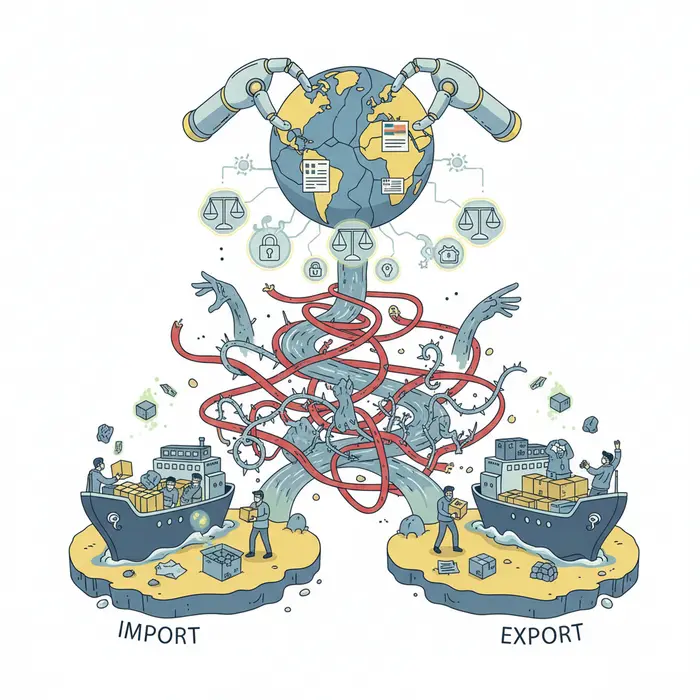
1. Common Fraud Schemes: Phishing, Advance Fee, Counterfeiting
Fraudsters employ a range of tactics, constantly evolving to bypass traditional security measures. Recognizing these common schemes is the first step in effective international trade scam protection:
- Phishing and Business Email Compromise (BEC): This widespread digital fraud involves tricking individuals into revealing sensitive information or transferring funds. In import-export, this often manifests as fake emails impersonating suppliers, clients, or logistics providers, requesting changes to payment details, shipping instructions, or even demanding urgent wire transfers. A slight alteration in an email address or a cleverly forged invoice can lead to significant financial losses.
- Advance Fee Fraud: This scheme preys on the promise of lucrative deals or exclusive supplier access. Fraudsters demand upfront payments – for ‘inspection fees,’ ‘customs duties,’ ‘commissions,’ or ‘bank guarantees’ – to release goods or finalize a deal that, in reality, does not exist. Once the advance fee is paid, the scammer disappears, leaving the victim with no goods and no recourse.
- Counterfeiting and Intellectual Property Infringement: This involves manufacturing, importing, or distributing goods that unlawfully bear the trademark or design of another company. For importers, this means unknowingly or knowingly dealing in fake products, leading to potential legal action, seizure of goods, and severe reputational damage. For exporters, their legitimate products might be copied and sold by unauthorized parties, eroding market share and brand value.
- Document Forgery: Altered bills of lading, falsified certificates of origin, fake insurance documents, or manipulated quality control reports are common in trade fraud, designed to misrepresent goods, conceal non-compliance, or facilitate illegal activities.
2. Financial Implications and Reputational Damage
The consequences of falling victim to import export fraud extend far beyond immediate monetary losses. While direct financial hits from lost payments, seized goods, or legal fees are substantial, the less tangible impacts can be even more damaging:
- Severe Financial Losses: Companies can lose millions of dollars through fraudulent transactions, impacting profitability, cash flow, and even solvency. Recovering these funds is often difficult, if not impossible.
- Operational Disruptions and Delays: Fraudulent activities can lead to significant delays in supply chains, impacting delivery schedules, customer satisfaction, and incurring additional costs for storage or expedited shipping.
- Legal and Regulatory Penalties: Involvement in fraudulent activities, even as an unwitting victim, can result in hefty fines, legal battles, and non-compliance penalties from customs authorities and international trade bodies.
- Irreparable Reputational Damage: Being associated with fraud, whether as a victim or by inadvertently facilitating it (e.g., importing counterfeit goods), can severely harm a company’s brand image, erode customer trust, and damage relationships with legitimate partners and financial institutions. Rebuilding trust takes years and significant effort.
- Impact on Trade Finance: Fraud can complicate future access to trade finance, as banks become warier of perceived risks. Increased Trade finance fraud awareness is crucial for both businesses and financial institutions.
3. Why Importers and Exporters are Prime Targets
Importers and exporters are particularly vulnerable due to several inherent characteristics of international trade:
- Geographical Distance and Information Asymmetry: The physical distance between parties makes in-person verification difficult. Importers often rely heavily on digital communication and documentation, creating opportunities for fraudsters to manipulate information and identities.
- Complex Supply Chains: Modern supply chains involve multiple intermediaries – agents, brokers, freight forwarders, customs officials – each adding a layer of complexity and potential vulnerability that fraudsters can exploit.
- Reliance on Trust: International trade often operates on a foundation of trust, especially in emerging markets or when dealing with new partners. Fraudsters exploit this trust by presenting themselves as legitimate entities.
- Varying Legal Frameworks: Different countries have diverse legal systems and enforcement capabilities, making it challenging to pursue legal recourse against international fraudsters operating from different jurisdictions.
- High Stakes and Urgency: The high value of international transactions and the pressure to complete deals quickly can lead businesses to overlook red flags and bypass stringent verification processes.
- Digitalization of Trade: While efficient, the increased reliance on digital platforms for communication, documentation, and payments also exposes businesses to cyber threats like phishing and data breaches.
To mitigate these risks, implementing robust Supplier verification services, exercising due diligence, and utilizing Secure international payment methods are paramount. A proactive approach to Import Export Fraud Prevention is not an option but a necessity for sustainable global trade.
Robust Supplier Verification Services
In the dynamic world of global commerce, establishing reliable supply chains is paramount. However, the promise of international trade also carries inherent risks, chief among them being the potential for fraud and scams. Navigating these complexities demands rigorous strategies for Import Export Fraud Prevention, particularly when engaging with new international partners. Robust supplier verification services are not just a best practice; they are an essential shield against scams, ensuring the legitimacy of your partners and the security of your investments. This section will delve into the critical importance of vetting international partners and outline the various verification services available to safeguard your business from international trade scams and enhance international trade scam protection.
1. Due Diligence Best Practices for New Partners
Before committing to any international trade agreement, comprehensive due diligence is non-negotiable. This initial investigative phase is crucial for robust international trade scam protection and establishing a foundation of trust. Best practices involve a multi-faceted approach, starting with requesting and verifying basic company information such as registration documents, business licenses, and tax IDs. Don’t rely solely on information provided; cross-reference it with independent sources like government business registries or industry associations. Scrutinize their online presence, including their website, social media, and any news articles or reviews. Red flags often appear in inconsistencies between claimed information and publicly available data, or a complete lack of verifiable online footprint. Always ask for business references—not just customers, but also banking partners and other suppliers they work with. Contacting these references independently can provide invaluable insights into their reliability and operational integrity. Furthermore, understanding the regulatory environment of their country and ensuring they comply with local and international trade laws is vital. This proactive approach significantly reduces the risk of engaging with fraudulent entities and forms the bedrock of secure international transactions.
2. Utilizing Third-Party Verification Agencies
While internal due diligence is crucial, the complexities of international trade often necessitate the expertise of specialized third-party supplier verification services. These agencies offer an impartial and in-depth assessment of potential partners, leveraging local knowledge, extensive networks, and sophisticated investigative tools that may be beyond the reach of an individual company. Their services typically include on-site factory audits, which verify physical presence, production capabilities, quality control systems, and adherence to labor and environmental standards. They can also conduct more extensive background checks, delving into the company’s legal standing, ownership structure, and any history of disputes or litigation. Engaging such agencies is particularly beneficial when dealing with suppliers in unfamiliar markets or when the transaction involves a significant investment. Their reports provide a comprehensive risk assessment, helping businesses make informed decisions and significantly mitigating the potential for fraud. For more insights into comprehensive supplier verification, consider resources like those provided by global trade bodies, ensuring you adopt robust strategies for secure partnerships. For example, the International Trade Centre (ITC) offers valuable guidance on supplier verification best practices for SMEs, highlighting the importance of thorough checks.
3. Background Checks and Financial Scrutiny
Beyond basic verification, a deeper dive into a prospective partner’s background and financial health is paramount for robust import-export fraud prevention. Thorough background checks should extend to the company’s directors and key personnel, identifying any criminal records, past bankruptcies, or involvement in fraudulent activities. This personal-level scrutiny helps uncover “shell companies” or individuals with a history of illicit dealings. Simultaneously, rigorous financial scrutiny is essential. Requesting financial statements, credit reports, and banking references allows you to assess their solvency, stability, and capacity to fulfill contractual obligations. Analyze their payment history and ensure they maintain a positive financial standing. Awareness of trade finance fraud awareness is critical here; fraudsters often exploit complex trade finance instruments. Verify bank account details meticulously, especially for international payments, as payment diversion scams are increasingly common. Employing secure international payment methods, such as Letters of Credit or escrow services through reputable financial institutions, adds an extra layer of protection, ensuring funds are released only upon verification of goods or services. By combining detailed background checks with stringent financial scrutiny, businesses can significantly reduce their exposure to risks and ensure the integrity of their international trade relationships.
Implementing Secure International Payment Methods
In the complex world of cross-border trade, managing financial transactions securely is paramount to mitigating risks and enhancing overall transaction integrity. Import Export Fraud Prevention is not just about vetting partners; it’s also deeply intertwined with the payment mechanisms chosen. Each method carries its own set of advantages and potential vulnerabilities, making an informed choice critical for businesses engaged in international trade. By understanding and utilizing secure international payment methods, companies can significantly reduce their exposure to financial fraud, ensure timely payments, and build trust with their global partners. This section delves into various strategies to safeguard your international payments, offering practical advice for robust international trade scam protection.

1. Letters of Credit (LCs) and Escrow Services
Letters of Credit (LCs), also known as documentary credits, stand as one of the most secure international payment methods in cross-border transactions, especially when dealing with new or unknown partners. An LC is a financial instrument issued by a bank on behalf of the buyer (importer), guaranteeing payment to the seller (exporter) upon presentation of specified shipping documents. This mechanism dramatically reduces risk for both parties: the seller is assured payment as long as they meet the terms and conditions outlined in the LC, and the buyer is confident that payment will only be released once the goods have been shipped according to the agreement. The involvement of independent banks as intermediaries adds a layer of trust and due diligence, making LCs a cornerstone of trade finance fraud awareness. Various types of LCs, such as revocable, irrevocable, confirmed, and unconfirmed, offer flexibility to suit different risk appetites and trade scenarios.
Escrow Services offer another robust layer of security. In an escrow arrangement, a neutral third party holds the payment until both the buyer and seller have fulfilled their contractual obligations. Once all conditions are met, the escrow agent releases the funds to the seller. This method provides strong protection against non-delivery for buyers and non-payment for sellers, as funds are secured from the outset but only transferred upon satisfactory completion of the deal. Escrow services are particularly valuable for high-value transactions or when trust between trading partners is still developing, bridging the gap of uncertainty in global commerce.
2. Insured Payments and Trade Credit Insurance
Insured Payments and Trade Credit Insurance provide crucial financial safeguards against commercial and political risks in international trade. Trade credit insurance protects businesses against the risk of non-payment from their customers due to insolvency, bankruptcy, or political events in the buyer’s country. This means if your international buyer defaults on payment, the insurance policy will cover a significant portion of the outstanding invoice. This type of insurance is invaluable for managing cash flow and reducing the potential for significant losses, thereby enhancing overall financial stability in export operations.
By leveraging trade credit insurance, exporters can confidently offer more flexible payment terms to their buyers, which can be a competitive advantage. It allows businesses to expand into new markets and pursue larger contracts without undue concern about payment defaults. Furthermore, having trade credit insurance can improve a company’s borrowing capacity, as banks often view insured receivables more favorably. This strategic financial tool is essential for comprehensive risk management in international trade, offering peace of mind against unforeseen payment issues.
3. Avoiding Risky Payment Arrangements (e.g., Wire Transfers)
While often convenient, certain payment methods, particularly direct Wire Transfers, carry significant risks in international trade and should be approached with extreme caution, especially with new or unverified suppliers. A wire transfer (or telegraphic transfer, TT) involves direct bank-to-bank electronic transfer of funds. The primary risk with wire transfers from the buyer’s perspective is that once the money is sent, it is exceptionally difficult, if not impossible, to recall or dispute, even if the seller fails to deliver the goods or delivers substandard products. For sellers, receiving an upfront wire transfer seems secure, but they must be wary of fraudulent proof of payment or chargeback scams.
Many supplier verification services emphasize avoiding full upfront wire transfers for initial orders or with unknown entities. Scammers frequently push for wire transfers due to their irreversible nature. Instead, prioritize methods that offer buyer protection, such as Letters of Credit or escrow services, particularly until a trusted relationship is established and proper supplier verification has been conducted. For small, trusted transactions, alternative methods like secure online payment platforms (which often include buyer protection) might be considered, but direct, irreversible transfers should be reserved for long-standing, verified relationships where mutual trust is firmly established and all due diligence, including thorough supplier verification services, has been completed. Awareness of these high-risk payment arrangements is a critical component of effective trade finance fraud awareness.
Trade Finance Fraud Awareness and Mitigation
Trade finance underpins global commerce, facilitating trillions in transactions. However, its inherent complexity and multi-party involvement also create fertile ground for sophisticated fraud. From documentary manipulation to intricate supply chain schemes, fraud can infiltrate every operational stage, posing significant financial, reputational, and regulatory risks. Developing robust Import Export Fraud Prevention strategies and fostering high trade finance fraud awareness are critical for safeguarding international trade. This section explores how fraud manifests and outlines actionable strategies for international trade scam protection, ensuring more secure and resilient trade operations.
1. Recognizing Red Flags in Trade Finance Documents
Documentary fraud is a pervasive avenue for illicit activities in trade finance. Vigilance in scrutinizing documents is a cornerstone of effective trade finance fraud awareness. Businesses must train teams to examine documents like bills of lading, invoices, and letters of credit for inconsistencies. Key red flags include:
- Inconsistent Information: Discrepancies in quantities, values, or goods descriptions across multiple documents (e.g., invoice vs. packing list).
- Unusual Shipping Details: Unexpected origins, destinations, or circuitous shipping routes for goods.
- Altered or Poor-Quality Documents: Evidence of tampering, inconsistent fonts, misspellings, or low-resolution logos indicative of forgery.
- Missing Documentation: Absence of standard required documents or incomplete information on critical forms.
- Price Discrepancies: Significantly inflated or deflated prices compared to market rates, potentially signaling money laundering or duty evasion.
- Vague Descriptions: Lack of specific details about goods, their quality, or specifications, hindering verification.
Diligent verification, cross-referencing with independent sources, and maintaining strong communication among parties are crucial for international trade scam protection.
2. Supply Chain Finance Fraud Risks
Supply Chain Finance (SCF) provides essential liquidity but introduces unique fraud vulnerabilities, often exploited due to digital platform reliance and complex participant networks. Major SCF fraud risks include:
- Duplicate Financing: A supplier secures funding from multiple lenders for the same invoice, leading to losses when only one can be repaid. This often stems from poor visibility or communication.
- Phantom Inventory: Creation of fictitious inventory or manipulation of records to obtain financing against non-existent goods, common in commodity finance.
- Collusion: Cooperation between fraudsters and internal staff or other supply chain parties (e.g., warehouse operators) to generate fake invoices or shipping confirmations.
- Round-Tripping: Repeated buying and selling of goods between colluding entities to inflate transaction volumes and secure financing for non-existent economic activity.
- False Supplier Information: Entities posing as legitimate suppliers to defraud buyers or finance providers. Robust supplier verification services are paramount here. Comprehensive due diligence, including background checks and financial assessments, can prevent such schemes.
Mitigating these risks requires strong internal controls, enhanced due diligence on all participants, and real-time transaction monitoring. Investing in reliable supplier verification services is a critical proactive measure.
3. Leveraging Technology for Fraud Detection in Finance
The evolving sophistication of trade finance fraud demands equally advanced countermeasures. Technology offers powerful tools to enhance trade finance fraud awareness and detection:
- Artificial Intelligence (AI) & Machine Learning (ML): AI/ML algorithms analyze vast trade datasets to identify unusual patterns, anomalies, and deviations from normal behavior, flagging suspicious transactions and predicting risks in real-time.
- Blockchain Technology: Distributed Ledger Technology (DLT) creates immutable records of transactions and ownership, vastly improving transparency and traceability. This significantly hinders document alteration and fictitious transactions, and bolsters supplier verification services through secure digital identities.
- Advanced Data Analytics: Aggregating information from diverse sources (trade data, shipping records, market intelligence) builds comprehensive risk profiles and predicts fraud hotspots.
- Secure Payment Methods: Technologies facilitating secure international payment methods, like encrypted platforms and verified payment gateways, reduce payment diversion fraud and unauthorized transactions.
- OCR and Document Verification: Optical Character Recognition (OCR) combined with AI automatically extracts and cross-verifies data from trade documents, detecting inconsistencies and potential forgeries faster and more accurately than manual checks.
Embracing these technological innovations is essential for robust combating trade finance fraud and maintaining integrity in global trade. Organizations must integrate these tools into their frameworks to build resilient defenses against evolving fraud schemes.
Building a Comprehensive Fraud Prevention Strategy
In the intricate world of global trade, safeguarding operations against sophisticated illicit activities is paramount. A robust, long-term fraud prevention plan is not merely a reactive measure but a proactive investment in enduring security. This section synthesizes best practices into an actionable framework for effective Import Export Fraud Prevention, ensuring businesses can thrive in international markets with confidence. From intricate documentation scams to identity theft, the landscape of threats demands a multifaceted approach that is constantly evolving.

1. Employee Training and Internal Controls
Employee Training and Internal Controls form the foundational pillar of any effective fraud prevention strategy. This involves educating every member of your team, from procurement to finance and logistics, on the common red flags and specific tactics employed in international trade scams. Comprehensive training should cover identifying suspicious communications, understanding the intricacies of various financial instruments, and recognizing patterns indicative of fraud. Equipping staff with this knowledge is a critical step in achieving international trade scam protection.
Beyond awareness, establishing stringent internal controls is essential. This includes segregating duties to prevent any single individual from having complete control over a transaction, implementing multi-factor authentication for financial approvals, and conducting regular, unannounced internal audits. A “four-eyes” principle, where multiple individuals verify transactions and documentation, significantly reduces the risk of both internal and external fraud. Clear policies regarding vendor onboarding, invoice processing, and payment authorization must be documented and strictly adhered to, creating an environment of accountability and transparency that deters fraudulent activities before they can take root.
2. Legal Recourse and International Law Enforcement Cooperation
Navigating the complexities of international trade fraud requires a clear understanding of legal recourse and fostering strong cooperation with international law enforcement agencies. When fraud occurs, having a predefined legal strategy is crucial. This includes understanding the jurisdiction where legal action can be taken, having robust contracts with clear dispute resolution clauses, and knowing when to engage legal counsel specializing in international commercial law. Businesses should also be proactive in their due diligence, especially concerning partners and intermediaries, to mitigate risks related to trade finance fraud awareness.
Furthermore, effective fraud prevention extends beyond national borders. Establishing channels for cooperation with international bodies like Interpol, national customs agencies, and financial intelligence units (FIUs) is vital. These collaborations enable the sharing of intelligence on emerging threats and facilitate cross-border investigations. For instance, organizations like the ICC Commercial Crime Services play a significant role in assisting businesses and law enforcement in combating various forms of commercial crime. Understanding these avenues for legal and investigative support is indispensable for resolving fraud cases and recovering assets, reinforcing the long-term security of your trade operations.
3. Continuous Monitoring and Adaptation to Evolving Threats
Given the dynamic nature of global trade and criminal ingenuity, continuous monitoring and adaptation are non-negotiable for effective Import Export Fraud Prevention. Fraudsters constantly refine their methods, leveraging new technologies and exploiting vulnerabilities. Businesses must therefore implement advanced monitoring systems, utilizing artificial intelligence and machine learning to detect anomalies in transaction patterns, flag unusual shipping routes, or identify discrepancies in documentation that might indicate fraud. Regular data analysis and threat intelligence updates are crucial for staying one step ahead.
This adaptability also extends to operational procedures. Regularly review and update your protocols for supplier verification services, ensuring that all new and existing partners undergo rigorous background checks and due diligence. Similarly, continuously evaluate and upgrade your secure international payment methods, opting for encrypted platforms and adhering to best practices for wire transfers and Letters of Credit. By fostering a culture of vigilance and embracing technological advancements, companies can build a resilient defense against the ever-evolving landscape of international trade fraud, ensuring the longevity and security of their global operations.
Partner with Vietnam’s Leading Suppliers
Looking for reliable suppliers in Vietnam? Contact VietnamSuppliers.com today to connect with verified manufacturers and exporters across all industries.
—————————————
References
– ICC Commercial Crime Services Annual Report 2022: https://www.iccwbo.org/publication/icc-commercial-crime-services-annual-report-2022/
– supplier verification best practices for SMEs: https://www.intracen.org/news/Supplier-verification-best-practices-for-SMES/
– risk management in international trade: https://www.wto.org/english/tratop_e/serv_e/finance_e/finance_e.htm
– ICC Reports on Trade Finance Fraud: https://www.icc-ccs.org/news/1797-icc-reports-usd-13-5-billion-in-trade-finance-fraud-over-past-three-years
– ICC Commercial Crime Services: https://iccwbo.org/advocacy-initiatives/icc-anti-crime-commission/commercial-crime-services/

