Understanding DAP Incoterms 2020: The Meaning & Scope
In the complex world of international trade, clarity regarding responsibilities, costs, and risks is paramount. The Incoterms 2020 rules provide this essential framework, and among the most frequently used is DAP Incoterms 2020, meaning “Delivered at Place.” This rule defines a specific point in the shipping journey where the seller’s obligations largely conclude, transferring significant responsibilities to the buyer. Understanding DAP is crucial for both importers and exporters to accurately price goods, manage logistics, and mitigate potential disputes. It offers a balanced approach, placing the goods at the buyer’s disposal at the agreed-upon destination, but with the buyer taking charge of the final leg of unloading and import formalities.
1. What “Delivered at Place” (DAP) truly signifies
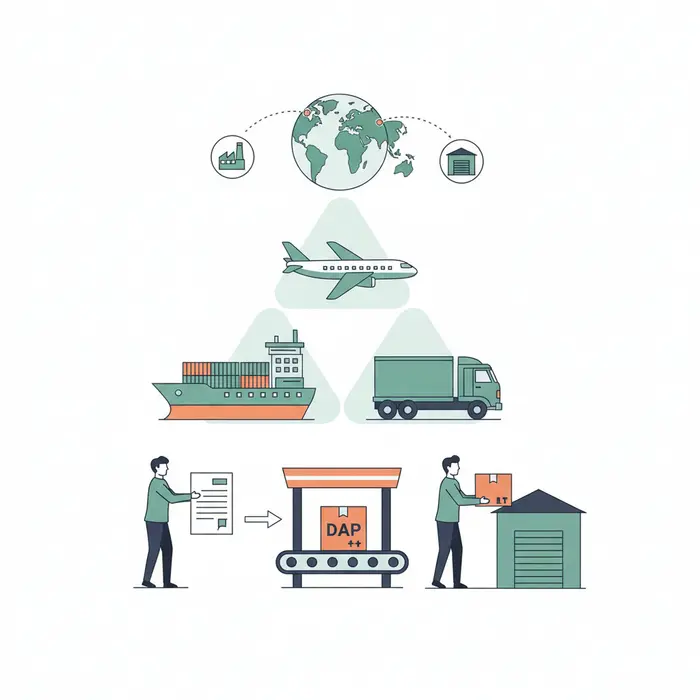
The core of DAP Incoterms 2020 meaning is that the seller delivers the goods when they are placed at the disposal of the buyer on the arriving means of transport, ready for unloading at the named place of destination. This means the seller is responsible for arranging and paying for all costs associated with bringing the goods to this named destination, including main carriage, export customs clearance, and any associated duties or taxes for export. The risk of loss or damage to the goods also transfers from the seller to the buyer at this precise moment. Crucially, the goods must be ready for unloading, but the actual act of unloading the goods from the arriving vehicle is the buyer’s responsibility. Therefore, key DAP buyer responsibilities include unloading the goods, clearing them for import, and paying any import duties, taxes, or other official charges.
2. Historical context and purpose of DAP in trade
DAP was introduced in the Incoterms 2010 rules, replacing the earlier “Delivered Duty Unpaid” (DDU) rule from Incoterms 2000. Its introduction aimed to simplify and modernize the rules, providing a clearer and more precise framework for delivery at a named destination. The purpose of DAP is to offer a flexible rule that covers a wide range of multimodal transportation scenarios. It represents a significant point of transfer where the seller has fulfilled the majority of the journey’s logistical burden, ensuring the goods arrive at the buyer’s doorstep (or a specified terminal/warehouse). It’s a popular choice for businesses seeking a balance: sellers are responsible for pre-import logistics and transportation, while buyers handle the final, often more locally managed, aspects of receiving the goods and handling import formalities. This makes it particularly useful when the seller wants to provide a comprehensive delivery service without taking on the complexities and liabilities of import clearance in a foreign country.
3. Key characteristics of DAP: Where risk and cost transfer
Understanding the exact points of risk and cost transfer is fundamental to effective trade under DAP Incoterms 2020. Risk transfers from the seller to the buyer at the named place of destination when the goods are available for unloading. Up to this point, the seller bears all risks of loss or damage. This includes risks during transit, from the factory gate through to the final destination before unloading. In terms of cost, the DAP shipping cost breakdown shows the seller is responsible for all costs to bring the goods to the named place of destination, including transportation costs, insurance (if chosen by the seller, as it’s not mandatory under DAP), and export clearance fees. The buyer, however, assumes responsibility for costs from the point of delivery onwards. This includes the cost of unloading the goods, import customs clearance, and all associated duties, taxes, and other governmental charges. This clear division makes DAP distinct from other Incoterms, especially when comparing DAP vs DDP Incoterms. While DAP places import clearance and duties on the buyer, DDP (Delivered Duty Paid) places all these responsibilities, including import duties and taxes, squarely on the seller, representing the maximum obligation for the seller.
DAP Buyer Responsibilities & Seller Obligations Detailed
Incoterms 2020, published by the International Chamber of Commerce (ICC), provides a globally recognized set of rules that define the responsibilities of sellers and buyers for the delivery of goods under sales contracts. Among these, Delivered At Place (DAP) is a widely used term, signifying a critical point of cost and risk transfer. Understanding the DAP Incoterms 2020 meaning is crucial for seamless international trade, as it outlines distinct duties for both parties, with a particular emphasis on the buyer’s obligations upon the goods’ arrival.
1. Seller’s obligations: From packaging to main carriage
Under DAP Incoterms 2020, the seller bears a significant portion of the responsibilities and costs, ensuring the goods arrive safely at the agreed-upon “named place of destination.” This means the seller’s duties commence right from preparing the goods for shipment. They are responsible for proper packaging, ensuring the goods are suitably packed for export and the intended mode of transport. Following this, the seller handles the initial loading of goods onto the first carrier and manages all export customs formalities, including obtaining necessary licenses and paying any export duties or taxes. The journey continues with the seller arranging and paying for pre-carriage (transport from the factory to the port/airport of origin) and then the main carriage (the international freight) to the named place of destination. Crucially, the seller also assumes all risks of loss or damage to the goods until they are delivered to the named place and made available for unloading from the arriving means of transport. This comprehensive responsibility up to the destination point differentiates DAP from terms like FOB or CFR.
2. DAP buyer responsibilities: Import customs, duties, taxes, and unloading
While the seller handles the heavy lifting of getting the goods to the destination, the “DAP buyer responsibilities” are equally significant and begin precisely where the seller’s end. Once the goods arrive at the “named place of destination” (which could be a port, airport, warehouse, or even the buyer’s premises), the buyer takes over. Their primary duties include:
- Unloading: The buyer is responsible for unloading the goods from the arriving means of transport. This might involve hiring specific equipment or personnel.
- Import Customs Clearance: This is a major area of buyer responsibility. The buyer must handle all import formalities, which includes preparing and submitting necessary documentation, obtaining import licenses, and complying with all local regulations.
- Import Duties and Taxes: A critical component of the “DAP shipping cost breakdown” for the buyer is the payment of all import duties, taxes (such as Value Added Tax – VAT or Goods and Services Tax – GST), and other official charges levied upon importation. This is a key distinction when comparing “DAP vs DDP Incoterms.” Under DDP (Delivered Duty Paid), the seller bears these import costs; however, under DAP, these fall squarely on the buyer.
- Onward Transportation: If the named place of destination is not the buyer’s final facility, the buyer is responsible for arranging and paying for any further transport from that point to their ultimate warehouse or premises.
- Risk Transfer: The risk of loss or damage to the goods transfers from the seller to the buyer at the moment the goods are available for unloading at the named place of destination.
Failure to fulfill these obligations promptly can lead to demurrage, detention charges, or even the goods being returned to the seller, incurring additional costs for the buyer.
3. Clarifying who arranges and pays for insurance in DAP
One common misconception revolves around insurance obligations under DAP Incoterms 2020. Unlike CIF or CIP, DAP does not explicitly mandate either the seller or the buyer to procure insurance for the goods. However, common sense and prudent business practice dictate that the party bearing the risk for a particular segment of the journey should consider insuring that risk.
- Seller’s Insurance: Since the seller is responsible for the goods and bears all risks of loss or damage up to the named place of destination, they typically arrange and pay for insurance covering the goods during pre-carriage and the main international carriage. This protects their interest until the risk transfers to the buyer.
- Buyer’s Insurance: Once the goods are made available for unloading at the named place, the risk shifts to the buyer. Therefore, the buyer might choose to insure the goods from that point onwards, covering the unloading process and any subsequent domestic transportation to their final facility.
Ultimately, while not a mandatory requirement, both parties are strongly advised to discuss and agree upon insurance coverage in their sales contract. Clear communication ensures that there are no gaps in coverage and that potential losses are adequately protected against. For a deeper dive into the nuances of Incoterms rules, including a comprehensive understanding of DAP Incoterms 2020, resources like the ICC’s official publications are invaluable.
DAP Incoterms 2020: A Full Shipping Cost Breakdown
Navigating international shipping terms is vital for seamless global trade. Among the official Incoterms 2020 rules, Delivered At Place (DAP) is frequently used, balancing seller and buyer responsibilities effectively. This section offers a comprehensive “DAP shipping cost breakdown,” detailing which expenses are borne by the seller and which fall to the buyer. A clear understanding of the “Incoterms 2020 DAP meaning” is essential for transparent financial obligations and successful transactions.
1. Seller’s cost analysis: Origin charges, freight, and export clearance
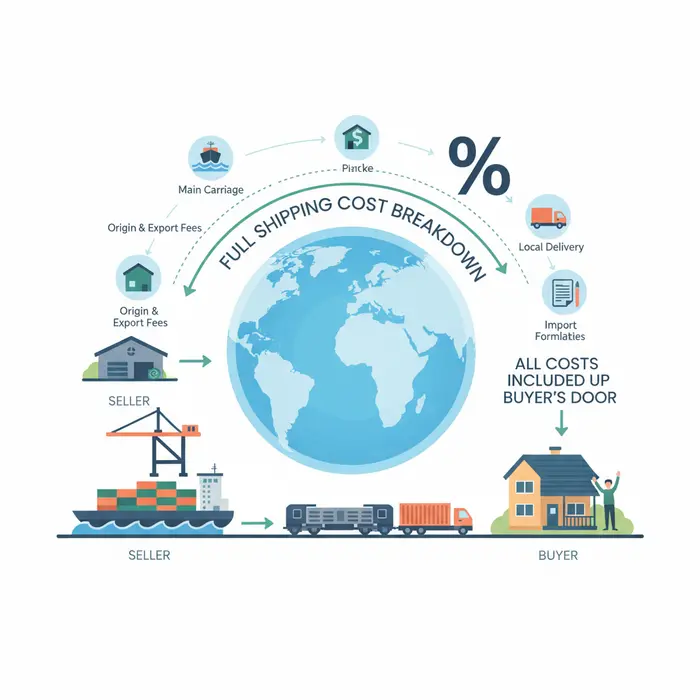
Under DAP Incoterms 2020, the seller undertakes a significant portion of costs and risks until the goods reach the named place of destination, ready for unloading. Key seller responsibilities and associated costs include:
- Preparation & Loading: Packing, checking, and loading goods onto the initial carrier at the seller’s premises.
- Origin Inland Transport: Moving goods from the factory to the port/airport of departure.
- Export Formalities: All expenses for export declarations, licenses, security clearances, and pre-shipment inspections.
- Origin Terminal Handling Charges (THC): Fees for handling cargo within the origin terminal.
- Main Carriage: The primary cost of international transport (ocean, air, or multimodal freight) to the named place of destination.
- Transit Costs: Any charges for goods passing through intermediate countries.
The seller’s financial responsibility concludes when goods are made available to the buyer, ready for unloading, at the agreed destination.
2. Buyer’s cost analysis: Destination charges, import duties, and local delivery
Once goods arrive at the named destination under DAP Incoterms 2020, the buyer assumes control, risk, and several crucial costs. Understanding these “DAP buyer responsibilities” is critical for accurate budgeting. Notably, in “DAP vs DDP Incoterms,” the buyer is responsible for import clearance, unlike DDP where the seller covers all duties and taxes. The buyer’s typical costs include:
- Unloading & Destination THC: Costs for unloading goods at the named destination and terminal handling fees upon arrival.
- Import Formalities & Duties: A major buyer responsibility, covering import declarations, customs inspections, customs duties, VAT, and other local taxes. This also often includes customs brokerage fees.
- Storage/Demurrage/Detention: Potential penalties if the buyer delays customs clearance or pickup beyond free time.
- Destination Inland Transport: Moving cleared goods from the destination port/airport to the buyer’s final warehouse.
This clear demarcation of responsibilities at the destination point is fundamental to DAP, distinguishing it from other Incoterms rules like DAP Incoterms 2020 itself or DDP.
3. Identifying potential hidden costs and surcharges in DAP
Despite clear DAP guidelines, international shipping can present “hidden costs and surcharges” that inflate the overall “DAP shipping cost breakdown.” Vigilance and detailed contracts are paramount for both parties. Common hidden expenses include:
- Port Congestion Surcharges: Extra fees imposed by carriers due to port delays or high traffic.
- Currency Adjustment Factor (CAF) / Bunker Adjustment Factor (BAF): Fluctuating surcharges from carriers responding to exchange rate volatility or fuel price changes.
- Security & Peak Season Surcharges: Additional fees for enhanced security or during periods of high demand.
- Unforeseen Inspection Fees: Costs arising from unexpected customs, quarantine, or product safety inspections at origin or destination.
- Demurrage and Detention: Significant charges if goods are not cleared or picked up within the free time at the destination terminal.
Mitigation strategies include meticulous planning, transparent communication, and comprehensive shipping contracts that explicitly address potential surcharges. Seeking all-inclusive quotes and understanding freight forwarder terms can help uncover these costs upfront. Ultimately, a thorough grasp of DAP Incoterms 2020, including potential hidden costs, is crucial for accurate financial forecasting and successful global trade partnerships.
DAP vs. DDP Incoterms: Key Differences and Applications
Navigating international trade requires a precise understanding of Incoterms, the globally recognized rules published by the International Chamber of Commerce (ICC) that define the responsibilities of buyers and sellers for the delivery of goods. Among the most frequently encountered terms for multimodal transport are Delivered at Place (DAP) and Delivered Duty Paid (DDP). While both terms signify that the seller is responsible for delivering goods to a named destination, their critical distinctions, particularly regarding customs duties and taxes, significantly impact cost allocation and risk management. For businesses engaged in global commerce, understanding these nuances is paramount to selecting the appropriate Incoterm, ensuring smooth operations, and avoiding unforeseen expenses. This comparison aims to clarify the core differences, helping businesses make informed decisions when structuring their international shipments.
1. Defining DDP: Delivered Duty Paid – a full seller responsibility
DDP, or Delivered Duty Paid, represents the maximum obligation for the seller under the Incoterms 2020 rules. Under DDP, the seller takes on virtually all risks and costs associated with transporting goods until they are delivered to the buyer’s specified destination, ready for unloading. This ‘door-to-door’ responsibility includes not only freight charges, insurance (if the seller chooses to obtain it, though not explicitly required by the Incoterm for the buyer), and all export formalities, but crucially, also covers all import duties, taxes, and other official charges payable upon importation, as well as the cost and risk of carrying out customs formalities. The buyer’s only responsibility begins once the goods arrive at their premises, cleared for import, and ready to be offloaded. This makes DDP a highly attractive option for buyers seeking a hassle-free import experience, but it places a substantial administrative and financial burden on the seller, especially if they are unfamiliar with the import regulations and tax structures of the destination country. When comparing DAP Incoterms 2020 meaning with DDP, this full absorption of import costs by the seller stands out as a primary differentiator.
2. Primary distinctions in duty and tax allocation: The core difference
The allocation of import duties and taxes forms the fundamental divide between DAP and DDP Incoterms. Under DAP (Delivered at Place), the seller is responsible for delivering the goods to the named place of destination, ready for unloading, but the buyer is responsible for all import formalities, including clearing the goods for import, and paying any applicable duties, taxes (such as VAT or GST), and other official charges. This means that while the seller covers the transport costs up to the destination, the financial burden and administrative task of customs clearance at the destination fall squarely on the DAP buyer responsibilities. In contrast, DDP shifts this entire responsibility to the seller. The seller must not only arrange and pay for transportation but also navigate the import customs clearance process, pay all duties and taxes, and ensure the goods are delivered fully cleared to the buyer’s door. This distinction is critical because import duties and taxes can represent a significant portion of the total landed cost of goods, and their proper handling directly impacts profitability and compliance. Misunderstandings can lead to unexpected delays at customs, additional charges, or even goods being held indefinitely. The choice between DAP vs DDP Incoterms often hinges on which party is better equipped to handle these complex import procedures and financial obligations.
3. Comparing risk transfer points between DAP and DDP
Beyond the financial responsibilities, understanding where the risk of loss or damage to the goods transfers from seller to buyer is vital. For DAP, the risk transfers from the seller to the buyer when the goods are placed at the buyer’s disposal on the arriving means of transport, ready for unloading at the named place of destination. At this point, the goods have not yet been cleared for import, and any risks associated with customs procedures or subsequent transport within the destination country are borne by the buyer. This means that if goods are damaged during unloading, or if issues arise during import clearance, the buyer typically bears that risk. Analyzing the DAP shipping cost breakdown reveals that the seller’s risk largely ends before the most unpredictable part of the import process begins.
Conversely, DDP extends the seller’s risk considerably further. Under DDP, the risk transfers to the buyer only when the goods are made available at the named place of destination, cleared for import, and ready for unloading from the arriving means of transport. This means the seller assumes the risk of loss or damage throughout the entire journey, including during customs clearance procedures at the import destination. If goods are damaged or lost at customs, or if delays occur due to clearance issues, the seller is responsible. This extended risk for the seller is precisely why DDP is often considered the most ‘seller-unfriendly’ Incoterm from a risk perspective, though it offers unparalleled convenience and predictability for the buyer. Businesses should refer to authoritative sources, such as the official Incoterms 2020 rules, for the most detailed definitions and implications of these terms.
In conclusion, the decision between DAP and DDP Incoterms fundamentally comes down to who is best positioned, and willing, to manage the complexities and costs associated with import clearance, duties, and taxes. While DAP provides greater control and cost transparency for the buyer regarding import charges, DDP offers a complete, hassle-free solution for the buyer, shifting virtually all responsibility to the seller. Sellers considering DDP must have robust knowledge of the destination country’s import regulations and tax system, or partner with reliable customs brokers and freight forwarders, to avoid unexpected costs and delays. Buyers, on the other hand, must be prepared to handle import formalities under DAP. Careful consideration of internal capabilities, customer expectations, and risk tolerance is essential for making the optimal choice.
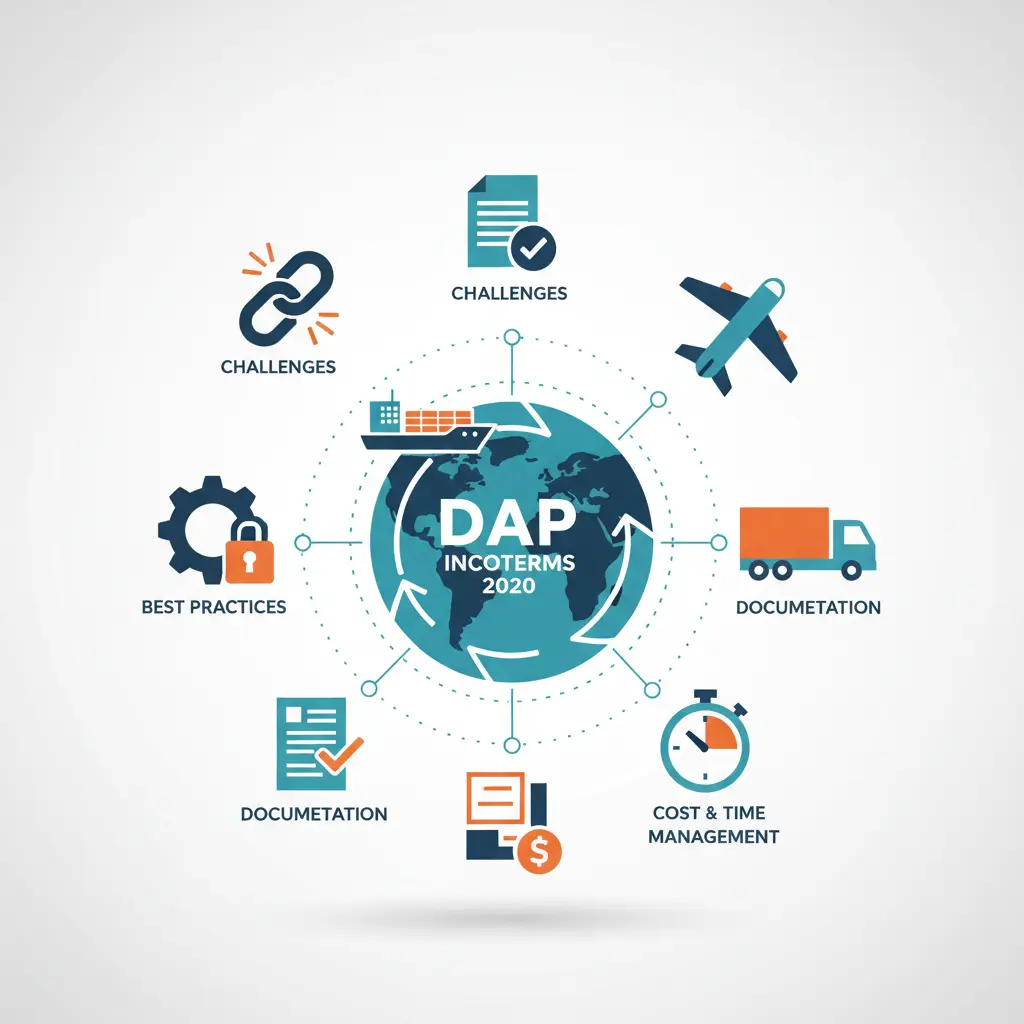
Navigating Challenges & Best Practices with DAP Incoterms 2020
Delivered at Place (DAP) Incoterms 2020 is a widely utilized rule in international trade, offering a balance where the seller delivers goods to a named place of destination, bearing all risks and costs up to that point, excluding import clearance and duties. While its widespread adoption underscores its utility, navigating DAP Incoterms 2020 effectively requires a clear understanding of its nuances. This final section addresses common pitfalls, provides practical advice, and outlines strategies for ensuring smooth transactions, ultimately aiming to foster successful implementation of DAP in international trade.
1. Common misconceptions and how to avoid them in DAP
One of the most frequent errors in applying DAP Incoterms 2020 stems from misunderstandings regarding responsibility allocation at the destination. Buyers often mistakenly assume that “delivery at place” implies the seller handles all aspects, including import clearance and payment of duties. This is a critical misconception. Under DAP Incoterms 2020, the seller’s responsibility ends when goods are placed at the buyer’s disposal, ready for unloading at the named place of destination. All subsequent processes, including customs formalities, import duties, taxes, and any required permits, fall squarely under DAP buyer responsibilities. To avoid this pitfall, both parties must clearly understand their roles. Contracts should explicitly state who is responsible for which costs and processes. Furthermore, understanding the fundamental differences between DAP vs DDP Incoterms is vital; while DDP places the entire burden of import clearance and duties on the seller, DAP clearly assigns these to the buyer. Detailed pre-shipment discussions and comprehensive contractual agreements are essential preventative measures against such misunderstandings.
2. Ensuring seamless import customs clearance for the buyer
Given that import customs clearance is a primary responsibility of the buyer under DAP, proactive planning and meticulous execution are paramount to prevent delays and unexpected costs. Before goods leave the origin country, the buyer should thoroughly research and confirm all import regulations, required documentation, duties, and taxes applicable in the destination country. Engaging a reputable local customs broker or freight forwarder with expertise in the specific trade lane and product type can significantly streamline this process. The broker can advise on necessary permits, provide accurate duty assessments, and handle clearance efficiently. Sellers, while not responsible for import clearance, play a crucial supporting role by providing accurate and timely shipping documents, including commercial invoices, packing lists, and certificates of origin. Any discrepancy or delay in these documents can lead to significant hold-ups at customs. A clear DAP shipping cost breakdown in the contract should also explicitly detail who covers potential demurrage or detention charges if clearance is delayed due to buyer’s oversight or issues with documentation. Continuous communication between the buyer, seller, and their respective logistics partners is key to anticipating and resolving potential issues.
3. The critical role of clear communication and precise documentation
The success of any international trade transaction, especially one operating under DAP Incoterms 2020, hinges on impeccable communication and meticulous documentation. Ambiguity in either can lead to costly delays, disputes, and damaged business relationships. Both buyer and seller must establish clear communication channels, ensuring all parties involved – including freight forwarders, carriers, and customs brokers – are kept informed of shipment status, potential issues, and required actions. Regular updates and immediate notification of changes are crucial. Equally vital is the precision of documentation. The commercial invoice, packing list, bill of lading (or air waybill), and any required certificates must be accurate, complete, and consistent across all documents. Errors, even minor ones, can trigger customs inspections, delays, and penalties. Furthermore, the “named place of destination” specified in the contract, which defines the point where the seller’s responsibility for delivery ends, must be absolutely precise. Vague descriptions like “Buyer’s warehouse” are insufficient; a full address is imperative to fully understand the Incoterms 2020 rules and avoid disputes over where risk and cost transfer occurs. A detailed understanding of the Incoterms 2020 DAP meaning, supported by robust communication protocols and error-free documentation, forms the bedrock of smooth and successful DAP transactions.
Partner with Vietnam’s Leading Suppliers
Looking for reliable suppliers in Vietnam? Contact VietnamSuppliers.com today to connect with verified manufacturers and exporters across all industries.
—————————————
References
– Incoterms 2020 rules: https://iccwbo.org/resources-for-business/incoterms-rules/
– Incoterms rules: https://iccwbo.org/resources-for-business/incoterms-rules/
– official Incoterms 2020 rules: https://iccwbo.org/resources-for-business/incoterms-rules/incoterms-2020/
– Incoterms 2020 rules: https://iccwbo.org/resources-for-business/incoterms-rules/incoterms-2020/
– Incoterms 2020 rules: https://iccwbo.org/resources-for-business/incoterms-rules/incoterms-2020-rules/