
The Evolving Landscape of Global Export Strategy

In an increasingly interconnected yet volatile world, crafting an effective Global Export Strategy is paramount for businesses aiming to expand their reach and bolster profitability. The international trade arena is undergoing profound transformations, driven by a confluence of economic shifts, technological advancements, and complex geopolitical dynamics. Understanding these foundational elements is crucial for any enterprise seeking to navigate the complexities of global markets, develop robust international market entry strategies, and ultimately achieve sustainable export success. This section delves into the critical factors shaping the current global economic climate, identifying emerging opportunities and challenges that demand a strategic re-evaluation of traditional export approaches.
1. Key Macroeconomic Trends Impacting Exports
The global economy currently presents a mosaic of contrasting trends that significantly influence export dynamics. Persistent inflationary pressures in major economies, often coupled with aggressive interest rate hikes by central banks, are reshaping consumer spending habits and business investment decisions worldwide. While some regions experience robust growth, others contend with stagnation or even recessionary fears. For exporters, this translates into a heightened need for agility and a deep understanding of regional economic indicators. For instance, strong dollar environments can make exports from the US more expensive, while weakening local currencies in emerging markets might boost their export competitiveness. Furthermore, the push towards sustainability and responsible sourcing is not merely a corporate social responsibility initiative but a growing market demand, influencing procurement decisions and offering a competitive edge for compliant exporters.
Measuring success in this climate requires sophisticated export performance metrics that go beyond mere sales volume. Businesses must track profit margins adjusted for currency fluctuations, market share within specific segments, and the efficiency of their supply chains. The shift in economic power towards Asia and other emerging markets continues, creating new consumer bases and manufacturing hubs. Businesses must consider these new centers of gravity for both sourcing and sales, adapting their offerings to meet diverse cultural preferences and regulatory requirements.
2. Technological Disruptions in International Trade
Technology is not just facilitating trade; it is fundamentally altering its architecture. The rapid proliferation of e-commerce platforms has democratized access to international markets, enabling even small and medium-sized enterprises (SMEs) to bypass traditional intermediaries and reach global customers directly. This digital transformation extends to logistics and supply chain management, where advancements in AI, machine learning, and big data analytics are enhancing forecasting accuracy, optimizing routing, and improving inventory management. The integration of blockchain technology promises greater transparency and traceability across complex global supply chains, mitigating risks associated with fraud and enhancing trust among trading partners.
These technological leaps demand that businesses invest in digital infrastructure and skills to remain competitive. Automation in manufacturing and warehousing, coupled with advanced data analytics, is critical for building global supply chain resilience, allowing companies to respond swiftly to disruptions. From predictive analytics for demand forecasting to automated customs declarations, technology streamlines processes, reduces costs, and opens up new avenues for market penetration. Businesses must leverage these tools to refine their international market entry strategy, identify niche opportunities, and manage the complexities of cross-border trade with greater efficiency.
3. Geopolitical Factors Shaping Trade Routes
Geopolitical shifts represent perhaps the most unpredictable, yet profoundly impactful, element influencing global export strategies. Rising protectionism, trade disputes between major economic blocs, and the imposition of tariffs or non-tariff barriers are forcing companies to reassess their production locations and market access strategies. The weaponization of trade, exemplified by export controls and sanctions, adds layers of complexity and risk, necessitating careful compliance and risk mitigation planning. Conflicts and political instability in key regions can disrupt established trade routes, leading to higher shipping costs, longer transit times, and increased supply chain vulnerabilities.
The trend towards “friend-shoring” or “near-shoring” reflects a desire among nations and corporations to diversify supply chains away from perceived high-risk areas, prioritizing political alignment and reliability over pure cost efficiency. This strategic realignment creates both challenges and opportunities. While some traditional sourcing hubs may decline, new regional trade blocs and bilateral agreements are emerging, potentially streamlining trade for member countries. Navigating this intricate geopolitical maze often requires specialized expertise, where B2B export consulting services become invaluable. These consultants can provide critical insights into regulatory changes, political risks, and cultural nuances, helping businesses adapt their Global Export Strategy to maintain competitive advantage amidst an ever-changing international political landscape.
Crafting a Robust International Market Entry Strategy
Embarking on international expansion is a pivotal step for businesses seeking new revenue streams and sustainable growth. Crafting a robust international market entry strategy is not merely about identifying a foreign market; it’s a comprehensive process demanding meticulous planning, deep insights, and a clear understanding of potential challenges. A well-defined strategy serves as a blueprint for navigating global trade complexities, ensuring efficient resource allocation and profitable ventures into new territories. This section explores the critical components needed to build such a strategy for successful market penetration.
1. Market Research and Opportunity Identification
The cornerstone of any effective Global Export Strategy is thorough market research. Before committing significant resources, businesses must undertake a deep dive into potential target markets to identify viable opportunities and mitigate risks. This involves assessing market size, growth rates, demographic trends, and consumer behavior. A comprehensive competitive analysis is equally vital, identifying key players, their market share, and distribution channels. Evaluating the political and economic stability, along with technological infrastructure, provides crucial context. Tools like PESTLE analysis can help structure this research. By carefully sifting through data, businesses can pinpoint underserved niches, evaluate market readiness for their products, and set realistic goals for their international market entry strategy. This investigative phase ultimately informs whether a market presents a genuine opportunity for sustainable growth.
2. Entry Modes: Direct vs. Indirect Exporting
Choosing the right market entry mode is a strategic decision that profoundly impacts an international market entry strategy’s success. Broadly, these modes categorize into direct and indirect exporting.
Direct exporting involves selling directly to customers in the foreign market, either through an in-house export department, e-commerce, or a foreign sales subsidiary. This offers greater control over branding, pricing, and distribution, allowing for closer customer relationships and potentially higher profit margins. However, it demands significant investment, expertise in international logistics, and direct exposure to foreign market risks like customs and local regulations.
Indirect exporting utilizes intermediaries to facilitate sales. This can involve export management companies (EMCs) or export trading companies (ETCs). While indirect exporting significantly reduces financial risk and operational complexity, as the intermediary handles most logistics and marketing, it also means less control and potentially lower profit margins. For businesses, especially SMEs, seeking to minimize initial investment and risk, indirect exporting can be an attractive gateway. Other modes include licensing, franchising, joint ventures, and wholly owned subsidiaries. The optimal choice depends on factors like company size, resources, risk tolerance, and the target market’s characteristics, ensuring alignment with the overall international market entry strategy. Effective management of global supply chain resilience is crucial regardless of the chosen mode.
3. Legal, Regulatory, and Cultural Considerations
Navigating the intricate web of international laws, regulations, and cultural nuances is paramount for any international market entry strategy. Legal considerations encompass import/export tariffs, quotas, and non-tariff barriers impacting pricing and competitiveness. Businesses must research and comply with local product standards, labeling, and intellectual property laws to protect innovations and avoid disputes. Contract law, competition law, and consumer protection regulations vary widely, often necessitating specialized B2B export consulting. Non-compliance leads to fines, recalls, or market exclusion, severely hindering export performance metrics.
Beyond legal frameworks, cultural considerations are equally critical. A deep understanding of local culture, including communication styles, business etiquette, and social norms, is essential for building trust. What is acceptable in one culture might be offensive in another, impacting marketing, product design, and negotiation. Companies should invest in cultural training and consider local partnerships to gain invaluable insights. Adapting marketing and product features to resonate with the target market’s cultural values can significantly enhance acceptance and market penetration, transforming potential obstacles into strategic advantages for the international market entry strategy.
Measuring Success: Essential Export Performance Metrics
In the dynamic landscape of international trade, a well-crafted Global Export Strategy is only as effective as its ability to be measured and refined. Tracking critical performance indicators and analytics is paramount to understanding the effectiveness, profitability, and return on investment (ROI) of your export initiatives. By embracing a data-driven approach, businesses can make informed decisions, optimize resource allocation, and adapt swiftly to global market shifts, ultimately fostering sustainable growth and enhanced global supply chain resilience.

To truly gauge the impact of your international market entry strategy, a robust framework of export performance metrics must be established. Here are three essential areas to focus on:
1. Sales Volume and Market Share Analysis
Sales Volume: This fundamental metric tracks the total quantity or value of products and services sold in international markets over a specific period. It’s crucial to segment sales volume by country, product line, distribution channel, and even customer type to identify top-performing markets and product categories. Analyzing trends in sales volume helps pinpoint areas of growth or decline, providing early warnings or opportunities for scaling successful ventures.
Market Share: Defined as your company’s sales as a percentage of the total sales within a specific international market, market share is a vital indicator of your competitive standing. Gaining market share in new territories signifies successful penetration and acceptance of your offerings. Conversely, a declining market share might signal increased competition, changing consumer preferences, or issues with your pricing or promotion strategies. Regular market share analysis, often aided by market intelligence tools and data-driven decision-making, is essential for strategic planning and assessing the long-term viability of your international market presence.
2. Profitability and ROI of Export Activities
Profitability: Beyond top-line sales, understanding the profitability of your export activities is paramount. This involves analyzing various profit margins:
- Gross Profit Margin: Revenue minus the cost of goods sold, indicating the profitability of your core products before overheads.
- Operating Profit Margin: Gross profit minus operating expenses (e.g., marketing, administration, logistics specific to export).
- Net Profit Margin: The ultimate measure, representing the percentage of revenue left after all expenses, including taxes and interest, have been deducted.
Carefully tracking these margins for each export market allows businesses to identify which markets are genuinely lucrative and which might be draining resources. It’s critical to account for all export-related costs, including shipping, customs duties, local marketing, regulatory compliance, and currency exchange fluctuations.
Return on Investment (ROI): ROI calculates the efficiency of an investment by comparing the gain from an investment relative to its cost. For export initiatives, ROI might measure the profit generated from a specific international marketing campaign, market entry project, or investment in a new distribution network against the capital expended. A positive and high ROI indicates that your export efforts are generating significant financial returns, justifying further investment and expansion. Calculating ROI helps prioritize export opportunities and ensures that capital is deployed where it can yield the best financial outcomes.
3. Customer Acquisition and Retention in International Markets
Customer Acquisition: In international markets, this refers to the process of attracting new customers. Key metrics include the Cost Per Acquisition (CPA) for international clients, the number of new international leads generated, and the conversion rate of those leads into paying customers. Understanding CPA across different countries and channels helps optimize marketing spend and refine your value proposition for diverse cultural contexts. High acquisition costs might prompt a re-evaluation of your international market entry strategy or marketing tactics.
Customer Retention: Once acquired, retaining international customers is crucial for sustainable growth and long-term profitability. Metrics such as customer retention rate, churn rate (the rate at which customers stop doing business with you), and Customer Lifetime Value (CLTV) provide insights into customer loyalty and the effectiveness of your post-sale support and relationship management. A high CLTV in international markets signifies strong brand loyalty and repeat business, which is often more cost-effective than constantly acquiring new customers. Engaging B2B export consulting can offer tailored strategies to enhance both acquisition and retention, ensuring your international customer base remains robust and profitable.
Building Global Supply Chain Resilience in 2025
The global economic landscape of 2025 is characterized by unprecedented volatility and interconnectedness. In this environment, establishing robust and flexible supply chains is not merely an operational goal but a strategic imperative. The ability to withstand disruptions, ensure the continuous flow of goods, and maintain a competitive advantage hinges critically on an organization’s Global Export Strategy and the resilience embedded within its supply networks. From geopolitical shifts and natural disasters to economic downturns and cyber threats, the potential for disruption is constant. Therefore, proactive measures and strategic foresight are essential to safeguard operations, protect brand reputation, and secure market share, particularly for businesses engaged in international trade and aiming for sustainable growth through effective Global Export Strategy.
Building global supply chain resilience means developing systems that are not only efficient but also adaptable, allowing companies to pivot quickly in the face of unforeseen challenges. This involves a holistic approach that integrates advanced risk management, strategic diversification, and cutting-edge technological adoption. Companies that prioritize these elements will be better positioned to navigate the complexities of the global market, ensuring that their products reach customers reliably and consistently, irrespective of external pressures. A strong focus on resilience can transform potential threats into opportunities for innovation and market leadership.
1. Risk Assessment and Mitigation Strategies
At the core of any effective Global Export Strategy and supply chain resilience initiative lies comprehensive risk assessment. This initial step involves identifying, evaluating, and prioritizing potential disruptions that could impact the supply chain. Risks can emanate from various sources, including geopolitical instability, natural catastrophes, economic fluctuations, infrastructure failures, cyberattacks, and even supplier insolvency. A robust framework for risk assessment goes beyond mere identification; it quantifies the potential impact and likelihood of each risk, enabling organizations to allocate resources effectively for mitigation.
Once risks are identified, the development of proactive mitigation strategies becomes paramount. This involves creating contingency plans, establishing alternative sourcing channels, implementing buffer stocks at strategic locations, and building financial reserves to absorb unexpected costs. Engaging B2B export consulting services can provide invaluable external expertise in identifying obscure risks and formulating tailored mitigation plans, especially for complex international operations. The goal is to move from a reactive posture to a proactive stance, allowing companies to anticipate and neutralize threats before they escalate into major crises. Regular review and updating of these strategies are crucial to adapt to the evolving risk landscape, solidifying overall Global supply chain resilience.
2. Diversification of Suppliers and Logistics
Over-reliance on a single supplier or a concentrated geographical region is a significant vulnerability. The second critical pillar of building global supply chain resilience involves strategic diversification of suppliers and logistics networks. This means deliberately expanding the base of suppliers to include multiple vendors across different regions, thereby reducing dependency on any single source. The ‘China Plus One’ strategy, for instance, encourages businesses to complement their existing Chinese manufacturing base with additional facilities in other emerging markets, mitigating geopolitical and operational risks.
Diversification extends beyond sourcing to logistics. Utilizing multiple transportation modes (air, sea, rail, road) and engaging various logistics providers helps create redundant pathways for goods movement. This approach ensures that if one route or carrier faces disruption, alternative options are readily available, minimizing delays. Implementing an effective International market entry strategy often goes hand-in-hand with supplier diversification, as entering new markets can open up new sourcing opportunities and distribution channels. By spreading risks across a wider network of partners and routes, businesses can significantly enhance their capacity to maintain operations during unforeseen events, fortifying their overall resilience.
3. Leveraging Technology for Supply Chain Visibility
In the complex global supply chain of 2025, true resilience cannot be achieved without comprehensive visibility. The third essential component is the strategic leveraging of technology to gain real-time insights into every stage of the supply chain, from raw material procurement to final product delivery. Advanced technologies such as Artificial Intelligence (AI), Machine Learning (ML), Internet of Things (IoT), and blockchain are transforming supply chain management by providing unparalleled data accuracy and predictive capabilities.
IoT sensors can track inventory levels, monitor environmental conditions during transit, and provide precise location data, offering immediate alerts to potential issues. AI and ML algorithms can analyze vast datasets to predict demand fluctuations, identify potential bottlenecks, and even forecast future disruptions based on historical patterns and external factors. Blockchain technology offers secure and transparent transaction records, enhancing trust and traceability across the entire network. These tools empower decision-makers with the information needed to react swiftly and strategically, optimizing inventory management, routing decisions, and resource allocation.
Furthermore, technology facilitates the measurement and improvement of Export performance metrics. By tracking key indicators in real-time, businesses can assess the effectiveness of their resilience strategies and make data-driven adjustments. This continuous feedback loop is vital for ongoing optimization and ensures that the investment in global supply chain resilience delivers tangible benefits, enhancing overall operational efficiency and competitiveness in the international marketplace. According to insights on supply chain risk management, technology is a cornerstone for building adaptive and resilient networks.
Strategic Partnerships and B2B Export Consulting
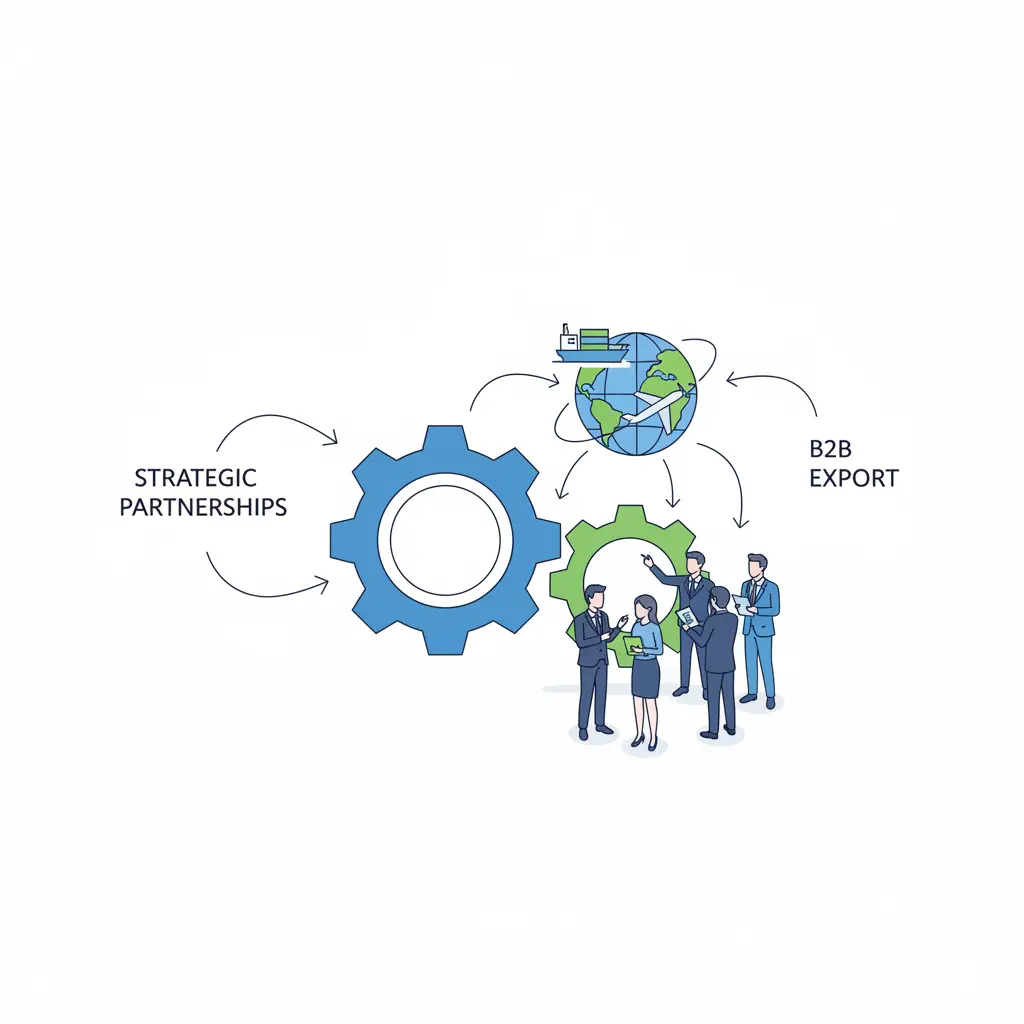
In the dynamic and often complex landscape of international trade, successfully penetrating new markets and sustaining growth requires more than just a great product or service. It demands a sophisticated Global Export Strategy built upon robust alliances and informed decision-making. Strategic partnerships and expert B2B export consulting services are invaluable assets, providing businesses with the insights, networks, and operational efficiencies needed to navigate intricate global markets, optimize supply chains, and significantly accelerate market penetration. These elements are not merely supplementary but are foundational to achieving sustained international success, fostering global supply chain resilience and mitigating the inherent risks of cross-border commerce.
The journey into international markets is fraught with cultural nuances, regulatory hurdles, and intense competition. Without a clear Global Export Strategy, companies risk missteps that can lead to significant financial losses and reputational damage. This is where the synergy between strategic collaborations and professional guidance becomes critical. By aligning with the right partners and engaging seasoned consultants, businesses can gain localized knowledge, streamline logistics, and develop a more adaptive and responsive approach to global trade. This proactive stance is essential for transforming potential obstacles into opportunities for growth and for ensuring the long-term viability of an international venture.
1. Identifying and Vetting International Partners
The success of any international venture often hinges on the quality of its local partnerships. Identifying and rigorously vetting these potential allies is a critical first step. An ideal international partner brings more than just market access; they offer invaluable local insights, cultural understanding, an established distribution network, and shared business objectives. The vetting process should be comprehensive, examining financial stability, market reputation, operational capabilities, ethical standards, and alignment with your company’s values and long-term Global Export Strategy. Due diligence might involve background checks, reference calls, financial audits, and even site visits. Selecting the wrong partner can lead to operational inefficiencies, legal disputes, and damage to brand reputation, underscoring the importance of a meticulous selection process that prioritizes mutual benefit and trust.
2. The Value of Expert B2B Export Consulting
Navigating the labyrinthine rules and regulations of international trade, understanding diverse consumer behaviors, and optimizing logistics can overwhelm even experienced businesses. This is where expert B2B export consulting services prove invaluable. Consultants bring specialized knowledge of international trade laws, customs procedures, intellectual property rights, and market-specific entry requirements. They can assist in developing a bespoke international market entry strategy, conduct market research, identify potential risks, and recommend optimal distribution channels. Furthermore, consultants often help establish and monitor key export performance metrics, offering data-driven insights to refine operations and improve profitability. Their objective perspective can uncover efficiencies, mitigate compliance issues, and accelerate a company’s journey to becoming a successful global player, significantly enhancing global supply chain resilience by providing strategic foresight and adaptive solutions.
3. Developing Long-Term International Business Relationships
Beyond the initial deal, the true measure of international success lies in the ability to cultivate and sustain long-term business relationships. This requires a commitment to open communication, mutual respect, and continuous adaptation. Building trust across cultural divides involves understanding local customs, being flexible in negotiations, and honoring commitments. Regular performance reviews, joint strategic planning sessions, and transparent feedback mechanisms are crucial for maintaining alignment and addressing challenges proactively. Companies must be prepared to invest time and resources into nurturing these relationships, viewing partners not just as transactional entities but as extensions of their own team. A collaborative approach, focused on shared growth and problem-solving, ensures that partnerships evolve positively, contributing to a stable and expansive international presence. This sustained effort reinforces the initial Global Export Strategy and lays the groundwork for future collaborative successes, solidifying a company’s position in global markets.
In conclusion, forming strategic partnerships and leveraging expert B2B export consulting are not optional extras but essential pillars for any company aspiring to excel in international markets. These components empower businesses to navigate complexities with confidence, optimize their operations for global scale, and build enduring relationships that drive sustainable growth. By embracing this integrated approach, companies can unlock their full export potential, achieve competitive advantage, and solidify their standing as formidable players on the global stage.
Partner with Vietnam’s Leading Suppliers
Looking for reliable suppliers in Vietnam? Contact VietnamSuppliers.com today to connect with verified manufacturers and exporters across all industries.
—————————————
References
– WTO Report on Trade Trends: https://www.wto.org/english/news_e/news23_e/dir_17aug23_e.htm
– Choosing the right market entry mode: https://www.intracen.org/news/Choosing-the-right-market-entry-mode/
– ITC Market Analysis Tools: https://www.intracen.org/trade-support/market-analysis-tools/
– Deloitte Insights on Supply Chain Risk Management: https://www2.deloitte.com/us/en/insights/topics/supply-chain/supply-chain-risk-management.html
– international market entry strategy: https://www.intracen.org/news/six-steps-for-companies-to-enter-international-markets/