
Understanding Expedited International Shipping
In today’s interconnected global economy, the ability to move goods swiftly and reliably across borders is no longer a luxury but a fundamental necessity for competitive businesses. Expedited International Shipping refers to a premium logistics service designed to significantly reduce transit times for cargo moving between countries, prioritizing speed over standard cost-saving methods like conventional sea freight. It’s a strategic imperative for modern businesses aiming for unparalleled speed and efficiency in their global operations, offering a critical advantage in dynamic markets.
Modern supply chains are increasingly complex and demand agility. While traditional shipping methods via sea freight remain viable for less time-sensitive cargo, the rising pressures of just-in-time inventory, e-commerce demands, and volatile market conditions necessitate faster solutions. Expedited international shipping directly addresses these challenges, playing a pivotal role in Global Supply Chain Optimization. It helps companies minimize lead times, reduce stockholding costs, and respond rapidly to shifts in demand or supply, thereby enhancing overall operational resilience and customer satisfaction. For businesses engaged in B2B Export Freight Solutions, especially those dealing with high-value, perishable, or time-critical components, expedited services are indispensable.
1. What Defines “Expedited” in International Context?
At its core, “expedited” in international shipping signifies a service that promises and delivers a significantly shorter transit time than standard options. This is primarily achieved through the dominant use of air freight. While sea freight might take weeks or even months for transcontinental shipments, expedited air freight can reduce this to a matter of days or even hours, depending on the origin and destination. This often involves direct flights, minimal layovers, priority handling at airports, and efficient customs clearance processes.
Beyond just faster transport, expedited services typically encompass a higher level of logistical coordination. This includes dedicated customer service, real-time tracking, proactive communication about potential delays, and sometimes door-to-door solutions that integrate trucking and warehousing with air transport. The goal is to streamline every step of the international logistics chain, ensuring that goods move from the point of origin to the final destination with maximum velocity and minimal disruption. It’s about more than just speed; it’s about a commitment to a compressed and reliable delivery schedule.
2. Key Benefits for Your Business Operations
Embracing Expedited International Shipping offers a multitude of strategic advantages for businesses operating on a global scale:
- Reduced Lead Times: Faster delivery means products reach markets quicker, allowing for more responsive inventory management and the ability to capitalize on fleeting market opportunities. This is crucial for industries with short product lifecycles or high demand volatility.
- Enhanced Customer Satisfaction: Meeting tight deadlines and delivering products reliably builds trust and strengthens customer relationships, crucial for repeat business and brand loyalty in competitive landscapes.
- Minimized Inventory Costs: With quicker transit, businesses can operate with lower safety stock levels, reducing warehousing costs, insurance expenses, and the risk of obsolescence. This contributes directly to International Logistics Cost Reduction in the long run, despite higher per-unit shipping costs.
- Improved Supply Chain Resilience: Expedited services act as a vital contingency plan, enabling businesses to recover quickly from unforeseen disruptions, such as production delays, port congestions, or natural disasters, by bypassing slower routes.
- Access to New Markets: The ability to deliver rapidly can open up markets previously inaccessible due to long transit times, expanding a business’s global reach and revenue potential.
3. When Speed is Non-Negotiable for Supply Chains
There are specific scenarios where the financial and operational benefits of expedited international shipping far outweigh the higher upfront costs, making speed truly non-negotiable:
- Perishable Goods: Products with a limited shelf life, such as fresh produce, pharmaceuticals, or certain chemicals, absolutely require rapid transit to maintain quality and efficacy.
- High-Value & Time-Sensitive Components: For industries like aerospace, automotive, or high-tech manufacturing, a single delayed component can halt an entire production line, leading to immense financial losses. Expedited shipping ensures critical parts arrive precisely when needed.
- Urgent Replenishments & Emergency Orders: When stock runs critically low due to unexpected demand spikes or supply chain failures, expedited shipping is essential to prevent costly stockouts and maintain continuous operations.
- Product Launches & Marketing Campaigns: To seize market share during critical product launch windows or to support time-bound promotional campaigns, products must arrive simultaneously across various international retail points.
- Sample & Prototype Shipments: Rapid delivery of samples and prototypes is vital for accelerating research and development cycles, design approvals, and pre-production testing.
Understanding these critical junctures underscores why investing in reliable, fast international shipping is a strategic decision for forward-thinking businesses. It’s not just about moving goods; it’s about enabling agility, safeguarding revenue, and sustaining a competitive edge in a fast-paced global marketplace. The World Trade Organization’s focus on trade facilitation further emphasizes the global recognition of speed and efficiency in cross-border trade.
Global Supply Chain Optimization Through Speed
In the intricate web of modern commerce, the phrase “time is money” resonates more deeply than ever, particularly within global supply chain management. As businesses navigate an increasingly volatile and competitive landscape, the strategic deployment of speed, facilitated by expedited international shipping, is no longer a mere option but a critical driver for overall global supply chain optimization. This approach transcends traditional logistics, transforming it into a powerful tool for enhancing efficiency, reducing costs, and boosting responsiveness across continents. By prioritizing rapid transit, companies can fundamentally reshape their operational models and gain a decisive competitive edge.
1. Minimizing Lead Times and Inventory Holding Costs
One of the most immediate and impactful benefits of integrating expedited international shipping into a supply chain strategy is the dramatic reduction in lead times. Lead time, the duration between initiating an order and receiving its delivery, directly influences a company’s agility and financial health. Traditional shipping methods, particularly sea freight transit times, can involve weeks or even months, tying up capital in goods in transit and necessitating larger safety stocks. Expedited services, predominantly air freight, drastically shorten these periods, allowing businesses to operate with leaner inventory levels.
By minimizing lead times, companies can significantly lower their international logistics cost reduction targets. Reduced inventory means less capital is tied up in stored goods, freeing up cash flow for other investments. Furthermore, it slashes warehousing expenses, insurance costs, and the risk of obsolescence, particularly crucial for products with short shelf lives or rapid technological advancements. This lean approach to inventory management, driven by faster shipping, directly translates into substantial operational savings and improved profitability.
2. Responding to Dynamic Market Demands Quickly
The global marketplace is characterized by its inherent unpredictability – fluctuating consumer trends, sudden geopolitical shifts, and unexpected disruptions can emerge with little warning. In such an environment, the ability to respond swiftly is paramount. Expedited shipping provides the agility needed to react to these dynamics, transforming potential crises into opportunities.
Consider the stark difference between air freight vs sea freight transit times when a sudden surge in demand for a product occurs, or when a critical component is urgently needed to prevent production line shutdowns. Air freight, despite its higher per-unit cost, becomes invaluable in these scenarios. It enables companies to restock popular items before shelves are empty, fulfill urgent orders, or reroute supplies to mitigate the impact of unforeseen events. This rapid response capability not only prevents lost sales and production downtime but also enhances customer satisfaction and strengthens brand loyalty. In essence, speed grants businesses the flexibility to adapt and thrive amidst market volatility.
3. Integrating with Just-In-Time and Lean Inventory Models
The principles of Just-In-Time (JIT) and Lean manufacturing – centered on minimizing waste and ensuring materials arrive precisely when needed – are powerful tools for efficiency. However, their effective implementation on a global scale hinges entirely on the reliability and speed of logistics. This is where expedited shipping becomes an indispensable enabler.
For companies relying on a global network of suppliers, timely delivery of components and raw materials is critical to maintaining continuous production flows and avoiding costly stoppages. B2B export freight solutions that prioritize speed allow manufacturers to synchronize their supply with their production schedule, eliminating the need for extensive buffer stocks. This integration facilitates a seamless, highly efficient operation where components arrive just as they are required for assembly, and finished products are dispatched immediately to meet consumer demand. By fostering a truly demand-driven supply chain, expedited services help businesses fully realize the cost savings and efficiency gains inherent in JIT and Lean methodologies, ensuring a more responsive and resilient operational framework.
Ultimately, embracing speed through expedited international shipping is a strategic investment that underpins a modern, optimized global supply chain. It empowers businesses to reduce costs, enhance agility, and build a robust, responsive system capable of navigating the complexities of the 21st-century marketplace with confidence and efficiency.
Air Freight vs. Sea Freight: The Transit Time Showdown
In the high-stakes world of Expedited International Shipping, the choice between air freight and sea freight is often a critical determinant of success. For businesses navigating complex global supply chains, the decision hinges on a delicate balance of speed, cost, and cargo specifics. This detailed comparison delves into the nuances of each mode, focusing on their respective transit times, cost structures, and suitability for various cargo types when time is of the essence. Understanding these distinctions is paramount for Global Supply Chain Optimization, enabling companies to make informed decisions that impact everything from market entry to inventory management and customer satisfaction. The goal is not merely to move goods, but to move them intelligently and efficiently, minimizing delays and maximizing value in every B2B Export Freight Solution.
1. Air Freight: Speed, Cost Implications, and Capacity
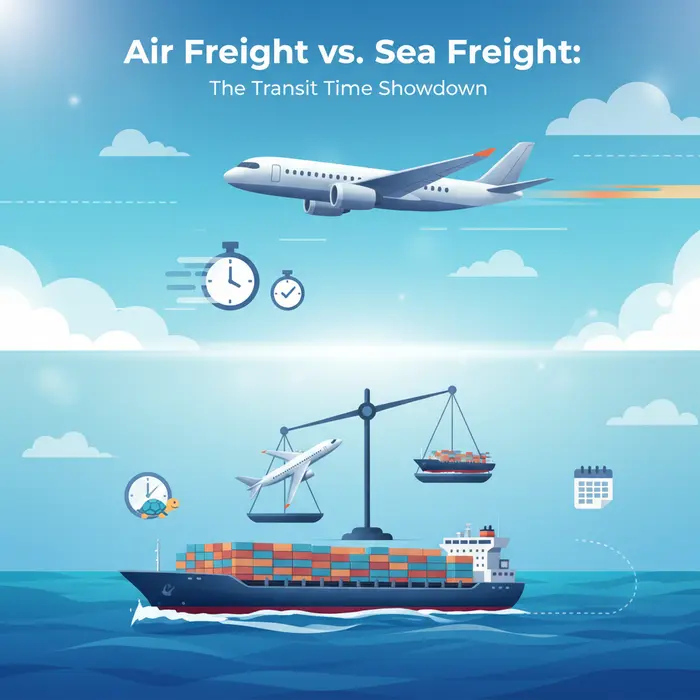
Air freight stands as the undisputed champion of speed in international logistics. When transit time is the overriding factor, air cargo offers the fastest route to market, often completing transatlantic or transpacific journeys in a matter of days, sometimes even hours, compared to weeks for sea freight. This rapid transit is invaluable for time-sensitive goods such as perishable items, high-value electronics, fashion collections needing quick market entry, or critical components for just-in-time manufacturing. However, this unparalleled speed comes with a significantly higher price tag. Air freight costs are typically calculated by weight or volumetric weight, whichever is greater, making it considerably more expensive per kilogram than ocean freight. Businesses must weigh this premium against the potential financial gains of faster delivery, reduced inventory holding costs, and improved responsiveness to market demands. While offering speed, air freight also has inherent capacity limitations. Cargo must adhere to specific dimensions and weight restrictions, and space can be limited during peak seasons, requiring advanced booking and potentially impacting Air Freight vs Sea Freight Transit Times reliability for last-minute shipments.
2. Sea Freight: Volume, Value, and Viability for Expedited Needs
Sea freight, while slower, is the backbone of global trade, renowned for its capacity to move vast volumes of cargo at the lowest cost per unit. Ideal for bulk goods, heavy machinery, raw materials, and non-perishable consumer products, ocean shipping facilitates the movement of approximately 90% of global trade by volume. Standard sea freight transit times can range from 20 to 45 days for intercontinental routes, making it generally unsuitable for truly expedited international shipping. However, advancements in shipping lines, port efficiency, and vessel technology have introduced services like ‘fast boat’ options or premium routes, which can shave several days off traditional transit times, albeit at a higher cost than standard ocean freight. Despite these enhancements, sea freight’s primary advantage remains its cost-effectiveness for large, heavy, or bulky shipments where speed is secondary to budget and volume. When considering sea freight for semi-expedited needs, factors such as port congestion, customs clearance efficiency, and potential weather delays must be carefully factored into the overall lead time, as these can significantly impact the final delivery schedule and necessitate robust contingency planning for optimal International Logistics Cost Reduction.
3. Hybrid Solutions and Multimodal Strategies for Optimized Transit
For many businesses, the optimal solution lies not in an either/or choice, but in a smart blend of both air and sea freight – a multimodal strategy. This approach, central to effective global supply chain efficiency, leverages the strengths of each transport mode to achieve a balance of speed and cost. For instance, a ‘sea-air’ solution involves shipping goods by sea to a strategically located hub (e.g., Dubai for Asia-Europe routes) and then transferring them to air freight for the final leg. This can significantly reduce overall transit time compared to pure sea freight, while still being more cost-effective than pure air freight. Conversely, a ‘air-sea’ approach might involve an urgent initial component being flown in, with the rest of the shipment following by sea. Beyond these primary combinations, businesses are increasingly exploring road and rail integration to create seamless door-to-door B2B Export Freight Solutions. Effective multimodal planning requires meticulous coordination between different carriers and careful management of customs clearances at various transfer points. By strategically combining transport modes, companies can achieve remarkable Global Supply Chain Optimization, ensuring that goods arrive within acceptable timeframes without incurring prohibitive costs, demonstrating a sophisticated approach to managing Air Freight vs Sea Freight Transit Times.
In conclusion, the ‘transit time showdown’ between air and sea freight reveals no single victor; rather, it highlights the importance of strategic decision-making tailored to specific cargo, urgency, and budget constraints. While air freight offers unparalleled speed for critical and high-value shipments, sea freight provides cost-effective solutions for bulk cargo. The future of expedited international shipping increasingly lies in the intelligent integration of these modes, creating hybrid and multimodal strategies that optimize delivery times and costs across the entire global supply chain, ultimately enhancing efficiency and competitiveness for businesses worldwide.
Strategies for International Logistics Cost Reduction
Practical approaches to reduce expenses in your B2B export freight solutions while still maintaining or improving shipping speed and reliability.
The landscape of B2B export freight solutions is increasingly competitive, demanding not just efficient delivery but also stringent cost management. While the desire for Expedited International Shipping often suggests higher costs, strategic planning can significantly reduce expenses without compromising speed or reliability. Achieving this balance requires a multi-faceted approach, focusing on optimizing every aspect of your global supply chain. By implementing robust Global Supply Chain Optimization strategies, businesses can identify inefficiencies, mitigate risks, and unlock substantial savings. This section delves into practical strategies for International Logistics Cost Reduction, ensuring your B2B export operations remain competitive and profitable.
1. Optimizing Route Planning and Carrier Selection
Effective route planning and carrier selection are foundational to controlling international shipping costs. This strategy involves a thorough analysis of available shipping routes, transit times, and associated expenses to find the most cost-effective and efficient path for your goods. For businesses prioritizing speed, understanding the nuances of Air Freight vs Sea Freight Transit Times is crucial. While air freight offers unparalleled speed for Expedited International Shipping, it comes at a premium. Sea freight, conversely, is significantly cheaper for larger volumes but involves longer transit times. A hybrid approach, using sea freight for regular stock and air freight for urgent or high-value shipments, can strike an optimal balance. Beyond the mode of transport, selecting the right carrier is paramount. This isn’t solely about finding the lowest price; it’s about matching a carrier’s network, capabilities, and reliability with your specific requirements. Factors such as a carrier’s specialization in certain regions, their handling of specific cargo types (e.g., hazardous materials, oversized goods), and their track record for on-time delivery are critical considerations. Building relationships with multiple carriers can also provide flexibility and leverage during negotiations, allowing you to choose the best option for each unique shipment. Regularly reviewing and adjusting your route planning based on market changes, fuel costs, and geopolitical factors ensures continuous optimization.
2. Negotiating Favorable Freight Rates and Service Agreements
Direct negotiation with logistics providers is a powerful tool for International Logistics Cost Reduction. Moving beyond standard tariffs requires understanding your shipping volume, frequency, and specific service needs. Consolidating your freight with fewer carriers or freight forwarders can increase your bargaining power, enabling you to secure more favorable rates based on volume discounts. When negotiating, consider not just the base freight rate but also ancillary charges, such as fuel surcharges, terminal handling fees, customs clearance charges, and detention/demurrage fees. These hidden costs can significantly inflate overall expenses if not properly addressed in service agreements. Beyond cost, negotiate clear service level agreements (SLAs) that define transit times, insurance coverage, customs support, and communication protocols. A well-defined SLA can prevent disputes and ensure that the promised service quality aligns with your expectations for B2B Export Freight Solutions. Furthermore, explore long-term contracts where appropriate, as these often come with more stable and competitive pricing, protecting your business from volatile spot market rates. Regularly review these agreements to ensure they remain competitive and meet your evolving supply chain needs. Collaborating with a freight forwarder who has extensive experience and strong relationships with multiple carriers can also provide access to aggregated volumes and better rates than a single exporter might achieve independently.
3. Leveraging Technology for Efficiency and Visibility
In today’s digital age, technology is indispensable for achieving Global Supply Chain Optimization and driving down logistics costs. Implementing a robust Transportation Management System (TMS) can revolutionize how businesses manage their B2B Export Freight Solutions. A TMS provides centralized control over shipping operations, allowing for automated rate comparisons across multiple carriers, optimal route planning, and real-time tracking of shipments. This enhanced visibility helps identify bottlenecks, anticipate delays, and proactively manage inventory, reducing the need for costly last-minute Expedited International Shipping. Predictive analytics, a feature often integrated into advanced TMS platforms, can forecast demand fluctuations and optimize inventory levels, minimizing storage costs and avoiding stockouts. Furthermore, utilizing Electronic Data Interchange (EDI) and Application Programming Interface (API) integrations with carriers and customs brokers streamlines documentation, reduces manual errors, and accelerates customs clearance, which in turn reduces delays and potential demurrage charges. Automation of routine tasks, from booking to invoicing, frees up valuable human resources to focus on strategic initiatives rather than administrative overhead. Investing in technology not only enhances efficiency and reduces operational costs but also improves overall service reliability, providing a competitive edge in the complex world of international trade. By embracing these technological advancements, businesses can transform their logistics operations from a cost center into a strategic advantage.
B2B Export Freight Solutions for Urgent Shipments
In the dynamic world of international trade, the demand for rapid and reliable delivery is paramount, especially for B2B exports. Businesses often face scenarios where time-critical shipments are essential to meet production schedules, capitalize on market opportunities, or fulfill contractual obligations. Expedited International Shipping is not just a luxury but a necessity for maintaining a competitive edge and ensuring customer satisfaction. This section delves into specific solutions and crucial considerations for companies exporting goods under tight deadlines, guaranteeing seamless and swift international delivery. Navigating the complexities of global logistics requires strategic planning, robust partnerships, and an understanding of the available options to optimize transit times and minimize risks. From urgent machinery parts to perishable goods, securing a streamlined export process is vital for success in today’s interconnected global economy.

1. Choosing the Right Freight Forwarder Partner
The success of Expedited International Shipping hinges significantly on selecting an experienced and reliable freight forwarder. For urgent B2B exports, a partner with a proven track record in handling time-sensitive cargo is indispensable. Look for forwarders who offer comprehensive services, including customs clearance, warehousing, and real-time tracking capabilities. Their network of global agents and carriers should be extensive, ensuring flexibility and alternative routes in case of disruptions. Critically, the ideal partner will possess expertise in both air freight and sea freight transit times, guiding you on the most efficient mode for your specific shipment. They should be transparent about costs and potential surcharges, helping you achieve International Logistics Cost Reduction without compromising speed or reliability. A proactive freight forwarder will also provide proactive communication, keeping you informed at every stage of the journey, which is crucial when deadlines are tight. They act as an extension of your global supply chain, meticulously managing the intricacies of international movement.
2. Specialized Services for High-Value or Perishable Goods
Urgent shipments often encompass goods that are either high-value, perishable, or require specific handling conditions. For such items, standard freight solutions are insufficient. Specialized services become essential to protect the integrity and value of the cargo throughout its journey. This includes temperature-controlled containers (reefers) for pharmaceuticals, food products, and certain chemicals, ensuring optimal conditions are maintained from origin to destination. For high-value goods like electronics, machinery, or luxury items, enhanced security measures, such as escorted transit, GPS tracking, and specialized insurance, are critical. Freight forwarders experienced in these niches can offer tailored solutions, understanding the nuances of packaging, documentation, and expedited clearance processes required for these sensitive shipments. They can advise on the optimal balance between air freight vs sea freight transit times, often recommending air cargo for its speed despite higher costs, especially when product shelf-life or market responsiveness is a priority. This expertise minimizes risks of damage, spoilage, or theft, ensuring that your critical exports arrive in perfect condition and on schedule.
3. Navigating Regulatory Compliance and Trade Agreements
One of the most complex aspects of Expedited International Shipping is ensuring full compliance with the myriad of international regulations, customs requirements, and trade agreements. Delays due to incomplete or incorrect documentation can severely jeopardize urgent shipments, leading to significant costs and missed deadlines. An adept freight forwarder will be well-versed in the customs laws of both the exporting and importing countries, as well as relevant international conventions. They can assist with accurate classification of goods, preparation of all necessary permits and licenses, and adherence to specific labeling and packaging standards. Furthermore, understanding various trade agreements (e.g., Free Trade Agreements) can offer significant advantages, such as reduced tariffs or simplified customs procedures, contributing to overall International Logistics Cost Reduction and faster transit. Proactive management of these regulatory hurdles is paramount for seamless cross-border movement, transforming potential roadblocks into smooth pathways for your time-sensitive B2B exports. This proactive approach is a hallmark of effective global supply chain optimization.
Partner with Vietnam’s Leading Suppliers
Looking for reliable suppliers in Vietnam? Contact VietnamSuppliers.com today to connect with verified manufacturers and exporters across all industries.
—————————————
References
– WTO Trade Facilitation: https://www.wto.org/english/tratop_e/tradfa_e/tradfa_e.htm
– The Next Normal for Supply Chains: From Crisis to Opportunity: https://www.mckinsey.com/capabilities/operations/our-insights/the-next-normal-for-supply-chains-from-crisis-to-opportunity
– Logistics Performance Index | World Bank Group: https://lpi.worldbank.org/
– Global Supply Chain Optimization: https://www.weforum.org/agenda/2023/01/supply-chain-logistics-future-davos2023/
– air freight vs sea freight transit times: https://www.iata.org/en/publications/cargo-logistics-e-book/

