Understanding the Carbon Border Adjustment Mechanism (CBAM)
The European Union has introduced a groundbreaking regulatory tool, the Carbon Border Adjustment Mechanism (CBAM), designed to address the critical issue of carbon leakage and promote global decarbonization. Effectively an EU carbon tax on imports, CBAM aims to equalize the carbon price paid by EU domestic products under the EU Emissions Trading System (ETS) with that of imported goods. This ensures that the EU’s ambitious climate policies are not undermined by industries relocating production to countries with less stringent environmental regulations.
1. What is CBAM and Its Objectives?
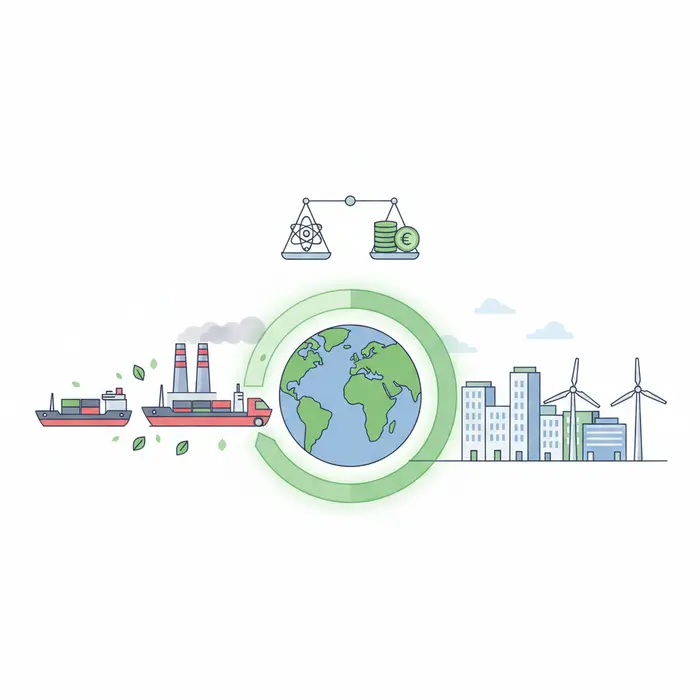
The Carbon Border Adjustment Mechanism (CBAM) is a pivotal component of the EU’s ‘Fit for 55’ package, a legislative framework aimed at reducing the bloc’s net greenhouse gas emissions by at least 55% by 2030 compared to 1990 levels. At its core, CBAM seeks to prevent ‘carbon leakage’ – a scenario where EU companies might move carbon-intensive production outside the EU to avoid the bloc’s carbon pricing, or where EU products are simply replaced by more carbon-intensive imports. By imposing a carbon price on certain imported goods equivalent to the carbon cost that EU producers already pay, CBAM levels the playing field.
The primary objectives of CBAM are multifaceted:
- Prevent Carbon Leakage: This is the cornerstone objective, ensuring that climate action within the EU is not diluted by a shift in emissions outside its borders.
- Encourage Global Climate Action: By requiring importers to report and eventually pay for the carbon content of their goods, CBAM incentivizes non-EU countries to adopt more stringent climate policies and decarbonize their industrial production.
- Support EU Climate Ambition: It reinforces the effectiveness of the EU ETS, allowing the EU to pursue higher climate targets without compromising the competitiveness of its industries.
- Promote Fair Competition: It creates a level playing field between EU manufacturers, who bear the cost of carbon emissions under the ETS, and non-EU manufacturers, ensuring that carbon-intensive imports do not have an unfair cost advantage.
Ultimately, successful CBAM compliance will play a crucial role in the EU’s journey towards carbon neutrality by 2050.
2. Key Sectors and Products Covered
CBAM’s initial scope focuses on specific sectors deemed most at risk of carbon leakage and with high embedded carbon emissions. These include:
- Cement: Includes Portland cement, aluminous cement, slag cement, and similar hydraulic cements.
- Iron and Steel: Covers a broad range of products, from raw materials like pig iron and ferro-alloys to finished goods such as sheets, bars, pipes, and tubes.
- Aluminium: Encompasses raw aluminium, aluminium alloys, and a variety of semi-finished and finished aluminium products.
- Fertilisers: Primarily nitrogenous fertilisers, which are highly energy-intensive to produce.
- Electricity: Electricity imports into the EU.
- Hydrogen: Recently added to the scope, reflecting its growing importance as a potential green fuel and the emissions associated with its production.
These sectors were chosen due to their significant carbon footprint and their exposure to international trade. For businesses involved in these supply chains, understanding the specific products covered is vital for preparing for CBAM reporting and eventual financial obligations. This also highlights the growing importance of accurate Scope 3 emissions reporting, as the embedded emissions throughout the entire value chain will need to be accounted for.
3. The Phased Implementation Timeline
CBAM’s introduction follows a carefully structured, phased approach to allow businesses and administrations sufficient time to adapt to the new regulations:
- Transitional Period (October 1, 2023 – December 31, 2025): This initial phase is primarily focused on reporting obligations. Importers of CBAM-covered goods are required to collect and report quarterly data on the embedded greenhouse gas emissions of their imports, without any financial payments or surrender of CBAM certificates. The first reporting deadline was January 31, 2024, covering imports made in Q4 2023. This period serves as a learning curve, allowing businesses to familiarize themselves with data collection methodologies and reporting requirements, including direct emissions and indirect emissions from electricity consumption.
- Full Implementation (January 1, 2026 onwards): From this date, the financial aspects of CBAM come into full effect. Importers will be required to declare the quantity of embedded emissions in their goods and purchase an equivalent number of CBAM certificates. The price of these certificates will be linked to the average weekly closing price of EU ETS allowances. This marks the point where the EU carbon tax on imports will have direct financial implications for businesses.
The phased timeline underscores the need for businesses to act proactively. Establishing robust data collection, verification, and reporting systems during the transitional period is critical for seamless operations post-2025. Adapting to these new Green supply chain regulations is not merely a compliance exercise but an opportunity to enhance sustainability and competitiveness in the global market.
Essential Requirements for CBAM Compliance
The Carbon Border Adjustment Mechanism (CBAM) represents a pivotal component of the European Union’s ambitious climate strategy, designed to prevent carbon leakage and ensure that the price of carbon reflects the true environmental cost of goods entering the EU market. For businesses importing specified goods into the EU, understanding and meticulously adhering to CBAM compliance is not merely an option but a critical imperative. This mechanism, often perceived as an EU carbon tax on imports, mandates that importers account for the embedded greenhouse gas emissions of certain products, ensuring a level playing field with EU domestic producers who already face carbon pricing under the EU Emissions Trading System (ETS).
Navigating the complexities of CBAM requires a proactive approach, involving detailed data collection, precise emissions calculations, and a clear understanding of reporting obligations. Businesses must integrate these new requirements into their operational and supply chain strategies to mitigate risks, avoid penalties, and demonstrate their commitment to green supply chain regulations.
1. Identifying Your Emissions Footprint (Direct & Indirect)
The foundational step for CBAM compliance involves accurately identifying and quantifying the embedded emissions footprint of the goods you import. This is not about your company’s direct operational emissions (Scope 1) or energy-related indirect emissions (Scope 2) in isolation, but specifically the greenhouse gas emissions released during the production of the imported goods. For CBAM purposes, this entails both the direct emissions from the manufacturing process at the production facility (analogous to Scope 1 for the producer) and the indirect emissions from the consumption of electricity or heat (analogous to Scope 2 for the producer) used in that production.
Critically, while not explicitly “Scope 3 emissions reporting” in the traditional sense for the importer’s own corporate inventory, the requirement effectively pushes businesses to gather data from their suppliers regarding the upstream emissions inherent in the materials and processes used to create the imported product. This demands a deep dive into the manufacturing processes of your non-EU suppliers, requiring them to provide verified data on the emissions generated per unit of product. Initially, during the transitional phase, companies can use default values if supplier data is unavailable, but the long-term expectation is for precise, verified data, which necessitates strong engagement with your supply chain partners.
2. The Role of Declarant Status
Central to the operationalisation of the Carbon Border Adjustment Mechanism is the concept of the “declarant.” In most cases, the declarant is the EU importer who places the goods into free circulation within the EU. However, under certain circumstances, an indirect customs representative can act as the declarant, particularly when the importer is established outside the EU or has not appointed an authorised representative. The declarant assumes the primary responsibility for CBAM compliance.
This responsibility encompasses several key duties: registering in the CBAM Transitional Registry, submitting quarterly CBAM reports during the transitional period (October 2023 – end of 2025), and eventually, from 2026 onwards, purchasing and surrendering CBAM certificates equivalent to the embedded emissions of the imported goods. Understanding and formally establishing who holds the declarant status within your operational structure is paramount, as this individual or entity will be held accountable for meeting all reporting and financial obligations associated with the EU carbon tax on imports.
3. Data Collection and Reporting Obligations
Effective CBAM compliance hinges on robust data collection and accurate reporting. During the transitional period, importers must submit quarterly reports detailing the total quantity of each type of CBAM good imported, their embedded emissions (calculated using specified methodologies), and any carbon price effectively paid in the country of origin. This crucial data allows for a potential reduction in the number of CBAM certificates that need to be purchased, preventing double carbon pricing.
The methodologies for calculating embedded emissions are detailed by the European Commission, outlining both default values for initial periods and the preferred use of actual emissions data provided by producers. Companies must establish sophisticated internal systems to gather, verify, and store this data from their non-EU suppliers. This often involves close collaboration with suppliers, potentially requiring them to implement their own emissions monitoring and reporting systems. Furthermore, businesses need to stay abreast of evolving green supply chain regulations and potential changes in reporting requirements. Failing to meet these obligations can lead to significant penalties, making diligent data management and timely submission of accurate reports indispensable for any business impacted by the Carbon Border Adjustment Mechanism.
Navigating Scope 3 Emissions and Supply Chain Impact
The European Union’s Carbon Border Adjustment Mechanism (CBAM) is poised to reshape global trade, extending its influence far beyond direct manufacturing processes. This groundbreaking regulation, effectively an EU carbon tax on imports, compels businesses to quantify and report the embedded carbon in their goods entering the EU, driving a profound transformation in green supply chain regulations and making robust Scope 3 emissions reporting an imperative. For companies seeking seamless CBAM compliance, understanding and actively managing the carbon footprint across their entire value chain is no longer optional but a strategic necessity. This section delves into the broader implications of CBAM on supply chains, highlighting the critical role of Scope 3 emissions and outlining strategies for effective emission reduction.
1. Scope 3 Emissions: Definition and Relevance to CBAM
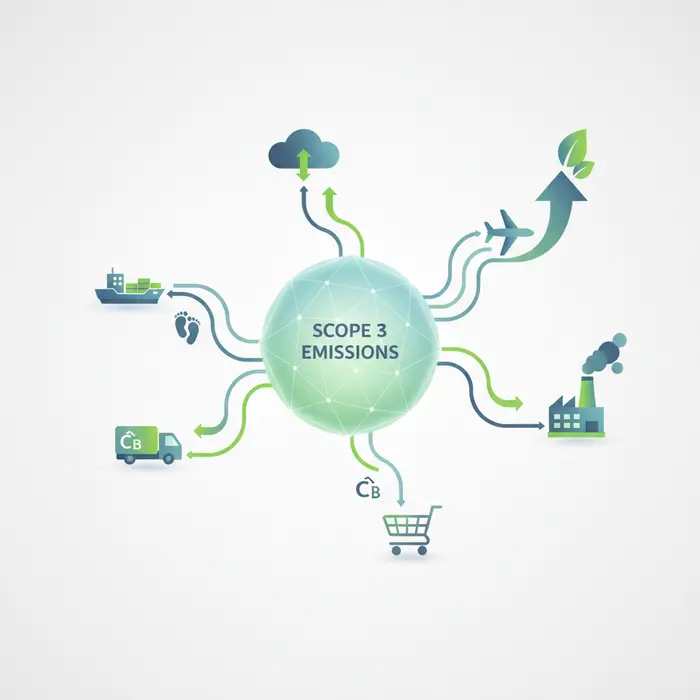
Scope 3 emissions represent all indirect emissions that occur in a company’s value chain, both upstream and downstream. Unlike Scope 1 (direct emissions from owned or controlled sources) and Scope 2 (indirect emissions from purchased electricity, heat, or steam), Scope 3 encompasses a vast array of activities, from the extraction and production of raw materials and the transportation of goods, to the use and end-of-life treatment of sold products. These can include business travel, employee commuting, waste generation, and the capital goods used by a company. For many businesses, Scope 3 emissions constitute the largest portion of their overall carbon footprint, often exceeding 80% to 90%.
The relevance of Scope 3 emissions to the Carbon Border Adjustment Mechanism is profound. CBAM’s objective is to prevent carbon leakage by ensuring that goods imported into the EU face a carbon cost equivalent to that borne by EU-produced goods. This necessitates accounting for the embedded emissions throughout the production process, which inherently involves upstream Scope 3 activities such as raw material acquisition and pre-processing. Accurate Scope 3 emissions reporting is therefore not just about good environmental stewardship but a direct prerequisite for minimizing the financial burden of the EU carbon tax on imports. Companies must accurately track and verify these indirect emissions to calculate their CBAM obligations, making the transparent reporting of their value chain’s environmental impact a competitive advantage.
2. Assessing Your Upstream and Downstream Supply Chain
Effective CBAM compliance hinges on a thorough understanding of your entire supply chain’s carbon footprint. This requires a comprehensive assessment of both upstream (suppliers, raw materials, manufacturing processes) and downstream (distribution, product use, end-of-life) activities. The first step involves mapping your supply chain to identify all significant emission sources and data points. This can be a complex undertaking, especially for companies with extensive global networks involving multiple tiers of suppliers. Leveraging supply chain visibility tools, conducting supplier surveys, and engaging directly with partners are crucial for gathering the necessary data.
Companies must move beyond simply requesting aggregate data and instead work towards collecting activity-level data where possible, such as energy consumption per unit of material or transport distance per tonne of goods. This detailed data collection is fundamental for accurate Scope 3 emissions reporting and for identifying emission hotspots. Prioritizing suppliers and processes with the highest emission intensities allows businesses to focus their efforts on areas where reductions will have the greatest impact. Collaboration is key; fostering strong relationships with suppliers to encourage data sharing and joint emission reduction initiatives is paramount for navigating these new green supply chain regulations.
3. Strategies for Reducing Supply Chain Emissions
Achieving meaningful reductions in supply chain emissions requires a multifaceted strategic approach. One primary area is supplier engagement. This involves setting clear expectations, providing training, and offering incentives for suppliers to adopt more sustainable practices, such as transitioning to renewable energy sources, improving energy efficiency, and optimizing production processes. Developing a supplier code of conduct that includes environmental criteria is a strong starting point.
Logistics optimization is another critical lever. This can involve shifting transportation modes from air freight to less carbon-intensive sea or rail freight, optimizing shipping routes to reduce mileage, consolidating shipments, and investing in lower-emission vehicles. Product design and material selection also play a significant role; designing products for longevity, recyclability, and using low-carbon or recycled materials can drastically reduce upstream emissions. Implementing circular economy principles can further minimize waste and resource consumption throughout the product lifecycle.
Finally, embracing technological solutions for monitoring and managing emissions is essential. This includes using data analytics platforms to track emissions in real-time, employing blockchain for enhanced supply chain transparency, and investing in innovative clean technologies. By proactively implementing these strategies, businesses can not only ensure robust CBAM compliance but also build more resilient, efficient, and environmentally responsible supply chains, positioning themselves for long-term success in a carbon-constrained global economy.
Financial Implications and Strategic Responses to the EU Carbon Tax
The European Union’s Carbon Border Adjustment Mechanism (CBAM) represents a landmark policy designed to level the playing field for EU industries by placing a carbon price on imports of certain goods. Often dubbed an EU carbon tax on imports, CBAM compels non-EU businesses exporting high-carbon goods into the EU to account for their embedded emissions. This mechanism is set to have significant financial implications for affected businesses worldwide, necessitating proactive strategic adjustments and a robust approach to CBAM compliance.
1. Calculating CBAM Certificates Costs
Understanding the financial outlay required for CBAM begins with accurately calculating the cost of CBAM certificates. Businesses importing specified goods into the EU, such as iron, steel, cement, fertilizers, aluminium, electricity, and hydrogen, will need to purchase these certificates. The cost is directly tied to the embedded greenhouse gas emissions of their products, multiplied by the weekly average price of EU Emissions Trading System (ETS) allowances. Initially, the focus is on Scope 1 (direct emissions from production) and Scope 2 (indirect emissions from purchased electricity). For many businesses, particularly those with complex manufacturing processes or diverse product lines, this calculation demands meticulous data collection and reporting.
The core challenge lies in precisely quantifying the emissions embedded in each imported product. This requires robust internal systems for tracking energy consumption, raw material origins, and production processes. Companies must be able to demonstrate the veracity of their reported emissions, as discrepancies can lead to penalties. The initial transitional period, which began in October 2023, primarily involves reporting, but the financial liability for purchasing certificates will commence in 2026. Therefore, businesses must use this time to refine their methodologies for emissions measurement and develop accurate cost projections for this new Carbon border adjustment mechanism.
2. Impact on Pricing and Profit Margins
The direct cost of CBAM certificates will inevitably impact the pricing strategies and profit margins of affected businesses. Companies face a critical decision: absorb the additional costs, pass them on to consumers, or find a strategic balance. Absorbing costs could erode profit margins, especially for industries with already tight margins or intense price competition. Passing costs onto consumers, through higher prices for goods, might reduce competitiveness unless market demand is highly inelastic or competitors face similar carbon costs.
The competitive landscape will play a crucial role. Suppliers from regions with less stringent carbon pricing mechanisms may initially face a competitive disadvantage against EU producers or non-EU producers who have already invested in decarbonization. Businesses must conduct thorough cost-benefit analyses, considering market elasticity, brand loyalty, and the actions of competitors. Strategic responses might include diversifying export markets, renegotiating supply contracts, or exploring new product lines. Ultimately, the goal is to maintain market share and profitability while navigating the new landscape of green supply chain regulations and carbon pricing.
3. Investment in Decarbonization Technologies
Beyond immediate cost management, CBAM serves as a powerful incentive for long-term strategic investment in decarbonization technologies. The most effective way to mitigate future CBAM costs is to reduce the embedded emissions of products. This strategic imperative encourages businesses to invest in renewable energy sources for their operations, improve energy efficiency, adopt cleaner production processes, and explore innovative carbon capture technologies.
Such investments, while initially capital-intensive, offer significant long-term benefits. They not only reduce exposure to fluctuating carbon prices but also enhance operational efficiency, improve brand reputation, and future-proof businesses against evolving environmental regulations. Furthermore, while CBAM currently focuses on Scope 1 and 2 emissions, the broader trend in global trade and environmental policy points towards increased scrutiny of Scope 3 emissions reporting (indirect emissions across the value chain). Proactive investment in decarbonization across the supply chain, therefore, prepares businesses for future regulatory landscapes and positions them as leaders in sustainable production. Embracing these green technologies is not just a matter of compliance, but a strategic move towards enhanced competitiveness and resilience in a carbon-constrained global economy.
Future-Proofing Your Business: Beyond CBAM 2025
As the world grapples with climate change, regulatory landscapes are rapidly evolving, placing significant new demands on businesses worldwide. The European Union’s Carbon Border Adjustment Mechanism (CBAM), set to fully implement its financial obligations in 2026 after the transitional phase ending in 2025, represents a pivotal shift. It’s essentially an EU carbon tax on imports, designed to prevent carbon leakage by ensuring that goods imported into the EU face similar carbon costs to those produced within it. While the immediate focus for many businesses is achieving CBAM compliance, forward-thinking enterprises understand that this is just one piece of a much larger puzzle. The true challenge—and opportunity—lies in building long-term strategies for sustainability that not only meet current regulations but anticipate and stay ahead of evolving global green supply chain regulations.

1. Leveraging Digital Tools for Emissions Tracking
Accurate and transparent emissions tracking is no longer a luxury but a fundamental necessity for modern businesses. The complexity of measuring carbon footprints, especially concerning Scope 3 emissions reporting, demands robust digital solutions. Scope 3 emissions, which encompass all indirect emissions that occur in a company’s value chain, are often the largest source of greenhouse gases for many businesses and are notoriously difficult to quantify. Digital tools, powered by artificial intelligence (AI), machine learning, and blockchain technology, offer unparalleled capabilities to collect, analyze, and verify emissions data across intricate global supply chains. These platforms can automate data collection from suppliers, identify emission hotspots, and generate auditable reports crucial for CBAM compliance and other regulatory frameworks. By investing in these technologies, companies can move beyond manual, error-prone processes, gaining granular insights into their environmental impact and identifying opportunities for reduction.
2. Aligning with Global Green Supply Chain Regulations
While the Carbon Border Adjustment Mechanism is a significant driver, it’s merely one of many emerging green supply chain regulations worldwide. Countries and blocs are increasingly implementing their own versions of environmental due diligence laws, plastic taxes, sustainable sourcing mandates, and extended producer responsibility schemes. Companies that adopt a holistic approach to understanding and integrating these diverse regulations into their operational DNA will gain a significant competitive edge. This involves continuous monitoring of policy developments, engaging with industry associations, and proactively adapting supply chain practices to meet new standards. Rather than reacting to each new regulation individually, businesses should aim to develop a universal framework for sustainable supply chain management that anticipates future requirements, fostering resilience and agility in a rapidly changing regulatory environment. This proactive alignment minimizes disruption and builds trust with stakeholders.
3. Building a Resilient and Sustainable Business Model
Ultimately, future-proofing your business extends far beyond mere regulatory adherence. It involves embedding sustainability into the core of your business model, fostering resilience against environmental and economic shocks. This means exploring circular economy principles, where waste is minimized, and resources are kept in use for as long as possible. It includes transitioning to renewable energy sources, optimizing logistics for lower emissions, and engaging in ethical and sustainable sourcing practices. A truly sustainable business model also considers social impact, fair labor practices, and community engagement, understanding that environmental and social responsibilities are intrinsically linked. Companies that embrace these principles not only mitigate risks associated with climate change and regulation but also unlock new avenues for innovation, attract conscious consumers and talent, and enhance long-term profitability. This strategic shift transforms sustainability from a compliance burden into a powerful driver of competitive advantage and enduring value creation, well beyond the immediate scope of CBAM compliance.
Partner with Vietnam’s Leading Suppliers
Looking for reliable suppliers in Vietnam? Contact VietnamSuppliers.com today to connect with verified manufacturers and exporters across all industries.
—————————————
References
– :
– European Commission CBAM Information: https://taxation-customs.ec.europa.eu/carbon-border-adjustment-mechanism_en
– GHG Protocol Scope 3 Standard – Chapter 4: https://ghgprotocol.org/sites/default/files/standards_guidance/Chapter%204.pdf
– EU carbon tax on imports: https://taxation-customs.ec.europa.eu/carbon-border-adjustment-mechanism_en
– European Commission’s CBAM Page: https://taxation-customs.ec.europa.eu/carbon-border-adjustment-mechanism_en