
The Imperative for Supply Chain Diversification in 2025
In an increasingly interconnected yet volatile global economy, the notion of Supply Chain Diversification Strategy has transcended from a best practice to an absolute imperative. As businesses navigate a landscape rife with geopolitical shifts, environmental challenges, and rapid technological advancements, relying on single-source suppliers or concentrated geographic regions is no longer a viable option for sustained growth and resilience. This section explores why diversifying your supply chain is not merely a strategic advantage but a critical cornerstone for business continuity and competitiveness in 2025 and beyond.

1. Lessons from Recent Global Disruptions
The past few years have served as an undeniable stress test for global supply chains, exposing vulnerabilities that few businesses could have fully anticipated. From the unprecedented lockdowns and factory closures triggered by the COVID-19 pandemic to the logistical nightmares of the Suez Canal blockage, and the ongoing repercussions of geopolitical tensions and trade wars, these events unequivocally demonstrated the fragility of concentrated sourcing models. Companies that had heavily relied on a single region or a limited set of suppliers faced severe stockouts, production halts, and escalating costs, directly impacting their revenue and market share. These disruptions underscored the urgent need for a robust Supply Chain Resilience framework, emphasizing that single points of failure can lead to catastrophic business interruptions. The lessons are clear: an effective Supply Chain Diversification Strategy, incorporating elements like parallel sourcing and strategic inventory positioning, is no longer a luxury but a fundamental requirement for mitigating unforeseen shocks and maintaining operational stability.
2. Anticipating Future Market Volatility
Looking ahead to 2025, the global business environment shows no signs of stabilizing; instead, it promises continued and perhaps heightened volatility. Climate change impacts are leading to more frequent and severe weather events, disrupting transportation networks and raw material availability. Geopolitical fragmentation and protectionist policies are reshaping trade routes and market access. Furthermore, rapid technological evolution, while offering opportunities, also presents risks of obsolescence and cyber threats to interconnected supply networks. Businesses must proactively anticipate these future challenges by engaging in comprehensive Export Market Analysis Report and implementing advanced Supplier Risk Management Strategies. This involves moving beyond reactive problem-solving to proactive risk identification and mitigation through deliberate Global Sourcing Diversification. By spreading sourcing across various regions and suppliers, companies can build inherent flexibility, ensuring that a disruption in one area does not cripple the entire operation. This foresight is crucial for maintaining agility and responsiveness in an unpredictable world.
3. Impact on Business Continuity and Competitiveness
Implementing a comprehensive Supply Chain Diversification Strategy directly bolsters business continuity and significantly enhances competitive advantage. By diversifying suppliers, routes, and manufacturing locations, businesses dramatically reduce their exposure to specific regional risks, be they natural disasters, political instability, or labor disputes. This multi-pronged approach ensures a continuous flow of goods and materials, minimizing downtime and safeguarding production schedules. Beyond risk mitigation, diversification opens doors to new opportunities. Engaging with suppliers in different countries can lead to cost efficiencies, access to specialized expertise, and innovative technologies. Furthermore, a well-executed International Market Entry Strategy allows businesses to expand their customer base, tapping into new growth markets and reducing reliance on saturated domestic demand. Companies with diversified supply chains demonstrate greater adaptability, allowing them to pivot quickly in response to market shifts or emerging consumer trends. In essence, while the initial investment in diversification may seem substantial, the long-term returns in terms of enhanced resilience, sustained profitability, and stronger market positioning make it an indispensable strategy for any forward-thinking enterprise in 2025.
Global Sourcing Diversification: Expanding Your Reach
In today’s volatile global economic landscape, a robust and resilient supply chain is paramount for business continuity and competitive advantage. Over-reliance on a single region or a limited set of suppliers has proven to be a significant vulnerability, susceptible to geopolitical shifts, natural disasters, and economic downturns. This necessitates a proactive Supply Chain Diversification Strategy, moving beyond traditional sourcing hubs to explore new, viable international markets. By strategically expanding your sourcing network, you not only mitigate risks but also unlock opportunities for cost savings, innovation, and enhanced market responsiveness. This section delves into actionable strategies for broadening your global reach, ensuring your supply chain can withstand future disruptions and capitalize on emerging market dynamics.
1. Identifying New Sourcing Hubs
The first step in effective Global Sourcing Diversification involves a systematic approach to identifying new and promising sourcing hubs. This process goes beyond simply seeking lower labor costs; it requires a holistic evaluation of a region’s suitability for your specific needs. Key factors to consider include the availability and quality of raw materials, the presence of a skilled workforce, robust manufacturing capabilities, and a supportive logistics infrastructure. Regions in Southeast Asia, Eastern Europe, and Latin America are increasingly becoming attractive alternatives to established sourcing powerhouses, offering competitive advantages in specific industries. For instance, countries like Vietnam, Thailand, and Mexico have developed strong manufacturing ecosystems in electronics, textiles, and automotive components, respectively. Leveraging detailed market research, trade data analysis, and expert consultations can help pinpoint regions that align with your product requirements, production volumes, and quality standards. Furthermore, assessing the ease of doing business, cultural compatibility, and potential for long-term partnership development are crucial elements in this initial exploratory phase of your International Market Entry Strategy.
2. Assessing Geopolitical & Economic Stability for Sourcing
Once potential new sourcing hubs are identified, a rigorous assessment of their geopolitical and economic stability is non-negotiable. This critical step in Supplier Risk Management Strategies aims to protect your investment and ensure long-term supply chain viability. Factors to evaluate include the political climate, government stability, regulatory framework, and the presence of corruption. An unstable political environment can lead to sudden policy changes, trade barriers, or even social unrest, all of which can severely disrupt supply lines. Economically, evaluate inflation rates, currency stability, and the overall health of the national economy. A strong, growing economy often indicates a stable business environment and access to capital for your potential suppliers. Consult comprehensive resources like an Export Market Analysis Report or country risk assessments from reputable financial institutions and international organizations. Furthermore, understanding a region’s legal system, intellectual property protections, and compliance with international labor and environmental standards is vital to avoid future ethical and legal complications. Proactive monitoring of these indicators allows businesses to anticipate potential disruptions and build contingency plans, thereby enhancing the overall resilience of their diversified sourcing network.
3. Building a Multi-Regional Supplier Portfolio
The ultimate goal of Global Sourcing Diversification is not merely to identify new regions but to actively construct and maintain a resilient, multi-regional supplier portfolio. This involves strategically distributing your sourcing across different geographical locations and even across multiple suppliers within those regions. A well-constructed portfolio ensures that if one region faces disruption, alternative suppliers in other areas can step in to maintain continuity. This strategy not only mitigates single-point-of-failure risks but also fosters greater competition among suppliers, potentially leading to better pricing, improved quality, and increased innovation. Developing strong, collaborative relationships with these diverse suppliers is critical. Implement robust due diligence processes for vetting new partners, focusing on their financial stability, operational capabilities, quality control systems, and ethical practices. Establishing clear communication channels and regular performance reviews helps maintain high standards across your entire network. Furthermore, consider developing contingency plans for each critical component or raw material, outlining alternative suppliers and logistical routes. By consciously building and nurturing a broad and deep supplier base across various stable and viable markets, companies can achieve true supply chain resilience, adapt swiftly to global changes, and secure a sustainable competitive edge.
International Market Entry Strategy & Export Analysis
Venturing into new international markets presents both immense opportunities and complex challenges. A robust International Market Entry Strategy is paramount for sustainable global expansion, requiring meticulous planning, comprehensive data analysis, and an understanding of diverse market dynamics. This section explores practical approaches to effectively penetrate new international territories, focusing on thorough market analysis and strategic planning to ensure export success. Ultimately, these efforts contribute significantly to a resilient Supply Chain Diversification Strategy, mitigating risks and enhancing global competitiveness.
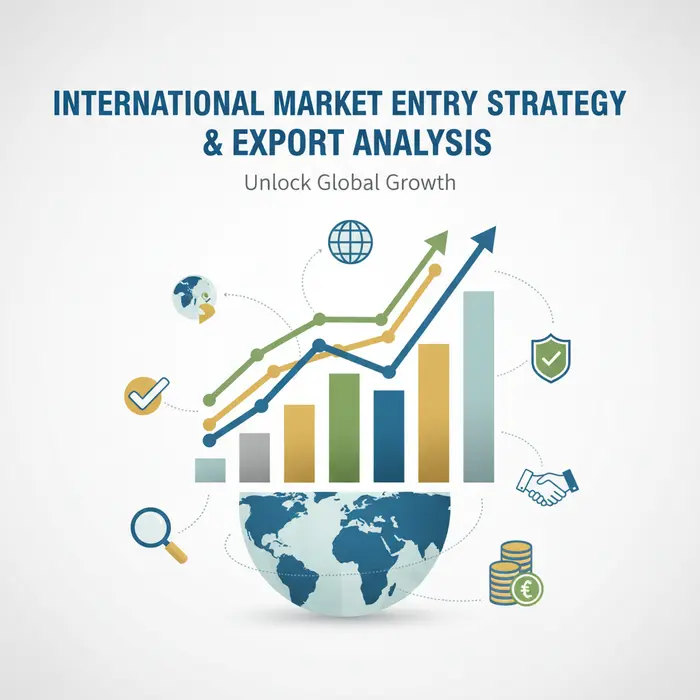
At the core of successful global expansion lies a proactive approach to Supply Chain Diversification Strategy. This isn’t merely about finding alternative suppliers; it encompasses a holistic view of market access, risk mitigation, and strategic resource allocation. By strategically entering diverse markets, businesses can not only access new customer bases but also foster robust Global Sourcing Diversification, reducing dependency on single regions or suppliers and thereby fortifying their overall resilience against geopolitical shifts, economic downturns, and logistical disruptions. Effective Supplier Risk Management Strategies are woven into this fabric, ensuring that new market entries also bring reliable and compliant partners into the fold.
1. Conducting Comprehensive Export Market Analysis Reports
The foundation of any successful international expansion is a thoroughly researched Export Market Analysis Report. This report acts as a roadmap, providing critical insights into potential markets. It involves a deep dive into various factors, including market size, growth trends, consumer demographics, purchasing power, competitive landscape, and local industry structures. Key data points such as GDP per capita, import tariffs, trade agreements, and logistical infrastructure are crucial. Beyond macroeconomic indicators, a nuanced understanding of cultural preferences, local business practices, and distribution channels is indispensable. Investing in detailed analysis helps identify viable market segments, assess potential demand for your product or service, and forecast sales, minimizing the risks associated with blind market entry. It’s about making data-driven decisions that pave the way for a strong International Market Entry Strategy.
2. Navigating Regulatory & Trade Compliance
Successfully operating in international markets demands a meticulous approach to regulatory and trade compliance. Each country possesses unique legal frameworks, import/export regulations, customs procedures, product standards, and intellectual property laws. Failure to comply can result in significant fines, delays, product confiscation, or reputational damage. Businesses must invest in understanding and adhering to these requirements, often necessitating local legal counsel or specialized compliance consultants. Key areas include tariff classifications, country of origin rules, labeling requirements, certifications (e.g., CE, FDA), and data privacy regulations (e.g., GDPR). Leveraging authoritative trade intelligence tools and resources is essential for staying abreast of ever-evolving international trade laws and ensuring a smooth flow of goods. Proactive engagement with these complexities is a cornerstone of effective Supplier Risk Management Strategies and ensures long-term market access.
3. Developing Market Entry Models (e.g., Joint Ventures, Direct Export)
Once target markets are identified and regulatory landscapes understood, selecting the appropriate market entry model becomes critical. The choice depends on various factors: the level of control desired, risk tolerance, available resources, and the nature of the product or service. Common models include:
- Direct Export: Selling directly to overseas customers or distributors. This offers high control but requires significant in-house resources for marketing, logistics, and compliance.
- Indirect Export: Utilizing intermediaries (e.g., export management companies, trading companies) that handle international sales on your behalf. Lower risk and resource commitment but less control.
- Licensing & Franchising: Granting a foreign company the right to use your intellectual property (brand, technology) for a fee. Low capital outlay, but limited control over operations.
- Joint Ventures: Collaborating with a local partner to establish a new entity. This combines local market knowledge with your expertise, sharing both risks and rewards. It’s particularly effective for complex markets or where local presence is mandated.
- Foreign Direct Investment (FDI): Establishing a wholly-owned subsidiary or acquiring an existing company in the foreign market. Offers maximum control and profit potential but involves the highest risk and capital investment.
Each model has its pros and cons, and the optimal choice often evolves as a company gains experience in the international arena. A well-considered choice is vital for a successful International Market Entry Strategy and helps solidify efforts towards Global Sourcing Diversification by embedding your operations directly or indirectly into new supply networks.
Advanced Supplier Risk Management Strategies
In-depth methodologies for identifying, assessing, and mitigating risks across your diversified supplier base to ensure operational stability and reliability.
In today’s interconnected global economy, building a resilient supply chain is paramount. While a Supply Chain Diversification Strategy is crucial for mitigating single-point failures and enhancing flexibility, it also introduces a more complex risk landscape. Advanced supplier risk management goes beyond basic vetting, delving into sophisticated methodologies to identify, assess, and mitigate potential disruptions across your extensive and often geographically dispersed supplier network. This proactive approach ensures continuous operational stability, safeguards reputation, and underpins long-term business reliability in an increasingly volatile global marketplace.
1. Mapping Your Extended Supply Chain
Effective risk management begins with unparalleled visibility. Many organizations only have a clear view of their direct (Tier 1) suppliers, leaving them vulnerable to disruptions further upstream. Mapping your extended supply chain involves meticulously identifying not just Tier 1 partners, but also their suppliers (Tier 2), and even beyond. This intricate process requires collaborative efforts, often leveraging specialized software, to visualize the entire network, including critical components, raw materials, and logistics providers. Understanding these multi-tier relationships is essential for anticipating potential bottlenecks, identifying single points of failure, and assessing the true impact of a disruption originating anywhere in the chain.
This deeper understanding is particularly vital for organizations pursuing Global Sourcing Diversification and executing a robust International Market Entry Strategy. By mapping dependencies across different geographies and regulatory environments, companies can better prepare for geopolitical shifts, natural disasters, or trade policy changes. It allows for the strategic placement of buffer stocks, the development of alternative supplier pathways, and a more informed approach to managing the inherent complexities of a globalized supplier base.
2. Implementing Robust Supplier Vetting Processes
Beyond initial qualification, a truly resilient supply chain demands continuous and rigorous supplier vetting. This process moves beyond basic financial checks to encompass a holistic assessment of a supplier’s operational stability, ethical practices, environmental compliance, and geopolitical exposure. Key elements include:
- Financial Health Assessment: Regular monitoring of credit ratings, financial statements, and market news to identify potential insolvency risks.
- Operational Capabilities & Redundancy: Evaluating production capacity, quality control systems, and the supplier’s own contingency plans for disruptions.
- Ethical & ESG Compliance: Assessing labor practices, human rights policies, environmental impact, and adherence to sustainability standards, which are increasingly crucial for brand reputation and regulatory compliance.
- Geopolitical & Regulatory Risk: Analyzing a supplier’s exposure to political instability, trade barriers, sanctions, and changes in international law.
Implementing these advanced Supplier Risk Management Strategies requires clearly defined criteria, regular audits, and a framework for continuous monitoring. It’s not a one-time activity but an ongoing commitment to understanding and influencing supplier performance and resilience. By establishing clear performance indicators and engaging in collaborative risk mitigation planning, organizations can proactively address vulnerabilities before they escalate into major disruptions.
3. Leveraging Technology for Risk Monitoring and Prediction
The sheer scale and complexity of modern supply chains make manual risk management untenable. Technology is now indispensable for real-time monitoring, predictive analytics, and proactive intervention. Advanced platforms utilize Artificial intelligence (AI) and Machine Learning (ML) to process vast amounts of data from various sources – news feeds, social media, weather patterns, geopolitical analyses, and shipping data – to identify emerging threats and predict potential disruptions before they occur.
Key technological applications include:
- Real-time Monitoring Dashboards: Providing a consolidated view of supplier performance, inventory levels, logistics movements, and external risk factors.
- Predictive Analytics: Using historical data and algorithms to forecast demand fluctuations, potential quality issues, or geopolitical hotspots that could impact specific suppliers. This can inform an Export Market Analysis Report by identifying volatile regions.
- Blockchain for Transparency: Enhancing traceability and verifying the authenticity of goods and ethical sourcing across multi-tier networks.
- IoT Sensors: Monitoring conditions of goods in transit (temperature, humidity) and tracking asset locations to prevent spoilage or theft.
By integrating these technologies, companies can move from reactive problem-solving to proactive risk management. They gain the ability to conduct scenario planning, stress-test their supply chain against various disruption models, and develop rapid response protocols, ensuring business continuity even in the face of unforeseen challenges.
In conclusion, advanced supplier risk management is a strategic imperative, not merely a tactical exercise. By systematically mapping your extended supply chain, implementing robust and continuous vetting processes, and strategically leveraging cutting-edge technology, businesses can transform potential vulnerabilities into sources of competitive advantage. This holistic and proactive approach not only safeguards operational stability and reliability but also builds a more resilient, adaptable, and ultimately more profitable enterprise capable of thriving in a dynamic global environment.
Implementing and Measuring Diversification Success
Successfully implementing a Supply Chain Diversification Strategy is more than just formulating a plan; it requires a robust execution framework coupled with clear metrics to track progress and ensure its enduring effectiveness. This section outlines the essential steps for putting diversification strategies into action, establishing key performance indicators (KPIs) to track their impact, and fostering a culture of continuous improvement to adapt to an ever-evolving global landscape.

1. Phased Implementation Roadmaps
Effective diversification isn’t an overnight transformation; it necessitates a structured, phased approach. Organizations should develop detailed roadmaps that break down the overarching supply chain diversification strategy into manageable, sequential phases. The initial phase often involves a thorough assessment of current dependencies, identifying critical single points of failure, and evaluating potential new sourcing regions or market opportunities. For instance, a focus on Global Sourcing Diversification might begin with pilot projects in new geographical areas, allowing for learning and refinement before a full-scale rollout. This could involve exploring alternative supplier hubs in Southeast Asia, Latin America, or Eastern Europe.
Subsequent phases would then concentrate on executing specific initiatives, such as establishing new supplier relationships, building logistics infrastructure, or launching an International Market Entry Strategy. Each phase should have defined objectives, allocated resources, and clear timelines. Crucially, stakeholder engagement is vital throughout this process, ensuring buy-in from procurement, logistics, sales, and senior management. A phased roadmap mitigates risks by allowing for adjustments based on early outcomes, preventing resource overextension, and building organizational capability incrementally.
2. Key Performance Indicators (KPIs) for Diversification
To truly measure the success of a diversification strategy, organizations must establish a comprehensive set of Key Performance Indicators (KPIs). These metrics move beyond anecdotal evidence, providing quantifiable insights into the strategy’s impact on resilience, cost, and growth. Key KPIs for diversification include:
- Supplier Concentration Risk Reduction: Measuring the percentage reduction in spend with top-tier suppliers or the increase in the number of qualified suppliers across different regions. This directly reflects the success of Supplier Risk Management Strategies.
- Geographic Spread: Tracking the distribution of suppliers and customers across various countries or continents, indicating reduced reliance on any single geopolitical zone.
- Resilience Metrics: Quantifying improvements in lead times from alternative sources, recovery time from disruptions, or the availability of buffer stock at diversified locations. A strong focus here is on overall supply chain resilience.
- Cost Efficiency & Savings: Analyzing the cost benefits derived from new sourcing locations, reduced logistics costs due to regionalization, or improved negotiation leverage with a broader supplier base.
- Market Penetration & Revenue Growth: For market diversification efforts, KPIs would include the percentage increase in revenue from new international markets, customer acquisition rates in those regions, or the success rates highlighted in an Export Market Analysis Report.
- Quality & Delivery Performance: Ensuring that diversification doesn’t compromise quality, by monitoring defect rates, on-time delivery from new suppliers, and overall customer satisfaction.
Regular monitoring and reporting of these KPIs are essential to evaluate the strategy’s effectiveness and inform necessary adjustments.
3. Continuous Improvement and Adaptation
Diversification is not a static goal but an ongoing journey. The global economic and geopolitical landscape is constantly shifting, necessitating a commitment to continuous improvement and adaptation. Organizations must establish robust feedback loops, regularly reviewing KPI performance against strategic objectives. This involves conducting periodic audits of diversified suppliers, re-evaluating market entry strategies in light of new economic data, and assessing the impact of geopolitical events on existing supply chains.
Learning from both successes and failures in initial diversification efforts is critical. What worked well? What challenges were unforeseen? These insights should inform future strategic adjustments. An agile approach allows businesses to pivot quickly, explore emerging markets, or even reconsider existing supplier relationships if new risks arise. By embracing a culture of continuous assessment and proactive adaptation, businesses can ensure their Supply Chain Diversification Strategy remains robust, relevant, and effective in navigating future uncertainties, ultimately building a more resilient and competitive enterprise.
Partner with Vietnam’s Leading Suppliers
Looking for reliable suppliers in Vietnam? Contact VietnamSuppliers.com today to connect with verified manufacturers and exporters across all industries.
—————————————
References
– :
– Export Market Research Resources from Trade.gov: https://www.trade.gov/export-market-research
– International Trade Centre (ITC) Trade Information Tools: https://www.intracen.org/trade-support-institutions/trade-information-tools/
– Supply Chain Resilience: Five Actions for CEOs: https://www.weforum.org/agenda/2022/02/supply-chain-resilience-five-actions-for-ceos/
– Building Resilient Supply Chains: https://hbr.org/2020/07/building-resilient-supply-chains