
Understanding the WTO SPS Agreement Explained
The WTO Agreement on the Application of Sanitary and Phytosanitary Measures (SPS Agreement) is a cornerstone of multilateral trade, designed to ensure that countries can protect human, animal, and plant life and health without using such measures as disguised barriers to trade. In an increasingly interconnected global economy, understanding the SPS Agreement is crucial for all stakeholders involved in SPS compliance international trade. This agreement plays a pivotal role in regulating global commerce, particularly concerning agricultural products, food, and animal and plant health. It sets the framework for how countries apply food safety and animal and plant health regulations, ensuring they are scientifically justified and do not unduly restrict international trade. For businesses engaged in exporting food, plants, or animals, navigating the intricacies of the SPS Agreement is paramount to ensuring smooth market access and avoiding costly trade disputes. It underpins the global exchange of goods, making adherence to its principles essential for agricultural import export compliance.
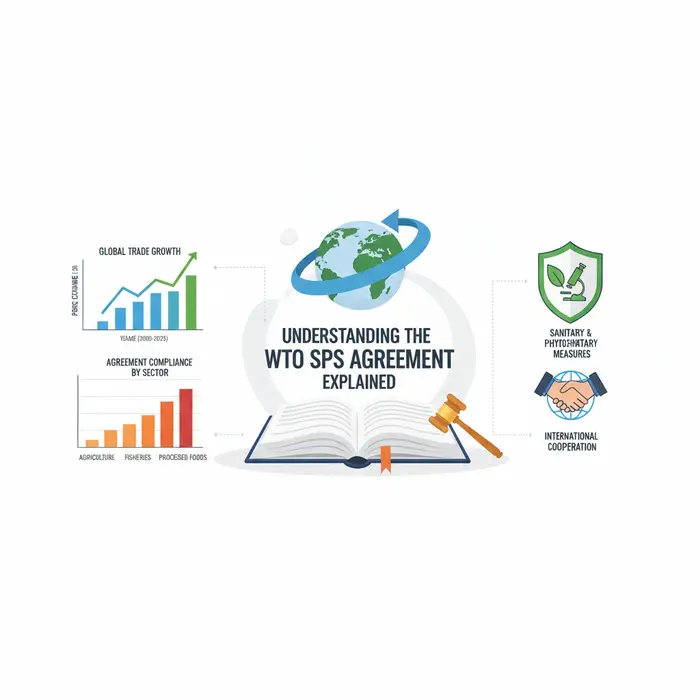
1. Key Principles: Harmonization, Equivalence, and Risk Assessment
The WTO SPS Agreement is founded on three core principles that guide its application and impact food safety regulations global export and phytosanitary certificate requirements:
- Harmonization: This principle encourages member countries to base their SPS measures on international standards, guidelines, and recommendations where they exist. Key international standard-setting bodies include the Codex Alimentarius Commission for food safety, the World Organisation for Animal Health (OIE) for animal health, and the International Plant Protection Convention (IPPC) for plant health. By aligning national regulations with these globally recognized benchmarks, the Agreement aims to reduce the divergence of standards, thereby simplifying international trade and fostering greater predictability. While harmonization is encouraged, it is not mandatory; countries retain the right to implement higher standards if scientifically justified.
- Equivalence: Recognizing that different countries might achieve the same level of health protection through varying methods, the principle of equivalence allows importing countries to accept the SPS measures of exporting countries as equivalent, even if those measures differ from their own. This means that an exporting country can demonstrate that its sanitary or phytosanitary measures, though different, achieve the same level of protection as those required by the importing country. Establishing equivalence can be a complex process, often requiring extensive technical cooperation and mutual recognition agreements, but it offers significant flexibility and trade facilitation benefits, directly impacting areas like phytosanitary certificate requirements and meat inspection systems.
- Risk Assessment: All SPS measures must be based on scientific principles and evidence, typically derived from a robust risk assessment. This principle mandates that countries determine the appropriate level of protection (ALOP) they wish to achieve and then implement measures that are proportionate to the identified risks to human, animal, or plant health. The risk assessment process should consider available scientific evidence, relevant inspection and sampling methods, prevalence of specific diseases or pests, and ecological and environmental conditions. This scientific underpinning prevents arbitrary or discriminatory measures, ensuring that health standards serve their legitimate purpose rather than acting as unjustified trade barriers.
2. Rights and Obligations of Member Countries in Global Trade
The WTO SPS Agreement explained offers both rights and imposes obligations on its member countries, striking a balance between national sovereignty in health protection and the collective goal of facilitating open and fair international trade.
- Rights: Member countries have the sovereign right to adopt or enforce SPS measures necessary to protect human, animal, or plant life or health within their territories. This includes the right to establish their own appropriate level of sanitary or phytosanitary protection, provided these measures are consistent with the provisions of the Agreement. This ensures that nations are not compelled to compromise their health standards for the sake of trade.
- Obligations: Alongside these rights come several crucial obligations. Firstly, measures must not arbitrarily or unjustifiably discriminate between countries where identical or similar conditions prevail. This non-discrimination principle applies both between foreign countries (Most-Favoured Nation treatment) and between domestic and foreign products (National Treatment). Secondly, measures must be based on scientific principles and not maintained without sufficient scientific evidence, as underpinned by the risk assessment principle. Thirdly, countries must ensure their measures are no more trade-restrictive than necessary to achieve their chosen level of protection, taking into account technical and economic feasibility. Finally, the Agreement mandates transparency, requiring members to notify other WTO members of new or changed SPS regulations that might significantly affect trade. This involves establishing inquiry points and notification authorities to disseminate information on their SPS measures, thereby enhancing predictability and compliance in SPS compliance international trade. These obligations directly influence how countries manage food safety regulations global export and issue phytosanitary certificate requirements, promoting global consistency.
3. Distinction from the WTO TBT Agreement
While both the SPS Agreement and the Agreement on Technical Barriers to Trade (TBT Agreement) aim to prevent technical regulations from creating unnecessary obstacles to trade, they address distinct types of measures and concerns. Understanding this distinction is vital for agricultural import export compliance and ensuring proper classification of trade regulations.
- SPS Agreement: Specifically covers measures applied to protect human or animal life or health from risks arising from food additives, contaminants, toxins, or disease-causing organisms; animal or plant life or health from pests, diseases, disease-carrying organisms, or disease-causing organisms; and to prevent other damage from the spread of pests. Essentially, SPS measures are concerned with the safety of products as it relates to health and preventing biological contamination or spread of disease. Examples include bans on imports of meat from regions with certain animal diseases, maximum residue limits for pesticides in food, or phytosanitary certificate requirements for plant products.
- TBT Agreement: In contrast, the TBT Agreement covers all technical regulations and voluntary standards, and conformity assessment procedures, except for those specifically covered by the SPS Agreement. TBT measures are concerned with the product characteristics or their production processes and methods that are not directly related to sanitary or phytosanitary risks. This includes measures designed to ensure quality, performance, labeling, packaging, sizing, or environmental protection. For instance, regulations on the shape of a banana, the flammability of textiles, or energy efficiency standards for appliances fall under TBT.
The fundamental difference lies in their scope: SPS deals exclusively with measures related to health and life protection from specific biological risks, whereas TBT covers all other technical regulations that apply to products, focusing on aspects like quality, performance, or informational requirements. Both are crucial for SPS compliance international trade, but addressing different facets of market access and regulatory frameworks.
The WTO SPS Agreement is an indispensable framework for managing global trade in products that pose potential risks to human, animal, or plant health. By promoting scientifically justified, non-discriminatory, and transparent measures, the Agreement fosters a predictable trading environment while upholding national sovereignty in protection. Adherence to its principles is not merely a legal obligation but a strategic imperative for businesses aiming to succeed in SPS compliance international trade, ensuring that their products meet international food safety regulations global export and phytosanitary certificate requirements, thereby facilitating seamless agricultural import export compliance. Understanding the nuances of the WTO SPS Agreement explained is the first step towards achieving global market access and upholding consumer confidence.
Core Elements of SPS Compliance and Documentation
Achieving Sanitary and Phytosanitary (SPS) compliance is a fundamental pillar supporting safe and sustainable global trade in food, animals, and plants. It safeguards public health, animal health, and plant health, preventing the spread of diseases and pests across borders. For businesses engaged in international commerce, understanding and meticulously adhering to SPS requirements is paramount. This involves not only meeting technical standards but also ensuring robust SPS Compliance International Trade documentation, which serves as proof of adherence to importing country regulations and international agreements, such as the WTO SPS Agreement explained.
1.
Phytosanitary Certificate Requirements for Plant Products
For any plant or plant product – from fresh produce and grains to timber and cut flowers – crossing international borders, a Phytosanitary Certificate is an indispensable document. Issued by the National Plant Protection Organization (NPPO) of the exporting country, this certificate attests that consignments have been inspected, tested, or treated according to official procedures, are free from specified pests and diseases, and conform to the phytosanitary requirements of the importing country. Understanding specific phytosanitary certificate requirements is crucial, as they vary significantly based on the importing nation and the specific commodity.
Key information typically found on a phytosanitary certificate includes:
- Exporter/Importer Details: Names and addresses of both parties.
- Description of Consignment: Product details (botanical name, quantity, weight, packaging).
- Origin & Destination: Country and place of origin, and specific point of entry.
- Declaration: Formal statement confirming compliance with importing country’s phytosanitary regulations.
- Additional Declarations: Specific statements required for particular treatments or freedom from certain pests.
Failure to present a valid and accurately completed certificate can lead to delays, rejections, or even destruction of the consignment, resulting in significant financial losses. Meticulous attention to detail and early engagement with NPPOs are vital for smooth agricultural import export compliance.
2.
Veterinary Health Certificates for Animal Products
Similar to phytosanitary certificates, Veterinary Health Certificates are mandatory for the international trade of live animals, animal products (e.g., meat, dairy, eggs), and genetic material. These certificates, issued by the competent veterinary authority in the exporting country, verify the health status of animals or the safety of animal products, ensuring they meet the importing country’s sanitary regulations. This is a critical component of food safety regulations global export, preventing the transmission of animal diseases (zoonoses) to humans and protecting animal populations.
A typical veterinary health certificate will include:
- Animal Identification: Species, breed, age, unique identification marks.
- Health Status: Declaration of the animal’s health, absence of clinical disease signs, and freedom from specific diseases.
- Vaccination & Treatment Records: Details of vaccinations and any treatments received.
- Origin & Destination: Information on premises of origin and final destination.
- Facility Details: For processed products, details of approved slaughterhouses or processing plants.
- Laboratory Test Results: Documentation of specific tests, if required.
Adherence to these rigorous standards is crucial for maintaining consumer confidence and facilitating the seamless flow of animal products across borders, underscoring the complexities of agricultural import export compliance.
3.
Pest Risk Analysis (PRA) and Hazard Analysis (HACCP) in Practice
Beyond certificates, proactive risk management systems like Pest Risk Analysis (PRA) and Hazard Analysis and Critical Control Points (HACCP) form the bedrock of robust SPS compliance. These frameworks enable countries and businesses to identify, assess, and mitigate potential risks before they materialize, providing a scientific basis for trade decisions.
Pest Risk Analysis (PRA): PRA is a scientific and systematic process used by NPPOs to identify pests and diseases, evaluate their potential entry, establishment, and spread, and assess economic and environmental consequences. It is fundamental for establishing import conditions for plant products, guiding decisions on quarantine measures, treatments, and surveillance. A thorough PRA ensures that phytosanitary measures are technically justified, proportionate to the risk, and do not create unnecessary barriers to trade, aligning with the principles of the WTO SPS Agreement.
Hazard Analysis and Critical Control Points (HACCP): HACCP is a preventive system for food safety management widely adopted globally. It systematically identifies potential biological, chemical, and physical hazards in food production and outlines measures to prevent or reduce them to an acceptable level. The seven principles of HACCP are essential for any entity involved in food safety regulations global export. Implementing HACCP demonstrates a commitment to producing safe food, greatly facilitating market access and compliance with international SPS Compliance International Trade standards. Both PRA and HACCP represent critical, proactive approaches to managing risks inherent in global agricultural and food trade, ensuring safety and compliance from farm to fork.
Navigating Food Safety Regulations Global Export
In the intricate world of agricultural import export, understanding and adhering to diverse food safety regulations is not merely a bureaucratic hurdle but a critical prerequisite for market access. For exporters, ensuring products meet the stringent demands of foreign markets is paramount, directly impacting trade viability and consumer trust. This section delves into the complex landscape of global food safety standards, crucial for achieving seamless SPS Compliance International Trade and fostering sustainable international trade relationships.
International Standards: Codex Alimentarius Commission Guidelines
At the foundation of global food safety lies the Codex Alimentarius Commission, a joint initiative by the Food and Agriculture Organization (FAO) and the World Health Organization (WHO). Codex develops harmonized international food standards, guidelines, and codes of practice designed to protect consumer health and ensure fair practices in food trade. These comprehensive standards cover everything from food additives, veterinary drug residues, and contaminants to hygiene, labeling, and methods of sampling and risk assessment. For exporters, understanding and aligning with Codex guidelines is crucial, as they often serve as the benchmark for national food safety laws and regulations across the globe. Furthermore, the WTO SPS Agreement explained explicitly references Codex standards as the preferred basis for measures affecting international trade. Adherence to these international principles significantly streamlines the export process, minimizing non-tariff barriers and demonstrating a commitment to global best practices in food safety.
National Regulatory Bodies and Their Specific Requirements (e.g., FDA, EFSA)
While international standards provide a framework, individual countries often implement their own specific food safety regulations global export requirements, enforced by powerful national regulatory bodies. For instance, in the United States, the Food and Drug Administration (FDA) oversees the safety of most foods, mandating compliance with its Food Safety Modernization Act (FSMA), which emphasizes preventive controls. This includes comprehensive Hazard Analysis and Critical Control Points (HACCP) plans, supplier verification programs, and stringent record-keeping. Similarly, within the European Union, the European Food Safety Authority (EFSA) provides scientific advice and risk assessments that inform EU food law, which is then implemented by member states. Exporters targeting the EU must navigate complex regulations on maximum residue levels (MRLs) for pesticides, genetically modified organisms (GMOs), and detailed labeling requirements. These national requirements can differ significantly, necessitating meticulous research and tailored compliance strategies for each target market. Failing to meet specific phytosanitary certificate requirements or other national protocols can lead to product rejection, costly delays, and reputational damage.
Traceability and Record-Keeping Best Practices for Food Safety
In an increasingly interconnected global food system, robust traceability and meticulous record-keeping are indispensable components of effective food safety management. Traceability refers to the ability to track a food product through all stages of production, processing, and distribution – from farm to fork. This capability is vital for rapid response in the event of a food safety incident, allowing for efficient product recalls and limiting public health risks. For exporters, comprehensive records proving the origin, processing methods, ingredient sourcing, and handling conditions of their products are often legally mandated and serve as evidence of compliance with import regulations. Best practices include implementing digital traceability systems that allow for real-time data capture and sharing, maintaining detailed documentation of all inputs (seeds, fertilizers, pesticides), processing steps, quality control checks, and transportation logs. Furthermore, fulfilling specific phytosanitary certificate requirements demands impeccable record-keeping to verify the health status and origin of plant products, preventing the spread of pests and diseases. This rigorous approach to data management is not just about compliance; it builds trust with international buyers and consumers, bolstering a company’s standing in the competitive landscape of agricultural import export compliance.
Challenges and Solutions in Agricultural Import Export Compliance
Navigating the complex landscape of agricultural import and export can be fraught with hurdles, particularly when it comes to ensuring adherence to Sanitary and Phytosanitary (SPS) measures. Businesses engaging in global trade of agricultural products must meticulously comply with diverse international and national regulations to prevent the spread of pests and diseases and protect public health. This section addresses common challenges faced by businesses in SPS Compliance International Trade and provides actionable strategies for overcoming them, ensuring smooth operations and preventing costly disruptions.
1. Common Non-Compliance Issues and Associated Penalties
Failure to meet stringent WTO SPS Agreement explained requirements often stems from a lack of awareness or inadequate preparation regarding specific market demands. One prevalent issue is the incorrect or incomplete provision of phytosanitary certificate requirements. These certificates, crucial for verifying that plant products are free from pests and diseases, frequently contain errors in commodity description, origin, destination, or treatment details. Similarly, non-compliance can arise from failing to meet specific Maximum Residue Limits (MRLs) for pesticides or veterinary drugs, or from contamination by undeclared allergens or pathogens, directly impacting Food safety regulations global export.
The penalties for such non-compliance are severe and multi-faceted. Consignments may be delayed, rejected, re-exported, or even destroyed at the exporter’s expense, leading to significant financial losses from wasted product and transportation costs. Beyond the immediate monetary impact, businesses can face hefty fines imposed by importing authorities. More gravely, repeated non-compliance can result in blacklisting, revoking export licenses, or damaging a company’s reputation, making future trade relationships difficult to establish. Understanding and adhering to every nuance of agricultural import export compliance is therefore not just good practice, but an absolute necessity for sustainable international trade.
2. Leveraging Technology for Efficient Compliance Management
In an increasingly digitized world, technology offers powerful tools to mitigate compliance risks and streamline processes. Implementing robust compliance management software can centralize all relevant regulations, documentation, and deadlines, providing real-time alerts for impending requirements or changes in trade policies. Such platforms can automate the generation of necessary documents, including phytosanitary certificates, and cross-reference them against country-specific rules, drastically reducing the margin for human error and ensuring accurate phytosanitary certificate requirements adherence.
Furthermore, advanced traceability systems, often utilizing blockchain technology, can provide end-to-end visibility of the supply chain. This transparency allows for meticulous tracking of product origin, processing, and transportation, proving compliance with food safety regulations global export and preventing fraud. Artificial intelligence (AI) and machine learning (ML) can analyze vast datasets of past trade incidents, risk assessments, and regulatory updates to predict potential compliance pitfalls and recommend proactive measures. By embracing these technological solutions, businesses can transform their approach to SPS Compliance International Trade, making it more efficient, reliable, and cost-effective.
3. Partnering with Customs Brokers and Trade Consultants for Expertise
Despite technological advancements, the human element of expertise remains irreplaceable, especially when dealing with the intricacies of international trade law and specific market demands. Engaging experienced customs brokers and trade consultants can be a game-changer for businesses navigating agricultural import export compliance. These professionals possess in-depth knowledge of global trade agreements, country-specific regulations, and the ever-evolving landscape of SPS measures, including detailed phytosanitary certificate requirements and food safety regulations global export. Their expertise can help businesses proactively identify potential compliance issues, perform thorough risk assessments, and ensure all documentation is meticulously prepared and submitted correctly.
Moreover, consultants can provide strategic advice on market entry, help interpret complex legislative texts like the WTO SPS Agreement explained, and offer training to internal teams. In an environment where even minor discrepancies can lead to significant penalties, leveraging the specialized knowledge of these partners ensures that businesses not only meet current compliance standards but are also prepared for future regulatory changes. This collaboration transforms compliance from a reactive burden into a strategic advantage, fostering trust and facilitating smoother trade relations globally, ultimately strengthening a company’s position in SPS Compliance International Trade.
Future Trends and Updates in SPS Compliance 2025
As the global trade landscape continues its rapid evolution, businesses engaged in agricultural import export compliance must look ahead to emerging trends and potential changes in SPS (Sanitary and Phytosanitary) regulations. The year 2025 promises to bring significant shifts, driven by technological advancements, environmental imperatives, and dynamic geopolitical forces. Navigating these complexities effectively will be paramount for maintaining market access and ensuring seamless operations. Understanding the evolving landscape of SPS compliance in international trade is not just about adhering to current rules, but anticipating future requirements to safeguard public health, animal and plant life, and to facilitate fair trade practices globally.
1. Impact of Digitalization on Certificates and Documentation
The digital transformation sweeping through various industries is set to profoundly impact phytosanitary certificate requirements and other SPS documentation processes by 2025. We can anticipate a continued push towards electronic certification (e-Phyto) and blockchain-based solutions, enhancing traceability, reducing fraud, and significantly speeding up customs clearance. Countries are increasingly adopting systems that allow for the seamless exchange of digital documents, minimizing delays and errors associated with paper-based systems. This evolution demands that exporters and importers invest in robust digital infrastructure and training to integrate these new processes effectively. The shift towards paperless trade will not only streamline operations but also bolster the integrity of SPS compliance, making it easier to verify the authenticity of products and their origins. Furthermore, advanced data analytics and AI will play a greater role in risk assessment, allowing authorities to identify and mitigate potential threats more efficiently before they impact the supply chain. Adapting to these digital demands will be crucial for maintaining competitive advantage in global markets and ensuring smooth international trade compliance.
2. Sustainability and Environmental Considerations in SPS Measures
Sustainability and environmental concerns are no longer peripheral but central to the future of SPS regulations. By 2025, expect to see an increased integration of climate change considerations and environmental protection principles into new food safety regulations global export and other SPS measures. This includes a focus on sustainable agricultural practices, reduced pesticide use, water conservation, and biodiversity protection as criteria for market access. Consumers and governments alike are demanding greater transparency regarding the environmental footprint of imported goods, pushing for stricter standards on production methods. Exporters will need to provide more detailed information on their environmental stewardship, possibly through certifications or eco-labels. This trend is also influencing pest and disease control strategies, with a greater emphasis on integrated pest management (IPM) and biological controls rather than chemical interventions. The WTO SPS Agreement explained, while focused on health and safety, increasingly interacts with environmental objectives, reflecting a broader global commitment to green trade. Preparing for these evolving requirements means rethinking supply chains to prioritize environmentally sound practices and demonstrating a clear commitment to sustainability.
3. Adapting to Evolving Global Trade Policies and Agreements
The global geopolitical landscape continues to shift, directly influencing trade policies and agreements that impact SPS compliance. In 2025, businesses must remain agile in adapting to new bilateral and multilateral trade agreements, regional bloc developments, and potential shifts in international relations. Post-pandemic supply chain vulnerabilities have also prompted many nations to re-evaluate their import-export strategies, potentially leading to new domestic SPS measures aimed at enhancing food security and resilience. Understanding the nuances of the WTO SPS Agreement remains foundational, yet regional specificities and emerging preferential trade agreements will also dictate specific agricultural import export compliance requirements. Furthermore, political tensions or changes in trade alliances can rapidly alter market access conditions, necessitating proactive monitoring and strategic planning. Companies involved in SPS compliance international trade need to develop robust risk management strategies and maintain close communication with trade bodies and regulatory agencies to anticipate and respond to these policy changes effectively. Agility and foresight will be key to successfully navigating the complex web of future global trade policies and ensuring uninterrupted market access.
Partner with Vietnam’s Leading Suppliers
Looking for reliable suppliers in Vietnam? Contact VietnamSuppliers.com today to connect with verified manufacturers and exporters across all industries.
—————————————
References
– WTO Agreement on the Application of Sanitary and Phytosanitary Measures: https://www.wto.org/english/tratop_e/sps_e/sps_e.htm
– WTO Agreement on the Application of Sanitary and Phytosanitary Measures: https://www.wto.org/english/tratop_e/sps_e/sps_e.htm
– WTO SPS Agreement: https://www.wto.org/english/tratop_e/sps_e/sps_e.htm
– WTO Agreement on the Application of Sanitary and Phytosanitary Measures: https://www.wto.org/english/tratop_e/sps_e/sps_e.htm
– WTO SPS Agreement explained: https://www.wto.org/english/tratop_e/sps_e/sps_e.htm

