
Understanding Maritime Cargo Damage Claims
The global economy relies heavily on maritime shipping, with vast quantities of goods traversing oceans daily. While incredibly efficient, this complex logistics chain is not without its risks. Among the most significant challenges faced by shippers, carriers, and consignees alike are maritime cargo damage claims. These claims arise when goods are lost, damaged, or suffer degradation during their journey by sea, leading to financial disputes that can be intricate and costly. Understanding what constitutes cargo damage, its common causes, and the inherent complexities of international claims is crucial for anyone involved in global trade.
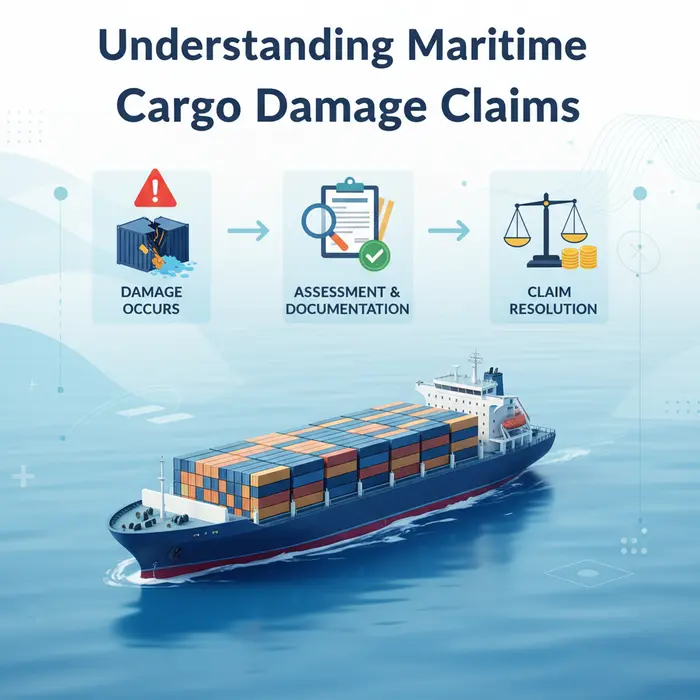
1. Defining Cargo Damage in Transit
At its core, cargo damage in transit refers to any impairment, deterioration, loss, or contamination of goods while under the care of a carrier, typically from the point of loading onto a vessel until discharge at the destination port. This definition extends beyond visible physical destruction, encompassing a spectrum of issues. Damage can manifest as outright physical breakage, crushing, or impact damage. It also includes contamination, where goods are exposed to harmful substances, odors, or inappropriate environmental conditions (e.g., temperature, humidity) that render them unfit for their intended purpose. Shortages, where fewer items are delivered than documented, and even delays that cause time-sensitive goods to lose value or perish, can also fall under the umbrella of cargo damage. The bill of lading damage clause, a critical document in maritime transport, outlines the terms and conditions under which cargo is carried and often contains provisions related to the carrier’s liability for damage or loss, making it a foundational element in any claim.
2. Common Causes: From Stowage to Weather
The causes of maritime cargo damage are multifaceted, often stemming from a combination of human error, environmental factors, and operational shortcomings. One of the most frequent culprits is improper stowage and securing of cargo within the vessel or container. If goods are not adequately blocked, braced, or lashed, they can shift violently during transit, especially in rough seas, leading to crushing, impact, or collapse. Adverse weather and sea conditions are inherent risks in maritime shipping; heavy gales, high waves, and extreme temperatures can subject cargo to severe stresses beyond designed limits. Handling errors during loading and unloading operations, such as dropping containers or mishandling pallets, also contribute significantly to damage. Furthermore, inadequate or faulty packaging can leave goods vulnerable, as can issues related to the container itself, such as poor ventilation, temperature control failures, or structural defects. Other less common but significant causes include vessel unseaworthiness – a defect in the ship making it unfit for its voyage – and even contamination from other cargo or the ship’s own systems.
3. The Unique Challenges of Maritime Claims
Navigating maritime cargo damage claims presents unique complexities compared to other forms of freight claims. Firstly, the international nature of maritime trade means claims often involve multiple jurisdictions, diverse legal systems, and varying interpretations of maritime law cargo damage. This necessitates a deep understanding of international conventions like the Hague-Visby Rules or the Hamburg Rules, which govern carrier liability. Establishing liability is a significant hurdle, as the burden of proof often lies with the claimant to demonstrate that the damage occurred while the cargo was in the carrier’s custody and resulted from a breach of their duties. Numerous parties are typically involved—the shipper, consignee, carrier, freight forwarder, port authorities, and various insurers—each with their own responsibilities and potential liabilities. Time limitations for filing claims are strictly enforced, often being as short as one year from the date of delivery or when the goods should have been delivered, making prompt action critical. The cargo insurance claim process can be protracted, requiring meticulous documentation, survey reports, and expert assessments to substantiate the claim. Additionally, understanding specific international freight claim procedures, including the appointment of marine surveyors to assess damage and determine causation, adds further layers of complexity. Successfully pursuing a maritime cargo damage claim requires not only detailed evidence but also expertise in international commerce, logistics, and legal frameworks.
The Cargo Insurance Claim Process Step-by-Step
Navigating the aftermath of damaged or lost cargo can be a daunting experience for any business involved in international trade. When faced with unforeseen incidents, a clear understanding of the maritime cargo damage claims process becomes paramount. This detailed guide breaks down the procedures involved when filing a claim under a cargo insurance policy, from the initial notification to the final settlement, ensuring you are well-equipped to protect your interests and mitigate potential losses efficiently.
1. Immediate Actions: Notifying Insurers and Carriers
The swiftness of your initial response significantly influences the success of your cargo insurance claim process. As soon as damage or loss is discovered, immediate action is crucial. Firstly, notify your cargo insurer without delay. Most policies stipulate strict time limits for reporting incidents, and failure to comply can jeopardize your claim. Simultaneously, inform the carrier (shipping line, airline, trucking company) and any relevant freight forwarders. This notification should be in writing, clearly stating the nature of the damage or loss, and reserving your rights to claim against them.
It’s vital to reference the bill of lading damage clause. Bills of Lading often contain specific provisions regarding the notification of claims against the carrier, including deadlines, which can be as short as three days for visible damage or loss upon delivery, and longer for concealed damage. Documenting the condition of the cargo immediately upon arrival, before it leaves the port or receiving facility, is also critical. Take photographs or videos of any damage to packaging, containers, or the goods themselves. These immediate actions are the bedrock upon which successful international freight claim procedures are built, preserving evidence and ensuring all parties are aware of the situation from the outset.
2. Essential Documentation for Your Claim
A successful cargo claim hinges on comprehensive and accurate documentation. Preparing a detailed dossier of supporting documents is crucial for substantiating your loss and facilitating a smooth cargo insurance claim process. The key documents typically required include:
- **Bill of Lading (BoL):** The primary contract of carriage and receipt for goods, detailing shipment terms and conditions.
- **Commercial Invoice:** Proves the value of the goods.
- **Packing List:** Indicates the contents and quantities of packages.
- **Certificate of Insurance:** Your proof of coverage.
- **Proof of Loss/Damage:** This includes survey reports, tally sheets, exception notes issued by carriers, port authorities, or warehouse operators, and detailed photographs or videos of the damage.
- **Correspondence:** All communications with carriers, forwarders, and other relevant parties regarding the incident.
- **Claim Form:** Completed claim form provided by your insurer.
- **Repair Invoices/Replacement Costs:** If applicable, to quantify the extent of loss.
Each document plays a critical role in establishing the cause, extent, and monetary value of your loss. Incomplete or inconsistent documentation can lead to delays or even rejection of your claim. Meticulous record-keeping is therefore indispensable when dealing with maritime cargo damage claims.
3. Role of Surveyors and Loss Adjusters
Once a claim is reported and initial documentation gathered, your insurer will typically appoint a surveyor or loss adjuster. These independent professionals are central to the cargo insurance claim process. Their primary role is to investigate the incident thoroughly, determine the cause and extent of the damage or loss, and assess the financial implications.
- **Surveyors** physically examine the damaged cargo, packaging, and mode of transport. They collect evidence, interview witnesses, and compile a detailed survey report outlining their findings. This report is critical in establishing the liability and quantifying the loss.
- **Loss Adjusters** work closely with surveyors, examining all documentation, policies, and relevant legal frameworks to calculate the fair settlement amount in accordance with the insurance policy terms. They ensure the claim is handled fairly and objectively, often acting as an intermediary between the claimant and the insurer.
Cooperating fully with surveyors and loss adjusters by providing all requested information and access to goods is essential. Their independent assessment often forms the basis of the final settlement. Their expertise is particularly valuable when dealing with complex maritime law cargo damage scenarios, where international conventions and carrier liabilities can significantly influence the claim’s outcome. Understanding their role helps streamline the process towards a fair resolution.
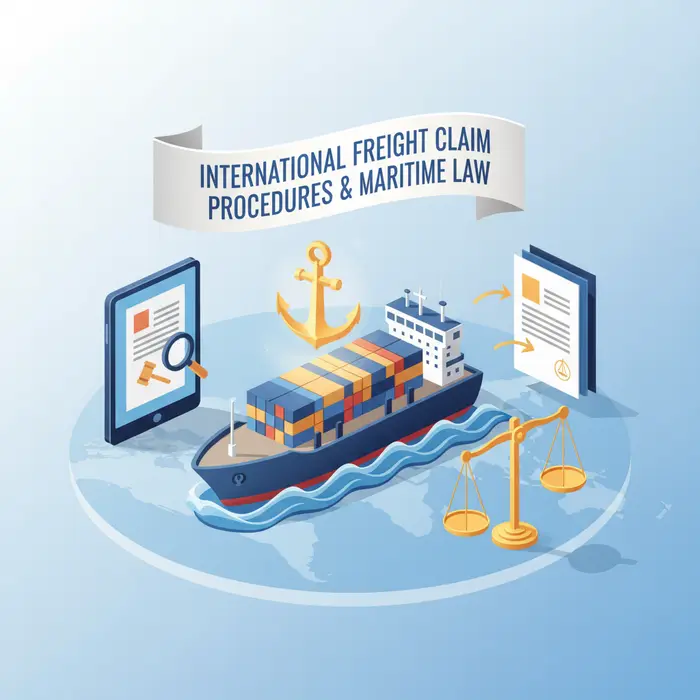
International Freight Claim Procedures & Maritime Law
Navigating the complex waters of international trade inevitably brings with it the risk of cargo damage or loss. When such unfortunate events occur, understanding the intricate web of international conventions and national legal frameworks governing maritime cargo damage claims becomes paramount. This section explores the foundational legal instruments, jurisdictional challenges, and critical time limitations that define international freight claim procedures, offering crucial insights for managing the cargo insurance claim process effectively.
1. Key International Conventions (Hague-Visby, Rotterdam Rules)
The global shipping industry relies heavily on international conventions to standardize carrier liability and resolve disputes. The most significant are the Hague Rules, the Hague-Visby Rules, and the more recent Rotterdam Rules.
The Hague Rules (1924) established the baseline for carrier responsibilities, rights, and immunities for contracts of carriage covered by a bill of lading between loading and discharge ports. They mandated the carrier’s duty to exercise due diligence for seaworthiness and proper cargo care, outlining specific exemptions from liability and introducing a package limitation and a one-year time bar for claims.
The Hague-Visby Rules (1968) updated the Hague Rules, primarily by increasing carrier liability limits per package/unit and per kilo, thereby offering greater protection to cargo interests. These rules also clarified their application to claims for loss or damage, solidifying the framework for maritime law cargo damage. Both Hague and Hague-Visby Rules predominantly govern the period from loading to discharge.
The Rotterdam Rules (2008) represent a comprehensive attempt to modernize and unify international maritime law, providing a “door-to-door” legal regime covering multimodal transport. While not yet widely ratified, they propose higher liability limits and extend the time bar for claims to two years. Understanding their potential future impact is crucial for maritime cargo damage claims, although Hague-Visby remains the dominant convention currently.
2. Understanding Jurisdiction and Governing Law
Determining the appropriate jurisdiction and governing law is often the first and most critical step in pursuing international freight claim procedures. Jurisdiction dictates which court will hear the dispute, while governing law determines which country’s legal principles apply. These elements are frequently stipulated within the bill of lading damage clause, which serves as the contract of carriage.
Bills of lading often contain forum selection and choice of law clauses, specifying the courts and legal system for dispute resolution. While generally upheld, their enforceability can sometimes be challenged. Factors influencing jurisdiction can also include where the damage occurred, the carrier’s principal place of business, or the port of destination. Navigating these complexities requires specialized legal expertise to ensure the cargo insurance claim process proceeds correctly.
3. Time Bars and Statutes of Limitations
A distinctive feature of maritime law cargo damage is the strict application of time bars and statutes of limitations. These legal deadlines are crucial; failing to initiate legal proceedings within the specified period will almost invariably result in the claim being time-barred, regardless of its merits. This is a common pitfall in international freight claim procedures.
Under the Hague and Hague-Visby Rules, carriers are discharged from all liability unless suit is brought within one year of the date the goods were delivered or should have been delivered. This one-year period is a strict time bar, meaning a formal legal action must commence before its expiry, or the right to claim is lost. While some extensions may be possible by mutual agreement, prompt notification and diligent pursuit of claims are essential. The Rotterdam Rules propose a two-year time bar, but the one-year Hague-Visby period remains the dominant standard for most sea carriage. Understanding these limitations is fundamental to successfully recovering losses in international freight for any cargo insurance claim process.
The Bill of Lading: Your Contract and Damage Clause
In the complex ecosystem of international shipping, the Bill of Lading (B/L) stands as a foundational document, serving multiple critical roles. Far more than just a receipt for goods, it is a legally binding contract of carriage and a document of title, holding significant weight in any maritime cargo damage claims. Understanding its nuances, particularly its clauses pertaining to liability, damage, and stringent notice requirements, is paramount for shippers, carriers, and consignees alike. A misstep in comprehending or adhering to the B/L’s stipulations can have profound financial implications, transforming a routine shipment into a costly dispute. This section delves into the multifaceted nature of the B/L, highlighting its pivotal role in protecting interests and outlining the crucial aspects of its damage-related provisions, which are central to any successful cargo insurance claim process and international freight claim procedures.
1. Bill of Lading as a Contract of Carriage
At its core, the Bill of Lading functions as the definitive contract of carriage between the shipper and the carrier. This agreement outlines the terms and conditions under which goods will be transported from the port of loading to the port of discharge. It specifies the responsibilities and liabilities of both parties, including details about the cargo, the voyage, freight charges, and crucially, the limitations of liability in the event of loss or damage. Governed by international conventions such as the Hague-Visby Rules or sometimes the Hamburg Rules, the B/L dictates the legal framework for resolving disputes. For instance, it typically includes clauses regarding the carrier’s due diligence in ensuring the vessel is seaworthy and properly crewed, and the shipper’s responsibility to provide accurate cargo descriptions and safe packing. A clear understanding of these contractual obligations is essential for navigating the complexities of maritime law cargo damage disputes and forms the basis for any subsequent claims.
2. Understanding ‘Clean’ vs. ‘Claused’ B/L
The condition of the Bill of Lading upon issuance provides immediate insight into the apparent state of the cargo at the time it was received by the carrier. A ‘Clean Bill of Lading’ signifies that the goods were received in apparent good order and condition, without any visible signs of damage, defect, or shortage. This is the preferred document for banks involved in trade finance, as it implies a smooth transaction. Conversely, a ‘Claused Bill of Lading’ (also known as a ‘Foul B/L’ or ‘Dirty B/L’) contains specific notations made by the carrier, detailing observed discrepancies, damage, or unsatisfactory packaging upon receipt. Examples include “one carton torn,” “pallet broken,” or “some contents wet.” These clauses serve as a crucial warning flag, indicating potential pre-existing issues with the cargo. While a claused B/L does not automatically absolve the carrier of all liability, it shifts the burden of proof, making it more challenging for the consignee or insurer to claim that the damage occurred while in the carrier’s custody. Understanding the implications of a bill of lading damage clause is vital for assessing risk and for the validity of any future cargo insurance claim process.
3. The Importance of the Damage Notification Clause
One of the most critical elements within the Bill of Lading, and often the most overlooked until a problem arises, is the damage notification clause. This clause stipulates the strict time limits within which the consignee must notify the carrier of any loss or damage to the cargo. Typically, for apparent damage, notification must be given immediately upon delivery or within a very short timeframe (e.g., 3 days). For concealed damage, which is not discoverable upon reasonable inspection at discharge, the period is usually longer, often 15 days from delivery. Failing to adhere to these stringent notice periods can be fatal to a claim. The B/L often creates a presumption of good delivery if no timely notice is given, placing a significant evidentiary burden on the claimant to prove the damage occurred during the carrier’s responsibility. Therefore, meticulous inspection of cargo upon arrival, immediate documentation of any discrepancies (photos, surveyor reports), and prompt, formal notification to the carrier are indispensable steps in any effective international freight claim procedures and crucial for successful maritime cargo damage claims. Ignoring this clause can effectively waive your right to claim compensation, underscoring its immense importance in the realm of maritime shipping.
Strategies for Successful Claim Resolution
Effectively navigating the complex landscape of maritime cargo damage claims is crucial for both shippers and consignees. The financial implications of lost or damaged goods can be significant, making a strategic approach to risk management, evidence collection, and the resolution process paramount. This section provides practical advice and best practices to effectively manage risks, gather robust evidence, and streamline the resolution process for maritime cargo damage claims, ensuring a smoother journey from incident to resolution.

1. Proactive Risk Management and Prevention
The best defense against cargo damage claims is a strong offense, meaning a proactive approach to risk management. Before a shipment even leaves port, stakeholders should engage in meticulous planning and due diligence. This begins with selecting reputable carriers with proven track records and understanding the contractual framework governing the shipment. Thoroughly review all terms and conditions, especially those within the Bill of Lading and charter parties, paying close attention to bill of lading damage clause. These documents often define liabilities, time limits for claims, and specific procedures.
Crucially, robust cargo insurance is not an option but a necessity. Understanding the nuances of your policy, including coverage limits, deductibles, and exclusions, is vital for a smooth cargo insurance claim process. Consider an ‘all-risks’ policy for comprehensive protection, especially for high-value or fragile goods. Beyond documentation, physical prevention measures are equally important. Ensure goods are packed appropriately for their journey, considering potential environmental stressors like humidity, temperature fluctuations, and motion. Proper stowage, securing, and labeling of cargo minimize shifting and damage during transit. Pre-shipment inspections can also identify and rectify potential issues before they become costly claims.
2. Best Practices for Evidence Collection and Preservation
Once damage occurs, the speed and thoroughness of evidence collection directly impact the success of a claim. The golden rule is ‘document everything.’ Upon discovery of damage, immediately notify all relevant parties: the carrier, freight forwarder, and your insurance provider. Delays can prejudice your claim, as many contracts and international conventions stipulate strict time limits for notification. Engage an independent marine surveyor as quickly as possible. Their expert report, detailing the nature, extent, and probable cause of the damage, is often the most critical piece of evidence.
Supplement the surveyor’s report with your own comprehensive photographic and video evidence. Document the damaged cargo, its packaging, the condition of the container or vessel hold, and any external factors that may have contributed to the damage. Collect all relevant shipping documents, including the Bill of Lading, commercial invoices, packing lists, loading reports, temperature logs, and communication records. Preserve the damaged goods in their original condition as much as possible, as they may need to be inspected further or even held as evidence. Understanding the strict timelines for filing international freight claim procedures under various conventions (e.g., Hague-Visby Rules, COGSA) is paramount to avoid having your claim time-barred.
3. When to Engage Legal Counsel or Industry Experts
While many straightforward claims can be resolved directly with carriers or insurers, complex or high-value claims often necessitate the expertise of legal counsel or specialized industry experts. Engaging a maritime lawyer is advisable when liability is disputed, the claim involves significant financial value, or when navigating the intricacies of maritime law cargo damage. These professionals possess an in-depth understanding of international conventions (e.g., the Hamburg Rules, Rotterdam Rules), national legislation, and case precedents that can significantly influence the outcome of a claim.
Furthermore, specialists like average adjusters can be invaluable in complex general average situations, while forensic investigators can determine the precise cause of obscure damage. These experts can help interpret contractual clauses, advise on the best course of action, and represent your interests in negotiations, mediation, or arbitration. Understanding the nuances of international maritime claims processes can be daunting, and leveraging professional expertise ensures that all legal avenues are explored, and your claim is presented with the strongest possible foundation, ultimately maximizing the chances of a successful resolution.
Partner with Vietnam’s Leading Suppliers
Looking for reliable suppliers in Vietnam? Contact VietnamSuppliers.com today to connect with verified manufacturers and exporters across all industries.
—————————————
References
– International Maritime Organization – List of Conventions: https://www.imo.org/en/About/Conventions/ListOfConventions/Pages/Default.aspx
– maritime cargo damage claims: https://www.gard.no/web/articles/cargo-claims-a-practical-guide
– :
– The Bill of Lading – BIMCO: https://www.bimco.org/news-and-trends/publications/the-bill-of-lading
– Gard Claims Handbook: https://www.gard.no/web/pages/gard_claims_handbook.aspx

