What is International Trade Protectionism?
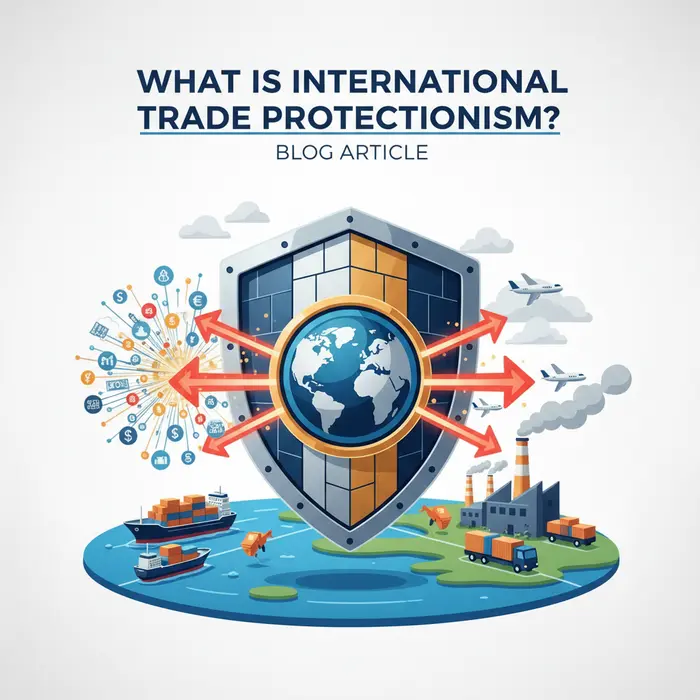
International trade protectionism represents a set of government policies designed to restrict or regulate international trade, primarily with the aim of shielding domestic industries and jobs from foreign competition. Unlike the principles of free trade, which advocate for minimal government intervention in cross-border commerce, protectionism deliberately introduces barriers to protect national economic interests. These policies are often driven by a complex interplay of economic, political, and social considerations, reflecting a nation’s strategic approach to its global economic engagement. Understanding protectionism requires delving into its fundamental tools, objectives, and the philosophical underpinnings that have shaped global trade dynamics for centuries.
1. Defining Protectionism in the Global Context
At its core, International trade protectionism involves various measures implemented by governments to control the flow of goods and services into and out of a country. The primary goal is to provide a competitive advantage to domestic producers over their foreign counterparts. The most common tools associated with protectionism tariffs and quotas include:
- Tariffs: Taxes imposed on imported goods and services. These increase the price of foreign products, making domestically produced goods relatively cheaper and more attractive to consumers.
- Quotas: Direct limits on the quantity of certain goods that can be imported over a specific period. Quotas restrict supply, potentially driving up prices and reducing competition for local industries.
- Subsidies: Government financial assistance provided to domestic industries. This can take many forms, such as direct payments, tax breaks, or low-interest loans, helping local businesses reduce costs and become more competitive.
- Non-Tariff Barriers (NTBs): A broad category encompassing regulations, standards, bureaucratic procedures, and other measures that make it difficult or costly for foreign goods to enter a market. Examples include stringent health and safety standards, complex customs procedures, or anti-dumping duties.
These measures collectively aim to alter market conditions in favor of domestic industries, often at the expense of global trade efficiency and consumer choice.
2. Goals of Protectionist Policies
The implementation of protectionist policies is typically motivated by several key objectives, each rooted in distinct economic and strategic rationales. One of the foremost arguments for protectionism trade policy is the protection of domestic industries and jobs. Governments may argue that shielding nascent or strategically important industries (often termed "infant industries") from established foreign competition allows them time to mature and become globally competitive. Similarly, protectionism is frequently employed to safeguard jobs in sectors facing intense import competition, preventing factory closures and unemployment.
Another significant goal is national security. Countries may restrict imports of critical goods, such as defense equipment, essential medicines, or key technological components, to reduce dependence on foreign suppliers and ensure self-sufficiency during times of crisis. Protectionism can also be used to correct trade imbalances, such as large and persistent trade deficits, by discouraging imports and promoting exports. Furthermore, some argue that protectionist measures can help raise government revenue through tariffs or address unfair trade practices like dumping, where foreign companies sell goods below production cost. The impact of protectionism on global trade is a complex one, often leading to retaliatory measures from trading partners, escalating into trade wars that can harm economic growth worldwide.
3. Historical Context and Evolution of Protectionism
The practice of protectionism is not a modern phenomenon; it has a long and varied history, deeply intertwined with the development of nation-states and global economies. Early forms, such as mercantilism in the 17th and 18th centuries, explicitly advocated for policies that maximized exports and minimized imports to accumulate national wealth, primarily in the form of gold and silver. This era saw widespread use of tariffs, import restrictions, and colonial trade monopolies.
The 19th century witnessed a gradual shift towards more liberal trade policies, championed by economists like Adam Smith and David Ricardo, who argued for the benefits of free trade based on comparative advantage. However, periods of economic nationalism and global conflict, such as the interwar period of the 20th century, saw significant resurgences of protectionism, often exacerbating economic downturns like the Great Depression.
Post-World War II, there was a concerted international effort, notably through the General Agreement on Tariffs and Trade (GATT) and later the World Trade Organization (WTO), to dismantle trade barriers and foster a more open, multilateral trading system. This period largely emphasized the free trade vs protectionism advantages, with free trade being seen as a driver of economic growth, efficiency, and international cooperation. Yet, the 21st century has seen a notable resurgence of protectionist sentiments and policies, driven by concerns over deindustrialization, geopolitical rivalries, and a desire to bring supply chains closer to home. This evolution underscores the cyclical nature of trade policy, constantly balancing national interests with the potential benefits of global integration. Understanding this historical pendulum is crucial for comprehending current debates and the potential future trajectory of international trade.
Protectionism: Tariffs, Quotas, and Other Tools
Delving into the intricate world of global commerce, governments often employ various mechanisms to safeguard domestic industries from international competition. This practice, known as International trade protectionism, utilizes specific policy instruments to either restrict imports or encourage exports. Understanding these tools—ranging from direct taxes on foreign goods to limitations on their quantity—is crucial for grasping their profound impact on global trade dynamics, consumer choices, and industrial development. While debates around free trade vs protectionism advantages continue, the implementation of protectionist policies like tariffs and quotas reshapes the landscape for businesses and nations alike.
1. Tariffs: Taxes on Imported Goods
At the forefront of protectionist measures are tariffs, which are essentially taxes or duties levied on imported goods or services. These financial charges increase the cost of foreign products, making them less competitive compared to domestically produced alternatives. Tariffs serve a dual purpose: they can generate revenue for the government and, more importantly in a protectionist context, they can protect nascent or struggling domestic industries from cheaper, often more efficient, international competition. Common types include ad valorem tariffs, calculated as a percentage of the imported good’s value (e.g., 10% on imported cars), and specific tariffs, a fixed charge per unit of the imported good (e.g., $2 per imported shirt). A less common variant is the compound tariff, which combines both ad valorem and specific charges.
The immediate impact of tariffs is an increase in the price of imported goods for consumers. This often leads to reduced demand for foreign products and a shift towards domestic goods, theoretically boosting local production and employment. However, tariffs can also result in higher prices for consumers overall, reduce product variety, and provoke retaliatory tariffs from other countries, stifling overall international trade protectionism and leading to trade wars. Businesses reliant on imported components also face increased input costs, potentially hurting their competitiveness in export markets. The discussion around tariffs is a central component when considering the broader impact of protectionism on global trade.
2. Import Quotas: Limiting Quantity
Beyond taxes, governments also employ import quotas, which are non-tariff barriers that directly limit the quantity or monetary value of specific goods that can be imported into a country during a given period. Unlike tariffs, which operate through price mechanisms, quotas restrict supply directly, regardless of price. For instance, a country might impose a quota allowing only 100,000 units of a certain foreign textile product to enter its market annually. Once this limit is reached, no more of that product can be imported until the next period, irrespective of demand.
The primary aim of import quotas, much like tariffs, is to protect domestic industries by reducing competition from foreign suppliers and ensuring a market share for local producers. By artificially limiting the supply of imports, quotas tend to drive up the domestic price of the restricted goods. This price increase benefits domestic producers who can sell their products at higher prices, but it harms consumers who face less choice and higher costs. A distinct feature of quotas is the creation of “quota rents,” which are the extra profits earned by those licensed to import the limited quantity of goods due to the artificial scarcity and resulting higher prices. These rents do not accrue to the government as tariff revenue would, making quotas potentially less transparent and more susceptible to corruption. Analyzing protectionism tariffs and quotas reveals how these tools, while different in mechanism, share common goals and consequences for economic landscapes.
3. Subsidies and Domestic Content Requirements
While tariffs and quotas restrict imports, other protectionist measures focus on bolstering domestic industries directly. Subsidies are direct or indirect financial contributions provided by a government to domestic producers. These can take many forms, including direct cash payments, low-interest loans, tax breaks, or government provision of inputs at below-market prices. The purpose of subsidies is to lower the production costs for domestic firms, enabling them to either sell their products at a lower price, compete more effectively with imports, or increase their exports. For example, an agricultural subsidy might help local farmers compete against cheaper imported produce, while an export subsidy might make a country’s goods more attractive in foreign markets. This is a key aspect of understanding the broader arguments for protectionism trade policy.
Another common tool is domestic content requirements, which mandate that a certain percentage of a product’s value, or specific components used in its production, must originate from domestic sources. For example, a country might require that 60% of the parts for an automobile assembled within its borders must be manufactured locally. This policy directly aims to foster local manufacturing, create jobs, and develop domestic supply chains. While intended to strengthen local industries, both subsidies and domestic content requirements can distort international trade by giving domestic firms an unfair advantage, potentially leading to trade disputes and inefficiencies. They can also increase costs for consumers and reduce innovation by shielding domestic firms from global competition. These measures highlight the multifaceted nature of protectionism tariffs and quotas and the diverse instruments governments employ to shape their trade landscape.
Global Repercussions: Impact of Protectionism
Protectionist policies, once seen as a shield for nascent domestic industries, have evolved into a complex and often contentious aspect of modern economic discourse. Exploring the wide-ranging effects of protectionist policies on international trade flows, consumer prices, domestic industries, and global economic relations reveals a tapestry of both intended and unintended consequences. While proponents often cite national security, job preservation, or infant industry arguments, the real-world International trade protectionism can ripple across borders, reshaping economies and geopolitical alliances.

Impact on International Trade Volume and Flows
The most immediate and discernible impact of protectionist measures is on the volume and direction of international trade. Tools like protectionism tariffs and quotas directly increase the cost of imported goods or restrict their quantity. Tariffs, essentially taxes on imports, make foreign products more expensive, reducing their competitiveness against domestically produced alternatives. Quotas, on the other hand, impose strict limits on the volume of goods that can be imported, physically constraining supply regardless of price. The cumulative effect is a reduction in overall trade volume as transactions become less profitable or are simply disallowed. This contraction in trade doesn’t just affect the protected country; it disrupts global supply chains, redirects trade flows to less efficient producers, and can lead to a misallocation of resources globally. Countries that once specialized in certain exports find their markets shrinking, forcing them to either diversify or scale back production, leading to a net negative impact of protectionism on global trade efficiency and economic growth.
Effects on Domestic Consumers and Industries
While often championed as beneficial for domestic industries, protectionism presents a mixed bag of outcomes for consumers and various sectors within the economy. For consumers, protectionist policies generally translate to higher prices and reduced choice. When tariffs increase the cost of imports, domestic producers, facing less competition, can raise their prices without fear of being undercut. This essentially acts as a hidden tax on consumers, eroding their purchasing power. Furthermore, the limited availability of foreign goods due to quotas or high tariffs means consumers have fewer options and potentially lower quality products, stifling innovation that often arises from competitive pressures. For domestic industries, the picture is more nuanced. Protected industries may experience a short-term boost in sales and employment as import competition diminishes. However, this shield often comes at a cost: reduced incentive to innovate, improve efficiency, or invest in research and development. Without the crucible of global competition, these industries can become complacent and less competitive in the long run. Meanwhile, export-oriented domestic industries often suffer immensely. They face higher input costs if raw materials or intermediate goods are subject to tariffs, making their final products more expensive on the global market. Moreover, they are highly vulnerable to retaliatory tariffs from other countries, which can cripple their access to crucial international markets. The debate around free trade vs protectionism advantages highlights these trade-offs, often demonstrating that the immediate gains for a few protected sectors are outweighed by broader economic losses for consumers and other industries.
Risk of Retaliation and Trade Wars
Perhaps the most dangerous consequence of protectionist policies is the elevated risk of international retaliation, leading to destructive trade wars. When one country imposes tariffs or quotas on another’s goods, the affected nation often views this as an unfair economic aggression. The natural response, driven by economic and political pressures, is often to implement similar protective measures against the aggressor’s exports. This tit-for-tat escalation can quickly spiral out of control, creating a chain reaction of tariffs, import restrictions, and non-tariff barriers that disrupt global commerce. Such trade wars are detrimental for all parties involved, as they suppress global demand, increase uncertainty for businesses, and reduce overall economic growth. Supply chains that have taken years to build are fractured, investment decisions are postponed, and job losses can occur across multiple sectors and countries. The initial arguments for protectionism trade policy, such as safeguarding domestic jobs or industries, often backfire dramatically as global economic activity contracts, ultimately harming the very sectors they sought to protect. This cycle of retaliation underscores the interconnectedness of the global economy and highlights why multilateral cooperation and adherence to international trade rules are crucial for maintaining stability and fostering prosperity.
Arguments For and Against Protectionist Trade Policy
The debate surrounding international trade protectionism is a contentious topic in economics. Protectionism involves government policies that restrict international trade, primarily through protectionism tariffs and quotas, import licensing, and subsidies, to help domestic industries. Proponents argue for safeguarding national interests and fostering economic stability, while free trade advocates highlight the significant impact of protectionism on global trade, citing reduced efficiency, higher consumer prices, and potential trade wars. This section explores the primary arguments for protectionism trade policy and the counter-arguments from those championing free trade vs protectionism advantages.
1. The Infant Industry Argument
One of the longest-standing arguments for protectionism is the ‘infant industry’ argument. This theory suggests that newly developing industries may struggle to compete with established foreign competitors. To allow these nascent industries to grow and achieve economies of scale, proponents argue that temporary protectionism tariffs and quotas are necessary. Shielding them from intense international competition allows domestic infant industries to mature, innovate, and eventually become globally competitive, contributing significantly to national employment and economic growth. Historical examples often include South Korea’s early automotive and electronics sectors.
However, critics point out several drawbacks. Identifying genuine ‘infant’ industries with long-term potential is challenging, often influenced by politics rather than economics. Temporary protection frequently becomes permanent as industries lobby to retain their sheltered status, fostering inefficiencies and a lack of innovation. Such prolonged protection can result in higher prices for domestic consumers forced to buy less competitive products, undermining the broader free trade vs protectionism advantages debate.
2. National Security and Strategic Industries
Another powerful justification for international trade protectionism revolves around national security and strategic industries. This argument contends that certain sectors are vital to a nation’s defense, well-being, or economic sovereignty, making them vulnerable to international supply chain disruptions. Industries like defense manufacturing, critical agriculture, energy, pharmaceuticals, and essential technology are frequently cited. Governments may impose protectionist measures to ensure domestic capacity and self-sufficiency, reducing reliance on potentially unstable foreign suppliers, especially during crises.
Opponents, however, caution against broad application. They argue that nearly any industry can claim strategic importance, leading to widespread protectionism that stifles innovation and raises costs. Critics highlight that defining ‘strategic’ is subjective, susceptible to political manipulation, causing resource misallocation and a detrimental impact of protectionism on global trade. Relying solely on domestic production may also forgo access to advanced or cost-effective foreign technologies, potentially weakening rather strengthening national security. Diversification and international cooperation are often proposed as more robust strategies.
3. Preventing ‘Dumping’ and Unfair Competition
A third major pillar supporting arguments for protectionism trade policy is the need to counteract ‘dumping’ and other forms of unfair competition. Dumping occurs when a foreign company sells products in another country below its production cost or domestic market price. This predatory pricing aims to capture market share, eliminate domestic competitors, and then potentially raise prices. For affected domestic industries, dumping represents unfair competition leading to job losses and bankruptcies.
To combat this, governments implement anti-dumping duties, a specific type of protectionism tariffs and quotas. These tariffs raise the price of dumped imports to a ‘fair’ level, leveling the playing field for domestic producers. However, determining genuine dumping and calculating appropriate duties is complex and controversial. Critics argue anti-dumping measures are sometimes used as a veiled excuse for protectionism, shielding inefficient domestic industries rather than addressing unfair practices. Proving below-cost sales is difficult, and such measures can escalate into trade disputes and retaliatory tariffs, harming global trade and limiting consumer choice. The debate balances protecting against unfair practices with the risk of hindering overall free trade vs protectionism advantages.
In conclusion, the arguments for and against protectionist trade policy present a complex landscape. While proponents advocate for nurturing nascent industries, safeguarding national security, and combating unfair practices like dumping, critics underscore the potential for inefficiency, higher consumer costs, reduced innovation, and a significant impact of protectionism on global trade and international relations. The tension between protecting domestic interests and harnessing global economic integration remains a central challenge in shaping international trade policy.
Free Trade vs. Protectionism: Advantages and Disadvantages
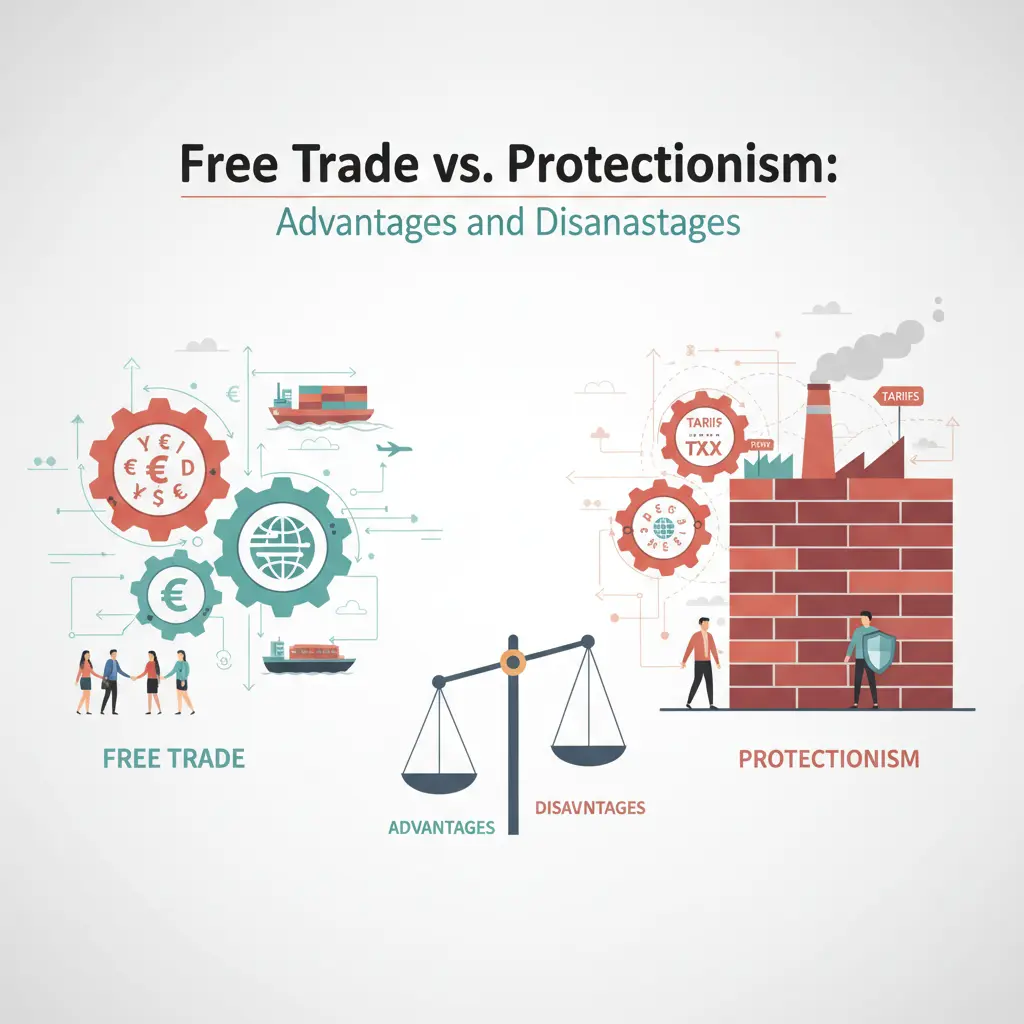
International trade is a complex arena where nations constantly weigh the benefits of openness against the desire for domestic protection. At its core, the debate often revolves around two fundamental philosophies: free trade and protectionism. Free trade advocates for minimal government intervention, allowing goods and services to flow across borders unhindered. Conversely, protectionism employs policies to restrict imports, aiming to safeguard domestic industries and jobs. Understanding the nuances of these approaches is crucial for comprehending their profound impact of protectionism on global trade and economic development. This section will delve into a direct comparison, highlighting their respective benefits, drawbacks, and real-world implications for economies worldwide.
Advantages of Free Trade (Efficiency, Innovation, Consumer Choice)
Free trade, defined as the absence of artificial barriers (like tariffs or quotas) to the free flow of goods and services between countries, brings a host of economic benefits.
Efficiency and Specialization: When nations engage in free trade, they tend to specialize in producing goods and services where they have a comparative advantage. This specialization leads to greater efficiency in resource allocation globally. Countries can produce more with fewer resources, leading to lower production costs and increased overall output.
Innovation and Competitiveness: Exposure to international competition compels domestic industries to become more efficient and innovative. To compete with foreign goods, local firms must continuously improve their products, processes, and technologies. This drive for innovation benefits consumers through higher quality products and services.
Greater Consumer Choice and Lower Prices: Free trade expands the variety of goods and services available to consumers. With access to products from around the world, consumers benefit from a wider selection and often lower prices, as international competition drives down costs. This increases purchasing power and raises living standards. According to the World Trade Organization (WTO), free trade fosters economic growth and development by allowing countries to utilize their resources more efficiently and provide consumers with more affordable options.
Disadvantages of Free Trade (Job Displacement, Inequality, Market Volatility)
While free trade offers significant advantages, it is not without its drawbacks, which often fuel arguments for international trade protectionism.
Job Displacement: One of the most significant concerns is the potential for job losses in domestic industries that cannot compete with cheaper imports. As production shifts to countries with lower labor costs or higher efficiency, workers in certain sectors may face unemployment, requiring retraining or relocation.
Increased Income Inequality: Free trade can exacerbate income inequality within a country. While highly skilled workers in export-oriented sectors may see their wages rise, lower-skilled workers in import-competing industries may face stagnant wages or job losses, widening the gap between different income groups.
Market Volatility and Dependence: Over-reliance on global markets can expose domestic economies to international economic shocks. Supply chain disruptions, currency fluctuations, or recessions in major trading partners can have significant ripple effects, leading to economic instability at home. Furthermore, countries might become overly dependent on foreign nations for essential goods, posing a national security risk in times of crisis.
Short-term Advantages of Protectionism (Industry Support, Self-Sufficiency)
Protectionism involves government policies, such as protectionism tariffs and quotas, designed to restrict imports and shield domestic industries from foreign competition. While often criticized for its long-term economic costs, it offers certain short-term advantages and forms the basis for various arguments for protectionism trade policy.
Support for Infant Industries: New or developing domestic industries, known as “infant industries,” may struggle to compete with established foreign firms. Protectionist measures, such as temporary tariffs, can give these nascent industries a chance to grow, achieve economies of scale, and become competitive on the global stage before being exposed to full international competition.
National Security and Self-Sufficiency: Protecting strategic industries, such as defense, energy, or essential agricultural sectors, is a common protectionist argument. By reducing reliance on foreign suppliers for critical goods, a nation can enhance its self-sufficiency and national security, especially during geopolitical tensions or global supply chain disruptions. This ensures a stable domestic supply of vital resources regardless of external factors.
Protection of Domestic Jobs: Protectionist policies aim to safeguard domestic jobs from foreign competition. By making imported goods more expensive, tariffs and quotas can shift consumer demand towards domestically produced goods, thereby preserving employment in local industries. This can be particularly appealing to governments facing high unemployment rates or pressure from specific interest groups.
The debate between free trade and protectionism is ongoing and complex, with each approach presenting a unique set of advantages and disadvantages. While free trade generally promises greater efficiency, innovation, and consumer benefits, it carries risks of job displacement and inequality. Conversely, protectionism can offer short-term benefits like supporting emerging industries and bolstering national security, but often at the cost of higher prices and reduced efficiency in the long run. The optimal strategy often involves a careful balance, acknowledging the global interdependence while also addressing domestic economic and social concerns.
Partner with Vietnam’s Leading Suppliers
Looking for reliable suppliers in Vietnam? Contact VietnamSuppliers.com today to connect with verified manufacturers and exporters across all industries.
—————————————
References
– The Case for Open Trade: https://www.wto.org/english/thewto_e/whatis_e/tif_e/fact1_e.htm
– Trade Protectionism: https://www.cfr.org/world/trade-protectionism
– The Economic Consequences of Protectionism: https://www.imf.org/en/Publications/fandd/issues/2017/06/the-economic-consequences-of-protectionism
– WTO | Global trade outlook and statistics: https://www.wto.org/english/news_e/news20_e/outlook_e.htm
– World Trade Organization – What is the WTO?: https://www.wto.org/english/thewto_e/whatis_e/tif_e/fact1_e.htm