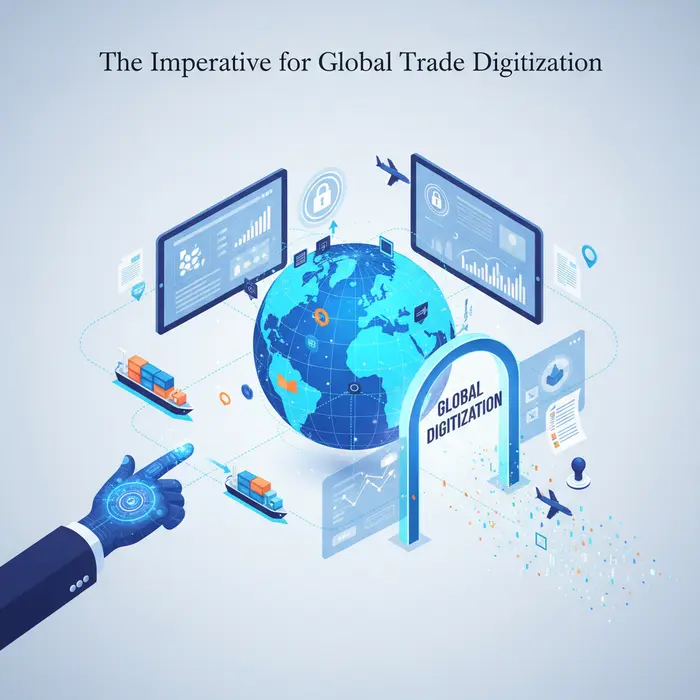
The Imperative for Global Trade Digitization
In an increasingly interconnected yet complex global economy, the digital transformation of international trade is no longer an option but a critical necessity. Businesses navigating the intricacies of cross-border commerce are facing unprecedented challenges, from geopolitical shifts and supply chain disruptions to evolving consumer expectations and regulatory landscapes. Global Trade Digitization offers a robust framework for overcoming these hurdles, fostering greater efficiency, transparency, and resilience across the entire trade ecosystem. This shift entails leveraging advanced technologies to streamline processes, enhance data exchange, and create more agile and responsive supply chains.
1. Drivers of Digital Transformation in Trade
The push towards digital transformation in trade is propelled by a confluence of factors. Foremost among these is the escalating demand for B2B Cross-Border E-commerce Solutions. Business buyers now expect the same seamless, user-friendly experiences as B2C consumers, driving companies to invest in online platforms and digital payment systems. The COVID-19 pandemic starkly highlighted vulnerabilities in traditional supply chains, creating an urgent need for enhanced International Supply Chain Transparency and resilience. Digital tools, such as blockchain and IoT, offer unparalleled visibility, allowing businesses to track goods in real-time and mitigate risks proactively.
Furthermore, regulatory changes, particularly those aimed at modernizing customs procedures and improving compliance, encourage the adoption of digital solutions. The competitive landscape also plays a significant role; companies that embrace digitization gain a strategic advantage through faster processing, reduced costs, and better market access. The continuous innovation in technologies like artificial intelligence (AI), machine learning (ML), big data analytics, and cloud computing provides powerful new tools for automating tasks, optimizing logistics, and personalizing customer interactions. The quest for greater efficiency and cost reduction across all trade processes, from procurement to delivery, remains a primary catalyst for this digital imperative.
2. Challenges of Traditional Trade Processes
Traditional international trade processes are notoriously complex, cumbersome, and prone to inefficiencies. They are often characterized by extensive manual, paper-based documentation, leading to significant delays, human errors, and increased administrative costs. This reliance on physical documents makes data sharing fragmented and inhibits real-time visibility, contributing to a lack of International Supply Chain Transparency. Businesses struggle with siloed systems and disparate data sources, making it difficult to achieve a holistic view of their global operations. The manual handling of customs declarations, compliance checks, and legal documentation is not only time-consuming but also increases the risk of non-compliance and penalties.
Moreover, traditional Trade Finance Digitization remains slow, with many financial transactions still relying on outdated methods like letters of credit, which can tie up capital and introduce friction. The sheer volume of intermediaries involved in a single trade transaction—from freight forwarders and customs brokers to banks and insurance providers—further complicates the process, creating multiple points of potential failure and delays. This outdated operational framework ultimately stifles innovation, limits agility, and hinders the ability of businesses to scale efficiently in the dynamic global marketplace.
3. Economic Benefits of Digital Adoption
Embracing digital transformation in global trade unlocks a myriad of economic benefits that significantly enhance competitiveness and profitability. Digitization drastically improves efficiency by automating manual tasks, reducing processing times, and minimizing errors. This leads to substantial cost reductions in administration, logistics, and compliance. Enhanced International Supply Chain Transparency, facilitated by technologies like blockchain and real-time tracking, empowers businesses with end-to-end visibility, enabling better inventory management, proactive risk mitigation, and more accurate demand forecasting. This improved visibility also aids in faster customs clearance and reduced lead times, getting products to market quicker.
The adoption of B2B Cross-Border E-commerce Solutions opens up new market opportunities, allowing businesses to reach a broader customer base with greater ease and lower entry barriers. Streamlined Trade Finance Digitization solutions, such as digital payment platforms and automated invoice processing, accelerate cash flow, reduce working capital requirements, and minimize fraud risks. Furthermore, advanced Export Automation Tools simplify complex export procedures, from documentation to compliance, making international expansion more accessible for small and medium-sized enterprises (SMEs). Ultimately, Global Trade Digitization fosters greater agility, resilience, and data-driven decision-making, positioning businesses for sustainable growth and success in the modern global economy.
Revolutionizing B2B Cross-Border E-commerce Solutions
The landscape of international commerce is undergoing a profound transformation, driven by advancements in digital technology. Global Trade Digitization is not just a buzzword; it’s a strategic imperative reshaping how businesses conduct transactions across borders. This shift is particularly evident in the burgeoning sector of B2B cross-border e-commerce, where digital platforms are dismantling traditional barriers, significantly enhancing efficiency, and vastly expanding market reach for enterprises of all sizes. These B2B Cross-Border E-commerce Solutions are at the forefront of this revolution, offering streamlined processes, greater transparency, and unprecedented connectivity between buyers and sellers worldwide, thereby revolutionizing the very fabric of global trade.
1. Key Technologies Powering B2B Platforms
At the heart of this digital revolution lies a suite of sophisticated technologies that empower modern B2B platforms. Artificial Intelligence (AI) and Machine Learning (ML) are pivotal, enabling advanced analytics for market trends, personalized product recommendations, and automated customer service, thereby optimizing the buying and selling experience. Blockchain technology is rapidly emerging as a game-changer for enhancing International Supply Chain Transparency. By providing an immutable, distributed ledger, blockchain ensures verifiable tracking of goods from origin to destination, building trust and reducing fraud in complex international logistics. Furthermore, the Internet of Things (IoT) provides real-time data on inventory levels, shipment conditions, and equipment performance, allowing for proactive management and predictive maintenance. Cloud computing forms the backbone, offering scalable infrastructure that can handle vast amounts of data and transactions, while Robotic Process Automation (RPA) automates repetitive tasks like order processing and data entry, significantly improving operational efficiency. These integrated technologies collectively serve as powerful Export Automation Tools, allowing businesses to navigate the complexities of international trade with unparalleled ease and precision, democratizing access to global markets.
2. Overcoming Payment & Logistics Hurdles
Historically, cross-border B2B transactions have been plagued by significant hurdles, particularly concerning payments and logistics. Traditional payment methods were often slow, costly, and lacked transparency, with complex foreign exchange processes and high intermediary fees. Digital platforms are directly addressing these challenges through integrated, secure payment gateways that support multiple currencies, often leveraging blockchain-based payment rails for faster, cheaper, and more transparent transactions. Solutions like escrow services mitigate risk for both buyers and sellers, while advanced analytics provide real-time currency conversion rates. The advent of Trade Finance Digitization is revolutionizing how businesses access capital for international ventures, with platforms offering digital solutions for invoices, letters of credit, and supply chain finance, making funding more accessible and efficient. On the logistics front, platforms integrate with global shipping carriers, offering real-time tracking, optimized routing, and simplified customs documentation. This holistic approach provided by leading B2B Cross-Border E-commerce Solutions dramatically reduces delivery times, minimizes customs delays, and lowers overall shipping costs. According to J.P. Morgan’s insights on digital trade finance, the digital transformation of global trade finance could unlock significant economic value, streamlining processes and enhancing liquidity for businesses engaged in international trade.
3. Marketplace Models vs. Direct Digital Sales
When venturing into cross-border e-commerce, businesses often face a crucial decision: whether to leverage established B2B marketplace models or to invest in direct digital sales channels. B2B marketplaces, such as Alibaba.com or Amazon Business, offer immediate access to a vast global audience and an established infrastructure for payments, logistics, and dispute resolution. They reduce the initial investment and marketing effort for companies, especially SMEs, seeking to test international waters. However, operating within a marketplace often means less control over branding, customer data, and pricing, alongside potential competition from numerous other sellers. Conversely, establishing a direct digital sales platform (e.g., a proprietary e-commerce website) grants businesses complete control over their brand narrative, customer experience, and valuable first-party data. This approach allows for deeper customer relationships and potentially higher profit margins, but it demands significant investment in platform development, digital marketing, and managing all aspects of international fulfillment and customer support. Both models are critical drivers of Global Trade Digitization, each catering to different strategic objectives and resource capabilities. The optimal choice often depends on a company’s size, industry, brand strength, and long-term global expansion goals. Many businesses adopt a hybrid strategy, utilizing marketplaces for broad reach while developing direct channels for premium offerings or specific markets.
Enhancing International Supply Chain Transparency
The complexities of modern global trade demand an unprecedented level of visibility, traceability, and resilience across supply chains. From raw materials sourcing to last-mile delivery, every step in the international supply chain is a potential point of disruption or inefficiency. However, the rapid evolution of technology is fundamentally transforming this landscape, ushering in an era of greater Global Trade Digitization. This digital revolution provides robust tools for companies to gain comprehensive insights, mitigate risks, and build more robust, transparent, and responsive operations. These advancements are critical for optimizing efficiency, ensuring compliance, and fostering trust among stakeholders in the intricate web of cross-border commerce.
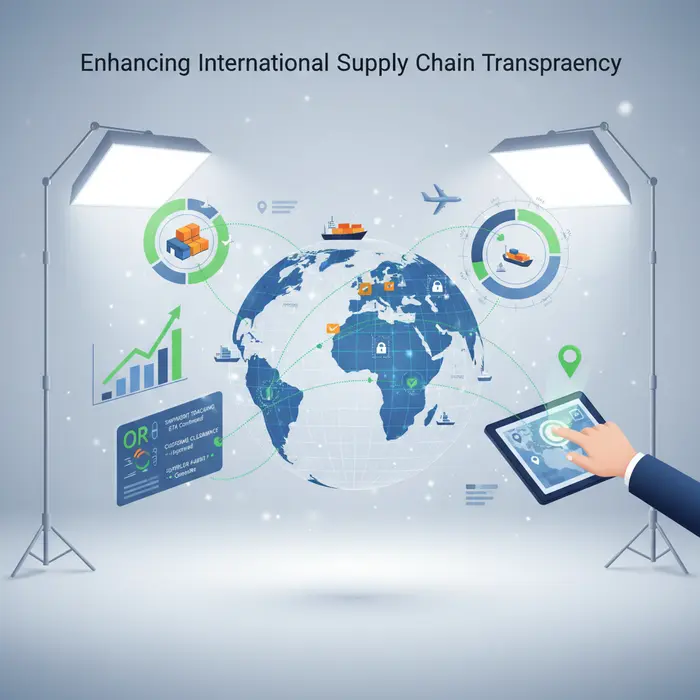
1. Blockchain and Traceability Solutions
Blockchain technology, often associated with cryptocurrencies, is revolutionizing supply chain management by offering an immutable, distributed ledger that records every transaction and event. For international supply chains, this translates into unprecedented digital transformation in supply chains by providing end-to-end traceability. Each product’s journey, from its origin to the consumer, can be logged and verified, creating a transparent chain of custody that is virtually tamper-proof. This enhanced traceability is crucial for proving ethical sourcing, verifying authenticity, and combating counterfeiting, which are significant concerns for International Supply Chain Transparency. Furthermore, for B2B Cross-Border E-commerce Solutions, blockchain can streamline customs processes by providing verifiable documentation and facilitating faster, more secure payment settlements, ultimately reducing friction and increasing trust in global transactions.
2. IoT for Real-time Shipment Monitoring
The Internet of Things (IoT) has emerged as a cornerstone of real-time supply chain visibility. By deploying smart sensors and devices on shipments, warehouses, and vehicles, businesses can gather critical data points continuously. These sensors can monitor location via GPS, temperature, humidity, shock, and even light exposure, providing an instantaneous feed of information regarding a product’s condition and whereabouts. This real-time monitoring capability is invaluable for perishable goods, high-value items, or pharmaceuticals, where environmental conditions are paramount. The ability to track goods in transit, anticipate potential delays due to weather or traffic, and respond proactively to deviations significantly bolsters International Supply Chain Transparency. Moreover, integrating IoT data with Export Automation Tools allows for dynamic route optimization, predictive maintenance for logistics assets, and automated compliance checks, ensuring that goods reach their destination efficiently and intact.
3. Predictive Analytics for Supply Chain Resilience
Beyond simply observing current conditions, predictive analytics leverages vast datasets, machine learning, and artificial intelligence to forecast future trends and potential disruptions. By analyzing historical data, market trends, geopolitical events, weather patterns, and even social media sentiment, businesses can anticipate demand fluctuations, identify potential supply bottlenecks, and assess geopolitical risks with greater accuracy. This forward-looking capability is vital for building resilience within complex global supply chains. For instance, predictive models can flag potential port congestion weeks in advance, allowing companies to reroute shipments or adjust production schedules proactively. Similarly, understanding future demand accurately helps optimize inventory levels, reducing holding costs and preventing stockouts. The integration of predictive insights also supports Trade Finance Digitization by enabling more accurate risk assessment for financing decisions and facilitating automated payment triggers based on predicted delivery milestones, thereby enhancing both efficiency and security in global commerce.
The Digital Evolution of Trade Finance
The intricate world of international trade, once heavily reliant on paper-based processes and complex manual procedures, is undergoing a profound transformation. This Global Trade Digitization wave is revolutionizing how financial transactions are managed, making trade finance more accessible, efficient, and secure than ever before. By leveraging cutting-edge technologies, businesses can now navigate the complexities of cross-border commerce with unprecedented ease, driving economic growth and fostering greater international collaboration. This digital shift not only streamlines operations but also introduces robust mechanisms for risk mitigation and compliance, paving the way for a more integrated and transparent global trading ecosystem.
1.
Paperless Trade Documentation
Paperless trade documentation refers to the shift from physical, hard-copy documents—such as bills of lading, customs declarations, and certificates of origin—to their digital equivalents. This transition is a cornerstone of modern Trade Finance Digitization, eliminating the geographical and logistical barriers associated with traditional paperwork. By replacing stacks of documents with secure digital files, companies can significantly reduce processing times, minimize the risk of human error, and cut down on administrative costs. Export Automation Tools play a critical role here, providing platforms for electronic document submission, verification, and storage. These tools often integrate with existing enterprise resource planning (ERP) systems, allowing for seamless data flow and real-time updates across the supply chain. Beyond efficiency gains, paperless trade contributes to environmental sustainability by reducing paper consumption, aligning trade practices with global ecological goals.
2.
Blockchain in Letters of Credit
A Letter of Credit (LC) is a payment mechanism used in international trade to provide financial assurance to both the buyer and seller, ensuring payment upon fulfillment of specified conditions. Traditionally, LCs involve multiple banks and mountains of paper, leading to delays and potential fraud. Blockchain technology is fundamentally transforming this process. By utilizing a distributed ledger, blockchain provides an immutable, transparent, and secure record of all transactions and document exchanges related to an LC. Each step, from issuance to payment, is recorded on the chain, accessible to all authorized parties in real-time. This not only dramatically reduces the time taken to process LCs from weeks to days or even hours but also significantly enhances International Supply Chain Transparency. The cryptographic security of blockchain minimizes fraud risks, while smart contracts can automate payment releases once predefined conditions are met. This innovation is particularly impactful for B2B Cross-Border E-commerce Solutions, enabling faster and more reliable transactions between businesses globally. For more insights into how blockchain is reshaping global trade, refer to resources from leading financial institutions and industry bodies. The World Economic Forum highlights blockchain’s role in bolstering supply chain resilience.
3.
AI-driven Risk Assessment and Compliance
Artificial Intelligence (AI) is rapidly becoming indispensable in evaluating and mitigating risks within trade finance, as well as ensuring adherence to complex regulatory frameworks. AI-driven risk assessment involves using machine learning algorithms to analyze vast datasets related to counterparties, transactions, and geopolitical factors. This allows for more accurate and predictive risk profiling than traditional methods, identifying potential defaults, fraud, or even sanctions breaches with greater precision. For example, AI can scrutinize trade documents for inconsistencies, detect unusual transaction patterns indicative of money laundering, or monitor news and social media for reputational risks associated with trading partners. Furthermore, AI significantly enhances compliance efforts by automating the complex processes of Know Your Customer (KYC) and Anti-Money Laundering (AML) checks. These intelligent systems can sift through regulatory updates, automatically flag non-compliant activities, and generate audit trails, vastly improving the efficiency and effectiveness of compliance departments. This sophisticated approach to risk and compliance is a crucial component of modern Trade Finance Digitization, providing a robust safeguard against financial crimes and ensuring the integrity of global commerce.
The ongoing digital evolution of trade finance is not merely an incremental improvement; it represents a paradigm shift. From reducing bureaucratic hurdles with paperless documentation to leveraging the transformative power of blockchain for secure LCs and employing AI for sophisticated risk management, these advancements are making global trade more dynamic, inclusive, and resilient. As technology continues to evolve, the future promises even greater innovations, further cementing digital platforms as the backbone of international commerce.
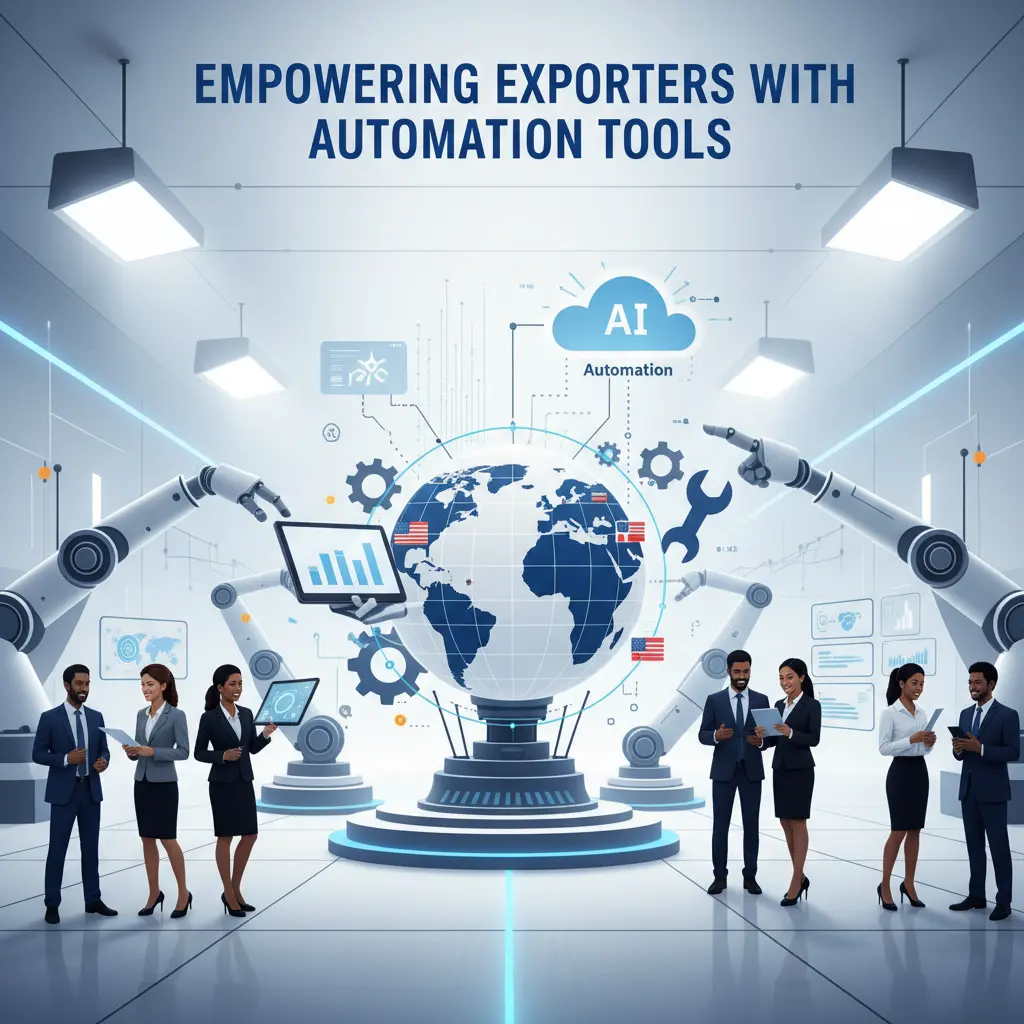
Empowering Exporters with Automation Tools
In today’s fiercely competitive global marketplace, the ability to efficiently manage and execute export operations is paramount for businesses aiming for international growth. The traditional complexities of cross-border trade, including intricate customs regulations, fragmented logistics, and opaque financial processes, often deter small and medium-sized enterprises (SMEs) from venturing into new markets. However, the advent of sophisticated digital tools and software has revolutionized this landscape, offering powerful Global Trade Digitization solutions that simplify, automate, and accelerate export processes for businesses of all sizes. These technologies not only streamline operations but also foster greater transparency, reduce costs, and mitigate risks, thereby democratizing access to global markets.
1. Automated Customs Declarations & Compliance
One of the most daunting aspects of international trade is navigating the labyrinthine world of customs regulations and ensuring compliance. Export automation tools specializing in customs declarations provide a transformative solution. These platforms leverage advanced algorithms and regulatory databases to automatically generate accurate customs documentation, including declarations, invoices, and certificates of origin, based on input data. They can perform real-time checks against tariff codes, trade agreements, sanctions lists, and import/export restrictions for various countries, significantly reducing the likelihood of errors, delays, and penalties. By integrating with national customs systems and staying updated with the latest changes in international trade law, these tools ensure that businesses maintain strict adherence to compliance standards. This level of automation is crucial for accelerating cargo clearance and enhancing the efficiency of trade facilitation initiatives, enabling smoother and faster movement of goods across borders. Furthermore, for businesses engaged in B2B cross-border e-commerce, such automation is indispensable for managing high volumes of shipments.
2. Digital Logistics and Freight Forwarding Integration
The journey of goods from exporter to importer involves a complex web of logistics, encompassing multiple carriers, modes of transport, and handling points. Digital logistics platforms and integrated freight forwarding solutions bring unprecedented efficiency and International Supply Chain Transparency to this intricate process. These tools allow exporters to centralize shipment management, compare freight quotes from various providers in real-time, book shipments, and track their cargo’s progress across land, sea, and air. Through API integrations, they connect directly with carriers, warehousing facilities, and port authorities, providing end-to-end visibility. This not only optimizes route planning and reduces transit times but also enables proactive problem-solving, as businesses can quickly identify and address potential disruptions. The digitization of logistics eliminates manual data entry, minimizes communication silos, and provides a single source of truth for all shipping-related information, drastically improving operational control and cost management for businesses leveraging B2B Cross-Border E-commerce Solutions.
3. AI for Market Entry & Opportunity Identification
Venturing into new international markets requires extensive research and strategic planning, a process often time-consuming and resource-intensive. Artificial Intelligence (AI) and machine learning tools are now empowering exporters with sophisticated capabilities for market entry and opportunity identification. These AI-powered platforms analyze vast datasets, including global trade statistics, consumer behavior trends, economic indicators, regulatory landscapes, and geopolitical factors, to pinpoint the most promising markets for specific products or services. They can identify niche demands, competitive gaps, and potential barriers to entry, providing actionable insights that would be impossible to uncover through traditional methods. From predicting future market demand to assessing optimal pricing strategies and identifying potential distributors, AI acts as a strategic consultant. This intelligent analysis helps businesses make data-driven decisions, reducing the risks associated with international expansion and maximizing the chances of successful market penetration, thereby providing a significant competitive edge in the global arena and fostering more informed Global Trade Digitization strategies.
By harnessing the power of automation tools, from streamlining customs compliance and optimizing logistics to leveraging AI for strategic market insights, businesses can navigate the complexities of global trade with greater ease and confidence. These technologies are not just tools; they are essential enablers for growth, allowing exporters to expand their reach, enhance efficiency, and unlock new opportunities in the dynamic world of international commerce. Embracing these solutions is no longer an option but a necessity for sustained success in the global marketplace.
Partner with Vietnam’s Leading Suppliers
Looking for reliable suppliers in Vietnam? Contact VietnamSuppliers.com today to connect with verified manufacturers and exporters across all industries.
—————————————
References
– E-commerce and the WTO: https://www.wto.org/english/tratop_e/serv_e/ecom_e/ecom_e.htm
– J.P. Morgan: Digital Transformation in Trade Finance: https://www.jpmorgan.com/solutions/treasury-services/insights/digital-trade-finance
– :
– The World Economic Forum highlights blockchain’s role in bolstering supply chain resilience.: https://www.weforum.org/agenda/2020/07/blockchain-trade-finance-covid-19-supply-chains/
– Trade Facilitation – World Customs Organization: https://www.wcoomd.org/en/topics/facilitation.aspx