Defining International Trade
In an increasingly interconnected world, the exchange of goods, services, and capital across national borders forms the bedrock of global economic activity. This fundamental process, known as international trade, is far more than just transactions between countries; it is a complex web of economic relationships that shapes industries, influences cultures, and drives innovation worldwide. From ancient barter systems to modern digital marketplaces, international trade has consistently been a catalyst for progress, enabling nations to specialize, access diverse resources, and foster economic growth.
Understanding international trade is crucial for grasping the dynamics of the global economy. It facilitates the movement of everything from raw materials to high-tech manufactured goods and sophisticated financial services. This cross-border exchange allows countries to leverage their comparative advantages, leading to more efficient resource allocation and greater overall prosperity. Without it, economies would be largely self-sufficient, limited by domestic resources and production capabilities, resulting in higher costs, reduced choices, and slower development.
1. What is International Trade?
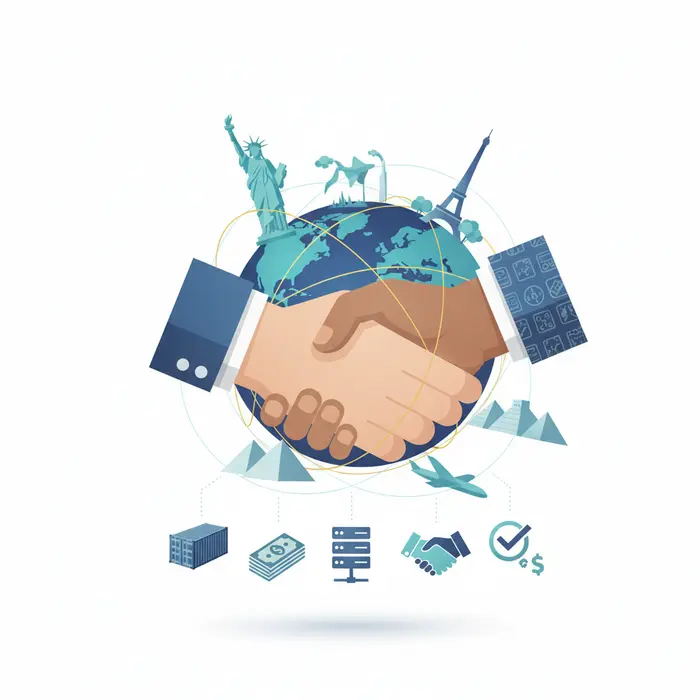
At its core, international trade refers to the exchange of goods and services between different countries, encompassing all commercial transactions that cross political boundaries. The fundamental mechanisms involve what is import export activities. An import is a good or service brought into one country from another, typically for sale or use; for example, U.S. purchases of Japanese cars are imports for the U.S. Conversely, an export is a good or service sent to another country for sale, such as Vietnam selling coffee beans to Germany. The key difference between import and export is that imports represent inflows into a domestic economy, while exports are outflows. Both are vital to a nation’s balance of trade and economic health. Countries engage in international trade because they cannot produce everything they need efficiently, leading to specialization and interdependence driven by differing resources, labor costs, and technology. These exchanges are often governed by complex regulations, tariffs, and trade agreements.
2. Historical Context and Evolution
The roots of international trade stretch back millennia. Ancient civilizations engaged in sophisticated trade networks, exchanging goods like spices, silk, and precious metals along routes such as the famous Silk Road, fostering economic growth and cultural diffusion. The Age of Exploration dramatically expanded global trade, connecting continents and leading to the establishment of colonial empires driven by mercantilist policies. The Industrial Revolution further transformed trade, enabling mass production and accelerating global movement of goods.
The 20th century saw significant shifts, particularly after World War II, with the establishment of multilateral institutions like the General Agreement on Tariffs and Trade (GATT), which evolved into the World Trade Organization (WTO). These bodies aimed to reduce trade barriers and promote a more open, rules-based global trading system. In recent decades, technological advancements in communication and logistics have ushered in an era of rapid globalization, where supply chains are intricate and trade flows are almost instantaneous. This evolution underscores the continuous adaptation of international trade to changing technological, economic, and political landscapes.
3. Key Principles and Components
The theoretical foundation of international trade is largely built on principles like comparative advantage. Developed by David Ricardo, this principle suggests that countries should specialize in producing goods and services where they have a lower opportunity cost. By specializing and trading, all participating nations can benefit from greater overall production and consumption.
The components of international trade are diverse, including physical goods (from raw materials to finished products), services (tourism, financial, IT support), and capital flows (foreign direct investment). A critical aspect of modern international trade is the global supply chain definition: a complex network of interconnected organizations, people, activities, information, and resources involved in moving a product or service from its inception to the final consumer, often spanning multiple countries. Efficient management of these global supply chains is paramount for businesses operating internationally.
For businesses, the international trade advantages for businesses are numerous. It provides access to larger markets, enabling companies to achieve economies of scale and diversify revenue. Businesses can also source specialized raw materials, access advanced technologies more cheaply, and enhance innovation through global competition. While challenges like trade barriers, currency fluctuations, and logistical complexities exist, the strategic benefits often make international trade a cornerstone of business expansion and global economic prosperity.
The Core Mechanics: Import and Export
International trade, a cornerstone of the global economy, involves the exchange of goods and services across national borders. At its heart lie two fundamental activities: importing and exporting. These processes are not merely transactions; they are the arteries through which the global supply chain flows, connecting producers with consumers worldwide and fostering economic interdependence. Understanding “what is import export” is crucial for any business looking to expand its reach or source materials efficiently in today’s interconnected marketplace. These activities offer significant “international trade advantages for businesses,” from accessing new markets to optimizing production costs. For a deeper understanding of the principles, international trade encompasses a wide range of economic interactions.
1. What is Import?
Importing refers to the act of bringing goods or services into one country from another. This activity is driven by a variety of factors, including the domestic unavailability of certain products, the need for specialized components, or simply the desire for cost-effective alternatives. For instance, a country might import crude oil because its own reserves are insufficient, or a manufacturer might import specific machinery parts that are not produced locally or are of higher quality elsewhere. Common goods involved in import activities range from consumer electronics, apparel, and processed foods to heavy machinery, raw materials like minerals and timber, and even intellectual services. Imports play a vital role in meeting domestic demand, stimulating competition, and often providing essential inputs for local industries, thereby indirectly contributing to the “international trade advantages for businesses” by ensuring continuous production and innovation.
2. What is Export?
Conversely, exporting is the process of sending goods or services produced within a country to another country for sale. This outward movement of products is a primary driver of economic growth and national income. Businesses engage in exporting to expand their market reach beyond domestic borders, tap into new customer bases, and achieve economies of scale. For many nations, exports are critical for earning foreign exchange, which can then be used to pay for imports. Examples of common exported goods include agricultural products such as coffee, textiles, technological devices, automobiles, and a growing array of services, including software development, tourism, and financial consulting. Successful exporting strategies can significantly bolster a company’s revenue, enhance its brand recognition on a global scale, and provide substantial “international trade advantages for businesses” seeking sustainable growth. The interconnected nature of the global supply chain definition means that an export from one country is often an import for another, highlighting the complementary roles of these activities.
3. Difference Between Import and Export
While importing and exporting are two sides of the same international trade coin, their fundamental “difference between import and export” lies in their direction of flow and economic implications. Importing involves goods entering a country, typically resulting in an outflow of domestic currency to pay for foreign products. Exports, on the other hand, involve goods leaving a country, generating an inflow of foreign currency. From a national economic perspective, a country that imports more than it exports runs a trade deficit, while one that exports more than it imports enjoys a trade surplus. For businesses, imports can be a source of competitive advantage by providing access to diverse inputs or finished goods, while exports represent an opportunity for market expansion and revenue diversification. Both activities are indispensable to the health of the global supply chain definition and illustrate the complex web of interactions that define modern international trade. Understanding these core mechanics is paramount for any entity engaged in global commerce.
Navigating the Global Supply Chain
In an increasingly interconnected world, the global supply chain forms the backbone of modern commerce, linking producers and consumers across vast distances. Far more than a simple linear process, it represents an intricate network of activities, resources, and technologies that facilitate the movement of goods and services worldwide. At its core, this vast system is powered by international trade, a dynamic force that enables businesses to source materials, manufacture products, and distribute them to markets beyond their national borders.
1. Global Supply Chain Definition
At its essence, a global supply chain definition encompasses the entire network involved in getting a product or service from its raw material stage to the final consumer, spanning multiple countries. This extensive process involves every step from the sourcing of raw materials, through manufacturing, logistics, and distribution, all the way to retail and even post-purchase services. It is a highly complex, multi-layered system designed to optimize efficiency, reduce costs, and leverage specialized production capabilities available globally.
A critical component of understanding this chain is comprehending what is import export. Imports refer to goods and services brought into a country from another country, while exports are goods and services sent from one country to another. The difference between import and export is fundamental: imports represent inbound shipments (e.g., a Vietnamese manufacturer importing specialized machinery from Germany), whereas exports represent outbound shipments (e.g., the same Vietnamese manufacturer exporting finished textiles to the United States). These two activities are the lifeblood of international commerce, allowing countries to specialize in certain productions and acquire goods they cannot produce efficiently themselves.
2. Key Stages of a Global Supply Chain
The journey of a product through a global supply chain typically involves several interconnected stages, each heavily reliant on efficient international trade practices:
- Sourcing and Procurement: Companies globally procure raw materials and components from the most competitive suppliers worldwide. This might involve importing rare earth minerals from Africa to Asia for electronics manufacturing, or textiles from Vietnam for apparel production in Europe.
- Manufacturing and Assembly: Production often takes place in countries with specialized expertise, lower labor costs, or strategic geographic locations. Components from various nations might converge in one country for final assembly before being shipped out as finished goods.
- Logistics and Transportation: This stage involves the physical movement of goods across borders via sea, air, road, and rail. Efficient freight forwarding, customs clearance, and warehousing are paramount to minimize transit times and costs.
- Distribution and Retail: Once products reach their destination markets, they are distributed through local networks to retailers and ultimately to the end consumer. This can involve intricate regional logistics networks that ensure timely delivery to diverse selling points.
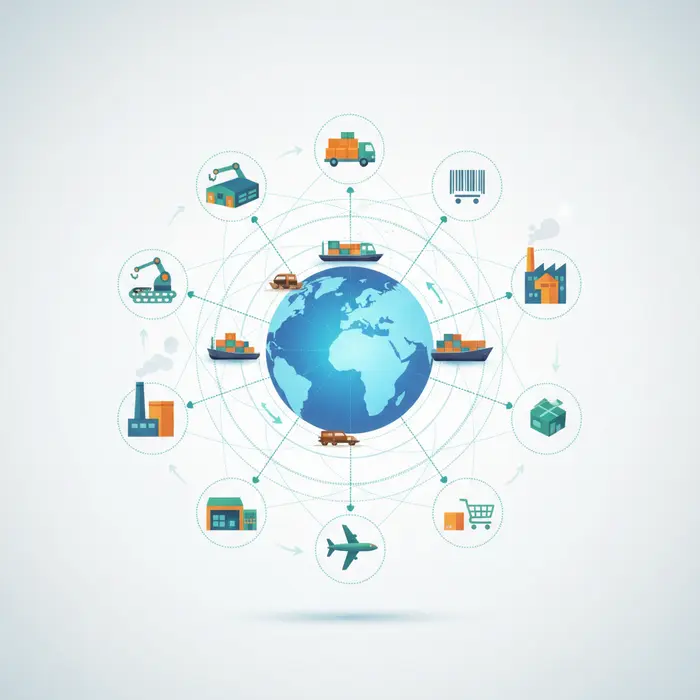
Each stage highlights the pervasive role of international trade, demanding sophisticated coordination and regulatory compliance across diverse jurisdictions.
3. Challenges and Resilience in Global Trade
While offering immense opportunities, global supply chains are inherently complex and prone to various disruptions. Geopolitical instability, trade wars, natural disasters, economic downturns, and public health crises (like pandemics) can severely impact the flow of goods, leading to delays, increased costs, and shortages. Regulatory changes, tariffs, and fluctuating exchange rates also add layers of complexity, requiring businesses to constantly adapt their strategies.
Despite these challenges, the international trade advantages for businesses remain compelling. They include access to broader markets, economies of scale, diversified sourcing options, access to specialized labor and technologies, and enhanced competitiveness through cost efficiencies. To mitigate risks and build resilience, companies are increasingly adopting strategies such as:
- Diversification: Spreading sourcing and manufacturing across multiple regions rather than relying on a single country.
- Nearshoring/Reshoring: Bringing production closer to home markets or back to the home country to reduce lead times and geopolitical exposure.
- Digitalization: Implementing advanced technologies like AI, blockchain, and IoT for better visibility, traceability, and predictive analytics within the supply chain.
- Strategic Stockpiling: Holding buffer stocks of critical components or finished goods to cushion against unexpected disruptions.
Effectively navigating the global supply chain requires not only an understanding of its intricate stages but also a proactive approach to managing its inherent risks. As international trade continues to evolve, so too must the strategies employed to maintain robust and resilient supply networks capable of meeting global demand.
Advantages of International Trade for Businesses
Engaging in international trade is a cornerstone strategy for modern businesses seeking sustainable growth and competitive advantage. At its core, international trade involves the exchange of goods, services, and capital across national borders. This broad definition encompasses what is import export, where imports are goods or services brought into one country from another, and exports are goods or services sent to another country for sale. Understanding the difference between import and export is fundamental to grasping the mechanics of global commerce. Imports typically represent an inflow of foreign goods, satisfying domestic demand or supplying raw materials, while exports represent an outflow of domestic goods, generating foreign currency and expanding market reach.
For businesses, embracing global commerce is not merely about moving products across borders; it’s about strategically leveraging worldwide resources and consumer bases. It directly addresses opportunities for market expansion and drives significant cost efficiencies. The benefits are multi-faceted, ranging from enhancing revenue streams to optimizing operational models through a robust global supply chain definition, which refers to the worldwide network used to deliver products and services from raw materials to end-customers. These international trade advantages for businesses make a compelling case for looking beyond domestic horizons.
1. Access to New Markets and Customers
One of the most immediate and impactful benefits of international trade is the unprecedented access to new markets and a vastly expanded customer base. Businesses confined to their domestic markets face inherent limitations in terms of population size, consumer preferences, and economic cycles. By exporting, companies can tap into millions, or even billions, of new potential customers who may have unmet needs or a strong demand for specific products or services. This expansion mitigates the risk associated with over-reliance on a single market, diversifying revenue streams and creating resilience against regional economic downturns. For instance, a product that has saturated its home market might find immense untapped demand in another country due to cultural differences, economic development stages, or simply a lack of local alternatives. This strategic diversification not only boosts sales volumes but also strengthens a company’s brand presence on a global scale, leading to greater recognition and potentially opening doors for further international ventures. For businesses in developing economies, engaging in exports can provide critical access to markets with higher purchasing power, facilitating economic uplift and industrial growth.
2. Increased Revenue and Profitability
The logical outcome of accessing new markets and customers is a direct increase in revenue and, consequently, profitability. Higher sales volumes achieved through international expansion can lead to economies of scale in production, reducing per-unit costs and improving profit margins. Furthermore, some international markets may offer premium pricing opportunities for certain products or services that are perceived as exotic, high-quality, or scarce. Businesses can also benefit from favorable exchange rates, where converting foreign currency earnings back into their home currency can yield additional gains. Beyond direct sales, international trade encourages innovation as businesses adapt their products and services to meet diverse global demands and regulatory standards. This continuous improvement process can create superior offerings that also perform better in domestic markets. The potential for substantial revenue growth and enhanced profitability through international trade is a powerful incentive for businesses of all sizes, making it a critical component of long-term financial success. According to the World Trade Organization, global merchandise trade volumes have consistently grown over the past decades, highlighting the enduring opportunities for businesses.
3. Resource Optimization and Cost Savings
International trade isn’t just about selling more; it’s also about smarter operations and significant cost savings. Businesses can strategically import raw materials, components, or semi-finished goods from countries where they are produced more efficiently or at a lower cost. This global supply chain definition approach allows companies to optimize their input costs, leading to more competitive pricing for their final products. For example, a manufacturer might source specialized components from a country known for its advanced technology in that area, or raw materials from a region with abundant natural resources and lower labor costs. Beyond direct material costs, international trade can also lead to efficiency gains through outsourcing certain services (e.g., customer support, IT services, manufacturing processes) to countries with specialized expertise or lower operational overheads. This resource optimization not only reduces expenses but also frees up domestic resources to focus on core competencies and innovation. By engaging in a sophisticated global supply chain, businesses can reduce production costs, enhance product quality by sourcing best-in-class components globally, and ultimately pass savings or improved value to their customers, thereby strengthening their market position. The ability to diversify suppliers across different countries also builds resilience into the supply chain, reducing dependency on a single source and mitigating risks associated with local disruptions.
Key Players, Policies, and Future Trends
International trade, a cornerstone of global economic prosperity, involves the intricate exchange of goods and services across national borders. Understanding the diverse entities that facilitate this exchange, the regulatory frameworks that govern it, and the emerging trends that are poised to reshape its future is crucial for businesses and policymakers alike. This section delves into the multifaceted world of global commerce, highlighting its primary actors, governing principles, and technological trajectory. For deeper insights into global commerce, explore the complexities of international trade.

1. Government Bodies and International Organizations
In the realm of international trade, Government Bodies and International Organizations are foundational pillars, setting the rules, mediating disputes, and promoting cooperation. Government bodies, such as national customs agencies, trade ministries, and economic development boards, play a critical role in regulating the flow of goods and services into and out of their respective countries. They are responsible for enforcing import and export laws, collecting duties, and ensuring compliance with national and international standards. For businesses looking to engage in global commerce, understanding what is import export requires navigating these national regulations, including licensing, quotas, and quality controls. The difference between import and export primarily lies in the direction of the transaction from a country’s perspective – importing brings goods in, while exporting sends them out, each governed by specific national requirements.
Beyond national governments, several international organizations provide a framework for global trade. The World Trade Organization (WTO) is perhaps the most prominent, acting as a forum for trade negotiations, a mechanism for resolving trade disputes, and a body for monitoring national trade policies. Its aim is to ensure that trade flows as smoothly, predictably, and freely as possible. Other influential bodies include the United Nations Conference on Trade and Development (UNCTAD), which assists developing countries in integrating into the global economy, and the World Bank, which provides financial and technical assistance to support trade-related infrastructure and reforms. These organizations collectively strive to create a level playing field, fostering economic growth and stability through robust international trade practices.
2. Trade Agreements and Tariffs
Trade Agreements and Tariffs form the backbone of the international trading system, dictating the terms under which countries conduct business with one another. A trade agreement is a pact between two or more nations to reduce barriers to trade, such as tariffs, import quotas, and non-tariff barriers (e.g., complex regulations, subsidies). These agreements can be bilateral (between two countries) or multilateral (between three or more countries). Free Trade Agreements (FTAs) are a common type, aiming to eliminate or significantly reduce tariffs and other trade barriers among member countries, thereby promoting greater economic integration and benefiting businesses with enhanced market access.
Tariffs, on the other hand, are taxes imposed on imported goods and services. They can be specific duties (a fixed fee per unit) or ad valorem duties (a percentage of the value of the goods). While tariffs generate revenue for governments, their primary purpose is often to protect domestic industries from foreign competition by making imported goods more expensive. However, high tariffs can lead to retaliatory measures from other countries, potentially sparking trade wars and hindering global economic growth. Understanding these agreements and tariff structures is vital for businesses seeking to leverage the International trade advantages for businesses, as they directly impact costs, market access, and competitive positioning. For example, businesses operating under an FTA might enjoy lower costs of goods, making their exports more competitive or their imports cheaper.
3. Technological Advancements in Trade
The landscape of international trade is continually being reshaped by Technological Advancements in Trade, driving unprecedented levels of efficiency, transparency, and connectivity. Digitalization stands at the forefront, transforming traditional paper-based processes into streamlined electronic workflows, from customs declarations to shipping manifests. This shift significantly reduces processing times and human error, accelerating the movement of goods across borders.
Blockchain technology is another game-changer, offering a decentralized and immutable ledger for tracking transactions. In the context of the global supply chain definition, blockchain can enhance transparency and traceability, allowing all parties – from producers to consumers – to verify the origin, quality, and journey of products. This not only builds trust but also helps combat counterfeiting and ensures compliance with ethical sourcing standards. Artificial intelligence (AI) and machine learning are also being deployed to optimize logistics, predict demand, and identify potential disruptions in supply chains, leading to more resilient and responsive trade networks. Furthermore, the exponential growth of e-commerce platforms has democratized international trade, enabling even small and medium-sized enterprises (SMEs) to access global markets with relative ease, bypassing traditional intermediaries. These innovations are not merely enhancing existing trade mechanisms but are fundamentally redefining how global commerce is conducted, promising a more integrated, efficient, and accessible future for all participants.
Partner with Vietnam’s Leading Suppliers
Looking for reliable suppliers in Vietnam? Contact VietnamSuppliers.com today to connect with verified manufacturers and exporters across all industries.
—————————————
References
– international trade: https://www.investopedia.com/terms/i/internationaltrade.asp
– International Trade Definition: https://www.investopedia.com/terms/i/international-trade.asp
– WTO – What is the WTO? Understanding the WTO: The basics: https://www.wto.org/english/thewto_e/whatis_e/tif_e/fact1_e.htm
– World Trade Organization: https://www.wto.org/english/news_e/pres24_e/pr954_e.htm
– World Trade Organization (WTO): https://www.wto.org/