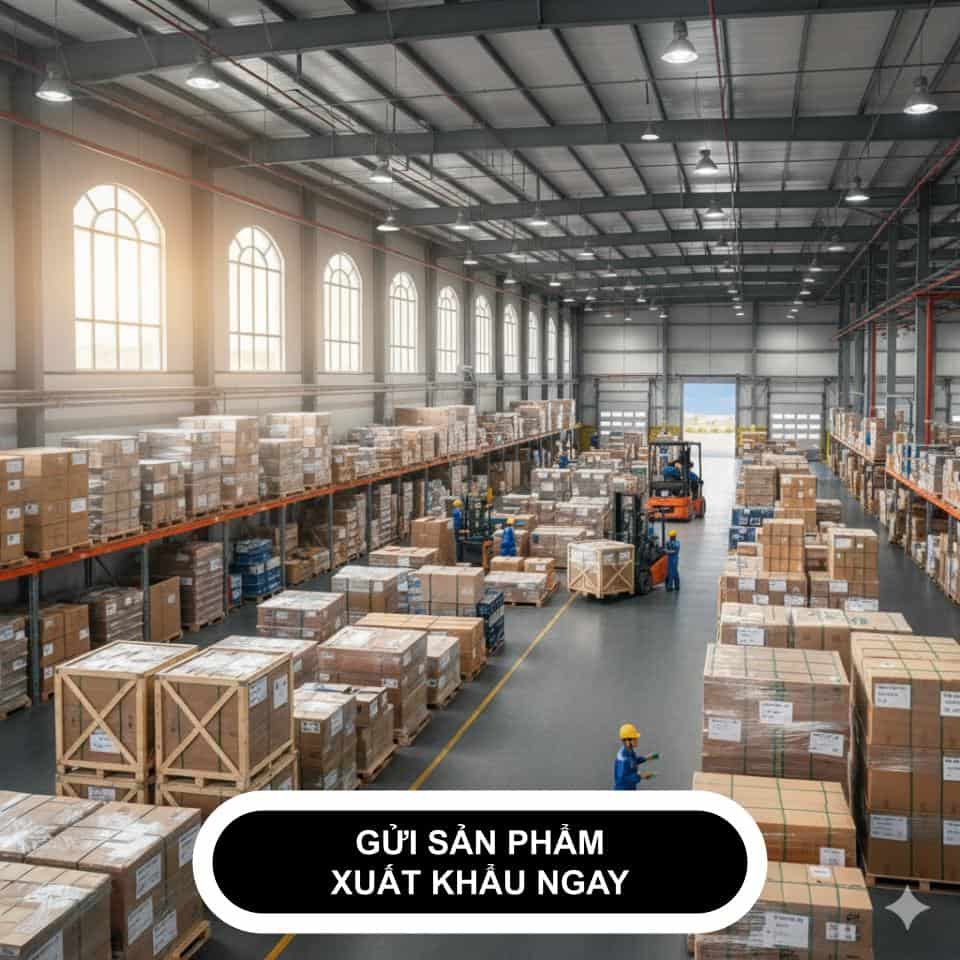
Understanding Import Duties and Why They Matter
In the intricate world of international trade, numerous factors influence the viability and profitability of importing and exporting goods. Among the most critical, yet often misunderstood, are import duties. These financial levies can significantly impact a business’s landed cost, pricing strategy, and overall competitiveness. For companies engaged in global commerce, a thorough understanding of what import duties are, their underlying purpose, and how they are calculated is not just beneficial—it’s essential for sustainable success. Ignoring them can lead to unexpected costs, delays, and a substantial hit to your bottom line. Leveraging tools like an Import Duty Calculator and understanding Customs clearance services can transform a daunting task into a manageable part of your supply chain strategy.
1. What are Import Duties?
Import duties, also known as customs duties or tariffs, are taxes imposed by a government on goods imported into a country, typically collected at the point of entry by customs authorities. Their primary purposes are multifaceted:
- Revenue Generation: Duties serve as a significant source of income for governments.
- Protection of Domestic Industries: By making imported goods more expensive, duties help level the playing field for local manufacturers, protecting them from cheaper foreign competition and encouraging domestic production.
- Regulation of Trade: Governments use duties to control the flow of specific goods, implement trade policies, or enforce international agreements.
Duties can be levied in various ways:
- Ad Valorem Duties: Calculated as a percentage of the imported good’s value (e.g., 5% of the declared value).
- Specific Duties: A fixed charge per unit of quantity or weight (e.g., $2 per kilogram).
- Compound Duties: A combination of both ad valorem and specific duties.
Understanding which type applies to your goods is the first step in accurate cost projection.
2. Impact on Business & Consumers
The implications of import duties resonate throughout the entire supply chain, affecting both businesses and the end consumer.
For Businesses:
- Increased Landed Cost: Duties are a direct additional cost factored into the “landed cost”—the total cost of a product once it arrives at the buyer’s doorstep.
- Reduced Profitability: Higher landed costs directly erode profit margins unless fully passed on to the consumer. Unanticipated duties can turn a profitable venture into a loss.
- Pricing Strategy Adjustments: Businesses often raise retail prices to maintain profitability, potentially making their products less competitive compared to domestic alternatives or goods from countries with more favorable Tariff rates by country.
- Supply Chain Complexity: Navigating customs regulations adds a layer of complexity. Businesses often rely on specialized Customs clearance services for efficient handling of paperwork and calculations.
- Cash Flow Implications: Duties are typically paid upfront when goods clear customs, requiring capital allocation before sales.
For Consumers:
- Higher Retail Prices: A significant portion of import duties is passed on to consumers as higher prices for imported goods.
- Reduced Choice: If duties make certain imported products prohibitively expensive, consumers might have fewer options or be pushed towards domestic alternatives.
3. Key Factors Influencing Duty Calculation
Calculating import duties accurately requires careful attention to several critical variables.
- HS Code (Harmonized System Code): This fundamental element classifies traded products internationally. Every product has a unique HS code, determining its specific Tariff rates by country. Proper HS code lookup is crucial; misclassification can lead to incorrect duties or penalties. You can explore the International Trade Centre’s (ITC) Trade Map for detailed tariff information.
- Country of Origin: The country where goods were manufactured significantly impacts duty rates. Many free trade agreements (FTAs) offer reduced or zero duties for goods originating from specific partner countries. Leveraging these Trade agreement benefits is vital.
- Customs Valuation: This determines the monetary value of imported goods for duty assessment, most commonly the transaction value (price paid).
- Duty Rate: Once the HS code, country of origin, and customs value are established, the applicable duty rate (percentage or specific amount) from the country’s tariff schedule can be applied.
- Other Taxes and Fees: Beyond import duties, goods may be subject to additional taxes like Value Added Tax (VAT), excise taxes, anti-dumping duties, or administrative fees.
Given this complexity, relying on an advanced tool like an Import Duty Calculator is increasingly essential for businesses engaged in international trade. These calculators help estimate costs, streamline compliance, and provide a clearer financial picture before goods even leave their origin point. Proactively addressing these factors ensures smoother, more profitable import operations.

How an Import Duty Calculator Works: Step-by-Step Guide
Details the mechanics of an import duty calculator, emphasizing the critical data inputs required for accurate estimation of taxes and fees.
Navigating the complexities of international trade can be daunting, especially when it comes to understanding the array of taxes and fees involved. An Import Duty Calculator is an indispensable tool that simplifies this process, providing businesses and individuals with a clear estimation of what they can expect to pay. This guide delves into the mechanics of how these calculators work, highlighting the essential data inputs required to achieve accurate landed cost estimations, thereby streamlining your customs clearance services.
1. Required Information (e.g., product value, origin, destination)
At its core, an import duty calculator functions by processing several key pieces of information you provide. The accuracy of the output heavily relies on the precision of these inputs. The fundamental details typically include:
- Product Value: This is often referred to as the CIF (Cost, Insurance, Freight) value. It encompasses the cost of the goods themselves, the insurance taken out for their journey, and the freight charges for shipping them to the destination country. Many duties are calculated as a percentage of this total value (ad valorem duties), making this figure paramount.
- Origin Country: The country where the goods were manufactured or substantially transformed. This is critical because bilateral or multilateral trade agreements and specific tariff regimes are often dependent on the goods’ origin.
- Destination Country: The country where the goods will be imported. This dictates which country’s specific customs regulations, tariff rates, and local taxes (like VAT or GST) will apply.
- Currency: Specifying the currency of the transaction ensures that all calculations are performed using the correct exchange rates, converting the product value into the destination country’s local currency if necessary.
- Quantity and Units: For certain products, duties might be specific (per unit, per weight, per volume) rather than ad valorem. Providing accurate quantity and units (e.g., kilograms, liters, pieces) is essential for these types of calculations.
Without this foundational data, even the most sophisticated calculator cannot provide a reliable estimate.
2. The Role of HS Code Lookup
Perhaps the most critical piece of information, often overlooked by newcomers, is the Harmonized System (HS) Code. An HS Code is a standardized numerical classification for internationally traded products, developed and maintained by the World Customs Organization (WCO). This multi-digit code, typically 6-10 digits long depending on the country, categorizes virtually every product under the sun.
The significance of an HS code lookup in an import duty calculator cannot be overstated:
- Duty & Tax Determination: Each HS code is directly linked to specific tariff rates by country. An accurate HS code immediately tells the calculator which duties, taxes, and other charges apply to your specific product in the destination country.
- Regulatory Compliance: The HS code helps identify any specific import restrictions, licensing requirements, or safety standards that apply to the product.
- Trade Agreement Application: It’s the primary identifier for determining if a product qualifies for reduced or zero duties under various free trade agreements or preferential schemes.
An incorrect HS code can lead to significant issues, including incorrect duty calculations, customs delays, fines, or even seizure of goods. Many import duty calculators incorporate an ‘HS code lookup’ feature or guide users to external resources to help them accurately classify their products, ensuring the tariff rates applied are correct.
3. Calculating Landed Cost Estimation
Once all the necessary data—product value, origin, destination, and crucially, the HS code—are entered, the import duty calculator performs a series of complex computations to arrive at the estimated landed cost. This is the total cost of a product once it has arrived at the buyer’s doorstep, encompassing not just its initial price, but all associated costs.
The calculation process involves:
- Applying Tariff Rates by Country: The calculator accesses vast databases of customs tariffs specific to the destination country and the assigned HS code. It identifies the applicable import duties (which could be ad valorem, specific, or a combination).
- Factoring in Trade Agreement Benefits: If the origin country has a free trade agreement (FTA) or other preferential trade agreement with the destination country, the calculator determines if your product qualifies for reduced or eliminated duties based on its HS code and origin. This can significantly lower import costs.
- Calculating Taxes: Beyond duties, various consumption taxes like Value Added Tax (VAT), Goods and Services Tax (GST), or sales tax are calculated. These are often applied to the sum of the product value and the import duties.
- Adding Other Fees: Many countries impose additional fees, such as customs processing fees, harbor fees, or security fees. While some calculators might include a general estimate for these, precise figures often require more detailed customs brokerage information.
The resulting landed cost estimation provides a comprehensive financial overview, empowering businesses to make informed decisions about pricing, profitability, and sourcing. By demystifying the financial aspect of international shipping, an Import Duty Calculator becomes an invaluable tool for strategic planning and efficient global trade, enhancing the effectiveness of Customs clearance services.
Navigating HS Codes and Tariff Rates by Country
In international trade, correctly applying Harmonized System (HS) codes is paramount. These universal codes form the bedrock for customs declarations, directly influencing the import duty calculator and total import costs. Without precise classification, businesses face financial penalties and significant delays in customs clearance services. This section explores the critical role of HS codes, accurate tariff rates by country determination, and common pitfalls.

1. What is an HS Code and Its Importance?
The Harmonized System (HS) code is a standardized numerical method for classifying traded products, developed and maintained by the World Customs Organization (WCO). It provides a universal language for goods, facilitating international trade and global trade statistics. The core is a globally consistent 6-digit classification, which countries extend with additional digits (8-10) for national tariff schedules, allowing granular product descriptions and specific tariffs.
Accurate HS code classification is critical because it directly determines:
- Duty & Tax Rates: Links to specific duty rates; misclassification leads to penalties.
- Regulatory Compliance: Determines specific import/export regulations or restrictions.
- Trade Agreement Eligibility: Essential for claiming trade agreement benefits like reduced tariffs under FTAs.
Precise HS code lookup is indispensable for smooth, compliant cross-border transactions.
2. Finding Accurate Tariff Rates by Country
After understanding the HS code, pinpointing exact tariff rates by country is crucial. The international 6-digit HS code branches into country-specific tariff lines. For instance, HS 8517.12 (cellular phones) has a global core, but extended national codes (e.g., U.S. 8517.12.00.00 vs. EU 8517.12.00.10) and associated duty rates can differ significantly.
To find accurate tariff rates:
- Official Customs Websites: The most reliable source is the importing country’s official customs or government trade portal, offering national tariff schedules searchable by HS code.
- Trade Agreement Benefits: Goods from FTA partner countries may qualify for preferential duty rates (e.g., 0%). This is a key aspect of trade agreement benefits, requiring strict adherence to rules of origin.
- Specialized Tools: Commercial databases and online tools integrate various countries’ schedules and FTA details, useful for quickly estimating duties with an Import Duty Calculator.
Always ensure information is current, as tariffs and agreements change. Verifying the correct HS code and corresponding tariff rate for the destination is essential for budgeting and compliance.
3. Common HS Code Classification Mistakes
HS code classification is prone to errors, leading to costly consequences due to product array complexity, evolving nature, and subtle interpretation nuances across jurisdictions. Common mistakes include:
- Generic Codes: Using broad HS codes instead of specific ones can lead to incorrect duty rates or regulatory oversight.
- Misinterpreting Product Descriptions: Slight misunderstandings of a product’s material, function, or primary use can result in classification under the wrong heading.
- Ignoring National Nuances: Relying solely on the international 6-digit code without verifying the extended national tariff schedule can lead to major errors in duty rates and regulations.
- Failing to Update Codes: Product modifications may necessitate an HS code change; overlooking this can result in non-compliance.
- Incorrect Preferential Treatment Claims: Claiming trade agreement benefits without proper documentation or meeting rules of origin is a frequent mistake leading to penalties.
To mitigate risks, businesses should consider utilizing expert customs clearance services, dedicated HS code lookup tools, and consulting with customs brokers. Proactive due diligence and regular classification reviews are vital for successful global trade and accurate tariff rates by country determination.
Leveraging Trade Agreement Benefits for Duty Savings
Optimizing supply chains and reducing operational costs are crucial for businesses seeking a competitive edge. One highly effective strategy involves harnessing free trade agreements (FTAs) to significantly reduce or eliminate import duties. By understanding and utilizing these agreements, companies can unlock substantial cost savings, enhance profitability, and offer more competitive pricing. This section explores the mechanisms of FTAs, outlines the requirements for qualifying for preferential tariff rates, and highlights impactful global trade agreements.
1. Introduction to Free Trade Agreements
Free Trade Agreements (FTAs) are legally binding pacts between countries or customs territories designed to reduce or eliminate trade and investment barriers. Their primary goal is to foster economic growth, increase market access, and promote fair competition. FTAs primarily aim to reduce or eliminate tariffs (import duties) and non-tariff barriers, making goods and services cheaper to trade between signatory countries. This tariff reduction directly lowers landed costs for importers, offering a significant financial advantage. For instance, without an FTA, importing a product might incur a 10% duty, but under an applicable agreement, that could drop to 0%, representing substantial savings. Understanding these provisions is the first step towards leveraging benefits. Businesses should regularly perform an Import Duty Calculator assessment to estimate potential savings.
2. Qualifying for Preferential Tariff Rates
Simply being located in an FTA signatory country does not automatically qualify your goods for preferential tariff rates. To benefit from reduced or eliminated duties, goods must meet specific “Rules of Origin” (ROO) criteria outlined within each agreement. These rules dictate how much of a product’s value must originate within the FTA territory or undergo substantial transformation there to be considered “originating.”
Key steps and considerations for qualifying include:
- Understanding Rules of Origin (ROO): Each FTA has unique and often complex ROO, which can include changes in tariff classification, regional value content requirements, or specific manufacturing processes. Meticulously tracking sourcing and production is vital for compliance.
- Accurate HS Code Lookup: The Harmonized System (HS) code is critical for determining tariff rates and origin. Correctly classifying your product using a precise HS code lookup is fundamental, as an incorrect classification can lead to denied preferential treatment, penalties, or customs delays.
- Documentation: Proof of origin, such as a Certificate of Origin (COO), is typically required by customs authorities. This document attests that goods meet relevant ROO. Meticulous record-keeping is essential.
- Customs Clearance Services: Navigating complex trade regulations and ROO can be challenging. Engaging professional Customs clearance services can streamline the process, ensure compliance, and maximize duty savings. Experts assist with HS code classification, document preparation, and customs liaison.
- Monitoring Tariff Rates by Country: Tariff rates by country are dynamic. Businesses should continuously monitor these rates to identify new opportunities or potential risks.
3. Key Trade Agreements (e.g., USMCA, RCEP)
Several major trade agreements significantly impact global commerce. Two prominent examples are the United States-Mexico-Canada Agreement (USMCA) and the Regional Comprehensive Economic Partnership (RCEP).
- USMCA (United States-Mexico-Canada Agreement): Replacing NAFTA in 2020, USMCA governs trade between these three North American nations. It features updated provisions on automotive rules of origin (requiring higher regional content), intellectual property, digital trade, and labor. For North American businesses, understanding USMCA’s specific rules is crucial for leveraging preferential tariff rates and optimizing supply chains.
- RCEP (Regional Comprehensive Economic Partnership): Signed in 2020 and effective in 2022, RCEP is the world’s largest free trade agreement, encompassing 15 Asia-Pacific nations (including China, Japan, South Korea, Australia, New Zealand, and ASEAN states). This agreement standardizes rules of origin and provides comprehensive market access, significantly reducing tariffs on a vast array of goods. For companies trading within or with the RCEP region, its provisions offer unparalleled opportunities for duty savings and enhanced regional supply chain integration, making trade agreement benefits a core competitive strategy.
Other agreements, like CPTPP and the EU’s various FTAs, also shape international trade. By strategically analyzing trade lanes and products against these agreements, businesses can achieve considerable duty savings and strengthen their global market position.
Beyond Calculation: Customs Clearance Services & Compliance
While an Import Duty Calculator is an invaluable tool for preliminary cost estimation, the actual process of international trade extends far beyond simple numerical computations. Navigating the intricate world of customs clearance demands a comprehensive understanding of regulations, meticulous documentation, and often, the expertise of seasoned professionals. The broader ecosystem of customs compliance is a dynamic landscape, critical for ensuring smooth, efficient, and legal movement of goods across borders. Without a robust strategy for compliance, businesses face potential delays, costly penalties, and reputational damage. This section delves into the essential components that underpin successful international trade: professional customs clearance services, the critical documentation required, and the continuous effort needed to stay updated with ever-evolving global trade regulations.

1. The Importance of Professional Customs Clearance Services
Engaging professional customs clearance services is paramount for businesses, regardless of their size or import volume. These specialists act as intermediaries between importers and customs authorities, streamlining a process that is often fraught with complexities. Their expertise extends beyond merely using an Import Duty Calculator; they possess deep knowledge of classification, valuation, and origin rules. For instance, accurately determining an HS code lookup can significantly impact the applicable tariff rates by country, potentially saving or costing an importer substantial amounts. Professionals ensure that goods are correctly classified, declared at the right value, and that all necessary permits and licenses are in place. This proactive approach helps to mitigate risks of non-compliance, prevents costly delays, and can even identify opportunities for duty savings through various trade agreements or special programs. By offloading these intricate tasks to experts, businesses can focus on their core operations, confident that their shipments will clear customs efficiently and legally.
2. Required Documentation for Import
The cornerstone of seamless customs clearance is accurate and complete documentation. Any missing or incorrect paperwork can halt a shipment, leading to demurrage charges, storage fees, and significant delays. While specific requirements can vary by country and type of goods, several core documents are almost universally required:
- Commercial Invoice: A detailed record of the transaction between the exporter and importer, including product descriptions, quantities, unit prices, and total value. It’s crucial for customs valuation.
- Packing List: Provides an itemized list of all goods in a shipment, including their dimensions and weight, aiding customs in cargo inspection.
- Bill of Lading (B/L) or Air Waybill (AWB): A contract of carriage between the shipper and the carrier, also serving as a receipt for goods and a document of title (for B/L).
- Certificate of Origin: States the country where the goods were produced or manufactured, essential for determining applicable duties, quotas, and eligibility for trade agreement benefits.
- Permits, Licenses, and Certificates: Depending on the nature of the goods (e.g., food, pharmaceuticals, electronics, regulated chemicals), specific government agencies may require additional permits, health certificates, or compliance declarations.
Ensuring all these documents are meticulously prepared and correctly submitted is a critical step that prevents bureaucratic bottlenecks and ensures a swift passage through customs.
3. Staying Compliant with Evolving Regulations
The landscape of international trade regulations is in constant flux, influenced by geopolitical shifts, new trade agreements, environmental concerns, and evolving security standards. What was compliant yesterday may not be today, making continuous monitoring and adaptation essential for importers. Regulatory changes can impact tariff rates by country, require new types of documentation, or introduce new restrictions on certain goods. For example, shifts in trade policies or the implementation of new free trade agreements can create opportunities for reduced duties, but only if importers are aware of and correctly apply for these benefits. Conversely, increased scrutiny on specific product categories or countries of origin can lead to stricter import conditions. To navigate this dynamic environment, businesses must proactively seek updates from authoritative sources. Utilizing resources like the World Customs Organization (WCO) or official government customs websites is vital for staying informed and ensuring ongoing compliance. Professional customs brokers often subscribe to advanced alert systems and actively participate in industry associations to keep their clients abreast of relevant changes. This vigilance is not just about avoiding penalties; it’s about maintaining operational continuity and seizing competitive advantages in a global marketplace.
Partner with Vietnam’s Leading Suppliers
Looking for reliable suppliers in Vietnam? Contact VietnamSuppliers.com today to connect with verified manufacturers and exporters across all industries.
—————————————
References
– International Trade Centre (ITC) Trade Map: https://www.intracen.org/trade-support/trade-statistics/
– WCO Harmonized System: https://www.wcoomd.org/en/topics/nomenclature/instrument-and-tools/harmonized_system.aspx
– World Customs Organization (WCO): https://www.wcoomd.org/
– WTO Tariff Rates by Country: https://www.wto.org/english/tratop_e/tariffs_e/tariff_rates_e.htm
– World Customs Organization: https://www.wcoomd.org/