
Understanding the Exchange Rate Impact on International Trade
In the complex web of global commerce, the Exchange rate impact on international trade serves as a fundamental force that determines the flow of goods and services. For businesses operating across borders, understanding how currency fluctuations dictate market position is not just a matter of accounting, but a core strategic necessity. When a nation’s currency rises or falls, it sends ripples through supply chains, affecting everything from the price of raw materials to the final competitiveness of finished products on retail shelves.
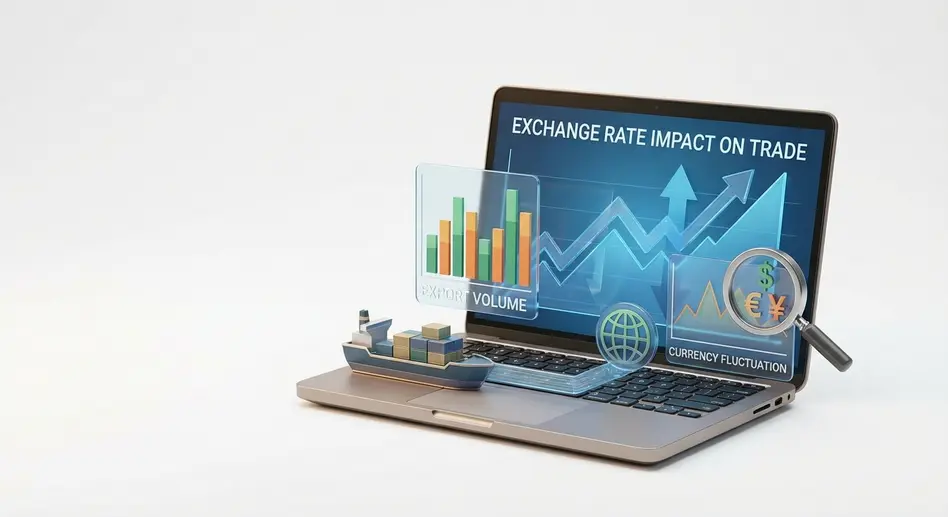
1. Direct effects on export volume and pricing
The most immediate Exchange rate impact on international trade is visible in how exports are priced for foreign buyers. A depreciating local currency generally makes a country’s exports more price-competitive abroad. For instance, if we analyze the USD to VND exchange rate forecast, a weakening of the Vietnamese Dong against the US Dollar means that US-based importers can purchase more Vietnamese goods for the same amount of dollars. This often leads to a surge in export volumes as international buyers seek better value.
Conversely, a strong domestic currency can act as a headwind for exporters. When the local currency appreciates, the cost of goods in foreign currency terms rises, potentially pricing manufacturers out of the market. To combat this, savvy businesses must master the import price calculation formula (often defined as Price in Foreign Currency = Price in Local Currency / Exchange Rate) to ensure they remain competitive without sacrificing their bottom line.
2. Impact on domestic production costs for manufacturers
While a weak currency might help sales volume, it can simultaneously wreak havoc on production costs. Many manufacturers depend on imported raw materials, machinery, or intermediate components. When the local currency loses value, the cost of these inputs increases, squeezing profit margins. This creates a double-edged sword: products are cheaper to sell abroad, but more expensive to make at home.
To navigate this volatility, firms often implement robust currency hedging strategies for exporters. These strategies, such as forward contracts or currency options, allow businesses to lock in exchange rates for future transactions. By doing so, they stabilize their internal budgeting and protect themselves from sudden spikes in material costs that could otherwise derail production schedules and financial forecasts.
3. The role of global inflation in currency shifts
Currency values do not exist in a vacuum; they are deeply influenced by global inflation rates and central bank policies. High domestic inflation typically leads to a depreciation of the currency as its purchasing power erodes. This macro-economic shift forces businesses to rethink their B2B payment terms currency risk. In long-term contracts, parties must decide whether to peg payments to a stable reserve currency like the USD or include price adjustment clauses that trigger when exchange rates move beyond a specific threshold.
Ultimately, the Exchange rate impact on international trade requires a proactive management style. Whether a business is sourcing electronics from Southeast Asia or exporting textiles to Europe, staying informed about geopolitical shifts and economic indicators is essential. By integrating currency risk management into their core operations, global enterprises can turn exchange rate volatility from a threat into a manageable variable of their international growth strategy.
Essential Import Price Calculation Formula for Traders
Navigating the complexities of global procurement requires more than just finding a reliable supplier; it demands a rigorous understanding of the total landed cost. For businesses operating in a globalized market, the exchange rate impact on international trade cannot be overstated. A minor fluctuation in currency value can instantly transform a high-margin product into a financial liability. To safeguard profitability, procurement managers must move beyond the sticker price and implement a comprehensive exchange rate impact on international trade analysis within their financial modeling.
1. Standard import price calculation formula components
The core of any procurement strategy is the import price calculation formula. This formula is designed to determine the ‘landed cost,’ which represents the total price of a product once it has arrived at the buyer’s doorstep. The standard components include the Unit Price (often quoted as FOB or EXW), International Freight charges, and Insurance. However, the most critical variable for Vietnamese importers is the currency conversion factor. When analyzing the USD to VND exchange rate forecast, traders must decide whether to use the spot rate or a projected rate to account for potential volatility during the shipping window.
A basic formula can be expressed as: Landed Cost = (Product Price + Freight + Insurance + Customs Duties) × Exchange Rate + Local Logistics + Processing Fees. By breaking down each component, teams can identify which costs are fixed and which are susceptible to market shifts, allowing for better negotiation with logistics providers and suppliers alike.
2. Incorporating shipping and customs fees into costs
Beyond the purchase price, shipping and customs duties represent the largest portion of the landed cost. These are often calculated based on the CIF (Cost, Insurance, and Freight) value. In many jurisdictions, customs duties are applied as a percentage of the CIF value converted into local currency. This is where B2B payment terms currency risk becomes a significant factor. If a contract stipulates payment upon delivery rather than at the time of order, the importer is exposed to currency fluctuations during the weeks the goods are in transit.
To manage this, savvy traders often look for currency hedging strategies for exporters and importers to lock in rates through forward contracts or options. Furthermore, local handling fees, terminal charges, and Value Added Tax (VAT) must be added after the customs clearance process. Accurate forecasting in this stage ensures that the retail or wholesale price set for the local market remains competitive while covering all overheads associated with the cross-border transaction.
3. Real-world calculation examples for procurement teams
To illustrate the application of these principles, consider a procurement team in Hanoi importing electronic components from a US-based supplier. If the unit cost is $100 and the freight/insurance adds $10, the total CIF value is $110. If the current exchange rate is 24,500 VND per USD, the base cost is 2,695,000 VND. However, if the customs duty is 10% and the VAT is 10%, the calculation must be sequential: the duty is applied to the CIF, and the VAT is applied to the (CIF + Duty) total.
If the USD strengthens by 2% by the time the payment is due, the cost in VND rises significantly. This demonstrates why understanding the exchange rate impact on international trade is vital. By using a standardized import price calculation formula, teams can run sensitivity analyses—testing ‘what-if’ scenarios where the currency fluctuates. This preparation allows firms to set ‘buffer’ margins or renegotiate B2B payment terms currency risk clauses with their partners. Ultimately, the goal is to move from reactive accounting to proactive financial strategy, ensuring that international trade remains a source of growth rather than a source of unforeseen loss.
USD to VND Exchange Rate Forecast: Trends for 2025
As the global economy transitions into 2025, the relationship between the US Dollar and the Vietnamese Dong remains a focal point for international investors and procurement managers. Navigating the USD to VND exchange rate forecast requires an understanding of both Vietnam’s macroeconomic stability and the shifting fiscal policies of the United States. With Vietnam’s status as a manufacturing powerhouse continuing to grow, the stability of its currency is no longer just a local concern but a vital metric for global supply chain cost management.
1. Key economic drivers for the USD/VND pair
The primary driver for the USD/VND trajectory in 2025 will be the State Bank of Vietnam’s (SBV) ability to manage foreign exchange reserves against a volatile global backdrop. Historically, the SBV has maintained a managed float regime, allowing for gradual depreciation to support export competitiveness while curbing inflation. The exchange rate impact on international trade is profound here, as a weaker Dong makes Vietnamese goods more attractive abroad but increases the cost of imported raw materials. According to the World Bank’s economic overview of Vietnam, the nation’s resilience depends heavily on its trade surplus and FDI inflows. In 2025, if the US Federal Reserve continues a cycle of interest rate cuts, the pressure on the Dong may ease, allowing the SBV more breathing room to support domestic credit growth without fearing massive capital outflows.
2. Quarterly USD to VND exchange rate forecast breakdown
Looking at the 2025 timeline, we anticipate distinct shifts across the four quarters. In Q1, the Lunar New Year often brings a surge in overseas remittances, which historically provides a temporary cushion for the VND. However, the USD to VND exchange rate forecast suggests that Q2 may see increased pressure as Vietnamese firms settle international debts and import inventories for the second half of the year. By Q3 and Q4, the focus will shift to the US economic performance. If the US avoids a hard landing, we expect the rate to stabilize. However, procurement teams should be prepared for a year-end range between 25,400 and 25,900 VND per USD, depending on the velocity of global trade recovery and commodity price fluctuations.
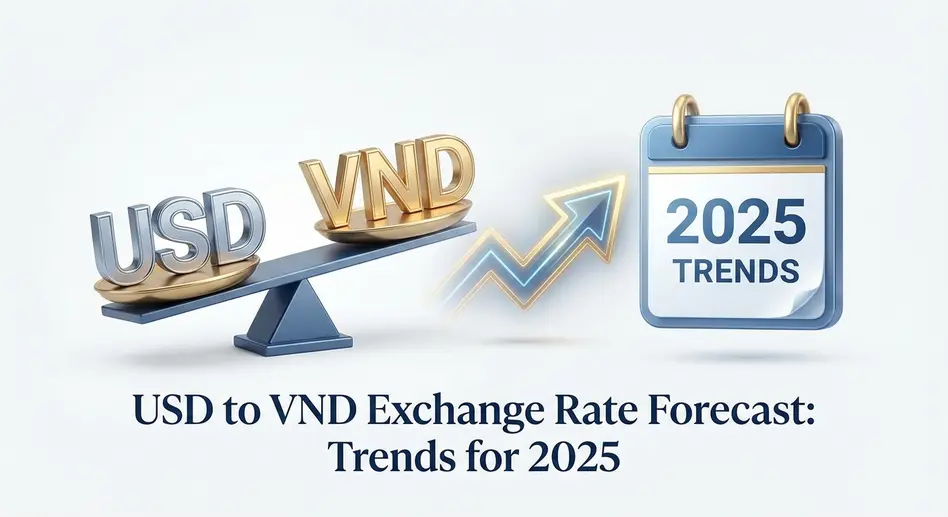
3. Strategic implications for Vietnam-based trade partners
For international businesses, the volatility in currency markets necessitates a proactive approach to financial planning. The exchange rate impact on international trade can quickly erode profit margins if not managed correctly. Importers must refine their import price calculation formula to include a buffer for currency fluctuations, ensuring that landed costs remain within sustainable limits. On the other side, implementing currency hedging strategies for exporters, such as forward contracts or currency swaps, can provide much-needed revenue certainty in a fluctuating market. Furthermore, buyers and sellers are increasingly revisiting their B2B payment terms currency risk clauses. In 2025, we expect to see more contracts denominated in local currencies or featuring “currency adjustment clauses” that allow for price renegotiation if the exchange rate moves beyond a pre-defined threshold. Staying ahead of these trends will be the difference between a profitable partnership and a financial setback in the Vietnamese market.
Effective Currency Hedging Strategies for Exporters
In the complex arena of global commerce, the volatility of foreign exchange markets remains one of the most significant hurdles for businesses. The Exchange rate impact on international trade can drastically alter the profitability of a contract between the time an invoice is issued and when payment is received. For exporters, a sudden strengthening of the home currency can lead to reduced revenue when converted back from foreign denominations. To navigate these turbulent waters, implementing robust currency hedging strategies for exporters is no longer optional—it is a financial necessity for maintaining price competitiveness and stabilizing cash flows.
1. Forward contracts vs. currency options explained
When dealing with international sales, one of the primary concerns for financial officers is the B2B payment terms currency risk. Many global contracts operate on 30, 60, or 90-day payment cycles. During this window, the value of the currency can shift significantly. To counter this, exporters often turn to forward contracts and currency options.
A forward contract is a customized agreement to exchange a specific amount of currency at a predetermined rate on a set future date. This effectively ‘locks in’ the revenue, providing absolute certainty for the exporter regardless of market fluctuations. On the other hand, currency options offer more flexibility. An option gives the exporter the right, but not the obligation, to exchange currency at a specific rate. This is particularly useful if the USD to VND exchange rate forecast suggests potential upside for the home currency, as it allows the exporter to benefit from favorable moves while being protected against unfavorable ones. Choosing between these depends on the company’s risk tolerance and the cost of the option premium.
2. Natural hedging through localized sourcing
Beyond financial derivatives, exporters can utilize ‘natural hedging’ to mitigate risks. This strategy involves aligning a company’s income and expenses in the same currency. For example, if a Vietnamese furniture manufacturer exports to the United States and receives payment in USD, they can naturally hedge their exposure by sourcing raw materials or machinery from suppliers who also accept USD. This reduces the need for frequent currency conversions and minimizes the impact of a volatile USD to VND exchange rate forecast.
To execute this effectively, businesses must employ a precise import price calculation formula that accounts for landed costs and currency shifts at the procurement stage. By balancing the inflow and outflow of foreign denominations, a business creates a buffer that absorbs shocks in the exchange market. This method is often preferred by small to medium-sized enterprises (SMEs) that may not have the banking facilities to manage complex derivative portfolios but still need to protect their margins against the Exchange rate impact on international trade.
3. Long-term benefits of currency hedging strategies for exporters
The primary advantage of adopting long-term currency hedging strategies for exporters is the ability to conduct financial planning with a high degree of predictability. When a business can forecast its domestic currency revenue with precision, it can make more confident decisions regarding capital expenditure, hiring, and expansion. Furthermore, hedging allows exporters to offer more stable pricing to their international clients. Instead of frequently adjusting prices due to currency swings—which can frustrate buyers—exporters can maintain consistent price lists, thereby strengthening long-term B2B relationships.
Ultimately, currency hedging is not about ‘beating the market’ or speculating for profit; it is about risk management. By neutralizing the B2B payment terms currency risk, exporters ensure that their business success is determined by the quality of their products and efficiency of their operations, rather than the unpredictable movements of the global forex market. In an era of geopolitical shifts and economic uncertainty, these strategies provide the financial foundation necessary for sustainable international growth.
Managing B2B Payment Terms and Currency Risk
In the landscape of global commerce, the exchange rate impact on international trade remains one of the most volatile variables for procurement managers and export directors. Fluctuations in currency values can silently erode profit margins, even when sales volume is high. Effective management of B2B payment terms requires a proactive strategy that balances competitive credit offers with financial security. This is particularly true in emerging markets where local currencies may experience sudden shifts against major reserve currencies like the US Dollar or the Euro.
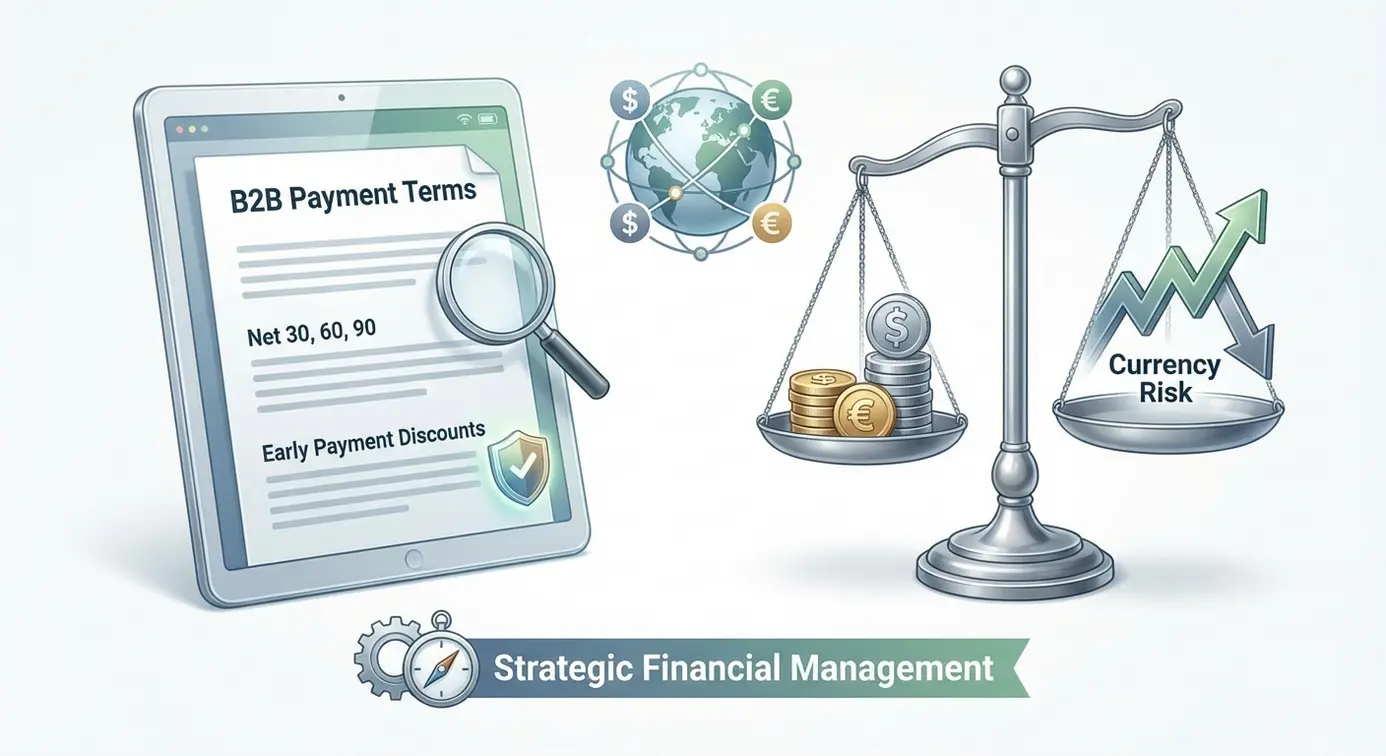
To navigate these complexities, businesses must integrate risk assessment directly into their contracting phase. By understanding the exchange rate impact on international trade, companies can better prepare for the financial uncertainties of the global market. Whether you are an importer looking to stabilize costs or an exporter aiming to secure receivables, the following strategies provide a framework for mitigating exposure.
1. Identifying B2B payment terms currency risk factors
The primary source of financial exposure in international trade is the time lag between the agreement of a price and the actual settlement of the invoice. This delay exposes both parties to transaction risk. For instance, in long-term supply contracts, B2B payment terms currency risk increases significantly when payment cycles exceed 60 or 90 days. During this period, macroeconomic shifts can drastically alter the value of the payment.
For businesses operating in Southeast Asia, monitoring the USD to VND exchange rate forecast is essential for setting realistic budget expectations. Factors such as interest rate differentials, inflation rates, and geopolitical stability all contribute to the volatility of these pairs. According to financial risk management standards, failure to account for these variables often leads to unexpected losses that could have been avoided with a more robust assessment of the payment timeline.
2. Protective clauses for currency adjustment in contracts
One of the most effective ways to minimize exposure is to embed protective language within the trade agreement. A Currency Adjustment Clause (CAC) allows for the contract price to be recalculated if the exchange rate moves beyond a pre-defined “neutral zone.” For example, if the currency fluctuates by more than 3%, the parties may agree to split the difference or adjust the final invoice amount accordingly.
When drafting these clauses, it is helpful to establish a clear import price calculation formula. This formula should specify the benchmark exchange rate (e.g., the central bank’s closing rate on the date of the Purchase Order) and the exact mechanism for adjustment. By formalizing this process, both the buyer and seller gain a level of predictability, ensuring that neither party is unfairly penalized by market movements that are beyond their control. This transparency is key to maintaining long-term supplier-buyer relationships during periods of high volatility.
3. Selecting the optimal invoicing currency for stability
Choosing which currency to invoice in is a strategic decision that determines who bears the risk. Invoicing in the exporter’s local currency shifts the risk to the buyer, while invoicing in the buyer’s currency shifts it to the exporter. Often, B2B partners compromise by using a “hard” currency like the USD or EUR to provide a stable middle ground. However, even this does not eliminate risk entirely.
To further safeguard operations, many firms are implementing robust currency hedging strategies for exporters. These may include forward contracts, which allow a business to lock in an exchange rate for a future date, or currency options that provide the right but not the obligation to exchange money at a set price. By utilizing these tools, businesses can ensure that the revenue they record at the time of sale is the revenue they actually receive in their bank account, regardless of how the broader market performs. Ultimately, the goal is to create a financial environment where trade can flourish without being held hostage by the unpredictability of foreign exchange markets.
Partner with Vietnam’s Leading Suppliers
Looking for reliable suppliers in Vietnam? Contact VietnamSuppliers.com today to connect with verified manufacturers and exporters across all industries.
—————————————
References
– currency fluctuations: https://www.investopedia.com/terms/e/exchangerate.asp
– USD to VND exchange rate forecast: https://www.reuters.com/markets/currencies/
– World Bank Vietnam Overview: https://www.worldbank.org/en/country/vietnam/overview
– Investopedia: Hedging Definition and Strategies: https://www.investopedia.com/terms/h/hedge.asp
– financial risk management standards: https://www.investopedia.com/terms/c/currencyrisk.asp