The Evolving Landscape of International Food Safety Regulations
The food industry is a realm of constant innovation and evolution, but perhaps nowhere is this dynamism more pronounced than in the landscape of international food safety regulations. For businesses engaged in food export, understanding and adhering to these ever-changing global standards is not merely a bureaucratic hurdle; it is a fundamental pillar of market access, brand reputation, and consumer trust. The intricate web of national, regional, and international mandates means that what was compliant yesterday might not be today. Staying meticulously updated is therefore paramount for exporters seeking to ensure continuous market access and avoid costly detentions, recalls, or reputational damage. Robust Food Export Quality Control Solutions are essential to navigate this complex regulatory environment successfully.

1. Key Regulatory Bodies & Their Requirements
At the heart of international food safety regulations are several influential bodies whose mandates shape global trade. In the United States, the Food and Drug Administration (FDA) governs a vast array of food products, imposing stringent requirements like the Food Safety Modernization Act (FSMA), which emphasizes preventive controls, supplier verification, and traceability. Exporters to the US market must adhere to rules on hazard analysis, risk-based preventive controls (HARPC), foreign supplier verification programs (FSVP), and facility registration.
Across the Atlantic, the European Food Safety Authority (EFSA) provides scientific advice and risk assessments that underpin the European Union’s comprehensive food law. The EU’s regulations are renowned for their strictness, covering everything from hygiene packages, specific directives for certain product categories (e.g., dairy, meat), allergen labeling, and maximum residue limits (MRLs) for pesticides and veterinary drugs. Compliance often necessitates robust Codex Alimentarius Commission standards for establishing food safety benchmarks, which often form the basis for national regulations. For many products, demonstrating HACCP certification food export is a non-negotiable requirement, proving a systematic approach to identifying and controlling food safety hazards.
In Canada, the Canadian Food Inspection Agency (CFIA) enforces regulations like the Safe Food for Canadians Regulations (SFCR), which require licensed food businesses to implement preventive control plans (PCPs), maintain traceability records, and adhere to specific labeling and packaging rules. Each of these bodies, while sharing common goals of public health protection, has distinct nuances in their regulatory frameworks, making detailed, market-specific knowledge indispensable.
2. Impact of Emerging Global Food Safety Trends and Standards
The dynamic nature of food safety isn’t just about new laws; it’s also driven by evolving scientific understanding, technological advancements, and shifting consumer expectations. Emerging trends are constantly reshaping global food safety standards. For instance, digitalization and blockchain technology are increasingly being adopted to enhance supply chain traceability, offering unprecedented transparency from farm to fork. This allows for quicker responses to contamination events and strengthens consumer trust.
Sustainability and ethical sourcing are also gaining prominence, with consumers and regulators alike demanding more environmentally responsible and socially equitable food production practices. This often translates into new requirements for certifications related to environmental impact, labor practices, and animal welfare. Furthermore, the focus on food fraud prevention—deliberate adulteration for economic gain—has led to stricter import controls and enhanced analytical testing. The demand for meticulous food quality inspection services for export is growing, encompassing not just microbial and chemical hazards, but also authenticity checks and origin verification. Exporters must anticipate these trends and proactively integrate them into their quality management systems to remain competitive and compliant.
3. Navigating Regional vs. International Compliance Differences
While international frameworks like those from the Codex Alimentarius Commission provide foundational guidelines, the real challenge for exporters lies in navigating the disparities between these overarching standards and specific regional or national compliance requirements. For example, a product might meet general international pathogen limits but fail to comply with a particular country’s stricter MRLs for a specific pesticide, or its unique labeling format requirements.
Regional blocs, such as the EU or ASEAN, often have harmonized internal standards, but these can still differ significantly from those of other major trading partners. This necessitates a granular understanding of each target market’s regulatory landscape. A robust supplier quality management food industry strategy is crucial here, extending compliance checks throughout the entire supply chain to ensure all inputs meet the destination market’s specific criteria. Exporters must invest in continuous regulatory monitoring, specialized training, and often, in-country representation or expert consultation to accurately interpret and implement diverse requirements. Failing to recognize these subtle yet critical differences can lead to costly non-compliance, jeopardizing entire shipments and long-term trade relationships. The continuous evolution of these standards means that vigilance and adaptability are not just desirable, but absolutely essential for successful food export.
Implementing Robust Food Quality Inspection Services for Export
In the competitive global marketplace, ensuring the quality and safety of food products for export is not just a regulatory requirement but a fundamental pillar of business success. Flaws can lead to costly rejections, recalls, and damage to brand reputation. Implementing robust Food Export Quality Control Solutions is paramount, encompassing a systematic approach from farm to consumer. This section delves into practical food quality inspection services for export, offering strategies to maintain product integrity and navigate complex international food safety regulations effectively.
1. Types of Inspection: Pre-shipment, Loading, Destination Checks
A comprehensive food quality inspection strategy for export involves multiple critical checkpoints to mitigate risks at various stages.
- Pre-shipment Inspection (PSI): This crucial stage, conducted post-production, verifies products meet buyer specifications, contractual agreements, and relevant international food safety regulations. Inspectors examine visual appearance, labeling, packaging integrity, weight, and quantity. Critical checks include temperature verification for perishables, organoleptic assessments, and sampling for lab analysis (microbiological, heavy metals, pesticide residues). Early detection prevents costly issues.
- Loading Supervision: Ensures the correct quantity is loaded, the container is clean, dry, and fit for purpose, and proper loading techniques prevent damage. Seal integrity and documentation are verified, safeguarding products in transit.
- Destination Checks: Upon arrival, these checks confirm the shipment’s integrity, visible damage absence, and proper maintenance of required conditions for temperature-sensitive products. Any discrepancies are documented, providing evidence for claims or process improvements. This final step is crucial for effective food quality inspection services for export.
2. Leveraging Advanced Technologies in Food Inspection (AI, IoT)
The future of Food Export Quality Control Solutions is intrinsically linked with technological advancement. Integrating Artificial Intelligence (AI) and the Internet of Things (IoT) can significantly enhance the accuracy, efficiency, and traceability of food quality inspections.
- AI for Visual Inspection and Data Analysis: AI-powered vision systems rapidly analyze food products for defects, irregularities, or foreign materials with greater consistency and speed than human inspectors. Machine learning algorithms identify subtle deviations in color, shape, or texture, improving detection of ripeness or damage. AI also processes inspection data to identify trends, predict potential issues, and optimize protocols.
- IoT for Real-time Monitoring: IoT sensors embedded within packaging or transport vehicles provide real-time data on critical parameters like temperature and humidity. For perishable exports, continuous cold chain monitoring from farm to destination is invaluable. Anomalies trigger immediate alerts, allowing for swift corrective actions. This transparency strengthens compliance with international food safety regulations and builds importer confidence, moving food quality inspection services for export towards proactive prevention.
3. Choosing a Reliable Third-Party Food Inspection Partner
Selecting the right third-party inspection partner is a strategic decision impacting your food export success. A reputable partner offers specialized expertise, impartiality, and global reach, becoming an extension of your supplier quality management food industry efforts.
Key considerations include:
- Accreditation and Certifications: Ensure the company is accredited by recognized international bodies (e.g., ISO/IEC 17020) and inspectors are knowledgeable about specific products and international standards like those set by the Codex Alimentarius Commission and importing country regulations.
- Expertise and Experience: Look for extensive experience in the food industry, deep understanding of your product category, and proficiency in implementing HACCP certification food export requirements.
- Technological Integration: A modern partner leverages advanced tools like AI and IoT for precise, efficient services and better data.
- Global Network and Local Presence: A wide international network ensures consistent service quality across sourcing and destination markets, simplifying logistics.
- Reporting and Communication: Clear, comprehensive, and timely reporting with actionable insights and open communication is essential.
By partnering with a trusted firm, exporters gain peace of mind, ensure compliance, and consistently deliver high-quality products, enhancing brand reputation and avoiding costly trade disputes. Effective Food Export Quality Control Solutions are an investment that pays dividends in market access and sustained growth.
Achieving HACCP Certification for Food Export Success
In the competitive global marketplace, ensuring the safety and quality of food products is paramount, especially for exporters. For businesses aiming to thrive in international trade, implementing robust Food Export Quality Control Solutions is not just a best practice, but a critical necessity. Among these, Hazard Analysis and Critical Control Points (HACCP) certification stands out as a globally recognized standard that guarantees food safety from production to consumption. Achieving this certification not only streamlines export processes by meeting stringent international food safety regulations but also significantly builds consumer and buyer trust, paving the way for sustained success in export markets.
1. Understanding HACCP Principles and Their Practical Implementation
HACCP is a proactive, preventative system designed to identify, evaluate, and control food safety hazards. Unlike traditional quality control methods that rely on end-product testing, HACCP focuses on preventing hazards at every stage of the food production process. This systematic approach is essential for any entity involved in the food supply chain, particularly those engaged in food quality inspection services for export.
The HACCP system is built upon seven core principles, which are universally accepted and applied:
- Conduct a hazard analysis: Identify potential biological, chemical, and physical hazards that could occur in the food production process.
- Determine Critical Control Points (CCPs): Pinpoint the points in the process where control can be applied to prevent or eliminate a food safety hazard or reduce it to an acceptable level.
- Establish critical limits: Set maximum or minimum values that must be met at a CCP to prevent or reduce a hazard.
- Establish monitoring procedures: Implement systematic observations or measurements to assess whether a CCP is under control.
- Establish corrective actions: Define procedures to follow when monitoring indicates a deviation from a critical limit.
- Establish verification procedures: Confirm that the HACCP system is working effectively through regular reviews and audits.
- Establish record-keeping and documentation procedures: Maintain accurate records of all HACCP procedures and their implementation.
Implementing these HACCP principles in practice involves a detailed analysis of every step, from raw material sourcing and processing to packaging and distribution. It necessitates a deep understanding of potential risks and the establishment of robust controls, ensuring compliance with evolving international food safety regulations and fostering effective supplier quality management food industry practices.
2. Key Benefits of HACCP Certification for Food Exporters
Obtaining HACCP certification offers a multitude of advantages that are crucial for food exporters aiming for global reach and sustained growth:
- Enhanced Market Access: Many countries, especially those with stringent import requirements, mandate or highly favor HACCP certification. It serves as a passport, opening doors to new markets that might otherwise be inaccessible due to complex international food safety regulations.
- Increased Consumer and Buyer Trust: Certification signals a company’s unwavering commitment to food safety, building confidence among international buyers, retailers, and ultimately, the end consumers. This trust is invaluable for brand reputation and loyalty.
- Operational Efficiency and Cost Savings: By proactively identifying and controlling hazards, HACCP minimizes the risk of product recalls, foodborne illness outbreaks, and waste. This preventative approach leads to significant cost savings in the long run by reducing potential liabilities and operational disruptions.
- Competitive Advantage: In a crowded global market, HACCP certification differentiates exporters from competitors, positioning them as reliable and responsible suppliers of safe food products. This is particularly relevant for businesses seeking premium segments or partners demanding high standards of food quality inspection services for export.
- Improved Regulatory Compliance: The structured framework of HACCP helps businesses consistently meet and exceed various national and international food safety standards, simplifying customs clearance and reducing the likelihood of rejected shipments.
3. Steps to Successful HACCP Certification and Maintenance
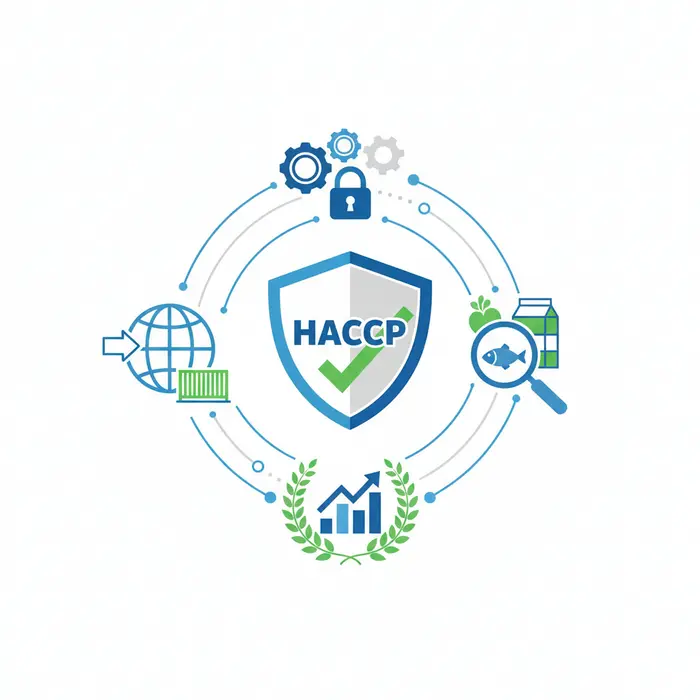
Achieving HACCP certification food export requires a systematic approach and unwavering commitment. Here are the general steps involved:
- Secure Management Commitment: Leadership support is crucial for allocating necessary resources, time, and training for HACCP implementation.
- Assemble a HACCP Team: Form a multidisciplinary team with expertise in various aspects of food production, quality control, and food science.
- Conduct a Comprehensive Hazard Analysis: Systematically identify all potential hazards and assess their likelihood and severity.
- Develop the HACCP Plan: Based on the hazard analysis, document the seven HACCP principles, detailing CCPs, critical limits, monitoring procedures, corrective actions, verification, and record-keeping.
- Implement the Plan: Put the HACCP plan into action across all relevant operational stages, ensuring all staff are trained and understand their roles.
- Monitor and Verify: Continuously monitor CCPs and regularly verify the effectiveness of the HACCP system through internal audits and testing.
- Seek External Certification: Engage a recognized third-party certification body to audit your HACCP system. Upon successful audit, your organization will be awarded HACCP certification food export.
- Maintain and Review: HACCP is not a one-time effort. Regular reviews, updates, and continuous improvement are essential to ensure the system remains effective and compliant with evolving standards and product changes. This includes ongoing supplier quality management food industry practices and internal system audits.
By diligently following these steps, food exporters can not only achieve HACCP certification but also embed a culture of food safety excellence within their operations. This dedication to quality and safety is the bedrock for long-term success in the dynamic global food trade.
Strategic Supplier Quality Management in the Food Industry
In the highly competitive global market, ensuring superior Food Export Quality Control Solutions is paramount for success. A critical, yet often underestimated, pillar of this endeavor is robust supplier quality management. Effective supplier management in the food industry extends beyond simple procurement; it is a strategic imperative that directly contributes to overall export quality, mitigating risks directly from the source, and ensuring compliance with stringent international food safety regulations. By proactively managing suppliers, food exporters can safeguard their brand reputation, avoid costly recalls, and gain a competitive edge in international trade.
1. Establishing Robust Supplier Vetting and Qualification Processes
The foundation of effective supplier quality management lies in a comprehensive vetting and qualification process. This initial stage is crucial for identifying partners who can consistently meet defined quality standards and regulatory requirements. It involves more than just price comparison; it’s a deep dive into a potential supplier’s operational capabilities, quality control systems, and past performance. Key elements include rigorous documentation reviews, on-site audits, and critical risk assessments to evaluate factors such as production capacity, hygiene protocols, traceability systems, and adherence to specific standards like HACCP (Hazard Analysis and Critical Control Points) and ISO 22000. For food products destined for export, this process must specifically confirm compliance with destination country regulations and certifications. Employing specialized food quality inspection services for export during the qualification phase can provide an independent and objective assessment, ensuring that only suppliers capable of consistently delivering high-quality, safe ingredients and products are brought into the supply chain. This proactive approach significantly reduces the likelihood of quality deviations down the line, saving time and resources that would otherwise be spent on rectifying issues.
2. Ongoing Supplier Audits and Performance Monitoring Strategies
Supplier qualification is not a one-time event; it necessitates continuous oversight through ongoing audits and performance monitoring. Once a supplier is approved, a structured program of periodic and unannounced audits is essential to verify continued compliance with contractual agreements, quality specifications, and evolving international food safety regulations. These audits assess operational consistency, adherence to quality management systems, corrective action implementation, and environmental controls. Performance monitoring goes hand-in-hand with audits, utilizing key performance indicators (KPIs) such as defect rates, on-time delivery, complaint resolution times, and adherence to lot specifications. Regular data analysis from these KPIs allows food manufacturers to identify trends, potential risks, and areas for improvement before they escalate into major problems. For example, consistent monitoring helps ensure that suppliers maintain their HACCP certification food export standards, which are often non-negotiable for international markets. This proactive monitoring forms a vital part of supplier quality management food industry practices, allowing for timely intervention and corrective actions, thereby sustaining high export quality standards and mitigating supply chain risks effectively.
3. Building Collaborative Supplier Relationships for Enhanced Quality Assurance
Beyond audits and monitoring, fostering collaborative relationships with key suppliers is a powerful strategy for enhancing quality assurance and driving continuous improvement. A partnership approach, rather than a purely transactional one, encourages open communication, shared responsibility, and mutual growth. This involves joint problem-solving initiatives, sharing technical expertise, and even co-developing quality improvement programs. For instance, providing training to suppliers on new regulatory requirements or best practices for specific processes can elevate their capabilities and, by extension, the quality of inputs received. Establishing clear communication channels for feedback, performance reviews, and strategic planning ensures that both parties are aligned on quality objectives and export market expectations. When suppliers feel valued and are integrated into the exporter’s quality ecosystem, they are more likely to invest in their own quality systems, be transparent about potential issues, and actively contribute to finding innovative Food Export Quality Control Solutions. This collaborative synergy not only reduces risks and improves consistency but also fosters a resilient and adaptable supply chain capable of meeting the dynamic demands of the global food market.
Future-Proofing Your Food Export Quality Control Solutions
The global food trade is an ever-evolving landscape, marked by increasing consumer demands, complex supply chains, and stringent international food safety regulations. For businesses aiming for long-term export success, merely reacting to quality control issues is no longer sufficient. Future-proofing your Food Export Quality Control Solutions demands a proactive, foresight-driven approach. This involves anticipating emerging challenges and embracing innovative technologies to maintain impeccable food quality and safety across borders. From adapting to environmental shifts to harnessing cutting-edge digital tools, understanding these future trends is paramount for sustained growth and reputation.

The imperative for robust food quality inspection services for export is growing. As global markets become more interconnected, and consumer expectations for transparency and ethical sourcing rise, traditional quality assurance methods are evolving. Embracing advanced strategies and tools is key to ensuring compliance with diverse international food safety regulations and maintaining a competitive edge.
1. Leveraging Data Analytics for Proactive Quality Control and Risk Assessment
The era of big data offers unprecedented opportunities for transforming food quality control. Beyond reactive post-incident analysis, advanced data analytics empower businesses with proactive risk assessment. By analyzing vast data – from farm conditions and processing parameters to logistics and consumer feedback – companies can identify patterns, predict quality deviations, and even foresee outbreaks. Robust data analytics frameworks allow for predictive maintenance, optimized storage, and early contamination detection. This data-driven approach enhances current Food Export Quality Control Solutions, enabling targeted interventions and resource allocation. It provides a strategic advantage in meeting evolving international food safety regulations and mitigating losses from product recalls.
2. Adapting to Climate Change Impacts on Food Supply Chains and Quality
Climate change presents a significant and escalating threat to global food supply chains and, consequently, to food quality and safety. Extreme weather events, altered growing seasons, water scarcity, and new pest and disease patterns directly impact crop yields, nutritional content, and introduce novel contaminants. Exporters must develop resilient strategies. This includes diversifying sourcing regions, investing in climate-smart agriculture practices, and implementing enhanced monitoring protocols for raw materials. For instance, changes in rainfall patterns might increase mycotoxin risks in certain grains, requiring more rigorous testing. Adapting to these shifts will necessitate greater collaboration with upstream suppliers, enhancing supplier quality management food industry practices to ensure consistency and safety despite environmental volatility. Proactive risk management and continuous assessment of environmental factors will be integral for effective Food Export Quality Control Solutions.
3. The Role of Blockchain and AI in Enhanced Food Traceability and Trust
Building consumer trust and ensuring end-to-end traceability are critical for future food export success. Blockchain technology offers an immutable, transparent, and decentralized ledger to record every step of a food product’s journey, from farm to fork. This allows for instant verification of origin, processing history, and certification status, such as HACCP certification food export standards. Should a quality issue arise, blockchain enables rapid and precise tracing, significantly reducing the scope and impact of recalls. Complementing blockchain, Artificial intelligence (AI) can analyze real-time data from sensors, cameras, and other IoT devices across the supply chain. AI-powered systems can detect anomalies, predict spoilage, and even verify product authenticity, providing an additional layer of assurance. Together, these technologies not only bolster food safety and compliance with international food safety regulations but also empower consumers with unprecedented transparency, fostering greater confidence in imported food products. Adopting these advanced tools is not just about compliance; it’s about establishing a competitive edge in a global market increasingly valuing transparency and integrity.
The future of food export quality control is dynamic and challenging, yet rich with innovation. By strategically embracing data analytics, adapting to environmental changes, and integrating transformative technologies like blockchain and AI, food exporters can not only meet but exceed future demands. These proactive strategies will fortify supply chains, enhance product integrity, and secure a prosperous position in the international marketplace.
Partner with Vietnam’s Leading Suppliers
Looking for reliable suppliers in Vietnam? Contact VietnamSuppliers.com today to connect with verified manufacturers and exporters across all industries.
—————————————
References
– Codex Alimentarius Commission: https://www.fao.org/fao-who-codexalimentarius/en/
– Codex Alimentarius Commission: https://www.fao.org/fao-who-codexalimentarius/en/
– HACCP principles: https://www.fda.gov/food/guidance-regulation-food-and-dietary-supplements/hazard-analysis-and-critical-control-point-haccp
– FDA FSMA Foreign Supplier Verification Programs: https://www.fda.gov/food/food-safety-modernization-act-fsma/fsma-final-rule-foreign-supplier-verification-programs-fsvp-importers-food-humans-and-animals
– FAO: Climate Change Impact on Food Safety and Control: https://www.fao.org/fao-stories/article/en/c/1283733/