
Introduction to FAS Incoterms 2020
International trade, with its vast complexities, relies heavily on clear communication and standardized rules to facilitate smooth transactions across borders. Among these crucial standards, Incoterms stand out as a universal language for defining the responsibilities of buyers and sellers for the delivery of goods. Published by the International Chamber of Commerce (ICC), these rules clarify who is responsible for costs, risks, and tasks such as customs clearance, insurance, and freight at various stages of the shipping process. This section provides a foundational understanding of Incoterms and specifically defines ‘Free Alongside Ship’ (FAS), setting the stage for its importance in international trade. We will delve into the core concept of FAS Incoterms 2020, outlining its specific definitions and practical implications for businesses engaged in global commerce, particularly for heavy or bulk cargo.
1. What are Incoterms and Why Do They Matter?
Incoterms, an acronym for International Commercial Terms, are a globally recognized set of rules published by the International Chamber of Commerce (ICC). Their primary purpose is to clearly define the responsibilities of sellers and buyers for the delivery of goods under sales contracts. Since their inception in 1936, Incoterms have been periodically updated to reflect changes in global trade practices, with the latest revision being Incoterms 2020. These rules address crucial aspects of international transactions, including:
- Costs: Who pays for transportation, insurance, loading, unloading, and customs duties.
- Risks: When and where the risk of loss or damage to goods transfers from the seller to the buyer.
- Responsibilities: Who is responsible for handling export and import customs formalities, obtaining licenses, and security-related clearances.
By integrating Incoterms into sales contracts, businesses can avoid costly misunderstandings, disputes, and legal complications, ensuring greater certainty and efficiency in their international dealings. They act as a common lexicon, streamlining communication and reducing potential friction between parties in different countries.
2. Free Alongside Ship (FAS) Definition: The Core Concept
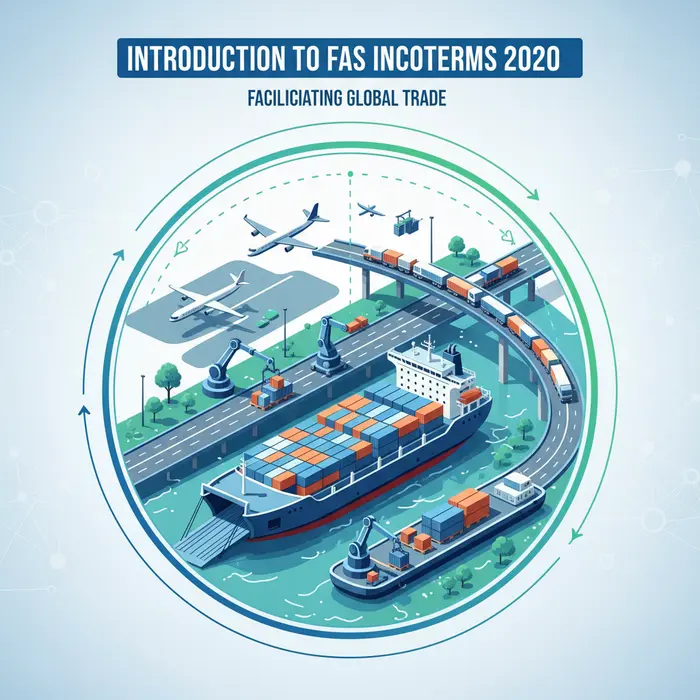
The term “Free Alongside Ship” (FAS) signifies a specific point of delivery and transfer of risk within the Incoterms 2020 framework. Under FAS Incoterms 2020, the seller fulfills their obligation when the goods are placed alongside the vessel (e.g., on a quay or barge) nominated by the buyer at the named port of shipment. This means the goods are physically ready for loading onto the ship.
Let’s break down the Free Alongside Ship definition and associated FAS Incoterms responsibilities:
- Seller’s Responsibilities: The seller is responsible for bringing the goods to the named port of shipment and placing them alongside the vessel. This includes all costs and risks associated with transporting the goods from their premises to this point, including export packaging, inland transport to the port, and export customs clearance. Once the goods are alongside the vessel, the seller has completed their delivery obligation.
- Buyer’s Responsibilities: From the moment the goods are alongside the ship, the buyer assumes all subsequent costs and risks. This includes the cost of loading the goods onto the vessel, sea freight, insurance (if desired), discharge at the destination port, import customs clearance, and onward transport to the final destination. Therefore, the FAS Incoterms 2020 costs for the buyer are significantly higher than for the seller, as they cover the main carriage and destination charges.
FAS is primarily used for heavy or bulk cargo that does not fit into standard containers, such as machinery, timber, or grain, where the goods are typically placed on the dock directly next to the ship’s loading area rather than inside a container terminal.
3. Key Changes and Considerations for FAS Incoterms 2020
While FAS Incoterms 2020 retains its fundamental structure from previous versions, the 2020 rules emphasize clarity and provide more detailed guidance on several aspects common to all Incoterms. For FAS, specifically, the core responsibility transfer point – alongside the vessel at the port of shipment – remains unchanged. However, understanding the broader context of Incoterms 2020 is vital. The latest version focuses on:
- Security-related requirements: Increased emphasis on security in transport, specifying which party is responsible for security checks and related costs up to their point of delivery. For FAS, the seller is responsible for these up to the point goods are alongside the ship.
- Cost clarification: The 2020 rules provide a clearer articulation of cost allocation between seller and buyer, helping to prevent hidden charges or disputes. All costs before the goods are alongside the vessel are the seller’s, and all costs from that point onwards are the buyer’s.
- Insurance (not applicable to FAS mandate): While FAS does not mandate insurance, it clarifies that if insurance is purchased, its scope should be clearly defined.
A common point of comparison is FAS vs FOB Incoterms. The crucial distinction lies in the point of risk transfer. Under FAS, risk transfers when the goods are alongside the vessel. Under FOB (Free On Board), risk transfers when the goods are on board the vessel. This means the cost and risk of loading the goods onto the ship fall on the buyer in FAS, whereas they fall on the seller in FOB. Consequently, FAS places more responsibility and cost on the buyer for the initial loading phase. This makes FAS a less common choice than FOB for containerized cargo but remains relevant for specialized bulk or oversized shipments where the buyer has direct control over the vessel and loading operations. When considering FAS Incoterms 2020, it’s paramount for both parties to clearly name the port of shipment and understand their respective obligations to ensure a smooth and predictable international trade transaction.
FAS Incoterms Responsibilities: A Deep Dive for 2020
In the complex world of international trade, clarity regarding shipping responsibilities is paramount. Incoterms (International Commercial Terms) provide a globally recognized framework for defining these obligations, ensuring smoother transactions and minimizing disputes. Among the various Incoterms rules, FAS, or “Free Alongside Ship,” stands out, particularly for industries dealing with bulk cargo, heavy lift, or non-containerized goods. Understanding the precise obligations and duties of both the buyer and seller under FAS Incoterms 2020 is crucial for efficient logistics and cost management. This deep dive clarifies who is responsible for what at each stage of the shipping process, from the point of origin to the final destination, specifically under the 2020 rules.
1. Seller’s Responsibilities: From Origin to Alongside Ship
Under FAS Incoterms 2020, the seller bears a significant portion of the initial logistics, ensuring the goods are ready for international transit up to a critical point. The core “Free Alongside Ship” definition dictates that the seller is responsible for all costs and risks until the goods are placed alongside the vessel nominated by the buyer at the named port of shipment. This includes a series of specific obligations:
- Export Packaging and Marking: The seller must ensure the goods are properly packed and marked for export, suitable for the intended mode of transport and handling.
- Pre-carriage and Delivery to Port: This involves arranging and paying for the inland transportation of the goods from their factory or warehouse to the named port of shipment.
- Export Customs Clearance: A key responsibility of the seller is to handle all export formalities. This includes obtaining any necessary export licenses, completing security clearances, and paying any duties or taxes associated with exporting the goods. They must also provide the buyer with proof of delivery alongside the ship.
- Placement Alongside Vessel: The most defining duty is physically delivering and placing the goods alongside the buyer’s nominated vessel. This means the goods are on the quay (dock) or in barges ready for loading by the buyer. The seller ensures the goods are available for the buyer to load.
All costs associated with these activities, including inland freight, terminal handling charges at origin, and export duties, are borne by the seller. The seller’s liability for the goods ends once they are placed alongside the ship.
2. Buyer’s Responsibilities: From Alongside Ship to Destination
Once the goods have been placed alongside the vessel at the named port of shipment, the responsibility for the cargo – both in terms of cost and risk – shifts entirely to the buyer. This marks the beginning of the buyer’s extensive obligations under FAS Incoterms 2020, covering the remainder of the shipping journey to the final destination. The buyer’s duties include:
- Loading onto Vessel: The buyer is responsible for arranging and paying for the loading of the goods from the quay or barge onto the nominated vessel.
- Main Carriage (Ocean Freight): The buyer must contract and pay for the main international carriage, such as ocean freight, to transport the goods from the port of shipment to the port of destination.
- Insurance: While not mandatory under FAS, it is highly recommended that the buyer secures marine insurance coverage for the main carriage, as the risk of loss or damage transfers to them once the goods are alongside the vessel.
- Discharge at Destination Port: The buyer is responsible for arranging and paying for the unloading of the goods from the vessel at the port of destination.
- Import Customs Clearance: All import formalities, including obtaining import licenses, security clearances, and paying import duties, taxes, and other official charges, are the sole responsibility of the buyer in the destination country.
- Onward Carriage to Final Destination: From the port of destination, the buyer arranges and pays for the inland transportation to the ultimate delivery point, as well as any final unloading.
Essentially, every cost incurred from the moment the goods are alongside the ship, including freight, insurance, destination charges, and import duties, falls squarely on the buyer’s shoulders.
3. Transfer of Risk and Cost: The Critical Point in FAS
The “transfer of risk and cost” is arguably the most crucial aspect of any Incoterms rule, and for FAS, this point is explicitly defined: it occurs when the goods are placed alongside the vessel at the named port of shipment. This means that from the moment the goods touch the quay or are placed in a barge next to the ship, the seller’s responsibility for potential loss or damage ends, and the buyer assumes all subsequent risks and costs.
For example, if the goods are damaged while being loaded onto the vessel, or if there’s an incident during the main ocean voyage, the buyer bears the financial burden. Conversely, any damage or loss occurring during inland transport to the port of shipment or while awaiting placement alongside the ship would be the seller’s responsibility. This clear demarcation is what makes FAS Incoterms 2020 costs predictable for both parties.
This principle also highlights a key difference between FAS and FOB (Free On Board) Incoterms. While both are suitable for non-containerized cargo, FOB transfers risk and cost when the goods are *on board* the vessel, typically once they cross the ship’s rail. FAS, by contrast, shifts this liability earlier, when the goods are merely *alongside* the vessel. This subtle but significant distinction makes FAS particularly appealing for buyers who prefer to have greater control over the loading process and main carriage, or for sellers who wish to limit their liability once the goods are at the port and accessible to the buyer’s carrier. Therefore, understanding the Free Alongside Ship definition and its implications for risk transfer is vital for managing supply chain liabilities effectively.
Understanding FAS Incoterms 2020 Costs
Navigating international trade requires a precise understanding of Incoterms, and FAS Incoterms 2020 (Free Alongside Ship) is no exception. This rule delineates the exact point where responsibility and costs transfer from the seller to the buyer, specifically at the port of shipment. While seemingly straightforward, the financial implications of FAS can be intricate, requiring both parties to meticulously understand their obligations to avoid unexpected expenses. This section will break down the financial responsibilities associated with FAS, detailing which costs are borne by the seller and which by the buyer, from the initial loading to final delivery, and how to mitigate potential hidden charges.
Under FAS Incoterms 2020, the seller completes their delivery obligation when the goods are placed alongside the vessel nominated by the buyer at the named port of shipment. From this point onwards, all risk of loss or damage to the goods, as well as all costs, are transferred to the buyer. This clear delineation makes FAS a popular choice for bulk cargo, heavy lift, or non-containerized goods, though it is less common for containerized shipments where FOB (Free On Board) Incoterms are often preferred due to the different loading dynamics.

1. Costs Borne by the Seller Under FAS
The seller’s primary responsibility under FAS Incoterms 2020 is to deliver the goods alongside the vessel at the agreed port of shipment, cleared for export. This means the seller must cover all costs up to that point. Key FAS Incoterms responsibilities for the seller include:
- Manufacturing/Procurement Costs: The cost of producing or acquiring the goods themselves.
- Packaging Costs: Expenses related to standard commercial packaging suitable for export.
- Quality Control and Inspection: Any costs associated with ensuring the goods meet contractual specifications.
- Inland Transportation to Port: The expense of transporting the goods from the seller’s premises to the named port of shipment.
- Export Customs Clearance: All fees, duties, taxes, and charges associated with clearing the goods for export in the origin country. This includes export licenses, security checks, and any other official authorizations.
- Placing Goods Alongside Vessel: The cost of moving the goods to the quay or barge alongside the nominated vessel. This is the crucial point of transfer, defining the Free Alongside Ship definition.
- Pre-shipment Documentation: Costs for preparing necessary documents like the commercial invoice, packing list, and proof of delivery alongside the vessel.
2. Costs Borne by the Buyer Under FAS
Once the goods are placed alongside the vessel, the buyer assumes all subsequent FAS Incoterms 2020 costs and risks. This includes the majority of the shipping journey from the port of loading to the final destination. The buyer’s financial responsibilities encompass:
- Loading Costs: Unlike FAS vs FOB Incoterms, where the seller typically covers loading onto the vessel, under FAS, the buyer is responsible for the cost of loading the goods onto the nominated vessel.
- Main Carriage Freight: The primary cost of shipping the goods from the port of loading to the port of destination, whether by ocean freight or air freight.
- Marine Insurance: While not mandatory under FAS, it is highly advisable for the buyer to arrange and pay for marine insurance to protect against loss or damage during the main carriage, as risk transfers at the port of shipment.
- Unloading Costs at Destination: Expenses incurred for unloading the goods from the vessel at the port of destination.
- Import Customs Clearance: All duties, taxes, fees, and charges associated with importing the goods into the destination country, including import licenses and permits.
- Inland Transportation at Destination: The cost of transporting the goods from the port of destination to the buyer’s final warehouse or facility.
- Post-shipment Documentation: Costs for any additional documents required at the destination or for final delivery.
3. Hidden Costs and How to Avoid Them in FAS Transactions
Despite the clarity of Incoterms, hidden costs can sometimes emerge in FAS transactions, often stemming from miscommunication or unforeseen delays. Being aware of these potential pitfalls and planning proactively can save significant expenses:
- Demurrage and Detention Charges: If the buyer’s vessel is delayed or fails to arrive on time, goods placed alongside the ship might incur port storage fees (demurrage) or charges for holding equipment (detention). To avoid this, clear communication and close coordination between buyer, seller, and carrier regarding vessel schedules are paramount.
- Pre-Carriage Delays: If the seller delivers the goods too early and the vessel isn’t ready, storage fees at the port might arise. Conversely, late delivery by the seller could lead to the buyer missing their nominated vessel, resulting in rescheduled shipping costs and potential contract penalties. Precise timing and buffer periods are essential.
- Documentation Errors: Incorrect or incomplete documentation can lead to customs delays, fines, or even seizure of goods at either end. Both parties must ensure all paperwork (commercial invoice, packing list, bill of lading instructions, export/import permits) is accurate and submitted promptly.
- Currency Fluctuations: If the contract is in a currency different from either party’s local currency, significant exchange rate changes between contract signing and payment can impact costs. Hedging strategies or clear currency clauses in the contract can mitigate this risk.
- Loading Equipment Costs: While the buyer is responsible for loading, specific equipment might be needed for particular types of cargo. If this isn’t clearly defined, disputes over who pays for specialized cranes or rigging could arise. All such details should be pre-agreed in the sales contract.
To avoid these hidden costs, a robust sales contract, clear communication channels between all parties (seller, buyer, freight forwarder, and carrier), and meticulous planning are indispensable. Due diligence in selecting reliable partners and understanding their respective roles ensures a smooth and cost-effective FAS transaction.
FAS vs. FOB Incoterms: A Critical Comparison
Navigating the complexities of international trade requires a precise understanding of shipping terms. Among the most frequently used, and often confused, are Free Alongside Ship (FAS) and Free On Board (FOB) Incoterms. Both terms are specific to sea and inland waterway transport, dictating critical points of responsibility, cost, and risk transfer between sellers (exporters) and buyers (importers). This analysis aims to dissect the similarities and, more importantly, the key differences between FAS and FOB, empowering readers to select the most appropriate term for their unique shipping requirements.
1. Key Differences in Delivery Point and Risk Transfer
The fundamental distinction between FAS Incoterms 2020 and FOB lies in the exact point where the seller completes their delivery obligation and where the risk of loss or damage to the goods transfers to the buyer. Understanding this is paramount for managing liabilities and insurance.
The International Chamber of Commerce (ICC) defines Incoterms to standardize these crucial points. Under Free Alongside Ship (FAS), the seller’s responsibility and risk transfer once the goods are placed alongside the vessel (e.g., on a quay or barge) nominated by the buyer at the named port of shipment. The seller handles all costs and risks up to this point, including export clearance. However, the buyer bears all costs and risks of loss or damage from that moment, crucially including the loading onto the vessel, securing them, and arranging for main carriage.
In contrast, under Free On Board (FOB), the seller’s obligation is more extensive. The seller delivers the goods, cleared for export, by placing them *on board* the vessel nominated by the buyer at the named port of shipment. Risk transfers when the goods are physically on board the ship. This means the seller is responsible for the costs and risks associated with loading the goods onto the vessel. From that point, the buyer assumes all subsequent costs and risks. Therefore, the primary difference lies in the ‘loading onto the vessel’ phase: with FAS, this is the buyer’s responsibility; with FOB, it’s the seller’s. This directly impacts FAS Incoterms responsibilities versus FOB responsibilities, particularly regarding who pays for stevedoring and loading charges.
2. When to Choose FAS Over FOB (and Vice Versa)
The choice between FAS and FOB largely depends on the nature of the cargo, the capabilities of the parties involved, and the specific port logistics. Recognizing when each term is most suitable is key to optimizing shipping operations and minimizing unexpected costs.
Choosing FAS (Free Alongside Ship): FAS is often preferred for heavy-lift cargo, bulk commodities (such as grains, ores), or project cargo that requires specialized loading equipment or procedures. In these scenarios, the buyer might have specific relationships with stevedoring companies or carriers that are better equipped or more cost-effective to handle the loading process. For instance, if a buyer regularly ships bulk materials and has its own loading specialists, FAS allows them to maintain control and potentially reduce overall logistics costs. The Free Alongside Ship definition makes it ideal when the buyer wishes to manage the loading operation themselves, assuming all associated risks and costs from the moment goods are portside.
Choosing FOB (Free On Board): FOB is generally the more common choice for containerized goods and general cargo, particularly when the seller is well-versed with the port operations and can efficiently arrange for loading onto the vessel. Most standard shipping practices for manufactured goods utilize FOB, as it provides a clearer delineation for the seller’s obligation to ensure goods are safely on board the main carrier. This simplifies the buyer’s role, as their responsibilities predominantly begin once the vessel departs. When comparing FAS vs FOB Incoterms, FOB places more initial responsibility on the seller, which can be advantageous for buyers who prefer a more “turnkey” solution for the initial leg of the sea journey.
3. Practical Implications for Exporters and Importers
The decision between FAS and FOB has tangible financial and logistical implications for both parties involved in international trade. Misunderstanding these can lead to disputes, delays, and unforeseen expenses.
For Exporters (Sellers):
- FAS: Offers less responsibility and lower costs, as the seller’s obligation ends once goods are alongside the vessel. The exporter’s primary concern is timely delivery to the named port, cleared for export.
- FOB: Entails greater responsibility and potentially higher costs. The seller must not only deliver cleared goods to the port but also bear the cost and risk of loading them onto the nominated vessel, requiring reliable access to loading facilities.
For Importers (Buyers):
- FAS: Places more responsibility on the buyer earlier. The buyer must arrange and pay for loading, main carriage, and subsequent costs. This requires strong logistical capabilities and potentially higher direct FAS Incoterms 2020 costs for them at the origin port. However, it can offer greater control over loading operations.
- FOB: Reduces the buyer’s responsibilities at the origin port, as the seller handles loading. The buyer’s main obligations typically begin with arranging and paying for the main carriage from the point the goods are on board. This can simplify logistics for the buyer but means less control over the loading process.
In conclusion, while both FAS and FOB are “F” group Incoterms designating the seller’s responsibility to deliver goods to a carrier or alongside a vessel, the subtle yet critical difference in the point of delivery and risk transfer – alongside vs. on board – significantly impacts costs, responsibilities, and control. Careful consideration of cargo type, logistical capabilities, and risk appetite is essential for selecting the most appropriate Incoterm to ensure a smooth and dispute-free international transaction.
Practical Application & Best Practices for FAS 2020
The Incoterms rules provide globally recognized standards for the delivery of goods between sellers and buyers. Among these, FAS Incoterms 2020, or “Free Alongside Ship,” is specifically tailored for sea or inland waterway transport. Understanding its practical application and best practices is crucial for seamless international trade, particularly when dealing with bulk cargo or heavy-lift goods that require specialized loading. This guide offers actionable advice to navigate the nuances of FAS transactions, covering documentation, insurance, and strategic tips to avoid common pitfalls.
1. Essential Documentation for FAS Shipments
Essential documentation for FAS shipments refers to the critical paperwork required by both seller and buyer to facilitate the export, transport, and import of goods under the FAS Incoterms 2020 rule. The seller’s primary obligation is to deliver the goods alongside the vessel at the named port of shipment, cleared for export. This means the seller must provide all necessary export licenses, security clearances, and other official authorizations.
Key documents typically include:
- Commercial Invoice: Details the transaction, goods description, quantity, price, and terms of sale.
- Packing List: Provides a detailed breakdown of the contents of each package, crucial for customs and cargo handling.
- Export License/Permits: Necessary if the goods are subject to export controls in the seller’s country.
- Certificate of Origin: Verifies the country where the goods were produced, often required for customs duties and trade agreements.
- Notice of Readiness: Issued by the seller, confirming the goods are ready alongside the vessel.
It’s vital for both parties to clarify their respective FAS Incoterms responsibilities regarding documentation early in the contract. While the seller handles export clearance documents, the buyer is responsible for import clearance and associated permits. Meticulous document preparation prevents delays, fines, and facilitates smooth customs procedures at both ends.
2. Insurance Considerations Under FAS
Under FAS (Free Alongside Ship), insurance considerations are predominantly the buyer’s responsibility. The critical point for risk transfer occurs when the goods are placed alongside the nominated vessel at the named port of shipment. From this moment, all risks of loss or damage to the goods, as well as any additional FAS Incoterms 2020 costs, transfer from the seller to the buyer. This contrasts sharply with FOB (Free On Board), where risk transfers once goods are loaded onboard the vessel.
Therefore, it is incumbent upon the buyer to arrange and pay for comprehensive marine insurance coverage for the main carriage from the port of shipment to the final destination. Buyers should:
- Secure Adequate Coverage: Ensure the insurance policy covers potential risks such as sinking, collision, theft, or damage during loading and transit.
- Timely Arrangement: Insurance should be in place before the goods are delivered alongside the vessel to avoid any uninsured gaps.
- Policy Review: Carefully review the insurance policy’s terms and conditions, including deductible clauses and exclusions.
Sellers, while not obliged to provide insurance, should still be aware of this risk transfer point and communicate it clearly. In some cases, a buyer might request the seller to assist in obtaining insurance, but this would be outside the standard FAS obligations and should be explicitly agreed upon in the contract.
3. Tips for Negotiating and Executing FAS Contracts
Effective negotiation and execution of contracts under the Free Alongside Ship rule are paramount for mitigating risks and ensuring efficient logistics. Here are key tips:
- Specify the Named Port and Berth Precisely: Ambiguity about the exact delivery point alongside the vessel can lead to significant disputes and delays. Clearly specify not just the port, but also the terminal or berth where the goods are to be delivered.
- Define Delivery Window: Establish a precise timeframe for when the goods must be delivered alongside the vessel. This is crucial for coordinating with the vessel’s arrival and avoiding demurrage charges.
- Clear Communication Protocols: Establish clear channels and frequency of communication between the seller, buyer, and their respective freight forwarders or agents. Updates on vessel schedules, cargo readiness, and potential delays are critical.
- Loading Operations: While the buyer is responsible for loading costs and risks, ensuring proper coordination for cranes or other equipment is essential. For unique cargo, discuss specialized handling requirements during negotiation.
- Pre-Shipment Inspections: Consider incorporating clauses for pre-shipment inspections (PSI) to verify quantity and quality before the risk transfers, especially for high-value or sensitive goods.
- Understand Local Port Practices: Familiarize yourself with the specific operational procedures, customs, and potential hidden charges at the named port of shipment. This insight helps in accurate costing and avoids surprises.
By meticulously addressing these points during negotiation and execution, both parties can ensure a smoother transaction, minimize unexpected costs, and build stronger trading relationships under FAS Incoterms 2020.
Partner with Vietnam’s Leading Suppliers
Looking for reliable suppliers in Vietnam? Contact VietnamSuppliers.com today to connect with verified manufacturers and exporters across all industries.
—————————————
References
– Incoterms 2020: https://iccwbo.org/resources-for-business/incoterms-rules/incoterms-2020/
– ICC Incoterms 2020: https://iccwbo.org/resources-for-business/incoterms-rules/incoterms-2020/
– FOB (Free On Board) Incoterms: https://iccwbo.org/resources-for-business/incoterms-rules/incoterms-2020/
– International Chamber of Commerce: https://iccwbo.org/resources-for-business/incoterms-rules/incoterms-2020/
– Incoterms rules: https://iccwbo.org/resources-for-business/incoterms-rules/

