
Introduction to Global Trade Outlook 2025
The global economy stands at a critical juncture as 2025 approaches, shaped by a complex interplay of persistent inflation, fluctuating interest rates, geopolitical tensions, and ongoing supply chain realignments. Businesses and policymakers worldwide are grappling with this dynamic environment, necessitating a deep understanding of evolving trade dynamics to navigate challenges and unlock new opportunities. The upcoming year promises both volatility and strategic advantages for those prepared to adapt. Understanding the Global Trade Outlook 2024 and beyond is not merely an academic exercise; it’s a strategic imperative for sustainable growth, market expansion, and resilience in an increasingly interconnected yet fragmented world. This introduction sets the stage by exploring the foundational elements that will define international commerce in the coming year, emphasizing the critical role of Free Trade Agreements (FTAs) in shaping future prosperity.

1. Key Economic Drivers Shaping 2025
As we peer into 2025, several powerful economic forces are poised to dictate the trajectory of global trade. Inflation, while showing signs of moderation in some regions, remains a persistent concern, influencing consumer spending, production costs, and central bank policies. High interest rates, a primary tool for combating inflation, continue to impact investment decisions and access to capital, particularly for small and medium-sized enterprises (SMEs). Geopolitical stability, or the lack thereof, from ongoing conflicts to shifting alliances, directly affects trade routes, supply chain security, and investor confidence. Furthermore, technological advancements, particularly in artificial intelligence, automation, and green technologies, are reshaping production processes, logistical efficiencies, and the very nature of goods and services traded. The imperative for decarbonization and sustainable practices is also becoming a significant driver, pushing companies to re-evaluate their supply chains and embrace environmentally friendly production methods, which in turn influences trade flows and regulatory frameworks.
2. The Evolving Landscape of International Trade
The architecture of international trade is undergoing a profound transformation. We are witnessing a notable shift away from hyper-globalization towards more regionalized and diversified supply chains, often termed ‘friendshoring’ or ‘nearshoring’. This trend is driven by a desire for greater resilience against disruptions, reduced reliance on single-source suppliers, and geopolitical considerations. Digitalization continues to revolutionize trade, with e-commerce platforms facilitating cross-border transactions at unprecedented scales and blockchain technology offering enhanced transparency and efficiency in logistics. The demand for robust frameworks that ensure Global trade agreement effectiveness is paramount, as countries strive to balance trade liberalization with national interests and environmental sustainability. Emerging markets, particularly those in Southeast Asia like Vietnam, are increasingly becoming pivotal players, offering competitive manufacturing bases and growing consumer markets, attracting significant foreign direct investment and reshaping established trade routes.
3. Why FTAs are Crucial for Future Growth
In this complex and evolving global economic climate, Free Trade Agreements (FTAs) are no longer merely instruments for tariff reduction; they are foundational pillars for future economic growth and stability. FTAs provide preferential market access, reduce non-tariff barriers, streamline customs procedures, and foster greater regulatory harmonization, significantly lowering the cost and complexity of international trade. A thorough FTA impact analysis 2024 reveals that businesses operating within FTA networks benefit from enhanced competitiveness, diversified supply chains, and access to a broader consumer base. For nations like Vietnam, FTAs such as the CPTPP, EVFTA, and RCEP have created immense Vietnam export opportunities under FTAs, driving economic growth and attracting foreign investment. Beyond tariffs, FTAs often include provisions on intellectual property rights, investment protection, and dispute resolution, creating a more predictable and secure environment for international commerce. The B2B trade benefits of FTAs are particularly significant, enabling businesses to source components more cost-effectively, expand their sales networks, and collaborate internationally with greater ease, thereby fostering innovation and economic prosperity.
Comprehensive FTA Impact Analysis 2024 & Beyond
The global economic landscape in 2024 continues to be profoundly shaped by the intricate web of Free Trade Agreements (FTAs). As nations navigate geopolitical shifts and technological advancements, understanding the actual and projected impacts of these agreements is crucial for businesses, policymakers, and investors alike. This section delves into a comprehensive Global Trade Outlook 2024, assessing the effectiveness of various FTAs worldwide, their influence on global trade flows, and highlighting key successes and areas for improvement based on recent data and trends. Our detailed FTA impact analysis 2024 reveals a dynamic environment where market access, regulatory convergence, and supply chain resilience are paramount.
1. Assessing Recent FTA Performance (e.g., CPTPP, RCEP)
In 2024, the performance of major multilateral FTAs like the Comprehensive and Progressive Agreement for Trans-Pacific Partnership (CPTPP) and the Regional Comprehensive Economic Partnership (RCEP) continues to be a focal point. The CPTPP, with its high standards in areas such as labor, environment, and digital trade, has demonstrated its capacity to foster deep integration among its members. Countries like Vietnam and Australia have seen significant increases in trade with CPTPP partners, diversifying their export markets and attracting foreign direct investment. However, challenges remain in areas such as rules of origin complexity and the full realization of services trade liberalization.
RCEP, representing the world’s largest trade bloc, has played a pivotal role in strengthening regional supply chains across Asia. Its broader scope and simpler rules of origin compared to some other agreements have facilitated smoother trade operations for many businesses. Data from 2024 indicates a steady rise in intra-RCEP trade, particularly benefiting smaller economies within the bloc by providing preferential access to larger markets like China, Japan, and South Korea. While RCEP’s impact on global trade flows is undeniable, its effectiveness in addressing non-tariff barriers and achieving higher levels of liberalization is an ongoing process, requiring continuous monitoring and adaptation.
2. Sector-Specific Gains and Challenges from FTAs
The effects of FTAs are rarely uniform across all sectors, presenting both lucrative opportunities and formidable challenges. A detailed sector-specific examination reveals distinct patterns. For instance, manufacturing sectors, particularly electronics and automotive, have largely benefited from reduced tariffs and streamlined customs procedures under various FTAs, leading to integrated regional production networks. Agricultural products, while often subject to sensitive domestic policies, have also seen increased market access in certain agreements, albeit with varying degrees of success depending on the product and partner country.
A prime example of targeted gains can be observed in Vietnam export opportunities under FTAs. The country has strategically leveraged agreements like the EVFTA (EU-Vietnam FTA) and CPTPP to boost exports of textiles, footwear, seafood, and electronics to new, high-value markets. This has not only diversified Vietnam’s trade partners but also spurred domestic industrial upgrading to meet higher quality and sustainability standards. Conversely, some domestic industries in member countries have faced increased competition, necessitating structural adjustments and government support programs. The B2B trade benefits of FTAs are most evident here, as businesses capitalize on preferential tariffs to optimize their sourcing and sales strategies across borders, leading to more efficient global supply chains and improved cost efficiencies.
3. Measuring Global Trade Agreement Effectiveness
Assessing Global trade agreement effectiveness extends beyond merely tracking tariff reductions and trade volumes. A holistic evaluation considers a broader spectrum of indicators, including foreign direct investment (FDI) inflows, job creation, regulatory harmonization, intellectual property protection, and the participation of small and medium-sized enterprises (SMEs) in international trade. While increased trade flows are a primary objective, the true measure of success lies in sustainable economic development and equitable distribution of benefits among member states.
According to the World Trade Organization’s data, FTAs have indeed contributed to a more interconnected global economy, yet their overall effectiveness can be influenced by factors such as the political will of member states to implement commitments fully, the depth of liberalization, and the responsiveness to emerging trade challenges like climate change and digital trade governance. Future FTAs are increasingly focusing on these “next-generation” issues, aiming to create more resilient, inclusive, and environmentally sustainable trade frameworks. The ongoing refinement of dispute settlement mechanisms and the adaptability of agreements to evolving global economic realities are critical for their long-term efficacy and relevance.
Vietnam’s Export Opportunities Under FTAs
In the dynamic landscape of the Global Trade Outlook 2024, few nations exemplify the strategic leveraging of Free Trade Agreements (FTAs) as effectively as Vietnam. Over the past two decades, Vietnam has meticulously woven a complex web of bilateral and multilateral trade pacts, transforming its economy and solidifying its position as a key player in global supply chains. This strategic approach has not only opened unprecedented export opportunities but has also significantly bolstered its attractiveness as a manufacturing and investment hub. Vietnam’s proactive engagement in FTAs, ranging from comprehensive agreements like the CPTPP (Comprehensive and Progressive Agreement for Trans-Pacific Partnership) and the EVFTA (EU-Vietnam Free Trade Agreement) to regional pacts such as RCEP (Regional Comprehensive Economic Partnership), underscores a deliberate policy to integrate deeply into the world economy. This section delves into Vietnam’s strategic approach, the key export sectors that have reaped substantial benefits, the resulting improvements in market access, and the profound impact on investment trends, providing a compelling FTA impact analysis 2024.
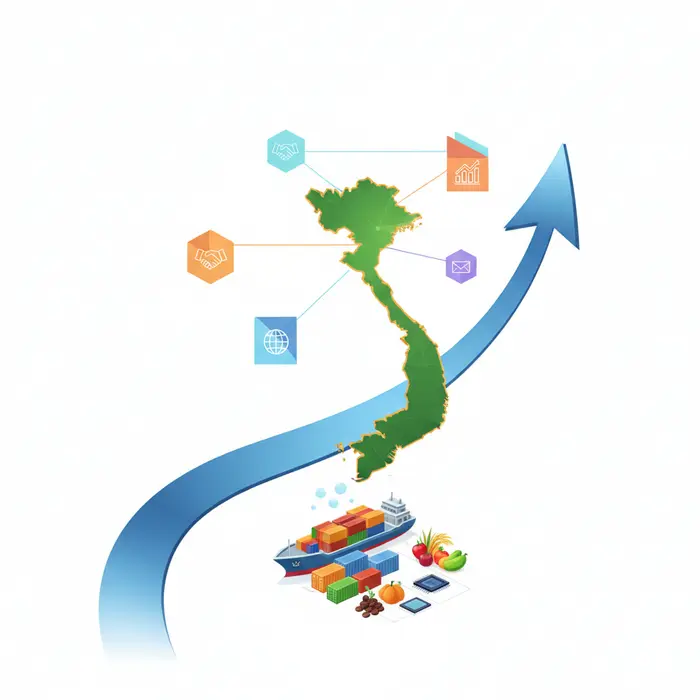
Key Vietnamese Export Sectors Benefiting from FTAs
Vietnam’s strategic embrace of FTAs has been a game-changer for several of its core export industries. The most prominent beneficiaries include textiles and garments, footwear, electronics, agriculture, and aquaculture. For instance, the CPTPP and EVFTA have provided Vietnamese textiles and footwear manufacturers with significant tariff reductions, even zero tariffs, when exporting to major markets like the EU, Canada, and Japan. This has enabled them to compete more effectively against rivals from non-FTA countries. Similarly, the electronics sector, dominated by global giants like Samsung and Intel operating production facilities in Vietnam, has seen enhanced competitiveness due to streamlined customs procedures and reduced input costs under various agreements. The agricultural and aquaculture sectors, encompassing products like coffee, rice, shrimp, and pangasius, have also found new avenues for growth. FTAs have facilitated easier access to discerning markets through improved sanitary and phytosanitary standards compliance and preferential tariffs, boosting the overall “Vietnam export opportunities under FTAs”.
Market Access Improvements for Vietnamese Products
The network of FTAs has profoundly transformed market access for Vietnamese products, marking a significant stride in “Global trade agreement effectiveness”. These agreements have systematically dismantled tariff and non-tariff barriers, creating a more level playing field for Vietnamese exporters. Under the EVFTA, for example, approximately 99% of all tariffs on goods traded between Vietnam and the EU are to be eliminated over a transitional period, offering substantial B2B trade benefits of FTAs. This means Vietnamese coffee, seafood, and garments can enter the lucrative European market at more competitive prices. The CPTPP has similarly opened up markets in Canada, Mexico, Australia, and New Zealand, offering diverse opportunities beyond traditional trading partners. Furthermore, FTAs often include provisions for regulatory harmonization, mutual recognition of standards, and expedited customs procedures, which collectively reduce transaction costs and increase predictability for exporters. This improved access has not only diversified Vietnam’s export markets but also encouraged its industries to enhance product quality and adhere to international standards, thereby strengthening their global appeal.
Investment Trends Driven by Vietnam’s FTA Network
Vietnam’s extensive FTA network has been a powerful magnet for Foreign Direct Investment (FDI), reshaping the country’s economic landscape. International investors are increasingly viewing Vietnam not just as a low-cost manufacturing base, but as a strategic production hub from which to access the vast markets covered by its FTAs. This trend is particularly evident in sectors like electronics, high-tech manufacturing, and sophisticated textiles. Companies from South Korea, Japan, China, and the EU are establishing or expanding their operations in Vietnam to leverage the preferential tariffs and market access offered by agreements like RCEP, CPTPP, and EVFTA. For instance, a European company might invest in Vietnam to produce goods that can then be exported to other CPTPP member countries at reduced tariffs, effectively utilizing Vietnam as a gateway. This influx of FDI brings not only capital but also advanced technology, management expertise, and job creation, fostering robust economic growth. The consistent growth in FDI inflows underscores the international business community’s confidence in Vietnam’s stable political environment, improving infrastructure, and, critically, its unparalleled access to global markets via its comprehensive FTA framework.
In conclusion, Vietnam’s journey demonstrates a masterclass in leveraging FTAs to drive national economic development. By strategically negotiating and implementing a broad array of trade agreements, Vietnam has significantly enhanced its export capabilities, diversified its market reach, and attracted crucial foreign investment, cementing its position as a rising star in the global trade arena as highlighted in the Global Trade Outlook 2024.
Unlocking B2B Trade Benefits of FTAs
In the dynamic landscape of international commerce, Free Trade Agreements (FTAs) have emerged as pivotal instruments for fostering economic growth and enhancing competitiveness, particularly for businesses engaged in B2B (business-to-business) transactions. As we navigate the Global Trade Outlook 2024, understanding and leveraging the tangible advantages offered by FTAs is no longer optional but a strategic imperative. These agreements, designed to reduce or eliminate trade barriers between signatory countries, unlock a wealth of opportunities, from significant cost reductions to enhanced supply chain resilience, directly impacting a company’s bottom line and global market positioning. For B2B enterprises, the strategic application of FTAs can translate into formidable competitive advantages and expanded market reach.
1. Tariff Reductions and Cost Savings for Businesses
One of the most immediate and impactful B2B trade benefits of FTAs is the significant reduction or complete elimination of tariffs on goods traded between member countries. Tariffs, essentially taxes on imported goods, directly increase the cost of doing business internationally. By lowering these barriers, FTAs enable companies to source raw materials, components, and finished products at a reduced cost. This translates into substantial cost savings that can be reinvested into research and development, passed on to customers through more competitive pricing, or contribute directly to profit margins. For instance, an in-depth FTA impact analysis 2024 reveals that businesses meticulously adhering to Rules of Origin can see savings of 5-15% or more on eligible products, making their offerings more attractive in partner markets. These cost advantages are crucial for B2B entities, allowing them to strengthen their value proposition and outmaneuver competitors operating without such preferential access.
2. Streamlined Customs Procedures and Logistics
Beyond tariffs, FTAs often include provisions aimed at simplifying and standardizing customs procedures, which significantly improve the efficiency of cross-border trade. This means less paperwork, faster clearance times, and reduced administrative burdens for businesses. The implementation of trade facilitation measures, electronic documentation, and harmonized standards under various global trade agreement effectiveness initiatives helps to expedite the movement of goods. For B2B companies, this translates into more predictable supply chains, lower demurrage and storage costs, and reduced lead times. For example, a manufacturing firm can rely on timely delivery of imported components, preventing costly production delays. This enhanced logistical predictability is invaluable for just-in-time inventory systems and for meeting strict delivery schedules, thereby bolstering customer satisfaction and operational efficiency.
3. Diversifying Supply Chains and Market Access through FTAs
FTAs are powerful tools for opening up new markets and facilitating the diversification of global supply chains. By granting preferential access to signatory countries, they encourage businesses to explore new sourcing locations and expand their export territories. This diversification is crucial for building resilience against geopolitical risks, natural disasters, or economic downturns affecting single markets. For example, Vietnam export opportunities under FTAs like the EVFTA (EU-Vietnam FTA) and CPTPP (Comprehensive and Progressive Agreement for Trans-Pacific Partnership) have created vast avenues for Vietnamese manufacturers to reach European and Pacific Rim markets, and vice-versa. B2B companies can strategically leverage these agreements to access a broader pool of suppliers and customers, reducing dependence on any single country or region. This not only mitigates risks but also fosters innovation through exposure to diverse business practices and technological advancements, ultimately strengthening a company’s global footprint and long-term sustainability.
Future Trends and Strategic Recommendations
The global trade landscape is undergoing a profound transformation, driven by technological advancements, evolving consumer demands, and a renewed focus on sustainability. As we look towards the Global Trade Outlook 2024 and beyond into 2025, businesses and policymakers must anticipate these shifts to maintain competitiveness and foster economic growth. This section explores the emerging trends, providing actionable strategies to navigate a complex, yet opportunity-rich, trade environment.

1. The Rise of Digital Trade and E-commerce Regulations
The digital revolution continues to reshape the contours of global commerce. Digital trade, encompassing everything from cross-border e-commerce to digitally enabled services and data flows, is rapidly expanding. This growth is accelerating B2B trade, creating new avenues for businesses to connect with international suppliers and customers, particularly benefiting from B2B trade benefits of FTAs. The proliferation of online marketplaces, fintech solutions, and logistics innovations has lowered entry barriers, allowing SMEs to participate more actively in the global economy. However, this rise brings forth a complex web of regulatory challenges. Governments worldwide are grappling with issues such as data privacy (e.g., GDPR, CCPA), digital taxation, consumer protection in cross-border transactions, and intellectual property rights in the digital realm. The lack of harmonized international standards poses significant compliance hurdles for businesses operating across multiple jurisdictions. Policymakers are increasingly exploring the development of specific e-commerce chapters within new or updated free trade agreements (FTAs) to facilitate digital trade while addressing these regulatory concerns. Understanding these evolving frameworks is crucial for companies looking to leverage the full potential of the digital marketplace.
2. Sustainability and Ethical Sourcing in Trade Agreements
Sustainability is no longer a niche concern but a mainstream imperative shaping global trade policies and corporate strategies. Consumers, investors, and regulators are demanding greater transparency and accountability regarding environmental, social, and governance (ESG) practices throughout supply chains. This pressure is embedding sustainability and ethical sourcing considerations deeply into new trade agreements. Many modern FTAs now include dedicated chapters on environmental protection, labor standards, and corporate social responsibility. These provisions aim to prevent a “race to the bottom” on standards and ensure that trade contributes to sustainable development. Businesses must therefore integrate robust sustainability frameworks into their sourcing strategies, supply chain management, and overall operations. This includes mapping supply chains to identify environmental risks, ensuring fair labor practices, and adopting circular economy principles. Companies that proactively embrace sustainable practices will not only mitigate risks but also gain a competitive advantage, attracting environmentally conscious consumers and meeting the evolving demands of international partners. The push for green trade and carbon border adjustment mechanisms (CBAMs) further underscores the urgency of this transition, impacting Global trade agreement effectiveness and shaping future market access.
3. Strategic Imperatives for Businesses in 2025
Navigating the dynamic global trade environment of 2025 requires agility, foresight, and strategic adaptation.
- Diversify and Localize Supply Chains: Geopolitical tensions and past supply chain disruptions highlight the need for greater resilience. Businesses should consider diversifying sourcing locations, potentially exploring near-shoring or friend-shoring strategies to reduce reliance on single points of failure. Investing in regional hubs and localized production can mitigate risks and improve responsiveness.
- Leverage Free Trade Agreements (FTAs): FTAs remain powerful tools for market access and competitive advantage. Companies, particularly those eyeing Vietnam export opportunities under FTAs, must conduct thorough FTA impact analysis 2024 to identify tariff reductions, non-tariff barriers, and rules of origin that can optimize their trade operations. Proactive engagement with trade policy developments will be key to unlocking new markets.
- Invest in Digital Capabilities: Embracing digital transformation is non-negotiable. This includes investing in e-commerce platforms, data analytics for market insights, automation for logistics, and blockchain for supply chain transparency. Digital fluency will be critical for efficient cross-border operations and regulatory compliance.
- Prioritize ESG Compliance and Reporting: Beyond mere compliance, embedding ESG principles into the core business model is vital. This involves robust due diligence for ethical sourcing, transparent reporting on environmental impact, and adherence to international labor standards. Such commitments enhance brand reputation, attract investment, and ensure long-term market access in increasingly regulated environments.
- Foster Public-Private Partnerships: For policymakers, collaboration with the private sector is essential to develop effective trade policies that are both forward-looking and practical. For businesses, engaging with government bodies can help shape trade policies that support innovation and sustainable growth. This collaborative approach can help address emerging challenges like digital trade regulations and the transition to green economies more effectively.
By strategically addressing these trends, businesses can transform potential challenges into significant opportunities, ensuring robust growth and resilience in the complex global trade landscape of 2025.
Partner with Vietnam’s Leading Suppliers
Looking for reliable suppliers in Vietnam? Contact VietnamSuppliers.com today to connect with verified manufacturers and exporters across all industries.
—————————————
References
– Global trade agreement effectiveness: https://www.wto.org/english/news_e/news24_e/trdev_09apr24_e.htm
– World Trade Organization’s World Trade Statistical Review 2023: https://www.wto.org/english/res_e/statis_e/wts2023_e/wts2023_e.pdf
– WTO News on Trade Development 2024: https://www.wto.org/english/news_e/news24_e/trdev_08feb24_e.htm
– WTO Trade Facilitation Agreement: https://www.wto.org/english/tratop_e/tradfa_e/tradfa_e.htm
– World Trade Organization on Trade and Environment: https://www.wto.org/english/tratop_e/envir_e/envir_e.htm

