
The Core of International Bulk Manufacturing
International Bulk Manufacturing stands as a cornerstone of modern global commerce, enabling businesses to achieve unprecedented scales of production and market penetration. It refers to the process where companies contract the production of goods in large quantities from manufacturers located in different countries, often leveraging specialized facilities, cost efficiencies, and diverse labor pools. This strategic approach is crucial for businesses aiming to scale production globally, meet high market demands, and optimize their supply chains without the extensive capital investment required for in-house global expansion.
The strategic importance of International Bulk Manufacturing cannot be overstated. It allows companies to tap into a global ecosystem of specialized expertise, advanced machinery, and competitive labor markets, fostering innovation and reducing per-unit costs significantly. For businesses seeking to grow their brand and reach new customers, it offers a pathway to increased profitability, market agility, and a robust global presence.

1. Defining Global Production at Scale
At its heart, global production at scale means designing, manufacturing, and distributing products across international borders in substantial volumes. It’s more than simply outsourcing; it involves a sophisticated ecosystem of supply chain management, quality control, logistics, and often, intricate intellectual property agreements. This model is particularly attractive for Custom Product Manufacturing Overseas, where companies require specialized factories capable of producing unique designs or formulations in mass quantities. Whether it’s consumer electronics, apparel, industrial components, or specialized chemicals, the goal is to leverage external manufacturing capabilities to produce goods efficiently and cost-effectively, reducing the burden of operating complex production facilities in multiple regions. This also allows businesses to focus on core competencies like design, marketing, and sales, while expert manufacturers handle the complexities of production.
2. Strategic Advantages for Businesses
Embracing International Bulk Manufacturing offers a multitude of strategic advantages. Foremost among these is cost reduction. Manufacturers in countries with lower labor costs, tax incentives, and streamlined operational expenses can produce goods at a fraction of the cost found in developed economies. This significant saving directly impacts a business’s bottom line and allows for more competitive pricing or higher profit margins.
Secondly, it provides unparalleled scalability and flexibility. Businesses can quickly ramp up or down production based on market demand without having to invest in new equipment or expand their own facilities. This is particularly relevant for High Volume Production Deals, where the ability to meet fluctuating orders without compromising quality or delivery times is paramount. Furthermore, it grants access to specialized skills and technologies that might not be available domestically, fostering innovation and product improvement.
Contract Manufacturing Sourcing also enhances market access. By manufacturing closer to target markets, businesses can reduce shipping times and costs, and navigate trade barriers more effectively. This strategic placement can also help companies understand and respond to regional consumer preferences, leading to more tailored product offerings. The ability to diversify manufacturing locations also mitigates risks associated with single-region production, such as political instability, natural disasters, or labor disputes. For a deeper dive into the strategic considerations of manufacturing outsourcing, exploring resources like Forbes can provide valuable insights into both its advantages and challenges. For example, understanding the pros and cons of outsourcing manufacturing can help businesses make informed decisions.
3. Key Considerations for Entry
While the benefits are substantial, entering the realm of International Bulk Manufacturing requires careful planning and consideration. Businesses must meticulously evaluate potential partners, focusing on their production capabilities, quality control standards, ethical practices, and communication infrastructure. Quality assurance is paramount; establishing robust inspection protocols and maintaining open lines of communication with overseas factories are critical to ensuring product consistency and meeting consumer expectations.
Logistics and supply chain management present another significant challenge. Navigating international shipping, customs regulations, and warehousing across different continents demands expertise. Effective inventory management and a clear understanding of lead times are essential to prevent stockouts or overstocking. Intellectual property protection is also a crucial concern, requiring clear contractual agreements and legal safeguards.
Finally, effective communication and cultural understanding are vital for successful partnerships. Bridging geographical and linguistic gaps ensures that product specifications are accurately conveyed and issues are resolved efficiently. Leveraging platforms for Vietnam Factory Direct Sourcing, for instance, can streamline the process of finding reliable manufacturers and managing these complex relationships. For businesses exploring how to optimize their sourcing strategies and connect with qualified manufacturers for International Bulk Manufacturing, resources like vietnamsuppliers.com offer valuable insights and connections.
In conclusion, International Bulk Manufacturing offers a powerful strategic lever for businesses aspiring to global growth. By understanding its definition, leveraging its advantages, and carefully navigating its complexities, companies can unlock significant opportunities for cost efficiency, scalability, and enhanced market reach in the competitive global landscape.
Mastering Custom Product Manufacturing Overseas
Venturing into custom product manufacturing overseas offers immense opportunities for businesses looking to innovate, scale, and optimize costs. From intricate gadgets to bespoke apparel, creating unique products through international channels requires a systematic approach. This journey, often complex, hinges on meticulous planning, robust execution, and stringent oversight across various stages, especially when navigating the landscape of international bulk manufacturing.
1. Concept-to-Market Workflow
The concept-to-market workflow defines the entire trajectory of your custom product, from an initial idea to a finished item ready for distribution. It begins with comprehensive design and engineering, where your vision takes tangible form through detailed CAD models, technical drawings, and precise material specifications. Clear, unambiguous communication with your overseas manufacturing partners is paramount at this stage to translate your design intent accurately. Following initial designs, prototyping becomes a critical iterative process, allowing for physical testing, design adjustments, and refinement before committing to large-scale production. Each prototype iteration helps validate functionality, aesthetics, and user experience, minimizing costly errors down the line.
Selecting the right manufacturing partner is the next pivotal step. This involves thorough contract manufacturing sourcing, researching factories based on their capabilities, track record, capacity, and experience with similar products. Due diligence is crucial, encompassing factory audits, reference checks, and transparent discussions about their production processes and quality management systems. For those considering specific regions, Vietnam factory direct sourcing offers distinct advantages due to its growing manufacturing infrastructure and competitive labor costs. Once a suitable partner is identified, detailed negotiations on terms, minimum order quantities (MOQs), pricing, and production timelines commence. This phase also includes developing specialized tooling, such as molds and dies, essential for your custom product. Pilot runs and pre-production samples are then created, serving as the gold standard for quality and specifications before moving into full-scale high volume production deals. Efficiently managing these stages sets the foundation for a successful product launch, ensuring that what was envisioned is what is ultimately produced.
2. Ensuring Quality and Specifications
Maintaining consistent quality and adhering to precise specifications are non-negotiable in custom product manufacturing overseas. This process begins long before production starts, with the creation of comprehensive documentation. A detailed Bill of Materials (BOM), engineering drawings with critical tolerances, and a clear Quality Control (QC) checklist with Acceptable Quality Limits (AQL) are fundamental. These documents serve as the blueprint and benchmark for every stage of manufacturing.
Quality assurance measures are implemented across the entire production cycle. Pre-production inspections involve verifying raw materials and components against specified standards to prevent defects from entering the supply chain. First Article Inspection (FAI) ensures that the initial production pieces meet all design and specification requirements before mass production commences. Throughout the manufacturing process, in-process quality control (IPQC) involves regular checks on the production line, monitoring machine calibration, operator adherence to procedures, and product consistency. This proactive approach helps identify and rectify issues early, preventing large batches of defective products. Finally, a thorough final inspection and testing phase occurs before shipment. This comprehensive check includes visual inspection, functional testing, performance validation, and packaging inspection to guarantee that every product leaving the factory meets the agreed-upon standards. Many businesses opt for independent, third-party QC inspections to provide an unbiased assessment, adding an extra layer of assurance and mitigating potential risks associated with manufacturing thousands of units.
3. Safeguarding Intellectual Property
Protecting your intellectual property (IP) is paramount when engaging in custom product manufacturing overseas. The risk of design theft or unauthorized reproduction is a significant concern, making proactive IP protection strategies indispensable. The first line of defense involves robust legal agreements. Implementing Non-Disclosure Agreements (NDAs) with all potential and chosen manufacturing partners, as well as any subcontractors, is essential. These agreements should explicitly define confidential information and the penalties for misuse. Furthermore, your manufacturing agreement must include clear clauses regarding IP ownership, specifying that all designs, tooling, and final products belong exclusively to your company.
Beyond contractual protections, strategic IP registration in the manufacturing country is crucial. Many businesses mistakenly believe that IP registered in their home country provides sufficient protection abroad. However, for effective enforcement, patents, trademarks, and copyrights relevant to your product should be registered in the country where manufacturing takes place, such as China or Vietnam, and ideally before any production begins. This provides legal recourse against infringement in the local jurisdiction. Operational security measures also play a vital role. This can include limiting access to sensitive design information within the factory, utilizing multiple suppliers for different components to prevent any single entity from having the complete design, and regularly auditing your supplier’s IP security protocols. Diligent research into a factory’s reputation regarding IP protection and a clear understanding of local IP laws are foundational to mitigating risks and ensuring your innovations remain exclusively yours.
In conclusion, mastering custom product manufacturing overseas is an intricate but highly rewarding endeavor. By meticulously navigating the concept-to-market workflow, implementing rigorous quality assurance protocols, and establishing comprehensive intellectual property safeguards, businesses can successfully bring bespoke products to a global market. This strategic approach transforms the complexities of international bulk manufacturing into a streamlined process, unlocking significant competitive advantages.
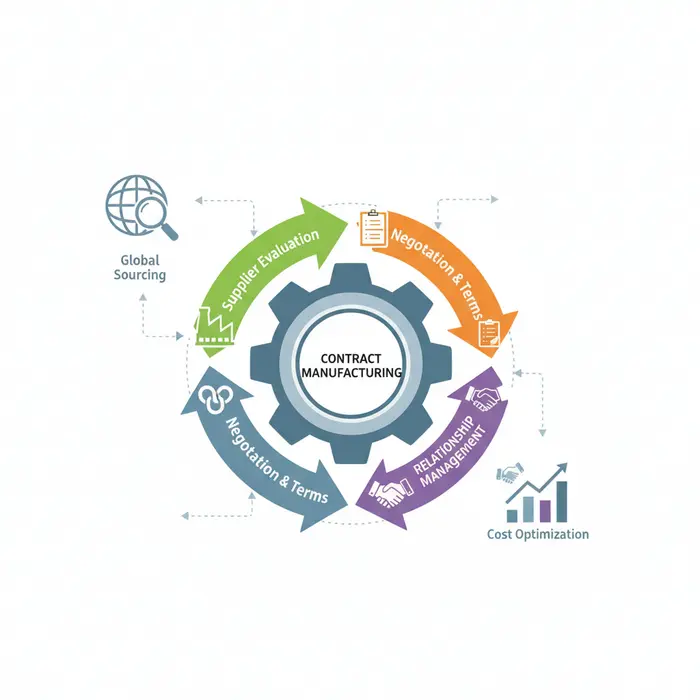
In today’s interconnected global economy, optimizing your supply chain through strategic contract manufacturing is no longer an option but a necessity. For businesses engaged in International Bulk Manufacturing, mastering the art of sourcing and partnering with the right contract manufacturers (CMs) globally can significantly enhance efficiency, reduce costs, and accelerate time-to-market. This section provides expert guidance on identifying, evaluating, and fostering robust relationships with CMs, ensuring your supply chain remains resilient and competitive.
1. Vendor Selection & Vetting Process
The foundation of successful contract manufacturing lies in a meticulous vendor selection and vetting process. When seeking Custom Product Manufacturing Overseas, start by clearly defining your product specifications, quality standards, production volumes, and budget. Evaluate potential CMs based on their technical capabilities, industry experience, certifications (e.g., ISO 9001 for quality, ISO 14001 for environmental management), and track record. Assess their capacity to scale, their commitment to lead times, and their financial stability.
Due diligence is paramount for effective Contract Manufacturing Sourcing. This involves conducting thorough factory audits, reviewing their quality control protocols, and checking references from current and past clients. Understanding their intellectual property (IP) protection policies is crucial, especially when dealing with proprietary designs or technologies. Don’t overlook communication channels and language capabilities, as clear and consistent dialogue is vital for managing projects across different time zones and cultures.
Furthermore, consider their supply chain transparency and ethical sourcing practices. Many businesses are now prioritizing CMs that demonstrate a commitment to social responsibility and sustainable operations. Proactive supplier risk management, including assessing geopolitical risks and supply chain vulnerabilities, should be an integral part of your vetting strategy to safeguard against potential disruptions.
2. Negotiation Best Practices
Once you’ve shortlisted potential CMs, the negotiation phase is critical for securing favorable terms that protect your interests while fostering a fair partnership. Key negotiation points include pricing structures, payment terms, minimum order quantities (MOQs), and intellectual property rights. For High Volume Production Deals, leverage your scale to negotiate more competitive unit costs and flexible terms. Always aim for transparent pricing, understanding all components of the cost, including raw materials, labor, overheads, and logistics.
Beyond costs, focus on contractual clauses related to quality assurance, defect rates, warranty terms, and dispute resolution mechanisms. Clearly define delivery schedules and penalties for delays to ensure accountability. When engaging in Vietnam Factory Direct Sourcing or sourcing from other regions, understanding local business customs and legal frameworks can provide a significant advantage. Be prepared to articulate your expectations clearly and to listen to the CM’s capabilities and limitations. A win-win approach that considers the long-term viability of the partnership often yields the best results.
3. Building Strong Supplier Relationships
The journey with your contract manufacturer doesn’t end after signing the deal; it merely begins. Building strong, collaborative supplier relationships is key to long-term success and continuous improvement. Establish regular communication channels, provide constructive feedback, and be transparent about your future needs and challenges. Treat your CM as an extension of your own team, fostering trust and mutual respect.
Encourage continuous improvement initiatives, sharing insights on market trends and product enhancements. Jointly work towards optimizing processes, reducing waste, and innovating. Implementing performance metrics and conducting periodic business reviews can help monitor progress and address any issues proactively. A strong relationship can lead to preferred treatment, quicker problem resolution, and access to new capabilities or technologies from your CM. Ultimately, investing in these partnerships ensures a resilient supply chain capable of adapting to market changes and supporting your growth in International Bulk Manufacturing.
Securing and Managing High Volume Production Deals
Navigating the landscape of International Bulk Manufacturing presents a unique blend of formidable challenges and significant opportunities. For businesses looking to scale, engaging in High Volume Production Deals is often the most direct path to market dominance and increased profitability. This section delves into the intricacies of large-scale production, exploring everything from the strategic pursuit of economies of scale to the meticulous management of complex global logistics and the proactive mitigation of inherent production risks. Successfully executing Custom Product Manufacturing Overseas requires a deep understanding of international supply chains, robust supplier relationships, and an unwavering commitment to quality and efficiency.
1. Achieving Economies of Scale
The primary allure of high-volume production is the potential to achieve substantial economies of scale. Simply put, this refers to the cost advantage that arises with increased output, where the per-unit cost of production decreases as the volume increases. For International Bulk Manufacturing, this means leveraging larger order quantities to negotiate better raw material prices, secure dedicated production lines, and spread fixed costs (like factory setup and tooling) across more units. Engaging in Vietnam Factory Direct Sourcing or through experienced Contract Manufacturing Sourcing partners allows businesses to tap into manufacturing ecosystems designed for efficiency and volume. This not only drives down unit costs but also often leads to improved product consistency and quality, as factories become more specialized and refined in their processes for specific products. Strategic planning and long-term commitments with manufacturers are crucial to unlocking these benefits, fostering relationships that yield preferential pricing, expedited production slots, and greater flexibility in response to market demands.
2. Optimizing Global Logistics
Once products are manufactured, the next critical hurdle in High Volume Production Deals is optimizing global logistics. Transporting large quantities of goods from overseas factories to destination markets involves a complex web of freight forwarding, customs clearance, warehousing, and last-mile delivery. Efficient logistics are not just about speed; they are about cost-effectiveness, reliability, and minimizing transit risks. For Custom Product Manufacturing Overseas, businesses must meticulously plan shipping routes, choose appropriate modes of transport (sea freight for cost efficiency, air freight for urgency), and manage intricate customs regulations across various countries. Leveraging advanced supply chain management software and partnering with experienced logistics providers can streamline this process. These providers often have established networks, understand international trade laws, and can offer consolidated shipping options, significantly reducing both costs and lead times. Moreover, a well-optimized logistics strategy considers inventory management, ensuring that goods arrive precisely when needed to meet consumer demand without incurring excessive storage costs or stockouts. This is especially vital when dealing with the scale inherent in International Bulk Manufacturing.
3. Mitigating Production Risks
While the opportunities in High Volume Production Deals are substantial, so too are the inherent risks. These can range from quality control issues and production delays to geopolitical instability, natural disasters, intellectual property theft, and currency fluctuations. Effective risk mitigation begins with thorough due diligence during Contract Manufacturing Sourcing, selecting partners with proven track records, robust quality management systems, and ethical labor practices. Implementing stringent quality assurance protocols, including factory audits, in-process inspections, and pre-shipment checks, is non-negotiable for Custom Product Manufacturing Overseas. Furthermore, diversifying the supplier base rather than relying on a single factory can provide a crucial buffer against localized disruptions. Legal agreements must be comprehensive, clearly defining specifications, timelines, payment terms, and intellectual property protections. For broader supply chain resilience, companies often adopt strategies like “dual sourcing” or maintaining a strategic inventory buffer. Understanding and preparing for potential disruptions, as highlighted by global supply chain experts McKinsey & Company in their analysis of supply chain resilience, is paramount. By proactively identifying and addressing these risks, businesses can safeguard their investments and ensure the smooth execution of their International Bulk Manufacturing endeavors, ultimately securing long-term success in the global marketplace.
Vietnam Factory Direct Sourcing: An Emerging Hub
Vietnam has rapidly emerged as a preferred destination for direct factory sourcing, solidifying its position as a powerhouse in International Bulk Manufacturing. The nation’s unique blend of strategic advantages makes it an increasingly attractive option for businesses worldwide seeking to diversify their supply chains and achieve competitive pricing. This section will delve into Vietnam’s growing role, detailing its distinct benefits and providing practical advice for fostering successful partnerships in Vietnam Factory Direct Sourcing.

1. Why Choose Vietnam?
The allure of Vietnam for direct factory sourcing stems from a confluence of compelling factors. Firstly, its political stability and pro-business government policies have created a secure and predictable environment for foreign investment. This includes an extensive network of Free Trade Agreements (FTAs), such as the CPTPP and EVFTA, which provide preferential tariffs and streamlined trade processes, making Vietnamese-made goods highly competitive in global markets. Secondly, Vietnam boasts a young, adaptable, and increasingly skilled workforce, often available at more competitive labor costs compared to established manufacturing hubs. This allows for significant cost savings in custom product manufacturing overseas without compromising on quality.
Furthermore, Vietnam’s strategic geographical location in Southeast Asia offers excellent access to major shipping routes, facilitating efficient logistics and reduced transit times for global distribution. The nation’s infrastructure is continually developing, with significant investments in ports, airports, and road networks, enhancing its capacity for high-volume production. According to the World Bank, Vietnam’s dynamic economic growth and commitment to trade liberalization underscore its long-term potential as a reliable manufacturing partner. These combined advantages position Vietnam as an optimal choice for businesses seeking robust and scalable manufacturing solutions.
2. Key Industries & Product Categories
Vietnam’s manufacturing sector is remarkably diverse, catering to a wide array of industries and product categories, making it ideal for various contract manufacturing opportunities. Key sectors where Vietnam excels include:
- Textiles and Apparel: From high-fashion garments to sportswear and footwear, Vietnamese factories are renowned for their quality, efficiency, and compliance with international labor standards.
- Electronics: A rapidly growing sector, with factories producing everything from smartphones and components to consumer electronics for global brands.
- Furniture: High-quality wooden, metal, and upholstered furniture is a significant export, benefiting from skilled craftsmanship and abundant raw materials.
- Plastics and Rubber: A robust industry producing a vast range of plastic components, packaging, and rubber products.
- Machinery and Equipment: Vietnam is increasingly manufacturing industrial machinery, spare parts, and tools.
- Agro-processing: Leveraging its rich agricultural resources, Vietnam is a major producer of processed foods, seafood, and agricultural products.
This broad industrial base means that businesses seeking custom product manufacturing for diverse items can often find suitable expertise and capacity within Vietnam.
3. Practical Tips for Sourcing Success
To maximize the potential of Vietnam factory direct sourcing, consider these practical tips:
- Conduct Thorough Due Diligence: Before committing, vet potential factories comprehensively. Look into their production capabilities, quality control processes, certifications (e.g., ISO, BSCI), financial stability, and track record. Site visits and third-party audits are invaluable.
- Establish Clear Communication: Language barriers can be a challenge. Employing a translator or a sourcing agent with local expertise is highly recommended. Clearly define product specifications, quality standards, timelines, and payment terms in written contracts.
- Prioritize Quality Control (QC): Implement robust QC measures throughout the production cycle, from raw material inspection to final product checks. Consider engaging third-party QC services to ensure consistent quality, especially for large orders.
- Understand Local Culture and Regulations: Familiarize yourself with Vietnamese business etiquette, labor laws, and import/export regulations. Building strong, respectful relationships with your factory partners is crucial for long-term success.
- Start with Smaller Orders: If possible, begin with a pilot order to test the factory’s capabilities, communication, and quality before scaling up to larger commitments.
- Protect Intellectual Property (IP): Register your trademarks and patents in Vietnam. Have clear IP clauses in your contracts with manufacturers to safeguard your designs and proprietary information.
By carefully navigating these aspects, businesses can successfully leverage Vietnam’s manufacturing prowess to secure high-quality products, optimize costs, and build resilient supply chains for the future.
Partner with Vietnam’s Leading Suppliers
Looking for reliable suppliers in Vietnam? Contact VietnamSuppliers.com today to connect with verified manufacturers and exporters across all industries.
—————————————
References
– The Pros And Cons Of Outsourcing Manufacturing: https://www.forbes.com/sites/forbesbusinesscouncil/2021/04/01/the-pros-and-cons-of-outsourcing-manufacturing/
– Patents, trademarks, and copyrights relevant to your product should be registered in the country where manufacturing takes place: https://www.wipo.int/sme/en/documents/ip_manufacture_factsheet.html
– Supplier Risk Management: https://www.cips.org/knowledge/procurement-topics/risk-management/supplier-risk-management/
– Building resilience in supply chains: https://www.mckinsey.com/capabilities/operations/our-insights/building-resilience-in-supply-chains
– World Bank Overview: Vietnam: https://www.worldbank.org/en/country/vietnam/overview

