Understanding Global Anti-Dumping Duties
In the complex landscape of international trade, the principle of fair competition is paramount. However, this principle is often challenged by practices such as “dumping,” where goods are sold in a foreign market at an unfairly low price. To counteract this, countries employ various trade remedies, among the most significant of which are anti-dumping duties. Understanding these duties is crucial for businesses, governments, and anyone involved in global commerce seeking to navigate the intricacies of trade policy. This comprehensive Global Anti-Dumping Duty Guide delves into what anti-dumping duties are, their purpose in fostering equitable trade, and how they differ from other protective measures.

1. What is Dumping in International Trade?
Dumping, in the context of international trade, refers to the practice of exporting products at a price lower than their normal value in the domestic market of the exporting country, or below the cost of production. Imagine a scenario where a manufacturer sells a product for $10 in its home country but exports the exact same product to another country for $7. This price discrepancy, if it meets certain criteria, constitutes dumping. Companies might engage in dumping for several strategic reasons: to gain market share rapidly in a foreign country, to dispose of excess inventory, or to drive out local competitors. While it might seem beneficial for consumers in the importing country due to lower prices, it’s considered an unfair trade practice because it distorts market competition and can severely harm domestic industries.
2. The Economic Impact of Dumping on Domestic Industries
The consequences of dumping for domestic industries in the importing country can be devastating. When foreign goods flood the market at prices significantly below local production costs, domestic producers struggle to compete. This often leads to reduced sales, decreased revenues, and declining profitability. Over time, sustained dumping can force domestic companies to cut production, lay off workers, or even shut down entirely. This erosion of the domestic industrial base not only results in job losses and economic instability but also stifles innovation and investment, as companies become hesitant to develop new products or expand operations when faced with an uneven playing field. Governments initiate an anti-dumping investigation process when domestic industries present evidence of such injury, aiming to determine if dumping has occurred and if it has caused material harm.
3. Anti-Dumping vs. Safeguard Measures and Quotas
While all are trade remedies designed to protect domestic industries, anti-dumping duties, safeguard measures, and quotas serve distinct purposes and are triggered by different circumstances. Understanding their differences is key to grasping the nuances of global trade protection.
- Anti-Dumping Duties: These are tariffs specifically imposed on imported goods that have been determined to be “dumped” and are causing material injury to a domestic industry. The core principle here is addressing an unfair trade practice. The duty is calculated to offset the margin of dumping, thereby neutralizing the unfair price advantage. For example, if an imported product is found to be dumped by $3 per unit, an anti-dumping duty of $3 might be applied. This type of duty is distinct from a countervailing duty, which addresses unfair subsidies rather than unfair pricing. The process involves a thorough investigation into pricing practices and injury assessment.
- Safeguard Measures: Unlike anti-dumping duties, safeguard measures are applied when a domestic industry is seriously injured, or threatened with serious injury, by a sudden and significant surge in imports, regardless of whether these imports are fairly traded. Safeguards are temporary, non-discriminatory (applied to all sources of imports), and are intended to give the domestic industry time to adjust to the increased competition. They can take the form of increased tariffs or quantitative restrictions (quotas).
- Quotas: Quotas are direct quantitative limits on the amount of specific goods that can be imported into a country over a defined period. They restrict the physical volume or value of imports, offering protection by reducing supply. While quotas can be used as a safeguard measure, they can also be implemented for other reasons, such as managing supply chains or protecting strategic industries, without necessarily being tied to unfair trade practices or sudden surges.
In essence, anti-dumping duties target unfair pricing practices, while safeguard measures and quotas address the impact of increased import volumes, whether fair or unfair. Companies aiming to avoid potential trade disputes need a deep understanding of these regulations, including navigating the complexities of how to avoid anti-dumping duties through transparent pricing strategies and adherence to international trade norms. The increasing number of Vietnam anti-dumping cases highlights the global relevance and necessity of these protective mechanisms for maintaining a balanced and equitable trading environment.
The Anti-Dumping Investigation Process
The intricate world of international trade constantly balances fair competition with national interests. One critical mechanism employed to ensure a level playing field is the anti-dumping investigation. When foreign producers sell goods in an export market at a price lower than their normal value in their home market, causing material injury to the domestic industry, it is considered “dumping.” To counteract this unfair trade practice, importing countries initiate an anti-dumping investigation process. Understanding this step-by-step procedure is crucial for businesses navigating global trade regulations and those looking for a comprehensive Global Anti-Dumping Duty Guide. This rigorous process, typically overseen by a country’s designated trade authority, aims to determine whether dumping has occurred, calculate its margin, and assess the injury caused to the domestic industry before potentially imposing remedial duties.
1. Initiation of an Investigation: Petition and Stakeholders
The journey of an anti-dumping investigation typically begins with a formal petition filed by the domestic industry of the importing country. This petition is a crucial first step, acting as the trigger for the entire process. It must provide sufficient evidence to support allegations of dumping, injury to the domestic industry, and a causal link between the dumped imports and the alleged injury. The petitioners, usually domestic producers of “like” products, must demonstrate that they represent a significant proportion of the total domestic production (often at least 25% of the total production, and supported by producers accounting for more than 50% of the production of those expressing an opinion).
Upon receiving a properly filed petition, the investigating authority – such as the U.S. Department of Commerce (DOC) and International Trade Commission (ITC), or the European Commission – reviews the adequacy and accuracy of the information provided. If the authority finds sufficient evidence, it formally initiates the investigation. This involves notifying all interested parties, including the government of the exporting country, the alleged dumping exporters, foreign producers, importers, and domestic producers. Public notices are issued, marking the official start of what can be a lengthy and complex inquiry.
2. Data Collection, Evidence Gathering, and Questionnaires
Once an investigation is initiated, the core of the process shifts to comprehensive data collection and evidence gathering. This phase is critical for establishing the facts of dumping and injury. The investigating authority sends out detailed questionnaires to various interested parties. Exporters and foreign producers are required to provide extensive information regarding their production costs, sales prices in their home market, sales prices to the importing country, and other relevant financial data. Importers are asked for details on their purchases of the subject merchandise and their resale prices. Domestic producers, on the other hand, must submit data concerning their production, sales, profits, employment, capacity utilization, and other economic indicators to demonstrate material injury.
The thoroughness and accuracy of responses to these questionnaires are paramount. Non-cooperation or submission of incomplete/inaccurate data can lead to adverse inferences, where the investigating authority may rely on “facts available,” which are often less favorable to the non-cooperating party. Following questionnaire responses, the authority typically conducts on-site verification visits to the premises of selected exporters, producers, and importers. These visits aim to verify the accuracy of the submitted data and gather additional information. This stage is crucial for businesses looking to understand how anti-dumping duties are determined under international trade law and to strategize on how to avoid anti-dumping duties by meticulously maintaining records and fully cooperating.
3. Preliminary and Final Determinations: Duties and Outcomes
The culmination of the data collection and analysis leads to a series of determinations. First, the investigating authority issues a preliminary determination on dumping and injury. If preliminary dumping is found and there’s a reasonable indication of injury, provisional anti-dumping duties may be imposed. These duties are typically collected in the form of cash deposits or bonds, effective for a limited period (e.g., four to six months). This interim measure prevents further injury to the domestic industry while the investigation continues.
Following the preliminary determinations, the parties are given opportunities to present arguments and participate in public hearings. The authority then proceeds to make its final determinations. If both dumping and material injury (or threat thereof) are confirmed, definitive anti-dumping duties are imposed. These duties are usually applied for a period of five years, after which they can be reviewed (sunset review) to determine if they are still necessary. The calculation of these duties often involves a comparison of the export price with the normal value, resulting in a specific “dumping margin” for each exporter.
Outcomes can vary: duties may be imposed, the investigation may be terminated if no dumping or injury is found, or exporters might offer price undertakings to raise their prices to avoid duties. For instance, in various Vietnam anti-dumping cases, Vietnamese exporters have faced these investigations. It’s important to distinguish anti-dumping duty vs countervailing duty; while both are trade remedies, anti-dumping duties address unfair pricing, whereas countervailing duties target foreign government subsidies that distort trade. Navigating these complex processes requires expert knowledge and proactive engagement.
Countervailing Duty vs. Anti-Dumping Duty
In the complex landscape of international trade, maintaining fair competition is paramount. When domestic industries face challenges from unfairly traded imports, governments can implement trade remedies to level the playing field. Two of the most significant such remedies are Countervailing Duties (CVD) and Anti-Dumping Duties (ADD). While both aim to counteract unfair trade practices and protect domestic industries, they address fundamentally different issues and are applied under distinct circumstances. Understanding these differences is crucial for any business engaged in global trade, especially when navigating potential Vietnam anti-dumping cases or other trade disputes.
1. Defining Countervailable Subsidies and Their Forms
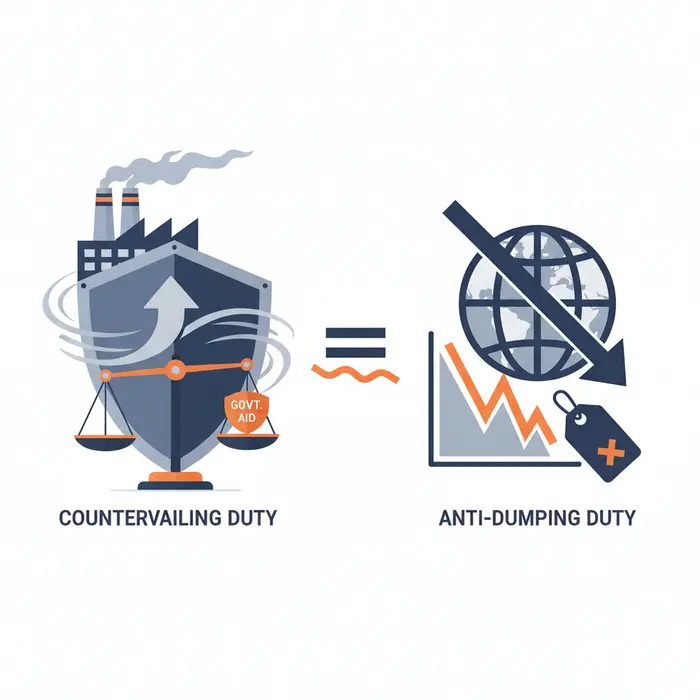
Countervailing Duty (CVD) is a specific import tariff imposed by an importing country to offset the competitive advantage gained by foreign products that have received specific government subsidies in their country of origin. The primary purpose of a CVD is to neutralize the distorting effect of these subsidies, thereby restoring fair competition for domestic industries. An imported product becomes “subsidized” if it benefits from a financial contribution by a government or any public body within the exporting country, which confers a benefit.
The key criterion for a subsidy to be actionable under CVD rules is its “specificity.” This means the subsidy must be available only to a specific enterprise, industry, or group of enterprises or industries, rather than being generally available to all. Common forms of countervailable subsidies include:
- Direct financial contributions: Such as grants, direct loans (or loan guarantees with preferential terms), or equity infusions from the government.
- Government provision of goods or services: Where the government provides goods (e.g., raw materials, energy) or services (e.g., infrastructure) at preferential rates that are below market value.
- Income or price support: Programs designed to support the income or prices of specific products or industries.
- Tax credits or exemptions: Specific tax benefits that are not broadly available.
The international framework governing these measures is primarily the WTO Agreement on Subsidies and Countervailing Measures (SCM Agreement), which outlines the conditions under which subsidies are prohibited or actionable, and how countries can impose CVDs.
2. Key Differences in Application, Purpose, and Proof
While both CVD and ADD serve as trade remedies, their targets, mechanisms, and legal bases differ fundamentally. To clearly understand the distinction, let’s look at Anti-Dumping Duty (ADD) in contrast:
Unfair Trade Practice Addressed:
- CVD: Targets government subsidies that provide an unfair competitive advantage to foreign producers.
- ADD: Targets “dumping,” which is the practice of selling goods in an importing country at a price below their “normal value” (typically the price in the exporter’s domestic market, or their cost of production). The focus is on the pricing strategy of individual foreign exporters, not government actions.
Party at Fault:
- CVD: The exporting country’s government for providing specific subsidies.
- ADD: The exporting company/producer for engaging in predatory pricing.
Basis for Duty Calculation:
- CVD: Calculated based on the amount of the specific subsidy received per unit of the exported product.
- ADD: Calculated based on the “margin of dumping,” which is the difference between the product’s normal value and its export price to the importing country.
Proof Required:
- CVD: Investigating authorities must prove the existence of a specific, countervailable subsidy and demonstrate that these subsidized imports are causing or threatening material injury to the domestic industry.
- ADD: Authorities must prove that dumping has occurred (i.e., sales below normal value) and that these dumped imports are causing or threatening material injury to the domestic industry. The Anti-dumping investigation process focuses heavily on pricing data and cost structures.
For a comprehensive understanding of anti-dumping measures and how to avoid anti-dumping duties, consult our Global Anti-Dumping Duty Guide.
3. When Both Duties May Apply Simultaneously: Cross-Border Scenarios
It is entirely possible and not uncommon for a product to be subject to both CVD and ADD. This scenario arises when an exporting company not only receives government subsidies but also sells its products in the importing country at dumped prices. For instance, a foreign steel manufacturer might benefit from subsidized government loans or cheap land (triggering a CVD investigation) while simultaneously selling its steel in an export market below its cost of production to gain market share (triggering an ADD investigation).
In such cross-border scenarios, the investigations for subsidies and dumping are conducted separately, requiring distinct findings for each duty. The calculation of the subsidy amount does not affect the determination of the dumping margin, and vice-versa, even though both contribute to the overall unfair competitive advantage. When both duties are ultimately imposed, their cumulative effect can significantly increase the cost of the imported product, effectively neutralizing the combined unfair advantages stemming from both government support and predatory pricing by the exporter.
The application of both duties underscores the distinct nature of the unfair trade practices they address, even when they occur concurrently. Such complex cases demand meticulous analysis by trade authorities to ensure that each duty is levied based on specific, proven violations without “double counting” any single unfair practice.
Strategies to Avoid and Mitigate Anti-Dumping Duties
Navigating the complexities of international trade requires a keen understanding of regulations designed to ensure fair competition. Among these, anti-dumping (AD) duties stand out as a significant concern for exporters. Imposed when a foreign company sells goods in an importing country at a price lower than its domestic price or production cost, causing material injury to the domestic industry, AD duties can severely impact profitability and market access. However, businesses are not powerless; proactive strategies and informed responses can significantly reduce the risk of anti-dumping investigations and mitigate the impact if duties are imposed. This guide delves into actionable strategies to safeguard your international trade operations.
1. Proactive Compliance and Fair Pricing Strategies
The most effective defense against anti-dumping duties begins long before an investigation is initiated: with robust proactive compliance and transparent pricing practices. Understanding the legal frameworks governing anti-dumping is paramount. Businesses should thoroughly familiarize themselves with the anti-dumping investigation process in their target export markets, including how “normal value” (the price in the exporter’s domestic market) and “export price” (the price at which the goods are sold to the importing country) are determined, and the criteria for demonstrating “material injury.”
One of the primary ways how to avoid anti-dumping duties is to maintain transparent and justifiable pricing structures. Avoid aggressive price undercutting that could be perceived as dumping. Conduct regular internal audits of your cost structures, pricing policies, and sales records for both domestic and export markets. Any significant discrepancies between domestic and export prices for similar goods, especially in key markets, should be carefully scrutinized and justifiable based on legitimate commercial factors (e.g., volume discounts, different market conditions, or product specifications). It’s crucial to document these justifications meticulously. Implement a robust internal control system that monitors pricing strategies to prevent unintentional dumping. This proactive approach minimizes the likelihood of attracting attention from domestic industries and trade authorities, thereby reducing the risk of an anti-dumping investigation. For a deeper dive into the regulatory landscape, consider consulting resources like the World Trade Organization’s Anti-Dumping Agreement, which provides the international framework.
2. Engaging Legal Counsel and Trade Experts During Investigations
Should an anti-dumping investigation commence, immediate and decisive action is critical. The complexities of the anti-dumping investigation process demand specialized expertise. Engaging experienced legal counsel and trade experts, particularly those with a strong track record in anti-dumping cases, is not merely advisable but essential. These professionals can provide an early assessment of the allegations, guide your company through the intricate procedural requirements, and help formulate a robust defense strategy.
Responding to detailed questionnaires issued by investigating authorities (such as the U.S. Department of Commerce or the European Commission) is often the most challenging phase. These questionnaires require extensive data on costs, sales, production, and pricing, often spanning several years, and typically have very tight deadlines. Errors or inconsistencies can lead to adverse inferences and higher anti-dumping duties. Legal and trade experts are invaluable in accurately compiling and presenting this information, ensuring compliance with technical specifications, and representing your company during hearings and on-site verifications. They can also differentiate between countervailing duty vs anti-dumping duty, which targets subsidies rather than unfair pricing, ensuring your defense is appropriately focused. Their expertise is crucial in navigating the legal nuances, challenging methodologies, and potentially negotiating settlements that could lead to lower duty rates or even the termination of the investigation.
3. Diversifying Supply Chains and Export Markets
Strategic diversification offers a long-term solution to mitigate the risks associated with anti-dumping duties. Over-reliance on a single export market or a narrow product range makes a business particularly vulnerable to trade remedy actions. By diversifying your export markets, you spread your risk; if one market imposes anti-dumping duties, your overall export revenue stream is less severely impacted. This strategy also involves exploring opportunities in emerging markets that may have less developed domestic industries or different trade policy priorities.
Furthermore, diversifying your supply chain and manufacturing footprint can provide significant flexibility. For instance, companies concerned about potential Vietnam anti-dumping cases might consider establishing production facilities in other countries or sourcing components from multiple regions. This approach can help avoid being caught in specific country-of-origin investigations. Another strategy involves adding value to products in the importing country or a third country. By significantly transforming a product through further processing, assembly, or manufacturing before final import, you might alter its classification and potentially its susceptibility to existing anti-dumping measures. Continuous market research and strategic planning are key to identifying new opportunities and proactively adapting your global trade strategy to minimize exposure to such duties. For more comprehensive insights into global trade regulations and risk management, explore our Global Anti-Dumping Duty Guide.
Case Studies and Regional Focus: Vietnam’s Experience
Vietnam’s integration into the global economy has brought unprecedented opportunities, but also increased exposure to international trade remedies, particularly anti-dumping measures. This section delves into real-world examples, exploring Vietnam’s nuanced journey as both a frequent target of anti-dumping investigations and, increasingly, an imposing authority itself. Understanding these experiences is crucial for navigating the complexities of the Global Anti-Dumping Duty Guide, offering valuable insights into the mechanics of trade defense instruments.

1. Notable Anti-Dumping Cases Against Vietnamese Products (e.g., Seafood, Steel)
For decades, Vietnamese export sectors have frequently found themselves at the receiving end of anti-dumping actions, primarily initiated by developed economies like the United States and the European Union. One of the most prominent instances involves the Vietnamese seafood industry, particularly pangasius (catfish) and shrimp. The U.S. has repeatedly imposed anti-dumping duties on these products, alleging unfair pricing practices. These investigations often involve complex methodologies to determine dumping margins, significantly impacting market access and profitability for Vietnamese exporters. The anti-dumping investigation process requires extensive data submission and legal defense, which can be particularly challenging for SMEs.
Another critical sector affected by these measures is steel. Vietnamese steel products, ranging from corrosion-resistant steel to certain types of pipes and tubes, have faced duties from various countries, including the U.S., EU, and ASEAN members. These cases frequently involve allegations of transshipment and circumvention, where products from a third country are processed in Vietnam to avoid existing duties. Such Vietnam anti-dumping cases highlight the need for robust compliance frameworks and transparent supply chains to demonstrate fair trade practices. The cumulative impact of these duties can be severe, leading to market share loss, reduced investment, and pressure on domestic production capacity. Learning how to avoid anti-dumping duties through proactive measures, such as maintaining precise cost records and diversifying markets, has become a core strategy for many Vietnamese businesses.
2. Vietnam’s Own Anti-Dumping Measures Against Imports
While historically a target, Vietnam has evolved to become a more proactive player in trade defense. With its accession to the WTO and subsequent economic development, the Vietnamese government has established its own legal framework for anti-dumping and countervailing duties. This shift reflects a growing maturity in its trade policy and a commitment to protecting domestic industries from unfair competition. The Ministry of Industry and Trade (MOIT) is the primary authority responsible for initiating and conducting these investigations.
Recent years have seen Vietnam impose anti-dumping duties on a range of imported products. Notable examples include steel products (such as long steel products, color-coated steel, and H-beams) originating from countries like China and Korea. These measures are often taken to safeguard local manufacturers, particularly in sectors deemed strategically important or those facing intense foreign competition. Understanding the distinction between anti-dumping and countervailing duties is vital here; while anti-dumping addresses unfairly low prices, countervailing duties target subsidies provided by foreign governments. Vietnam’s increasing use of these tools underscores its growing confidence and capability in enforcing international trade rules to ensure a level playing field for its industries.
3. Lessons Learned from Regional Trade Disputes and Resolutions
Vietnam’s extensive experience with anti-dumping cases, both as a respondent and an initiator, offers critical lessons. Firstly, it emphasizes the importance of a strong legal and technical defense. Exporters must meticulously maintain records, understand costing structures, and be prepared for rigorous scrutiny during an anti-dumping investigation process. Collaborative efforts between government agencies, industry associations, and legal experts are essential to formulate effective defense strategies and navigate complex international trade laws.
Secondly, the proactive imposition of anti-dumping measures by Vietnam highlights the need for domestic industries to monitor import trends closely and understand the criteria for initiating trade remedy actions. It also underscores the necessity for importers into Vietnam to fully comprehend and adhere to fair trade practices to avoid potential duties. Finally, Vietnam’s journey illustrates the dynamic nature of global trade remedies. As its economy develops and its trade relationships deepen, the country will continue to adapt its strategies, balancing the need to protect its industries with its commitments to open and fair trade. These experiences provide invaluable case studies for any entity seeking to understand the nuances of the Global Anti-Dumping Duty Guide and its real-world application.
Partner with Vietnam’s Leading Suppliers
Looking for reliable suppliers in Vietnam? Contact VietnamSuppliers.com today to connect with verified manufacturers and exporters across all industries.
—————————————
References
– countervailing duty: https://www.wto.org/english/thewto_e/what_e/tif_e/agrm8_e.htm
– WTO Agreement on Anti-Dumping: https://www.wto.org/english/docs_e/legal_e/19-adp.pdf
– :
– World Trade Organization’s Anti-Dumping Agreement: https://www.wto.org/english/tratop_e/adp_e/adp_e.htm
– WTO Anti-Dumping Agreement: https://www.wto.org/english/tratop_e/adp_e/adp_e.htm