
Understanding the Vietnam Manufacturing Landscape
The global manufacturing landscape is in constant flux, and few nations exemplify this dynamic shift as profoundly as Vietnam. Positioned strategically in Southeast Asia, Vietnam has rapidly emerged as a powerhouse, attracting significant foreign direct investment and becoming a preferred destination for companies seeking diversified and resilient supply chains. The surge in Vietnam Manufacturing RFQ activity for 2025 is not merely a trend; it’s a testament to the country’s maturing industrial ecosystem, competitive advantages, and forward-looking economic policies. Businesses worldwide are increasingly looking to Vietnam to fulfill their manufacturing needs, from high-tech electronics to essential consumer goods, driven by a compelling mix of cost-effectiveness, political stability, and a growing skilled workforce.

1. Key Industries Thriving in Vietnam (Electronics, Apparel, Footwear)
Vietnam’s manufacturing prowess is diverse, with several sectors leading its industrial growth. The electronics industry stands out, having transformed Vietnam into a global hub for the production of smartphones, components, and consumer electronics. Major international players have established significant manufacturing bases here, leveraging the country’s young, adaptable workforce and government incentives. This has fueled a considerable volume of Sourcing electronics Vietnam RFQ as companies seek reliable partners for everything from circuit boards to finished products.
Beyond electronics, Vietnam maintains its traditional strength in the apparel and textile sector. Renowned for its craftsmanship and competitive labor costs, Vietnam is a go-to country for high-quality garments and textiles. The industry benefits from a long history of production and a strong network of suppliers, making Apparel manufacturers Vietnam RFQ a frequent inquiry for brands worldwide. Similarly, the footwear industry in Vietnam is robust, producing for many of the world’s leading brands, showcasing its capacity for intricate manufacturing and large-scale production.
2. Advantages of Sourcing from Vietnam (Cost, Stability, Trade Agreements)
The appeal of sourcing from Vietnam is multi-faceted. Firstly, cost-effectiveness remains a significant draw. While labor costs are gradually rising, they generally remain lower than those in established manufacturing hubs like China, offering a competitive edge for labor-intensive industries. Operational costs, including utilities and factory rentals, are also favorable.
Secondly, Vietnam offers a high degree of political and economic stability, a crucial factor for long-term investment and supply chain planning. The government’s consistent pro-business policies and efforts to improve the investment climate instill confidence in international partners.
Perhaps most significantly, Vietnam has strategically positioned itself through an extensive network of trade agreements. These include membership in the Comprehensive and Progressive Agreement for Trans-Pacific Partnership (CPTPP), the European Union-Vietnam Free Trade Agreement (EVFTA), and the Regional Comprehensive Economic Partnership (RCEP). These agreements significantly reduce tariffs, simplify customs procedures, and provide preferential access to major global markets, making sourcing from Vietnam more attractive and efficient. This robust framework helps to explain the increased interest in Vietnam contract manufacturing quote requests, as companies look to capitalize on these trade benefits. According to the World Bank, Vietnam’s participation in these agreements has significantly boosted its trade integration and economic growth.
3. Challenges and Considerations for Sourcing Success
While Vietnam presents numerous opportunities, successful sourcing requires careful consideration of potential challenges. One key area is supply chain resilience. While Vietnam’s manufacturing base is expanding, some sectors still rely on imported raw materials or intermediate goods, which can introduce vulnerabilities. Companies must carefully vet the entire supply chain to mitigate risks.
Another consideration is infrastructure variability. While major industrial zones boast world-class facilities, some remote areas might still face logistical hurdles, impacting transportation and lead times. Quality control and intellectual property protection are also paramount. Establishing robust QC protocols and due diligence on potential suppliers is essential to ensure product standards are met and proprietary designs are safeguarded.
For companies looking for a reliable Vietnam contract manufacturing quote or trying to understand How to get quotes from Vietnam suppliers, navigating cultural nuances and communication can also be a challenge. It’s often beneficial to work with experienced sourcing agents or to establish a local presence. Platforms like VietnamSuppliers.com can be invaluable resources for connecting with verified manufacturers and understanding the quoting process, ensuring that every Vietnam Manufacturing RFQ leads to successful partnerships.
Crafting an Effective Vietnam Manufacturing RFQ
Navigating global manufacturing requires precision, especially when engaging with suppliers in Vietnam. A meticulously crafted Request for Quote (RFQ) is crucial for project success. This guide provides comprehensive advice on what to include in your Vietnam Manufacturing RFQ to ensure clarity, attract the right suppliers, and receive accurate Vietnam contract manufacturing quotes, forming the bedrock of a successful partnership.
A well-structured RFQ acts as your project’s blueprint, minimizing misunderstandings and empowering Vietnamese suppliers to provide competitive, realistic bids. Insufficient detail leads to vague quotes, prolonged communication, and costly delays. Whether for Sourcing electronics Vietnam RFQ or seeking Apparel manufacturers Vietnam RFQ, clarity and comprehensiveness are paramount.
1. Essential Information to Include (Specifications, Quantities, Materials)
The core of any effective RFQ lies in detailed product specifications. Suppliers need a precise understanding of your product. This section should cover:
- Detailed Product Specifications: Provide engineering drawings, CAD files (e.g., STEP, IGES), 3D models, and a comprehensive Bill of Materials (BOM). For apparel, include tech packs, size charts, fabric swatches, color codes (Pantone), and construction details. For electronics, specify PCB layouts, circuit diagrams, component datasheets, and firmware. Clearly state dimensions, tolerances, finishes, and assembly instructions.
- Quantities and Production Forecasts: Specify exact initial order quantities and provide forecasted volumes for subsequent orders (e.g., monthly, quarterly). This helps suppliers optimize pricing based on economies of scale and capacity. Differentiate between prototype, pilot, and mass production needs.
- Material and Component Specifications: List all raw materials and components, including grades, types, and required certifications. If specific suppliers are preferred or mandated, state them explicitly. Include any material safety data sheets (MSDS) or compliance requirements (e.g., RoHS, REACH).
2. Setting Clear Expectations (Quality Standards, Delivery Timelines)
Beyond the product itself, a successful manufacturing partnership requires alignment on quality, logistics, and commercial terms. Your RFQ must clearly outline these expectations:
- Quality Standards and Testing Protocols: Define your quality benchmarks. Reference international standards (e.g., ISO 9001, ASTM, AQL levels), describe specific inspection criteria, and detail any required testing procedures (e.g., functional tests, durability, lab certifications). State pre-shipment inspection requirements, including who conducts them.
- Packaging and Logistics: Detail inner and outer packaging specifications, materials, dimensions, labeling requirements (e.g., barcodes), and palletization instructions. Specify desired lead times for tooling, samples, and mass production. Crucially, define your Incoterms 2020 preferences (e.g., FOB, EXW, DDP) to clarify responsibilities and costs. Understand Incoterms rules from the International Chamber of Commerce for seamless international trade.
- Payment Terms: Propose your preferred payment structure, typically involving an upfront deposit, progress payments, and final payment. Be prepared to negotiate, but clearly state your initial terms.
3. Leveraging Digital Tools for RFQ Submission
Digital tools streamline the RFQ process, making it more efficient and transparent:
- Structured RFQ Platforms: Utilize dedicated online platforms or cloud-based procurement software for standardized submission, tracking, and comparison of bids. These often include features for document sharing, communication, and deadline management.
- Comprehensive Templates: For simpler projects, a well-designed spreadsheet template ensures all necessary data fields are covered and provides a clear format for suppliers, simplifying quote comparison.
- Clear Communication Channels: Specify how suppliers should submit questions and quotes. Establish a single point of contact and provide clear deadlines for queries and final submissions.
By investing time in crafting a thorough and well-organized Vietnam Manufacturing RFQ, you improve your chances of receiving competitive and accurate Vietnam contract manufacturing quotes. This proactive approach builds trust and clarity, significantly reducing risks and setting your project up for success in Vietnam’s manufacturing landscape. When considering how to get quotes from Vietnam suppliers efficiently, remember that the quality of your RFQ directly influences the quality of the responses.
Sourcing Strategies: Finding Reputable Vietnam Suppliers
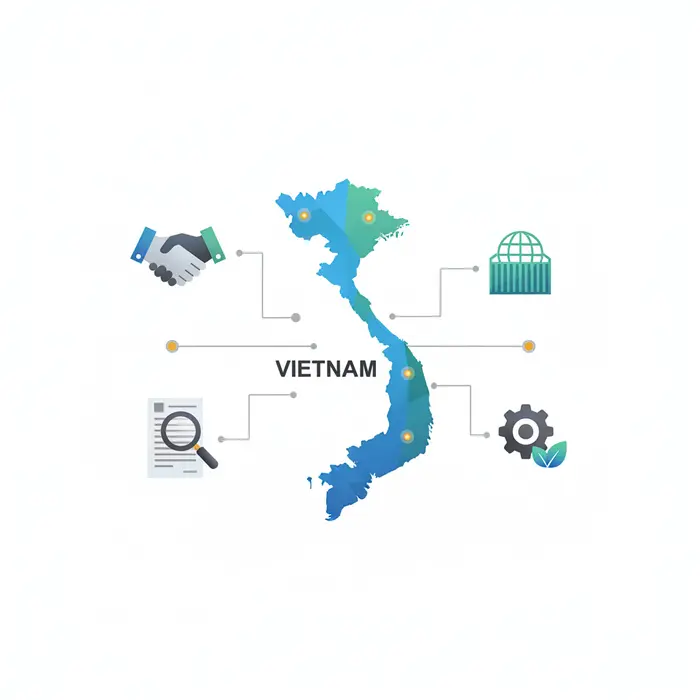
As global supply chains continue to evolve, Vietnam has solidified its position as a leading destination for contract manufacturing. Businesses seeking competitive pricing, skilled labor, and strategic geographic advantages are increasingly issuing a Vietnam Manufacturing RFQ (Request for Quote) to explore potential partnerships. However, navigating the landscape of Vietnamese suppliers requires a strategic approach to ensure quality, reliability, and ethical practices. This section outlines effective methods and platforms for identifying and vetting potential contract manufacturing partners in Vietnam, transforming a simple search into a robust and trustworthy supply chain.
1. Online Directories & B2B Platforms (Alibaba, Global Sources)
One of the most accessible starting points for finding a Vietnam contract manufacturing quote is through established online B2B platforms. Giants like Alibaba and Global Sources host an extensive database of manufacturers, including numerous Vietnamese suppliers specializing in various sectors, from Sourcing electronics Vietnam RFQ to Apparel manufacturers Vietnam RFQ. These platforms allow for initial searches based on product type, manufacturing capabilities, certifications, and minimum order quantities (MOQs). While convenient, it’s crucial to exercise due diligence. Start by filtering suppliers with verified badges, high transaction volumes, and positive reviews. Engage with multiple suppliers to compare capabilities, pricing structures, and communication responsiveness. Always request detailed company profiles, product catalogs, and any relevant certifications (e.g., ISO, SA8000) early in the process. Remember that the lowest quote isn’t always the best value; focus on a balance of quality, capacity, and reliability.
2. Trade Shows, Local Agencies, and Networks
For a more direct and often higher-quality approach, consider attending international trade shows that feature Vietnamese manufacturers or specialized events held within Vietnam. Events like the Vietnam Manufacturing Expo or regional industry-specific trade shows offer unparalleled opportunities to meet potential partners face-to-face, inspect product samples, and discuss capabilities directly. This personal interaction can build trust and provide insights that online platforms cannot. Furthermore, engaging local sourcing agencies or consultants with deep roots in Vietnam can be invaluable. These agencies often have established networks, understand local business customs, and can pre-vet suppliers based on your specific requirements. Leveraging business networks, industry associations, or chambers of commerce (e.g., American Chamber of Commerce in Vietnam, European Chamber of Commerce in Vietnam) can also lead to reputable referrals and provide insights into how to get quotes from Vietnam suppliers efficiently.
3. Vetting Potential Partners (Audits, References, Communication)
Once you’ve identified a shortlist of potential suppliers for your Vietnam Manufacturing RFQ, thorough vetting is paramount. This multi-faceted process should include:
- Factory Audits: Conduct or commission an independent factory audit to assess production capabilities, quality control systems, working conditions, and compliance with international standards. This can be a critical step, especially for complex products or high-volume orders.
- References and Case Studies: Request references from their current or past international clients. Follow up on these references to understand their experiences with product quality, delivery timelines, and responsiveness to issues. Ask for case studies or portfolios relevant to your product type.
- Clear Communication: Evaluate the supplier’s communication effectiveness. Are they responsive? Do they understand your requirements clearly? Are there language barriers? Consistent and transparent communication is foundational to a successful long-term partnership.
- Sample Production: Before committing to a large order, request samples or a small pilot production run. This allows you to evaluate the product quality firsthand, assess their manufacturing processes, and identify any potential bottlenecks or issues.
By diligently applying these sourcing strategies and robust vetting processes, businesses can confidently identify and partner with reputable Vietnamese manufacturers, contributing to a resilient and cost-effective supply chain. Vietnam’s strategic importance in global manufacturing continues to grow, attracting significant investment and becoming a crucial hub for various industries. For more insights into Vietnam’s manufacturing landscape, you can refer to reports detailing its emerging role as a global manufacturing hub.
Navigating Specific Sector RFQs: Electronics & Apparel
Tailoring the RFQ process for key industries is paramount to successful sourcing in Vietnam. While the foundational principles of requesting a quote remain consistent, electronics and apparel manufacturing demand unique considerations due to their distinct supply chains, regulatory environments, and product complexities. Understanding these nuances is crucial for securing optimal Vietnam contract manufacturing quotes and fostering productive partnerships. This section provides specific advice for sourcing electronics and apparel manufacturers in Vietnam, ensuring your Request for Quotation (RFQ) is comprehensive and effective.
1. Sourcing Electronics Vietnam RFQ: Key Considerations (Certifications, Components)
When preparing an RFQ for electronics manufacturing in Vietnam, precision and compliance are non-negotiable. Electronics products are often subject to stringent international standards and require meticulous attention to detail at every stage. Your RFQ must clearly outline these requirements to attract capable suppliers and avoid costly delays or non-compliance issues.
Certifications and Compliance: This is arguably the most critical aspect. Your RFQ must specify all necessary certifications for your target markets. Common examples include CE (European Conformity), FCC (Federal Communications Commission) for North America, UL (Underwriters Laboratories) for product safety, and RoHS (Restriction of Hazardous Substances). Clearly state which directives and standards your product must adhere to, and ask potential suppliers for proof of their relevant facility and product certifications. Ensure they have experience navigating these complex regulatory landscapes.
Detailed Bill of Materials (BOM): Provide an exhaustive BOM, listing every component, its manufacturer part number, quantity, and preferred suppliers (if any). Indicate acceptable alternatives and expected component lead times. Given global supply chain volatilities, suppliers’ capabilities in component sourcing, inventory management, and risk mitigation strategies are vital. Enquire about their relationships with authorized distributors and their ability to track component obsolescence.
Technical Specifications & Testing: Include complete engineering drawings, schematics, Gerber files, and detailed assembly instructions. Specify testing protocols (e.g., functional testing, burn-in testing, in-circuit testing) and desired quality control checkpoints. Ask about their DFM (Design for Manufacturability) capabilities and their adherence to industry standards like IPC (Association Connecting Electronics Industries).
Intellectual Property (IP) Protection: Explicitly address IP protection in your RFQ. Inquire about their security measures, confidentiality agreements, and how they safeguard proprietary designs and processes.
2. Apparel Manufacturers Vietnam RFQ: Design, Fabric, and Compliance
Sourcing apparel from Vietnam requires a different set of considerations, focusing heavily on aesthetics, material quality, and ethical production. An effective RFQ for apparel manufacturers Vietnam RFQ needs to convey your vision precisely and address critical aspects of the supply chain.
Comprehensive Design and Tech Packs: Apparel RFQs thrive on visual and detailed information. Provide complete tech packs that include detailed sketches, CAD drawings, measurement charts, material specifications, colorways (Pantone codes), stitching details, and trim placements (buttons, zippers, labels). Include high-resolution images or physical samples if possible to minimize misinterpretation. Clearly define tolerance levels for measurements.
Fabric and Material Sourcing: Specify the exact fabric composition, weight, weave, and desired hand-feel. Indicate if you will supply the fabric or if the manufacturer is expected to source it. If sourcing, ask for samples, minimum order quantities (MOQs), and lead times. Mention any specific fabric certifications required, such as Oeko-Tex Standard 100 or GOTS (Global Organic Textile Standard), which attest to environmental and social standards. The same level of detail should be applied to trims and embellishments.
Ethical Sourcing and Compliance: Social and environmental compliance is paramount in the apparel industry. Your RFQ should require evidence of adherence to international labor standards, fair wages, and safe working conditions. Inquire about certifications like WRAP (Worldwide Responsible Accredited Production), SA8000, or BSCI (Business Social Compliance Initiative). Ask for their policies on child labor, forced labor, and environmental impact. Transparency in the supply chain is highly valued.
Sampling and Production Process: Detail the required sampling stages (e.g., proto sample, fit sample, PP sample) and the expected timelines for each. Clarify quality control procedures at different stages of production, from fabric inspection to final garment checks. Inquire about their production capacity and lead times for bulk orders.
3. Best Practices for Niche Manufacturing Requirements
Regardless of whether you’re dealing with electronics or apparel, certain best practices are universal when submitting an RFQ to how to get quotes from Vietnam suppliers, particularly for niche or highly specialized requirements.
Clarity and Specificity: Ambiguity is the enemy of efficient manufacturing. Leave no room for interpretation. Provide detailed, unambiguous specifications, perhaps including a glossary of terms for highly technical products.
Communication Protocols: Define preferred communication channels, response times, and designated points of contact. Overcome potential language barriers by ensuring translation services or English-proficient contacts are available.
Supplier Vetting: Beyond the RFQ response, conduct thorough due diligence. Request factory audits, check references, and evaluate financial stability. A site visit (or virtual audit) can provide invaluable insight into a factory’s capabilities and working conditions.
Packaging and Logistics: Clearly specify packaging requirements (e.g., retail packaging, bulk packaging, labeling standards) and preferred shipping methods (FOB, EXW, CIF). Understand their capabilities regarding export documentation and customs clearance.
Building Relationships: The RFQ is the start of a potential partnership. Focus on finding a supplier willing to collaborate, innovate, and grow with your business, rather than just seeking the lowest Vietnam Manufacturing RFQ price.
By tailoring your RFQ with these sector-specific and best-practice considerations, you significantly increase your chances of finding reliable, high-quality manufacturers in Vietnam for your electronics or apparel products, ensuring a smoother production process and successful market entry.
From RFQ to Contract: Finalizing Your Vietnam Deal
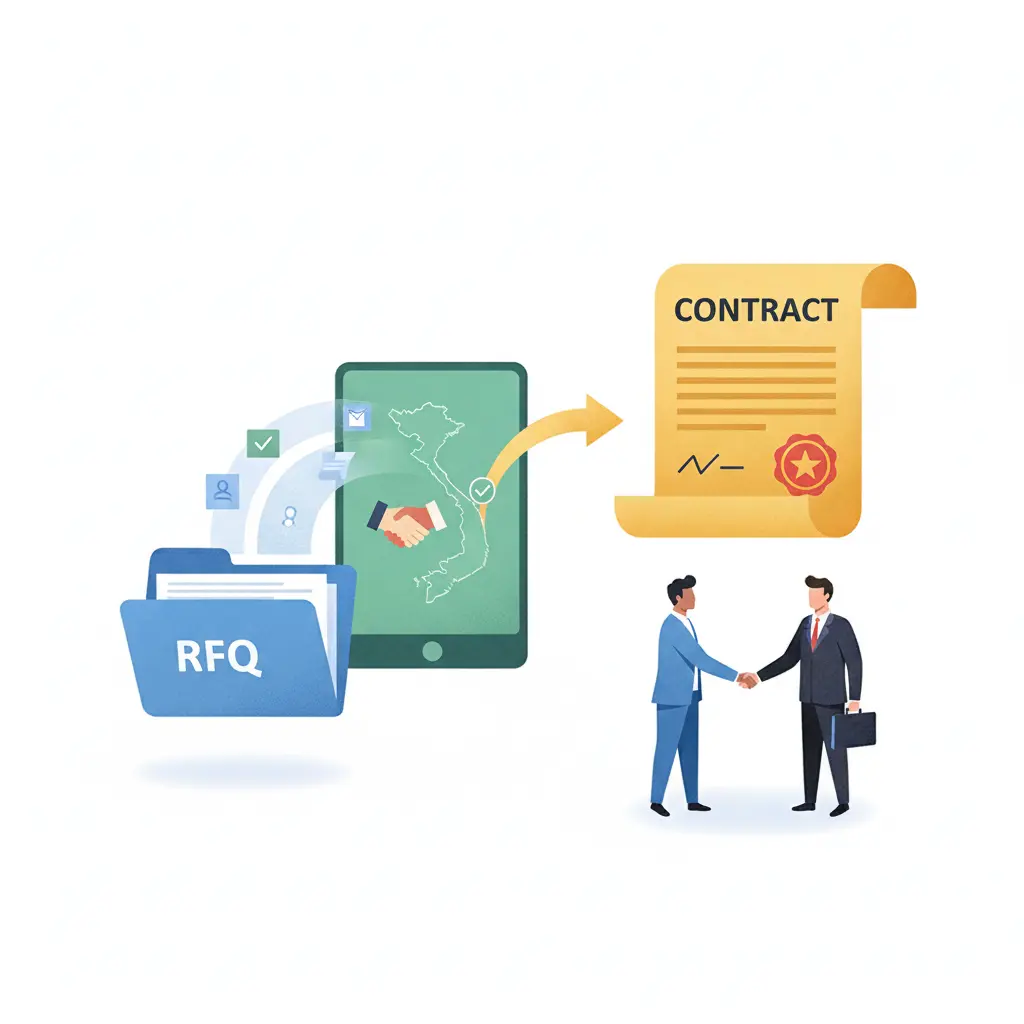
Navigating the journey from an initial Request for Quotation (RFQ) to a signed contract in Vietnam is a critical phase for businesses looking to diversify their manufacturing base. This section guides you through the essential post-RFQ stages, focusing on how to effectively compare quotes, master negotiation tactics, and ultimately establish a successful, long-term partnership with Vietnamese suppliers. Understanding these steps is paramount to securing favorable terms and building a resilient supply chain.
1. Evaluating and Comparing Vietnam Contract Manufacturing Quotes
Once you’ve submitted your Vietnam Manufacturing RFQ and received responses, the meticulous process of evaluation begins. It’s not merely about the lowest price; a comprehensive assessment of Vietnam contract manufacturing quote requires a deeper dive into several key areas. First, scrutinize the breakdown of costs: labor, materials, tooling, shipping, and any hidden fees. Transparency in pricing indicates a reliable partner. Next, evaluate the supplier’s capacity and capability. Do they have the necessary equipment, certifications (e.g., ISO, SA8000), and expertise for your specific product, whether it’s sourcing electronics Vietnam RFQ or apparel manufacturers Vietnam RFQ? Request samples or factory visits to verify quality control processes and production standards. Lead times, minimum order quantities (MOQs), and payment terms are also crucial. A shorter lead time might seem appealing, but not if it compromises quality. Always consider the total landed cost and the overall value proposition, including communication efficiency and responsiveness. Understanding how to get quotes from Vietnam suppliers efficiently is just the first step; evaluating them thoroughly ensures you select a partner aligned with your long-term strategic goals.
2. Negotiation Tactics and Payment Terms
Negotiation is an art form, especially in international business. When finalizing your Vietnam deal, approach negotiations with flexibility and a clear understanding of your priorities. While price is often a primary focus, don’t overlook other critical aspects such as payment terms, warranty periods, intellectual property (IP) protection, and dispute resolution mechanisms. For payment terms, a common structure involves an upfront deposit (e.g., 20-30%) to cover material costs, a partial payment upon production milestones, and the remaining balance upon final inspection or shipment. Consider options like Letters of Credit (LCs) for larger deals, which offer security to both parties. Be prepared to justify your counter-offers with market data or competitive quotes. Building rapport during negotiations can also lead to better outcomes, as Vietnamese business culture values relationships. Clearly define quality standards and acceptance criteria in the contract to prevent future misunderstandings. It’s advisable to have a local legal expert review all agreements to ensure compliance with Vietnamese law and to safeguard your interests, particularly concerning IP rights. Effective negotiation is about finding a mutually beneficial agreement that sets the foundation for a sustainable partnership.
3. Building Long-Term Supplier Relationships for 2025 and Beyond
The goal extends beyond a single transaction; it’s about fostering enduring partnerships that contribute to building supply chain resilience. Establishing strong relationships with your Vietnamese suppliers is vital for consistent quality, timely deliveries, and continuous improvement. Regular communication, transparent feedback, and occasional visits (virtual or in-person) can significantly strengthen these ties. Share your long-term vision and potential future projects to encourage commitment and investment from your supplier. Consider joint improvement initiatives, such as process optimization or new product development, which demonstrate a vested interest in their success. Acknowledge cultural nuances and build trust through consistent ethical practices and fairness. As global supply chains continue to evolve, a reliable and adaptable partner in Vietnam can be an invaluable asset. Proactive management of these relationships ensures that your operations in Vietnam remain robust, agile, and poised for growth well into 2025 and beyond, transforming your Vietnam Manufacturing RFQ efforts into lasting strategic advantages.
Partner with Vietnam’s Leading Suppliers
Looking for reliable suppliers in Vietnam? Contact VietnamSuppliers.com today to connect with verified manufacturers and exporters across all industries.
—————————————
References
– World Bank Overview: Vietnam: https://www.worldbank.org/en/country/vietnam/overview
– Understand Incoterms rules from the International Chamber of Commerce: https://www.iccwbo.org/resources-for-business/incoterms-rules/
– emerging role as a global manufacturing hub: https://www.reuters.com/markets/asia/vietnam-emerges-key-global-manufacturing-hub-2023-03-22/
– RoHS Directive – European Commission: https://ec.europa.eu/environment/waste/rohs_en.htm
– building supply chain resilience: https://www.weforum.org/agenda/2023/10/how-to-build-supply-chain-resilience/

