
Understanding the Bill of Lading Definition
In the intricate world of international trade, the smooth flow of goods across borders and oceans relies on a backbone of standardized documentation. Among these, the Bill of Lading (BoL) stands out as one of the most critical instruments, serving multiple vital functions in maritime shipping. This section delves into the core Bill of Lading definition international trade, exploring its fundamental role and why it remains indispensable in today’s global supply chains.
What Exactly is a Bill of Lading?
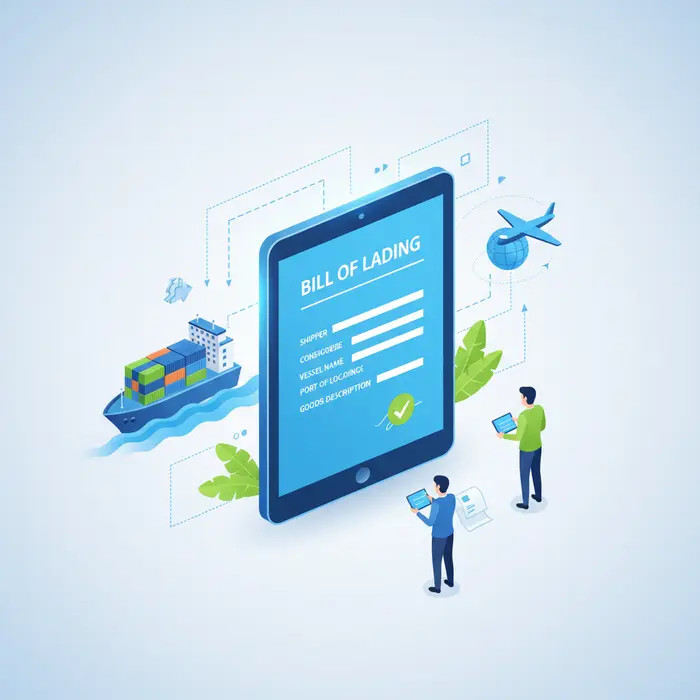
At its essence, a Bill of Lading (BoL) is a legally binding document issued by a carrier (or their agent) to a shipper, detailing the type, quantity, and destination of goods being shipped. It serves as a contract of carriage between the shipper and the carrier, a receipt of goods, and a document of title to the goods. This trifecta of functions makes the BoL an irreplaceable component in the logistics of global trade.
As a contract of carriage, the BoL outlines the terms and conditions under which the goods are transported. It specifies the responsibilities of the carrier, including the safe delivery of the cargo to its intended destination, and the obligations of the shipper. As a receipt of goods, it confirms that the carrier has received the goods as described, in good order and condition, for shipment. This receipt is crucial for both parties, providing proof of handover and initial condition.
Perhaps its most distinguishing feature, especially when compared to other transport documents like an Air Waybill (which primarily serves as a receipt and contract, but not title), is its function as a document of title. This means the holder of the Bill of Lading has the right to claim the goods at the destination. This transferable ownership allows for the buying and selling of goods while they are still in transit, a cornerstone of financing in international trade. Without this definitive document, the movement of high-value cargo across vast distances would be fraught with significantly greater risk and complexity.
Its Crucial Role in Global Supply Chains
The purpose of a Bill of Lading in shipping extends far beyond merely identifying cargo. It acts as a linchpin in global supply chains, facilitating several critical processes. For one, it is indispensable for securing financing. Banks frequently require a negotiable Bill of Lading as collateral for letters of credit (L/Cs) or other trade finance instruments, enabling sellers to receive payment before the buyer physically possesses the goods. This financial utility significantly reduces risk for both parties and lubricates the wheels of commerce.
Furthermore, the BoL is essential for customs clearance procedures. Authorities in importing and exporting countries use the information contained within the document to verify cargo details, assess duties and taxes, and ensure compliance with regulations. Accuracy in the Bill of Lading is paramount to avoid delays, fines, and potential legal issues.
There are various types of Bill of Lading documents, each tailored to specific shipping scenarios. For instance, a ‘straight’ Bill of Lading is non-negotiable and names a specific consignee who can claim the goods, while an ‘order’ Bill of Lading is negotiable and can be endorsed to a new party, reflecting its nature as a document of title. Understanding these distinctions is vital for effective global trade management. While a Bill of Lading governs sea freight, an Air Waybill (AWB) is its air cargo counterpart. The key difference in the Bill of Lading vs Air Waybill debate is that an AWB is not a document of title, meaning it cannot be used to transfer ownership of goods in transit.
Historical Significance and Evolution of the BoL
The concept of a Bill of Lading has roots dating back to the 13th century, evolving from simple notations made by shipmasters documenting cargo. As international trade expanded and became more complex, particularly with the rise of global maritime routes, the need for a standardized, legally robust document became evident. By the 17th century, the BoL had largely taken its modern form, recognized universally as a critical instrument for trade and finance.
In the 21st century, the evolution continues with the advent of the Electronic Bill of Lading (e-BoL). While paper BoLs have served reliably for centuries, they present challenges related to speed, security, and cost in an increasingly digitized world. Electronic Bill of Lading advantages include faster transmission, reduced administrative overheads, enhanced security against fraud and loss, and greater efficiency in trade finance processes. Organizations like the Digital Container Shipping Association (DCSA) are actively promoting and standardizing e-BoLs to streamline global shipping, marking a significant step towards a more efficient and sustainable future for international trade logistics.
Purpose of Bill of Lading in Shipping
The Bill of Lading (BoL) stands as an indispensable document in the complex world of international trade and shipping. Far more than just a piece of paper, it is a multifaceted instrument essential for securing and facilitating the seamless movement of goods across borders. Understanding the Bill of Lading definition international trade reveals its critical role in defining responsibilities, proving ownership, and ensuring the orderly flow of global commerce. This document serves three primary functions, each integral to the integrity and efficiency of maritime logistics.
1. Serving as a Contract of Carriage
One of the fundamental purposes of a Bill of Lading in shipping is its role as a contract of carriage. This means it is a legally binding agreement between the shipper (exporter) and the carrier (shipping line or its agent) for the transportation of goods from a specific origin to a designated destination. The Bill of Lading outlines the terms and conditions under which the goods will be transported, including the freight charges, the route to be taken, and the responsibilities and liabilities of both parties. It specifies the rights and obligations, such as the carrier’s duty to safely transport and deliver the goods, and the shipper’s obligation to provide accurate information and pay for the services. Any clauses or conditions printed on the BoL become part of this contract, governing aspects like demurrage, detention, and limitations of liability. Without a clear contract of carriage, the legal framework for resolving disputes, claiming damages, or even simply ensuring delivery according to agreed terms would be absent, making international freight extremely risky and difficult to manage.
2. Acting as a Receipt for Goods Shipped
Beyond its contractual nature, the Bill of Lading also functions as a tangible receipt for the goods shipped. When the cargo is loaded onto the vessel, the carrier or their agent issues the BoL to the shipper, confirming that the specified goods have been received in apparent good order and condition, unless otherwise noted. This receipt details crucial information about the consignment, including the type, quantity, weight, and dimensions of the goods, as well as their packaging and any identifying marks. This aspect is vital for several reasons: it provides proof that the shipper has delivered the goods to the carrier; it allows the consignee (receiver) to verify that the goods received match those shipped; and it forms the basis for insurance claims if the goods are damaged or lost during transit. A “clean Bill of Lading” indicates that the goods were received without any apparent damage or discrepancy, whereas a “claused” or “dirty Bill of Lading” notes existing damage, shortages, or other issues observed at the time of loading. This distinction is paramount for determining liability and can significantly impact the financial transactions associated with the shipment.
3. Functioning as a Document of Title
Perhaps the most unique and powerful feature of an “order” Bill of Lading is its function as a document of title to the goods. This means that possession of the original Bill of Lading is equivalent to ownership of the goods themselves. This characteristic is particularly important in international trade, where goods may be in transit for weeks or months, and payment often needs to be secured before the physical arrival of the cargo. By endorsing and transferring the original Bill of Lading, the holder can transfer ownership of the goods to another party, even while they are still at sea. This negotiability allows banks to use the Bill of Lading as collateral for financing trade transactions, such as letters of credit, where the bank releases payment to the exporter only upon presentation of the original BoL. Without this function, financing international shipments would be considerably more challenging, creating significant cash flow issues for businesses. It’s crucial to differentiate this from a “straight Bill of Lading,” which is non-negotiable and typically consigned directly to a named party, meaning it does not function as a document of title. The various types of Bill of Lading documents are largely defined by their negotiability and their implications for ownership and transfer of goods. While the Bill of Lading is the cornerstone for sea freight, it’s worth noting that documents like the Air Waybill serve a similar but distinct purpose for air cargo, primarily as a receipt and contract of carriage but generally not as a document of title due to the speed of air transport. The evolution towards modernizing these processes has also brought about Electronic Bill of Lading advantages, offering increased speed, security, and reduced paperwork in the digital era.
In conclusion, the Bill of Lading is a cornerstone of international shipping, embodying legal, logistical, and financial functions that are irreplaceable. Its three primary roles—as a contract, a receipt, and often a document of title—collectively streamline global trade, provide legal certainty, and enable secure financial transactions, making it truly essential for the movement of goods worldwide.
Key Types of Bill of Lading Documents
The Bill of Lading (BoL) is a cornerstone legal document in global commerce, serving as a contract of carriage, a receipt for goods, and, for certain types, a document of title. A precise Bill of Lading definition international trade necessitates understanding its diverse classifications. In international shipping, selecting the correct BoL type is paramount for smooth transactions, proper cargo delivery, and effective risk management. This section explores the key types of Bill of Lading documents, highlighting their uses, legal implications, and optimal deployment.
1. Negotiable vs. Non-Negotiable BoL
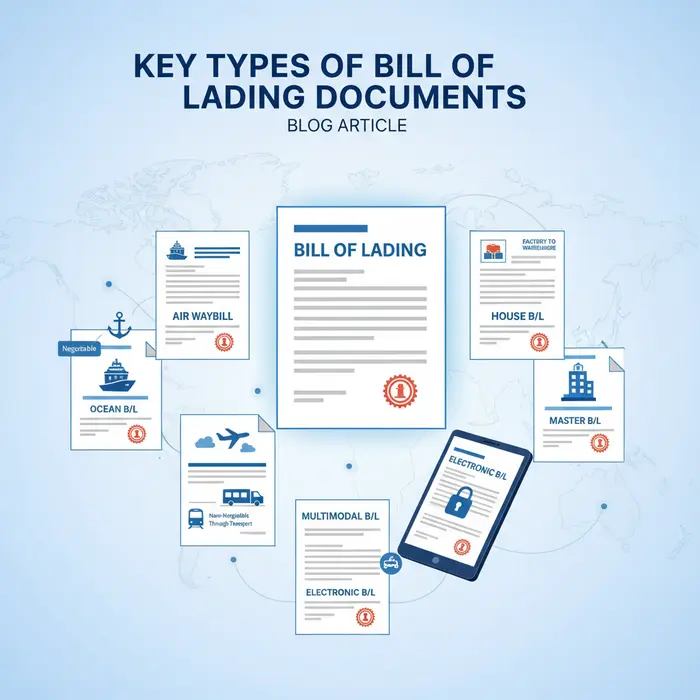
A fundamental distinction among types of Bill of Lading documents lies in their transferability and role as a document of title.
A Negotiable Bill of Lading acts as a document of title. Its legal holder has the right to claim the cargo and it can be transferred between parties, typically by endorsement and delivery, allowing goods to be bought or sold in transit. This type is indispensable for trade finance, especially transactions involving letters of credit, where banks require control over the cargo as collateral. Its flexibility provides security for both shipper and buyer, as goods are only released upon original document presentation.
In contrast, a Non-Negotiable Bill of Lading is issued directly to a named consignee and cannot be transferred. It functions solely as a contract of carriage and a receipt for goods, authorizing only the named consignee to receive the shipment. It does not convey title, preventing its use as collateral or for in-transit sale. This type is suitable when the shipper has received payment or has high trust with the consignee, ensuring direct and simple delivery.
2. Straight BoL vs. Order BoL
Further clarifying delivery and claim rights, the Straight Bill of Lading and the Order Bill of Lading are crucial types of Bill of Lading documents.
A Straight Bill of Lading is non-negotiable, consigning goods directly to a specific, named party. The carrier delivers solely to that consignee upon arrival, often without requiring original BoL presentation. Commonly used when shipper and consignee have an established relationship or for cash-in-advance shipments, its non-negotiable nature limits flexibility for finance or resale during transit.
An Order Bill of Lading, conversely, is negotiable. It stipulates goods are to be delivered “to the order” of a specified party (shipper, bank, or consignee). Possession requires the original BoL, properly endorsed, by the “to order” party or an endorsee. This type is vital for international transactions using letters of credit or when goods are traded while in transit, allowing control over cargo to be transferred and providing critical financial security and supply chain flexibility.
3. Master BoL vs. House BoL
For consolidated shipments managed by a freight forwarder, two distinct types of Bill of Lading documents become essential, showcasing the multi-layered Purpose of Bill of Lading in shipping.
A Master Bill of Lading (MBL) is issued by the actual ocean carrier to a freight forwarder or NVOCC. It covers the entire consolidated shipment as a single unit, with the forwarder named as shipper and their agent at destination as consignee. The MBL outlines the journey of the entire container from origin to destination, establishing the contract between the carrier and the forwarder.
In contrast, a House Bill of Lading (HBL) is issued by the freight forwarder or NVOCC to each individual shipper whose goods are part of the consolidated consignment. Each HBL details the specific cargo, naming the actual shipper as consignor and the actual buyer as recipient. The HBL functions as the individual contract between the shipper and the freight forwarder, effectively sub-contracting under the MBL. This system allows individual shippers to manage their specific cargo and receive their own document of title (if negotiable), while the freight forwarder manages the consolidated shipment.
Beyond these, other types of Bill of Lading documents include Clean vs. Claused BoLs (cargo condition), Received for Shipment vs. Shipped BoLs (cargo status), and Express Release BoLs (faster release). The Electronic Bill of Lading (eBL) offers significant Electronic Bill of Lading advantages like reduced paperwork and enhanced security. While the BoL is key for sea freight, it differs from the Air Waybill used for air cargo, which is always non-negotiable. Understanding these diverse BoL types is crucial for navigating global trade, managing risks, ensuring financial security, and facilitating efficient cross-border movement of goods.
Bill of Lading vs. Air Waybill: A Comparative Look
In the intricate world of international trade, the smooth movement of goods across borders relies heavily on standardized documentation. Among the most critical are the Bill of Lading (B/L) and the Air Waybill (AWB). While both serve as essential contracts of carriage and receipts for goods, their applications, legal implications, and roles in the logistics chain differ significantly based on the mode of transport. Understanding the distinctions between these two documents is fundamental for anyone involved in global shipping, from shippers and carriers to consignees and financial institutions. This section aims to clarify the specific applications and legal standing of a Bill of Lading versus an Air Waybill, highlighting their unique functions in sea versus air freight logistics.
1. Differences in Mode of Transport
The most straightforward distinction between a Bill of Lading and an Air Waybill lies in their respective modes of transport. A Bill of Lading is exclusively associated with sea freight, governing the transportation of goods by ocean vessel. It is an indispensable document for cargo moving across seas, whether in containers, as bulk cargo, or breakbulk. The extended transit times inherent in ocean shipping often necessitate the B/L’s robust legal framework, allowing for the potential sale or transfer of goods while they are still in transit. In contrast, the Air Waybill is specifically designed for air freight. It facilitates the rapid movement of goods via aircraft, reflecting the speed and efficiency characteristic of air cargo services. Due to the significantly shorter transit times for air shipments, the legal requirements and transferability aspects of an AWB differ substantially from those of a B/L, aligning with the quicker turnaround and delivery expectations of air cargo.
2. Legal Status as a Document of Title
Perhaps the most profound difference between these two critical shipping documents pertains to their legal status as a document of title. A Bill of Lading serves three primary functions: it is a receipt for goods, a contract of carriage, and crucially, a document of title. This means that possession of an original Bill of Lading bestows ownership rights over the goods it represents. As a transferable document, a B/L can be endorsed and negotiated, allowing the consignee to sell or transfer ownership of the goods even before their physical arrival at the destination port. This feature makes the B/L a vital instrument in international trade finance, often used as collateral for letters of credit and other financial transactions. For a comprehensive Bill of Lading definition in international trade, it’s essential to recognize its multifaceted legal role. Conversely, an Air Waybill is not a document of title. While it acts as a receipt for goods and a contract of carriage between the shipper and the airline, it does not confer ownership of the cargo to the holder. The goods are generally released directly to the consignee named on the AWB upon arrival, provided they can identify themselves. This non-negotiable nature simplifies air cargo procedures, aligning with the speed-oriented nature of air transport where goods are typically released quickly to the intended recipient without the need for presenting an original document for title transfer. For more on the legal intricacies of a Bill of Lading as a document of title, various authoritative resources provide deeper insights into their role in international commercial law.
3. Parties Involved and Responsibilities
The parties involved and their respective responsibilities also differ between the two documents. In a Bill of Lading, the key parties typically include the shipper (consignor), who sends the goods; the carrier (the shipping line or their agent), who transports the goods; and the consignee, who is the receiver of the goods. Additionally, a ‘notify party’ is often named, who receives notification of the goods’ arrival but may not be the actual consignee. The carrier is responsible for the safe transport of the goods and their delivery against the presentation of the original B/L. The shipper is responsible for providing accurate cargo information, and the consignee, upon presenting the B/L, takes responsibility for customs clearance and collection. The B/L clearly outlines the terms and conditions of the carriage, including liability limits. Air Waybills, on the other hand, involve simpler party structures. The main parties are the shipper (consignor), the carrier (the airline), and the consignee. While a ‘notify party’ can also be designated, the absence of a document of title means that the airline’s responsibility is generally to deliver the goods to the named consignee upon arrival, verification of identity, and payment of any outstanding charges. The AWB acts as a contract of carriage, detailing the terms, conditions, and liability limits for air transportation. Both documents outline critical details such as cargo description, quantity, weight, dimensions, and origin/destination, but the nuanced responsibilities, particularly regarding cargo release and transfer of ownership, underscore their fundamental differences.
Advantages of Electronic Bill of Lading (e-BL)
Description: Examine the benefits and advancements offered by electronic Bills of Lading, showcasing how digital transformation is enhancing efficiency, security, and sustainability in international trade documentation.
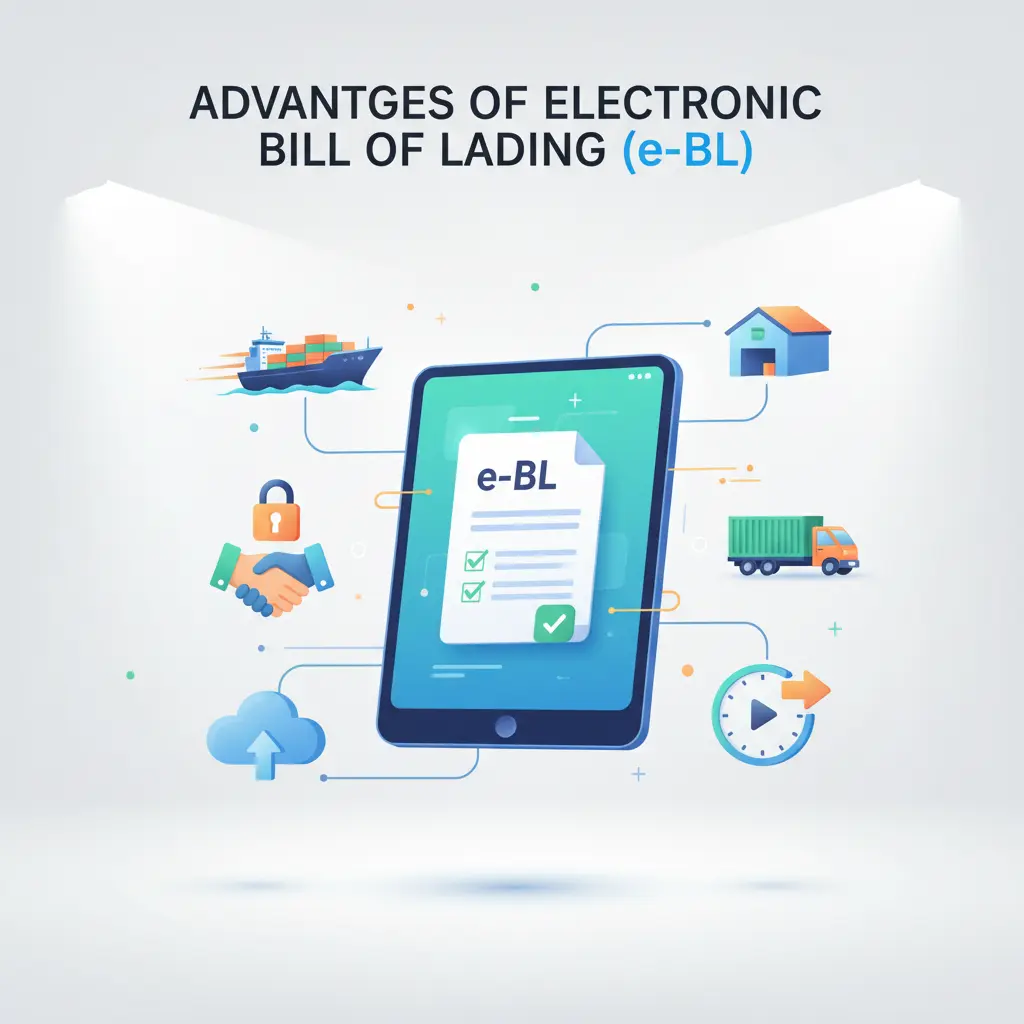
The traditional paper Bill of Lading (B/L) definition in international trade serves as a critical document, acting as a contract of carriage, a receipt for goods, and a document of title. However, in an increasingly digital world, its paper-based nature presents significant challenges, including delays, high administrative costs, and vulnerability to fraud. Enter the Electronic Bill of Lading (e-BL) – a digital counterpart designed to revolutionize global commerce. By leveraging digital technology, e-BLs enhance efficiency, security, and sustainability, marking a pivotal advancement in trade documentation. This shift represents a significant stride towards modernizing the supply chain, moving away from cumbersome physical processes to streamlined digital workflows that benefit all stakeholders involved in international trade.
1. Enhanced Security and Fraud Prevention
One of the most compelling Electronic Bill of Lading advantages lies in their superior security features and robust fraud prevention capabilities. Traditional paper Bills of Lading are susceptible to various forms of fraud, including forgery, alteration, and even theft, which can lead to significant financial losses and disputes. The physical nature of paper documents makes them difficult to track and verify securely, often requiring time-consuming manual checks.
In contrast, e-BLs utilize advanced digital technologies, such as blockchain and cryptography, to create an immutable and verifiable record of ownership and transfer. Each transaction and endorsement of an e-BL is digitally signed and time-stamped, providing an indisputable audit trail. This inherent traceability makes it exceedingly difficult to alter or forge an e-BL without detection. Furthermore, the secure digital environment minimizes the risk of loss or theft, as the document exists in a secure, encrypted digital format rather than a physical paper copy that can be misplaced or stolen. Platforms handling e-BLs often incorporate multi-factor authentication and robust access controls, ensuring that only authorized parties can view or interact with the document. This significantly mitigates risks associated with identity theft and unauthorized access, boosting confidence among shippers, carriers, and consignees. The legal recognition of e-BLs, as highlighted by bodies like the BIMCO’s legal framework for electronic bills of lading, further cements their standing as a secure and reliable alternative to paper documents.
2. Increased Efficiency and Cost Savings
The transition to e-BLs ushers in a new era of efficiency and substantial cost savings across the entire supply chain. Paper Bills of Lading are notorious for causing delays due to their physical movement requirements. They must be printed, couriered, and manually processed, often crossing multiple time zones and geographical boundaries. This can lead to bottlenecks, particularly when documents are delayed, preventing goods from being released promptly upon arrival, incurring demurrage and detention charges.
Electronic Bills of Lading eliminate these physical hurdles. They can be transmitted instantly and securely across the globe with a click, drastically reducing transit times for documents from days or weeks to mere minutes. This real-time transmission accelerates customs clearance, facilitates faster release of goods, and optimizes inventory management for consignees. The reduction in administrative burden is immense; there’s no need for printing, mailing, or archiving physical documents, which translates into significant savings on paper, ink, courier fees, and storage costs. Moreover, the automation of processes like endorsement and transfer minimizes human error, further streamlining operations. Enhanced visibility into the document’s status at every stage of its lifecycle allows for proactive problem-solving and improved decision-making. By expediting the flow of information and goods, e-BLs contribute directly to a more agile and responsive supply chain, optimizing the Purpose of Bill of Lading in shipping by making it more effective.
3. Environmental Benefits and Sustainability
Beyond security and efficiency, e-BLs offer substantial environmental advantages, contributing significantly to global sustainability efforts. The international shipping industry is under increasing pressure to reduce its carbon footprint and adopt greener practices. Traditional paper Bills of Lading consume vast amounts of resources throughout their lifecycle. From the energy and water used in paper production to the fuel consumed by air freight couriers transporting documents across continents, the environmental impact is considerable.
By digitizing the Bill of Lading, e-BLs drastically reduce the reliance on paper. This directly translates into fewer trees cut down, less water and energy consumed in manufacturing, and a significant reduction in waste. Furthermore, eliminating the need for physical transportation of documents dramatically lowers carbon emissions associated with courier services. This aligns perfectly with corporate social responsibility initiatives and global commitments to combat climate change. Adopting e-BLs is a tangible step towards creating a more sustainable and eco-friendly international trade ecosystem. It promotes a paperless workflow, which extends beyond just the Bill of Lading to encourage broader digitalization within trade finance and logistics. This shift towards digital documentation not only benefits individual companies through cost savings and efficiency but also contributes to a healthier planet, fostering a more sustainable future for trade by minimizing the environmental impact associated with the various Types of Bill of Lading documents.
In conclusion, the electronic Bill of Lading represents a transformative innovation in international trade. Its ability to bolster security, slash operational costs, enhance efficiency, and promote environmental sustainability positions it as an indispensable tool for the modern global supply chain. As technology continues to evolve and regulatory frameworks adapt, the adoption of e-BLs is poised to become the industry standard, propelling international commerce into a more secure, efficient, and sustainable future.
Partner with Vietnam’s Leading Suppliers
Looking for reliable suppliers in Vietnam? Contact VietnamSuppliers.com today to connect with verified manufacturers and exporters across all industries.
—————————————
References
– :
– Bill of Lading (B/L) Definition: https://www.investopedia.com/terms/b/billoflading.asp
– Bill of Lading (BoL): https://www.investopedia.com/terms/b/billoflading.asp
– legal intricacies of a Bill of Lading as a document of title: https://www.lexology.com/library/detail.aspx?g=e68f3a8b-f281-4b10-826f-4091e9f4560b
– BIMCO’s legal framework for electronic bills of lading: https://www.bimco.org/news-and-trends/publications/bulletin/2020/06/the-electronic-bill-of-lading-and-the-blockchain/

