The Imperative for Automated B2B Sourcing in 2025
In the dynamic landscape of global commerce, the ability to source efficiently, quickly, and cost-effectively has become paramount. As businesses navigate increasingly complex supply chains, geopolitical shifts, and ever-rising customer expectations, traditional B2B sourcing methods are proving inadequate. The year 2025 marks a critical inflection point where automated B2B sourcing efficiency is no longer a luxury but a fundamental necessity for survival and growth. This innovative approach harnesses technology to revolutionize how companies identify, vet, and engage with suppliers, fundamentally reshaping global trade. By streamlining the entire procurement lifecycle, automated sourcing platforms promise unparalleled levels of speed, accuracy, and strategic advantage, setting the stage for a new era of proactive and resilient supply chain management.

1. Defining Automated B2B Sourcing and Its Scope
Automated B2B sourcing refers to the application of advanced technologies – including Artificial Intelligence (AI), Machine Learning (ML), Robotic Process Automation (RPA), and data analytics – to automate and optimize various stages of the business-to-business procurement process. Far beyond simple digital forms, this encompasses everything from initial supplier discovery and qualification to bid management, contract negotiation, and ongoing performance monitoring. The scope is vast, covering diverse aspects such as intelligent matching of buyer requirements with supplier capabilities, automated risk assessment based on real-time data, and predictive analytics for demand forecasting and supply chain disruption alerts. Key supplier automation benefits include reduced manual effort, faster cycle times, enhanced data accuracy, and the ability to access a broader, more diverse pool of global suppliers. This shift empowers procurement teams to move away from transactional tasks and focus on strategic initiatives, fostering innovation and fostering stronger supplier relationships.
2. The Evolving Landscape of Global Procurement
The global procurement landscape has been profoundly reshaped by a confluence of factors, including the acceleration of digitalization, persistent supply chain vulnerabilities, and the imperative for greater sustainability and ethical sourcing. Events of recent years have highlighted the fragility of traditional, often opaque, supply chains, underscoring the urgent need for greater visibility and resilience. Businesses are now contending with fluctuating raw material prices, longer lead times, and increased regulatory scrutiny, making robust and agile sourcing strategies indispensable. The demand for digital supply chain optimization is surging as companies seek to mitigate risks, improve transparency, and adapt quickly to market changes. Automated sourcing solutions provide a crucial lever in this evolving environment, offering the tools to navigate complex international trade agreements, manage customs requirements, and facilitate streamlined export processes. According to McKinsey & Company, digital transformation in procurement is essential for companies to drive value and resilience in an increasingly volatile world, confirming that this trend is not merely advantageous but critical for future success.
3. Why Efficiency is the New Competitive Advantage
In today’s hyper-competitive global marketplace, efficiency transcends mere cost savings; it is the bedrock of sustained competitive advantage. Automated B2B sourcing drastically cuts down the time and resources traditionally consumed by manual procurement tasks, accelerating time-to-market for new products and services. This operational agility translates directly into enhanced responsiveness to customer demands and market shifts. Beyond speed, automation significantly reduces human error, improving the quality and reliability of supplier interactions and contract management. Furthermore, the data-driven insights provided by automated systems enable more informed decision-making, leading to better negotiation outcomes and optimized spend. Implementing robust B2B procurement automation strategies allows businesses to not only achieve significant operational efficiencies but also unlock strategic value, fostering innovation and building more resilient supply networks. For a deeper dive into how this translates to practical advantages, explore how Automated B2B sourcing efficiency is transforming supplier relationships and procurement outcomes. By embracing automation, companies can reallocate resources from administrative overheads to strategic activities, ensuring they remain lean, agile, and prepared to capitalize on emerging opportunities in 2025 and beyond.
Unlocking Supplier Automation Benefits for Growth
In today’s dynamic global marketplace, the ability to interact seamlessly and efficiently with suppliers is a cornerstone of sustainable business growth. As companies navigate increasingly complex supply chains and intense competition, the traditional manual approaches to supplier management are proving to be bottlenecks rather than enablers. Embracing automation in B2B interactions transforms these challenges into opportunities, delivering profound advantages that enhance operational flow, strengthen relationships, and drive strategic expansion. Achieving true Automated B2B sourcing efficiency is no longer a luxury but a strategic imperative, allowing businesses to unlock a new level of agility and responsiveness.
Supplier automation benefits extend across the entire procurement lifecycle, from initial sourcing and onboarding to ongoing performance management and payment. By digitizing and streamlining these processes, companies can significantly reduce operational costs, mitigate risks, and foster more collaborative and transparent relationships with their supply base. This strategic shift not only optimizes internal workflows but also empowers businesses to make data-driven decisions, anticipate market changes, and maintain a competitive edge through enhanced supply chain resilience and flexibility.
1. Reducing Manual Workload and Human Error
One of the most immediate and tangible benefits of implementing B2B procurement automation strategies is the dramatic reduction in manual workload and the associated risk of human error. Repetitive tasks such as data entry, invoice processing, order creation, and status updates, which traditionally consume a significant amount of staff time, are perfect candidates for automation. Robotic Process Automation (RPA) and other intelligent automation tools can handle these tasks with unparalleled speed and accuracy, freeing up procurement and administrative teams from mundane, transactional work.
This shift allows employees to reallocate their efforts towards more strategic initiatives, such as supplier negotiation, market analysis, innovation sourcing, and relationship building. Furthermore, by minimizing manual intervention, the likelihood of errors in critical data – such as pricing, quantities, delivery dates, and payment terms – is drastically reduced. This leads to fewer disputes, more accurate financial reporting, and a smoother operational flow throughout the supply chain, ultimately contributing to greater overall efficiency and cost savings.
2. Enhancing Supplier Relationship Management (SRM)
Effective Supplier Relationship Management (SRM) is crucial for long-term success, and automation plays a pivotal role in elevating these critical partnerships. By automating communication, performance tracking, and payment processes, companies can foster greater transparency, trust, and collaboration with their suppliers. Automated portals allow suppliers to easily submit bids, update information, track order statuses, and access payment schedules, leading to clearer communication and reduced friction.
Faster and more reliable payments, facilitated by automated systems, strengthen financial relationships and incentivize suppliers to prioritize your business. Moreover, automated performance monitoring provides objective data on delivery times, quality, and compliance, enabling proactive feedback and continuous improvement discussions. This data-driven approach transforms supplier relationships from mere transactional exchanges into strategic partnerships, encouraging innovation, shared growth, and a more resilient digital supply chain optimization for all parties involved. This transformative power of digital procurement is increasingly recognized as a key driver for business success, with leading consultancies like Deloitte highlighting the significant cost reductions and efficiency gains achievable through advanced technologies.
3. Accelerating Supplier Onboarding and Compliance
The process of onboarding new suppliers can often be lengthy, complex, and prone to delays, particularly when ensuring regulatory and internal compliance. Supplier automation drastically accelerates this crucial phase by digitizing and streamlining the entire workflow. Automated systems can manage the collection of necessary documents, conduct due diligence checks, verify certifications, and facilitate contract signing, all while ensuring adherence to predefined rules and policies.
This not only shortens the time-to-market for new products or services by bringing new suppliers online faster but also significantly reduces compliance risks. For businesses engaged in international trade, streamlined export processes are particularly vital. Automation ensures that all legal, ethical, and quality standards are met consistently, from verifying licenses to managing declarations and tariffs. Automated compliance checks provide an audit trail, offering peace of mind and protecting the company from potential penalties or reputational damage, thereby creating a robust and efficient supplier ecosystem.
Streamlined Export Processes Through Automation
In the dynamic landscape of global commerce, the efficiency of business-to-business (B2B) transactions is paramount. For companies engaged in cross-border trade, optimizing the export side of operations is not just about speed, but also about compliance, cost-effectiveness, and customer satisfaction. The traditional export process, often laden with manual paperwork, regulatory complexities, and fragmented communication, presents significant bottlenecks. However, with the advent of advanced digital tools, businesses are now embracing automation to transform their export functions. This shift towards Automated B2B sourcing efficiency extends deeply into export procedures, unlocking substantial supplier automation benefits and ushering in truly streamlined export processes. By leveraging automation, companies can navigate the intricacies of international trade with unprecedented agility, ensuring faster and more compliant cross-border transactions from documentation to logistics.

1. Automating Documentation and Regulatory Compliance
One of the most time-consuming and error-prone aspects of exporting is managing the extensive documentation and adhering to stringent regulatory requirements. From commercial invoices and packing lists to certificates of origin, export declarations, and customs forms, the sheer volume of paperwork can be daunting. Automation revolutionizes this process by enabling the digital generation, validation, and submission of these critical documents. Advanced platforms, often utilizing Electronic Data Interchange (EDI), blockchain, or AI-driven smart contracts, can automatically populate forms with accurate data drawn from enterprise resource planning (ERP) systems. This not only drastically reduces manual effort and the risk of human error but also ensures consistency across all export documents. Moreover, these systems are designed to stay updated with evolving international trade regulations, flagging potential non-compliance issues before they arise. This proactive approach to compliance is a cornerstone of digital supply chain optimization, mitigating delays, penalties, and even cargo seizures, thereby fostering trust and reliability in global trade operations.
2. Real-time Shipment Tracking and Visibility
Once goods leave the warehouse, maintaining visibility over their journey is crucial for effective export management. Automation, powered by technologies like IoT sensors, GPS tracking, and integrated logistics platforms, provides real-time shipment tracking from origin to destination. This means businesses can monitor the exact location, status, and even environmental conditions (like temperature for sensitive goods) of their cargo at any given moment. This unparalleled visibility is a game-changer for several reasons. Firstly, it allows for proactive problem-solving; if a delay occurs or a deviation from the planned route is detected, businesses can react swiftly to mitigate potential disruptions and inform stakeholders. Secondly, it enhances customer satisfaction by providing accurate estimated arrival times and transparent updates, reducing the need for manual inquiries. Finally, detailed tracking data contributes to better decision-making for future shipments, helping optimize routes, carrier selection, and overall logistics strategies. Such robust real-time insights are indispensable for modern B2B procurement automation strategies, ensuring that goods sourced globally reach their international destinations efficiently and predictably.
3. Overcoming Customs and International Trade Barriers
Navigating the complex maze of customs procedures, tariffs, and non-tariff barriers in different countries is a significant hurdle for exporters. Each nation has its own set of rules, often subject to frequent changes, which can lead to delays, unexpected costs, and compliance failures. Automation offers powerful solutions to simplify and expedite this process. AI-powered tools can assist in accurate tariff classification, predict potential customs hold-ups based on historical data, and even automate the calculation of duties and taxes. Furthermore, automated systems can pre-validate customs declarations against specific country requirements, ensuring that all necessary information is provided and correctly formatted before submission. This significantly reduces the likelihood of customs rejections or delays, leading to faster clearance times and reduced demurrage charges. By leveraging technology to anticipate and address trade barriers, businesses can achieve truly streamlined export processes. This not only accelerates market entry but also fosters greater confidence in international trade operations, allowing companies to expand their global reach more effectively and compliantly.
Digital Supply Chain Optimization Strategies
In today’s dynamic global marketplace, optimizing the supply chain is no longer just about efficiency; it’s about building resilience, fostering predictive capabilities, and achieving sustainable growth. Digital supply chain optimization represents a paradigm shift from traditional, reactive methods to proactive, technology-driven approaches. By leveraging advanced digital tools and automation, businesses can transform their entire supply chain, from sourcing and manufacturing to logistics and delivery, ensuring agility in the face of disruption and unlocking unprecedented levels of operational excellence. This transformation is crucial for companies aiming to maintain a competitive edge and navigate the complexities of international trade.
1. Integrating AI and Machine Learning in Procurement
The integration of Artificial Intelligence (AI) and Machine Learning (ML) is fundamentally redefining procurement, shifting it from a labor-intensive, often reactive function to a strategic, proactive powerhouse. AI and ML algorithms can analyze vast datasets at speeds and scales impossible for humans, providing insights that drive smarter decision-making. In the realm of B2B procurement, this translates directly into Automated B2B sourcing efficiency, where systems can identify and evaluate potential suppliers, predict market trends, and even negotiate terms based on historical data and real-time conditions. Key applications include advanced demand forecasting, which minimizes stockouts and overstocking, and sophisticated supplier risk management, identifying vulnerabilities before they impact operations. Furthermore, these technologies enhance supplier automation benefits by automating routine tasks like invoice processing, order tracking, and compliance checks, freeing procurement teams to focus on strategic initiatives. This approach falls under effective B2B procurement automation strategies, ensuring not only cost savings but also improved supplier relationships and a more robust supply chain. For a deeper dive into how AI is transforming this sector, refer to McKinsey’s guide on AI in supply chain.
2. Data-driven Decision Making for Supply Chain Resilience
At the heart of any robust digital supply chain optimization strategy is the ability to harness and interpret data effectively. Data-driven decision making is paramount for building true supply chain resilience, allowing businesses to anticipate disruptions, respond swiftly, and recover efficiently. This involves collecting real-time data from various touchpoints across the supply chain—from IoT sensors on production lines to GPS trackers on logistics fleets and market intelligence feeds. Advanced analytics then process this data to provide end-to-end visibility, revealing bottlenecks, inefficiencies, and potential risks. Predictive analytics, powered by ML models, can forecast demand fluctuations, potential supplier failures, or even geo-political risks, enabling proactive measures. Companies can run scenario simulations to model the impact of different disruptions and develop contingency plans, moving beyond traditional reactive problem-solving. By continuously monitoring key performance indicators (KPIs) and leveraging dashboards that present complex data in an understandable format, decision-makers can make informed choices quickly, ensuring the supply chain remains agile and adaptable to unforeseen challenges.
3. End-to-End System Integration for Seamless Operations
Achieving truly optimized digital supply chains requires seamless integration across all systems and stakeholders. Siloed data and disconnected processes are major impediments to efficiency and transparency. End-to-End System Integration involves linking disparate platforms such as Enterprise Resource Planning (ERP), Supply Chain Management (SCM), Customer Relationship Management (CRM), Transportation Management Systems (TMS), and even external partner systems. This creates a unified ecosystem where information flows freely and instantly across the entire supply chain. The benefits are manifold: improved communication between departments and external partners, reduced manual data entry and errors, and enhanced data accuracy. For instance, an integrated system can automatically update inventory levels when a sale is made or trigger a new order with a supplier when stock falls below a certain threshold. This level of integration is particularly vital for streamlined export processes, where multiple documents, regulations, and logistics partners must coordinate flawlessly. By establishing a single source of truth for all supply chain data, businesses can gain unprecedented visibility, optimize workflows, and ultimately foster a more efficient, collaborative, and responsive operational environment, crucial for global trade and achieving optimal Automated B2B sourcing efficiency.
In conclusion, the journey toward a fully optimized digital supply chain is continuous and transformative. By strategically integrating AI and Machine Learning, committing to data-driven decision making, and ensuring end-to-end system integration, businesses can not only enhance efficiency and reduce costs but also cultivate a robust, resilient, and highly responsive supply chain capable of thriving in the complexities of the modern global economy.
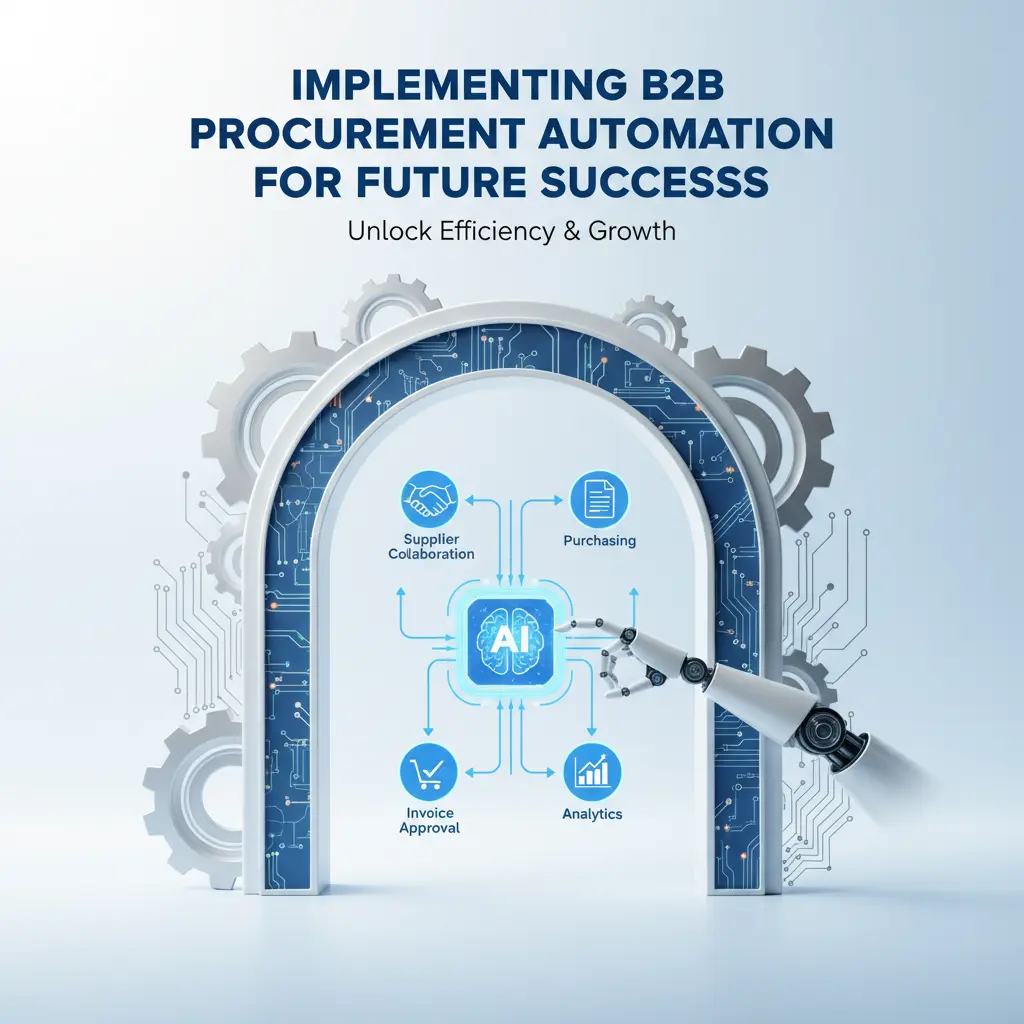
Implementing B2B Procurement Automation for Future Success
Provides actionable steps and considerations for businesses looking to adopt or enhance their B2B procurement automation strategies for long-term efficiency and competitive advantage.
In today’s fast-paced global market, the ability to source goods and services efficiently and cost-effectively is paramount for sustained business growth. B2B procurement automation isn’t just a trend; it’s a strategic imperative for companies aiming to achieve Automated B2B sourcing efficiency, reduce operational costs, and gain a significant competitive edge. By leveraging technology to streamline processes, businesses can transform their purchasing departments from cost centers into value drivers. This section outlines actionable steps and key considerations for successfully implementing or enhancing your B2B procurement automation strategies, ensuring long-term efficiency and a robust digital supply chain.
1. Assessing Your Current Procurement Needs and Gaps
Before diving into new technologies, a thorough assessment of your existing procurement landscape is crucial. Begin by mapping out all current manual processes, from requisition to payment. Identify bottlenecks, areas prone to human error, and opportunities for cost reduction. This includes analyzing spend data to understand where money is going, which suppliers are being used, and if contract compliance is consistently met. Understanding these gaps will help define clear objectives for your automation initiative. For instance, are you looking to enhance supplier automation benefits, improve data accuracy, or accelerate approval cycles? Engaging key stakeholders from various departments (finance, operations, IT) will provide a holistic view and foster buy-in. A clear understanding of current pain points and desired outcomes will guide the selection of appropriate solutions and ensure that automation efforts align with overarching business goals for digital supply chain optimization.
2. Choosing the Right Automation Tools and Platforms
The market offers a wide array of B2B procurement automation tools, from point solutions for specific tasks like e-sourcing or spend analytics to comprehensive Source-to-Pay (S2P) suites. The key is to select platforms that align with your assessed needs and future growth. Consider factors such as scalability, integration capabilities with existing ERP or accounting systems, user-friendliness, and vendor support. Look for solutions that offer features like automated requisitioning, purchase order generation, invoice processing, contract management, and supplier relationship management. Platforms that provide robust analytics and reporting capabilities are invaluable for continuous improvement. Prioritize solutions that can facilitate streamlined export processes and manage complex international transactions, especially if your business operates globally. It’s also wise to consider a phased implementation, starting with a pilot program in a less complex area to test the waters and gather feedback before a full rollout. Effective B2B procurement automation strategies require a careful balance of technological capability and practical applicability.
3. Measuring ROI and Scaling Your Automation Initiatives
Implementing B2B procurement automation is an investment, and demonstrating a clear Return on Investment (ROI) is essential for securing ongoing support and funding. Establish key performance indicators (KPIs) before implementation, such as reduced purchase order processing time, lower transaction costs, improved contract compliance rates, fewer maverick spends, and enhanced supplier performance. Regularly track these metrics to quantify the benefits. Qualitative benefits, like increased employee satisfaction and better supplier relationships, should also be communicated. Once initial automation efforts prove successful, look for opportunities to scale. This might involve expanding automation to other departments, integrating more advanced AI or machine learning capabilities for predictive analytics, or leveraging blockchain for enhanced supply chain transparency. Continuous evaluation and optimization are vital. Regularly review your processes and tools, seeking feedback from users, and adapting to new market conditions to maintain superior Automated B2B sourcing efficiency. By strategically measuring and scaling your automation, you ensure that your procurement functions remain agile, cost-effective, and a powerful contributor to your company’s long-term success.
Partner with Vietnam’s Leading Suppliers
Looking for reliable suppliers in Vietnam? Contact VietnamSuppliers.com today to connect with verified manufacturers and exporters across all industries.
—————————————
References
– McKinsey & Company: https://www.mckinsey.com/capabilities/operations/our-insights/the-future-of-procurement-requires-digital-transformation
– Deloitte: Procurement in the new normal: https://www2.deloitte.com/us/en/pages/operations/articles/procurement-in-the-new-normal.html
– international trade regulations: https://www.wto.org/english/tratop_e/tradfa_e/tradfa_e.htm
– McKinsey’s guide on AI in supply chain: https://www.mckinsey.com/capabilities/operations/our-insights/ai-in-supply-chain-a-guide-for-executives
– :